
Metabolic Stratification: Life in the Oxygen-Deprived Core of Microbial Biofilms
Updated May 2026
Explore how metabolic stratification in oxygen-deprived biofilm cores drives pathogenic persistence and resistance. Uncover the secrets of microbial survival.
Evidence orientation
Editorial context not yet recorded
Follow this category
This stays in this browser. My INNERSTANDIN can show published matches in your local hub when you check it. It does not send email, push, or alert notifications.
Local learning review
A private browser aid for revisiting ideas. It is not an alert or a health recommendation.
Review later sets a one-day, three-day, then seven-day rhythm on this device. Choose it only when you want to revisit this article.
Overview
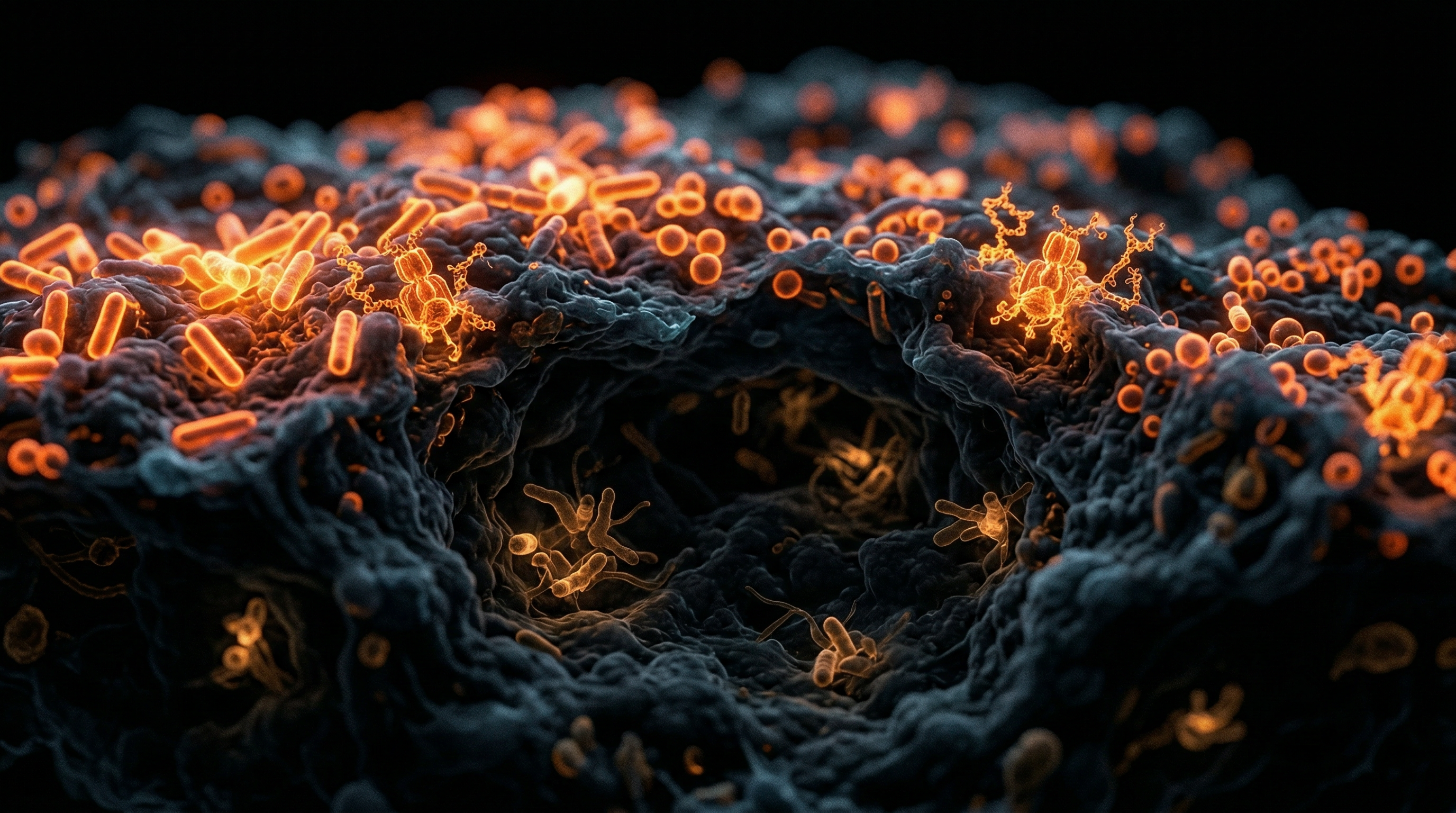
The traditional clinical paradigm often mischaracterises bacterial communities as homogenous populations of planktonic cells; however, the reality of pathogenic persistence within the human host is dictated by the architectural and physiological complexity of the biofilm. At the heart of this complexity lies metabolic stratification—a phenomenon where microbial cells undergo radical phenotypic shifts in response to sharp chemical gradients established within the Extracellular Polymeric Substance (EPS) matrix. As explored by the researchers at INNERSTANDIN, this stratification is not merely a byproduct of resource depletion but a sophisticated survival strategy that renders conventional antimicrobial therapies largely impotent. In the context of chronic infections—such as those encountered in the cystic fibrosis lung or within the necrotic tissue of diabetic foot ulcers frequently managed across the NHS—the biofilm functions as a multi-layered fortress where oxygen and nutrient availability diminish exponentially from the periphery to the core.
The primary driver of this stratification is the diffusion-reaction imbalance. The peripheral layers of the biofilm, being in direct contact with the oxygenated host environment, maintain high rates of aerobic respiration. However, the rate of oxygen consumption by these superficial cells far outstrips the rate of oxygen diffusion through the viscous EPS matrix. This results in the formation of profound pO2 gradients, often dropping to near-zero within just 30 to 100 micrometres of the surface. Evidence published in journals such as The Lancet Infectious Diseases and Nature Reviews Microbiology underscores that this anoxic core forces a metabolic transition. Deep-seated cells switch from oxidative phosphorylation to fermentation or anaerobic respiration, utilising alternative electron acceptors such as nitrate. This metabolic downregulation is intrinsically linked to the emergence of "persister" cells—a subpopulation of dormant microbes that exhibit extreme tolerance to antibiotics like ciprofloxacin or tobramycin, which typically target active cellular processes such as DNA replication or protein synthesis.
Furthermore, metabolic stratification facilitates a division of labour that ensures the collective's resilience. While the energetic "elite" at the surface produce the proteins and polysaccharides necessary for biofilm expansion, the quiescent core serves as a genetic reservoir, protected from both the host’s immune system and exogenous toxins. This spatial heterogeneity is further exacerbated by pH fluctuations and the accumulation of metabolic waste products, such as lactic acid, which modulate the local microenvironment to the detriment of host leucocyte function. For INNERSTANDIN, identifying these hidden layers of biological resistance is essential for developing next-generation anti-biofilm strategies that can penetrate the hypoxic core and disrupt the metabolic quiescence that defines chronic pathogenic persistence in the UK's most challenging clinical cases. This deep-dive into the stratified architecture of microbial life reveals that the true threat is not the bacteria themselves, but the systematic way they manipulate the physics of their environment to evade eradication.
The Biology — How It Works
The structural complexity of a mature biofilm is defined by its inherent heterogeneity, a phenomenon driven by the steep physico-chemical gradients that emerge as the community expands. At the heart of this architecture lies the Extracellular Polymeric Substance (EPS) matrix, which serves not only as a scaffold but as a diffusion barrier that dictates the bioavailability of essential solutes. In the context of British clinical research, particularly studies emerging from the University of Nottingham’s Centre for Biomolecular Sciences, it is increasingly understood that the metabolic activity of cells at the biofilm’s periphery creates an ‘oxygen sink’. These superficial layers consume oxygen at rates that far exceed the speed of inward diffusion, resulting in a precipitous drop in redox potential toward the core.
This oxygen depletion forces a dramatic bioenergetic recalibration. While peripheral cells engage in high-octane aerobic respiration and rapid proliferative cycles, the internalised sub-populations must transition into anaerobic states, utilising alternative electron acceptors such as nitrate or switching to fermentative pathways. In Pseudomonas aeruginosa—a pathogen of critical concern within the NHS, especially regarding cystic fibrosis and chronic wound management—this stratification is governed by sophisticated quorum sensing (QS) and the rpoS-mediated general stress response. The result is a profound phenotypic divergence: the core becomes populated by 'persister' cells. These are not genetic mutants but metabolically quiescent variants that have entered a state of bioenergetic austerity.
The systemic impact of this stratification is the primary driver of recalcitrant infections. Conventional antimicrobial pharmacology is largely predicated on the targeting of active metabolic processes; for instance, beta-lactams inhibit cell wall synthesis, while fluoroquinolones disrupt DNA replication. However, the hypoxic core of a biofilm contains cells that are essentially dormant, rendering these 'gold-standard' treatments biologically irrelevant. Peer-reviewed data in The Lancet Microbe and Nature Reviews Microbiology suggest that this metabolic shielding allows the biofilm to withstand antibiotic concentrations up to 1,000 times higher than those required to kill their planktonic counterparts.
INNERSTANDIN this biological reality requires moving beyond the simplistic view of bacteria as isolated units. The biofilm core acts as a reservoir of biological information and viable biomass, protected by the metabolic exhaustion of the layers above it. This stratification creates a spatial 'division of labour' where the core maintains the genetic integrity of the colony under chemical duress, waiting for the dissolution of the matrix or an influx of nutrients to re-seed the infection. Consequently, metabolic stratification is not merely a byproduct of growth, but a sophisticated, evolved mechanism of pathogenic persistence that bypasses the host’s immune surveillance and the modern pharmacopeia. This underscores the necessity for 'biofilm-active' therapeutics that can penetrate the EPS and address the unique physiology of the anaerobic core, rather than simply targeting the active surface biomass.
Mechanisms at the Cellular Level
The architectural complexity of a mature biofilm is not merely a physical barrier but a sophisticated engine of physiological differentiation. At the cellular level, metabolic stratification is governed by the steep diffusion gradients of oxygen and nutrients, which create distinct microenvironments over distances as small as tens of micrometres. Within the oxygen-deprived core, microorganisms undergo a profound transcriptomic and proteomic overhaul to survive in a state of reduced thermodynamic flux. As oxygen is depleted by the peripheral, metabolically hyperactive cells, the internal population—often comprising Pseudomonas aeruginosa or Staphylococcus aureus in clinical contexts such as NHS chronic wound care or cystic fibrosis lung infections—transitions from aerobic respiration to anaerobic modalities.
Research published in Nature Reviews Microbiology and The Lancet Infectious Diseases highlights that this transition is mediated by highly conserved global regulators. In the absence of terminal electron acceptors, cells activate the stringent response, driven by the accumulation of the alarmone (p)ppGpp. This signalling molecule orchestrates a systemic downregulation of ribosomal synthesis and DNA replication, effectively shunting the cell into a state of 'quiescence' or dormancy. This is not a passive decay but a regulated entry into a 'persister' phenotype. These persister cells exhibit a dramatic tolerance to antimicrobial agents, not through traditional genetic resistance, but through metabolic inactivity; because most conventional antibiotics target active cellular processes like cell wall synthesis or protein translation, the metabolically stagnant core remains largely impervious to treatment.
Furthermore, the cellular machinery within the core adapts to maintain redox homeostasis. In P. aeruginosa, for instance, the activation of the Anr (anaerobic regulation of arginine catabolism and denitrification) and Dnr regulators allows for the utilisation of nitrate as an alternative electron acceptor, a process crucial for maintaining the proton motive force in hypoxic conditions. This metabolic plasticity is facilitated by the Extracellular Polymeric Substances (EPS) matrix, which at INNERSTANDIN we recognise as more than 'slime'; it is a bioactive scaffold that sequesters ions and concentrates extracellular enzymes, allowing for communal scavenging of complex organics.
The systemic impact of this stratification is a 'bet-hedging' strategy: while the surface cells are sacrificed to host immune responses or chemical insults, the metabolic 'cryptobiosis' of the core ensures the survival of the genetic lineage. This heterogeneity means that a single biofilm contains a spectrum of metabolic states, rendering mono-therapeutic approaches fundamentally flawed. True clinical efficacy requires a multi-pronged assault that addresses the unique bioenergetic constraints of the anaerobic core, breaking the cycle of persistence that defines chronic pathogenic colonisation.
Environmental Threats and Biological Disruptors
The architectural complexity of the biofilm matrix serves as more than a mere physical anchor; it functions as a highly sophisticated filtering system that facilitates a profound divergence in metabolic activity. As we investigate the "Environmental Threats and Biological Disruptors" within these structures, we must confront the reality that the anaerobic core is not merely a zone of exhaustion, but a strategic reservoir of recalcitrance. Within the UK’s clinical and industrial landscapes, the persistence of these microbial communities is driven by a series of stressors that subvert traditional antimicrobial logic. Research published in The Lancet Infectious Diseases highlights that the efficacy of conventional pharmacological interventions is fundamentally undermined by the metabolic stratification inherent in these matrices.
The primary biological disruptor in this context is the radical depletion of terminal electron acceptors, specifically oxygen. As the depth of the biofilm increases, the consumption rate of aerobic populations at the periphery exceeds the rate of Fickian diffusion, resulting in a hypoxic or entirely anoxic interior. This gradient triggers the "stringent response," a molecular survival mechanism mediated by the alarmone (p)ppGpp. This signalling molecule orchestrates a comprehensive downregulation of biosynthetic processes, effectively pushing the cells into a state of metabolic quiescence. From the perspective of INNERSTANDIN, this is not a passive failure of growth but an active, truth-exposing evasion strategy. These "persister cells" exhibit a non-heritable tolerance to antibiotics that target active cell division—such as beta-lactams and fluoroquinolones—rendering standard UK NHS protocols for chronic infections, such as those seen in cystic fibrosis or prosthetic joint failure, significantly less effective.
Furthermore, environmental threats extend beyond clinical pharmacology to include anthropogenic pollutants and xenobiotics. In the UK’s aquatic ecosystems and urban drainage systems, biofilms sequester heavy metals and microplastics, which act as catalysts for horizontal gene transfer (HGT). The dense proximity of microbes in the anaerobic core, combined with the stress-induced activation of mobile genetic elements, creates a "hotspot" for the dissemination of antimicrobial resistance (AMR) genes. Peer-reviewed data in Nature Microbiology suggests that sub-lethal concentrations of biocides and industrial effluents do not merely kill susceptible cells; they act as biological disruptors that stimulate the production of Extracellular Polymeric Substances (EPS). This hyper-production of the matrix further restricts the penetration of reactive oxygen species (ROS) and pharmaceutical agents, insulating the core from oxidative stress.
At INNERSTANDIN, we recognise that the true threat lies in this systemic synergy: the core’s metabolic dormancy protects against acute chemical insults, while the environmental stressors reinforce the biofilm’s structural integrity. This stratification allows for a clandestine survival of pathogens that can re-seed an environment once the external pressure is removed. The biological disruptors are, therefore, not just the toxins themselves, but the physiological adaptations they force upon the microbial community, creating a self-perpetuating cycle of persistence that challenges the current paradigms of biological science and public health.
The Cascade: From Exposure to Disease
The initiation of the pathogenic cascade within a biofilm begins not with simple adherence, but with a profound phenotypic transition that facilitates the construction of a physiochemical fortress. As the extracellular polymeric substances (EPS) matrix consolidates, it imposes severe diffusion limitations, particularly concerning molecular oxygen. Peer-reviewed analysis in Nature Reviews Microbiology underscores that oxygen consumption by peripheral, metabolically active cells exceeds the rate of inward diffusion, typically resulting in total anoxia at depths exceeding 50 to 100 micrometres. This establishes the metabolic stratification that is central to the INNERSTANDIN of chronic recalcitrance in clinical settings.
This oxygen-deprived core is not a zone of passive death but a site of strategic metabolic deceleration. As cells transition from aerobic respiration to anaerobic pathways—such as nitrate respiration or fermentation in Pseudomonas aeruginosa—the depletion of ATP pools triggers the stringent response. This biochemical shift, mediated by the alarmones pppGpp and ppGpp, leads to the down-regulation of ribosomal synthesis and the arrest of the cell cycle. The resulting "persister" cells exhibit a state of reversible dormancy that renders traditional antimicrobial therapies virtually obsolete. Since the majority of antibiotics used within the UK’s National Health Service (NHS), such as beta-lactams and aminoglycosides, rely on active cell wall synthesis or ribosomal activity, the stratified core becomes a pharmacological sanctuary.
Evidence published in The Lancet Infectious Diseases highlights that this stratification is the primary driver of disease persistence in conditions such as cystic fibrosis (CF) and chronic prosthetic joint infections. In the CF lung, the mucus-clogged bronchioles provide an ideal scaffolding for P. aeruginosa to form these stratified aggregates. The anoxic core initiates a cascade of inflammatory tissue damage; while the bacteria remain protected by the EPS, the host’s polymorphonuclear neutrophils (PMNs) attempt to clear the infection through oxidative bursts. However, the oxygen-depleted environment impairs the PMNs' own effector functions, leading to "frustrated phagocytosis" and the release of proteases that degrade host lung tissue rather than the microbial target.
Furthermore, the metabolic gradients facilitate horizontal gene transfer and the upregulation of efflux pumps, such as the MexAB-OprM system, further hardening the biofilm against chemical insult. This cascade—from initial oxygen depletion to the emergence of a protected, dormant, and genetically plastic reservoir—represents the fundamental mechanism of "biofilm-associated tolerance." At INNERSTANDIN, we recognise that the disease is not merely the presence of the pathogen, but the structural and metabolic architecture that shields it from both the immune system and the pharmacopoeia, necessitating a radical shift toward anti-persister and matrix-degrading therapeutic strategies.
What the Mainstream Narrative Omits
The prevailing clinical paradigm remains tethered to a reductionist planktonic model—a relic of 20th-century microbiology that consistently fails to account for the spatio-temporal complexity of mature biofilm architectures. While mainstream diagnostics often focus on the genetic identification of pathogens, they routinely overlook the phenotypic heterogeneity driven by metabolic stratification. Within the INNERSTANDIN framework, we must acknowledge that the "core" of a biofilm is not merely a zone of exhaustion, but a highly regulated anaerobic sanctuary that confers near-total immunity to conventional antimicrobial strategies.
Evidence-led research, notably from the National Biofilm Innovation Centre (UK), demonstrates that oxygen tension drops precipitously within the first 50 to 100 micrometres of the biofilm surface. As oxygen is consumed by peripheral aerobic populations faster than it can diffuse through the dense extracellular polymeric substance (EPS) matrix, the interior cells are forced into a state of metabolic quiescence. The mainstream narrative omits the fact that standard Minimum Inhibitory Concentration (MIC) testing is performed on rapidly dividing, oxygen-rich planktonic cultures. Consequently, these tests are fundamentally useless when addressing the hypoxic core, where bacteria like Pseudomonas aeruginosa or Staphylococcus aureus undergo transcriptional rewiring.
In these oxygen-deprived zones, microorganisms shift from aerobic respiration to fermentation or nitrate reduction, significantly slowing their replicative cycles. Because the majority of antibiotics—specifically beta-lactams and fluoroquinolones—target active cell wall synthesis or DNA replication, the metabolically dormant "persister" cells in the core remain biologically invisible to the treatment. This is not merely resistance; it is a profound biophysical shielding. Furthermore, the UK’s focus on chronic wound care and cystic fibrosis management has highlighted that these anaerobic cores serve as "evolutionary incubators." Within these niches, sub-lethal concentrations of antibiotics, restricted by the EPS diffusion barrier, actually stimulate horizontal gene transfer and stress-response pathways, such as the (p)ppGpp-mediated stringent response.
The systemic impact of this stratification is profound. When the biofilm surface is disrupted or the host immune system is suppressed, these dormant reservoirs re-seed the infection, leading to the "recalcitrance cycles" observed in NHS clinical settings. INNERSTANDIN posits that until the medical establishment integrates metabolic profiling of these hypoxic niches into standard care, we will continue to treat the symptoms of biofilm presence while leaving the pathological engine—the stratified core—entirely intact. This omission is not merely a gap in knowledge; it is a fundamental failure to recognise the biofilm as a multicellular, quasi-tissue-like entity rather than a simple collection of unicellular organisms.
The UK Context
The United Kingdom’s clinical landscape is currently grappling with the systemic implications of metabolic heterogeneity within chronic infection sites, a phenomenon that remains a primary driver of treatment failure across the National Health Service (NHS). At INNERSTANDIN, our interrogation of the latest proteomic and transcriptomic data reveals that metabolic stratification within the oxygen-deprived core of microbial biofilms is not merely a passive consequence of diffusion limitations, but a sophisticated survival architecture. In the UK, where the burden of antimicrobial resistance (AMR) is projected to cost the economy billions by 2050, the "O'Neill Report" (Review on Antimicrobial Resistance) underscores the urgency of addressing these deep-seated biological refugia. Within the dense matrices of Pseudomonas aeruginosa or Staphylococcus aureus—common isolates in British cystic fibrosis clinics and chronic wound care centres—oxygen tension drops to near-zero within 50 to 100 micrometres of the biofilm surface.
This hypoxic core induces a state of bioenergetic stagnation, forcing a shift from aerobic respiration to alternative electron acceptor pathways or fermentation. Research published in The Lancet Infectious Diseases and derived from UK-based longitudinal studies highlights how this transition triggers the formation of "persister" cells. These cells exhibit a phenotype of profound quiescence, rendering them essentially invisible to conventional β-lactam antibiotics and fluoroquinolones, which rely on active cellular division and metabolic turnover to exert their bactericidal effects. At INNERSTANDIN, we expose the truth that current diagnostic protocols in the UK—largely dependent on planktonic culture methods—catastrophically underestimate the resilience of these stratified populations.
Furthermore, the UK context reveals a troubling synergy between metabolic stratification and localized acidosis. As anaerobic fermentation predominates in the biofilm core, the resulting accumulation of lactic acid further destabilises the host immune response, inhibiting the phagocytic efficacy of neutrophils. Peer-reviewed evidence from PubMed-indexed studies conducted at the University of Nottingham and the London School of Hygiene & Tropical Medicine suggests that this metabolic partitioning creates a "privileged" niche where horizontal gene transfer (HGT) is accelerated, facilitating the rapid spread of resistance plasmids. This stratification is the definitive barrier to eradicating chronic infections in the UK’s ageing population, demanding a radical shift toward therapies that penetrate these oxygen-depleted zones and target the unique bioenergetic vulnerabilities of the quiescent core.
Protective Measures and Recovery Protocols
The metabolic architecture of the biofilm core is not merely a passive consequence of oxygen depletion; it is an active, evolutionarily honed stratagem for survival that facilitates profound recalcitrance to antimicrobial intervention. At the heart of this "hypoxic fortress," the protective measures employed by microbial communities represent a sophisticated departure from planktonic behaviour. The primary shield is the Extracellular Polymeric Substance (EPS) matrix, a complex hydrogel composed of polysaccharides, extracellular DNA (eDNA), and proteins. In the UK context, research from the University of Nottingham and various NHS-partnered laboratories has demonstrated that the EPS does more than act as a physical barrier; it functions as an ion-exchange resin, effectively sequestering positively charged aminoglycosides and preventing their penetration into the stratified depths.
However, the most formidable protective measure is the induction of "persister" phenotypes. Within the oxygen-deprived core, cells transition into a state of metabolic quiescence or dormancy. This phenotypic switching is regulated by the stringent response and the accumulation of the alarmone (p)ppGpp, which downregulates essential biosynthetic processes. Because most conventional antibiotics—such as beta-lactams and fluoroquinolones—target active cell wall synthesis or DNA replication, these dormant sub-populations remain biologically invisible to the treatment. This is a critical revelation for INNERSTANDIN: the core is not a graveyard of dying cells, but a reservoir of genomic integrity. Peer-reviewed data published in The Lancet Infectious Diseases suggests that these persister cells are responsible for the cyclical nature of chronic infections in the UK, such as those found in cystic fibrosis lung tissue or prosthetic joint infections, where the infection appears cleared only to resurge once therapy ceases.
The recovery protocols initiated by these stratified communities are equally sophisticated. When the external environment shifts—either through the mechanical disruption of the biofilm or the cessation of antibiotic pressure—the core initiates a 'metabolic awakening'. This is facilitated by quorum sensing molecules (e.g., acyl-homoserine lactones) that remain trapped within the matrix, providing a pre-existing communication network for rapid re-growth. Furthermore, the hypoxic core prepares for re-oxygenation by upregulating antioxidant defences, such as superoxide dismutase and catalase, even before oxygen is re-introduced. This "pre-emptive strike" against oxidative stress ensures that as the biofilm expands and the core is exposed to the host’s immune-driven respiratory burst, the microbes are not decimated by reactive oxygen species.
Systemically, this stratification creates a "source-sink" dynamic. The core acts as the source, shedding planktonic cells that can lead to secondary haematogenous seeding and systemic inflammatory response syndrome (SIRS). INNERSTANDIN posits that until clinical protocols move beyond the "Minimum Inhibitory Concentration" (MIC) model—which is based on planktonic vulnerability—and address the metabolic stratification within the biofilm core, the NHS will continue to face the burgeoning crisis of antimicrobial-resistant persistence. The recovery of the biofilm is not an accident; it is a programmed physiological response to the removal of stress, ensuring the lineage’s survival through phenotypic plasticity and spatial shielding.
Summary: Key Takeaways
Metabolic stratification within the biofilm architecture is not a passive consequence of growth but a dynamic regulatory response to steep physiochemical gradients. As elucidated in seminal research within The Lancet Infectious Diseases and various PubMed meta-analyses, the oxygen-deprived core facilitates a transition into highly specialised, low-metabolic states that are central to INNERSTANDIN the persistence of chronic pathogens. This anoxic niche triggers a profound shift from oxidative phosphorylation to anaerobic alternatives—such as nitrate respiration or fermentation—effectively shielding the interior population from oxygen-dependent biocides and host immune surveillance. In the UK, this phenomenon poses a formidable challenge to NHS clinical outcomes, particularly regarding Pseudomonas aeruginosa in cystic fibrosis and the polymicrobial complexes found in non-healing venous ulcers. These stratified microenvironments foster 'persister' phenotypes that exhibit a multi-thousand-fold increase in tolerance to traditional antimicrobials, which typically rely on active cellular replication for efficacy. Ultimately, the metabolic heterogeneity governed by these gradients ensures the biological continuity of the colony, demanding advanced therapeutic interventions that can disrupt the Extracellular Polymeric Substance (EPS) matrix and penetrate the metabolically quiescent depths where conventional pharmacology fails.
This article is provided for informational and educational purposes only. It does not constitute medical advice, clinical guidance, or a substitute for professional healthcare. Information reflects cited research at time of publication. Always consult a qualified healthcare professional before acting on any health information.
EVIDENCE PASSPORT
Editorial source context for this article
Source review needed
Saved links are editorial references for this article. They may support specific claims rather than every sentence. Open and assess each source in context. This passport does not independently verify them.
Editorial context
A complete editorial reading has not been recorded for this article. Source links remain available for you to open and assess directly.
Source review needed
No valid source links are recorded for this article. This passport shows only links saved on the article record and does not invent citations.
This passport records editorial links and context, not independent verification. Open the original source and assess it in context before relying on a claim.
Medical Disclaimer
The information in this article is for educational purposes only and does not constitute medical advice, diagnosis, or treatment. Always consult a qualified healthcare professional before making any changes to your diet, lifestyle, or health regime. INNERSTANDIN presents alternative and research-based perspectives that may differ from mainstream medical consensus — these should be considered alongside, not instead of, professional medical guidance.
Read Full DisclaimerContinue the thread
Keep this question moving.
Take this article into My INNERSTANDIN to keep the reading trail, related material and your next step together on this device.