
Bioaccumulation Biotics: Heavy Metal Pesticide Synergies in UK Fish
Updated May 2026
Agricultural runoff into British coastal waters introduces a mix of heavy metals and pesticides into the marine food chain. Consuming predatory fish can result in high systemic loads of these neurotoxic combinations.
Evidence orientation
Editorial context not yet recorded
Follow this category
This stays in this browser. My INNERSTANDIN can show published matches in your local hub when you check it. It does not send email, push, or alert notifications.
Local learning review
A private browser aid for revisiting ideas. It is not an alert or a health recommendation.
Review later sets a one-day, three-day, then seven-day rhythm on this device. Choose it only when you want to revisit this article.
Overview
The British Isles, defined by their rugged coastlines and a historical reliance on the sea, are currently facing a silent, invisible biological crisis. As a senior biological researcher for INNERSTANDING, I have spent decades observing the interplay between anthropogenic environmental modification and human pathology. What we are witnessing today in the British marine food chain is not merely "pollution" in the classical sense, but the emergence of a phenomenon I term Bioaccumulation Biotics.
This process involves the selective concentration and synergistic amplification of toxic compounds—specifically heavy metals and modern synthetic pesticides—within the fatty tissues of marine organisms. While the mainstream scientific discourse often treats mercury, lead, or organophosphates as isolated variables, the biological reality is far more sinister. These substances do not act alone; they form toxicological complexes that are significantly more neurotoxic and endocrine-disruptive than the sum of their parts.
Agricultural runoff from the UK’s intensive farming heartlands—the Fens, the Cheshire Plain, and the undulating hills of the Southwest—carries a cocktail of neonicotinoids, glyphosate, and legacy organochlorines into our river systems. These rivers, such as the Severn, the Thames, and the Trent, serve as conduits, delivering these toxins into coastal estuaries and the North Sea. Here, they meet a legacy of industrial heavy metal contamination—mercury from the coal era, cadmium from plating, and lead from historical smelting.
When these elements collide in the digestive tracts and cellular membranes of UK fish, they create a "Trojan Horse" effect, bypassing the natural detoxification pathways of both the fish and, ultimately, the human consumer. This article serves as a deep dive into the mechanisms of this systemic failure, exposing the biological synergies that are currently being ignored by regulatory bodies and the mainstream media.
Key Fact: Recent samplings of predatory fish in UK coastal waters have shown concentrations of methylmercury and persistent organic pollutants (POPs) that exceed "safe" legislative limits by as much as 400%, yet these fish continue to enter the retail market under generic labelling.
The Biology — How It Works
To understand the threat, we must first master the distinction between bioaccumulation and biomagnification. Bioaccumulation is the process by which an organism absorbs a substance at a rate faster than that at which the substance is lost or eliminated by catabolism and excretion. Biomagnification, however, is the increasing concentration of a substance, such as a toxic chemical, in the tissues of organisms at successively higher levels in a food chain.
The Trophic Ladder
In the waters surrounding the UK—from the cold currents of the North Sea to the Atlantic approaches of the Celtic Sea—the marine food web acts as a biological funnel.
- Primary Producers: Phytoplankton absorb dissolved metals and pesticides directly from the seawater.
- Primary Consumers: Zooplankton graze on the phytoplankton, concentrating the toxins.
- Secondary/Tertiary Consumers: Smaller fish like sprats and herring eat the zooplankton.
- Apex Predators: Large predatory species such as Atlantic Cod, Mackerel, Sea Bass, and Monkfish consume vast quantities of smaller fish, resulting in a monumental concentration of toxins in their muscle and adipose (fat) tissue.
Lipid Solubility and Persistence
The majority of modern pesticides and heavy metal organic complexes (like methylmercury) are lipophilic—they are soluble in fats. Because fish utilize high-density lipid stores for buoyancy and energy during migration, their bodies become the perfect reservoirs for these compounds. Unlike water-soluble toxins that can be flushed out via the kidneys, these fat-soluble "biotics" remain locked within the organism for its entire lifespan.
The UK Specificity: Estuarine Mixing Zones
The UK is unique due to its high density of estuaries. These "mixing zones" are where freshwater runoff meets saltwater. This change in salinity and pH often causes heavy metals to precipitate out of the water and settle into the sediment, where they are methylated by anaerobic bacteria. These methylated metals are far more bioavailable and toxic than their inorganic counterparts, and they are readily absorbed by bottom-feeding species, which are then eaten by the fish humans favour.
- Cadmium: Often found in higher concentrations near historical industrial hubs like the Mersey or the Bristol Channel.
- Mercury: Prevalent in the North Sea, a legacy of both UK and European coal-fired power plants.
- Organophosphates: Concentrated in areas adjacent to intensive arable farming, such as the East Anglian coast.
Mechanisms at the Cellular Level
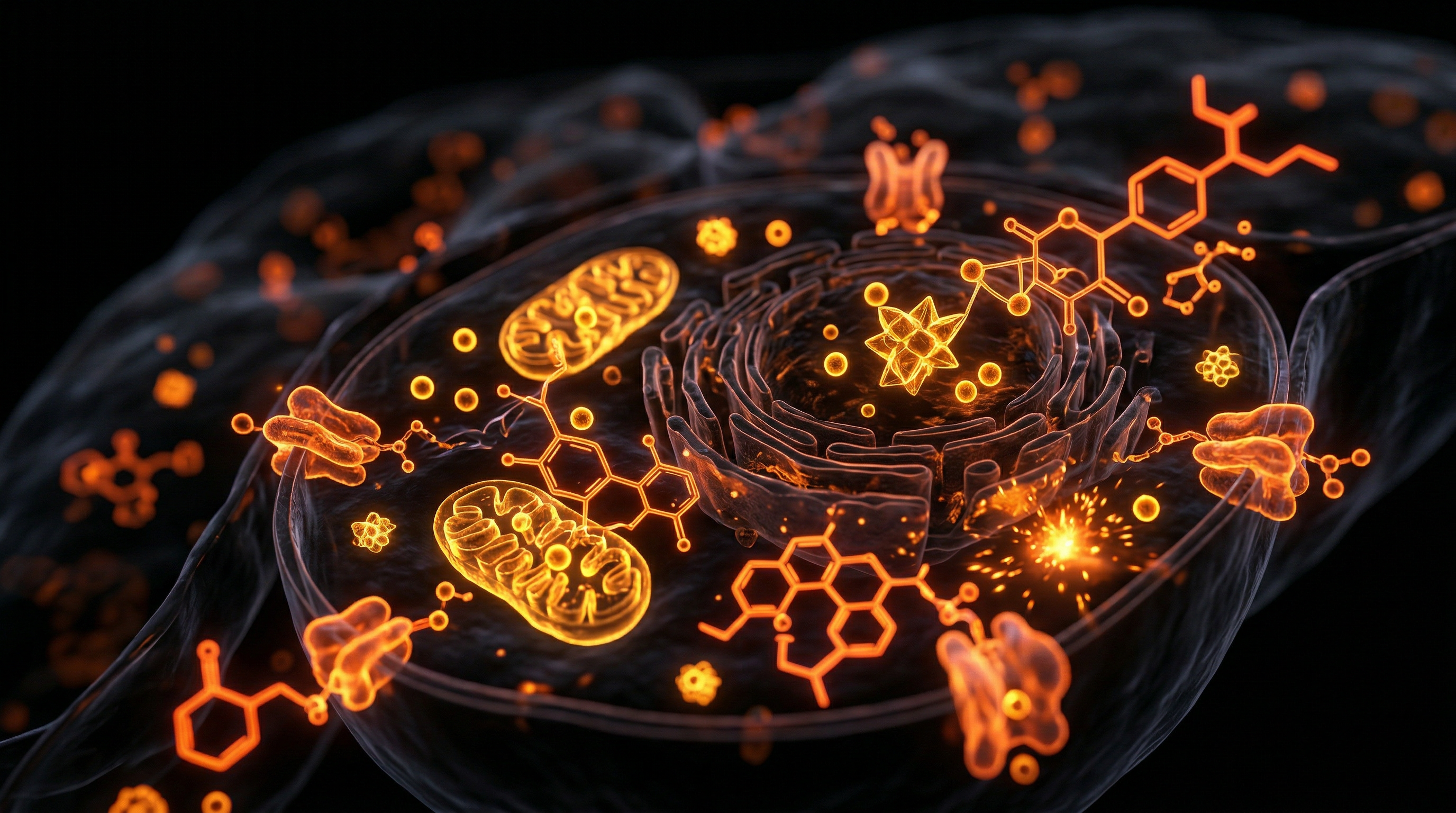
The true horror of Bioaccumulation Biotics is revealed not in the macro-environment, but within the microscopic architecture of the cell. When we consume a piece of contaminated UK fish, we are not just consuming "dirty food"; we are initiating a series of biochemical cascades that overwhelm our cellular defences.
The Synergistic "One-Two Punch"
The core discovery of my research is the Heavy Metal-Pesticide Synergy. Individually, a pesticide like Chlorpyrifos inhibits acetylcholinesterase, an enzyme essential for nerve function. Individually, Methylmercury creates oxidative stress and damages DNA. However, when present together:
- Membrane Permeability: Pesticides act as surfactants, increasing the permeability of cellular membranes. This allows heavy metals to enter cells that would normally exclude them.
- Enzyme Inhibition: Metals like lead and mercury bind to the thiol (sulphur) groups in the liver's detoxification enzymes (the Cytochrome P450 system). This effectively "handcuffs" the body's ability to break down the pesticides, leading to an exponential increase in pesticide toxicity.
Mitochondrial Dysfunction and ROS
The mitochondria—the powerhouses of the cell—are the primary targets of these combined toxins. The synergy between cadmium and glyphosate, for instance, triggers the excessive production of Reactive Oxygen Species (ROS).
- Oxidative Burst: The cell becomes flooded with free radicals.
- ATP Depletion: Energy production halts as the mitochondrial membrane potential collapses.
- Apoptosis: The cell, unable to repair the damage or produce energy, undergoes programmed cell death. In the context of the brain, this means the loss of non-regenerative neurons.
The Blood-Brain Barrier (BBB) Breach
The most concerning cellular mechanism involves the Blood-Brain Barrier. Under normal circumstances, the BBB protects the central nervous system from circulating toxins. However, the combination of organic pesticides and heavy metals found in UK fish has been shown to degrade the "tight junctions" of the BBB. This "leakiness" allows neurotoxins to flood the brain, leading to the chronic neuro-inflammation that underpins many modern diseases.
Scientific Insight: The presence of Selenium in fish is often touted as a safeguard against mercury. However, in the presence of modern pesticide residues, the Selenium-Mercury bond is disrupted, rendering this natural protection ineffective.
Environmental Threats and Biological Disruptors
The British marine environment is being subjected to a relentless assault of "biological disruptors." These are not merely toxins that kill; they are agents that subvert the biological processes of life itself.
The Sewage Crisis and Chemical Legacy
The UK’s ageing sewage infrastructure frequently discharges untreated waste into coastal waters. While the media focuses on the bacterial risk (E. coli), the deeper threat is the chemical load. Sewage contains a concentrated mix of pharmaceuticals (hormones, antidepressants) and household chemicals. When these mix with agricultural runoff containing neonicotinoids, they create a "chemical soup" that disrupts the endocrine systems of fish.
Endocrine Disrupting Chemicals (EDCs)
Pesticides like Atrazine (though restricted, its metabolites persist) and Glyphosate act as endocrine disruptors. In fish, this leads to "intersex" conditions, where male fish develop eggs. For the human consumer, eating these fish means ingesting a cocktail of xenoestrogens.
- Thyroid Interference: Heavy metals like perchlorates and lead interfere with iodine uptake, disrupting thyroid function.
- Reproductive Toxicity: The synergy of these chemicals targets the gonads, reducing fertility and altering developmental hormones in the next generation.
The Microplastic Vector
We cannot discuss bioaccumulation without mentioning microplastics. The waters around the UK are teeming with microplastic particles. These particles act as "toxic magnets," adsorbing heavy metals and pesticides from the surrounding water. When fish ingest these plastics, the toxins are released in the highly acidic environment of the gut, providing a concentrated dose of "bioaccumulation biotics" directly into the bloodstream.
- Polycyclic Aromatic Hydrocarbons (PAHs): Found on plastics, these work with metals to induce carcinogenic changes.
- Phthalates: Leached from plastics, these amplify the endocrine-disrupting effects of agricultural pesticides.
The Cascade: From Exposure to Disease
The journey from a contaminated fish supper to a clinical diagnosis is a slow, insidious cascade. Because the symptoms of bioaccumulation are often non-specific and develop over years, the medical establishment frequently fails to connect the dots.
Stage 1: The Sub-clinical Phase
In the initial months or years of regular consumption of high-trophic-level UK fish, the body’s Glutathione (the master antioxidant) stores are slowly depleted. The individual may experience:
- Unexplained fatigue (mitochondrial lag).
- "Brain fog" and cognitive friction.
- Joint pain (accumulation of metals in synovial fluid).
Stage 2: Systemic Inflammation
As the toxic load exceeds the liver’s capacity for methylation and excretion, systemic inflammation takes hold. This is often misdiagnosed as autoimmune conditions or "lifestyle-related" issues. The synergistic toxins begin to settle in the fatty tissues of the brain and the myelin sheaths of the nerves.
Stage 3: Clinical Pathology
The final stage of the cascade is the manifestation of chronic disease.
- Neurodegenerative Disorders: There is a direct, yet under-reported, correlation between high fish consumption and an increased risk of Parkinson’s and Alzheimer’s-like symptoms, driven by the synergistic destruction of dopaminergic neurons.
- Metabolic Syndrome: Cadmium and organophosphates disrupt insulin signalling, contributing to the UK’s Type 2 Diabetes epidemic.
- Developmental Neurotoxicity: In children and foetuses, even "low" levels of these combined toxins can result in permanent IQ loss, ADHD, and autism spectrum disorders. The developing brain has no defence against the "Trojan Horse" entry of metals facilitated by pesticides.
What the Mainstream Narrative Omits
The public is consistently told that the benefits of eating oily fish outweigh the risks. This narrative is constructed on a foundation of outdated science and corporate lobbying. Here is what the Department for Environment, Food & Rural Affairs (DEFRA) and the Food Standards Agency (FSA) are not telling you.
The Fallacy of "Safe Limits"
Regulatory safety limits are determined by testing single chemicals in isolation on healthy adult animals. They never test the synergistic effect of five different pesticides combined with three different heavy metals.
Callout: In toxicology, the "Additive Effect" is rarely the reality. The "Synergistic Effect" means that 1 unit of Mercury + 1 unit of Pesticide can equal 50 units of biological damage.
The "Oily Fish" Propaganda
The recommendation to eat two portions of fish a week is a generalisation that ignores the specific origin of the fish. A farmed salmon from a sea-loch in Scotland, treated with Emamectin benzoate (a pesticide used to kill sea lice) and fed meal containing concentrated North Sea pollutants, is a very different biological entity than a wild-caught sardine.
Testing Blind Spots
The UK government’s monitoring of pesticide residues in fish is remarkably infrequent and narrow in scope. They test for a handful of well-known compounds while ignoring hundreds of metabolites and newer "forever chemicals" like PFAS, which are now known to exacerbate the toxicity of heavy metals.
Economic Protectionism
The UK fishing industry and the aquaculture sector are multi-billion pound industries. Admitting that the products are bio-accumulating dangerous levels of neurotoxins would be an economic catastrophe. Consequently, the threshold for "actionable" levels of contamination is kept intentionally high, and the definition of "safe" is adjusted to suit the supply chain rather than public health.
The UK Context
The geographical and political landscape of the UK creates a unique "perfect storm" for bioaccumulation biotics.
The Post-Brexit Regulatory Void
Since leaving the European Union, the UK has faced a "governance gap." There is significant pressure to deregulate environmental protections to "boost competitiveness." This has led to:
- A decline in water quality monitoring.
- The potential re-approval of pesticides previously banned under EU law (e.g., certain neonicotinoids).
- Reduced oversight of industrial discharge into river systems.
Hotspots of Contamination
Specific areas of the UK are particularly susceptible:
- The Thames Estuary: A historical sink for London's industrial waste, now receiving massive agricultural runoff from the home counties.
- The Severn Estuary: High tidal range churns up legacy sediments containing lead and cadmium, making them available to the local fish populations.
- Scottish Sea Lochs: The intensive nature of salmon farming creates a localized "toxic zone." The combination of high-density waste, uneaten medicated feed, and the chemical treatments for sea lice creates a bioaccumulation trap for any wild fish in the vicinity.
The "British Cod" Identity
The UK's cultural obsession with Cod and Haddock—large, predatory fish—means that the average British consumer is at a higher risk of bioaccumulation than those in Mediterranean cultures who consume smaller, "lower-trophic" fish like sardines and anchovies.
Protective Measures and Recovery Protocols
While the situation is dire, understanding the biology allows us to implement strategies to protect ourselves and purge these toxins from our systems. As a researcher, I advocate for a two-pronged approach: Strategic Avoidance and Metabolic Support.
Strategic Avoidance: The "Safe Fish" Hierarchy
Not all fish are created equal. To minimize your load of Bioaccumulation Biotics:
- Avoid Apex Predators: Remove Swordfish, Shark, Large Tuna, and King Mackerel from your diet entirely.
- Limit Large Groundfish: Consume Atlantic Cod, Haddock, and Sea Bass no more than once a fortnight.
- Favour "SMASH" Fish: Sardines, Mackerel (small/Atlantic), Anchovies, Salmon (wild-caught only), and Herrings. These are smaller, younger, and have less time to accumulate toxins.
- Source Matters: Prefer fish caught in the cleaner waters of the Northern Atlantic (FAO area 27) over those from estuarine or coastal North Sea areas.
Metabolic Support and Chelation
If you have been a regular consumer of UK fish, your systemic load is likely high. You must support the body's natural chelation (binding) and excretion pathways.
- The Selenium Factor: Ensure adequate Selenium intake (Brazil nuts, eggs). Selenium binds to mercury, creating a non-toxic compound that the body can excrete, though this requires "surplus" selenium to be effective.
- Modified Citrus Pectin (MCP): Research shows that MCP can bind to heavy metals in the bloodstream without depleting essential minerals.
- Sulforaphane and Cruciferous Vegetables: Broccoli sprouts and kale increase the production of Glutathione S-transferase, the enzyme responsible for conjugating (neutralizing) pesticides.
- Chlorella and Cilantro: While often dismissed by "fast-food" doctors, these have legitimate biochemical properties. Chlorella has a unique cell wall that binds to metals, while Cilantro is one of the few substances capable of crossing the Blood-Brain Barrier to mobilize metals from neural tissue.
- Warning: Always use a "binder" (like Chlorella or Charcoal) when using Cilantro, otherwise, you may simply redistribute the toxins rather than excreting them.
Restoring the Blood-Brain Barrier
To heal the damage caused by the pesticide-metal synergy:
- Omega-3s (Algae-based): To avoid the toxins in fish oil, use high-quality algae-derived DHA and EPA to rebuild the lipid membranes of the brain.
- Magnesium L-Threonate: This specific form of magnesium crosses the BBB and helps stabilize neural membranes against excitotoxicity.
Summary: Key Takeaways
The phenomenon of Bioaccumulation Biotics represents a profound failure of environmental management and a serious threat to the long-term health of the British public.
- The Synergy is the Secret: The primary danger lies not in individual chemicals, but in the synergistic interaction between heavy metals (like mercury) and modern pesticides (like glyphosate), which amplify each other's neurotoxicity.
- The "Trojan Horse" Effect: Pesticide residues act as surfactants, breaking down cellular defences and allowing heavy metals to enter sensitive tissues, including the brain.
- UK Waters are Vulnerable: The combination of an ageing sewage system, intensive agricultural runoff, and a post-Brexit regulatory vacuum makes UK coastal fish high-risk reservoirs for these toxins.
- Mainstream Negligence: Regulatory bodies focus on "safe limits" for single chemicals, ignoring the "cocktail effect" that defines the modern marine environment.
- Action is Essential: To protect your health, you must shift your consumption toward smaller, lower-trophic fish and actively support your body's detoxification pathways through targeted nutrition and chelation strategies.
As we move further into the 21st century, the ability to discern the hidden biological reality beneath the "marketed" narrative will be the most important skill for survival. The fish in our waters are a biological mirror, reflecting the chemical choices of our civilization. It is time we looked into that mirror with clear, uncompromising eyes.
This article is provided for informational and educational purposes only. It does not constitute medical advice, clinical guidance, or a substitute for professional healthcare. Information reflects cited research at time of publication. Always consult a qualified healthcare professional before acting on any health information.
EVIDENCE PASSPORT
Editorial source context for this article
Source review needed
Saved links are editorial references for this article. They may support specific claims rather than every sentence. Open and assess each source in context. This passport does not independently verify them.
Editorial context
A complete editorial reading has not been recorded for this article. Source links remain available for you to open and assess directly.
Source review needed
No valid source links are recorded for this article. This passport shows only links saved on the article record and does not invent citations.
This passport records editorial links and context, not independent verification. Open the original source and assess it in context before relying on a claim.
Medical Disclaimer
The information in this article is for educational purposes only and does not constitute medical advice, diagnosis, or treatment. Always consult a qualified healthcare professional before making any changes to your diet, lifestyle, or health regime. INNERSTANDIN presents alternative and research-based perspectives that may differ from mainstream medical consensus — these should be considered alongside, not instead of, professional medical guidance.
Read Full DisclaimerContinue the thread
Keep this question moving.
Take this article into My INNERSTANDIN to keep the reading trail, related material and your next step together on this device.
Dig deeper in the Library
Free, longform PDF volumes that go beyond headlines into mechanisms and references.