
Bioavailability Scams: Why Plant-Based Fats Fail the Human Body
Updated May 2026
The human body struggles to convert plant-based ALA into the essential long-chain fats EPA and DHA. This article critiques the push for seed-oil-based fats as sufficient replacements for animal-derived lipids.
Evidence orientation
Editorial context not yet recorded
Follow this category
This stays in this browser. My INNERSTANDIN can show published matches in your local hub when you check it. It does not send email, push, or alert notifications.
Local learning review
A private browser aid for revisiting ideas. It is not an alert or a health recommendation.
Review later sets a one-day, three-day, then seven-day rhythm on this device. Choose it only when you want to revisit this article.
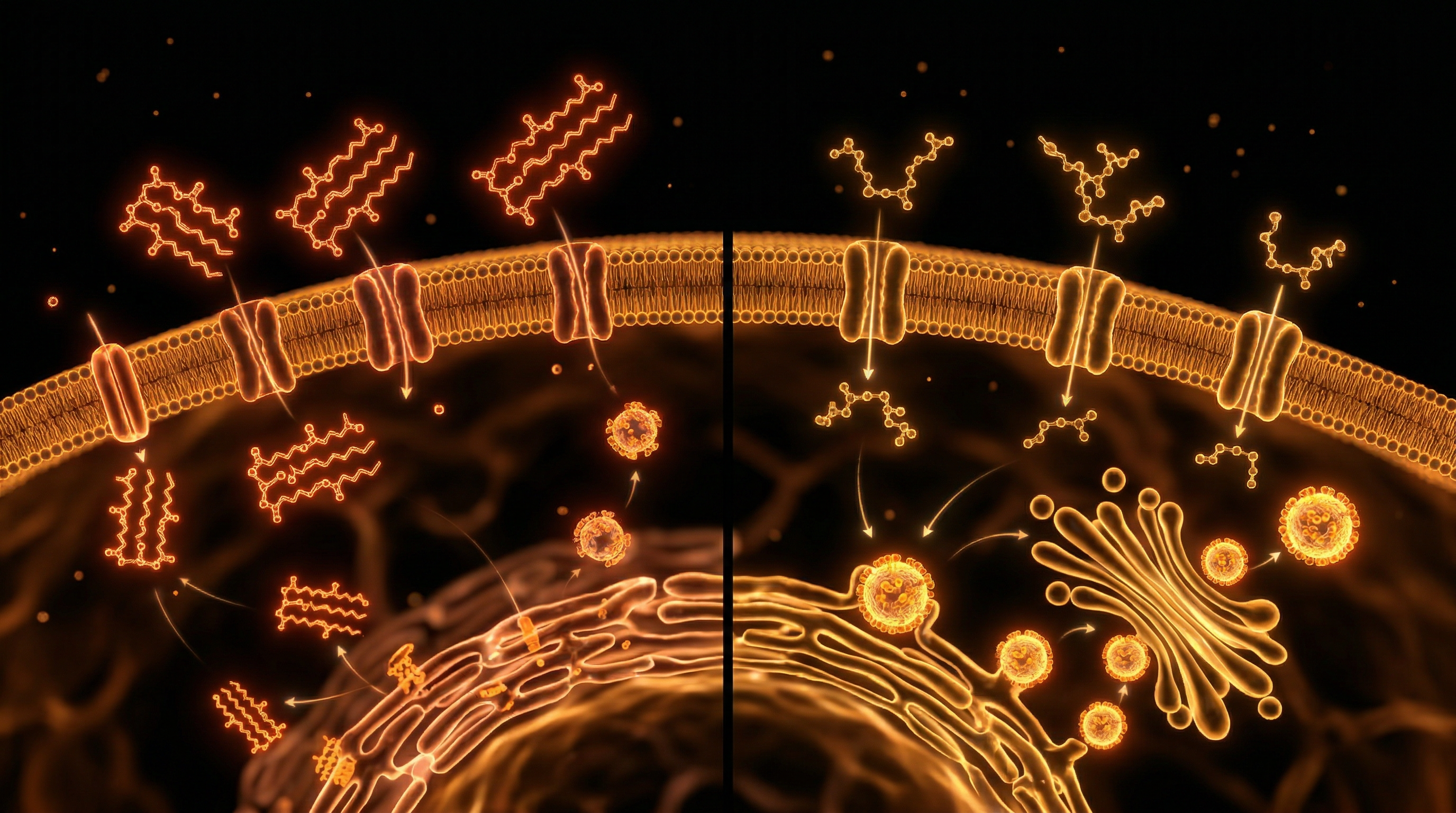
Overview
For the better part of seven decades, the global nutritional establishment has perpetuated a dogma that prioritises plant-derived polyunsaturated fatty acids (PUFAs) over stable, nutrient-dense animal fats. This paradigm shift—transitioning from the traditional use of tallow, lard, and butter to industrial seed oils like rapeseed, soya, and sunflower—has been framed as a triumph of modern science over cardiovascular disease. However, a deeper biological interrogation reveals this to be one of the most significant bioavailability scams in the history of human nutrition.
The core of the deception lies in the conflation of different types of "Omega-3" fats. The public is told that plant-based sources, such as flaxseed, chia, and walnuts, provide the essential fatty acids required for human health. While these foods contain Alpha-Linolenic Acid (ALA), the human body does not require ALA for its primary physiological functions; rather, it requires the long-chain derivatives Eicosapentaenoic Acid (EPA) and Docosahexaenoic Acid (DHA).
The industry narrative relies on the assumption that the human body possesses the metabolic machinery to efficiently convert ALA into EPA and DHA. The biological reality is starkly different. For the vast majority of the population, this conversion rate is nearly negligible, often falling below 1% for DHA. By marketing plant-based oils as sufficient replacements for animal fats, we have created a state of chronic, subclinical fatty acid deficiency that manifests in neurological decline, systemic inflammation, and metabolic dysfunction.
Callout Fact: While nutritional labels often group all Omega-3s together, the conversion of plant-based ALA to the critical brain-building fat DHA is estimated to be as low as 0.01% to 0.5% in adult males.
This article will dismantle the mechanisms behind this conversion failure, expose the cellular damage caused by industrial seed oils, and explore how the mainstream narrative has systematically ignored the unique bio-mechanical requirements of the human lipidome.
The Biology — How It Works
To understand why plant-based fats fail, one must first understand the "Omega-3 Cascade." The human body requires long-chain fats specifically for the structure of cell membranes, the production of anti-inflammatory signalling molecules, and the electrical insulation of neurons.
The Conversion Pathway
The process of turning a 18-carbon plant fat (ALA) into a 22-carbon animal fat (DHA) requires a complex series of enzymatic reactions involving Desaturase and Elongase enzymes. Specifically, the enzymes FADS1 and FADS2 (Delta-5 and Delta-6 desaturase) are responsible for adding double bonds and extending the carbon chain.
- ALA (18:3n-3) is converted to SDA (Stearidonic Acid).
- SDA is elongated to ETA (Eicosatetraenoic Acid).
- ETA is desaturated to EPA (Eicosapentaenoic Acid).
- EPA is elongated to DPA (Docosapentaenoic Acid).
- DPA must then undergo a "Sprecher Pathway" involving the peroxisomes to finally become DHA (Docosahexaenoic Acid).
The Genetic Bottleneck
The bottleneck in this pathway is the Delta-6 desaturase enzyme. This enzyme is highly limited and prioritised by the body for various tasks. Furthermore, the modern diet is saturated with Linoleic Acid (LA), the primary Omega-6 fat found in industrial seed oils. Because both the Omega-3 (ALA) and Omega-6 (LA) pathways compete for the same Delta-6 desaturase enzymes, the sheer volume of seed oils in the modern diet effectively "crowds out" any potential for ALA conversion.
Why DHA Is Non-Negotiable
DHA is not merely an energy source; it is a structural component of the human brain, making up approximately 20% of its dry weight. It is uniquely concentrated in the synapses and the retina. Unlike other fats, DHA has unique quantum electronic properties that allow for rapid signal transduction. Plant-based fats lack the chain length and the specific "kinks" in their molecular structure provided by the six double bonds in DHA, making them functionally useless for high-level neurological processing.
Mechanisms at the Cellular Level
The failure of plant-based fats extends beyond simple conversion rates; it penetrates the very architecture of our cells. Every cell in the human body is encased in a phospholipid bilayer, a membrane that dictates what enters and exits the cell.
Membrane Fluidity and Lipid Peroxidation
Animal-derived saturated fats and long-chain Omega-3s provide the ideal balance of stability and fluidity. However, when the body is forced to utilise the chemically unstable fats found in industrial seed oils—which are highly susceptible to oxidation—the cell membranes become "leaky" and prone to damage.
- Lipid Peroxidation: Because plant-based PUFAs have multiple double bonds, they are highly sensitive to heat, light, and oxygen. When these fats are incorporated into cell membranes, they can react with oxygen to form Lipid Peroxides.
- Reactive Oxygen Species (ROS): This process creates a chain reaction of cellular destruction, producing toxic by-products like 4-HNE (4-Hydroxynoneneal) and Malondialdehyde (MDA), which damage proteins and DNA.
Mitochondrial Dysfunction
The most critical impact occurs within the Mitochondria, the power plants of the cell. The inner mitochondrial membrane contains a unique phospholipid called Cardiolipin. For mitochondria to produce ATP (energy) efficiently, cardiolipin must be populated with specific fatty acids.
When cardiolipin is flooded with Linoleic Acid from seed oils instead of being protected by the stable fats found in animal suet and tallow, it undergoes rapid oxidation. This leads to:
- A decrease in the efficiency of the Electron Transport Chain.
- Increased "proton leak," leading to metabolic slowing.
- Chronic fatigue at a cellular level, which eventually manifests as systemic metabolic disease.
The Signalling Crisis
Beyond structure, fats serve as the precursors to Eicosanoids, which are local hormones that regulate inflammation.
- Omega-6 derivatives (from seed oils): Primarily produce pro-inflammatory eicosanoids (like PGE2 and LTB4).
- Omega-3 derivatives (EPA/DHA): Produce anti-inflammatory and pro-resolving mediators (like Resolvins and Protectins).
By providing the body only with plant-based ALA (which cannot efficiently reach the EPA/DHA stage), the body loses its ability to "turn off" the inflammatory response, leading to a state of chronic systemic inflammation.
Environmental Threats and Biological Disruptors
While the biological inability to convert ALA is an innate human limitation, modern environmental factors have exacerbated this failure, turning a metabolic inefficiency into a full-scale health crisis.
The Linoleic Acid Overload
In the ancestral environment, the ratio of Omega-6 to Omega-3 was roughly 1:1 or 2:1. In the modern British and Western diet, this ratio has ballooned to upwards of 20:1. This is primarily due to the ubiquitous presence of "vegetable oils" in processed foods, restaurant cooking, and even "healthy" salad dressings.
As mentioned, LA and ALA compete for the same enzymes. When LA is present in massive quantities, the enzymes are entirely sequestered by the Omega-6 pathway. This means even if an individual consumes a significant amount of flax or chia, the conversion to EPA/DHA is effectively zero because the "machinery" is busy processing toxic levels of seed oils.
Callout Fact: The half-life of Linoleic Acid in human adipose tissue is approximately 600 to 700 days. This means it takes years of diligent avoidance to clear the body of accumulated industrial fats.
Endocrine Disruptors and Herbicide Residues
Industrial fats are rarely pure. Most seed crops (soya, corn, rapeseed) are "Roundup Ready," meaning they are heavily sprayed with Glyphosate. This herbicide has been shown to disrupt the gut microbiome—the very place where some minor bacterial conversion of fats might occur. Furthermore, the chemical extraction process for seed oils involves the use of Hexane, a petroleum-derived solvent. Residual hexane and the presence of "trans-fats" created during high-heat deodorisation further stress the liver, the primary organ responsible for fatty acid metabolism.
The Role of Micronutrient Deficiencies
The conversion of ALA to EPA/DHA requires specific co-factors:
- Zinc
- Magnesium
- Vitamin B6
- Vitamin B3
- Vitamin C
Modern industrial agriculture has depleted British soils of these minerals. Without these enzymatic co-factors, even a person with "good" genetics cannot perform the desaturation steps necessary to utilise plant-based fats.
The Cascade: From Exposure to Disease
The persistent reliance on plant-based fats and the subsequent deficiency in animal-based EPA/DHA triggers a predictable cascade of physiological failure. This is not a sudden "attack" but a slow erosion of biological integrity.
1. Neurological Degeneration
Since the brain is the most lipid-dense organ, it is the first to suffer. Low DHA levels are strongly correlated with:
- Cognitive Decline and Alzheimer’s: Without DHA, the brain cannot repair its synaptic membranes.
- Depression and Anxiety: EPA is crucial for dampening neuroinflammation, which is now recognised as a primary driver of mood disorders.
- Developmental Delays: Infants whose mothers relied on plant-based Omega-3s during pregnancy often show lower IQ and impaired visual acuity.
2. Cardiovascular Irony
The "heart-healthy" label on seed oils is perhaps the most insidious part of the scam. While these oils may lower LDL cholesterol in the short term, they do so by oxidizing the LDL. Saturated fats are stable and do not easily oxidize. Conversely, the PUFAs in seed oils become "rancid" within the bloodstream. It is the oxidized LDL, not the total LDL, that embeds in the arterial walls and creates atherosclerotic plaque.
3. Metabolic Syndrome and Obesity
Seed oils act as metabolic mitochondrial poisons. When the mitochondria cannot burn fuel cleanly due to damaged cardiolipin, the body shifts into a "survival mode," prioritising fat storage over energy expenditure. This is why many people find it impossible to lose weight despite a caloric deficit if their diet remains high in industrial oils.
4. Autoimmunity
The "leaky" cell membranes mentioned earlier extend to the gut lining. When the intestinal barrier is compromised by poor lipid quality and the pro-inflammatory nature of Omega-6, undigested proteins enter the bloodstream. This triggers the immune system to attack its own tissues, contributing to the explosion of Crohn’s, Colitis, and Rheumatoid Arthritis.
What the Mainstream Narrative Omits
The suppression of these facts is not an accident. It is the result of a complex interplay between industrial interests, flawed epidemiological studies, and the "institutional inertia" of public health bodies.
The Saturated Fat Myth
The mainstream narrative relies on the Lipid Hypothesis, a theory popularised in the 1950s by Ancel Keys. Keys’ "Seven Countries Study" famously cherry-picked data to show a link between saturated fat and heart disease while ignoring countries where high fat intake coexisted with low heart disease (like France or the Masai tribes). Despite being thoroughly debunked, this study remains the foundation of modern dietary guidelines.
The Economics of Seed Oils
The shift to plant-based fats was driven by economics, not health.
- Cost: Soya and rapeseed are incredibly cheap to produce on an industrial scale compared to raising pasture-fed cattle for suet or butter.
- Shelf Life: By highly processing and chemically stabilising (deodorising) seed oils, manufacturers can create products that sit on supermarket shelves for years without smelling "off," though they are biologically rancid.
- Subsidies: In both the US and the UK, industrial monocrops receive massive government subsidies, making them the most profitable ingredients for "Big Food."
The "Plant-Based" Halo
The current cultural push toward "veganism" and "sustainability" has been weaponised by the industrial fat industry. By framing plant-based fats as "saving the planet," they have successfully shamed the public away from the very animal fats that are bioavailable and essential for human survival. They omit the fact that industrial monocropping (required for seed oils) is one of the most environmentally destructive practices in existence, destroying topsoil and biodiversity.
The UK Context
In the United Kingdom, the "bioavailability scam" has unique characteristics shaped by post-war history and current agricultural policy.
The "Yellow Fields" of Britain
Anyone travelling through the British countryside in spring will notice the vast expanses of bright yellow flowers. This is Rapeseed (often marketed as Canola). The UK has become one of the largest producers of this oil, and it has been aggressively pushed as a "healthy British alternative" to olive oil.
- The NHS Eatwell Guide: This government-sponsored graphic continues to group "unsaturated oils and spreads" as a healthy category, encouraging the British public to choose rapeseed-based margarines over traditional British butter.
- The "Flora" Factor: Iconic British brands like Flora have spent decades and millions of pounds on advertising campaigns that equate "plant-based" with "heart-healthy," directly influencing the shopping habits of generations.
The Decline of the British Lipidome
Historically, the British diet was rich in suet, dripping, and oily fish (like herring and mackerel). The "Fish and Chip" shop originally fried in beef dripping, providing a stable, heat-resistant fat. Today, almost every chippy in the UK has switched to "Vegetable Oil" (usually a blend of soya and rapeseed), meaning that even "traditional" British meals have been transformed into delivery systems for oxidized PUFAs and inflammatory Omega-6.
Public Health England's Silence
Despite the growing body of evidence regarding the FADS1/FADS2 genetic polymorphisms (which are particularly prevalent in Northern European populations), Public Health England has failed to update its guidelines. They continue to treat "Omega-3" as a monolithic category, failing to warn the public that for a large portion of the British population, flax and chia provide essentially zero DHA.
Protective Measures and Recovery Protocols
To reclaim biological health, one must actively reject the industrial lipid paradigm and return to a diet grounded in evolutionary biology and bioavailability.
1. The Immediate Elimination of Seed Oils
The single most effective step for health is the total removal of industrial seed oils. This includes:
- Rapeseed (Canola) Oil
- Soybean Oil
- Sunflower Oil
- Corn Oil
- Safflower Oil
- "Vegetable" Oil blends
- Margarine and "spreads"
2. Prioritising Bioavailable Animal Fats
Switch to stable, saturated fats for cooking and raw consumption. These fats do not oxidize easily and provide the building blocks for healthy cell membranes.
- Tallow and Suet (Beef fat): High in stearic acid, which signals the mitochondria to burn fat.
- Lard (Pork fat): Ensure it is from pasture-raised pigs to avoid high LA content.
- Butter and Ghee: Rich in Vitamin K2 and short-chain fatty acids like butyrate.
- Coconut Oil: A stable plant-based saturated fat (though lacking the fat-soluble vitamins of animal fats).
3. Direct Sourcing of EPA and DHA
Stop relying on ALA conversion. Consume the end-products directly from animal sources:
- Oily Fish: Wild-caught sardines, mackerel, and salmon.
- Fish Roe: One of the most concentrated sources of DHA in the phospholipid form, which crosses the blood-brain barrier more effectively.
- Pasture-Raised Egg Yolks: Contain DHA and choline, essential for brain health.
- Organ Meats: Brain and liver are highly concentrated in the specific long-chain fats the body requires.
4. The "Purge" Phase
Because Linoleic Acid is stored in body fat for years, recovery is a slow process. To accelerate the "purging" of seed oils:
- Increase Saturated Fat Intake: This helps "displace" the Omega-6 in your tissues.
- Supplement with Vitamin E: (Specifically alpha-tocopherol) to help protect against the oxidation of the seed oils currently stored in your adipose tissue.
- Glycine and Collagen: Support the repair of the gut lining and connective tissues damaged by chronic inflammation.
5. Genetic Testing
For those interested in their specific capacity for fat conversion, testing for FADS1 and FADS2 polymorphisms can reveal how critical it is for you to source pre-formed EPA/DHA. If you are a "poor converter," animal fats are not just an option—they are a biological necessity for survival.
Summary: Key Takeaways
- The Conversion Myth: The human body is biologically incapable of efficiently converting plant-based ALA (flax, chia) into the essential long-chain fats EPA and DHA. Conversion rates for DHA are often less than 0.5%.
- Competition for Enzymes: The massive overconsumption of Omega-6 (Linoleic Acid) from seed oils "steals" the enzymes needed for Omega-3 processing, making plant-based Omega-3s even more useless.
- Cellular Damage: Industrial seed oils are highly unstable. They oxidize into toxic by-products (4-HNE) that damage cell membranes, mitochondria, and DNA.
- Brain Health: DHA is a structural requirement for the brain. Relying on plant-based fats leads to a "starved" brain, contributing to the modern epidemic of mental health issues and cognitive decline.
- Industrial Influence: The push for "plant-based" fats is driven by the economics of industrial monocropping and the legacy of flawed 1950s science, not by human nutritional requirements.
- The Solution: To restore health, one must eliminate industrial seed oils, ignore the "plant-based" marketing scam, and return to the ancestral practice of consuming stable, nutrient-dense animal fats and pre-formed EPA/DHA from marine sources.
The "Bioavailability Scam" is a fundamental betrayal of public health. By understanding the biochemistry of lipids, we can opt out of this industrial experiment and provide our bodies with the structural fats they have evolved to require for millions of years. The choice is simple: continue to build your body out of unstable, industrial waste, or return to the foundational fats of life.
This article is provided for informational and educational purposes only. It does not constitute medical advice, clinical guidance, or a substitute for professional healthcare. Information reflects cited research at time of publication. Always consult a qualified healthcare professional before acting on any health information.
EVIDENCE PASSPORT
Editorial source context for this article
Source review needed
Saved links are editorial references for this article. They may support specific claims rather than every sentence. Open and assess each source in context. This passport does not independently verify them.
Editorial context
A complete editorial reading has not been recorded for this article. Source links remain available for you to open and assess directly.
Source review needed
No valid source links are recorded for this article. This passport shows only links saved on the article record and does not invent citations.
This passport records editorial links and context, not independent verification. Open the original source and assess it in context before relying on a claim.
Medical Disclaimer
The information in this article is for educational purposes only and does not constitute medical advice, diagnosis, or treatment. Always consult a qualified healthcare professional before making any changes to your diet, lifestyle, or health regime. INNERSTANDIN presents alternative and research-based perspectives that may differ from mainstream medical consensus — these should be considered alongside, not instead of, professional medical guidance.
Read Full DisclaimerContinue the thread
Keep this question moving.
Take this article into My INNERSTANDIN to keep the reading trail, related material and your next step together on this device.