
Bioenergetics of the Ileocecal Sphincter: Mitochondrial Dysfunction and the Failure of High-Tension Smooth Muscle Closure
An in-depth analysis of how mitochondrial efficiency and ATP availability dictate the structural integrity of the ileocecal valve, linking cellular energy failure to SIBO and chronic digestive dysfunction.
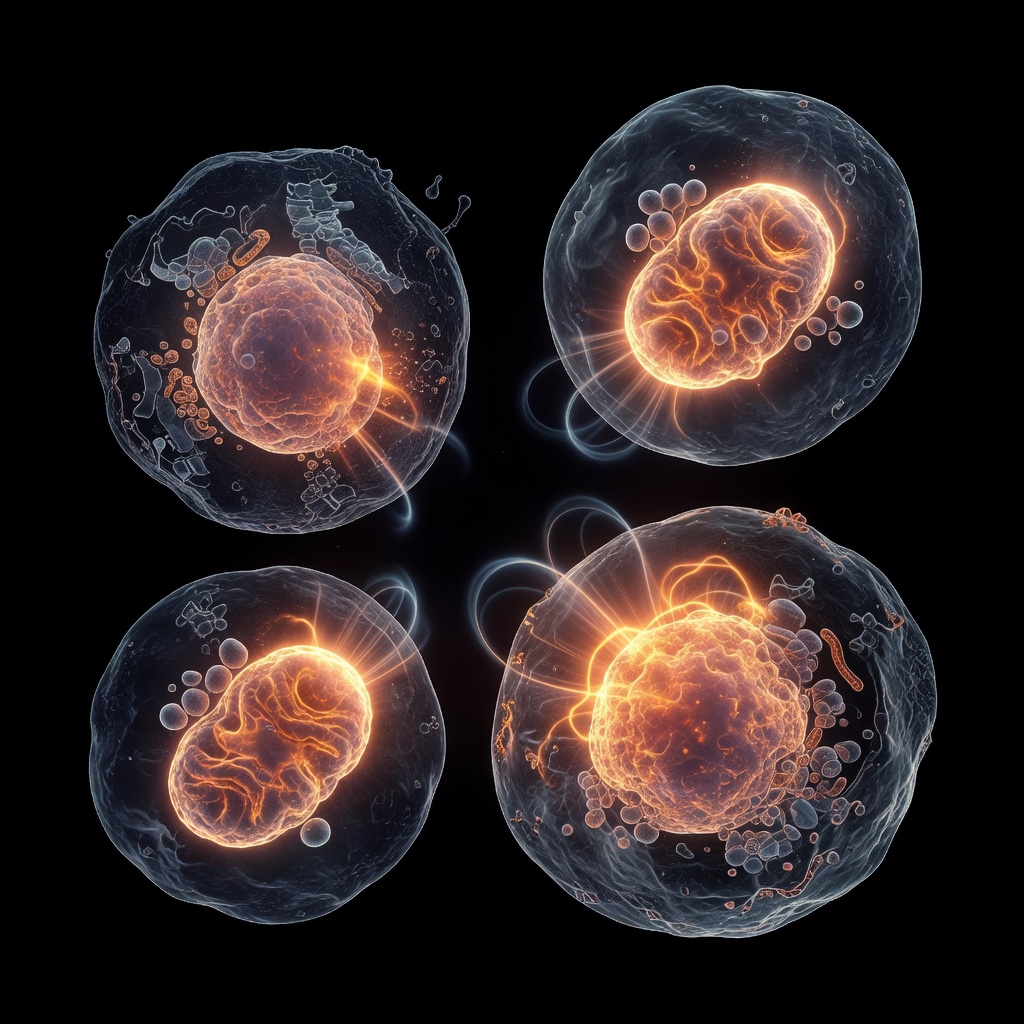
# Bioenergetics of the Ileocecal Sphincter: Mitochondrial Dysfunction and the Failure of High-Tension Smooth Muscle Closure ## The Gatekeeper of the Microbiome Located at the junction of the small and large intestines, the ileocecal valve (ICV) serves as a critical anatomical and physiological checkpoint. Its primary role is twofold: regulating the flow of chyme into the caecum and preventing the retrograde movement of colonic bacteria into the ileum. While often viewed through the lens of mechanical obstruction or reflex-driven movement, the integrity of this "gatekeeper" is fundamentally dependent on cellular bioenergetics. When we look at the root causes of ICV dysfunction—frequently manifested as either a "stuck open" (incompetent) or "stuck closed" (spastic) valve—we must look beyond local inflammation to the mitochondrial health of the smooth muscle cells that constitute the sphincter. At INNERSTANDING, we focus on the fundamental energy dynamics that govern physiological function, and the ICV is a prime example of where metabolic health meets structural integrity. ## The High-Tension Barrier: A Metabolic Tax The ileocecal sphincter is not a passive flap of skin; it is a specialised complex of smooth muscle that maintains a high basal tone.
Unlike the muscles of the limbs, which relax for extended periods, the ICV must remain in a state of sustained tonic contraction to withstand the pressure gradients between the small and large bowel. This state of "high-tension" requires a continuous supply of Adenosine Triphosphate (ATP) to maintain the phosphorylation of myosin light chains through the action of myosin light chain kinase (MLCK). This "latch-bridge" mechanism is what allows the valve to remain closed without excessive energy consumption compared to skeletal muscle, yet it still represents a significant metabolic tax over twenty-four hours. In the realm of bioenergetics, a valve that cannot stay shut is often a valve that has run out of fuel. ## Mitochondrial Dysfunction: The Root of Incompetence Mitochondria are the power plants of the cell, and in the high-demand environment of the ileocecal junction, their efficiency is paramount. Mitochondrial dysfunction—characterised by impaired oxidative phosphorylation and increased production of reactive oxygen species (ROS)—directly impacts the contractile capacity of the ICV.
When mitochondria fail to produce adequate ATP, the calcium pumps (SERCA) that regulate muscle contraction and relaxation become sluggish. This leads to a state of cellular exhaustion where the muscle can no longer sustain the tension required to keep the valve closed against the pressure of the colon. This "leaky" valve becomes a highway for bacterial translocation, a primary driver of Small Intestinal Bacterial Overgrowth (SIBO). Without the energy to maintain the barrier, the microbiome of the large intestine "bleeds" back into the small intestine, causing fermentation where it should not occur. ## The Role of ATP in Smooth Muscle Tone The biochemistry of the ICV is a delicate balance of electrolyte exchange and energy expenditure. The maintenance of the resting membrane potential in smooth muscle cells is an active process.
Sodium-potassium pumps (Na+/K+-ATPase) must work tirelessly to keep the cell ready for action. If ATP levels drop due to mitochondrial insults—such as chronic stress, environmental toxins, or nutrient deficiencies (specifically B vitamins, magnesium, and CoQ10)—the electrochemical gradient collapses. The result is a flaccid sphincter that fails to respond to the inhibitory and excitatory signals from the enteric nervous system. Furthermore, a spastic valve can also be a result of energy failure; if there is not enough ATP to power the pumps that remove calcium from the cytoplasm, the muscle remains in a state of permanent, pathological contraction, unable to relax to let chyme pass. ## Oxidative Stress and the Feedback Loop Mitochondrial failure is rarely a quiet event. As ATP production wanes, the leakage of electrons from the mitochondrial transport chain increases, leading to oxidative stress.
This oxidative damage targets the proteins of the ileocecal valve itself, including the delicate nerve endings of the Myenteric Plexus. This creates a vicious cycle: mitochondrial dysfunction leads to a loss of valve tone; the resulting reflux of colonic bacteria into the ileum triggers local inflammation; this inflammation further damages mitochondrial membranes through the release of cytokines like TNF-alpha. The "root cause" of ICV dysfunction is thus often a bioenergetic collapse that has become self-perpetuating, where the metabolic environment of the cell prevents the mechanical function of the tissue. ## Systemic Implications: Autotoxicity and SIBO When the bioenergetics of the ICV fail, the consequences are systemic. The failure of high-tension closure allows for the migration of lipopolysaccharides (LPS) and other endotoxins into the small intestine. Once in the small intestine, these toxins can cross the mucosal barrier, entering the portal circulation and putting an immense load on the liver.
This "autotoxicity" is a direct result of a mechanical failure powered by a metabolic deficit. Patients often present with brain fog, fatigue, and joint pain—symptoms that seem distal to the ileocecal valve but are actually the downstream effects of a mitochondrial failure at the gut’s most important junction. We see this frequently in chronic fatigue presentations where the gut-brain axis is disrupted starting at the ileocecal junction. ## Restoring Bioenergetic Balance To address ICV dysfunction at its root, we must move beyond manual manipulation and focus on mitochondrial resuscitation. This involves: 1. Micronutrient Support: Providing the co-factors for the Krebs cycle, such as Magnesium, Alpha-Lipoic Acid, PQQ, and Acetyl-L-Carnitine. 2.
Reducing Environmental Load: Eliminating mitochondrial inhibitors such as glyphosate, heavy metals, and processed seed oils that disrupt the electron transport chain. 3. Circadian Alignment: The enteric nervous system and its metabolic rate are governed by circadian rhythms. Ensuring high-quality sleep and consistent meal timing supports the bioenergetic peaks required for ICV function. 4. Vagus Nerve Support: The autonomic input to the ICV influences mitochondrial biogenesis. Promoting a parasympathetic state ensures the "rest and digest" energy is available for the valve's high-tension needs. ## Conclusion The ileocecal valve is more than a simple door; it is a high-energy metabolic barrier.
Its failure is a hallmark of mitochondrial insufficiency. By reframing ICV dysfunction as a bioenergetic crisis, we can better understand why chronic digestive issues often resist standard treatments. Restoring the high-tension closure of the sphincter requires us to power the cell, protect the mitochondria, and respect the massive energy demands of this small but mighty guardian of the gut.
This article is provided for informational and educational purposes only. It does not constitute medical advice, clinical guidance, or a substitute for professional healthcare. Information reflects cited research at time of publication. Always consult a qualified healthcare professional before acting on any health information.
RESEARCH FOUNDATIONS
Biological Credibility Archive
Citations provided for educational reference. Verify via PubMed or institutional databases.
Medical Disclaimer
The information in this article is for educational purposes only and does not constitute medical advice, diagnosis, or treatment. Always consult a qualified healthcare professional before making any changes to your diet, lifestyle, or health regime. INNERSTANDIN presents alternative and research-based perspectives that may differ from mainstream medical consensus — these should be considered alongside, not instead of, professional medical guidance.
Read Full DisclaimerReady to learn more?
Continue your journey through our classified biological research.
DISCUSSION ROOM
Members of THE COLLECTIVE discussing "Bioenergetics of the Ileocecal Sphincter: Mitochondrial Dysfunction and the Failure of High-Tension Smooth Muscle Closure"
SILENT CHANNEL
Be the first to discuss this article. Your insight could help others understand these biological concepts deeper.
THE ARSENAL
Based on Ileocecal Valve Health — products curated by our research team for educational relevance and biological support.
Fulvic Minerals – Natural Rare Earth Minerals. The essential trace elements missing from modern processed foods.
Magnesium Blend – The Most Important Mineral

Clean Slate – Detoxes thousands of chemicals,heavy metals, pesticides, allergens, mold spores and fungus
INNERSTANDING may earn a commission on purchases made through these links. All products are selected based on rigorous educational relevance to our biological research.
RABBIT HOLE
Follow the biological thread deeper
