
Bovine Ingredients: Risk Assessment of Transmissible Spongiform Encephalopathies
Updated May 2026
Assessing the safety protocols for cattle-derived materials in vaccine growth media. We look at the stringent UK regulations meant to prevent prion-related contamination.
Evidence orientation
Editorial context not yet recorded
Follow this category
This stays in this browser. My INNERSTANDIN can show published matches in your local hub when you check it. It does not send email, push, or alert notifications.
Local learning review
A private browser aid for revisiting ideas. It is not an alert or a health recommendation.
Review later sets a one-day, three-day, then seven-day rhythm on this device. Choose it only when you want to revisit this article.
Overview
In the sophisticated world of modern vaccinology, the shadow of the 20th century’s most enigmatic pathogen still looms large. Transmissible Spongiform Encephalopathies (TSEs)—a group of progressive, invariably fatal neurodegenerative disorders—represent a unique biological challenge. Unlike viruses or bacteria, the causative agents, known as prions, lack nucleic acids, making them resistant to standard sterilisation techniques such as ultraviolet radiation, formalisation, and conventional autoclaving.
The integration of bovine-derived materials into the vaccine manufacturing process is not merely a matter of historical record; it is a contemporary necessity for the cultivation of various cell lines and the stabilisation of biological products. From Foetal Bovine Serum (FBS) used as a growth supplement in cell cultures to gelatine used as a stabiliser, the bovine influence on pharmaceutical production is pervasive. However, following the Bovine Spongiform Encephalopathy (BSE) crisis that devastated the United Kingdom in the 1980s and 90s, the safety of these "bovine ingredients" became a matter of paramount national security and public health.
This article provides a rigorous assessment of the risks associated with TSEs in the context of vaccine science. We explore the biological mechanisms of prion replication, the structural vulnerabilities of the human central nervous system, and the stringent regulatory frameworks—particularly within the UK—designed to prevent iatrogenic transmission. While the mainstream narrative often treats the threat of BSE as a closed chapter of history, a deeper investigation into the persistence of prions and the limitations of current screening technologies suggests that vigilance must remain absolute.
Fact: Prions are so resilient that they can survive in soil for decades and remain infectious even after being heated to temperatures exceeding 600°C in laboratory settings.
##
The Biology — How It Works
To understand the risk assessment of bovine ingredients, one must first grasp the aberrant biology of the prion. The term "prion" (proteinaceous infectious particle) was coined to describe an agent that defies the central dogma of molecular biology. In all other known pathogens, genetic information is carried by DNA or RNA. Prions, however, are composed entirely of a misfolded protein.
The protein in question is the Prion Protein (PrP), which is found naturally in all mammals, most abundantly in the brain. In its normal, healthy state, it is referred to as PrP^C (cellular). Its exact physiological function remains a subject of intense research, though it is believed to play roles in copper binding, signal transduction, and neuroprotection.
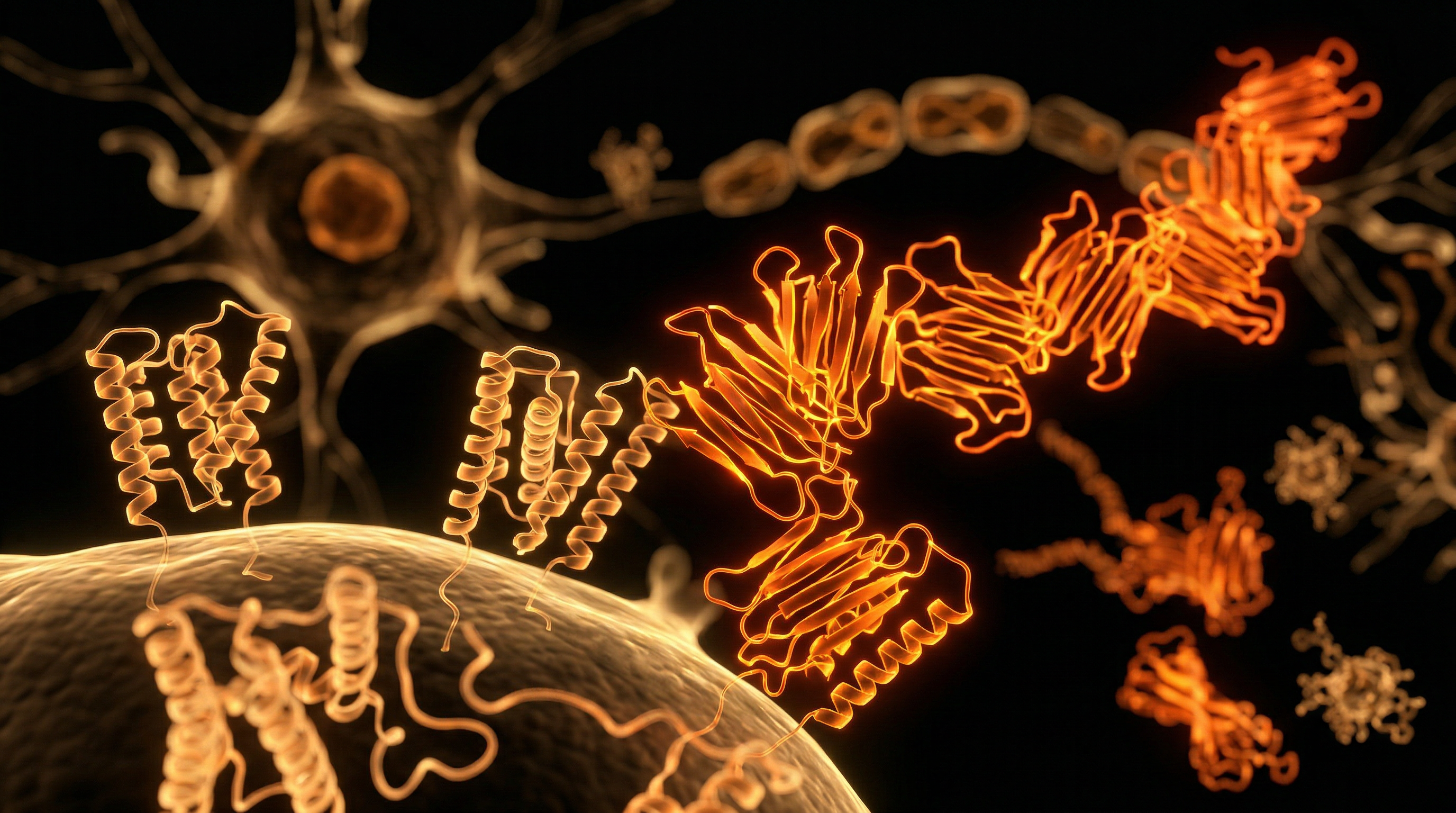
The disease-associated form is known as PrP^Sc (scrapie-type). The transition from PrP^C to PrP^Sc is not a chemical change, but a conformational one. The alpha-helical structure of the normal protein collapses and refolds into a rigid, insoluble beta-sheet structure. This misfolded protein then acts as a template, forcing healthy PrP^C proteins to also misfold.
The Problem of Sourcing
In vaccine production, bovine materials are utilised at various stages:
- Growth Media: FBS provides essential hormones, attachment factors, and nutrients for the cell lines used to grow viral antigens.
- Enzymes: Bovine-derived trypsin is frequently used to detach adherent cells from culture flasks.
- Stabilisers: Bovine gelatine is used to ensure the vaccine remains effective during storage and transport.
The risk assessment hinges on the "tissue infectivity" level. The World Health Organization (WHO) and the European Medicines Agency (EMA) categorise bovine tissues into different risk tiers. High-risk tissues include the brain, spinal cord, and eyes, while low-risk tissues include skeletal muscle and milk. Vaccine manufacturers are strictly prohibited from using high-risk tissues, yet the possibility of cross-contamination during slaughtering processes remains a critical point of failure that regulations seek to eliminate.
##
Mechanisms at the Cellular Level
At the microscopic level, the pathogenicity of prions is a "slow-motion" catastrophe. When a misfolded PrP^Sc molecule enters the body—whether through ingestion or iatrogenic exposure (such as an injection)—it must find its way to the central nervous system (CNS).
The Template-Directed Refolding Model
Once PrP^Sc interacts with PrP^C, the "seeding" process begins. This is often described as a "molecular domino effect." The beta-sheet structure is highly stable and resistant to proteases—the enzymes the body uses to break down and recycle proteins. Because the body cannot "clear" these misfolded proteins, they aggregate into dense clumps known as amyloid plaques.
Neurotoxicity and Vacuolation
The hallmark of TSEs, which gives them the "spongiform" name, is the development of microscopic holes (vacuoles) in the grey matter of the brain. As the PrP^Sc aggregates grow, they disrupt cellular membranes and trigger apoptosis (programmed cell death) in neurons.
- Astrogliosis: A secondary effect where astrocytes (support cells in the brain) proliferate in response to neuronal damage, leading to scarring and further loss of function.
- Synaptic Dysfunction: Long before the neurons actually die, the presence of PrP^Sc interferes with the synapses, leading to the rapid cognitive and motor decline characteristic of Creutzfeldt-Jakob Disease (CJD).
Statistic: The incubation period for TSEs in humans can range from 5 to over 50 years, making it one of the most difficult pathogens to track through traditional epidemiological methods.
##
Environmental Threats and Biological Disruptors
While the primary concern in vaccine science is the direct use of bovine materials, we must also consider the broader environmental context. Prions are remarkably "hardy" and can persist in the environment, creating a reservoir of potential reinfection.
Soil and Water Persistence
In the agricultural sector, the disposal of BSE-infected carcasses led to significant soil contamination. Research has shown that prions bind tightly to clay minerals in the soil, which actually increases their infectivity when subsequently ingested by grazing animals. For the pharmaceutical industry, this means that even the water used in processing must be rigorously filtered and monitored if it originates from regions with a history of endemic TSE.
The Role of Intensive Farming
The original BSE outbreak was traced back to the practice of rendered animal protein being used in cattle feed. Specifically, the recycling of sheep offal (infected with Scrapie) into cattle feed allowed the species barrier to be breached. This "biological recycling" acted as a disruptor, concentrating the misfolded proteins and facilitating a zoonotic jump to humans in the form of variant CJD (vCJD).
Cross-Contamination in Manufacturing
The pharmaceutical industry operates on a global scale. A vaccine manufactured in one country may use FBS sourced from another. If a facility processes both bovine and non-bovine materials, the risk of "mechanical" cross-contamination exists. This necessitates the use of dedicated equipment and "Closed Herd" sourcing, where the cattle are monitored from birth to slaughter in a controlled, TSE-free environment.
##
The Cascade: From Exposure to Disease
The journey of a prion from a vaccine vial to the human brain is a complex physiological trek. If we assume a hypothetical scenario where a trace amount of PrP^Sc survived the manufacturing process, the "cascade" would proceed as follows:
1. Peripheral Replication
Upon injection, the prions do not immediately travel to the brain. They are often first captured by the lymphoreticular system (LRS). They accumulate in the spleen, tonsils, and lymph nodes, where they may undergo initial rounds of replication in follicular dendritic cells.
2. Neuroinvasion
From the lymphatic system, the prions gain access to the peripheral nervous system. They travel along the nerve fibres (specifically the sympathetic and parasympathetic nerves) via axonal transport. This is a slow process, explaining the multi-year incubation periods.
3. The Blood-Brain Barrier (BBB)
While the BBB is designed to keep pathogens out, prions have been shown to cross it through several mechanisms, including:
- Transcellular transport via endothelial cells.
- "Trojan Horse" entry via infected leucocytes (white blood cells).
- Direct entry at points where the BBB is naturally "leaky," such as the area postrema.
4. Terminal Neurodegeneration
Once in the brain, the exponential phase of protein misfolding begins. The patient remains asymptomatic for most of this time. When the "tipping point" of neuronal loss is reached, symptoms manifest rapidly: ataxia, dementia, myoclonus, and eventually, a total loss of bodily function.
##
What the Mainstream Narrative Omits
The official discourse on vaccine safety and bovine ingredients is often framed as a "problem solved." However, several critical points are frequently omitted or downplayed in public-facing literature.
The Detection Limit
The most significant omission is the reality of our testing limitations. There is currently no live-animal (or live-human) blood test that can reliably detect prions at the concentrations likely to be found in a vaccine batch. Most TSE testing is performed post-mortem on brain tissue. While technologies like PMCA (Protein Misfolding Cyclic Amplification) have improved detection sensitivity in lab settings, they are not yet standard for every batch of FBS used in the industry.
The "Sub-Clinical" Carrier State
Animal studies have shown that it is possible to be "sub-clinically" infected with TSE. This means the individual carries the infectious agent and can transmit it (e.g., through blood donation) but may die of other causes before ever showing neurological symptoms. The mainstream narrative assumes a "one-to-one" relationship between infection and clinical disease, but the reality may be a larger pool of "silent" carriers.
The Species Barrier Myth
For decades, it was believed that bovine prions could not infect humans. The BSE crisis proved this wrong. While there is a "species barrier" that makes cross-species transmission less efficient, it is not an absolute wall. Molecular "strain" variation means that some prions are more "zoonotic" than others, and our understanding of what makes a bovine prion "jump" to humans is still incomplete.
The Economic Pressure
The pharmaceutical industry relies on FBS because it is an incredibly rich and, until recently, relatively cheap resource. Transitioning to "Animal-Free" or "Chemically Defined" media is technologically challenging and expensive. There is a systemic inertia that keeps bovine ingredients in the supply chain, despite the theoretical risks.
##
The UK Context
The United Kingdom occupies a unique position in the history of TSE regulation. Having been the epicentre of the 1990s BSE crisis, the UK's regulatory framework is among the most stringent in the world.
The Phillips Inquiry and Its Legacy
Following the outbreak, the Phillips Inquiry (2000) exposed systemic failures in how the UK government handled the risk to human health. This led to a complete overhaul of the Medicines and Healthcare products Regulatory Agency (MHRA) guidelines.
Current UK Regulations
In the UK, the use of bovine materials in medicinal products is governed by the TSE (England) Regulations and the European Note for Guidance (EMA/410/01). Key requirements include:
- Geographic Sourcing: Preference is given to materials sourced from countries with a "Negligible BSE Risk" status, such as New Zealand or Australia. The UK itself, while its risk status has improved, is often avoided as a source for high-grade pharmaceutical bovine serum to maintain international export standards.
- EDQM Certification: Manufacturers must obtain a Certificate of Suitability from the European Directorate for the Quality of Medicines, proving their bovine sources are managed under strict veterinary supervision.
- Age Limits: Cattle used for pharmaceutical raw materials are often restricted by age (e.g., under 30 months), as prions take time to accumulate to detectable levels.
The "Whitehall" Policy
The UK maintains a precautionary principle. Even though the "mad cow" era is over, the UK continues to ban certain groups of people (those who received blood transfusions in the UK between 1980 and 2004) from donating blood. This reflects a deep-seated institutional memory of the risks posed by iatrogenic TSE transmission.
##
Protective Measures and Recovery Protocols
Assessing the risk is one thing; mitigating it is another. The industry employs several layers of protection to ensure that bovine ingredients do not introduce prions into the vaccine supply.
1. Sourcing and Auditing
The first line of defence is the Closed Herd system. These herds are isolated from other livestock, fed a strictly controlled diet (no animal-derived proteins), and are subjected to regular veterinary inspections. Every animal is "tracked from birth," providing a paper trail that ensures no high-risk animal enters the pharmaceutical pipeline.
2. Physical and Chemical Clearance
During the processing of bovine-derived enzymes or gelatine, several "clearance steps" are employed:
- Nanofiltration: Using filters with pores small enough (15-20 nanometres) to physically trap prions.
- Sodium Hydroxide (NaOH) Treatment: Prions are susceptible to extremely high pH levels. Soaking equipment or raw materials in 1N NaOH for one hour is a standard decontamination protocol.
- Enzymatic Digestion: Certain specialised proteases, under specific conditions, have been found to break down the resistant beta-sheet structure of PrP^Sc.
3. Transition to Recombinant Technologies
The ultimate protective measure is the removal of bovine ingredients entirely.
- Recombinant Human Albumin: Replacing bovine serum albumin with a version grown in yeast or plant cells.
- Synthetic Media: Using chemically defined mixtures of amino acids, vitamins, and minerals to sustain cell growth without the need for FBS.
- Plant-Derived Gelatine: Using analogues derived from seaweed or cellulose.
Recovery Protocols for the System
From a broader public health perspective, "Recovery Protocols" involve the continuous monitoring of the human population for neurological "clusters." The National CJD Research & Surveillance Unit in Edinburgh plays a critical role in this, acting as a sentinel for any new "strains" of TSE that might emerge from the food or medical supply.
Important Callout: While no vaccine has ever been definitively linked to a case of vCJD, the potential for contamination remains a "high-impact, low-probability" risk that necessitates the current multi-billion pound regulatory infrastructure.
##
Summary: Key Takeaways
The risk assessment of bovine ingredients in vaccines is a testament to the complexity of modern medicine. It represents a balance between the necessity of bovine products for life-saving immunisations and the theoretical risk of a catastrophic prion outbreak.
- Prions are unique: These protein-only pathogens challenge our understanding of infection and are extraordinarily difficult to eradicate.
- Bovine materials are essential but risky: FBS and gelatine are foundational to vaccine production, but they must be sourced with extreme caution.
- UK Regulations are the gold standard: Post-BSE, the UK and Europe have implemented the most rigorous sourcing and testing protocols in the world.
- Detection remains the Achilles' heel: The lack of a rapid, sensitive, pre-clinical test for prions means we rely on "process safety" rather than "product testing."
- The future is animal-free: The scientific community is moving toward recombinant and synthetic alternatives to eliminate the "bovine risk" once and for all.
In the final analysis, the safety of vaccines regarding TSEs is maintained not by a single test, but by a "defence-in-depth" strategy. By understanding the biology of the prion, acknowledging the limitations of our current narratives, and enforcing uncompromising regulatory standards, we ensure that the bovine ingredients of today do not become the neurological tragedies of tomorrow. The lessons of the 20th century have been hard-won; the "INNERSTANDING" of these risks is what keeps the modern pharmaceutical landscape secure.
This article is provided for informational and educational purposes only. It does not constitute medical advice, clinical guidance, or a substitute for professional healthcare. Information reflects cited research at time of publication. Always consult a qualified healthcare professional before acting on any health information.
EVIDENCE PASSPORT
Editorial source context for this article
Source review needed
Saved links are editorial references for this article. They may support specific claims rather than every sentence. Open and assess each source in context. This passport does not independently verify them.
Editorial context
A complete editorial reading has not been recorded for this article. Source links remain available for you to open and assess directly.
Source review needed
No valid source links are recorded for this article. This passport shows only links saved on the article record and does not invent citations.
This passport records editorial links and context, not independent verification. Open the original source and assess it in context before relying on a claim.
Medical Disclaimer
The information in this article is for educational purposes only and does not constitute medical advice, diagnosis, or treatment. Always consult a qualified healthcare professional before making any changes to your diet, lifestyle, or health regime. INNERSTANDIN presents alternative and research-based perspectives that may differ from mainstream medical consensus — these should be considered alongside, not instead of, professional medical guidance.
Read Full DisclaimerContinue the thread
Keep this question moving.
Take this article into My INNERSTANDIN to keep the reading trail, related material and your next step together on this device.