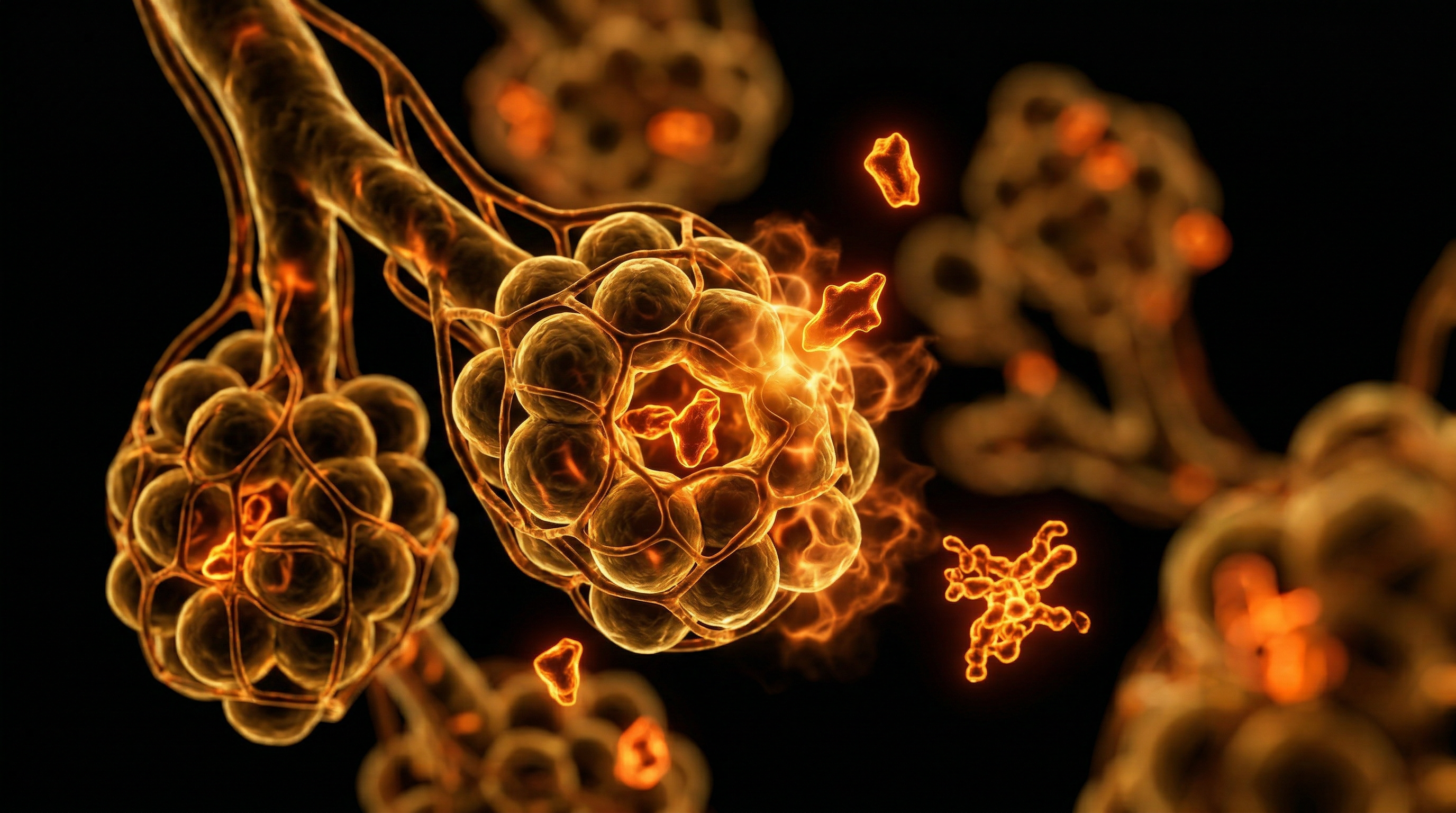
Cadmium-Induced Disruptions of the Renal Proximal Tubule: The Role of Megalin-Mediated Endocytosis and Mitochondrial Dysfunction
A deep-dive investigation into the molecular mechanisms of cadmium nephrotoxicity, exploring how this industrial heavy metal hijacks the megalin-cubilin receptor system to penetrate the proximal tubule and dismantle cellular energy production.
# Cadmium-Induced Disruptions of the Renal Proximal Tubule: The Role of Megalin-Mediated Endocytosis and Mitochondrial Dysfunction\n\nCadmium (Cd) is an insidious heavy metal that has become a ubiquitous environmental pollutant due to its extensive use in industrial processes, including battery manufacturing, pigment production, and electroplating. Unlike other toxic metals that may have transient biological interactions, cadmium is characterised by an extraordinary biological half-life in humans, often exceeding 20 to 30 years. At Innerstanding, we focus on the root causes of systemic health decline; in the case of cadmium, the most significant target of chronic low-dose exposure is the renal proximal tubule. This article explores the biochemical pathway of cadmium's entry into the kidney and the subsequent mitochondrial collapse that defines its toxicity.\n\n## The Vulnerability of the Renal Proximal Tubule\n\nThe kidneys are the primary site of cadmium accumulation, housing approximately 50% of the body's total cadmium burden. Within the kidney, the proximal tubule (PT) is the most affected segment.
The PT is responsible for the reabsorption of the vast majority of filtered solutes, including glucose, amino acids, and low-molecular-weight (LMW) proteins. This high metabolic demand makes the PT exceptionally sensitive to any disruption in cellular energy production. \n\nCadmium does not simply 'poison' the kidney through general irritation. Instead, it hijacks the very transport mechanisms intended to preserve essential nutrients. The damage to the PT is the root cause of 'Fanconi-like syndrome,' a condition where the kidney fails to reabsorb essential substances, leading to their loss in the urine (proteinuria, glycosuria, and phosphaturia).\n\n## Molecular Hijacking: The Megalin-Cubilin Pathway\n\nTo understand how cadmium enters the renal cells, we must look at how the body attempts to protect itself. When cadmium enters the bloodstream, the liver produces a small, cysteine-rich protein called metallothionein (MT).
Metallothionein binds to cadmium (forming the Cd-MT complex) to neutralise its immediate toxicity in the blood. However, this complex is small enough to be filtered through the glomerulus into the renal tubule.\n\nOnce in the tubular fluid, the Cd-MT complex reaches the apical membrane of the proximal tubule cells. Here, it encounters a sophisticated endocytic receptor system composed of two proteins: Megalin (LRP2) and Cubilin. Under normal physiological conditions, this system is responsible for the uptake of essential vitamins (like Vitamin D) and proteins. Cadmium, however, 'mimics' these essential ligands. \n\nThe Cd-MT complex binds to Megalin/Cubilin and is internalised via endocytosis into the PT cells.
Once inside the cell, the endocytic vesicles merge with lysosomes. The acidic environment of the lysosome degrades the metallothionein protein, releasing free, highly reactive ionic cadmium (Cd2+) into the cytoplasm. This 'Trojan Horse' mechanism is the fundamental root cause of cadmium's high concentration within the renal cortex.\n\n## Mitochondrial Dysfunction: The Engine Stops\n\nOnce the free cadmium ion is liberated within the proximal tubule cell, its primary target is the mitochondrion. Mitochondria are the 'power plants' of the cell, and the PT has one of the highest densities of mitochondria in the human body due to its active transport requirements.\n\nCadmium disrupts mitochondrial function through several distinct mechanisms:\n\n1. Inhibition of the Electron Transport Chain (ETC): Cadmium has a high affinity for thiol groups. It binds to and inhibits complexes within the ETC, particularly Complex I and Complex III.
This inhibition halts the flow of electrons, drastically reducing the production of Adenosine Triphosphate (ATP).\n2. Induction of Oxidative Stress: By disrupting the ETC, cadmium causes electrons to leak, reacting with oxygen to form Reactive Oxygen Species (ROS) such as superoxide radicals. These ROS damage mitochondrial membranes (lipid peroxidation) and mitochondrial DNA (mtDNA).\n3. Opening of the Mitochondrial Permeability Transition Pore (mPTP): The stress caused by cadmium triggers the opening of the mPTP. This causes the mitochondria to swell and release pro-apoptotic factors, such as Cytochrome c, into the cytoplasm. This signals the cell to undergo programmed cell death (apoptosis).\n\nWithout sufficient ATP, the sodium-potassium pumps (Na+/K+-ATPase) on the cell membrane fail. Since these pumps drive the reabsorption of almost all other solutes in the PT, their failure leads to the catastrophic loss of nutrients in the urine—the hallmark of cadmium-induced renal dysfunction.\n\n## The Clinical Progression: From Subclinical to Chronic Kidney Disease\n\nIn the United Kingdom, industrial exposure is regulated by the Health and Safety Executive (HSE), yet environmental exposure via tobacco smoke and contaminated food remains a concern.
The progression of cadmium-induced damage is often silent. Initial stages are marked by 'tubular proteinuria,' where specific LMW proteins like beta-2-microglobulin begin to appear in the urine. This is a direct sign that the Megalin-mediated reabsorption system is failing.\n\nAs the exposure persists, the oxidative stress leads to interstitial fibrosis—the replacement of functional kidney tissue with scar tissue. This transition from tubular damage to glomerular damage eventually leads to a decline in the Glomerular Filtration Rate (GFR), resulting in Chronic Kidney Disease (CKD). Importantly, because cadmium remains in the tissue for decades, the damage can continue to progress even after exposure has ceased.\n\n## Root-Cause Solutions and Mitigation\n\nFrom a root-cause educational perspective, addressing cadmium toxicity involves a three-pronged approach: prevention, chelation support, and mitochondrial protection.
Since cadmium is so difficult to remove once stored in the renal cortex, preventing the uptake of cadmium is paramount. This includes tobacco cessation and ensuring adequate intake of zinc and iron. Cadmium competes with these essential minerals for transporters; therefore, a deficiency in zinc or iron can actually increase the rate of cadmium absorption in the gut.\n\nSupporting mitochondrial health through antioxidants like N-acetylcysteine (NAC), which boosts glutathione levels, can help neutralise the ROS generated by cadmium. Furthermore, maintaining the health of the Megalin-Cubilin receptor system—which requires adequate Vitamin D levels—is a critical area of ongoing research in renal protection.\n\n## Conclusion\n\nCadmium is a master of molecular mimicry. By hijacking the Megalin-mediated endocytosis pathway, it gains entry into the most metabolically active cells of the kidney, where it systematically dismantles mitochondrial efficiency.
Understanding this pathway highlights why cadmium exposure is not merely an acute poisoning event but a chronic, biological disruption of cellular energy. At Innerstanding, we advocate for rigorous industrial standards and individual nutritional awareness to protect the renal proximal tubule from this persistent heavy metal threat.
This article is provided for informational and educational purposes only. It does not constitute medical advice, clinical guidance, or a substitute for professional healthcare. Information reflects cited research at time of publication. Always consult a qualified healthcare professional before acting on any health information.
RESEARCH FOUNDATIONS
Biological Credibility Archive
Citations provided for educational reference. Verify via PubMed or institutional databases.
Medical Disclaimer
The information in this article is for educational purposes only and does not constitute medical advice, diagnosis, or treatment. Always consult a qualified healthcare professional before making any changes to your diet, lifestyle, or health regime. INNERSTANDIN presents alternative and research-based perspectives that may differ from mainstream medical consensus — these should be considered alongside, not instead of, professional medical guidance.
Read Full DisclaimerReady to learn more?
Continue your journey through our classified biological research.
THE ARSENAL
Based on Cadmium & Industrial Exposure — products curated by our research team for educational relevance and biological support.
Methylene Blue – Advanced Cellular Chemistry
Fulvic Minerals – Natural Rare Earth Minerals. The essential trace elements missing from modern processed foods.
INNERSTANDING may earn a commission on purchases made through these links. All products are selected based on rigorous educational relevance to our biological research.
RABBIT HOLE
Follow the biological thread deeper