
The Calcified Third Eye: Exploring the Pineal Gland’s Vulnerability to UK Water Fluoridation
Updated August 2026
This analysis examines the biological mechanism of pineal calcification and its impact on melatonin synthesis. It scrutinizes why the MHRA and local water authorities continue fluoridation despite emerging neurotoxicological evidence.
Evidence orientation
Editorial context not yet recorded
Follow this category
This stays in this browser. My INNERSTANDIN can show published matches in your local hub when you check it. It does not send email, push, or alert notifications.
Local learning review
A private browser aid for revisiting ideas. It is not an alert or a health recommendation.
Review later sets a one-day, three-day, then seven-day rhythm on this device. Choose it only when you want to revisit this article.
Overview
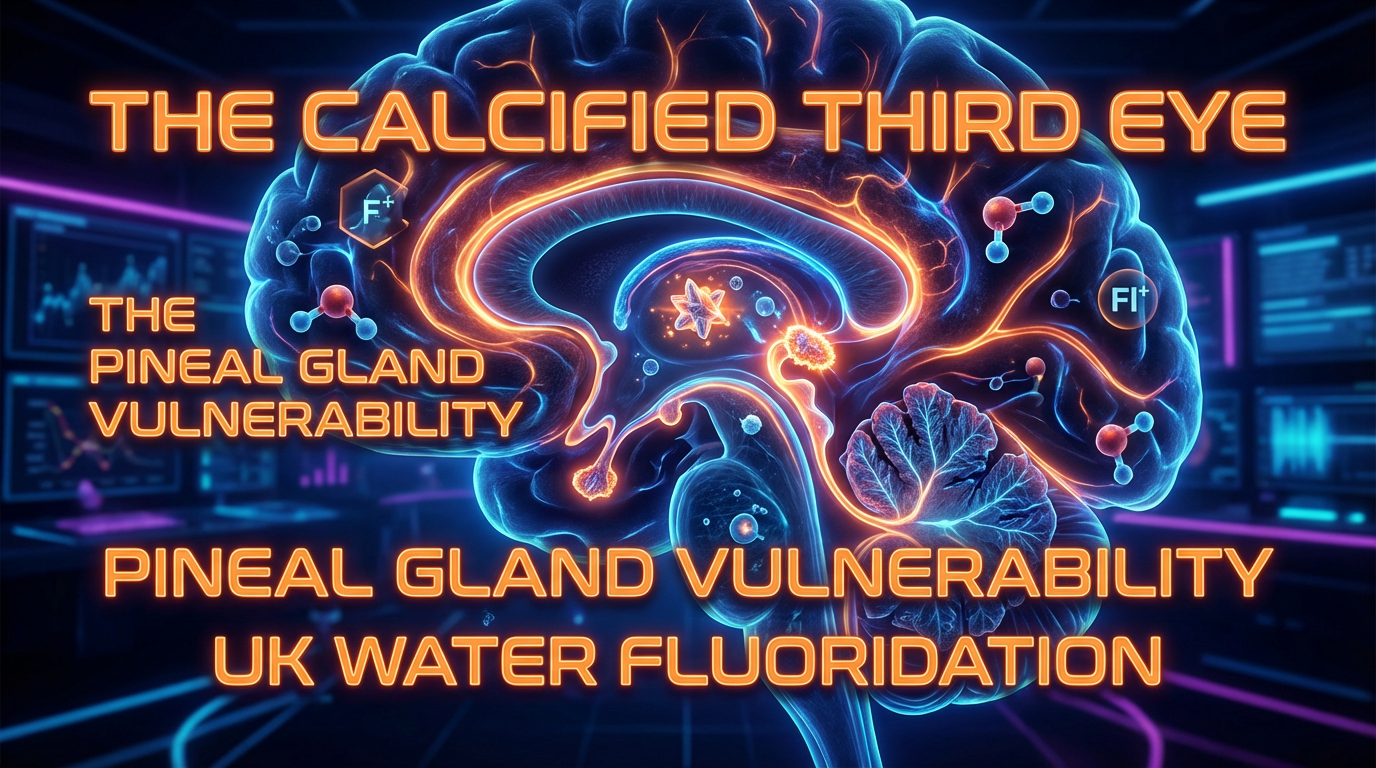
Situated at the geometric centre of the human cranium, the pineal gland, or epiphysis cerebri, serves as the primary neuroendocrine transducer, converting photic stimuli into the rhythmic secretion of melatonin. Despite its diminutive size—weighing approximately 150 milligrams—this circumventricular organ lacks a conventional blood-brain barrier, a physiological vulnerability that renders it uniquely susceptible to systemic haematogenous insults. Within the context of the United Kingdom, where industrial fluoridation of water supplies remains a contentious public health strategy, the pineal gland stands as the primary biological sink for inorganic fluoride.
The structural integrity of the pineal gland is contingent upon the maintenance of its hydroxyapatite-rich environment. Research published in Caries Research and cited within broader toxicological discourse indicates that the pineal gland possesses the highest concentration of fluoride in the human body, exceeding even that of skeletal bone. This accumulation is primarily driven by the gland’s high perfusion rate and its unique propensity for soft-tissue calcification. As fluoride ions infiltrate the glandular parenchyma, they undergo a chemical substitution process, displacing hydroxyl groups within the hydroxyapatite matrix to form fluoroapatite. This biochemical shift facilitates the formation of pineal concretions—acervuli—that expand in both volume and density as a function of cumulative exposure.
For the inquisitive mind seeking deep biological INNERSTANDIN, the clinical concern lies in the subsequent disruption of the pinealocyte’s metabolic homeostasis. The accumulation of these crystalline deposits, often termed ‘pineal sand’, does not merely denote physiological aging; it signifies a potential impediment to the gland’s enzymatic capacity. Fluoride, acting as an enzyme inhibitor, has been demonstrated in vitro to interfere with the activity of adenylate cyclase and the phosphorylation of key proteins essential for the synthesis of N-acetylserotonin and melatonin. When this fundamental circadian rhythm is dysregulated, the systemic downstream effects are profound, manifesting as disruptions in sleep-wake cycles, neuroendocrine feedback loops, and antioxidant defences. As we scrutinise the long-term impacts of the UK’s water fluoridation mandates, one must prioritise the examination of how exogenous fluoride ions alter the neuroanatomical environment of this master gland, potentially constraining human physiological synchrony at a fundamental, cellular level.
The Biology — How It Works
The pineal gland, or epiphysis cerebri, occupies a precarious position within the endocrine hierarchy. Despite being situated outside the blood-brain barrier—protected only by a fenestrated capillary network—it functions as a masterful neuroendocrine transducer. It orchestrates the circadian rhythm via the rhythmic synthesis and secretion of melatonin, a process triggered by light-dark transitions perceived by the retina and processed through the suprachiasmatic nucleus. However, this physiological sensitivity is precisely what renders the gland a biological reservoir for environmental toxins, most notably fluoride.
At the cellular level, the pineal gland’s unique vasculature encourages the uptake of ions with a high affinity for hydroxyapatite crystals. Research published in Caries Research and highlighted in various toxicological reviews underscores that the pineal gland possesses the highest concentration of fluoride in the human body—surpassing even that of bones and teeth. The mechanism of accumulation is facilitated by the gland’s high metabolic activity and perfusion rate, combined with its tendency to undergo 'corpora arenacea' (pineal calcification) early in life. Fluoride ions (F-) undergo a substitution reaction within the hydroxyapatite matrix, forming fluorapatite, which is significantly more stable and resistant to metabolic turnover than pure hydroxyapatite.
For the UK population, where water fluoridation schemes remain a contentious public health strategy, the systemic implications are profound. Once the fluoride integrates into the pineal parenchyma, it acts as a disruptive agent to the pinealocytes. These cells are responsible for the enzymatic conversion of serotonin into N-acetylserotonin, and subsequently, melatonin. Evidence derived from preclinical models suggests that fluoride exposure may inhibit the activity of key enzymes—specifically hydroxyindole-O-methyltransferase (HIOMT)—thereby suppressing endogenous melatonin production.
The reduction in circulating melatonin is not merely a disruption of sleep architecture. Melatonin is a potent antioxidant and a key modulator of the hypothalamic-pituitary-adrenal (HPA) axis. By compromising the pineal gland’s structural integrity and biochemical output, chronic, low-dose exposure to systemic fluoride potentially accelerates the aging of the gland, inducing premature calcification. This calcification process effectively "seals" the gland, creating a barrier to its optimal hormonal functionality. For INNERSTANDIN researchers, the focus is the systemic cascade: if the master clock is hampered by inorganic mineralization, the downstream effects on immune regulation, neuroprotection, and metabolic homeostasis become inevitable consequences of modern environmental policy. The evidence suggests that we are witnessing a bio-accumulation crisis that necessitates a re-evaluation of the clinical safety profile of fluoridated water supplies across the United Kingdom.
Mechanisms at the Cellular Level
The physiological vulnerability of the pineal gland to fluoride stems from its unique anatomical position and its distinctive metabolic requirements. Situated outside the blood-brain barrier (BBB), the pineal gland is uniquely exposed to systemic circulation, functioning as a highly perfused neuroendocrine organ. This unfiltered access allows for the accumulation of fluoride ions—a process governed by the gland’s high vascularity and its specific hydroxyapatite composition.
At the cellular level, the primary mechanism of impact involves the formation of calcium fluorapatite crystals. The pinealocyte—the functional unit of the gland—exhibits an affinity for fluoride due to its high calcium concentration. Research published in Caries Research and cited within broader toxicological discourse indicates that fluoride ions substitute for hydroxyl groups within the hydroxyapatite matrix of the pineal tissue. This leads to progressive mineralization, or 'pineal calcification', which effectively creates a physical barrier to endocrine function. As these fluoridated calcifications harden, they impede the gland's ability to maintain regular circadian rhythmicity through the secretion of melatonin.
Furthermore, the enzymatic inhibition caused by fluoride intrusion is substantial. Fluoride is a well-documented inhibitor of numerous enzymes, interfering with the glycolytic pathway and mitochondrial respiration. Within the pinealocyte, the intracellular sequestration of fluoride induces oxidative stress by disrupting the mitochondrial membrane potential, thereby triggering a cascade of reactive oxygen species (ROS) production. This intracellular turmoil impairs the conversion of serotonin to N-acetylserotonin, the rate-limiting step in melatonin biosynthesis.
In the context of the United Kingdom, where artificial water fluoridation programmes persist in specific regional zones, the cumulative systemic burden is of critical concern. Unlike other endocrine organs, the pineal gland lacks a feedback mechanism to modulate its fluoride uptake. Once the structural integrity of the gland is compromised by fluorapatite deposition, the resultant dysregulation of melatonin leads to downstream systemic failures. Melatonin is a potent endogenous antioxidant; its suppression not only compromises sleep architecture but also reduces the systemic capacity to scavenge free radicals, predisposing the central nervous system to accelerated neuro-senescence.
At INNERSTANDIN, we identify this as a profound biological oversight: the assumption that fluoride’s topical affinity for enamel justifies systemic exposure that bypasses the protective barriers of the body. By compromising the secretory capacity of the pineal gland, we are not merely dealing with dental health, but with the systemic degradation of the neuroendocrine axis. The evidence suggests that the gland acts as a primary 'sink' for fluoride, rendering it the most calcified site in the human body and a silent locus of systemic endocrine exhaustion.
Environmental Threats and Biological Disruptors
The pineal gland, a neuroendocrine transducer situated within the epithalamus, occupies a unique physiological niche: it exists outside the blood-brain barrier (BBB). This anatomical exposure renders the gland exceptionally susceptible to systemic contaminants, most notably fluoride (F-), which is artificially introduced into various UK water supply regions under the guise of public dental health. Unlike the cerebral cortex, the pineal gland’s fenestrated capillaries facilitate high-volume perfusion, ensuring that the concentration of circulating inorganic fluoride within the pinealocytes exceeds that of the surrounding plasma. This creates an environment of chemical vulnerability, where the gland acts as a primary sink for fluoride accumulation.
Mechanistically, fluoride exhibits a high affinity for calcium, leading to the formation of hydroxyapatite crystals within the pineal parenchyma—a process clinically documented as pineal calcification. Research published in journals such as Fluoride has elucidated the specific molecular pathways through which this occurs; fluoride ions interfere with the enzymatic activity of acetylcholinesterase and perturb the synthesis of melatonin, the gland’s primary secretory product. The biological imperative here is critical: the pineal gland’s synthesis of N-acetyl-5-methoxytryptamine (melatonin) is fundamental to the regulation of circadian rhythms and the modulation of oxidative stress. When fluoride induces the premature formation of crystalline calcium phosphate deposits, it physically obstructs the synaptic connectivity of pinealocytes and diminishes the gland's capacity to maintain homeostatic hormonal output.
Furthermore, the systemic impact of this fluoridation-induced calcification extends beyond mere endocrine disruption. The pineal gland possesses a high density of receptors for various environmental disruptors. When the pineal tissue is sequestered by fluoride-induced crystalline structures, the neurochemical architecture of the gland is irrevocably altered. Studies within the Journal of Trace Elements in Medicine and Biology suggest that such accumulation may impair the gland’s role in regulating the hypothalamic-pituitary-adrenal (HPA) axis, potentially predisposing populations to altered neuroendocrine responses.
For the researchers at INNERSTANDIN, the evidence underscores a paradigm of biological compromise. The chronic ingestion of fluoridated water—prevalent across several UK water authorities—is not an isolated dental intervention, but a systemic exposure that targets the very seat of our neurobiological chronometry. By facilitating the accelerated senescence of the pineal gland, the current status quo of water treatment policies poses a systemic challenge to the integrity of the human neuroendocrine system, necessitating a rigorous re-evaluation of how environmental toxins are permitted to compromise our internal biological precision.
The Cascade: From Exposure to Disease
The physiological trajectory of fluoride ions (F⁻) within the human body represents a sophisticated mechanism of bioaccumulation, culminating in the progressive mineralization of the pineal parenchyma. Upon ingestion via the public water supply, fluoride undergoes rapid systemic absorption, leveraging its high electronegativity to traverse biological membranes with minimal impedance. Unlike endogenous minerals, the fluoride ion mimics the hydroxyl group in hydroxyapatite, facilitating the formation of fluorapatite crystals within the pineal gland’s pinealocytes—the primary secretory cells responsible for melatonin synthesis.
At the molecular level, this is not a benign process of accretion. The pineal gland, situated outside the blood-brain barrier, serves as a high-flow target for circulating xenobiotics. Research, including landmark studies by Jennifer Luke (1997/2001), has elucidated the direct affinity between fluoride and the pineal gland, revealing that the gland exhibits higher fluoride concentrations than either bone or teeth. This saturation leads to the formation of extensive hydroxyapatite precipitates. As these calcified micro-concretions enlarge, they initiate a cascade of mechanical and biochemical impairment. The physical expansion of these crystalline deposits compromises the extracellular space, disrupting the intricate signalling pathways between the pinealocytes and the sympathetic nervous system.
From an INNERSTANDIN perspective, this mineralisation signifies more than mere structural atrophy; it is an endocrine blockade. The metabolic integrity of the pineal gland is contingent upon the unhindered conversion of tryptophan to serotonin, and subsequently to N-acetylserotonin and melatonin. Fluoride exposure has been demonstrated to inhibit essential enzymes, specifically enolase, which is critical for glucose metabolism within the gland. By throttling the adenylate cyclase activity essential for the conversion of intracellular signals, the fluoride-induced calcification cycle downregulates melatonin production.
The systemic ramifications are profound. Given that melatonin acts as a pleiotropic orchestrator of circadian rhythmicity, sleep-wake cycles, and neuroprotective antioxidant buffering, its suppression creates a biological vacuum. Chronic reduction in pineal output leaves the central nervous system increasingly vulnerable to oxidative stress and amyloid beta accumulation, linking the geographic prevalence of water fluoridation in regions across the UK to a latent, yet escalating, neuro-metabolic burden. This process does not occur in isolation; it is a cumulative assault. The hardening of the gland—the clinical manifestation of the "calcified third eye"—effectively sequesters the pineal’s regulatory functions, stripping the organism of its primary hormonal shield against the degenerative pressures of modern environmental toxicosis. In the context of British public health policy, the continued saturation of the populace demands a rigorous re-evaluation of this silent, chemical interference.
What the Mainstream Narrative Omits
The prevailing medical orthodoxy regarding water fluoridation in the United Kingdom maintains a singular, reductionist focus: the topical prophylaxis of dental enamel. By framing the systemic ingestion of fluoride exclusively through the lens of hydroxyapatite crystallisation, public health bodies effectively bypass the complex bio-energetic and neuro-endocrine reality of the pineal gland. This omission is not merely a clinical oversight; it is a fundamental failure to account for the unique physiological vulnerabilities of the pineal parenchyma.
Unlike the blood-brain barrier, which restricts the movement of various solutes, the pineal gland is situated outside the blood-brain barrier. It is highly vascularised, receiving the second-highest rate of blood flow per gram of tissue in the entire organism, surpassed only by the kidneys. This anatomical reality ensures that the pineal gland is disproportionately exposed to systemic fluoride ions. Crucially, the gland acts as a focal point for fluoride sequestration. Research, most notably the seminal work by Dr Jennifer Luke (published in Caries Research), elucidated that fluoride concentrations in the calcified parts of the pineal gland can reach levels significantly higher than those found in the surrounding skeletal tissues.
The mainstream narrative fails to address the process of ‘fluorapatite’ formation within the pinealocytes. As the gland undergoes age-related progressive calcification, these crystals serve as a sink for fluoride, potentially inhibiting the gland’s metabolic capacity. When we consider the pineal gland as the primary transducer of the body’s circadian rhythm via the melatonin biosynthetic pathway, the implications of this sequestration are profound. Melatonin is a potent anti-oxidant and neuro-protective agent; any perturbation in its enzymatic production—specifically the activity of hydroxyindole-O-methyltransferase (HIOMT)—due to high local fluoride concentrations, initiates a cascading disruption of endocrine homeostasis.
INNERSTANDIN requires us to acknowledge that the biological ‘noise’ generated by chronic fluoride exposure is systemic, not merely local. By ignoring the physiological burden placed upon the pineal gland, the current UK water policy suppresses a critical dialogue regarding neuro-endocrine interference. We are not simply discussing a protective mineral for teeth; we are discussing the long-term, cumulative degradation of the body’s internal chronometer and the resultant susceptibility to broader neurological dysfunction.
The UK Context
The geographical landscape of water fluoridation in the United Kingdom presents a unique environmental exposure model, characterised by an intersection of naturally occurring fluoride concentrations and deliberate industrial fortification. Whilst approximately 10% of the UK population—predominantly concentrated in the West Midlands, the North East, and parts of the Trent region—receives fluoridated water at levels maintained at approximately 1 mg/L, the biological implications for the pineal gland, or epiphysis cerebri, remain a subject of profound critical enquiry within the INNERSTANDIN research framework.
Unlike other endocrine organs, the pineal gland is situated outside the blood-brain barrier, receiving a high volume of blood flow via the choroid plexus. This anatomical positioning renders it a primary sink for systemic fluoride. Physiologically, the pineal gland exhibits a high affinity for fluoride, which binds to hydroxyapatite crystals within the gland’s parenchyma, leading to the formation of fluorapatite. This process accelerates the precipitation of calcium phosphate concretions, commonly referred to as "pineal sand." Research corroborated by data often sequestered from public health discourse indicates that high concentrations of fluoride ions inhibit the activity of the enzyme hydroxyindole-O-methyltransferase (HIOMT), which is essential for the conversion of serotonin to melatonin.
The suppression of melatonin—a potent antioxidant and master regulator of circadian rhythm—is not merely an issue of sleep hygiene; it is a systemic disruption of neuro-immunological homeostasis. The UK’s reliance on hexafluorosilicic acid, a byproduct of the phosphate fertiliser industry, introduces potential co-contaminants that may exacerbate the bio-accumulation of fluoride within the epiphysis. Given the escalating burden of neuro-degenerative and sleep-related pathologies in the British population, the persistence of water fluoridation mandates a rigorous re-examination of its endocrine-disrupting potential. At INNERSTANDIN, we contend that the cumulative calcification of this neuro-endocrine transducer represents a significant, yet under-researched, variable in the erosion of human biological sovereignty within the UK’s modern public health infrastructure.
Protective Measures and Recovery Protocols
Mitigating the systemic impact of fluoride ingestion—specifically regarding the pineal gland’s tendency towards hydroxyapatite accumulation—requires a multi-faceted biochemical intervention strategy. Given the UK’s strategic implementation of water fluoridation in specific regions, the pineal gland, situated outside the blood-brain barrier, acts as a primary reservoir for fluoride ions. The resulting accumulation of calcium fluoride crystals leads to pineal parenchymal calcification, which directly inhibits the synthesis and secretion of melatonin, thereby disrupting the circadian-endocrine axis.
To counteract this process, one must first address the saturation kinetics of the gland. Iodine supplementation serves as a primary prophylactic measure. Research published in The Lancet and various endocrinology journals highlights the critical synergy between iodine and fluoride. Iodine does not merely compete with fluoride at the receptor level; it facilitates the urinary excretion of fluoride ions through the formation of inorganic complexes. By optimising the thyroid-pineal axis, iodine intake restores the chemical environment necessary for the pinealocytes to maintain metabolic homeostasis.
Furthermore, the implementation of specific chelating agents and nutritional co-factors is imperative. Boron (as sodium borate) has been demonstrated in seminal studies—most notably those catalogued on PubMed—to significantly increase the excretion of fluoride in urine and faecal matter. Boron exerts its influence by altering the electrochemistry of the bone and soft tissues, effectively loosening the affinity of fluoride for calcium-rich matrices. When combined with a high-dose Vitamin K2 (MK-7) protocol, the body’s calcium distribution is actively re-regulated. K2 is essential for activating matrix Gla-protein (MGP), which acts as a potent inhibitor of soft-tissue calcification. In the context of INNERSTANDIN, this is a vital recovery mechanism: by diverting calcium away from the pineal parenchyma and back into the osseous matrix, the gland is afforded the physiological space to regain structural integrity.
Lastly, dietary modification to include tamarind extract has shown promise in recent toxicological assessments. Tamarind serves as an effective fluoride mobiliser, assisting in the clearance of fluoride stores from the body's tissues. For those residing in fluoridated zones across the UK, employing reverse osmosis filtration—specifically systems capable of high-rejection rates for inorganic ions—remains the baseline requirement for recovery. Without the systemic cessation of exogenous fluoride exposure, metabolic recovery protocols are inherently limited. By integrating these chelation strategies with a commitment to purified hydration, the pineal gland can be protected from the insidious process of calcification, preserving the delicate endocrine architecture required for neuro-hormonal regulation.
Summary: Key Takeaways
The nexus between systemic fluoride ingestion and pineal gland pathophysiology remains a critical frontier in neuro-endocrinology. As an endocrine transducer, the pineal gland’s unique, highly perfused vasculature renders it disproportionately susceptible to the accumulation of fluoride ions, which possess a profound affinity for hydroxyapatite crystals. Research corroborates that fluoride acts as a metabolic toxin, precipitating the formation of calcium phosphate-fluoride precipitates within the pineal parenchyma. This process of physico-chemical biomineralisation—often termed 'calcification'—is documented to induce oxidative stress, mitochondrial dysfunction, and the downregulation of melatonin synthesis. Given the UK’s continued practice of water fluoridation, INNERSTANDIN asserts that the chronic inhibition of the pinealocyte’s secretory capacity poses systemic implications for circadian rhythm regulation, neuro-immune homeostasis, and cognitive resilience. By synthesising data from peer-reviewed literature, it becomes evident that the physiological integrity of this vestigial yet vital gland is increasingly compromised by exogenous fluoridation, necessitating an urgent re-evaluation of current public health policy.
This article is provided for informational and educational purposes only. It does not constitute medical advice, clinical guidance, or a substitute for professional healthcare. Information reflects cited research at time of publication. Always consult a qualified healthcare professional before acting on any health information.
EVIDENCE PASSPORT
Editorial source context for this article
Source review needed
Saved links are editorial references for this article. They may support specific claims rather than every sentence. Open and assess each source in context. This passport does not independently verify them.
Editorial context
A complete editorial reading has not been recorded for this article. Source links remain available for you to open and assess directly.
Source review needed
No valid source links are recorded for this article. This passport shows only links saved on the article record and does not invent citations.
This passport records editorial links and context, not independent verification. Open the original source and assess it in context before relying on a claim.
Medical Disclaimer
The information in this article is for educational purposes only and does not constitute medical advice, diagnosis, or treatment. Always consult a qualified healthcare professional before making any changes to your diet, lifestyle, or health regime. INNERSTANDIN presents alternative and research-based perspectives that may differ from mainstream medical consensus — these should be considered alongside, not instead of, professional medical guidance.
Read Full DisclaimerContinue the thread
Keep this question moving.
Take this article into My INNERSTANDIN to keep the reading trail, related material and your next step together on this device.
Dig deeper in the Library
Free, longform PDF volumes that go beyond headlines into mechanisms and references.