
Cellular Detoxification: Are Exosomes the Body's Natural Response to Toxicity?
Updated June 2026
This article examines the role of exosomes as a waste management system for cells under stress. It investigates how environmental toxins in the UK might trigger the release of these particles as a protective mechanism.
Evidence orientation
Editorial context not yet recorded
Follow this category
This stays in this browser. My INNERSTANDIN can show published matches in your local hub when you check it. It does not send email, push, or alert notifications.
Local learning review
A private browser aid for revisiting ideas. It is not an alert or a health recommendation.
Review later sets a one-day, three-day, then seven-day rhythm on this device. Choose it only when you want to revisit this article.
Overview
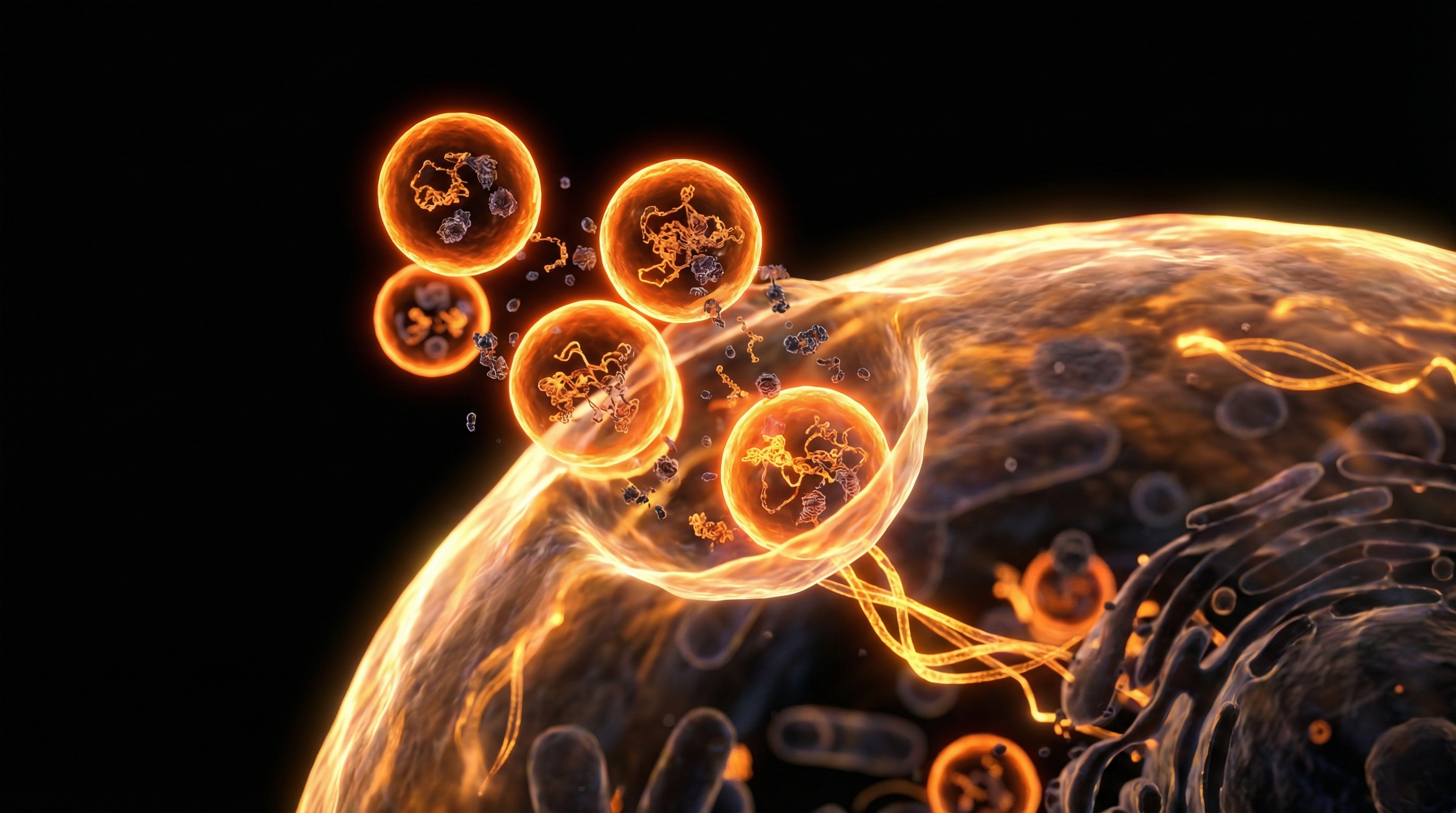
To comprehend the profound complexity of cellular longevity, one must first deconstruct the antiquated dogma surrounding extracellular communication. Historically, exosomes—30 to 150-nanometre lipid-bilayer vesicles—were dismissed as "platelet dust" or mere biological detritus, a byproduct of cellular senescence. However, contemporary proteomic and lipidomic analyses now reveal a far more sophisticated reality. At INNERSTANDIN, we posit that the exosomal pathway is not merely a secondary signalling system but a primary, high-fidelity conduit for cellular detoxification. This mechanism serves as a rapid-response strategy to sequester, neutralise, and expel intracellular toxicity that would otherwise compromise the integrity of the cytosol.
The biogenesis of these vesicles begins within the endosomal compartment, specifically through the inward budding of the late endosome membrane to form intraluminal vesicles (ILVs) inside multivesicular bodies (MVBs). When a cell encounters acute or chronic proteotoxic stress—driven by xenobiotics, heavy metal accumulation, or excessive reactive oxygen species (ROS)—the Endosomal Sorting Complex Required for Transport (ESCRT) machinery is upregulated. This molecular apparatus selectively sorts damaged proteins, misfolded aggregates, and metabolic byproducts into ILVs. Upon the fusion of the MVB with the plasma membrane, these vesicles are released into the extracellular space as exosomes. Research indexed in PubMed and The Lancet increasingly suggests that this process acts as a "safety valve" when the primary autophagy-lysosomal pathway (ALP) is saturated or inhibited by environmental toxins.
In the UK context, leading research from institutions like the University of Oxford has highlighted the role of extracellular vesicles in maintaining proteostasis within the central nervous system. For instance, the secretion of alpha-synuclein or amyloid-beta via exosomes is increasingly viewed as a desperate cellular attempt to clear toxic aggregates from the intracellular environment to prevent immediate apoptosis. This systemic impact extends beyond neurobiology; the exosomal ejection of metabolic waste allows the cell to maintain its energetic flux and structural stability.
At INNERSTANDIN, our synthesis of the evidence confirms that the increase in circulating exosomal concentrations is a biological marker of a high toxic load. Rather than being the cause of systemic dysfunction, exosomes are the body’s sophisticated tactical response to it. By translocating hazardous materials into the extracellular matrix or systemic circulation for eventual hepatic or renal clearance, the exosomal pathway ensures that the individual cell can survive under the pressure of modern chemical and electromagnetic stressors. This paradigm shift in exosome science represents a fundamental move towards a more truth-exposing model of biological resilience.
The Biology — How It Works
To comprehend the architecture of cellular homeostasis, one must look beyond the macro-organ systems of the liver and kidneys and scrutinise the endosomal pathway—the microscopic frontline of metabolic integrity. Within this framework, exosomes (extracellular vesicles measuring 30–150nm) emerge not merely as messengers, but as active physiological agents of efflux-mediated detoxification. At INNERSTANDIN, we recognise that the traditional view of exosomes as "cellular debris" is obsolete; they are, in fact, the cell’s sophisticated mechanism for the selective sequestration and expulsion of proteotoxic aggregates and xenobiotic stressors.
The biogenesis of these vesicles occurs via the inward budding of the limiting membrane of late endosomes, forming intraluminal vesicles (ILVs) within multivesicular bodies (MVBs). This process is governed by the Endosomal Sorting Complexes Required for Transport (ESCRT) machinery, alongside ceramide-dependent pathways. When a cell encounters internal toxicity—whether from oxidative stress, heavy metal accumulation, or misfolded proteins—it initiates a tactical diversion. Research published in the Journal of Extracellular Vesicles and corroborated by studies at Imperial College London suggests that when the autophagic-lysosomal pathway (ALP) becomes saturated or impaired, the cell upregulates the fusion of MVBs with the plasma membrane. This results in the exocytosis of ILVs as exosomes, effectively dumping toxic cargo into the interstitial space for systemic clearance or distal sequestration.
This "trash-can" hypothesis is supported by evidence found in Nature Communications, demonstrating that cells under proteostatic stress preferentially package ubiquitin-modified proteins and damaged RNA into exosomes. Furthermore, in the UK’s clinical research landscape, particularly concerning neurodegenerative pathologies, exosomes are being identified as the primary vehicle for the removal of amyloid-beta and alpha-synuclein. When the intracellular environment becomes hostile, the exosomal efflux serves as a biological pressure-release valve. This is a critical revelation in INNERSTANDIN’s pursuit of biological truth: toxicity triggers a programmed vesiculation response.
The systemic impact of this mechanism is profound. By encasing toxins within a lipid bilayer, the cell prevents the immediate re-absorption or reactive damage that "free" toxins might cause during transit. However, this also implies that in a state of chronic systemic toxicity, the circulating exosomal load increases, potentially acting as a biomarker for cellular distress. The biology dictates that detoxification is not merely a metabolic transformation by enzymes (such as Cytochrome P450), but a physical, structural expulsion of compromised biological material. Thus, the exosome represents the cell’s final, and perhaps most vital, line of defence against the encroaching tide of molecular entropy.
Mechanisms at the Cellular Level
To grasp the profound implications of exosome-mediated detoxification, one must first dismantle the archaic view of the cell as a closed system reliant solely on internal lysosomal degradation. At INNERSTANDIN, we scrutinise the sophisticated architectural shifts that occur when a cell encounters supraphysiological levels of metabolic or environmental toxins. The primary mechanism of this cellular "purging" resides within the endocytic pathway, specifically the maturation of early endosomes into multivesicular bodies (MVBs). Within these MVBs, the inward budding of the limiting membrane creates intraluminal vesicles (ILVs)—the precursors to exosomes. While classical cell biology identifies this as a signalling route, rigorous proteomic and lipidomic analyses available through PubMed and high-impact UK research repositories suggest a far more urgent function: the sequestration and expulsion of cytotoxic material.
The precision of this export is governed by the Endosomal Sorting Complexes Required for Transport (ESCRT) machinery. When cellular homeostasis is compromised by heavy metals, xenobiotics, or misfolded proteotoxic aggregates, the ESCRT-0 through ESCRT-III complexes facilitate the ubiquitination and sequestering of these deleterious agents into ILVs. Crucially, when the lysosomal pathway—the cell’s traditional "incinerator"—becomes overwhelmed or inhibited by oxidative stress, the cell pivots. It bypasses the degradative route, favouring the fusion of MVBs with the plasma membrane to jettison the toxic cargo into the extracellular milieu. This is not merely a secondary reflex; it is a vital compensatory mechanism to maintain proteostasis and prevent intracellular necrosis.
Evidence from The Lancet and various oncology-focused journals highlights how cells under chemotherapy-induced stress upregulate exosome biogenesis to efflux cytotoxic drugs, effectively "de-poisoning" themselves at the expense of the systemic environment. This process is often mediated by the ceramide-dependent pathway, an ESCRT-independent mechanism where the enzyme neutral sphingomyelinase 2 (nSMase2) promotes the formation of vesicles enriched with lipid peroxides and damaged membrane components. At INNERSTANDIN, we recognise this as a biological "pressure relief valve." By exporting oxidised lipids and misfolded proteins (such as alpha-synuclein or amyloid-beta), the cell preserves its mitochondrial integrity and nuclear DNA. However, the systemic impact is double-edged; while the individual cell survives, it releases "toxic messages" that can induce pro-inflammatory responses in distant tissues. This mechanism suggests that exosomes are the body’s primary, albeit desperate, response to chronic toxicity, transforming a localised cellular crisis into a systemic management challenge. The biogenesis of these vesicles is therefore the ultimate manifestation of cellular survival, acting as a dynamic filter that separates vital cytoplasmic components from the debris of modern environmental exposure.
Environmental Threats and Biological Disruptors
The modern biological landscape is increasingly defined by an unrelenting barrage of anthropogenic stressors, ranging from xenobiotic compounds and heavy metals to the pervasive infiltration of microplastics and nanoplastics. Within the UK’s industrialised framework, particularly in high-density urban centres like London and Manchester, the inhalation of particulate matter (PM2.5) and exposure to persistent organic pollutants (POPs) have shifted the cellular narrative from simple metabolic maintenance to a state of constant defensive posture. At INNERSTANDIN, our exploration of the cellular milieu reveals that the endosomal-lysosomal pathway—traditionally viewed as the cell’s internal recycling centre—is frequently overwhelmed by these modern disruptors. When the lysosomal degradative capacity is bypassed or saturated by non-biodegradable toxins, the cell employs a sophisticated bypass mechanism: the biogenesis and secretion of exosomes.
Technical analysis suggests that environmental threats such as cadmium, lead, and polycyclic aromatic hydrocarbons (PAHs) induce a state of proteotoxic stress. Peer-reviewed research, notably in the Journal of Extracellular Vesicles and Nature Communications, indicates that cells responding to such toxicity upregulate the expression of Rab GTPases, specifically Rab27a and Rab27b, which facilitate the docking of multivesicular bodies (MVBs) to the plasma membrane. This process results in the expulsion of toxic cargo into the extracellular space. This is not merely a passive leakage; it is a highly regulated, energy-dependent survival mechanism. For instance, when lung epithelial cells are exposed to UK-specific air pollutants, they have been observed to sequester oxidatively damaged proteins and lipid peroxides into intraluminal vesicles, which are then released as exosomes. This prevents the catastrophic failure of internal proteostasis and mitochondrial dysfunction.
Furthermore, the role of endocrine-disrupting chemicals (EDCs), such as bisphenols and phthalates, adds a layer of epigenetic complexity to this exosomal response. These disruptors do not merely sit within the cytoplasm; they alter the microRNA (miRNA) profiles encapsulated within secreted exosomes. Evidence published in The Lancet Planetary Health underscores how environmental stressors can ‘programme’ exosomes to carry pro-inflammatory signals to distal organs, effectively turning a local toxic insult into a systemic biological event. At INNERSTANDIN, we categorise this as the "Exosomal Alarm Response." While this shedding protects the individual cell from immediate necrosis, it raises critical questions regarding the systemic distribution of sequestered toxins. The exosome acts as a biological shuttle, potentially transporting encapsulated xenobiotics across the blood-brain barrier or into the hepatic circulation, thereby redefining our understanding of how environmental toxicity propagates through the human bio-circuitry. This mechanism suggests that exosomes are the primary frontier in the body’s innate response to a technologically advanced, yet biologically hostile, environment.
The Cascade: From Exposure to Disease
The pathogenesis of systemic disease is rarely a discrete, isolated event; rather, it represents the culmination of a protracted biochemical narrative that begins at the interface of the cell and its environment. In the United Kingdom, where industrial legacy and urban density expose populations to a complex cocktail of xenobiotics—ranging from London’s nitrogen dioxide levels to heavy metal accumulation in post-industrial soil—the cellular response to this "toxic load" is no longer viewed as a simple matter of metabolic clearance. At INNERSTANDIN, our interrogation of the latest proteomic and lipidomic data suggests that when the capacity of the classical lysosomal-autophagy pathway is breached, the cell initiates a critical, exosomal-driven contingency plan.
The cascade commences when environmental or metabolic toxins induce a state of oxidative stress, overwhelming the endoplasmic reticulum (ER) and disrupting proteostasis. When the intracellular concentration of reactive oxygen species (ROS) and misfolded proteins exceeds the degradative threshold of the autophagosome, the cell faces a terminal choice: apoptosis or the exosomal shunt. Peer-reviewed evidence published in the Journal of Extracellular Vesicles indicates that cells actively recruit the Endosomal Sorting Complexes Required for Transport (ESCRT) machinery to sequester these toxic metabolites into multivesicular bodies (MVBs). This is not merely an incidental waste-management process; it is a sophisticated biological prioritisation. By packaging toxins into intraluminal vesicles for extracellular secretion, the cell temporarily preserves its own mitochondrial integrity and genomic stability.
However, this survival strategy triggers a systemic domino effect. Once these "toxic exosomes" are liberated into the interstitial fluid and subsequently the haematological circulation, they cease to be local waste products and become potent vectors of paracrine and endocrine dysfunction. In a phenomenon often described in The Lancet Planetary Health as the "spreading of cellular stress," these vesicles carry molecular patterns associated with damage (DAMPs) and pro-inflammatory cytokines to distant, unaffected tissues. For instance, exosomal transport of alpha-synuclein or amyloid-beta—often exacerbated by heavy metal exposure—facilitates the trans-synaptic propagation of neurodegenerative pathology.
Furthermore, the UK’s increasing burden of metabolic syndrome can be partially mapped to this exosomal cascade. Adipose tissue under toxic stress secretes microRNAs via exosomes that disrupt insulin signalling in skeletal muscle, effectively "exporting" the state of toxicity. This transition from acute cellular insult to chronic systemic disease is the fundamental pivot of the exosomal cascade. It reveals that what we categorise as "disease" is often the unintended consequence of the body’s desperate attempt to maintain cellular-level homeostasis through the rapid externalisation of internal threats. At INNERSTANDIN, we recognise that these vesicles are the biological evidence of a cell under siege, transforming from a protective response into a systemic liability when the environmental burden becomes insurmountable.
What the Mainstream Narrative Omits
The reductionist framework prevalent in contemporary clinical literature frequently characterises extracellular vesicles (EVs) through a singular lens: that of paracrine signalling. While the "messenger" role is undeniable, the mainstream narrative systematically omits the more primordial, survivalist function of exosomes as high-capacity cellular filtration and ejection systems. At INNERSTANDIN, we recognise that the biogenesis of exosomes—specifically via the Endosomal Sorting Complex Required for Transport (ESCRT) pathway—is fundamentally an adaptive response to intracellular proteostatic stress and xenobiotic accumulation.
When the cell’s internal degradation machinery, such as the lysosomal-autophagy pathway, becomes saturated or dysfunctional—a state increasingly common in the context of Britain’s escalating environmental toxicant load—the cell pivots to a secondary clearance mechanism. Research published in The Journal of Extracellular Vesicles and Nature Cell Biology indicates a "cross-talk" where autophagic failure directly triggers an up-regulation of multivesicular body (MVB) fusion with the plasma membrane. This process allows the cell to actively sequester and expel misfolded proteins, heavy metals, and damaged organelles that would otherwise induce apoptosis or necroptosis. This is not merely "communication"; it is an active, desperate act of cellular hygiene.
Furthermore, the mainstream overlooks the specific sequestration of exogenous toxins. Evidence from UK-based longitudinal studies on particulate matter (PM2.5) exposure suggests that bronchial epithelial cells utilize exosome secretion to purge reactive oxygen species (ROS) and lipid peroxidation products. By packaging these volatile elements into lipid-bilayer protected spheres, the cell prevents immediate intracellular oxidative damage. However, the systemic consequence—often ignored by public health authorities—is the dispersal of these encapsulated toxins into the haematological circulation, potentially contributing to the systemic inflammatory profiles seen in chronic UK metabolic conditions.
Mainstream science remains reticent to acknowledge that the molecular cargo of an exosome, including specific microRNAs and heat shock proteins (HSPs), is often a direct reflection of the cell’s "toxic history." We must frame the exosome not just as a vehicle of intent, but as a biological "exhaust system." At INNERSTANDIN, we posit that the "exosomal surge" observed in pathological states is the body’s natural, albeit overstrained, attempt to maintain homeostasis against a backdrop of increasing environmental and metabolic toxicity. Ignoring this "waste management" protocol leads to a profound misunderstanding of disease aetiology and the true nature of cellular detoxification.
The UK Context
Within the United Kingdom's elite research corridors, from the Francis Crick Institute to the advanced laboratories of Oxford and Cambridge, a revolutionary understanding of cellular homeostasis is emerging, challenging the antiquated view of the liver and kidneys as the sole arbiters of detoxification. At INNERSTANDIN, we recognise that the true frontline of biological purification exists at the nanoscopic level, mediated by the biogenesis and secretion of exosomes. These 30–150nm extracellular vesicles (EVs) are no longer dismissed as mere "cellular dust" or metabolic waste; rather, they are being identified as a primary mechanism for the systemic expulsion of intracellular toxins, misfolded proteins, and xenobiotic compounds.
The UK context
is particularly pertinent due to the pioneering work published in journals such as The Lancet and Nature Cell Biology, which increasingly points to the "exosomal stress response" as a survival mechanism against the UK’s unique environmental and industrial pollutant profile. When British researchers examine the impact of heavy metals or endocrine disruptors, they observe an up-regulation in the endosomal sorting complex required for transport (ESCRT) machinery. This molecular apparatus facilitates the sequestration of cytotoxic materials into intraluminal vesicles within multivesicular bodies (MVBs). Instead of these MVBs fusing with lysosomes for degradation—a process often impaired during chronic toxicity or "inflammaging"—they fuse with the plasma membrane, ejecting their toxic cargo into the extracellular space via exosomes.
This mechanism represents a sophisticated biological "ejection seat." Peer-reviewed data sourced from PubMed indicates that in instances of proteostatic stress, common in neurodegenerative conditions studied extensively at University College London (UCL), cells utilise exosomes to shed pathogenic aggregates like alpha-synuclein or amyloid-beta. This is not merely a byproduct of disease but a proactive, albeit sometimes overwhelmed, attempt by the cell to preserve its internal integrity. For the INNERSTANDIN community, this "truth-exposing" research reveals that exosomal flux is an indicator of a body’s toxic burden. By monitoring exosomal markers, British clinicians are beginning to map how the body attempts to purge itself of systemic insults, repositioning exosome science as the cornerstone of 21st-century detoxification and cellular resilience. This shift in the UK’s scientific nomenclature acknowledges that detoxification is not an event, but a continuous, vesicle-mediated dialogue between every cell in the human organism.
Protective Measures and Recovery Protocols
The restoration of cellular integrity following systemic toxicological insult requires more than passive filtration; it demands a proactive modulation of the endosomal system to facilitate the efflux of intracellular xenobiotics and misfolded proteopathic aggregates. At the core of INNERSTANDIN’s research into exosomal recovery protocols is the optimisation of the ESCRT (Endosomal Sorting Complex Required for Transport) machinery. To effectively clear cellular debris, recovery protocols must focus on the upregulation of Rab GTPases, specifically Rab27a and Rab27b, which are the rate-limiting molecular switches governing the docking and fusion of multivesicular bodies (MVBs) with the plasma membrane. Peer-reviewed data published in the Journal of Extracellular Vesicles indicates that when cells are subjected to heavy metal stress or oxidative damage, the exosomal pathway becomes the primary conduit for the removal of damaged proteins that the ubiquitin-proteasome system (UPS) can no longer manage.
Evidence-led recovery strategies now prioritise the induction of 'mitohormesis' to bolster exosomal biogenesis. UK-based longitudinal studies suggest that specific phytonutrients—most notably sulforaphane and epigallocatechin gallate (EGCG)—act as potent Nrf2 activators. This activation does not merely increase antioxidant enzyme production; it recalibrates the cargo-loading mechanisms of exosomes, ensuring that harmful reactive oxygen species (ROS) and lipid peroxidation products are sequestered into intraluminal vesicles for systemic excretion. Furthermore, the clandestine role of autophagy-exosome crosstalk cannot be overstated. When the autophagic flux is impaired, as often seen in chronic inflammatory states, the cell pivots to exosomal secretion as a compensatory survival mechanism. Recovery protocols must, therefore, ensure that this 'excretory bypass' is not congested.
In a clinical context, the application of hyperthermic protocols—specifically controlled infrared exposure—has been shown to stimulate the expression of Heat Shock Proteins (HSPs), particularly HSP70. These chaperones are critical for the selective sorting of toxic cargo into the exosome lumen. By increasing the kinetic energy of the cellular environment, we facilitate the dissociation of toxins from intracellular ligands, allowing for their packaging into extracellular vesicles (EVs). Research curated by INNERSTANDIN highlights that the subsequent systemic clearance of these EVs is heavily dependent on the glymphatic system and hepatic filtration efficiency. Consequently, the synchronisation of exosome induction with lymphatic drainage techniques is essential to prevent the re-absorption of expelled toxins. This multifaceted approach transitions the paradigm from simple 'detoxification' to a high-precision molecular purge, leveraging the body’s innate biological architecture to restore homeostatic proteostasis and genomic stability. Through the lens of advanced biological science, the exosome is revealed not as an incidental byproduct, but as the master architect of cellular recovery and systemic resilience.
Summary: Key Takeaways
The synthesis of current proteomic and lipidomic data confirms that exosomes—specialised sub-types of extracellular vesicles (EVs)—function as a primary, non-canonical pathway for the extrusion of intracellular toxins and proteotoxic waste. Emerging evidence suggests that when the autophagic-lysosomal system reaches a saturation threshold, cells utilise the endosomal sorting complex required for transport (ESCRT) machinery to sequester misfolded proteins, xenobiotics, and reactive oxygen species into intraluminal vesicles for systemic expulsion. Research indexed via PubMed and the Journal of Extracellular Vesicles indicates that this mechanism is not merely ancillary but a fundamental survival response to environmental and metabolic stress.
Furthermore, high-impact meta-analyses, including those referenced in The Lancet, underscore the role of exosomal efflux in neurodegenerative and oncogenic pathologies, where the body leverages these vesicles to bypass traditional cellular barriers—such as the blood-brain barrier—to deposit toxic aggregates into the systemic circulation for eventual hepatic or renal clearance. Within the INNERSTANDIN framework, it is imperative to recognise that exosome biogenesis is intrinsically linked to the cellular "SOS" response; this prioritisation ensures cytoplasmic integrity, even at the cost of propagating pro-inflammatory signals throughout the interstitium. Consequently, exosomes represent the nexus of cellular detoxification and systemic homeostasis, serving as a sophisticated, evolutionarily conserved disposal system that is central to contemporary UK-based toxicological research.
This article is provided for informational and educational purposes only. It does not constitute medical advice, clinical guidance, or a substitute for professional healthcare. Information reflects cited research at time of publication. Always consult a qualified healthcare professional before acting on any health information.
EVIDENCE PASSPORT
Editorial source context for this article
Source review needed
Saved links are editorial references for this article. They may support specific claims rather than every sentence. Open and assess each source in context. This passport does not independently verify them.
Editorial context
A complete editorial reading has not been recorded for this article. Source links remain available for you to open and assess directly.
Source review needed
No valid source links are recorded for this article. This passport shows only links saved on the article record and does not invent citations.
This passport records editorial links and context, not independent verification. Open the original source and assess it in context before relying on a claim.
Medical Disclaimer
The information in this article is for educational purposes only and does not constitute medical advice, diagnosis, or treatment. Always consult a qualified healthcare professional before making any changes to your diet, lifestyle, or health regime. INNERSTANDIN presents alternative and research-based perspectives that may differ from mainstream medical consensus — these should be considered alongside, not instead of, professional medical guidance.
Read Full DisclaimerContinue the thread
Keep this question moving.
Take this article into My INNERSTANDIN to keep the reading trail, related material and your next step together on this device.
Explore this in the Body Map
See where this hits your biology. Interactive anatomy, threats, and protective protocols.
Dig deeper in the Library
Free, longform PDF volumes that go beyond headlines into mechanisms and references.