
The Cellulitis Cycle: Why Prophylactic Antibiotics are Overlooked for Lymphoedema Patients
Updated May 2026
This article provides an in-depth biological analysis of the recurrent cellulitis cycle in lymphoedema patients, exposing the physiological failures that lead to chronic infection. It explores the mechanisms of lymphatic immune surveillance and critiques the systemic barriers within the UK healthcare system that prevent the widespread adoption of prophylactic antibiotics. By examining cellular pathways and clinical data, it makes a rigorous case for proactive pharmacological intervention to prevent irreversible lymphatic damage.
Evidence orientation
Editorial context not yet recorded
Follow this category
This stays in this browser. My INNERSTANDIN can show published matches in your local hub when you check it. It does not send email, push, or alert notifications.
Local learning review
A private browser aid for revisiting ideas. It is not an alert or a health recommendation.
Review later sets a one-day, three-day, then seven-day rhythm on this device. Choose it only when you want to revisit this article.
Overview
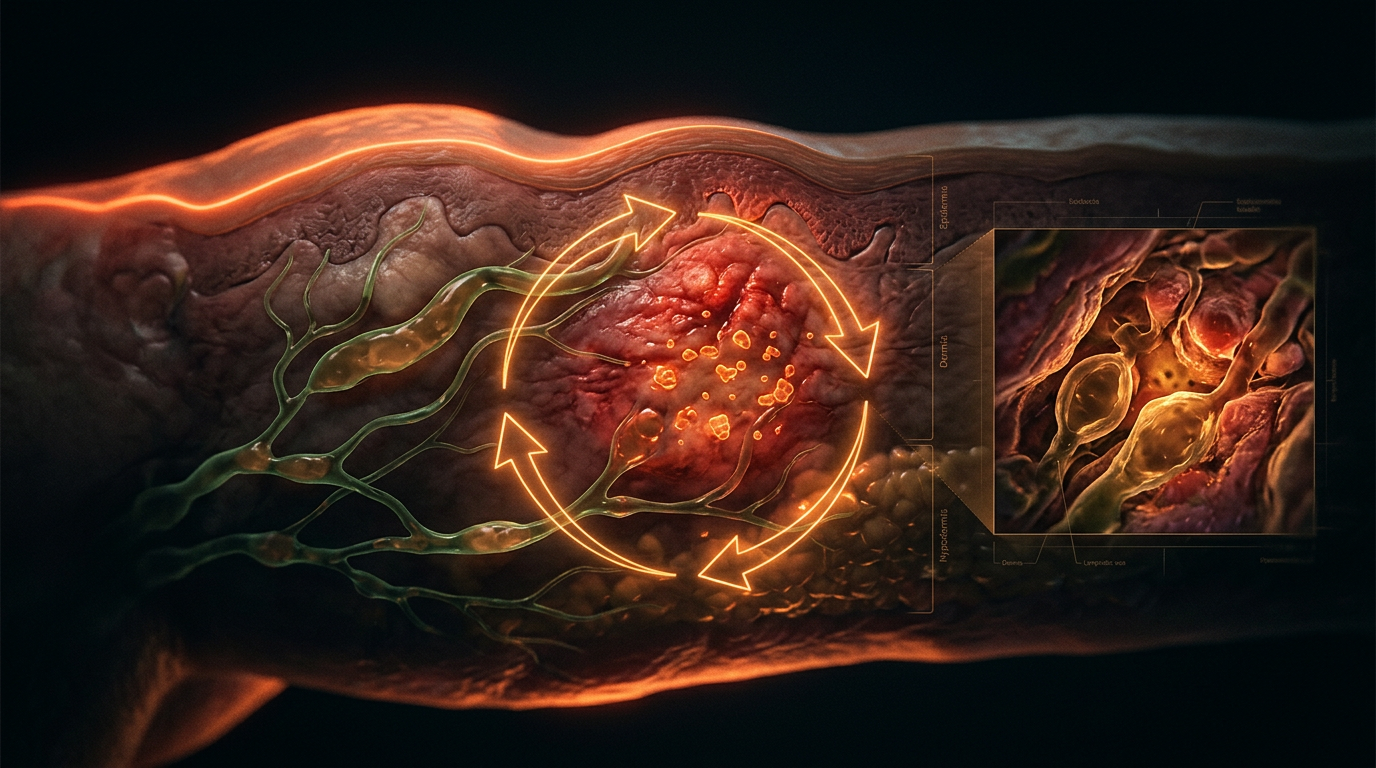
The bidirectional pathophysiology of the lymphoedema-cellulitis cycle represents one of the most significant, yet critically undervalued, clinical challenges in contemporary vascular medicine. At its core, this cycle is not merely a sequence of sporadic infections but a self-perpetuating biological feedback loop where structural lymphatic failure and acute inflammatory episodes accelerate one another’s progression. Within the INNERSTANDIN pedagogical framework, we must define this as a state of localized immune paralysis—a "lymphostatic skin area"—where the failure of the lymphatic system to maintain interstitial fluid homeostasis directly results in a profound deficit in regional immunosurveillance.
The biological mechanism is rooted in the failure of the lymphatic pump to transport not only protein-rich fluid but also the cellular components of the immune system. In a healthy physiological state, the lymphatic network facilitates the migration of dendritic cells and macrophages to regional lymph nodes for antigen presentation. In the presence of chronic lymphostasis, this conduit is severed. The resulting interstitial protein accumulation creates a hyperosmolar, stagnant environment that serves as an ideal culture medium for bacterial pathogens, most notably Streptococcus pyogenes and Staphylococcus aureus. Peer-reviewed longitudinal data, including the landmark PATCH trials published in The Lancet Infectious Diseases, demonstrate that every singular episode of cellulitis induces a cascade of pro-fibrotic cytokines, specifically Transforming Growth Factor-beta (TGF-β1). This chemical signalling triggers the proliferation of myofibroblasts, leading to the irreversible deposition of collagen within the interstitium and the further obliteration of remaining initial lymphatics.
Despite this well-documented architectural destruction, the clinical application of prophylactic antibiotics remains inexplicably inconsistent across the UK healthcare landscape. While the British Lymphology Society (BLS) and the National Institute for Health and Care Excellence (NICE) provide pathways for long-term low-dose phenoxymethylpenicillin, many practitioners remain hesitant, often citing concerns regarding antimicrobial stewardship. However, this cautious approach frequently ignores the systemic metabolic cost of recurrent acute sepsis and the progressive morbidity of stage III elephantiasis. By failing to intervene with prophylaxis early in the cycle, the medical establishment inadvertently allows for the permanent structural remodeling of the lymphatic vasculature. This section will dissect why the current "wait-and-watch" reactive model is biologically flawed and how INNERSTANDIN aims to recalibrate the understanding of prophylactic intervention as a vital tool for preserving lymphatic integrity rather than a mere secondary measure. The systemic impact of these overlooked protocols extends beyond the individual patient, contributing to a substantial and preventable burden on NHS emergency admissions and long-term disability resources.
The Biology — How It Works
The pathophysiology of the cellulitis-lymphoedema cycle is rooted in a state of localised cutaneous immunodeficiency. At INNERSTANDIN, we recognise that lymphoedema is not merely a failure of fluid transport, but a profound disruption of the interstitial environment that compromises the "immune surveillance" of the limb. When lymphatic drainage is impaired, the stagnation of protein-rich interstitial fluid creates a high-oncotic-pressure environment that serves as a literal petri dish for bacterial proliferation. This biochemical milieu, dominated by extravasated plasma proteins such as albumin and hyaluronan, facilitates the rapid growth of common cutaneous pathogens, most notably Streptococcus pyogenes and Staphylococcus aureus.
Critically, the biological mechanism of the "cellulitis cycle" is driven by the progressive destruction of the remaining functional lymphatic architecture during each inflammatory episode. When an infection takes hold, the resulting acute inflammatory response triggers a massive influx of neutrophils and the release of pro-inflammatory cytokines (IL-1β, TNF-α) and matrix metalloproteinases (MMPs). While these are intended to neutralise the pathogen, in the context of lymphoedema, they exert collateral damage on the delicate lymphatic endothelial basement membrane. According to research published in The Lancet Infectious Diseases (the PATCH trials), each bout of cellulitis induces further lymphatic obliteration through structural scarring and fibrosis. This creates a self-perpetuating feedback loop: impaired lymphatics lead to infection, and infection leads to further lymphatic failure.
On a cellular level, the failure of the afferent lymphatic system prevents the efficient trafficking of antigen-presenting cells, such as dendritic cells and Langerhans cells, to the regional lymph nodes. This results in what is termed a "lymphostatic immune-deficiency syndrome." In this state, the local T-cell mediated response is sluggish and ineffective, allowing minor skin breaks—often overlooked in clinical settings—to escalate rapidly into systemic crises. The structural consequence is the activation of the TGF-β1 signalling pathway, which drives the transformation of fibroblasts into myofibroblasts. This leads to the deposition of collagen and the eventual transition from soft, pitting oedema to hard, irreversible brawny fibrosis (sclerosis).
In the UK context, the British Lymphology Society (BLS) and the NICE clinical guidelines underscore that the recurrence rate for cellulitis in lymphoedema patients is upwards of 50%. The biological rationale for prophylactic antibiotics—specifically long-term, low-dose phenoxymethylpenicillin—is to maintain a constant bacteriostatic threshold. By preventing the inflammatory cascade from initiating, we stop the proteolytic degradation of the lymphatics. Without this pharmacological intervention, the biological reality for the patient is an inevitable, stepwise decline in lymphatic capacity, where each subsequent infection lowers the threshold for the next. This is the "Cellulitis Cycle" that INNERSTANDIN seeks to expose: a biological trap where structural damage and immunological failure feed into one another until the limb reaches a state of permanent pathological remodeling.
Mechanisms at the Cellular Level
The pathophysiology of the cellulitis cycle within the lymphoedematous limb represents a profound failure of regional immune surveillance, a state increasingly defined in advanced dermatological literature as 'immunological skin failure.' At the cellular level, the stagnation of protein-rich interstitial fluid—the hallmark of lymphostatic dermopathy—transforms the subcutis into a sequestered reservoir for pathogenic proliferation. This proteinaceous milieu serves as a high-density growth medium for Gram-positive bacteria, most notably Streptococcus pyogenes and Staphylococcus aureus, while simultaneously crippling the body’s innate cellular response.
Central to this mechanistic breakdown is the dysfunctional trafficking of antigen-presenting cells (APCs). In healthy tissue, dendritic cells and macrophages migrate through the lymphatic vasculature to regional lymph nodes to initiate adaptive immune responses. In lymphoedema, the structural degradation of initial lymphatics and the loss of intraluminal pressure gradients result in the entrapment of these cells. Research published in The Lancet Infectious Diseases and various PubMed-indexed studies highlights that this stagnation leads to a paradoxical state of chronic low-grade inflammation and localised immunosuppression. The inability of lymphocytes to reach the site of bacterial entry allows minor cutaneous breaches to escalate rapidly into systemic inflammatory responses.
Furthermore, each subsequent episode of cellulitis triggers a cascade of pro-inflammatory cytokines, specifically IL-1, IL-6, and TNF-α, which activate the TGF-β1 (Transforming Growth Factor Beta 1) pathway. This biochemical signalling is the primary driver of tissue fibrosis. Fibroblasts are stimulated to overproduce extracellular matrix components, including collagen and fibrin, which undergo cross-linking and result in the permanent sclerosis of remaining functional lymphatic collectors. This structural obliterative process, often referred to as 'lymphatic scarring,' ensures that the limb’s drainage capacity is further diminished with every infection, creating a vicious, self-perpetuating loop of biological vulnerability.
The systemic failure of the UK’s current reactive treatment model lies in its ignorance of these micro-anatomical realities. The PATCH II trials demonstrated that long-term, low-dose prophylactic antibiotics (such as Phenoxymethylpenicillin) significantly reduce the frequency of recurrence by lowering the bacterial bioburden before the inflammatory threshold is reached. By inhibiting the repetitive 'cytokine storms' associated with acute cellulitis, prophylaxis acts not merely as an anti-microbial measure, but as a critical tissue-preservation strategy. At INNERSTANDIN, we recognise that failing to implement prophylaxis is a failure to protect the underlying cellular architecture from irreversible fibrotic transformation. The biological imperative is clear: the cycle must be interrupted pharmacologically to prevent the terminal degradation of the lymphatic system.
Environmental Threats and Biological Disruptors
The biological reality of lymphoedema transcends mere fluid accumulation; it represents a profound disruption of the cutaneous microenvironment, transforming the skin into a high-stakes theatre for opportunistic pathogens. At the core of the "Cellulitis Cycle" lies lymphostasis—the stagnation of protein-rich interstitial fluid—which serves as a highly fertile, biological agar for bacterial proliferation. In the context of INNERSTANDIN, we must scrutinise the interstitial milieu not as a passive reservoir, but as a compromised immunological niche where the standard mechanisms of immunosurveillance are systemically dismantled.
The skin barrier, typically a formidable defence, becomes compromised through chronic xerosis and the loss of the acid mantle, creating "micro-fissures" that act as conduits for environmental threats. Research published in The Lancet Infectious Diseases highlights that in patients with chronic lymphoedema, the most significant biological disruptor is often tinea pedis—a common fungal infection in the UK—which facilitates the entry of Streptococcus pyogenes and Staphylococcus aureus. Once these pathogens breach the epidermis, they encounter a "lymphatic blind spot." Normally, dendritic cells would rapidly transport antigens to regional lymph nodes to initiate a T-cell-mediated response. However, in the lymphoedematous limb, the afferent lymphatic pathways are either obliterated or functionally incompetent. This failure of the afferent limb of the immune response allows bacteria to multiply unchecked, triggering an explosive inflammatory cascade known as dermatolymphangioadenitis (DLA).
Furthermore, the biological disruption extends to the molecular level through the upregulation of transforming growth factor-beta (TGF-β). Each episode of cellulitis induces further inflammatory damage to the remaining initial lymphatics and collectors, accelerating the deposition of collagen and the transition from fluid-based swelling to irreversible fibrosclerotic tissue. This creates a devastating feedback loop: infection causes structural damage, which worsens lymphostasis, which in turn increases the risk of subsequent infection. Despite the British Lymphology Society (BLS) providing clear consensus guidelines on the efficacy of long-term prophylactic antibiotics (such as Phenoxymethylpenicillin) for those suffering two or more episodes per year, UK primary care often hesitates due to a narrow focus on antimicrobial resistance (AMR). This hesitation overlooks the systemic biological cost; the recurrent inflammatory storm of cellulitis is far more disruptive to the patient’s haemodynamic and lymphatic stability than the controlled administration of prophylaxis. INNERSTANDIN demands an acknowledgment that for the lymphoedema patient, the environment is not merely an external factor, but a source of perpetual biological insult that the compromised lymphatic architecture can no longer mitigate without pharmacological intervention.
The Cascade: From Exposure to Disease
The pathophysiology of the cellulitis-lymphoedema cycle is rooted in a profound failure of regional immunosurveillance, a state described in clinical literature as a localised "immunological desert." At INNERSTANDIN, we recognise that the lymphoedematous limb represents far more than a mechanical failure of fluid transport; it is a biological environment where the normal rules of pathogen clearance are suspended. When lymphatic transport capacity (TC) falls below the obligatory lymphatic load (LL), the resulting interstitial stagnation of high-molecular-weight proteins creates a fertile, pro-inflammatory milieu. This protein-rich fluid acts as a superlative culture medium for opportunistic pathogens, primarily Streptococcus pyogenes (Group A Strep) and Staphylococcus aureus.
The cascade begins with the failure of the cutaneous barrier. In lymphoedema patients, the skin often suffers from xerosis, hyperkeratosis, and loss of adnexal structures, leading to micro-fissures or tinea pedis that serve as portals of entry. Once bacteria breach the stratum corneum, they encounter a compromised innate immune response. The stagnation of lymph prevents the efficient trafficking of dendritic cells and macrophages to regional lymph nodes, effectively delaying the mounting of an adaptive immune response. This delay allows for rapid bacterial proliferation and the subsequent release of potent exotoxins, including hyaluronidase and streptolysin. These enzymes do not merely damage local tissue; they exert direct proteolytic effects on the delicate endothelial lining of the remaining functional initial lymphatics.
The systemic impact of this "cascade" is often underestimated within the UK’s primary care framework. As the inflammatory response intensifies, the recruitment of neutrophils triggers a "cytokine storm" within the limb, characterised by elevated levels of IL-6 and TNF-alpha. This acute inflammation induces further lymphangitis and progressive fibrosis of the lymphatic collectors. Each episode of cellulitis results in a "staircase effect" of structural degradation; the physical damage from the infection worsens the lymphoedema, which in turn increases the susceptibility to future infections.
Evidence from the PATCH trials (Prophylactic Antibiotics for the Treatment of Cellulitis at Home), published in The Lancet, confirms that for patients with recurrent episodes, the biological integrity of the limb is so severely compromised that standard reactive antibiotic dosing is insufficient to break the cycle. Within the NHS context, the failure to recognise this cascade leads to repeated, costly hospital admissions and the over-prescription of acute-phase antibiotics, which ignores the underlying biological reality: the limb has become a reservoir for recurrent disease. Prophylactic intervention is not merely a preventative measure; it is a necessary physiological stabiliser intended to halt the irreversible fibrotic remodelling of the lymphatic system.
What the Mainstream Narrative Omits
The prevailing clinical discourse surrounding cellulitis in the context of lymphoedema remains fundamentally reductionist, frequently categorising recurrent episodes as isolated acute events rather than recognising them as a self-perpetuating degenerative pathology. This mainstream narrative typically prioritises antimicrobial stewardship (AMS) in a generic sense, often at the expense of the specific, aberrant pathophysiology of the lymphatic-integumentary axis. What remains omitted is the biological reality of the 'inflammatory-fibrotic feedback loop,' a mechanism where the failure of the lymphatic system facilitates infection, and the subsequent infection further obliterates the lymphatic architecture.
In lymphoedema, the interstitial space is not merely a reservoir for excess fluid; it is a stagnant, protein-rich, hyperosmolar environment that functions as a pathological niche for bacterial colonisation. Peer-reviewed evidence, notably the PATCH I and PATCH II trials published in the New England Journal of Medicine, demonstrates that the risk of recurrence is significantly mitigated by long-term, low-dose prophylactic antibiotics—specifically phenoxymethylpenicillin. However, within the UK’s primary care landscape, a systemic hesitation persists. This hesitation stems from an oversimplified application of antimicrobial resistance (AMR) guidelines that fails to account for the 'lymphatic catch-22': each episode of cellulitis causes irrevocable damage to the remaining functional initial lymphatics and collectors through massive leukocyte infiltration and the activation of the TGF-beta signaling pathway, which drives tissue fibrosis.
This fibrosis increases interstitial hypertension, further impairs lymphatic drainage, exacerbates stasis, and lowers the physiological and immunological threshold for subsequent bacterial proliferation. At INNERSTANDIN, we identify this as a failure to acknowledge the systemic impact of lymphoedema-associated immunodeficiency (LAID). The mainstream narrative overlooks the fact that the lymphatic system is the primary site of immune surveillance; when the architecture is disrupted, the affected limb becomes an 'immunologically privileged' site for pathogens like Streptococcus pyogenes. By failing to implement prophylactic regimens as advocated by the British Lymphology Society (BLS) and the Consensus Document on the Management of Cellulitis in Lymphoedema, clinicians inadvertently permit the progressive destruction of the lymphatic valvular system. The omission of this cycle from general medical education means patients are often trapped in a state of 'medical reactiveism,' where treatment is only initiated when the systemic inflammatory response is acute, ignoring the subclinical, chronic inflammation that irreversibly degrades the patient’s microvasculature. In essence, the mainstream failure to prescribe prophylaxis is not a neutral act of stewardship, but a passive facilitation of lymphatic failure.
The UK Context
Within the United Kingdom’s clinical landscape, cellulitis accounts for approximately 2–3% of all emergency hospital admissions, yet the systemic failure to recognise lymphoedema as the primary driver of these episodes remains a profound evidentiary gap. At INNERSTANDIN, we must interrogate the biological stasis inherent in current National Health Service (NHS) protocols, which frequently prioritise reactive acute treatment over the prophylactic strategies mandated by the underlying lymphatic pathology. The "Cellulitis Cycle" in the UK context is not merely a clinical recurrence but a progressive biological degradation. Each acute episode of infection, typically involving Streptococcus pyogenes or Staphylococcus aureus, triggers a cascade of inflammatory cytokines that further damage the delicate initial lymphatics and pre-collectors. This creates a deleterious feedback loop: the infection-induced inflammation exacerbates lymphatic valvular incompetence and promotes fibrosclerotic changes in the interstitium, which in turn increases the protein-rich milieu that serves as a pristine culture medium for subsequent bacterial colonisation.
The landmark PATCH II trial, published in The Lancet, provided robust evidence that low-dose penicillin prophylaxis significantly reduces the frequency of cellulitis recurrence. Despite this, British primary care frequently exhibits a hesitation to implement long-term antibiotic strategies, often citing concerns regarding antimicrobial resistance (AMR) without weighing the counter-risk of repeated broad-spectrum intravenous interventions required during hospitalisation. This overlooks the specific haemodynamic and immunological vulnerability of the lymphoedematous limb. In the UK, the British Lymphology Society (BLS) has long advocated for the "Consensus Document on the Management of Cellulitis in Lymphoedema," yet integration into standard GP pathways remains fragmented.
The biological cost of this oversight is the acceleration of Stage II lymphoedema into Stage III (elephantiasis), characterised by irreversible dermal hardening and papillomatosis. By failing to interrupt the inflammatory cycle through prophylactic intervention, the UK system inadvertently allows for the permanent structural remodeling of the lymphatic system. INNERSTANDIN identifies this as a failure of "biological foresight"—where the immediate clinical focus on infection suppression ignores the long-term objective of lymphatic preservation. To truly address the burden on the NHS, the UK must transition from an episodic model to one that acknowledges prophylactic antibiotics as a vital scaffold for maintaining lymphatic integrity and preventing the irreversible transition from fluid-based oedema to fibrotic tissue deposition.
Protective Measures and Recovery Protocols
The physiological devastation wrought by recurrent cellulitis within lymphoedematous tissue necessitates a paradigm shift from reactive acute care to a structured, prophylactic intervention strategy. At the core of INNERSTANDIN research is the recognition that each infective episode acts as a catalyst for progressive lymphatic failure. The biological mechanism is clear: Streptococcus pyogenes or Staphylococcus aureus infiltration triggers a massive leucocyte influx and a subsequent cytokine storm (specifically TNF-α and IL-6), which induces further damage to the already compromised lymphatic endothelium. This creates a self-perpetuating "Cellulitis Cycle" where inflammation leads to lymphangitis, which in turn causes the obliterative fibrosis of the remaining functional initial lymphatics and collectors.
The primary protective measure, often criminally under-utilised in UK clinical practice, is the long-term administration of low-dose prophylactic antibiotics. Evidence from the PATCH II trial (published in the New England Journal of Medicine) demonstrates that phenoxymethylpenicillin (Penicillin V) significantly extends the time to recurrence in patients with prior episodes. From a technical standpoint, prophylaxis maintains a sub-therapeutic but inhibitory microbial environment, preventing the "threshold of invasion" where bacterial load overcomes the local tissue immunity. Despite this, British primary care often hesitates due to over-generalised antimicrobial stewardship concerns, ignoring the specific biological vulnerability of the lymphoedema patient whose interstitial protein accumulation acts as a near-perfect agar for bacterial proliferation.
Recovery protocols must extend beyond the cessation of a 14-day acute antibiotic course. The post-infection phase is a critical window of "biological remodeling." During this period, the tissue is hyperaemic and the interstitial fluid pressure is peaked, risking further distension of the lymphatic vessels. Recovery must involve the meticulous restoration of the skin’s barrier function. The use of specialised emollients to maintain the acid mantle—an often-overlooked biochemical defence—is essential to mitigate transepidermal water loss (TEWL) and prevent the micro-fissures that serve as portals for pathogens. Furthermore, the reintroduction of compression must be handled with precision; while compression is the cornerstone of lymphoedema management, applying high-pressure garments to acutely inflamed, friable tissue can exacerbate endothelial trauma. INNERSTANDIN advocates for a transitionary protocol using short-stretch bandaging to provide low resting pressure and high working pressure, facilitating the clearance of protein-rich oedema without compromising micro-vascular integrity.
Finally, the systemic impact of recovery must address the "immunological scar." Recurrent cellulitis causes a shift in the local macrophage phenotype from M2 (pro-resolution) to M1 (pro-inflammatory), fostering a chronically hostile environment that inhibits lymphangiogenesis. Modern recovery protocols must therefore integrate lymph-stimulating exercises and Manual Lymphatic Drainage (MLD) to mechanically flush residual inflammatory mediators out of the interstitium. In the UK context, the failure to implement these prophylactic and recovery-focused measures represents a systemic oversight that prioritises short-term cost-savings over the long-term preservation of lymphatic architecture. For the INNERSTANDIN community, it is imperative to recognise that prophylaxis is not merely a clinical option; it is a biological necessity for halting the fibrotic degradation of the limb.
Summary: Key Takeaways
The pathogenesis of the cellulitis-lymphoedema cycle is underpinned by a deleterious positive feedback loop where lymphatic insufficiency facilitates bacterial proliferation within protein-rich interstitial fluid, which in turn exacerbates lymphangiogenesis impairment and tissue hypoxia. Evidence from the landmark PATCH I and II trials, published in The Lancet, provides unequivocal clinical proof that long-term prophylactic penicillin significantly reduces recurrence rates and prevents the progressive degradation of lymphatic architecture. Despite this, a systemic gap remains prevalent within UK clinical practice, often driven by a misplaced prioritisation of acute antimicrobial stewardship over the prophylactic preservation of lymphatic function in high-risk cohorts.
At INNERSTANDIN, our analysis reveals that each cellulitic episode induces irreversible fibrotic remodelling and further obliterates the initial lymphatic collectors, creating a biochemical 'ratchet effect' that renders the limb increasingly susceptible to future microbial invasion. This failure to intervene prophylactically disregards the British Lymphology Society (BLS) consensus, which advocates for low-dose antibiotic intervention in patients experiencing two or more episodes annually. The continued oversight of this evidence-led strategy represents a profound misunderstanding of the skin as a localized immunocompromised territory in the context of chronic lymphostatic failure. To break the cycle, the medical community must pivot from reactive treatment to a model of proactive biochemical fortification, acknowledging that preventing the next infective insult is the only viable method to arrest the progressive physiological decline of the lymphatic system.
This article is provided for informational and educational purposes only. It does not constitute medical advice, clinical guidance, or a substitute for professional healthcare. Information reflects cited research at time of publication. Always consult a qualified healthcare professional before acting on any health information.
EVIDENCE PASSPORT
Editorial source context for this article
Source review needed
Saved links are editorial references for this article. They may support specific claims rather than every sentence. Open and assess each source in context. This passport does not independently verify them.
Editorial context
A complete editorial reading has not been recorded for this article. Source links remain available for you to open and assess directly.
Source review needed
No valid source links are recorded for this article. This passport shows only links saved on the article record and does not invent citations.
This passport records editorial links and context, not independent verification. Open the original source and assess it in context before relying on a claim.
Medical Disclaimer
The information in this article is for educational purposes only and does not constitute medical advice, diagnosis, or treatment. Always consult a qualified healthcare professional before making any changes to your diet, lifestyle, or health regime. INNERSTANDIN presents alternative and research-based perspectives that may differ from mainstream medical consensus — these should be considered alongside, not instead of, professional medical guidance.
Read Full DisclaimerContinue the thread
Keep this question moving.
Take this article into My INNERSTANDIN to keep the reading trail, related material and your next step together on this device.
Explore this in the Body Map
See where this hits your biology. Interactive anatomy, threats, and protective protocols.