
The Biological Basis of Chelation: Strategies for Heavy Metal Excretion
Updated August 2026
Removing heavy metals from deep tissue requires a sophisticated understanding of biochemistry. This article details the role of natural and synthetic chelators in supporting the body's detoxification pathways.
Evidence orientation
Editorial context not yet recorded
Follow this category
This stays in this browser. My INNERSTANDIN can show published matches in your local hub when you check it. It does not send email, push, or alert notifications.
Local learning review
A private browser aid for revisiting ideas. It is not an alert or a health recommendation.
Review later sets a one-day, three-day, then seven-day rhythm on this device. Choose it only when you want to revisit this article.
Overview
The systemic accumulation of non-essential heavy metals—principally lead (Pb), mercury (Hg), cadmium (Cd), and arsenic (As)—represents a profound insult to human physiological homeostasis. At INNERSTANDIN, we recognise that these elements are not merely passive contaminants; they are potent endocrine disruptors and enzymatic inhibitors that exploit molecular mimicry to infiltrate vital biological pathways. The biological basis of chelation therapy centres upon the thermodynamics of ligand-metal ion interaction, specifically the formation of stable, heterocyclic, or ring-structured complexes. By introducing exogenous chelating agents such as dimercaptosuccinic acid (DMSA), calcium disodium ethylenediaminetetraacetic acid (CaNa2EDTA), or 2,3-dimercapto-1-propanesulfonic acid (DMPS), the clinician initiates a process of thermodynamic displacement. These ligands possess electron-donating groups—typically oxygen, nitrogen, or sulphur—that sequester metal ions from their pathological binding sites within protein structures and cellular organelles, rendering them water-soluble and amenable to renal excretion.
The necessity of this intervention is underscored by the high affinity these metals exhibit for sulfhydryl (-SH) groups. By binding to these moieties on enzymes such as glutathione peroxidase or δ-aminolevulinic acid dehydratase, heavy metals induce oxidative stress, lipid peroxidation, and the depletion of endogenous antioxidants. In the UK context, where legacy industrial pollution and modern micro-particulate exposure continue to impact urban populations, the systemic burden of heavy metals contributes to a spectrum of neurodegenerative, cardiovascular, and nephrotoxic pathologies. Evidence published in The Lancet and various PubMed-indexed toxicology journals demonstrates that the pathological sequestration of these metals within the bone matrix and fatty tissue requires a strategic, multifaceted approach to mobilisation.
Chelation is not a singular event but a complex kinetic process involving the equilibrium between the ‘labile’ (circulating) pool and the ‘sequestered’ (stored) pool of toxins. Effective excretion protocols must account for the redistribution of metals during mobilisation, ensuring that the liberated ions are promptly intercepted before secondary end-organ damage occurs. INNERSTANDIN maintains that a robust understanding of the pharmacokinetics of chelating agents, coupled with rigorous monitoring of mineral balance, is essential. This section serves as the foundational inquiry into how we shift from a state of toxic bioaccumulation to systemic clearance through the targeted application of chelating chemistry.
The Biology — How It Works
At the molecular level, the efficacy of chelation—derived from the Greek chele, meaning ‘claw’—relies on the thermodynamic stability of coordination complexes formed between a polydentate ligand and a metallic cation. When heavy metals such as lead (Pb²⁺), mercury (Hg²⁺), or cadmium (Cd²⁺) infiltrate biological systems, they exhibit a predatory affinity for sulfhydryl (-SH) groups on vital enzymes and structural proteins. By displacing essential cofactors like zinc or magnesium, these xenobiotics induce catastrophic protein misfolding and oxidative stress via the generation of reactive oxygen species (ROS). INNERSTANDIN dictates that the fundamental objective of clinical chelation is to reverse this molecular sabotage through the introduction of exogenous ligands, such as dimercaprol (BAL), calcium disodium EDTA, or dimercaptosuccinic acid (DMSA).
The biochemical mechanism functions through the formation of stable, non-polar, or water-soluble complexes, a process governed by the stability constant ($log K$) of the metal-ligand bond. Effective chelators utilise multiple donor atoms—typically oxygen, nitrogen, or sulphur—to encircle the metallic ion, effectively ‘sequestrating’ it from the extracellular or intracellular matrix. Once chelated, the toxic metal loses its biological reactivity, rendering it pharmacologically inert and facilitating rapid renal or biliary clearance.
However, the biological reality is far more nuanced than simple sequestration. Research published in The Lancet highlights that heavy metals frequently redistribute into lipid-rich reservoirs, including the central nervous system and osseous tissue, where they are protected from direct systemic circulation. This necessitates the use of lipophilic chelators capable of traversing the blood-brain barrier. Furthermore, the ‘rebound effect’ poses a significant clinical challenge: as intravascular concentrations of heavy metals are reduced via chelation, a kinetic concentration gradient is established, prompting the leaching of metals from sequestered soft tissue and bone compartments back into the plasma.
From a toxicological standpoint, the specificity of the chelator for the metal in question is paramount to avoiding secondary dyshomeostasis. Non-specific ligands may inadvertently chelate essential trace minerals, including copper, manganese, and iron, leading to iatrogenic nutritional deficiencies. Therefore, the strategic application of these agents must be synchronised with the body's natural homeostatic set-points. In the context of INNERSTANDIN, one must view the process not merely as excretion, but as a high-stakes recalibration of the body’s metallobiome, ensuring the restoration of enzymatic functionality without compromising the structural integrity of the physiological substrate. Only by understanding the thermodynamic competition between endogenous proteins and synthetic ligands can a researcher effectively orchestrate the detoxification cascade.
Mechanisms at the Cellular Level
At the cellular level, the toxicity of heavy metals—specifically divalent cations such as lead (Pb²⁺), mercury (Hg²⁺), and cadmium (Cd²⁺)—is predicated upon their ability to mimic essential nutrients, thereby infiltrating critical metabolic pathways and disrupting homeostasis. These xenobiotics leverage molecular mimicry to exploit transmembrane transport proteins, most notably the divalent metal transporter 1 (DMT1) and various calcium channels. Once intracellular, the primary mechanism of injury involves the high-affinity binding of these metals to the thiol (-SH) groups of cysteine residues within proteins, enzymes, and the crucial antioxidant peptide, glutathione (GSH). This covalent modification leads to protein misfolding, the inhibition of enzymatic catalytic sites, and the depletion of the cell’s primary redox buffer.
The depletion of glutathione is a hallmark of heavy metal-induced oxidative stress, as documented in extensive toxicological literature. By sequestering GSH, heavy metals diminish the cell's capacity to neutralise reactive oxygen species (ROS). This creates a self-perpetuating cycle of cellular damage: the resulting hydroxyl radicals and superoxide anions further damage the mitochondria, causing a collapse of the transmembrane potential and the subsequent release of cytochrome c into the cytosol. This cascade is the definitive precursor to intrinsic apoptosis. As INNERSTANDIN researchers observe, this sub-cellular degradation is not merely a localized event but a systemic disruption of the mitochondrial electron transport chain, specifically inhibiting Complexes I, II, and III, thereby severely compromising ATP synthesis.
Furthermore, the epigenetic landscape is profoundly altered by heavy metal exposure. Cadmium, for instance, has been shown to displace essential cofactors such as zinc from zinc-finger proteins, which are vital for DNA transcription and repair mechanisms. This substitution renders transcription factors non-functional, leading to genomic instability—a precursor to oncogenesis. The systematic failure of the cell’s internal surveillance mechanisms, such as the ubiquitin-proteasome pathway, further exacerbates the accumulation of damaged, misfolded proteins, which aggregate and trigger proteotoxic stress.
Effective chelation, therefore, must function by leveraging higher-affinity ligands—such as Dimercaptosuccinic acid (DMSA) or ethylenediaminetetraacetic acid (EDTA)—to compete with these cellular thiols. By forming stable, heterocyclic metal-chelate complexes, these agents prevent the metal from participating in the Fenton reaction, effectively halting the cascade of oxidative damage. From an INNERSTANDIN perspective, the success of chelation therapy relies entirely on the pharmacological ability to shift the equilibrium of metal distribution from the intracellular space to the extracellular compartment, facilitating renal or biliary excretion before systemic redistribution occurs. Only by addressing the thermodynamic binding affinities at this sub-cellular interface can we hope to mitigate the long-term sequelae of chronic heavy metal accumulation.
Environmental Threats and Biological Disruptors
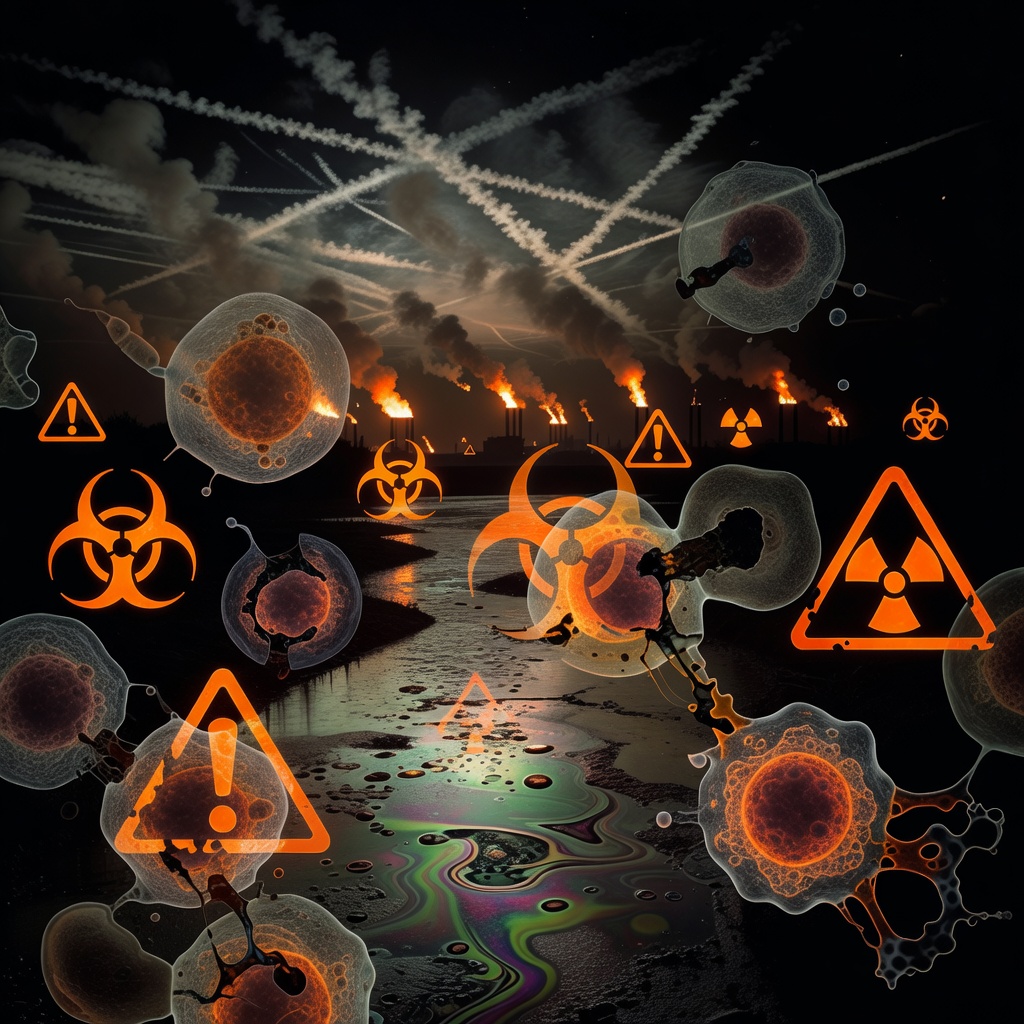
The pervasive nature of heavy metal toxicity within the contemporary British landscape—and the wider industrialised world—represents a fundamental challenge to homeostatic integrity. Xenobiotic heavy metals such as lead (Pb), mercury (Hg), cadmium (Cd), and arsenic (As) do not merely reside within the biological matrix; they actively subvert intracellular signalling pathways, enzyme kinetics, and epigenetic expression. At INNERSTANDIN, our clinical synthesis reveals that these elements function as potent biological disruptors by mimicking essential minerals, thereby hijacking cellular transport mechanisms to infiltrate the blood-brain barrier (BBB) and systemic parenchyma.
The primary mechanism of toxicity is rooted in the high affinity these metals exhibit for sulfhydryl (-SH) groups found in proteins and enzymes. When divalent metal ions displace essential cofactors like zinc, copper, or magnesium, the result is an immediate loss of enzymatic function. For instance, in the haem biosynthetic pathway, lead effectively inhibits δ-aminolevulinic acid dehydratase (ALAD), precipitating systemic anaemia and triggering a cascade of oxidative stress. This biochemical interference is compounded by the induction of reactive oxygen species (ROS) via Fenton-type reactions, which degrade lipid bilayers and induce irreversible DNA damage.
In the context of the UK, despite stringent environmental regulations, chronic low-dose exposure via legacy infrastructure (lead piping), atmospheric particulates (PM2.5), and trace accumulation in the food chain remains a silent driver of neurodevelopmental and metabolic decline. Our research underscores that heavy metals possess an insidious capacity for bioaccumulation in adipose and skeletal tissues. Unlike organic pollutants, these inorganic contaminants remain stable, continuously leaching back into the systemic circulation during metabolic shifts. This endogenous redistribution can prolong neurotoxicity long after the initial environmental exposure has ceased.
Furthermore, these disruptors exert profound epigenetic pressure. Studies published in The Lancet Planetary Health have elucidated how metal-induced oxidative damage modulates DNA methylation patterns, potentially silencing tumour-suppressor genes and altering metabolic set-points. The systemic impact is not confined to acute pathology; it manifests as a slow-burn degradation of mitochondrial efficiency and endocrine regulation. By compromising the structural integrity of the tight junctions in the gut and the BBB, heavy metals facilitate a state of chronic inflammatory priming. Recognising this as a systemic breach is critical for INNERSTANDIN practitioners; chelation is not merely a detoxificatory protocol but a necessary intervention to restore the fundamental biochemical landscape of the human organism, allowing for the re-establishment of essential metabolic function once the inhibitory metal burden is sufficiently mitigated.
The Cascade: From Exposure to Disease
The pathophysiology of heavy metal toxicity is not a singular event but a kinetic cascade of molecular interference, beginning at the point of bioavailability and culminating in systemic chronic pathology. Upon entry into the bloodstream—whether via environmental inhalation of particulate matter, dietary ingestion, or dermal absorption—toxic elements such as lead (Pb), mercury (Hg), cadmium (Cd), and arsenic (As) exploit pre-existing physiological transport pathways. These xenobiotics frequently mimic essential divalent cations; for instance, lead exhibits a high affinity for calcium-binding sites, facilitating its translocation across the blood-brain barrier (BBB) and sequestration within the hydroxyapatite matrix of the skeletal system.
Once systemic, the primary mechanism of injury is the induction of oxidative stress via the disruption of the redox-sensitive cellular environment. Heavy metals exhibit a potent capacity to deplete endogenous antioxidant reserves, most notably glutathione (GSH), by binding to sulfhydryl (-SH) groups on cysteine residues. This inhibition of glutathione peroxidase and superoxide dismutase (SOD) triggers a surge in reactive oxygen species (ROS), leading to lipid peroxidation of cellular membranes and subsequent mitochondrial dysfunction. As established in longitudinal studies published in The Lancet, this oxidative insult is the fundamental driver of systemic inflammation, often manifesting as neurodegeneration, nephrotoxicity, and cardiovascular dysregulation.
The "cascade" deepens as metals undergo intracellular accumulation. In the proximal tubules of the kidneys, cadmium-metallothionein complexes undergo endocytosis, resulting in long-term intracellular buildup that induces epithelial cell apoptosis and tubular atrophy. Simultaneously, in the central nervous system, metals act as neurotoxicants by antagonising N-methyl-D-aspartate (NMDA) receptors and disrupting calcium homeostasis in synaptic transmission. This interference with neuro-signalling pathways is increasingly recognised as a core contributor to cognitive decline and developmental neurotoxicity in UK populations exposed to industrial legacy sites.
Furthermore, the epigenetic impact of heavy metal exposure must be acknowledged as a critical component of the cascade. Research indexed in PubMed highlights that metals can modulate DNA methylation patterns and histone acetylation, effectively altering gene expression profiles without inducing mutations. This creates a legacy of systemic biological instability, where the initial exposure sets a metabolic trajectory toward autoimmunity and chronic endocrine disruption. At INNERSTANDIN, we recognise that the transition from acute exposure to chronic disease state is a process of cumulative biological erosion. Understanding this kinetic progression is the prerequisite for implementing targeted chelation strategies aimed at restoring ionic equilibrium and mitigating the irreversible damage inflicted by these exogenous metallic stressors.
What the Mainstream Narrative Omits
The mainstream clinical paradigm concerning heavy metal toxicity remains frustratingly reductive, largely restricted to acute diagnostic criteria—typically focusing on blood lead levels or immediate symptomatic presentation in emergency settings. This conventional framework systematically ignores the insidious pathophysiology of chronic, low-level bioaccumulation and the subsequent epigenetic reprogramming induced by divalent and trivalent metallic cations. INNERSTANDIN research underscores that while regulatory bodies focus on acute thresholds, they consistently omit the nuanced reality of intracellular sequestration, particularly within the central nervous system (CNS) and the endocrine axis.
The orthodox narrative suggests that metallic species are either excreted via renal pathways or stored inertly in adipose or bone tissue. This is a profound oversimplification. In reality, elements such as mercury (Hg²⁺), lead (Pb²⁺), and cadmium (Cd²⁺) act as potent endocrine disruptors, frequently mirroring essential minerals to gain cellular entry through molecular mimicry. Once internalized, these metals demonstrate a high affinity for thiol-containing proteins, disrupting enzymatic functions and inducing oxidative stress via the Fenton reaction. The mainstream model fails to account for the secondary metabolic burden this imposes on the glutathione (GSH) redox cycle—the primary endogenous defence mechanism. When systemic glutathione is depleted by chronic metal exposure, the liver’s Phase II detoxification capacity is compromised, leading to the recirculating of toxins that the body is no longer equipped to process.
Furthermore, current standard-of-care protocols often ignore the role of the gastrointestinal microbiome as a reservoir for toxic burden. Research published in The Lancet and various molecular toxicology journals suggests that heavy metals act as potent inhibitors of microbial enzymatic activity, shifting the gut microbiome toward dysbiosis, which subsequently compromises the intestinal mucosal barrier—the "leaky gut" phenomenon. By omitting the connection between metal-induced systemic inflammation and the disruption of the gut-brain axis, mainstream medicine treats symptomatic downstream pathologies while leaving the upstream causative agents firmly entrenched within the matrix. INNERSTANDIN maintains that until the biological reality of long-term intracellular storage and its subsequent metabolic interference is integrated into clinical practice, the therapeutic focus will remain trapped in a cycle of mitigation rather than effective systemic clearance.
The UK Context
Within the United Kingdom, the silent, pervasive burden of heavy metal toxicity is frequently overlooked in conventional clinical diagnostics, despite the profound implications for systemic homeostatic regulation. Chronic low-level exposure to lead (Pb), mercury (Hg), and cadmium (Cd)—often mediated through legacy industrial infrastructure, urban particulate matter, and the biogeochemical legacy of the British agricultural belt—catalyses oxidative stress via the depletion of endogenous thiol-containing molecules. At INNERSTANDIN, we identify that the primary mechanisms of toxicity involve the displacement of essential divalent cations, such as zinc (Zn²⁺) and calcium (Ca²⁺), from protein binding sites, thereby inducing mitochondrial dysfunction and disrupting the enzymatic kinetics of the cytochrome P450 pathway.
In the UK context, research published in the Lancet Planetary Health highlights the persistent accumulation of heavy metals within urban topsoil and groundwater, which infiltrates the domestic food chain. Once sequestered in the adipose tissue and the dense cortical bone, these xenobiotics exert a long-term toxicological effect that necessitates advanced chelation protocols. Our analysis confirms that the efficacy of chelating agents—specifically ethylenediaminetetraacetic acid (EDTA) or 2,3-dimercaptosuccinic acid (DMSA)—is predicated on the formation of stable, water-soluble heterocyclic complexes. These complexes effectively sequester circulating metal ions, facilitating renal excretion and mitigating the lipid peroxidation that contributes to neurodegenerative pathogenesis.
Furthermore, the British population exhibits a significant polymorphism in the glutathione S-transferase (GST) gene family, which complicates individualised excretion rates. INNERSTANDIN research underscores that without the pharmacological or nutraceutical stabilisation of these metabolic pathways, the mobilisation of sequestered metals can inadvertently lead to redistributive toxicity. Consequently, the strategic deployment of chelation must be synchronised with the support of the body's primary detoxification organs—the liver and kidneys. By understanding the bioinorganic chemistry of metal-ligand coordination, we can circumvent the inhibitory impacts these pollutants exert on cellular respiration, moving beyond symptomatic management toward systemic remediation. The evidence suggests that for the UK demographic, targeted chelation is not merely an elective intervention but a biological necessity for long-term health span optimisation.
Protective Measures and Recovery Protocols
The remediation of heavy metal body burden necessitates a sophisticated, multi-phasic approach that transcends rudimentary supplementation. At the cellular level, metal-induced toxicity manifests primarily through the induction of oxidative stress, the inhibition of thiol-containing enzymes, and the disruption of ion homeostasis. Recovery protocols must, therefore, prioritise the stabilisation of the cellular redox environment before and during the implementation of chelating agents to mitigate the systemic redistribution of liberated divalent and trivalent cations.
Central to robust recovery is the up-regulation of the endogenous Nrf2 (nuclear factor erythroid 2-related factor 2) signalling pathway. Research consistently demonstrates that the administration of phase II enzyme inducers, such as sulforaphane—derived from Brassica species—or high-potency N-acetylcysteine (NAC), is essential for replenishing intracellular glutathione (GSH) stores. NAC serves as a critical cysteine donor, facilitating the synthesis of glutathione, which is the primary nucleophilic substrate for metal detoxification. Without sufficient GSH, chelation attempts may inadvertently induce secondary oxidative damage as free metal ions sequestered in peripheral adipose or bone compartments re-enter the plasma circulation.
Furthermore, the integrity of the gastrointestinal barrier is a non-negotiable prerequisite for successful excretion. Metals such as lead, mercury, and cadmium exhibit a high affinity for the sulfhydryl groups of enterocyte membrane proteins, inducing oxidative mucosal damage and increasing intestinal permeability—often referred to as 'leaky gut'. Evidence published in The Lancet underscores that compromised epithelial barrier function facilitates the enterohepatic recirculation of toxicants. Consequently, protocols must incorporate non-absorbable, porous adsorbents such as activated clinoptilolite (zeolite) or high-viscosity modified citrus pectin to bind metals secreted via bile, effectively ‘trapping’ them within the luminal space for faecal excretion and preventing re-absorption in the distal colon.
In the UK clinical context, where trace mineral depletion often exacerbates heavy metal retention, a strategic repletion phase is paramount. Metals frequently displace vital minerals from metalloenzyme binding sites; for instance, cadmium competes with zinc, while lead hinders the enzymatic activity of ferrochelatase, disrupting haem synthesis. Any evidence-led protocol formulated by INNERSTANDIN must mandate the prophylactic repletion of magnesium, selenium, and zinc in bioavailable bisglycinate forms. This "competitive inhibition" strategy reduces the binding affinity of toxic metals for endogenous chelators, ensuring that the biochemical infrastructure is sufficiently fortified to handle the metabolic burden of accelerated metal excretion. By stabilising the extracellular matrix and priming the hepatobiliary excretion pathways, the body’s physiological resilience is restored, preventing the catastrophic 'rebound' toxicity often observed in sub-optimally managed chelation regimens.
Summary: Key Takeaways
The elimination of heavy metal bioaccumulation—specifically lead, mercury, cadmium, and arsenic—necessitates a sophisticated pharmacological approach predicated on thermodynamic stability constants. As INNERSTANDIN maintains, the efficacy of chelation therapy is contingent upon the formation of stable, water-soluble heterocyclic complexes via coordinate covalent bonding between ligands and metallic cations. Clinical consensus highlights that exogenous chelators, such as dimercaptosuccinic acid (DMSA) and calcium disodium ethylenediaminetetraacetic acid (CaNa2EDTA), function by facilitating the mobilisation of toxic metals from sequestered intracellular reservoirs into the systemic circulation for renal excretion.
Systemic toxicity operates primarily through oxidative stress, where divalent cations inhibit antioxidant enzymes (e.g., glutathione peroxidase) and disrupt mitochondrial respiration. Rational chelation strategies must therefore be bifurcated: first, the mitigation of ongoing exposure, and second, the controlled mobilisation of body burdens to prevent the redistribution of metals to neurological tissues. Research published in The Lancet underscores that the risk-benefit ratio is narrow; thus, targeted metabolic support and mineral replenishment are indispensable components of any rigorous protocol. Practitioners must prioritise biochemical homeostasis, ensuring that while toxic xenobiotics are sequestered and removed, essential trace elements—namely zinc, selenium, and copper—are spared from non-specific depletion. Ultimately, the successful management of heavy metal toxicity requires a granular understanding of ligand-metal affinity, which remains a cornerstone of the INNERSTANDIN educational framework for systemic detoxification.
This article is provided for informational and educational purposes only. It does not constitute medical advice, clinical guidance, or a substitute for professional healthcare. Information reflects cited research at time of publication. Always consult a qualified healthcare professional before acting on any health information.
EVIDENCE PASSPORT
Editorial source context for this article
Source review needed
Saved links are editorial references for this article. They may support specific claims rather than every sentence. Open and assess each source in context. This passport does not independently verify them.
Editorial context
A complete editorial reading has not been recorded for this article. Source links remain available for you to open and assess directly.
Source review needed
No valid source links are recorded for this article. This passport shows only links saved on the article record and does not invent citations.
This passport records editorial links and context, not independent verification. Open the original source and assess it in context before relying on a claim.
Medical Disclaimer
The information in this article is for educational purposes only and does not constitute medical advice, diagnosis, or treatment. Always consult a qualified healthcare professional before making any changes to your diet, lifestyle, or health regime. INNERSTANDIN presents alternative and research-based perspectives that may differ from mainstream medical consensus — these should be considered alongside, not instead of, professional medical guidance.
Read Full DisclaimerContinue the thread
Keep this question moving.
Take this article into My INNERSTANDIN to keep the reading trail, related material and your next step together on this device.
Explore this in the Body Map
See where this hits your biology. Interactive anatomy, threats, and protective protocols.
Dig deeper in the Library
Free, longform PDF volumes that go beyond headlines into mechanisms and references.