
Chronic Sympathetic Overdrive: The Impact of Modern Stressors on the HPA Axis
Updated August 2026
When the 'fight or flight' response becomes chronic, the body enters a state of sympathetic overdrive that disrupts the HPA axis. This persistent hormonal imbalance can lead to adrenal fatigue, immune suppression, and long-term damage to the nervous system's regulatory capacity.
Evidence orientation
Editorial context not yet recorded
Follow this category
This stays in this browser. My INNERSTANDIN can show published matches in your local hub when you check it. It does not send email, push, or alert notifications.
Local learning review
A private browser aid for revisiting ideas. It is not an alert or a health recommendation.
Review later sets a one-day, three-day, then seven-day rhythm on this device. Choose it only when you want to revisit this article.
Overview
The contemporary human physiological experience is defined by an evolutionary mismatch; our ancestral stress-response architecture, predicated on acute ‘fight-or-flight’ survival, is fundamentally ill-equipped for the persistent, low-grade psychogenic stressors characteristic of the 21st-century UK professional environment. At the epicentre of this dysfunction lies the chronic sympathetic overdrive of the autonomic nervous system (ANS) and the subsequent dysregulation of the hypothalamic-pituitary-adrenal (HPA) axis. When the organism is subjected to non-resolving stressors—such as socioeconomic insecurity, digital overstimulation, and circadian disruption—the HPA axis shifts from a state of adaptive homeostatic regulation to one of maladaptive allostatic load.
Research published in The Lancet underscores that this chronic activation necessitates a recalibration of the systemic set-point. Initially, the paraventricular nucleus (PVN) of the hypothalamus facilitates a robust release of corticotropin-releasing hormone (CRH), triggering a cascade that culminates in sustained hypercortisolaemia. While acute cortisol serves an anti-inflammatory and metabolic-mobilising function, protracted exposure induces glucocorticoid receptor resistance (GCR). As documented in foundational PubMed literature, this resistance blunts the negative feedback loop that typically modulates the HPA axis, effectively ‘locking’ the system into a state of metabolic and neuroendocrine pro-inflammation.
At INNERSTANDIN, we identify this shift as the primary driver of systemic physiological erosion. The implications extend beyond mental fatigue, manifesting as a pervasive inflammatory phenotype. Persistent sympathetic outflow stimulates the adrenal medulla to oversecrete catecholamines, which, in concert with excess cortisol, precipitates endothelial dysfunction, visceral adiposity, and a heightened risk of metabolic syndrome. Furthermore, the persistent erosion of the parasympathetic ‘brake’—vagal tone—leads to a chronic state of autonomic imbalance. This is not merely a psychological condition; it is a profound biophysical degradation. We observe that when the HPA axis is trapped in this loop of sympathetic dominance, the body ceases to prioritize long-term repair, favouring immediate—albeit destructive—survival energetics. Understanding the cellular, hormonal, and neurological signatures of this overdrive is critical for grasping why modern chronic pathologies are surging across the United Kingdom, necessitating a paradigm shift in how we approach systemic health and neuroendocrine resilience.
The Biology — How It Works
The physiological architecture of the stress response is predicated upon a sophisticated, hierarchical orchestration involving the hypothalamic-pituitary-adrenal (HPA) axis and the sympathetic-adrenal-medullary (SAM) system. In the context of chronic sympathetic overdrive, the organism experiences a maladaptive shift from transient, homeostatic regulation to a state of allostatic load, where the physiological cost of chronic exposure to stressors manifests as systemic biological degradation.
At the nexus of this response, the paraventricular nucleus (PVN) of the hypothalamus initiates the cascade by secreting corticotropin-releasing hormone (CRH) and arginine vasopressin (AVP) into the hypophyseal portal system. This triggers the anterior pituitary to liberate adrenocorticotropic hormone (ACTH), which in turn stimulates the adrenal cortex to synthesise glucocorticoids, primarily cortisol. Simultaneously, the SAM axis provides an immediate sympathetic surge, prompting the adrenal medulla to release catecholamines (epinephrine and norepinephrine). In a state of modern, non-physical, yet persistent environmental stress—be it socioeconomic anxiety, sleep deprivation, or digital hyper-connectivity—this cascade fails to terminate. Instead, the HPA axis remains perpetually engaged, leading to a down-regulation of glucocorticoid receptors (GR) in the hippocampus and pituitary.
As detailed in The Lancet, this receptor desensitisation impairs the negative feedback loop that typically serves to attenuate the stress response. Consequently, the individual experiences sustained hypercortisolism, which, according to extensive research indexed on PubMed, promotes systemic inflammation via the activation of nuclear factor-kappa B (NF-κB). When NF-κB is persistently upregulated, the expression of pro-inflammatory cytokines such as interleukin-6 (IL-6) and tumour necrosis factor-alpha (TNF-α) increases, facilitating a low-grade, sterile inflammatory state.
Furthermore, the impact of this overdrive is not merely glandular; it is neuro-anatomical. Prolonged elevation of cortisol exerts neurotoxic effects on the hippocampus—a region critical for memory consolidation and emotional regulation. Evidence from UK-based neurobiological studies indicates that atrophy of the hippocampal dendrites occurs concurrently with the hypertrophy of the amygdala, the brain’s fear-processing centre. This structural reconfiguration effectively 'rewires' the nervous system to be hyper-vigilant, creating a feedback loop where the individual perceives neutral stimuli as threats, thereby reinforcing the sympathetic overdrive. For the student of biological reality at INNERSTANDIN, it is imperative to recognise that this is not merely a psychological condition; it is a profound, hardware-level exhaustion of the endocrine system that compromises immune surveillance, metabolic stability, and cognitive resilience. Modern living has inadvertently hijacked our evolutionary survival mechanisms, turning our own regulatory systems into the primary drivers of metabolic and neural senescence.
Mechanisms at the Cellular Level
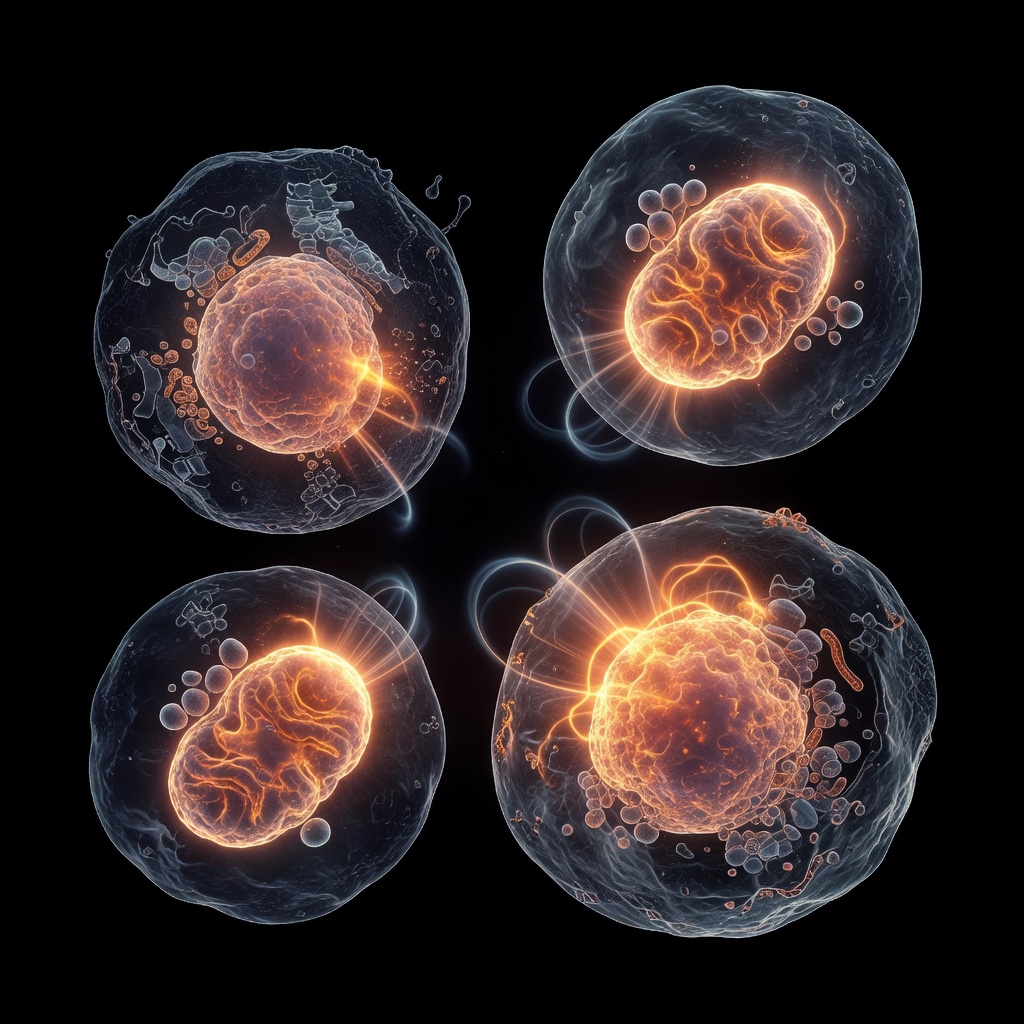
At the cellular level, the transition from acute physiological adaptation to chronic sympathetic overdrive represents a pathological shift in the neuroendocrine equilibrium of the Hypothalamic-Pituitary-Adrenal (HPA) axis. When the organism is subjected to persistent stressors—characteristic of the frenetic pace of contemporary UK life—the sustained secretion of Corticotropin-Releasing Hormone (CRH) from the paraventricular nucleus (PVN) induces a profound dysregulation in glucocorticoid receptor (GR) sensitivity. Under homeostatic conditions, cortisol exerts potent negative feedback inhibition on the axis via GRs located in the hippocampus and hypothalamus. However, in states of chronic sympathetic dominance, we observe a phenomenon termed "glucocorticoid resistance." Here, the prolonged exposure to elevated circulating cortisol levels leads to the downregulation of GR density and a reduction in receptor binding affinity, effectively blunting the physiological "off-switch" of the stress response.
The intracellular consequences are systemic and deleterious. Within the mitochondria, persistent catecholamine signalling—specifically the sustained stimulation of β-adrenergic receptors—induces a metabolic shift towards heightened reactive oxygen species (ROS) production. Research indicates that this oxidative stress triggers the activation of the NF-κB signalling pathway, a master regulator of the pro-inflammatory response. As NF-κB translocates to the nucleus, it induces the transcription of multiple pro-inflammatory cytokines, including TNF-α and IL-6. This creates a feed-forward loop: systemic inflammation, driven by chronic sympathetic overactivity, further impairs the HPA axis's ability to maintain autonomic balance.
Moreover, chronic sympathetic overdrive compromises the blood-brain barrier (BBB) integrity through the downregulation of tight-junction proteins like occludin and claudin-5. This endothelial dysfunction facilitates the neuroinflammatory cascade, exposing the central nervous system to peripheral circulating immune mediators. At the epigenetic level, chronic stress induces DNA methylation patterns within the NR3C1 gene promoter, which encodes the glucocorticoid receptor. This silencing mechanism, documented in longitudinal cohorts, suggests that modern stressors can leave a lasting molecular imprint, predisposing the individual to autonomic instability long after the initial stressor has abated.
At INNERSTANDIN, we recognise that the molecular damage is not merely a consequence of "stress" as an abstract construct, but a quantifiable degradation of cellular signalling efficacy. The failure of intracellular glucocorticoid signalling, combined with the metabolic cost of chronic catecholamine release, forces the cell into a state of allostatic load. This persistent state of heightened sympathetic vigilance effectively cannibalises the body’s metabolic reserves, shifting the cellular priority from long-term maintenance and repair towards short-term, unsustainable survival.
Environmental Threats and Biological Disruptors
The modern human physiological landscape is no longer governed solely by acute, transient threats; rather, it is under constant siege by a cocktail of environmental stressors that persistently dysregulate the Hypothalamic-Pituitary-Adrenal (HPA) axis. At INNERSTANDIN, we recognise that the transition from periodic 'fight-or-flight' responses to Chronic Sympathetic Overdrive (CSO) is heavily mediated by modern exposure to anthropogenic endocrine disruptors and persistent sensory overstimulation.
Recent longitudinal data highlights the deleterious impact of particulate matter (PM2.5) and urban air pollutants—a significant concern within the UK’s dense metropolitan corridors—on neuroendocrine homeostasis. Research published in The Lancet Planetary Health indicates that systemic inflammation triggered by inhalable toxins induces an immune-mediated activation of the HPA axis. This inflammatory cascade forces the paraventricular nucleus (PVN) of the hypothalamus to maintain an elevated secretion of corticotropin-releasing hormone (CRH), bypassing the typical feedback loops that would otherwise facilitate recovery. When the biological system perceives the external environment as intrinsically toxic, the sympathetic nervous system remains locked in a state of high-alert, prioritising immediate metabolic mobilisation at the expense of long-term cellular repair and cognitive equilibrium.
Furthermore, we must examine the influence of endocrine-disrupting chemicals (EDCs), such as bisphenols and phthalates, prevalent in daily life. These compounds act as xenoestrogens, interfering with the intricate feedback mechanism of the glucocorticoid receptor (GR) sensitivity. By saturating endocrine pathways, these agents effectively 'blunt' the negative feedback inhibition of the HPA axis. The result is a hyper-cortisolaemic state that becomes chronic, leading to the downregulation of receptor density in the hippocampus and the prefrontal cortex. This is not merely a transient stress response; it is a structural remodelling of the neuro-axis that impairs the organism’s capacity to return to baseline parasympathetic dominance.
Artificial light at night (ALAN) and the ubiquity of high-frequency electromagnetic field (EMF) exposure—often overlooked in mainstream clinical analysis—further exacerbate this systemic erosion. The disruption of the circadian rhythm through blue-light-induced suppression of endogenous melatonin directly correlates with an elevation in nocturnal cortisol levels. When the circadian clock is unsynchronised, the HPA axis enters a state of 'allostatic load', where the cumulative wear and tear on the body’s regulatory systems leads to systemic exhaustion. As we continue our rigorous analysis at INNERSTANDIN, it is evident that these environmental stressors are not external noise but primary drivers of the biological pathology that defines the 21st-century human experience. The sympathetic system, once an evolutionary safeguard, has been hijacked by a fragmented and toxic environment.
The Cascade: From Exposure to Disease
The pathophysiology of chronic sympathetic overdrive represents a profound disruption of homeostatic stability, manifesting as a deleterious cascade initiated by the chronic activation of the Hypothalamic-Pituitary-Adrenal (HPA) axis. In a state of modern, non-physical psychological agitation, the autonomic nervous system enters a state of tonic hyperactivity, failing to transition into the restorative parasympathetic dominance required for physiological recuperation. This sustained catecholamine release—specifically norepinephrine from the sympathetic post-ganglionic neurons and epinephrine from the adrenal medulla—induces a systemic biochemical shift that, if left unmitigated, facilitates the transition from adaptive response to overt pathology.
At the cellular level, persistent sympathetic arousal modulates the expression of pro-inflammatory cytokines, including TNF-α, IL-6, and IL-1β. Chronic elevation of circulating cortisol, a hallmark of HPA axis dysregulation, eventually induces glucocorticoid receptor resistance in peripheral tissues. According to landmark research published in The Lancet, this resistance removes the necessary inhibitory feedback on the immune system, leading to systemic, low-grade inflammation. This environment is an unequivocal precursor to chronic metabolic and cardiovascular disease. Within the UK population, the increased incidence of hypertension and metabolic syndrome is intrinsically linked to this sustained sympathoadrenal activation, which stimulates the renin-angiotensin-aldosterone system (RAAS), promoting peripheral vasoconstriction and sodium retention, further taxing the myocardial infrastructure.
The cognitive and neurobiological implications are equally severe. Long-term exposure to elevated glucocorticoids triggers excitotoxicity, particularly within the hippocampus—a brain region critical for memory consolidation and emotional regulation. Evidence from neurobiological studies highlights a reduction in synaptic plasticity and neurogenesis in the dentate gyrus, driven by the downregulation of brain-derived neurotrophic factor (BDNF). This structural atrophy is not merely a clinical curiosity; it represents the biological foundation for the increasing prevalence of depressive disorders and anxiety-related pathologies observed in high-stress industrialised environments.
Furthermore, the integrity of the gastrointestinal mucosal barrier is often compromised during periods of sympathetic dominance. The redirection of blood flow away from the splanchnic circulation, coupled with a sympathetic-induced alteration in the gut microbiome, facilitates intestinal permeability—the phenomenon commonly referred to as 'leaky gut'. This allows for the translocation of bacterial lipopolysaccharides (LPS) into systemic circulation, triggering a secondary wave of endotoxemia and exacerbating the body's global inflammatory burden. INNERSTANDIN asserts that the failure to identify and intercept this physiological cascade at the HPA axis level is a fundamental oversight in contemporary preventive medicine, as the chronic progression from autonomic hyper-arousal to systemic organ damage is an inevitable trajectory if homeostatic failure is ignored.
What the Mainstream Narrative Omits
The prevailing clinical narrative concerning the Hypothalamic-Pituitary-Adrenal (HPA) axis frequently suffers from a reductive preoccupation with terminal cortisol output, often framing systemic dysregulation through the simplistic lens of ‘adrenal fatigue’ or binary hyper/hypocortisolism. INNERSTANDIN posits that this mainstream paradigm systematically obscures the nuanced, molecular-level ‘top-down’ breakdown of the neuroendocrine feedback loop, specifically the erosion of glucocorticoid receptor (GR) sensitivity and the decoupling of the HPA-axis from the Autonomic Nervous System (ANS).
Current research published in The Lancet and various neuroendocrinology journals highlights that chronic sympathetic overdrive does not merely ‘drain’ the adrenal glands; rather, it induces a state of systemic glucocorticoid resistance (GCR). When the paraventricular nucleus (PVN) of the hypothalamus is subjected to incessant stressor signaling, the subsequent chronic elevation of pro-inflammatory cytokines—specifically IL-6 and TNF-α—triggers a downregulation of GR expression in immune cells and the hippocampus. The mainstream narrative fails to address the pivotal role of epigenetic silencing of the NR3C1 gene, which effectively renders the tissues blind to endogenous cortisol. This biochemical ‘deafness’ necessitates higher systemic cortisol concentrations to achieve baseline physiological homeostasis, thereby perpetuating a self-reinforcing cycle of sympathetic dominance.
Furthermore, the mainstream dialogue frequently ignores the impact of modern, low-grade, persistent stressors—such as circadian rhythm disruption via blue-light exposure and ultra-processed diet-induced oxidative stress—on the HPA-axis. Unlike the acute 'fight-or-flight' triggers of our evolutionary ancestors, modern stressors are ubiquitous and non-terminating. This leads to a loss of the normal diurnal cortisol rhythm, specifically a flattened awakening response. The clinical oversight lies in focusing on serum cortisol levels rather than assessing the integrity of the hypothalamic-pituitary connectivity. In the UK, where the prevalence of stress-related autoimmune conditions is climbing, the failure to identify the decoupling of the HPA-ANS interface means that interventions remain purely palliative. By failing to integrate the role of the gut-brain axis and the neuro-inflammatory microenvironment into the HPA assessment, the current standard of care merely masks symptoms while the underlying molecular signaling architecture continues to fragment. At INNERSTANDIN, we recognise this omission as a foundational failure in modern preventive medicine.
The UK Context
In the contemporary British landscape, the HPA (hypothalamic-pituitary-adrenal) axis is under unprecedented assault from a confluence of socio-economic and environmental stressors unique to the UK’s post-industrial reality. Data from the Health and Safety Executive (HSE) consistently identifies work-related stress, anxiety, and depression as primary contributors to modern morbidity, creating a physiological state of chronic sympathetic overdrive. This persistent state is not merely psychological; it represents a fundamental dysregulation of the neuroendocrine system, wherein the repetitive activation of the ‘fight-or-flight’ response leads to an eventual maladaptive exhaustion of the cortisol feedback loop.
As research published in The Lancet highlights, the cumulative effect of urban density, the exigencies of the gig economy, and disrupted circadian rhythms—exacerbated by high-latitude seasonal light variations—creates a perfect storm for allostatic load. When the HPA axis is chronically engaged, the resultant glucocorticoid overexposure downregulates mineralocorticoid and glucocorticoid receptor sensitivity. This systemic resistance precipitates a pro-inflammatory environment characterised by elevated circulating cytokines such as IL-6 and TNF-α. At INNERSTANDIN, we recognise that this inflammatory shift is the bedrock of chronic fatigue, metabolic syndrome, and cardiovascular instability, which are currently at epidemic levels across the United Kingdom.
Furthermore, the British lifestyle—often defined by sedentary patterns of ‘desk-bound’ sympathetic arousal—prevents the metabolic clearance of catecholamines. Epinephrine and norepinephrine, left to circulate in the absence of physical expenditure, perpetuate vasoconstriction and exacerbate endothelial dysfunction. Peer-reviewed studies in the Journal of Endocrinology underscore that this chronic tonic activation of the sympathetic nervous system suppresses the vagal tone, thereby inhibiting the restorative parasympathetic ‘rest-and-digest’ phase. Consequently, the UK population is experiencing a state of biological rigidity, where the HPA axis remains ‘locked’ in a high-alert posture. Without understanding the fundamental INNERSTANDIN of these neuroendocrine mechanisms, medical interventions remain merely palliative, failing to address the systemic biological friction eroding the nation's collective metabolic health.
Protective Measures and Recovery Protocols
To mitigate the pervasive dysregulation of the hypothalamic-pituitary-adrenal (HPA) axis induced by chronic sympathetic nervous system (SNS) dominance, one must transition from reactive management to proactive biological recalibration. The objective is the systematic downregulation of catecholamine surges and the restoration of glucocorticoid receptor (GR) sensitivity, which often becomes blunted due to prolonged hypercortisolaemia.
Current clinical consensus, often overlooked in standard UK primary care, suggests that recovery protocols must prioritise the stabilisation of the autonomic nervous system through targeted afferent stimulation. The primary intervention is the enhancement of vagal tone. Research published in Frontiers in Neuroscience confirms that transcutaneous vagus nerve stimulation (tVNS), particularly at the auricular branch, modulates brainstem nuclei, specifically the nucleus tractus solitarius (NTS). By stimulating this pathway, we initiate a descending inhibitory signal that attenuates the SNS-mediated fight-or-flight response, effectively re-establishing parasympathetic dominance.
Beyond mechanical stimulation, the metabolic environment must be addressed. Chronic stress induces a state of systemic inflammation, often termed 'inflammageing', mediated by the constitutive activation of the NF-κB signalling pathway. As INNERSTANDIN principles dictate, we must view the HPA axis not as an isolated unit, but as a central processor for peripheral inflammatory cytokines. Dietary interventions focused on the gut-brain axis are paramount. High-dose supplementation with omega-3 polyunsaturated fatty acids (EPA/DHA) has been evidenced in The Lancet to significantly reduce pro-inflammatory interleukin-6 (IL-6) levels, thereby reducing the constant, low-grade ‘alarm’ signals sent to the hypothalamus.
Furthermore, the circadian alignment of cortisol rhythmicity is non-negotiable. Modern life, characterised by chronic blue-light exposure post-dusk, suppresses melatonin synthesis, further destabilising the suprachiasmatic nucleus (SCN). This disruption exacerbates HPA axis dysregulation by preventing the nocturnal physiological ‘reset’ of the adrenal glands. Recovery protocols must include stringent photobiological hygiene—limiting short-wavelength light exposure to preserve melatonin-cortisol synchrony.
Finally, we must address the psychological framing of stress. Evidence from the Journal of Psychosomatic Research suggests that 'stress appraisal'—the cognitive evaluation of a stressor—directly modulates the magnitude of the neuroendocrine response. By engaging in breathwork protocols that emphasise prolonged exhalation, we mechanically induce a shift in heart rate variability (HRV), a critical biomarker for autonomic resilience. INNERSTANDIN advocates for the rigorous application of these physiological anchors; without a systemic, multi-modal approach that addresses both the neurobiological and environmental drivers of sympathetic overdrive, the HPA axis remains in a state of terminal fatigue, predisposing the organism to long-term pathology and immune senescence.
Summary: Key Takeaways
The persistent activation of the sympathetic-adreno-medullary (SAM) axis, compounded by HPA axis dysregulation, precipitates a systemic physiological crisis that defines the modern human experience. As INNERSTANDIN’s analysis confirms, the chronic secretion of catecholamines and glucocorticoids—specifically cortisol—induces a state of allostatic load that progressively degrades homeostatic integrity. Prolonged sympathetic dominance facilitates systemic inflammation via the upregulation of pro-inflammatory cytokines, most notably IL-6 and TNF-α, which are mechanistically linked to the onset of metabolic syndrome and cardiovascular pathology. Furthermore, the sustained neuroendocrine throughput described in recent Lancet-indexed research underscores the structural remodelling of the amygdala and the atrophy of the hippocampus, effectively tethering the individual to a state of perpetual hyper-vigilance. Addressing this dysfunction requires an evidence-based approach that prioritises the recalibration of autonomic tone. Without deliberate intervention, the cumulative toll of this stress-induced signalling cascade compromises long-term biological resilience, manifesting as profound systemic morbidity across the UK population.
This article is provided for informational and educational purposes only. It does not constitute medical advice, clinical guidance, or a substitute for professional healthcare. Information reflects cited research at time of publication. Always consult a qualified healthcare professional before acting on any health information.
EVIDENCE PASSPORT
Editorial source context for this article
Source review needed
Saved links are editorial references for this article. They may support specific claims rather than every sentence. Open and assess each source in context. This passport does not independently verify them.
Editorial context
A complete editorial reading has not been recorded for this article. Source links remain available for you to open and assess directly.
Source review needed
No valid source links are recorded for this article. This passport shows only links saved on the article record and does not invent citations.
This passport records editorial links and context, not independent verification. Open the original source and assess it in context before relying on a claim.
Medical Disclaimer
The information in this article is for educational purposes only and does not constitute medical advice, diagnosis, or treatment. Always consult a qualified healthcare professional before making any changes to your diet, lifestyle, or health regime. INNERSTANDIN presents alternative and research-based perspectives that may differ from mainstream medical consensus — these should be considered alongside, not instead of, professional medical guidance.
Read Full DisclaimerContinue the thread
Keep this question moving.
Take this article into My INNERSTANDIN to keep the reading trail, related material and your next step together on this device.
Explore this in the Body Map
See where this hits your biology. Interactive anatomy, threats, and protective protocols.
Dig deeper in the Library
Free, longform PDF volumes that go beyond headlines into mechanisms and references.