
Chronotype Mismatch: Why Your Social Clock May Be Driving Metabolic Dysfunction
Updated May 2026
Investigate the conflict between internal biological timing and modern societal demands, known as social jetlag. Learn how aligning habits with your chronotype can optimize glucose regulation.
Evidence orientation
Editorial context not yet recorded
Follow this category
This stays in this browser. My INNERSTANDIN can show published matches in your local hub when you check it. It does not send email, push, or alert notifications.
Local learning review
A private browser aid for revisiting ideas. It is not an alert or a health recommendation.
Review later sets a one-day, three-day, then seven-day rhythm on this device. Choose it only when you want to revisit this article.
Overview
The modern world is structured around a rigid, industrial-era schedule that prioritises economic output over biological reality. For decades, the "nine-to-five" workday has been the unquestioned standard of professional life, yet for a significant portion of the population, this schedule represents a form of chronic biological sabotage. At the heart of this conflict lies the chronotype—the internal genetic blueprint that determines an individual’s optimal timing for sleep, wakefulness, and metabolic activity. When our social clocks (work, school, and social obligations) drift away from our internal biological clocks, we enter a state of Social Jetlag (SJL).
Social Jetlag is not merely a matter of feeling "tired" or being a "night owl" in an early bird's world. It is a fundamental disruption of the circadian rhythm, the 24-hour cycle that governs every physiological process in the human body. Research emerging from the vanguard of chronobiology reveals that this temporal mismatch is a primary driver of the global metabolic health crisis. By forcing ourselves to perform, eat, and sleep at times that contradict our genetic programming, we are inducing a state of systemic insulin resistance, chronic inflammation, and cellular dysfunction.
This article exposes the hidden mechanisms by which chronotype mismatch erodes our metabolic foundations. We will move beyond the superficial "calories in, calories out" narrative to explore how the timing of light exposure, nutrient intake, and physical activity dictates our biochemical fate. For the British public, navigating a landscape of long winters, artificial blue light, and high-pressure work cultures, understanding the science of chronotypes is no longer optional—it is a prerequisite for survival in an increasingly de-synchronised world.
Recent longitudinal studies indicate that for every one-hour increase in Social Jetlag, the risk of being overweight or obese increases by roughly 33%, independent of sleep duration or physical activity levels.
The Biology — How It Works
At the centre of our temporal biology is the Suprachiasmatic Nucleus (SCN), a tiny cluster of approximately 20,000 neurons located in the hypothalamus. The SCN acts as the "Master Clock," receiving direct input from the eyes regarding light and dark cycles. However, the SCN does not act alone. Every organ—the liver, the pancreas, the gut, and even adipose tissue—possesses its own peripheral clock. In a healthy individual, these clocks are perfectly synchronised, much like an orchestra following a conductor.
The chronotype is the outward expression of this internal timing. It is determined largely by polymorphisms in specific "clock genes," most notably PER3 (Period 3), CLOCK, and CRY1 (Cryptochrome 1). Individuals with a "morning" chronotype (Larks) typically have shorter endogenous circadian periods, meaning their biological day is slightly shorter than 24 hours, causing them to wake and peak earlier. "Evening" chronotypes (Owls) have longer endogenous periods, leading to a natural delay in peak alertness and metabolic readiness.
Metabolism is fundamentally rhythmic. The secretion of insulin, the sensitivity of cells to glucose, and the rate of lipid oxidation (fat burning) are all under circadian control. For instance, insulin sensitivity is naturally higher in the morning for most individuals, as the body prepares to process the energy from the day's first meal. As night approaches, the body transitions into a "repair and storage" phase, mediated by the rise of melatonin. When an evening chronotype is forced to wake at 6:00 AM for a London commute, they are often attempting to eat and function while their melatonin levels are still high and their insulin sensitivity is at its lowest point of the day.
Data suggests that over 80% of the modern workforce suffers from at least one hour of Social Jetlag on workdays, with nearly 15% suffering from two hours or more, creating a permanent state of physiological "jetlag" without ever leaving their home postcode.
Mechanisms at the Cellular Level
To understand how chronotype mismatch drives disease, we must zoom in on the Transcription-Translation Feedback Loop (TTFL). This is the molecular engine of the circadian clock within every cell. The proteins BMAL1 and CLOCK bind together to promote the transcription of PER and CRY genes. Once these proteins reach a certain concentration in the cytoplasm, they inhibit their own production. This cycle takes approximately 24 hours to complete.
The Role of BMAL1 in Glucose Homeostasis
BMAL1 is perhaps the most critical player in the link between time and metabolism. It regulates the expression of GLUT4, the primary glucose transporter in muscle and fat cells. In a state of chronotype mismatch, the peak expression of BMAL1 is shifted. If a person consumes a high-carbohydrate meal when BMAL1 activity is low, the GLUT4 transporters fail to migrate to the cell surface effectively. The result is "postprandial hyperglycaemia"—elevated blood sugar levels that linger far longer than they should, damaging the delicate lining of the blood vessels (endothelium).
Mitochondrial Dynamics and Oxidative Stress
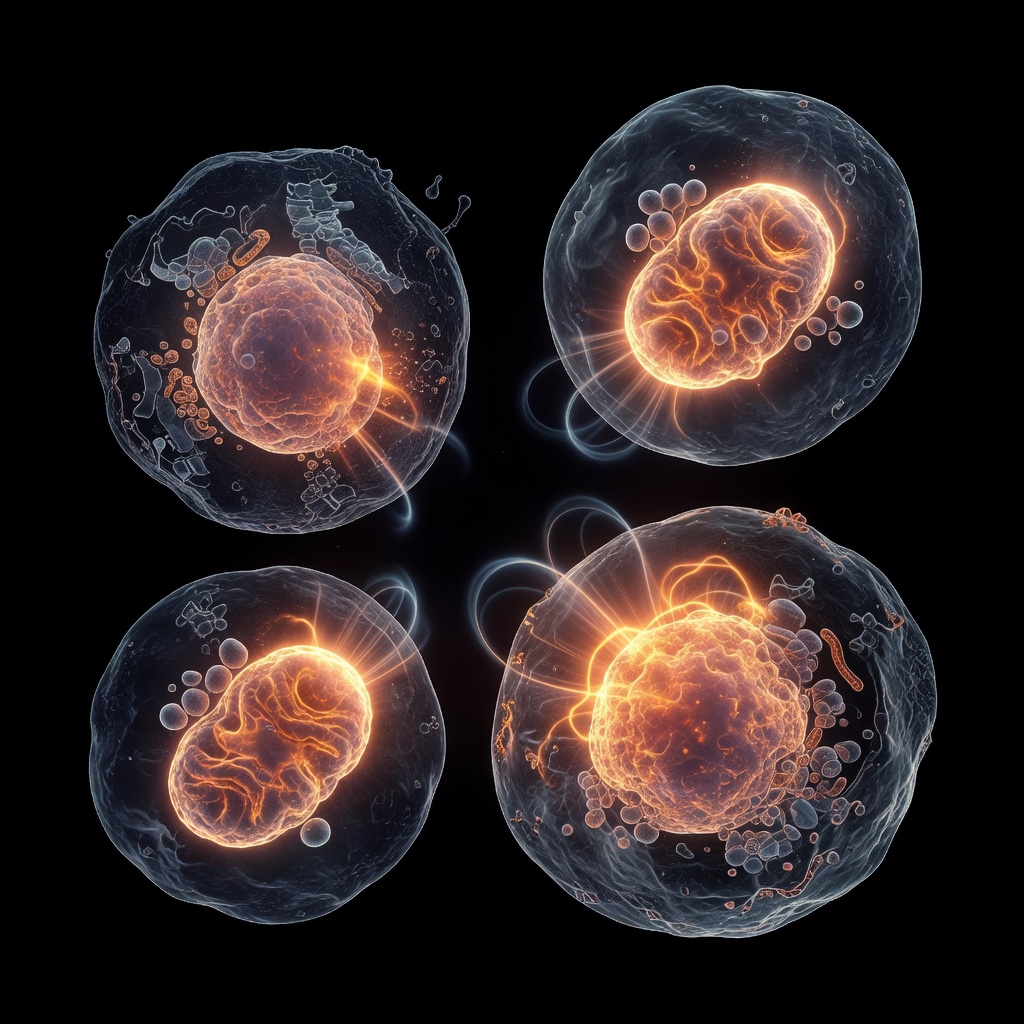
Mitochondria, the powerhouses of the cell, are also under strict circadian control. Processes such as mitophagy (the clearing out of damaged mitochondria) and mitochondrial fusion are timed to occur during the sleep phase. When we stay awake against our chronotype, particularly under artificial light, we disrupt the production of mitochondrial melatonin. Unlike the melatonin secreted by the pineal gland, mitochondrial melatonin is a potent antioxidant produced within the cell to neutralise Reactive Oxygen Species (ROS). A mismatch leads to a "leaky" mitochondrial state, where energy production becomes inefficient and oxidative stress begins to mutate cellular DNA and denature proteins.
The Pancreatic Clock and Insulin Secretion
The beta-cells of the pancreas, which produce insulin, have an intrinsic clock that is highly sensitive to the timing of nutrient intake. In "Owls" forced into early schedules, the pancreas is often still in a "quiescent" state during breakfast. Research shows that eating during the biological night—or the "biological morning" for an Owl—blunts the first-phase insulin response. This forces the pancreas to pump out compensatory, excessive amounts of insulin later, leading to hyperinsulinaemia, a precursor to Type 2 Diabetes and a primary driver of systemic inflammation.
Environmental Threats and Biological Disruptors
The primary threat to our chronotype is Artificial Light at Night (ALAN). Our eyes contain specialised cells called intrinsically photosensitive Retinal Ganglion Cells (ipRGCs), which contain the photopigment melanopsin. Melanopsin is exquisitely sensitive to blue light (wavelengths around 460-480nm). In the natural world, this light is only present during the day. In the modern world, it is emitted by every smartphone, laptop, and LED streetlamp in the UK.
High-Energy Visible (HEV) Light
Blue light exposure after sunset suppresses the pineal gland's secretion of melatonin. For evening chronotypes, who already have a delayed melatonin onset, even a small amount of blue light can push their biological "sleep gate" past midnight, while their social obligations remain fixed at 7:00 AM. This creates a "sleep squeeze," but more importantly, it prevents the metabolic reset that occurs during deep, melatonin-rich sleep.
Ultra-Processed Foods (UPFs) and "Social Snacking"
The modern UK food environment is a minefield of Ultra-Processed Foods (UPFs) that are designed to be "hyper-palatable." These foods often contain emulsifiers and industrial seed oils that disrupt the gut microbiome—another critical component of the circadian system. The gut microbiota have their own rhythms, and they communicate with the liver via the portal vein. When we engage in late-night "social snacking" on UPFs, we send conflicting signals to the liver. The SCN says "it is night," but the gut and liver perceive an energy influx, leading to a "phase shift" where peripheral organs become de-synchronised from the brain.
Temperature Regulation and Modern Housing
Human biology is evolved to respond to the natural drop in ambient temperature that occurs after dusk. This drop in core body temperature is a necessary signal for sleep onset and the activation of Brown Adipose Tissue (BAT), which burns glucose and fats to produce heat (thermogenesis). Modern UK homes, often kept at a constant 21°C due to central heating, deprive the body of this thermal cue. This "thermal monotony" contributes to metabolic sluggishness and further complicates the alignment of the chronotype.
Studies have confirmed that exposure to standard room lighting (approx. 200 lux) in the hours before bedtime can suppress melatonin levels by more than 50%, effectively "tricking" the brain into a state of permanent physiological midday.
The Cascade: From Exposure to Disease
What begins as a simple mismatch between a 10:00 PM bedtime and an 11:30 PM internal clock eventually cascades into systemic pathology. This process is known as allostatic load—the wear and tear on the body that accumulates when an individual is exposed to repeated or chronic stress.
Stage 1: The Cortisol-Insulin Seesaw
When an individual is forced to wake before their biological dawn, the body perceives this as a stressor. The adrenal glands release cortisol prematurely to force the body into alertness. Elevated morning cortisol, when combined with the "biological night" insulin resistance of an Owl, creates a perfect storm. Glucose cannot enter the cells, so it is diverted to the liver, where it is converted into triglycerides via De Novo Lipogenesis (DNL). This is the direct pathway to Non-Alcoholic Fatty Liver Disease (NAFLD).
Stage 2: Leptin Resistance and Dysregulated Hunger
The hormones governing appetite, leptin (satiety) and ghrelin (hunger), are profoundly affected by Social Jetlag. Chronically mismatched individuals show significantly lower levels of daytime leptin and higher nighttime ghrelin. This leads to "hedonic eating," where the brain seeks out high-calorie, sugary foods to compensate for the perceived energy deficit caused by fatigue. This is not a failure of willpower; it is a predictable hormonal consequence of circadian disruption.
Stage 3: Systemic Inflammation and Vascular Damage
As metabolic dysfunction takes hold, the adipose tissue becomes dysfunctional. Fat cells (adipocytes) grow too large (hypertrophy) and begin to leak inflammatory cytokines like IL-6 and TNF-alpha. These markers of "meta-inflammation" travel through the bloodstream, damaging the cardiovascular system and increasing the risk of hypertension and stroke. In the UK, cardiovascular disease remains a leading cause of death, yet the role of chronotype mismatch in driving this inflammation is rarely discussed in clinical settings.
What the Mainstream Narrative Omits
The mainstream health narrative in the UK, often echoed by the NHS and the FSA (Food Standards Agency), focuses heavily on "moderation" and "exercise." While these are not inherently wrong, they are woefully incomplete because they ignore the temporal dimension of health.
The "Morningness" Bias in Public Policy
There is a profound "morningness" bias in societal structure. Schools start early, businesses reward the "early bird," and late-rising is often stigmatised as "laziness." This ignores the fact that chronotype is approximately 50% heritable. By forcing "Owls" into a "Lark" schedule, society is effectively demanding that half the population live in a state of permanent metabolic impairment. Mainstream advice tells people to "eat a good breakfast," but for an evening chronotype, eating a large meal at 7:30 AM can be metabolically disastrous, as their body is not yet primed to handle the glucose load.
The Myth of "Catch-up Sleep"
The common practice of sleeping in on weekends to "catch up" on lost sleep actually exacerbates Social Jetlag. This "yo-yo" effect on the circadian system is equivalent to flying from London to New York every Friday and back every Monday. The mainstream narrative suggests that "as long as you get 8 hours on average," you are healthy. This is a fallacy. The consistency of the timing is more important for metabolic health than the total duration of sleep.
The Suppression of Light as a Nutrient
Mainstream medicine views light as a utility for seeing, not as a powerful "zeitgeber" (time-giver) that regulates hormones. There is a marked absence of public health warnings regarding the metabolic dangers of blue light. Just as the dangers of tobacco were suppressed for decades, the biological impact of the "Blue Light Revolution" is being downplayed by tech and energy interests. We must begin to view light exposure as a "nutritional" input that can either heal or harm.
The UK Context
The United Kingdom presents a unique set of challenges for maintaining circadian health. Our high latitude means that in winter, daylight hours are extremely limited, often coinciding with the time many Britons are stuck inside windowless offices.
The "SAD" Spectrum and Metabolic Health
Seasonal Affective Disorder (SAD) is well-recognised in the UK, but its metabolic counterpart is less discussed. During the British winter, the lack of morning sunlight (which should be at least 10,000 lux to reset the SCN) leads to a "drift" in the circadian rhythm. Without the strong "anchor" of morning sun, Social Jetlag becomes more pronounced. This correlates with the "winter weight gain" often attributed to Christmas indulgence, but which is fundamentally driven by a breakdown in circadian metabolic control.
The NHS Burden
The NHS is currently buckling under the weight of "lifestyle" diseases. Type 2 Diabetes costs the NHS roughly £10 billion per year. Current treatment protocols focus on pharmaceutical intervention—metformin, statins, and insulin. However, if the underlying driver is a chronotype mismatch, these drugs are merely masking the symptoms. A "circadian-first" approach to UK public health could potentially save billions by focusing on light hygiene and flexible working hours that respect individual biology.
Regulatory Gaps: MHRA and the Lighting Industry
While the MHRA (Medicines and Healthcare products Regulatory Agency) regulates drugs, there is little to no regulation concerning the "biological safety" of consumer electronics and indoor lighting. The FSA focuses on the content of food, but there are no guidelines on the timing of food consumption relative to the UK's social clock. We are living in a regulatory vacuum where the tools of modern life are allowed to disrupt our most fundamental biological rhythms without oversight.
Protective Measures and Recovery Protocols
Achieving metabolic health in a de-synchronised world requires a radical commitment to Circadian Discipline. We must act as our own "biological engineers" to protect our internal clocks from the pressures of modern society.
Phase 1: Identify and Honour Your Chronotype
The first step is to determine your true genetic chronotype using tools like the Munich ChronoType Questionnaire (MCTQ). Once identified, you must advocate for a schedule that aligns with your biology. For many in the UK, this means negotiating "Flexible Working" arrangements—a legal right that should be exercised specifically for circadian health.
Phase 2: Strategic Light Management
- The Morning Anchor: Within 30 minutes of waking, expose your eyes to bright light. In the UK winter, this requires a 10,000 lux SAD lamp. This suppresses melatonin and "resets" the SCN for the day.
- The Sunset Bridge: As soon as the sun sets, transition your environment to warm, amber light.
- Total Blue Block: Use high-quality (orange-tinted) blue-blocking glasses after 8:00 PM. These are not a luxury; they are a necessary defence against metabolic disruption.
- Blackout Conditions: The bedroom must be "cave-dark." Even a tiny sliver of light from a streetlamp can penetrate the eyelids and disrupt the nocturnal metabolic repair phase.
Phase 3: Time-Restricted Feeding (TRF)
To align your peripheral clocks, you must limit your "feeding window." For most, an 8-hour or 10-hour window is ideal. Crucially, this window should be shifted according to your chronotype.
- Larks: Should eat earlier in the day and stop by 6:00 PM.
- Owls: Should skip the "traditional" early breakfast, wait until their system is metabolically "awake" (around 10:00 or 11:00 AM), and finish eating by 8:00 PM.
- The Golden Rule: Never eat within 3 hours of your biological bedtime. This prevents the "clash" between insulin and melatonin.
Phase 4: Nutriceutical Support
While lifestyle is primary, certain supplements can help "re-sync" a damaged system:
- Magnesium Bisglycinate: Essential for over 300 enzymatic reactions, including those involved in the clock gene cycle. Take in the evening to support GABAergic relaxation.
- Alpha-Lipoic Acid (ALA): A potent antioxidant that improves insulin sensitivity and supports mitochondrial health, helping to mitigate the damage caused by Social Jetlag.
- Myo-Inositol: Helps to regulate the insulin signal transduction pathway, particularly useful for those who have already developed some degree of insulin resistance.
Integrating a strict 10-hour Time-Restricted Feeding window has been shown in clinical trials to reduce systemic inflammation markers (C-Reactive Protein) and improve HbA1c levels, even without a reduction in total calorie intake.
Summary: Key Takeaways
The collision between our ancient biological heritage and our modern temporal environment is a primary driver of metabolic decay. We cannot continue to ignore the fact that when we live is just as important as how we live.
- Chronotype is Genetic: Your preference for morning or evening is hardwired into your DNA. Fighting it is a recipe for chronic disease.
- Social Jetlag is a Metabolic Toxin: Mismatching your social and biological clocks leads to "allostatic load," manifesting as insulin resistance, obesity, and systemic inflammation.
- Light is a Biological Signal: Blue light at night is a metabolic disruptor that suppresses melatonin and prevents cellular repair.
- The UK Environment is Challenging: Seasonal light changes and a rigid work culture exacerbate chronotype mismatch, placing a massive burden on the NHS and individual health.
- Action is Possible: Through "Circadian Discipline"—morning light, evening darkness, and time-restricted feeding—you can re-synchronise your internal orchestra and reclaim your metabolic sovereignty.
The "Industrial Clock" was designed for machines. The "Biological Clock" was designed for life. It is time we stop sacrificing the latter for the former. True health is not found in a pill or a fad diet; it is found in the rhythmic harmony of a body that knows what time it is. Stay vigilant, protect your light environment, and honour the rhythm of your cells. This is the path to "Innerstanding."
This article is provided for informational and educational purposes only. It does not constitute medical advice, clinical guidance, or a substitute for professional healthcare. Information reflects cited research at time of publication. Always consult a qualified healthcare professional before acting on any health information.
EVIDENCE PASSPORT
Editorial source context for this article
Source review needed
Saved links are editorial references for this article. They may support specific claims rather than every sentence. Open and assess each source in context. This passport does not independently verify them.
Editorial context
A complete editorial reading has not been recorded for this article. Source links remain available for you to open and assess directly.
Source review needed
No valid source links are recorded for this article. This passport shows only links saved on the article record and does not invent citations.
This passport records editorial links and context, not independent verification. Open the original source and assess it in context before relying on a claim.
Medical Disclaimer
The information in this article is for educational purposes only and does not constitute medical advice, diagnosis, or treatment. Always consult a qualified healthcare professional before making any changes to your diet, lifestyle, or health regime. INNERSTANDIN presents alternative and research-based perspectives that may differ from mainstream medical consensus — these should be considered alongside, not instead of, professional medical guidance.
Read Full DisclaimerContinue the thread
Keep this question moving.
Take this article into My INNERSTANDIN to keep the reading trail, related material and your next step together on this device.
Explore this in the Body Map
See where this hits your biology. Interactive anatomy, threats, and protective protocols.
Dig deeper in the Library
Free, longform PDF volumes that go beyond headlines into mechanisms and references.