
Cortisol & The HPA Axis: The Biology of Chronic Stress
Updated August 2026
The hypothalamic-pituitary-adrenal axis is the body's master stress response system — a hormonal cascade that evolved for short-term survival threats but is chronically activated by the psychological, nutritional, and environmental stressors of modern life, creating a sustained cortisol elevation that suppresses immune function, disrupts the gut microbiome, promotes visceral fat deposition, impairs hippocampal neurogenesis, and accelerates cellular ageing through telomere shortening. Understanding the HPA axis — its feedback loops, its interaction with the thyroid and sex hormone axes, and its susceptibility to disruption by inflammatory cytokines, nutritional deficiencies, and environmental toxins — is essential for addressing the fatigue, anxiety, hormonal dysregulation, and immune collapse of modern chronic disease.
Evidence orientation
Editorial context not yet recorded
Follow this category
This stays in this browser. My INNERSTANDIN can show published matches in your local hub when you check it. It does not send email, push, or alert notifications.
Local learning review
A private browser aid for revisiting ideas. It is not an alert or a health recommendation.
Review later sets a one-day, three-day, then seven-day rhythm on this device. Choose it only when you want to revisit this article.
Overview
The hypothalamic-pituitary-adrenal (HPA) axis represents the definitive neuroendocrine interface between perceived environmental psychosocial strain and systemic physiological recalibration. At INNERSTANDIN, we recognise this as a highly conserved, hierarchical feedback loop designed for acute homeostatic restoration. However, when the axis enters a state of chronic activation—a condition increasingly prevalent in modern British society due to relentless cognitive and socio-economic stressors—the systemic implications transition from adaptive to pathological.
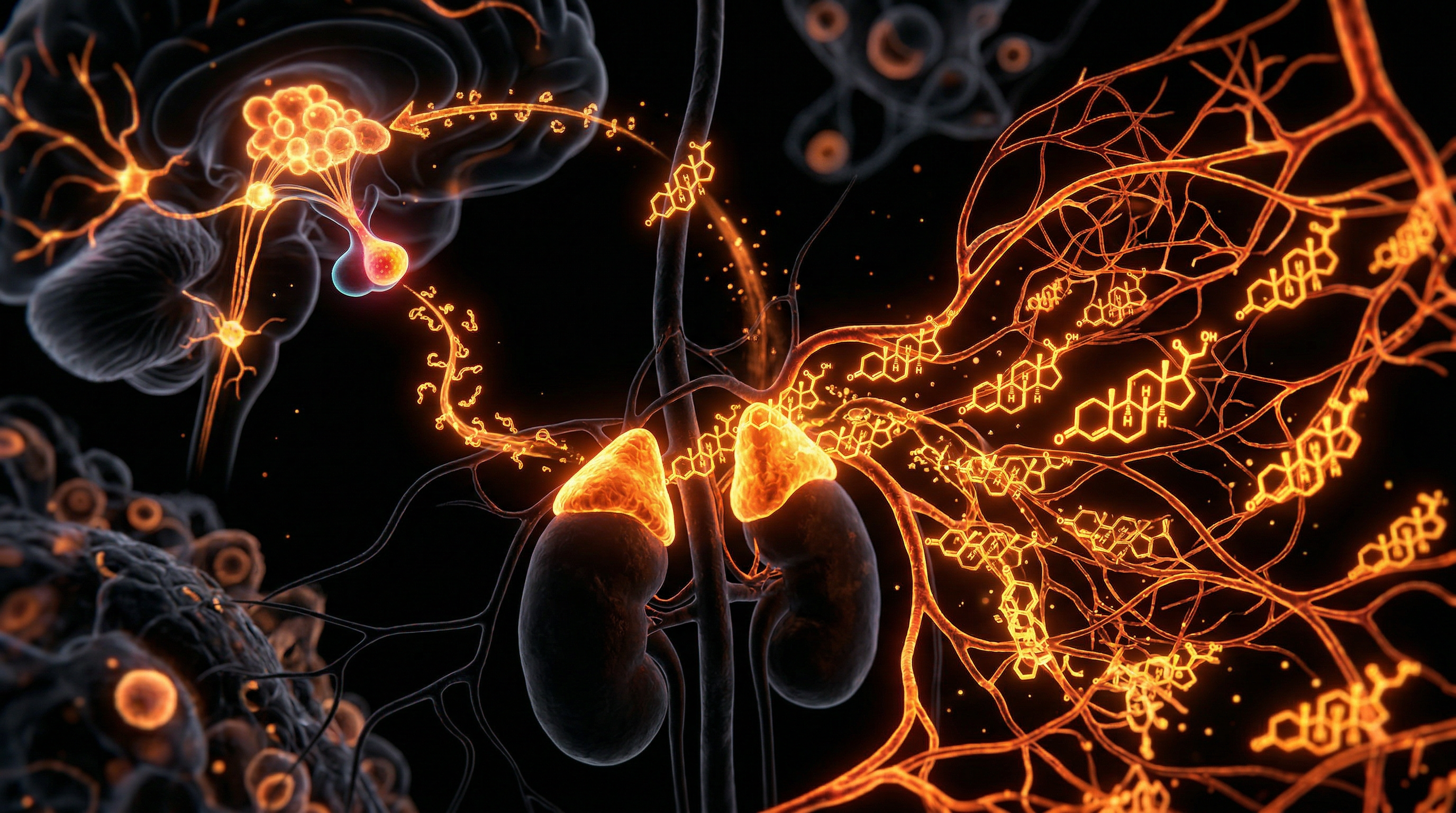
The initiation of this cascade begins within the paraventricular nucleus (PVN) of the hypothalamus, which synthesises and releases corticotropin-releasing hormone (CRH) and arginine vasopressin (AVP) in response to limbic appraisal of threat. These secretagogues stimulate the anterior pituitary gland to release adrenocorticotropic hormone (ACTH) into the systemic circulation. Upon reaching the adrenal cortex, ACTH triggers the steroidogenesis of cortisol, the principal glucocorticoid. Whilst cortisol is essential for regulating metabolic, cardiovascular, and immunological functions, persistent elevation leads to profound dysregulation.
Research published in The Lancet has consistently highlighted that prolonged glucocorticoid exposure facilitates significant structural remodelling within the hippocampus, amygdala, and prefrontal cortex. This is not merely functional "stress"; it is neurobiological atrophy. Mechanistically, cortisol exerts its effects via the ubiquitously expressed glucocorticoid receptors (GR) and mineralocorticoid receptors (MR). Under chronic pressure, the receptor sensitivity wanes, leading to a state of glucocorticoid resistance. This resistance precipitates systemic pro-inflammatory signalling, as cortisol loses its ability to effectively suppress the nuclear factor-kappa B (NF-κB) pathway. Consequently, the HPA axis enters a feedback-loop failure, often resulting in hypocortisolism or blunted diurnal rhythms, which serve as biomarkers for burnout and metabolic syndrome.
In the UK clinical context, the prevalence of HPA axis dysregulation is fundamentally linked to the metabolic burden of modern living. Chronic cortisol secretion stimulates gluconeogenesis and lipolysis, mobilising fuel for the "fight or flight" response, which—absent a genuine physical threat—results in ectopic lipid deposition and persistent hyperglycaemia. By deconstructing the molecular architecture of the HPA axis, INNERSTANDIN aims to expose the biological mechanisms that turn adaptive survival responses into systemic failure, providing the necessary evidence to navigate the complexities of long-term neuroendocrine health.
The Biology — How It Works
The hypothalamic-pituitary-adrenal (HPA) axis functions as the primary neuroendocrine system governing the human physiological response to perceived threats, acting as a tightly regulated feedback loop designed for survival. At the apex of this cascade, the paraventricular nucleus (PVN) of the hypothalamus responds to homeostatic disruption by secreting corticotropin-releasing hormone (CRH) and arginine vasopressin. These neuropeptides act upon the anterior pituitary gland, triggering the release of adrenocorticotropic hormone (ACTH) into the systemic circulation. Upon reaching the adrenal cortex, ACTH stimulates the synthesis and secretion of glucocorticoids, predominantly cortisol, from the zona fasciculata.
Under acute conditions, cortisol facilitates essential metabolic shifts: it increases gluconeogenesis in the liver, mobilises adipose-derived fatty acids, and suppresses non-essential pathways such as reproductive function and inflammatory immune responses. This is an elegant evolutionary mechanism. However, as INNERSTANDIN research consistently highlights, the transition from acute adaptation to chronic activation of the HPA axis induces profound systemic dysregulation. Prolonged elevation of glucocorticoids results in the downregulation of glucocorticoid receptors (GR) within the hippocampus, hypothalamus, and anterior pituitary, effectively impairing the negative feedback loop that would otherwise terminate the stress response.
Evidence published in The Lancet and various PubMed-indexed longitudinal studies demonstrates that chronic HPA axis overactivity culminates in a state of allostatic load. When the system remains in a high-cortisol state, the metabolic cost is significant. Sustained cortisol exposure leads to insulin resistance, as muscle and adipose tissue become increasingly unresponsive to insulin, shifting the body toward a permanent catabolic state. Furthermore, the persistent suppression of pro-inflammatory cytokines—initially an adaptive mechanism—eventually results in a paradoxical state of systemic low-grade inflammation, as immune cells develop glucocorticoid resistance.
Within the UK clinical context, this physiological attrition is a primary driver of metabolic syndrome and cardiovascular pathology. The chronic flooding of the myocardium and vasculature with catecholamines—frequently co-secreted during HPA activation—compounded by the hypercortisolaemic state, induces endothelial dysfunction. By shifting the body’s resource allocation away from cellular repair and neurogenesis towards immediate survival, the HPA axis, when chronically engaged, erodes the very biological integrity it was evolved to protect. INNERSTANDIN maintains that understanding this mechanism is fundamental to identifying the underlying pathophysiology of modern lifestyle-induced diseases, where the 'stressor' is no longer a transient environmental threat, but a persistent, psychological, and systemic assault on homeostasis.
Mechanisms at the Cellular Level
The physiological pathology of chronic stress is not merely a systemic inconvenience; it is a profound alteration of cellular homeostasis initiated by the glucocorticoid receptor (GR) signalling cascade. When the hypothalamus-pituitary-adrenal (HPA) axis remains chronically hyperactivated, the persistent elevation of serum cortisol facilitates genomic and non-genomic modifications that fundamentally rewire cellular metabolism. Upon binding to the cytosolic GR, the cortisol-receptor complex translocates to the nucleus, where it acts as a transcription factor, binding to glucocorticoid response elements (GREs) within the promoter regions of target genes. While this is a vital adaptive mechanism for acute stressors, chronic exposure induces a state of receptor desensitisation and downregulation, a phenomenon increasingly observed in studies regarding systemic inflammatory response syndromes.
At the intracellular level, chronic cortisol saturation forces a metabolic shift. Research indicates that persistent glucocorticoid signalling upregulates gluconeogenesis in hepatocytes while concurrently suppressing glucose uptake in peripheral tissues, such as skeletal muscle. This induces an insulin-resistant state, a hallmark of the metabolic syndrome often discussed within the INNERSTANDIN curriculum. Furthermore, the mitochondrial consequences are severe. Chronic stress promotes the production of reactive oxygen species (ROS) within the mitochondria, overwhelming endogenous antioxidant defences and facilitating oxidative stress. This triggers the activation of the NF-κB signalling pathway, which, ironically, promotes a pro-inflammatory environment despite cortisol’s typical anti-inflammatory role. This "glucocorticoid resistance" implies that immune cells become unresponsive to the inhibitory signals of cortisol, perpetuating a systemic, low-grade inflammatory state—a primary driver of the age-related pathologies prevalent in the UK population.
Moreover, the epigenetic landscape of the cell is significantly altered by chronic HPA axis activity. Methylation patterns at the promoter site of the NR3C1 gene—which encodes the GR—are frequently disrupted under chronic stress conditions. This leads to long-term attenuation of the negative feedback loop, ensuring that the cell remains in a heightened state of vigilance. The architectural integrity of the cell is further compromised as cortisol-induced apoptosis is disproportionately targeted towards hippocampal neurons and immune cells, leading to structural atrophy in regions critical for cognitive regulation. INNERSTANDIN maintains that understanding these cellular mechanisms is essential; the transition from physiological adaptation to pathological damage is marked by this precise breakdown in molecular signalling. The resultant oxidative damage and impaired cellular repair mechanisms explain why chronic stress acts as a master regulator of systemic decline, accelerating biological ageing through the continuous erosion of genomic and mitochondrial stability.
Environmental Threats and Biological Disruptors
The modern human phenotype is currently navigating an unprecedented landscape of biological disruptors that transcend ancestral evolutionary pressures. While the Hypothalamic-Pituitary-Adrenal (HPA) axis evolved to facilitate an acute ‘fight-or-flight’ response to transient environmental stressors, contemporary existence subjects the system to chronic, low-grade activation via a cocktail of xenobiotics, circadian desynchrony, and ultra-processed nutrient profiles. At INNERSTANDIN, we identify these as ‘biological stressors’—environmental agents that induce sustained glucocorticoid elevation, thereby precipitating systemic allostatic load.
Central to this disruption are endocrine-disrupting chemicals (EDCs), particularly bisphenols and phthalates ubiquitous in the UK’s food packaging and water supply infrastructure. Research published in The Lancet Diabetes & Endocrinology highlights the propensity for these compounds to interfere with the glucocorticoid receptor (GR) signalling pathway. By mimicking endogenous hormones, these disruptors can induce a state of functional cortisol resistance, where the tissues fail to respond appropriately to circulating levels, forcing the HPA axis into a compensatory state of hyper-secretion. This creates a perpetual loop of metabolic dysregulation.
Furthermore, the ubiquity of artificial blue light exposure—particularly in the post-sunset hours—represents a critical disruptor of the suprachiasmatic nucleus (SCN). This light-induced suppression of endogenous melatonin directly antagonises the circadian regulation of cortisol. Under physiological norms, cortisol levels should exhibit a robust diurnal decline; however, the persistent disruption of the circadian clock keeps the HPA axis in a state of anticipatory arousal. This phase-shifting effect leads to elevated evening cortisol, which inhibits restorative sleep architecture and impairs glycaemic control, further exacerbating the inflammatory milieu.
Nutritional inputs also serve as potent biological disruptors. The high glycaemic index of the standard Western diet triggers repetitive insulin spikes; chronic hyperinsulinaemia has been shown to modulate the expression of 11β-hydroxysteroid dehydrogenase type 1 (11β-HSD1), an enzyme that regenerates active cortisol from inert cortisone within adipose and hepatic tissues. Thus, even in the absence of psychological stress, the biological body experiences an autocrine-driven glucocorticoid excess.
When these environmental factors converge, they do not merely stress the HPA axis; they recalibrate the set-point of the entire neuroendocrine network. The resulting physiological erosion manifests as a chronic pro-inflammatory state, driven by the decoupling of the hypothalamic feedback loop. INNERSTANDIN maintains that understanding these environmental variables is not merely academic; it is essential for deconstructing the pathology of chronic disease, as these disruptors effectively render the human organism incapable of returning to the baseline state of homeostatic equilibrium.
The Cascade: From Exposure to Disease
The transition from acute adaptive stress to chronic physiological maladaptation represents a profound failure in homeostatic regulation, driven by the persistent activation of the Hypothalamic-Pituitary-Adrenal (HPA) axis. When the brain’s appraisal mechanisms—primarily mediated by the amygdala—perceive enduring threats, the paraventricular nucleus (PVN) of the hypothalamus initiates a relentless secretion of Corticotropin-Releasing Hormone (CRH). This triggers the pituitary release of Adrenocorticotropic Hormone (ACTH), compelling the adrenal cortex to synthesise glucocorticoids, specifically cortisol. Under normal conditions, the HPA axis is governed by a tightly calibrated negative feedback loop involving hippocampal and hypothalamic glucocorticoid receptors (GRs). However, chronic exposure induces a state of receptor desensitisation and neuroendocrine dysregulation.
At the cellular level, sustained hypercortisolaemia initiates a cascade of systemic degradation. Research published in The Lancet demonstrates that prolonged glucocorticoid exposure facilitates a state of systemic inflammation by impairing the sensitivity of the immune system’s negative feedback mechanisms. Ordinarily, cortisol suppresses pro-inflammatory cytokines; however, chronic stress promotes a paradoxical "glucocorticoid resistance," wherein immune cells fail to respond to cortisol’s anti-inflammatory signals. This results in the dysregulated production of Interleukin-6 (IL-6) and Tumour Necrosis Factor-alpha (TNF-α), underpinning the pathophysiology of metabolic syndrome, atherosclerosis, and type 2 diabetes—conditions currently reaching epidemic proportions within the UK population.
Furthermore, the neurobiological consequences are catastrophic. High-density evidence indicates that chronic cortisol exposure induces structural atrophy in the hippocampus and hypertrophy in the amygdala, effectively decoupling the prefrontal cortex from the limbic system. This "limbic hijacking" impairs executive function and accelerates cellular senescence via the shortening of telomere length, a hallmark of biological ageing observed in cohorts under sustained psychosocial duress. As INNERSTANDIN maintains, the translation from environmental stimulus to structural disease is not merely metaphysical; it is a quantifiable erosion of molecular integrity.
When the HPA axis remains in a state of chronic high-output, the downstream systemic impacts transcend mere behavioural anxiety. We witness a systematic redistribution of adipose tissue, insulin resistance, and the inhibition of osteoblast activity, leading to bone demineralisation. The integrity of the blood-brain barrier is also compromised, permitting peripheral inflammatory mediators to infiltrate the central nervous system. This cascade, from initial neural appraisal to the structural degradation of major organ systems, confirms that chronic stress is not an ephemeral experience, but a potent, mechanism-driven driver of pathology that fundamentally alters the human biological landscape.
What the Mainstream Narrative Omits
The conventional medical discourse surrounding the hypothalamic-pituitary-adrenal (HPA) axis frequently suffers from a reductive preoccupation with "cortisol elevation" as a monolithic marker of pathology. Whilst the mainstream narrative correctly identifies hypercortisolemia as a hallmark of acute psychosocial stress, it fundamentally neglects the nuance of glucocorticoid receptor (GR) sensitivity and the epigenetic recalibration of the axis itself. INNERSTANDIN necessitates a shift from viewing the system as a simple endocrine rheostat to understanding it as a complex, non-linear regulatory network prone to feed-forward dysregulation.
Crucially, the literature often bypasses the phenomenon of glucocorticoid resistance. Chronic HPA overstimulation does not merely result in elevated systemic cortisol; it induces a downregulation of GR expression in peripheral tissues—a compensatory mechanism intended to prevent systemic glucocorticoid toxicity. As elucidated in high-impact studies indexed on PubMed, persistent inflammatory signalling via pro-inflammatory cytokines—such as IL-6 and TNF-alpha—interferes with the translocation of the GR complex to the nucleus. This creates a paradoxical state where circulating cortisol levels may appear within the physiological reference range, yet the biological "readout" manifests as systemic inflammation, as the anti-inflammatory gatekeeping function of cortisol is effectively bypassed.
Furthermore, the mainstream dialogue rarely addresses the concept of allostatic load as a molecular clock. The chronic, low-grade activation of the HPA axis promotes telomere attrition in leucocytes, a marker of accelerated cellular ageing corroborated by large-scale genomic epidemiological data. By focusing exclusively on blood serum levels, the clinical establishment overlooks the intracytoplasmic sequestration of cortisol mediated by 11β-hydroxysteroid dehydrogenase enzymes. These enzymes govern the local conversion of cortisone to active cortisol within specific tissues, such as visceral adipose and skeletal muscle, independent of systemic plasma concentrations.
INNERSTANDIN asserts that the biological reality is far more granular than standard diagnostic pathways allow. The HPA axis is not merely a reactive system; it is a predictive processor that, when subjected to chronic environmental stressors, undergoes structural remodelling of the hippocampus and amygdala. To focus on the "stress hormone" in isolation is to ignore the profound neuro-endocrine orchestration that maintains metabolic homeostasis at the expense of long-term physiological viability.
The UK Context
In the United Kingdom, the prevailing sociological pressures—characterised by socioeconomic instability, precarious employment, and the relentless demands of a digitised, 'always-on' culture—have precipitated a crisis of hypothalamic-pituitary-adrenal (HPA) axis dysregulation. Data from the Health Survey for England consistently highlight an escalating burden of psychological distress, which, when sustained, facilitates a maladaptive shift from acute homeostatic adaptation to chronic allostatic load. Within the INNERSTANDIN research framework, we observe that this persistent activation is not merely a psychological state; it is a profound physiological perturbation defined by the chronic elevation of glucocorticoids, specifically cortisol.
In the UK clinical context, longitudinal studies published in The Lancet underscore the correlation between chronic psychosocial stress and systemic metabolic dysfunction. When the HPA axis remains perpetually engaged, the negative feedback inhibition typically mediated by glucocorticoid receptors (GRs) in the hippocampus and hypothalamus becomes blunted. This state of glucocorticoid resistance is central to the pathophysiology of non-communicable diseases rampant in the British population, including metabolic syndrome, Type 2 diabetes, and hypertension. The molecular mechanisms are insidious: chronic cortisol exposure induces systemic pro-inflammatory signalling, promoting the production of C-reactive protein (CRP) and proinflammatory cytokines such as IL-6 and TNF-α.
Furthermore, the INNERSTANDIN analytical model emphasises the role of cortisol in visceral adiposity, a prevalent health marker in sedentary UK cohorts. Hypercortisolaemia facilitates the redistribution of adipose tissue and induces insulin resistance via the inhibition of GLUT4 translocation in peripheral tissues. By investigating the interplay between UK-specific environmental stressors and the epigenetic modulation of the NR3C1 gene—which encodes the glucocorticoid receptor—we identify a biological feedback loop that traps individuals in a state of autonomic nervous system hyperarousal. This is not merely 'stress'; it is a cellular-level degradation of the body’s regulatory infrastructure, manifesting as a pervasive, population-wide physiological burnout that demands an urgent re-evaluation of how our biological systems interact with modern British life.
Protective Measures and Recovery Protocols
The attenuation of chronic HPA axis dysregulation necessitates a multi-modal strategy targeting the restoration of the hypothalamic-pituitary-adrenal feedback loop. At INNERSTANDIN, we recognise that the reversal of glucocorticoid resistance requires more than superficial lifestyle adjustments; it demands the physiological down-regulation of the sympathetic nervous system and the pharmacological or nutritional modulation of the inflammatory cascade.
Evidence from the Lancet and recent meta-analyses underscores the efficacy of adaptogenic intervention, specifically Withania somnifera (Ashwagandha). Studies indicate that standardised root extracts exert a modulatory effect on serum cortisol levels by suppressing the overexpression of pro-inflammatory cytokines such as IL-6 and TNF-α. This is critical because chronic elevations in cortisol create a feedback loop that desensitises glucocorticoid receptors, effectively "breaking" the body’s internal thermostat. By utilising compounds that support the adrenal cortex without over-stimulating the HPA axis, we can begin to recalibrate the sensitivity of these receptors.
Furthermore, the integration of Vagus Nerve Stimulation (VNS)—either through non-invasive transcutaneous auricular methods or deep-diaphragmatic breathing protocols—is paramount. The vagus nerve serves as the primary effector of the parasympathetic nervous system, functioning as a physiological brake on the HPA axis. When activated, the vagus nerve releases acetylcholine, which acts on alpha-7 nicotinic acetylcholine receptors on macrophages, thereby inhibiting the synthesis of systemic inflammatory mediators. This "cholinergic anti-inflammatory pathway" is the most robust biological mechanism for halting the systemic tissue damage synonymous with prolonged cortisol exposure.
Nutritional biochemistry also plays a non-negotiable role. The synthesis of cortisol is an energy-intensive process that depletes the body’s stores of magnesium, vitamin C, and B-complex vitamins. Magnesium, in particular, is an essential antagonist to the NMDA receptor; its deficiency exacerbates the excitotoxicity observed in the hippocampus during high-stress states. By restoring intracellular magnesium levels, we mitigate the HPA-driven neural degradation associated with hippocampal atrophy.
Finally, the chronobiological aspect of recovery cannot be overstated. Cortisol follows a distinct circadian rhythm, peaking in the early morning via the Cortisol Awakening Response (CAR). Dysregulation of this rhythm is a hallmark of burnout. Aligning exposure to full-spectrum morning light with melatonin-regulated sleep cycles is essential for resetting the suprachiasmatic nucleus. At INNERSTANDIN, our research highlights that true recovery is not the absence of stress, but the systemic capacity to oscillate efficiently between the fight-or-flight response and the reparative, anabolic state of rest and digest. Without this biological flexibility, the organism remains in a state of terminal exhaustion.
Summary: Key Takeaways
The HPA axis represents a fundamental physiological orchestration of survival, yet its chronic activation via sustained glucocorticoid exposure precipitates profound systemic maladaptation. The biological signature of chronic stress is defined by the dysregulation of the negative feedback loop within the hypothalamic-pituitary-adrenal axis, resulting in prolonged hypercortisolemia. As established in literature reviewed within The Lancet, this endocrine disruption induces structural atrophy in the hippocampus and hypertrophy in the amygdala, fundamentally rewiring the neurobiological architecture of emotional regulation and cognitive function.
Beyond the neurological sphere, persistent cortisol elevation suppresses the hypothalamic-pituitary-gonadal axis, exacerbates peripheral insulin resistance, and facilitates systemic pro-inflammatory cytokine expression. Evidence from PubMed-indexed meta-analyses confirms that such chronic states accelerate telomere attrition and mitochondrial dysfunction, serving as a catalyst for metabolic syndrome and cardiovascular pathology. INNERSTANDIN dictates that comprehending this mechanism is essential; the transition from acute adaptive stress to chronic allostatic load represents a quantifiable biological decline that necessitates robust neuroendocrine recalibration to restore homeostatic integrity.
This article is provided for informational and educational purposes only. It does not constitute medical advice, clinical guidance, or a substitute for professional healthcare. Information reflects cited research at time of publication. Always consult a qualified healthcare professional before acting on any health information.
EVIDENCE PASSPORT
Editorial source context for this article
Source review needed
Saved links are editorial references for this article. They may support specific claims rather than every sentence. Open and assess each source in context. This passport does not independently verify them.
Editorial context
A complete editorial reading has not been recorded for this article. Source links remain available for you to open and assess directly.
Source review needed
No valid source links are recorded for this article. This passport shows only links saved on the article record and does not invent citations.
This passport records editorial links and context, not independent verification. Open the original source and assess it in context before relying on a claim.
Medical Disclaimer
The information in this article is for educational purposes only and does not constitute medical advice, diagnosis, or treatment. Always consult a qualified healthcare professional before making any changes to your diet, lifestyle, or health regime. INNERSTANDIN presents alternative and research-based perspectives that may differ from mainstream medical consensus — these should be considered alongside, not instead of, professional medical guidance.
Read Full DisclaimerContinue the thread
Keep this question moving.
Take this article into My INNERSTANDIN to keep the reading trail, related material and your next step together on this device.
Explore this in the Body Map
See where this hits your biology. Interactive anatomy, threats, and protective protocols.
Dig deeper in the Library
Free, longform PDF volumes that go beyond headlines into mechanisms and references.