
Cytochrome C Oxidase: The Molecular Master Switch of Red Light Efficacy
Updated May 2026
Understanding the photo-acceptor role of Cytochrome C Oxidase is fundamental to grasping how specific wavelengths trigger systemic healing. This deep dive explains the dissociation of nitric oxide and the subsequent cascade of cellular repair and anti-inflammatory signaling.
Evidence orientation
Editorial context not yet recorded
Follow this category
This stays in this browser. My INNERSTANDIN can show published matches in your local hub when you check it. It does not send email, push, or alert notifications.
Local learning review
A private browser aid for revisiting ideas. It is not an alert or a health recommendation.
Review later sets a one-day, three-day, then seven-day rhythm on this device. Choose it only when you want to revisit this article.
Overview
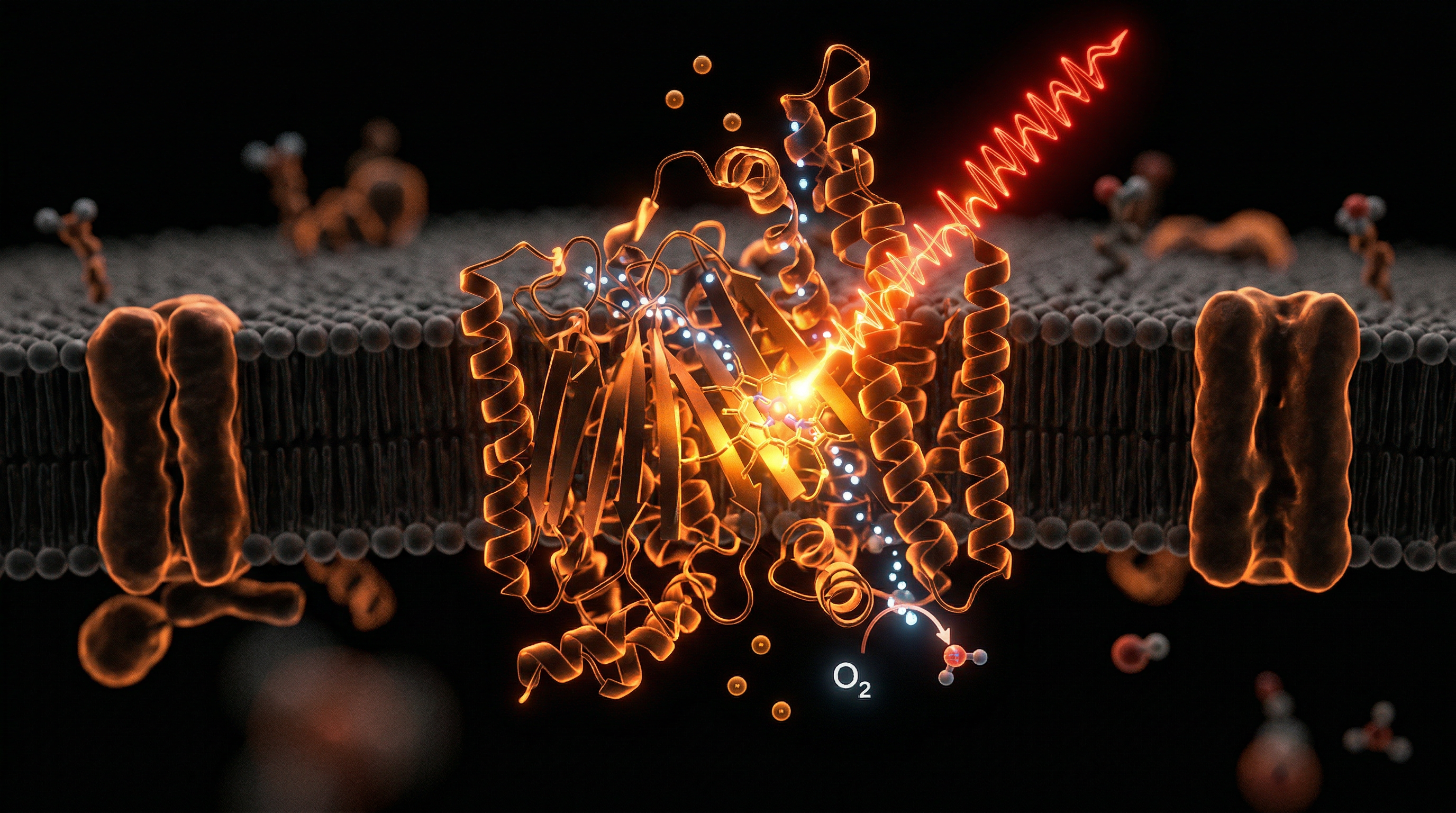
In the realm of modern biophysics, few discoveries carry as much transformative potential as the realisation that the human body is not merely a chemical engine, but a sophisticated light-harvesting antenna. At the heart of this bio-photonic exchange lies a singular, complex enzyme: Cytochrome C Oxidase (CCO). This protein, nestled within the inner membrane of our mitochondria, serves as the primary photo-acceptor for wavelengths in the red and near-infrared (NIR) spectrum.
For decades, the mainstream medical establishment has treated light as a superficial environmental factor, relevant only to vitamin D synthesis or circadian rhythms. However, as we delve into the molecular architecture of the cell, we find that CCO acts as a molecular master switch. When activated by specific frequencies of light—primarily between 600nm and 1100nm—this enzyme facilitates a quantum leap in metabolic efficiency.
This article explores the profound biological implications of Photobiomodulation (PBM). We will dissect how CCO facilitates the dissociation of inhibitory molecules, restores the electron transport chain, and triggers a systemic healing cascade that challenges the current pharmaceutical paradigm of "managing" disease rather than curing it.
Fact: Cytochrome C Oxidase is the terminal enzyme of the electron transport chain, responsible for over 95% of the oxygen consumption in eukaryotic cells.
##
The Biology — How It Works
To understand Cytochrome C Oxidase, one must first understand the Mitochondrion. Often reductionistically termed the "powerhouse of the cell," the mitochondrion is actually an environmental sensor that determines whether a cell should invest in growth and repair or retreat into a defensive, inflammatory state.
The Structure of Complex IV
Cytochrome C Oxidase is formally known as Complex IV of the mitochondrial respiratory chain. It is a large transmembrane protein complex containing multiple metal centres—specifically, two copper centres ($CuA$ and $CuB$) and two heme groups ($heme$ $a$ and $heme$ $a_3$). These metal ions are not merely structural; they are the "antennae" that catch photons.
- The Copper Centres: These are particularly sensitive to near-infrared light (800nm–1100nm).
- The Heme Groups: These show peak absorption in the visible red spectrum (600nm–700nm).
The Quantum Exchange
When a photon of the correct wavelength hits these metal centres, it excites an electron to a higher energy state. This is not a heat-driven process; it is a quantum mechanical event. This excitation facilitates the transfer of electrons to oxygen molecules, which is the final step in the production of Adenosine Triphosphate (ATP), the universal energy currency of life.
The Grotthuss-Draper Law
In photobiology, the Grotthuss-Draper Law states that light must be absorbed by a substance for a photochemical reaction to occur. Because CCO has absorption peaks that perfectly match the "optical window" of human tissue (the wavelengths that can penetrate skin and bone), it is the primary bridge between environmental light and internal biological function.
##
Mechanisms at the Cellular Level
The magic of red light therapy does not lie simply in "adding energy" to the system, but in removing the "brakes" that modern stress places on our metabolism. The most significant of these brakes is Nitric Oxide (NO).
The Dissociation of Nitric Oxide
In a stressed or inflamed cell, Nitric Oxide binds to the iron and copper centres of Cytochrome C Oxidase. When NO occupies these sites, it physically blocks oxygen from binding. This effectively "shuts down" the engine of the cell. The cell enters a state of oxidative stress, ATP production plummets, and the cell begins to leak electrons, creating harmful free radicals.
When red or NIR light hits the CCO enzyme, it causes a conformational change that kicks the Nitric Oxide molecule off the binding site. This is known as photodissociation.
Statistic: Research indicates that red light can increase ATP production by up to 150-200% in compromised cells by successfully displacing Nitric Oxide from CCO.
The Triple-Threat Recovery
Once the NO is displaced and CCO is reactivated, three critical events occur simultaneously:
- Resumption of ATP Production: Oxygen binds to CCO, the electron transport chain resumes, and ATP levels surge. This provides the "fuel" for cellular repair.
- Modulation of Reactive Oxygen Species (ROS): While high levels of ROS are damaging, low-level pulses of ROS (triggered by PBM) act as vital signalling molecules. They tell the cell to activate antioxidant genes and repair proteins.
- Release of Nitric Oxide into the Vasculature: The NO that was "clogging" the mitochondria is released into the surrounding tissue, where it acts as a potent vasodilator, increasing blood flow and oxygen delivery to the area.
Water Structuring and the Exclusion Zone
Beyond CCO, red light affects the interfacial water within the cell. The work of Dr Gerald Pollack suggests that NIR light builds a "layer" of structured water (EZ water) around biological membranes. This structured water has lower viscosity, allowing the ATP synthase motor—which rotates at speeds up to 9,000 RPM—to spin with less friction. This is a purely mechanical benefit of light that complements the chemical action on CCO.
##
Environmental Threats and Biological Disruptors
We currently live in a state of biological darkness. While our ancestors spent the majority of their time under the full spectrum of the sun, the modern human spends 90% of their life indoors, shielded from the very wavelengths that CCO evolved to require.
The Blue Light Hazard
Modern LED lighting and digital screens are heavily weighted toward the blue end of the spectrum (400-450nm). While blue light is necessary for daytime alertness, in isolation, it is aggressive. It lacks the "counter-balance" of red and infrared light found in sunlight. High-energy blue light can actually increase the production of ROS without the corresponding increase in ATP, leading to mitochondrial fragmentation.
Non-Native Electromagnetic Fields (nnEMFs)
Evidence is mounting that nnEMFs from Wi-Fi, cellular towers, and electronic devices interfere with the voltage-gated calcium channels (VGCCs) in cell membranes. This leads to an influx of calcium into the cell, which further increases Nitric Oxide production and the subsequent blocking of CCO. We are effectively being "suffocated" at a cellular level by our technological environment.
The "Indoor Syndrome"
Glass windows are a major disruptor. Standard window glass blocks the majority of NIR wavelengths while allowing UV and blue light through. This means that even when sitting in a sunlit room, you are being deprived of the wavelengths required to stimulate CCO and repair the damage caused by high-energy visible light.
##
The Cascade: From Exposure to Disease
When Cytochrome C Oxidase is chronically inhibited—whether by lack of sunlight, chemical toxins, or EMFs—the body enters a state of Mitochondrial Dysfunction. This is the root cause of nearly all "modern" diseases.
Metabolic Inflexibility and the Warburg Effect
When CCO cannot process oxygen efficiently, the cell reverts to a primitive form of energy production: glycolysis (fermenting sugar). This is known as the Warburg Effect. While essential for short-term survival, chronic glycolysis leads to:
- Lactic acid buildup.
- Systemic inflammation.
- The proliferation of cancer cells, which thrive in low-oxygen, high-sugar environments.
Neurodegeneration and "Brain Fog"
The brain is the most energy-intensive organ in the body, containing thousands of mitochondria per neuron. When CCO activity drops in the brain, we see the onset of neurodegenerative conditions. The accumulation of amyloid-beta plaques in Alzheimer's is now being viewed by many researchers as a consequence of mitochondrial failure, rather than the primary cause. Without ATP, neurons cannot maintain their ion gradients, leading to synaptic failure.
The Inflammatory Loop
Low CCO activity triggers the NLRP3 inflammasome. This is a molecular alarm system that, when activated, releases pro-inflammatory cytokines like IL-1β. This creates a vicious cycle: inflammation leads to more NO production, which further blocks CCO, which leads to more inflammation. This cycle is the hallmark of autoimmune disorders and chronic fatigue syndrome.
##
What the Mainstream Narrative Omits
The suppression of light therapy's efficacy is not necessarily a grand conspiracy of silence, but rather a byproduct of a medical model that cannot patent a wavelength.
The Pharmaceutical Bias
In the UK and globally, the "Gold Standard" of medicine is the double-blind, placebo-controlled drug trial. This model is perfectly suited for synthetic chemicals but poorly suited for light. You cannot "patent" 660nm light. Therefore, there is no financial incentive for large pharmaceutical firms to fund the multi-million-pound trials required to get PBM into standard primary care.
The Sunlight Scare-Mongering
For the last 50 years, public health messaging has focused almost exclusively on the "dangers" of the sun (skin cancer and UV damage). While UV overexposure is a risk, the narrative has completely omitted the protective and reparative role of the NIR light that accompanies UV in natural sunlight. By telling people to avoid the sun and cover themselves in chemical sunscreens (which often contain endocrine disruptors), the "authorities" have inadvertently caused a massive deficiency in the NIR required to fuel CCO.
The Suppression of "Energy Medicine"
Mainstream biology remains stubbornly "materialist." It views the body as a collection of chemical bags. To admit that light—a form of electromagnetic frequency—can heal the body is to admit that the body is an electrodynamic system. This opens the door to therapies that the current infrastructure is not equipped to monetise or control.
##
The UK Context
The United Kingdom presents a unique set of challenges regarding CCO activation and light health.
The "Light Desert" of the British Isles
Due to its northern latitude, the UK suffers from a profound lack of high-intensity sunlight for at least six months of the year. During winter, the sun's angle is so low that virtually no UVB reaches the skin, and the intensity of NIR is significantly reduced. This leads to a seasonal "hibernation" of CCO activity, contributing to the high rates of Seasonal Affective Disorder (SAD) and the "Winter Blues" prevalent in British society.
The NHS and Photobiomodulation
While the NHS is often slow to change, there are small pockets of progress. The National Institute for Health and Care Excellence (NICE) has acknowledged the use of PBM for treating oral mucositis—a painful side effect of chemotherapy. However, this is the tip of the iceberg. Millions of UK citizens suffering from chronic pain, wound healing issues, and depression could benefit from CCO-targeted light therapy, yet it remains largely unavailable on the NHS.
The Vitamin D Obsession vs. The Infrared Reality
In the UK, there is a growing awareness of Vitamin D deficiency, but there is almost no public discourse on Infrared deficiency. Taking a Vitamin D supplement is not a substitute for the complex biophysical reactions triggered by light. You can have all the Vitamin D in the world, but if your CCO enzymes are blocked by Nitric Oxide and your cellular water is unstructured, you will still lack true vitality.
##
Protective Measures and Recovery Protocols
Understanding that CCO is the target allows us to build a precise protocol for health optimisation. We must aim to maximise light intake while minimising the environmental "noise" that disrupts mitochondrial function.
1. Strategic Sunlight Exposure
The most important time for CCO priming is dawn. The early morning sun is rich in red and infrared light and contains almost no UV. This "primes" the CCO in your skin and eyes, preparing your cells for the more stressful UV rays that arrive at midday.
- Protocol: Spend 15-30 minutes outside at sunrise without sunglasses or contact lenses.
2. Targeted Red Light Therapy (PBM)
For those in the UK or living indoor lifestyles, a high-quality PBM device is essential. Look for devices that provide:
- 660nm (Visible Red): For skin health and superficial CCO activation.
- 850nm (Near-Infrared): For deep tissue, joint, and brain penetration.
- Irradiance: Ensure the device provides at least $50mW/cm^2$ at the target distance to ensure sufficient photon density to reach the mitochondria.
3. Methylene Blue: The CCO Catalyst
Methylene Blue is a potent metabolic enhancer that works synergistically with red light. It acts as an alternative electron cycler, essentially "helping" CCO by bypassing blockages in the electron transport chain. In the presence of red light, Methylene Blue becomes even more effective at restoring mitochondrial respiration.
Caution: Always use pharmaceutical-grade (USP) Methylene Blue and consult a practitioner, as it can interact with certain medications.
4. Mitigating Blue Light and EMFs
To prevent the "re-blocking" of CCO:
- Wear red-tinted blue blockers after sunset to protect your circadian rhythm.
- Turn off Wi-Fi routers at night.
- Use "warm" lighting (incandescent or amber LEDs) in your home.
5. Grounding (Earthing)
Connecting your skin to the Earth allows for the transfer of free electrons into the body. These electrons help neutralise the oxidative stress that clogs the mitochondria, making it easier for red light to perform its work on CCO.
##
Summary: Key Takeaways
The science of Cytochrome C Oxidase moves us beyond the "calories in, calories out" model of health and into the era of Quantum Biology.
- CCO is the Antenna: This enzyme is the primary receiver for red and near-infrared light, acting as the bridge between environmental energy and cellular ATP.
- Nitric Oxide is the Brake: Stress and lack of light cause NO to bind to CCO, halting energy production and triggering inflammation.
- Light is the Key: Red and NIR wavelengths "kick" the NO off the enzyme, instantly restoring cellular respiration and triggering a healing cascade.
- The Modern Crisis: Our indoor, blue-light-saturated, and EMF-heavy environment is a recipe for chronic CCO inhibition and systemic disease.
- Sovereignty through Light: By understanding the role of CCO, we can take control of our biological health, using sunlight and PBM technology to bypass a medical system that is currently ill-equipped to address the root causes of mitochondrial failure.
Innerstanding requires us to see through the veil of modern lifestyle "norms" and recognise that we are light-beings. To nourish the Cytochrome C Oxidase within us is to reclaim the fundamental energy of life itself.
This article is provided for informational and educational purposes only. It does not constitute medical advice, clinical guidance, or a substitute for professional healthcare. Information reflects cited research at time of publication. Always consult a qualified healthcare professional before acting on any health information.
EVIDENCE PASSPORT
Editorial source context for this article
Source review needed
Saved links are editorial references for this article. They may support specific claims rather than every sentence. Open and assess each source in context. This passport does not independently verify them.
Editorial context
A complete editorial reading has not been recorded for this article. Source links remain available for you to open and assess directly.
Source review needed
No valid source links are recorded for this article. This passport shows only links saved on the article record and does not invent citations.
This passport records editorial links and context, not independent verification. Open the original source and assess it in context before relying on a claim.
Medical Disclaimer
The information in this article is for educational purposes only and does not constitute medical advice, diagnosis, or treatment. Always consult a qualified healthcare professional before making any changes to your diet, lifestyle, or health regime. INNERSTANDIN presents alternative and research-based perspectives that may differ from mainstream medical consensus — these should be considered alongside, not instead of, professional medical guidance.
Read Full DisclaimerContinue the thread
Keep this question moving.
Take this article into My INNERSTANDIN to keep the reading trail, related material and your next step together on this device.
Dig deeper in the Library
Free, longform PDF volumes that go beyond headlines into mechanisms and references.