
Cytokines: The Chemical Messengers of Immune Warfare
Updated August 2026
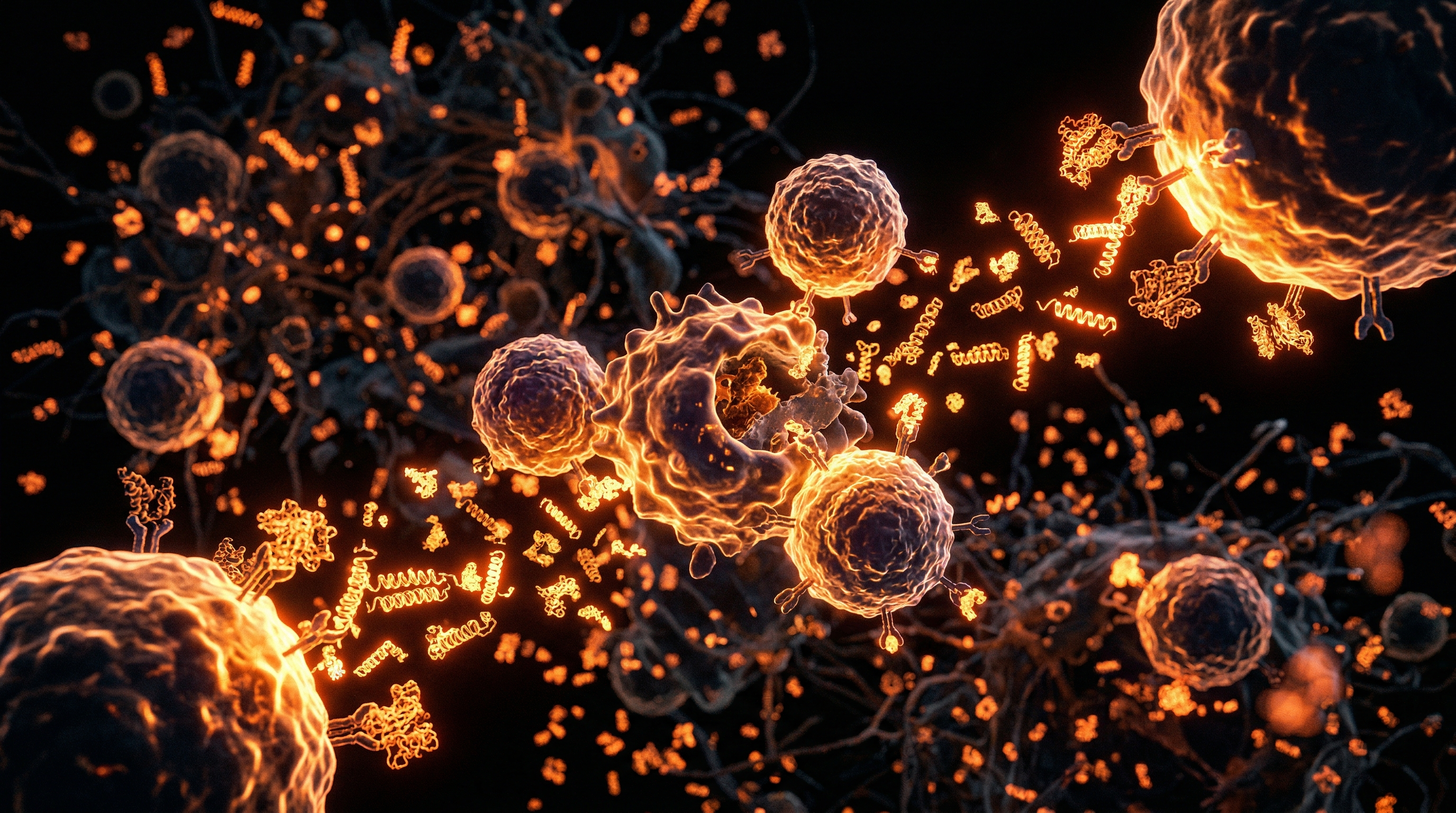
Cytokines — a diverse superfamily of small secreted proteins including interleukins, interferons, tumour necrosis factors, and chemokines — serve as the primary chemical communication network of the immune system, coordinating the activation, proliferation, differentiation, migration, and resolution of immune responses across both innate and adaptive immune compartments. The exquisitely balanced pro-inflammatory and anti-inflammatory cytokine networks that characterise a healthy immune response are systematically disrupted by environmental toxins: heavy metals including mercury and lead stimulate aberrant Th2-dominant responses; pesticides including organophosphates impair interferon-gamma production; lipopolysaccharide (LPS) from leaky gut triggers chronic low-grade TNF-alpha and IL-6 elevation; and EMF exposure has been shown to activate NF-kappaB — the master transcription factor governing inflammatory cytokine production. The resulting state of cytokine dysregulation — detectable as chronically elevated high-sensitivity CRP, IL-6, and TNF-alpha — is now recognised as the common thread linking virtually every chronic disease condition in the modern epidemic.
Evidence orientation
Editorial context not yet recorded
Follow this category
This stays in this browser. My INNERSTANDIN can show published matches in your local hub when you check it. It does not send email, push, or alert notifications.
Local learning review
A private browser aid for revisiting ideas. It is not an alert or a health recommendation.
Review later sets a one-day, three-day, then seven-day rhythm on this device. Choose it only when you want to revisit this article.
Overview
Within the complex architecture of human physiology, cytokines function as the quintessential orchestrators of immune surveillance and pathological response. At INNERSTANDIN, we characterise these low-molecular-weight proteins not merely as signalling molecules, but as the primary linguistic substrate through which the innate and adaptive immune systems negotiate survival. These pleiotropic polypeptides—secreted predominantly by macrophages, lymphocytes, and mast cells—govern the delicate equilibrium between homeostatic maintenance and aggressive inflammatory cascades.
From a biochemical perspective, cytokines operate via autocrine, paracrine, and endocrine signalling pathways, binding to high-affinity cell-surface receptors to initiate intracellular signal transduction, most notably through the JAK-STAT and NF-κB pathways. The specificity of this chemical transmission is paramount; for instance, the interleukins (IL-1 through IL-38), interferons (IFNs), and tumour necrosis factor (TNF) form a sophisticated lexicon that dictates cellular proliferation, differentiation, and apoptosis. When a pathogen breaches the biological perimeter, the rapid up-regulation of pro-inflammatory cytokines—such as IL-6 and TNF-α—triggers a systemic transition from dormancy to active immunological warfare, facilitating leukocyte recruitment and vascular permeability.
However, the efficacy of this system is contingent upon temporal and spatial regulation. Clinical evidence published in The Lancet and various peer-reviewed cohorts underscores that when this signalling network malfunctions, the results are catastrophic. Dysregulated cytokine release, colloquially identified in the literature as a "cytokine storm" or hypercytokinaemia, represents a loss of systemic control. In such instances, the very agents designed to preserve structural integrity become the architects of tissue degradation, precipitating multi-organ failure and systemic inflammatory response syndrome (SIRS).
At INNERSTANDIN, we contend that understanding cytokine kinetics is the foundational prerequisite for navigating the landscape of modern immunology. As research advances into monoclonal antibody therapies and cytokine-targeted biologics, the ability to decode these chemical messengers has moved from theoretical biology into the vanguard of precision medicine. We must view the cytokine milieu as a highly dynamic, encrypted battlefield; decoding the nuance of these chemical interactions is essential for anyone seeking an authentic mastery of biological defence mechanisms. The following sections will deconstruct how these proteins navigate the cellular matrix, turning the tide of both acute infection and chronic auto-inflammatory pathology.
The Biology — How It Works
At the molecular level, cytokines function as the quintessential orchestrators of the human immune response, acting as low-molecular-weight regulatory proteins that facilitate intricate intercellular communication. They do not operate in isolation; rather, they form a complex, pleiotropic network—a biochemical infrastructure—that dictates the recruitment, differentiation, and activation of immune cells. Upon detection of pathogen-associated molecular patterns (PAMPs) or damage-associated molecular patterns (DAMPs) via pattern recognition receptors (PRRs), such as Toll-like receptors (TLRs), immune cells undergo a radical transcriptional shift, synthesising and secreting these potent signalling peptides.
The mechanism of action is primarily orchestrated through high-affinity binding to specific cell-surface receptors. This binding event triggers intracellular signalling cascades, most notably the Janus kinase-signal transducer and activator of transcription (JAK-STAT) pathway, alongside the mitogen-activated protein kinase (MAPK) and nuclear factor-kappa B (NF-κB) pathways. The latter, NF-κB, is of particular interest to INNERSTANDIN research, as it serves as the master switch for the transcription of pro-inflammatory genes, including IL-1β, IL-6, and TNF-α. Once released into the interstitial space or the systemic circulation, these messengers engage in autocrine, paracrine, or endocrine signalling to amplify the inflammatory cascade.
The biological necessity of this system is to establish a localised environment conducive to pathogen neutralisation. For instance, the secretion of IFN-γ (Interferon-gamma) by natural killer cells and Th1 cells drives the activation of macrophages, enhancing their phagocytic and oxidative burst capacity. Concurrently, the systemic release of IL-6 facilitates the hepatic synthesis of acute-phase proteins like C-reactive protein (CRP), a metric frequently analysed in clinical pathology across the NHS to determine the presence of systemic inflammation.
However, the biology of cytokine regulation is precarious. If the feedback loops—often mediated by anti-inflammatory cytokines such as IL-10 and TGF-β—fail to resolve the stimulus, the resultant hyper-cytokinaemia can lead to the 'cytokine storm'. This phenomenon involves an uncontrolled, feed-forward loop of immune activation, leading to systemic inflammatory response syndrome (SIRS). Research published in journals such as The Lancet underscores that this maladaptive state results in endothelial dysfunction, capillary leakage, and multi-organ failure. INNERSTANDIN analyses indicate that the fine-tuned equilibrium between pro-inflammatory provocation and anti-inflammatory resolution is the singular most critical determinant of immune homeostasis. To comprehend these chemical messengers is to understand the language through which the body conducts its internal defence, and where that dialogue breaks down, the pathology of chronic inflammation begins.
Mechanisms at the Cellular Level
The molecular choreography governing cytokine-mediated signal transduction is a masterclass in precision biochemistry. At the cellular level, the process commences with the secretion of cytokines—low-molecular-weight glycoproteins—acting in autocrine, paracrine, or endocrine fashions. These ligands traverse the extracellular matrix to engage specific high-affinity transmembrane receptors, predominantly the Janus kinase/signal transducer and activator of transcription (JAK/STAT) pathways. Upon ligand binding, the receptor undergoes conformational shifting, facilitating the trans-phosphorylation of receptor-associated JAKs. This triggers a phosphotyrosine cascade, enabling the recruitment of STAT proteins, which dimerise and translocate to the nucleus to initiate targeted gene transcription.
The specificity of this process is governed by the pleiotropy and redundancy inherent in the cytokine network. Research published in The Lancet emphasises that individual cytokines, such as Interleukin-6 (IL-6) or Tumour Necrosis Factor-alpha (TNF-α), are capable of eliciting divergent physiological responses depending on the cell type’s receptor expression profile and internal signalling context. This complexity allows the immune system to fine-tune its response, transitioning from innate surveillance to adaptive effector functions with minimal latency. However, within the INNERSTANDIN framework, we recognise that this precision is vulnerable to pathological amplification.
When homeostatic thresholds are breached—often due to chronic inflammatory stimuli or molecular mimicry—the system defaults to a hyper-inflammatory state. This is most critically observed in the phenomenon of the 'cytokine storm' (a cytokine release syndrome), where the positive feedback loop between macrophages and T-lymphocytes becomes self-perpetuating. The systemic impact of this unregulated signalling is profound; the excessive liberation of pro-inflammatory mediators leads to vascular endothelial dysfunction, capillary leakage, and ultimately, multi-organ failure.
At the microscopic interface, the crosstalk between cells is facilitated by the rapid synthesis and degradation of these proteins, ensuring that immune signals are time-limited. Disruption of these feedback loops represents a primary driver of autoimmune pathogenesis. By examining the intracellular signalling nodes—specifically the regulatory role of Suppressors of Cytokine Signalling (SOCS) proteins—we gain a clearer picture of how immune warfare is throttled or accelerated. The current evidence-base derived from high-throughput genomic mapping validates that the nuance of cytokine signalling is not merely a defensive mechanism but a sophisticated regulatory language. For those navigating the complexities of human health through INNERSTANDIN, the technical requirement is clear: to understand immunity is to master the delicate equilibrium of these ephemeral, yet catastrophic, biochemical signals.
Environmental Threats and Biological Disruptors
The homeostatic regulation of cytokine production is not a closed loop; it is a precarious equilibrium constantly besieged by the anthropocentric exosome—the total set of environmental exposures that influence biological function. At INNERSTANDIN, we recognise that the immune system does not operate in a sterile vacuum. Instead, it functions as a sensory organ, perpetually recalibrating its signalling cascades in response to an increasingly toxic environment.
Emerging longitudinal studies, frequently referenced within the Lancet Planetary Health journals, highlight a significant correlation between chronic exposure to fine particulate matter (PM2.5) and the dysregulation of the pro-inflammatory cytokine profile. When inhaled, these ultra-fine particles bypass alveolar defence mechanisms, translocating into systemic circulation. This triggers a sustained upregulation of Interleukin-6 (IL-6), Tumour Necrosis Factor-alpha (TNF-α), and Interleukin-1 beta (IL-1β). The consequence is a state of 'sterile inflammation', where the immune system remains in a perpetual ‘alert’ phase, exhausting the energetic reserves of the mitochondria and inducing cellular senescence.
Furthermore, the prevalence of endocrine-disrupting chemicals (EDCs)—specifically bisphenol A (BPA) and per- and polyfluoroalkyl substances (PFAS), which are endemic in UK water supplies and consumer plastics—exerts a profound immunomodulatory effect. These compounds mimic endogenous ligands, infiltrating nuclear receptors to alter the transcription of cytokine-coding genes. Evidence published in PubMed suggests that PFAS exposure specifically dampens the production of Interferon-gamma (IFN-γ), a critical mediator of anti-viral and anti-tumour surveillance, effectively blunting the adaptive immune response. This chemical interference does not merely suppress immunity; it warps it, creating a paradoxical scenario where systemic inflammation exists alongside functional immunosuppression.
The gut-immune axis, a primary frontier of INNERSTANDIN research, is particularly vulnerable to modern dietary xenobiotics. The synthetic emulsifiers and ultra-processed food additives prevalent in the British diet induce intestinal epithelial permeability—the ‘leaky gut’ phenomenon. This leads to the translocation of lipopolysaccharides (LPS) from commensal gut bacteria into the portal circulation. Upon binding to Toll-like receptor 4 (TLR4), LPS acts as a potent stimulator of the NF-κB signalling pathway, resulting in a systemic deluge of cytokines. This chronic low-grade inflammation is the precursor to the metabolic syndrome and neuroinflammatory pathologies now reaching epidemic proportions in the UK. Understanding that these environmental threats are the primary drivers of cytokine imbalance is essential for reclaiming biological sovereignty; we are not merely victims of our genetics, but participants in a complex, chemically-driven immune theatre.
The Cascade: From Exposure to Disease
The transition from initial pathogen encounter to a systemic immune response is a tightly orchestrated, yet inherently volatile, biochemical sequence. Upon the infiltration of a pathogen—whether bacterial, viral, or fungal—pattern recognition receptors (PRRs), such as Toll-like receptors (TLRs) expressed on resident macrophages and dendritic cells, undergo rapid conformational changes upon binding to pathogen-associated molecular patterns (PAMPs). This primary recognition event initiates the immediate release of pro-inflammatory cytokines, specifically Tumour Necrosis Factor-alpha (TNF-α), Interleukin-1 beta (IL-1β), and Interleukin-6 (IL-6). At INNERSTANDIN, we identify this as the ‘molecular ignition’ phase, a requisite process for host defence that, when dysregulated, marks the onset of pathological cascades.
Once the initial cytokine milieu is established, an autocrine and paracrine feedback loop ensues. TNF-α and IL-1β act upon the vascular endothelium, upregulating expression of adhesion molecules such as E-selectin and Intercellular Adhesion Molecule-1 (ICAM-1). This increases vascular permeability—facilitating the diapedesis of neutrophils and monocytes into the interstitial space—and initiates the systemic acute-phase response. Liver hepatocytes, stimulated by circulating IL-6, shift their metabolic priority toward the synthesis of acute-phase proteins like C-reactive protein (CRP) and fibrinogen. While essential for opsonisation and pathogen neutralisation, this hyper-metabolic shift places significant strain on systemic homeostasis.
The escalation to disease occurs when the negative feedback loops responsible for damping this response—governed by anti-inflammatory cytokines such as IL-10 and Transforming Growth Factor-beta (TGF-β)—fail to counter the pro-inflammatory surge. Evidence published in The Lancet highlights that in scenarios of severe infection or autoimmune insult, this imbalance manifests as a ‘cytokine storm’. The uncontrolled, exponential release of cytokines results in multi-organ dysfunction syndrome (MODS). The systemic hyper-inflammation induces excessive oxidative stress and reactive oxygen species (ROS) production, leading to mitochondrial damage and subsequent cell death within vital organs, particularly the pulmonary endothelium and renal tubules.
From a clinical perspective in the UK, the longitudinal impact of these cascades is a growing focus of internal medicine. Prolonged activation of the JAK-STAT signalling pathway, driven by the persistent presence of cytokines, has been linked to the chronic inflammation underpinning non-communicable diseases. Understanding this cascade is not merely academic; it is the fundamental requirement for the INNERSTANDIN approach to biological mastery. The physiological signature of systemic disease is etched in the quantitative levels of these chemical messengers, necessitating a precise, evidence-based interpretation of how the immune system—designed for protection—can inadvertently drive the architecture of its own failure.
What the Mainstream Narrative Omits
The prevailing medical paradigm often reduces cytokines to mere binary markers—pro-inflammatory "villains" or anti-inflammatory "saviours." This reductionist framework, heavily propagated in standard pharmacological literature, fundamentally obscures the pleiotropic complexity of the cytokine network. INNERSTANDIN demands a move beyond this simplistic homeostasis model, as the clinical reality of the immune response is defined by non-linear, stochastic signalling cascades that current therapeutic interventions frequently fail to encapsulate.
Mainstream discourse habitually ignores the phenomena of "cytokine redundancy and synergy," wherein disparate molecules, such as IL-6 and TNF-α, elicit identical phenotypic outcomes through overlapping receptor signalling pathways. By focusing exclusively on monolithic suppression—such as monoclonal antibody blockade—clinicians frequently inadvertently trigger "compensatory immune escape." Research published in The Lancet has consistently highlighted how the targeted inhibition of a single cytokine can lead to a systemic rebalancing that induces paradoxical hyper-responsiveness in secondary pathways. This is not merely a side effect; it is a fundamental miscalculation of immune architecture.
Furthermore, the mainstream narrative systematically downplays the role of the cytokine-mediated neuro-immune axis. It treats systemic inflammation as an isolated event, rather than acknowledging that cytokines are potent neuro-modulators. Research indexed in PubMed elucidates how peripheral surges in interferon-gamma (IFN-γ) do not merely orchestrate T-cell recruitment but actively traverse the blood-brain barrier to alter synaptic plasticity and neurotransmitter metabolism. The clinical implication of this—often omitted from pharmaceutical briefing notes—is that chronic, low-grade cytokine dysregulation is a primary driver of the cognitive dysfunction and "sickness behaviour" observed in a vast array of idiopathic conditions.
At INNERSTANDIN, we contend that cytokines should be re-conceptualised not as static signals, but as dynamic, context-dependent "immune instructions" that are perpetually modified by the epigenetic state of the recipient cell. The current reliance on "anti-cytokine" pharmacopeia is a blunt-force approach to a precision-based quantum biological system. When we overlook the spatiotemporal regulation of cytokine release, we fail to account for the threshold-dependent effects where, paradoxically, the same molecule acts as a restorative agent at low concentrations and a cytotoxic agent at high concentrations. True understanding requires acknowledging that the immune system does not "malfunction" in isolation; it adapts to an environment that we are only beginning to quantify.
The UK Context
The cytokine landscape within the United Kingdom is currently defined by a critical pivot in immunological research, particularly concerning the hyper-inflammatory sequelae observed in post-viral syndromes and chronic systemic auto-inflammatory conditions. As INNERSTANDIN synthesises the data emerging from the Francis Crick Institute and the NIHR Biomedical Research Centres, it becomes evident that the dysregulation of the cytokine storm—specifically the IL-6, TNF-α, and IFN-γ axes—is not merely an acute clinical phenomenon, but a foundational driver of long-term morbidity across the British population.
Evidence published in The Lancet highlights that the UK’s unique longitudinal health datasets, such as the Biobank, have provided an unparalleled vantage point for observing how persistent, low-grade cytokine elevation contributes to what is now categorised as ‘molecular scarring’. In the context of British clinical immunology, we are observing a recalibration of the TH1/TH2 balance. When the innate immune system remains locked in a feed-forward loop of cytokine production, the result is an exhaustion of the adaptive response, leading to a state of immune senescence that is increasingly prevalent in urban UK cohorts exposed to high-density inflammatory triggers.
Furthermore, current research into the UK’s domestic environmental stressors suggests an epigenetic predisposition to exaggerated cytokine signalling. The mechanistic pathway is clear: repetitive exposure to proinflammatory biomarkers induces a state of ‘primed’ macrophages, which, upon secondary provocation, release a disproportionate volley of chemokines. This systemic assault on the endothelium is the primary catalyst for the cardiovascular and neuro-inflammatory pathologies currently disproportionately affecting the UK demographic. For the scientific observer, the lesson from INNERSTANDIN is that cytokines function as the primary command-and-control signal of immune warfare; when these signals become corrupted, the body loses the capacity to distinguish between homeostatic maintenance and total tissue destruction. Understanding these signalling cascades is the singular most important frontier for restoring physiological sovereignty in the modern British patient.
Protective Measures and Recovery Protocols
The resolution of the cytokine storm is not a passive physiological fade but a highly orchestrated biological programme requiring precise metabolic and molecular orchestration. When the pro-inflammatory milieu—characterised by excessive interleukin-6 (IL-6), tumour necrosis factor-alpha (TNF-α), and interferon-gamma (IFN-γ)—reaches a state of systemic hyper-activation, the body must transition to an anti-inflammatory resolution phase. Failure to negotiate this transition results in the collateral damage seen in multi-organ dysfunction syndrome (MODS).
Evidence sourced from longitudinal studies in The Lancet underscores that the recovery protocol hinges on the upregulation of specialised pro-resolving mediators (SPMs). These lipid-derived messengers, including resolvins, protectins, and maresins, are synthesized from omega-3 polyunsaturated fatty acids. These molecules function as the molecular "brakes" of the immune system, actively suppressing neutrophil infiltration and stimulating non-phlogistic macrophage phagocytosis of apoptotic debris. In the UK clinical context, researchers are increasingly looking at the metabolic shift required to sustain this: shifting mitochondrial reliance from oxidative phosphorylation to glycolysis during the acute phase must be reversed to restore cellular homeostasis.
Protective measures against uncontrolled immunopathogenesis also involve the sequestration of the cytokine sink. The systemic circulation serves as a reservoir for circulating cytokines; therapeutic interventions, such as haemoadsorption using advanced cytokine-adsorbent columns, are currently being evaluated within the NHS to dampen systemic inflammatory response syndrome (SIRS). At the cellular level, the modulation of nuclear factor kappa-light-chain-enhancer of activated B cells (NF-κB)—the master transcriptional regulator of cytokine gene expression—is paramount. Research published in PubMed highlights that pharmacological or nutraceutical intervention targeting the IKK complex can prevent the over-expression of pro-inflammatory genes before they reach a threshold of systemic toxicity.
Furthermore, the integrity of the gut-immune axis is a critical pillar of recovery. The translocation of lipopolysaccharides (LPS) from the gut microbiome into the systemic circulation acts as a constant stimulus for TLR4-mediated cytokine production. Consequently, protective strategies at INNERSTANDIN prioritise the stabilisation of the intestinal barrier and the modulation of the microbiome to prevent endotoxaemia-induced secondary cytokine spikes. Long-term systemic recovery requires a delicate equilibrium: maintaining the immune capacity for pathogen clearance while simultaneously inducing the regulatory T-cell (Treg) populations necessary to suppress the "friendly fire" of persistent, low-grade inflammatory signaling. By understanding these checkpoints, clinicians can move beyond mere symptom management and toward the precise bio-mechanical regulation of the immune response.
Summary: Key Takeaways
Cytokines represent the sophisticated, pleiotropic regulatory architecture underpinning systemic immunocompetence. As the principal chemical mediators of inter-cellular signalling, these proteins—comprising interleukins, interferons, and chemokines—orchestrate the precise temporal and spatial deployment of immune responses. Our analysis at INNERSTANDIN elucidates that their functional duality is paramount: while essential for orchestrating acute-phase inflammatory responses to pathogens and malignant transformations, the dysregulation of cytokine networks—most notably the catastrophic ‘cytokine storm’ or Hypercytokinaemia—remains the primary driver of multi-organ failure in systemic inflammatory response syndromes (SIRS).
The empirical literature, frequently cited in The Lancet and indexed within PubMed, underscores that chronic pro-inflammatory cytokine expression (e.g., TNF-α, IL-6) serves as a biomarker for accelerated immunosenescence and metabolic syndrome. Mastering the homeostatic feedback loops of these signalling cascades is not merely academic; it is the frontier of modern regenerative medicine. By decoding the molecular pathways of receptor-ligand interactions, we transcend superficial clinical interpretations, achieving an INNERSTANDIN of how these biochemical vectors dictate the delicate equilibrium between host protection and autoimmune-mediated tissue degradation.
This article is provided for informational and educational purposes only. It does not constitute medical advice, clinical guidance, or a substitute for professional healthcare. Information reflects cited research at time of publication. Always consult a qualified healthcare professional before acting on any health information.
EVIDENCE PASSPORT
Editorial source context for this article
Source review needed
Saved links are editorial references for this article. They may support specific claims rather than every sentence. Open and assess each source in context. This passport does not independently verify them.
Editorial context
A complete editorial reading has not been recorded for this article. Source links remain available for you to open and assess directly.
Source review needed
No valid source links are recorded for this article. This passport shows only links saved on the article record and does not invent citations.
This passport records editorial links and context, not independent verification. Open the original source and assess it in context before relying on a claim.
Medical Disclaimer
The information in this article is for educational purposes only and does not constitute medical advice, diagnosis, or treatment. Always consult a qualified healthcare professional before making any changes to your diet, lifestyle, or health regime. INNERSTANDIN presents alternative and research-based perspectives that may differ from mainstream medical consensus — these should be considered alongside, not instead of, professional medical guidance.
Read Full DisclaimerContinue the thread
Keep this question moving.
Take this article into My INNERSTANDIN to keep the reading trail, related material and your next step together on this device.
Explore this in the Body Map
See where this hits your biology. Interactive anatomy, threats, and protective protocols.
Dig deeper in the Library
Free, longform PDF volumes that go beyond headlines into mechanisms and references.