
Dermatological Decay: Why Seed Oils Sensitise Skin to UV Radiation
Updated May 2026
High concentrations of linoleic acid in skin cell membranes increase susceptibility to UV-induced lipid peroxidation. Learn how dietary fat choices influence the risk of sunburn and skin cancers in the UK climate.
Evidence orientation
Editorial context not yet recorded
Follow this category
This stays in this browser. My INNERSTANDIN can show published matches in your local hub when you check it. It does not send email, push, or alert notifications.
Local learning review
A private browser aid for revisiting ideas. It is not an alert or a health recommendation.
Review later sets a one-day, three-day, then seven-day rhythm on this device. Choose it only when you want to revisit this article.
Overview
For decades, the public health narrative surrounding skin cancer and dermatological health has been singularly focused on a solitary villain: the sun. We have been told to shroud ourselves in chemical filters, avoid the midday rays, and view our primary source of Vitamin D as a carcinogenic threat. Yet, an uncomfortable paradox has emerged. Despite the exponential increase in the use of high-SPF sunscreens and a significant reduction in outdoor occupations over the last century, rates of melanoma and non-melanoma skin cancers have continued to climb.
As a senior biological researcher for INNERSTANDING, I have spent years scrutinising the biochemical precursors to skin damage. The data points toward a more insidious culprit that resides not in the sky, but on our dinner plates. The dramatic shift in the human lipid profile—driven by the industrialised consumption of seed oils (highly processed vegetable oils)—has fundamentally altered the structural integrity of our skin.
By flooding our cellular membranes with unstable, polyunsaturated fatty acids (PUFAs), specifically linoleic acid, we have effectively turned our skin into a highly combustible fuel source for UV-induced oxidation. This article explores the biochemical mechanism of "dermatological decay," exposing how the modern diet has sensitised the British population to the very light that should be life-giving, and why the mainstream refusal to address dietary fats is a catastrophic failure of public health.
Fact: Since the early 1900s, the consumption of linoleic acid in the Western diet has increased by approximately 200% to 300%, mirroring the rising trajectory of skin cancer incidence.
The Biology — How It Works
To understand why seed oils are so damaging to the skin, one must first understand the architecture of the human cell. Every cell in the human body is encased in a phospholipid bilayer—a protective envelope that governs what enters and exits the cell. The composition of this bilayer is not fixed; it is determined almost entirely by the fats we ingest.
The Composition of the Lipid Bilayer
When we consume saturated fats (found in butter, tallow, and coconut oil), our cell membranes become structurally sound and resistant to oxidative stress. Saturated fats lack double bonds in their chemical structure, making them "saturated" with hydrogen atoms. This makes them highly stable even when exposed to heat or light.
In contrast, polyunsaturated fatty acids (PUFAs), which dominate industrial seed oils like sunflower, rapeseed (canola), corn, and soybean oil, contain multiple double bonds. These double bonds create "kinks" in the fatty acid chain, making the membranes more fluid but also significantly more fragile.
The "Methylene Bridge" Vulnerability
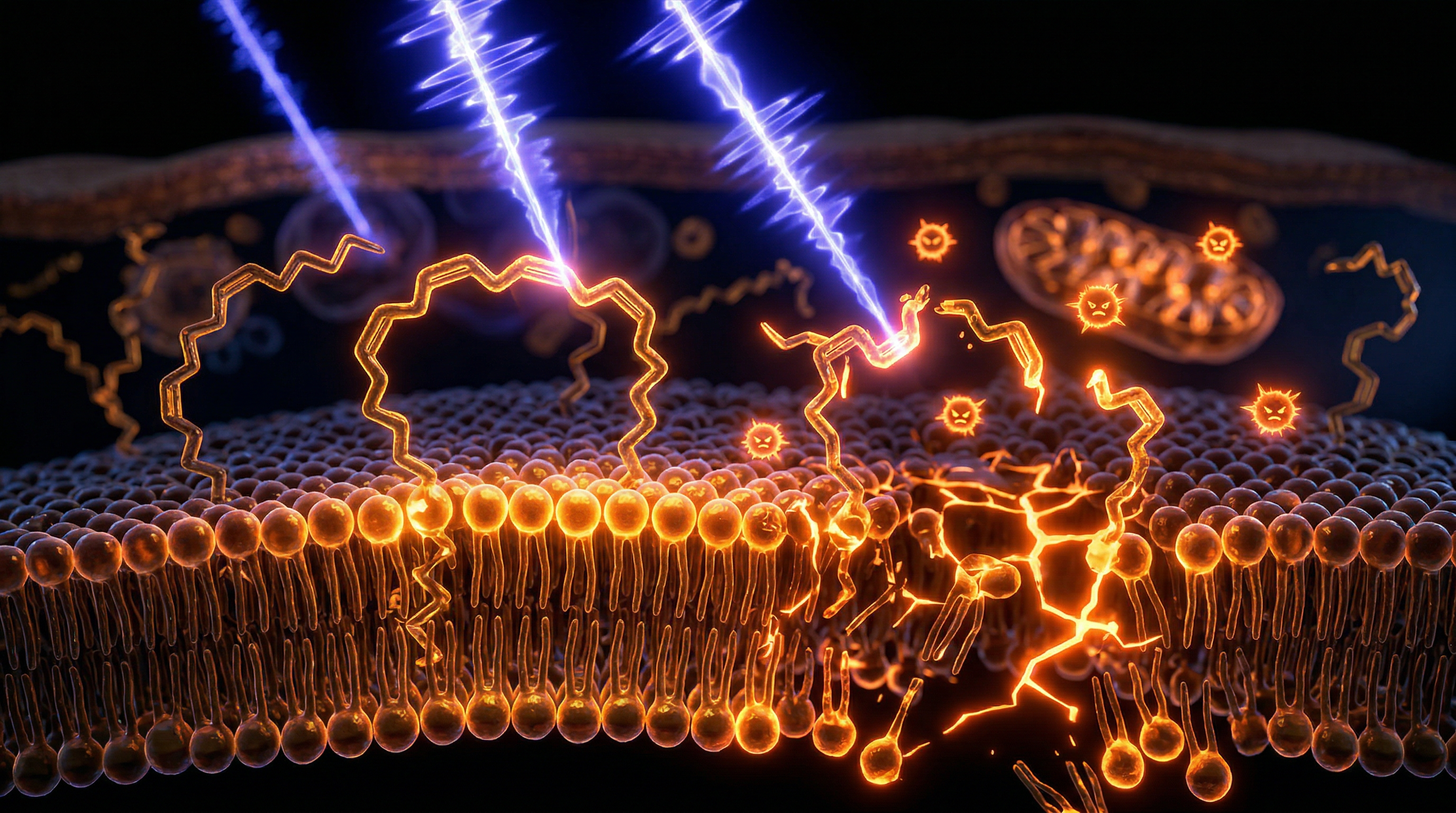
The specific danger of PUFAs lies in the carbon-hydrogen bonds located between these double bonds, known as the bis-allylic position or the methylene bridge. These hydrogen atoms are weakly held and are easily "stolen" by free radicals. This starts a devastating chain reaction that saturated fats are immune to.
- Saturated Fats: No double bonds; highly resistant to oxidation.
- Monounsaturated Fats (e.g., Olive Oil): One double bond; moderately stable.
- Polyunsaturated Fats (Seed Oils): Multiple double bonds; highly unstable and prone to "going rancid" inside the body.
Incorporation into the Epidermis
The skin is our most external organ and is constantly regenerating. The keratinocytes in the epidermis and the melanocytes that provide pigment incorporate these dietary fats into their own structures. If your diet is high in seed oils, your skin cells are literally built out of "liquid" fats that are chemically predisposed to degrade when exposed to the energy of a UV photon.
Mechanisms at the Cellular Level
The primary mechanism through which seed oils damage the skin is Lipid Peroxidation. This is a process where free radicals "attack" the polyunsaturated fats in cell membranes, leading to a self-propagating cycle of destruction.
The Initiation Phase
When UV radiation (particularly UVA) penetrates the skin, it generates Reactive Oxygen Species (ROS). In a healthy cell comprised primarily of saturated and monounsaturated fats, the cell’s antioxidant systems (like glutathione and Vitamin E) can neutralise these ROS effectively. However, in a cell saturated with linoleic acid, the ROS immediately find a target in the unstable double bonds of the PUFAs.
The Propagation Phase
Once a single PUFA molecule is oxidised, it becomes a lipid radical itself. It then attacks the neighbouring PUFA molecule to steal an electron, turning that molecule into a radical. This is the "domino effect" of lipid peroxidation. A single UV photon can trigger the destruction of hundreds of lipid molecules in a membrane if the concentration of PUFAs is high enough.
The Creation of Toxic Byproducts
As these fats break down, they don’t just vanish. They decompose into highly toxic secondary metabolites, most notably:
- 4-Hydroxynonenal (4-HNE): A potent "aldehyde" that acts as a systemic toxin.
- Malondialdehyde (MDA): A marker of oxidative stress and DNA damage.
Callout: 4-HNE is particularly dangerous because it can migrate from the cell membrane into the nucleus, where it directly damages DNA and suppresses the "p53" tumour-suppressor gene—the "guardian of the genome."
Mitochondrial Dysfunction
Seed oils also infiltrate the mitochondria, the powerhouses of our skin cells. The inner membrane of the mitochondria contains a unique phospholipid called cardiolipin. For cardiolipin to function correctly, it requires specific fatty acids. When linoleic acid replaces the preferred fats in cardiolipin, the mitochondria become "leaky," producing even more ROS and accelerating the aging process of the skin (photo-ageing).
Environmental Threats and Biological Disruptors
The sun is not a static threat; it is an environmental constant that humans have evolved with for millennia. The "disruptor" in this equation is the modern change in our biological substrate.
UVA vs. UVB: The Seed Oil Connection
- UVB Rays: These are shorter wavelengths that cause visible sunburn. They are primarily responsible for the production of Vitamin D.
- UVA Rays: These are longer wavelengths that penetrate deeper into the dermis. UVA is the primary driver of lipid peroxidation because it generates the free radicals that ignite the "PUFA fire."
Because seed oils increase the "oxidative burden" of the skin, people with high PUFA concentrations in their tissues find that they burn much faster (the Erythema response). What we call a "sun allergy" or "photosensitivity" is, in many cases, simply the visible evidence of lipids rotting inside the skin.
The Depletion of Endogenous Protection
The human body has a natural "internal sunscreen" system. We store alpha-tocopherol (Vitamin E) in our skin to protect against oxidation. However, when we consume seed oils, our Vitamin E stores are rapidly depleted as they work overtime to try and stabilise the unstable PUFAs in our diet. By the time the sun hits the skin, the cupboards are bare, and the cells are left defenceless.
The Blue Light Factor
It isn't just the sun. Modern humans are exposed to high amounts of Artificial Blue Light from screens and LED lighting. Emerging research suggests that blue light can also trigger oxidative stress in the skin. When combined with a high-PUFA diet, our indoor environments become secondary sites of dermatological decay.
The Cascade: From Exposure to Disease
The progression from a seed-oil-heavy meal to a dermatological diagnosis is a multi-step cascade of biological failures.
Stage 1: Acute Photo-inflammation
Within hours of UV exposure, the lipid peroxidation process begins. In a high-PUFA individual, this manifests as a severe, painful sunburn. This isn't just "redness"; it is an acute inflammatory response to the massive release of 4-HNE and other aldehydes.
Stage 2: Immunosuppression
The breakdown products of seed oils (specifically Prostaglandin E2 derived from Omega-6) suppress the local immune system in the skin. This prevents T-cells and Natural Killer (NK) cells from identifying and destroying mutated skin cells. The sun is "blamed" for the cancer, but the seed oils provided the "cloaking device" that allowed the cancer to grow.
Stage 3: Genetic Mutation
As 4-HNE levels rise, they create DNA adducts. These are physical "clumps" on the DNA strand that cause errors during cell division. If these errors occur in the genes that control cell growth, the stage is set for Basal Cell Carcinoma, Squamous Cell Carcinoma, or the more deadly Melanoma.
Stage 4: Solar Elastosis (Photo-ageing)
Beyond cancer, the oxidation of lipids destroys collagen and elastin fibres. This leads to the leathery, wrinkled texture often associated with "sun damage." However, researchers have noted that populations with high saturated fat intake and high sun exposure (such as traditional islander groups) often maintain remarkably youthful skin, suggesting that the "ageing" is a result of the fats being oxidised, not the light itself.
What the Mainstream Narrative Omits
Why is this information not headline news? The answer lies in the complex web of industrial interests and outdated nutritional dogmas.
The "Saturated Fat is Bad" Dogma
Since the 1960s, public health policy has been gripped by the Diet-Heart Hypothesis, which claimed that saturated fats cause heart disease. To "protect" the public, health authorities encouraged a wholesale shift toward "heart-healthy" vegetable oils. This recommendation was based on flawed science (the Ancel Keys era), but it became the foundation of the modern food industry. To admit that seed oils sensitise the skin to cancer would be to admit that the last 60 years of nutritional advice has been a catastrophic error.
The Sunscreen Industrial Complex
The global sunscreen market is worth billions. These products focus on blocking UV rays while ignoring the biological susceptibility of the host. Furthermore, many sunscreens contain ingredients that are themselves endocrine disruptors or, ironically, contain seed-oil-derived carriers that can oxidise on the skin's surface.
The Failure of the "Seed Oil is Essential" Argument
The mainstream often argues that we need linoleic acid because it is an "essential fatty acid." While it is true we need trace amounts, the human requirement is estimated to be around 0.5% to 1% of total calories. The modern UK diet often exceeds 10% to 15%. We are not consuming an "essential" nutrient; we are overdosing on an industrial processing agent.
- Industrial Seed Oils: Deodorised with bleach and high heat before they even reach the bottle.
- Rancidity: Most seed oils are already partially oxidised (rancid) before you eat them.
- Systemic Inflammation: PUFAs are the precursors to pro-inflammatory cytokines.
The UK Context
The United Kingdom presents a unique and compelling case study for the seed oil/UV hypothesis.
The Vitamin D Paradox
The UK is a relatively low-UV environment. For six months of the year, the sun is not strong enough at the UK's latitude to even produce Vitamin D. Despite this, skin cancer rates in the UK have skyrocketed. If the sun were the sole cause, one would expect rates to be significantly lower than in high-UV regions, or at least stable.
The British Diet
The UK has one of the highest consumptions of ultra-processed foods (UPFs) in Europe. Estimates suggest that up to 50% of the British caloric intake comes from UPFs. These foods—biscuits, crisps, ready meals, and commercial breads—are almost universally made with "vegetable oil" (rapeseed or sunflower oil).
Statistic: In the UK, melanoma incidence rates have increased by 140% since the early 1990s. During this same period, outdoor manual labour decreased, and the consumption of processed seed oils in "convenience foods" reached an all-time high.
The "Holiday Burn" Phenomenon
The British "tradition" of flying to a high-UV climate (like Spain or Greece) for one week a year and getting a severe sunburn is the perfect storm for dermatological decay. The average Briton arriving on a Mediterranean beach has a cellular structure primed with years of accumulated linoleic acid and a severe deficiency in protective saturated fats and fat-soluble antioxidants. The resulting "burn" is not just a thermal injury; it is a massive biochemical "off-gassing" of lipid peroxides.
Protective Measures and Recovery Protocols
If the goal is to "sun-proof" the body, the strategy must move beyond topical lotions and into the realm of biological fortification.
1. The Seed Oil Detox
The most critical step is the total elimination of industrial seed oils. This requires a diligent reading of labels.
- Avoid: Sunflower oil, rapeseed oil, canola oil, soybean oil, corn oil, "vegetable" oil, and grapeseed oil.
- Embrace: Butter, Ghee, Tallow, Suet, Coconut Oil, and (strictly cold-pressed) Olive Oil or Avocado Oil.
Note: It takes approximately 2 to 4 years to fully cycle the stored linoleic acid out of your adipose tissue and cell membranes. Persistence is key.
2. Loading Saturated Fats
Saturated fats provide the "bricks and mortar" for stable cell membranes. By increasing the intake of stearic and palmitic acids (found in beef and dairy), you provide your skin with the raw materials to build a "reflective" and stable barrier against UV-induced ROS.
3. Systematic Antioxidant Support
To quench the free radicals that do occur, the body requires fat-soluble antioxidants that sit alongside the lipids in the membrane.
- Vitamin E (Mixed Tocopherols): Found in eggs and grass-fed meats.
- Astaxanthin: A powerful reddish pigment found in wild salmon and krill that acts as an "internal sunscreen."
- Lycopene: Found in cooked tomatoes; known to increase the skin's natural SPF.
4. Smart Light Exposure
Instead of total avoidance, practice UV Titration.
- Morning Sunlight: Exposure to near-infrared light in the morning helps "prime" the skin's repair mechanisms before the harsher UV rays of midday arrive.
- Avoid "The Burn": The goal is to stimulate melanogenesis (tanning) without ever reaching the point of erythema (burning). Saturated-fat-rich skin tans deeply and easily; PUFA-rich skin burns and peels.
5. Topical Stability
Avoid commercial moisturisers filled with "seed-derived" oils. Instead, use Beef Tallow or Coconut Oil topically. Tallow, in particular, has a fatty acid profile almost identical to human sebum, making it the ultimate bio-available skin protectant.
Summary: Key Takeaways
The conventional understanding of skin health is incomplete and, in many ways, dangerous. By ignoring the dietary substrate of the skin, we have left the population vulnerable to environmental stress that we were evolved to handle.
- The Root Cause: Seed oils (high in linoleic acid) are incorporated into skin cell membranes, where they act as volatile fuel for UV-induced oxidation.
- The Mechanism: Lipid peroxidation creates toxic aldehydes like 4-HNE, which damage DNA and suppress the immune response required to prevent skin cancer.
- The Paradox: Rising skin cancer rates in low-UV climates like the UK are a reflection of dietary "fragility," not simply sun exposure.
- The Solution: A paradigm shift back to stable, traditional fats (saturated fats) and the systematic elimination of industrial seed oils.
To reclaim our dermatological health, we must stop fearing the sun and start questioning the industrial fats that have compromised our biological integrity. The skin is a mirror of our internal chemistry; if you feed it stability, it will offer you protection. If you feed it decay, it will inevitably succumb to the light.
Author: Senior Biological Researcher, INNERSTANDING Date: May 2024 Subject: Nutritional Dermatology and Lipid Stability
This article is provided for informational and educational purposes only. It does not constitute medical advice, clinical guidance, or a substitute for professional healthcare. Information reflects cited research at time of publication. Always consult a qualified healthcare professional before acting on any health information.
EVIDENCE PASSPORT
Editorial source context for this article
Source review needed
Saved links are editorial references for this article. They may support specific claims rather than every sentence. Open and assess each source in context. This passport does not independently verify them.
Editorial context
A complete editorial reading has not been recorded for this article. Source links remain available for you to open and assess directly.
Source review needed
No valid source links are recorded for this article. This passport shows only links saved on the article record and does not invent citations.
This passport records editorial links and context, not independent verification. Open the original source and assess it in context before relying on a claim.
Medical Disclaimer
The information in this article is for educational purposes only and does not constitute medical advice, diagnosis, or treatment. Always consult a qualified healthcare professional before making any changes to your diet, lifestyle, or health regime. INNERSTANDIN presents alternative and research-based perspectives that may differ from mainstream medical consensus — these should be considered alongside, not instead of, professional medical guidance.
Read Full DisclaimerContinue the thread
Keep this question moving.
Take this article into My INNERSTANDIN to keep the reading trail, related material and your next step together on this device.
Explore this in the Body Map
See where this hits your biology. Interactive anatomy, threats, and protective protocols.