Embedded UTIs: Challenging the Standard Diagnosis of Chronic Cystitis
Overview
The prevailing clinical paradigm surrounding recurrent urinary tract symptoms has, for decades, been tethered to a diagnostic framework that is increasingly viewed by the research community as antiquated and physiologically reductive. At the centre of this controversy is the "Embedded UTI" (eUTI)—a chronic, low-grade infection characterised by the sequestration of uropathogens within the bladder wall, which systematically evades the detection thresholds of standard NHS diagnostic protocols. While conventional medicine frequently misattributes these persistent symptoms to non-infectious "syndromes" such as Interstitial Cystitis (IC) or Bladder Pain Syndrome (BPS), INNERSTANDIN posits that a rigorous interrogation of the biological mechanisms at play reveals a far more complex microbial reality.
The failure of the standard 1950s Kass criteria—which dictates a threshold of 10^5 colony-forming units per millilitre (CFU/mL) for a positive diagnosis—represents a significant diagnostic lacuna. Research published in *The Lancet* and by the late Professor James Malone-Lee at University College London has demonstrated that this threshold misses approximately 50% of genuine infections. The biological reality of an embedded infection involves the transition of uropathogens, primarily uropathogenic *Escherichia coli* (UPEC), from a planktonic state in the urine to a sessile state within the urothelium. These pathogens invade the superficial umbrella cells, forming Intracellular Bacterial Communities (IBCs). Within these IBCs, bacteria are shielded from the host’s immune response and the pharmacokinetics of standard short-course antibiotics, which are designed to target luminal, free-swimming microbes rather than intracellular reservoirs.
Furthermore, the formation of Quiescent Intracellular Reservoirs (QIRs) allows these pathogens to remain dormant for extended periods, only to re-emerge and trigger symptomatic flares when the uroepithelium undergoes natural shedding or "sloughing." This cycle creates a deceptive clinical picture of "reinfection" when, in truth, it is the same recalcitrant strain persisting in a stealth state. The systemic impact of such chronic inflammation extends beyond the bladder; persistent microbial presence triggers a sustained release of pro-inflammatory cytokines, potentially altering local nerve sensitivity and contributing to the central sensitisation seen in chronic pain patients. INNERSTANDIN aims to expose the inadequacy of the dipstick and MSU culture as the "gold standard," advocating instead for a shift toward high-sensitivity microscopy and genomic sequencing to identify the polymicrobial nature of these deep-seated infections. Understanding the molecular choreography of bacterial invasion and biofilm architecture is not merely an academic exercise; it is the essential first step in dismantling the diagnostic inertia that leaves millions in the UK suffering from mismanaged chronic infections.
The Biology — How It Works
The prevailing clinical model of urinary tract infection (UTI) relies upon the outdated paradigm of planktonic bacterial proliferation within the urinary lumen. However, at INNERSTANDIN, we recognise that chronic, recalcitrant cystitis is frequently driven by a far more sophisticated biological stratagem: the formation of Intracellular Bacterial Communities (IBCs) and polymicrobial biofilms within the bladder wall. This is not merely a persistent surface infection; it is a profound sequestration of pathogens within the host tissue.
The pathogenesis begins with the attachment of uropathogenic *Escherichia coli* (UPEC) or other stealth pathogens—such as *Enterococcus faecalis* or *Klebsiella pneumoniae*—to the superficial umbrella cells of the urothelium. Utilising FimH adhesins located on the tips of Type 1 pili, these pathogens bind specifically to uroplakin integral membrane proteins. This binding triggers a fundamental subversion of host cell signalling, inducing the bladder cell to engulf the pathogen through a process of endocytosis. Once internalised, the bacteria escape the endosomal vesicle and rapidly proliferate within the cytoplasm. Research spearheaded by the late Professor James Malone-Lee at University College London (UCL) and seminal studies published in *The Lancet* and *Nature Reviews Microbiology* have elucidated how these bacteria aggregate into pod-like IBCs. Within these structures, the pathogens undergo a morphologic transition, protected from the host’s innate immune response and the reach of systemic antibiotics.
Crucially, as the IBC matures, the bacteria transition into a state of metabolic quiescence. This "dormancy" renders traditional bacteriostatic and bactericidal agents—which typically target active cell-wall synthesis or metabolic pathways—largely impotent. These Quiescent Intracellular Reservoirs (QIRs) can persist for months or even years, anchored deep within the transitional epithelium. When the superficial umbrella cells are naturally shed or undergo exfoliation due to inflammation, the bacteria are liberated, reverting to a planktonic state to infect newly exposed underlying cells, thereby creating a self-perpetuating cycle of reinfection that standard diagnostics fail to capture.
Furthermore, the formation of extracellular biofilms on the urothelial surface adds another layer of complexity. These biofilms consist of a self-produced matrix of Extracellular Polymeric Substances (EPS), primarily polysaccharides and DNA, which acts as a physical and chemical shield. This matrix effectively neutralises the penetration of neutrophils and large-molecule antibiotics. In the UK context, the reliance on the antiquated Kass criteria for Mid-Stream Urine (MSU) cultures—which typically requires a threshold of $10^5$ Colony Forming Units (CFU/mL)—is biologically illiterate when dealing with embedded infections. Because the pathogens are sequestered within the bladder wall or the biofilm matrix, they are not shed into the urine stream in sufficient quantities to trigger a "positive" result. This leads to the systemic misdiagnosis of thousands of patients, whose "clear" tests mask a dense, tissue-borne bacterial load that necessitates a fundamental shift in our antimicrobial approach. At INNERSTANDIN, we posit that until the medical establishment acknowledges this intracellular reality, "chronic cystitis" will remain an erroneously managed syndrome of persistent, untreated infection.
Mechanisms at the Cellular Level
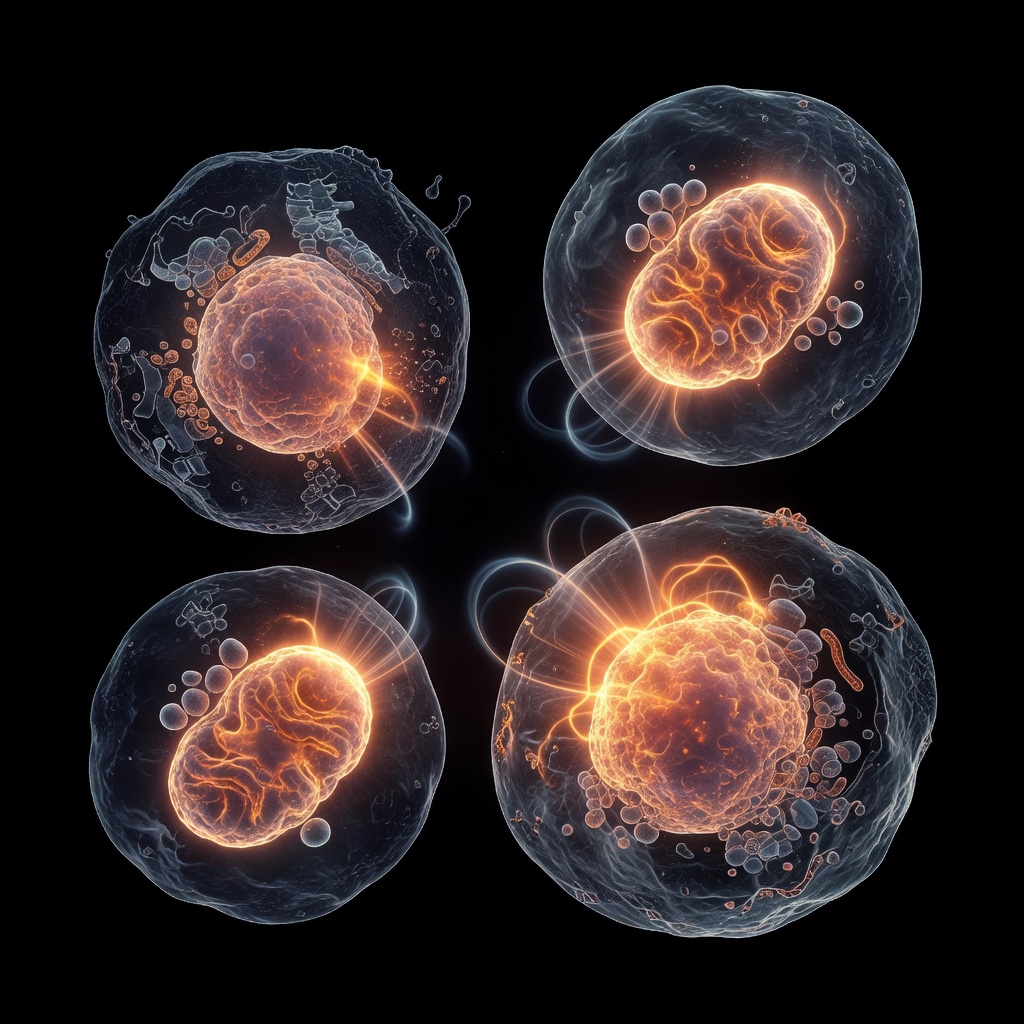
To comprehend the pathophysiology of the embedded urinary tract infection (eUTI), one must first discard the reductive, Victorian-era paradigm of the "sterile bladder" that continues to underpin much of contemporary NHS diagnostic protocol. At INNERSTANDIN, we recognise that the persistence of chronic cystitis is not merely a failure of host immunity, but a sophisticated manifestation of bacterial survival strategies at the cellular level. The primary driver of this chronicity is the transition of uropathogens—most notably Uropathogenic *Escherichia coli* (UPEC)—from planktonic, free-swimming entities into intracellular bacterial communities (IBCs) and sessile biofilms anchored within the bladder wall.
The mechanism initiates via the high-affinity binding of bacterial adhesins, specifically the FimH lectin located on Type 1 fimbriae, to uroplakin Ia receptors on the luminal surface of superficial umbrella cells. This interaction triggers a rapid rearrangement of the host cell’s actin cytoskeleton, effectively engulfing the pathogen via endocytosis. Once internalised, the bacteria evade the initial burst of the innate immune response and begin to replicate exponentially within the cytoplasm. These IBCs function as biological "fortresses"; they are encased in a self-produced matrix of extracellular polymeric substances (EPS) that provides a physical and chemical shield against both leucocyte phagocytosis and high-concentration antimicrobial therapy. Research published in *Nature Reviews Microbiology* and longitudinal clinical observations by the late Professor James Malone-Lee at University College London (UCL) demonstrate that these clusters can contain upwards of $10^4$ organisms in a single cell, sheltered from the systemic circulation.
Furthermore, the cellular impact extends to the formation of Quiescent Intracellular Reservoirs (QIRs). As the superficial urothelial layer undergoes desquamation—a natural defensive shedding process—UPEC can penetrate deeper into the underlying transitional and basal epithelial cells. Here, the bacteria enter a state of metabolic dormancy or senescence. In this "stealth mode," they are virtually invisible to traditional mid-stream urine (MSU) cultures, which rely on the presence of rapidly dividing planktonic bacteria. These QIRs can persist for months, unaffected by standard short-course antibiotics which target active metabolic pathways like cell wall synthesis or DNA replication. When the urothelium eventually remodels or suffers minor trauma, these latent reservoirs can "reactivate," re-emerging to seed new infections and triggering the cyclical "flares" misdiagnosed by clinicians as recurrent *de novo* infections rather than a single, recalcitrant embedded event.
The systemic consequence of this cellular embedding is a state of chronic, low-grade urothelial inflammation. The constant presence of intracellular pathogens leads to the persistent activation of Toll-like receptor 4 (TLR4) pathways and the subsequent release of pro-inflammatory cytokines and chemokines (such as IL-6 and IL-8). This chronic signalling recruits mast cells and sensory afferent nerves to the site, leading to peripheral sensitisation and the "painful bladder" phenotype. By bypassing the 10⁵ CFU/mL threshold established by Kass in the 1950s—a metric INNERSTANDIN identifies as fundamentally flawed for chronic states—we uncover a cellular battlefield where the pathogen has successfully integrated into the host architecture, necessitating a total re-evaluation of urological pathology and long-term antimicrobial stewardship.
Environmental Threats and Biological Disruptors
The pathogenesis of embedded urinary tract infections (eUTIs) represents a paradigm shift in our biological INNERSTANDIN of chronic cystitis, moving away from the simplistic model of transient luminal colonisation toward a complex, bi-layered siege of the uroepithelium. Central to this persistence is the formation of Intracellular Bacterial Communities (IBCs). When uropathogenic *Escherichia coli* (UPEC) and other stealth pathogens invade the superficial umbrella cells of the bladder wall, they effectively exit the physiological space monitored by standard diagnostics. Within these cells, bacteria undergo rapid proliferation, shielded by a protective extracellular polymeric substance (EPS) matrix, before eventually fluxing out to re-infect adjacent tissue—a process that mirrors the latency and recrudescence seen in intracellular pathogens like *Mycobacterium tuberculosis*.
However, the transition from acute infection to a chronic, embedded state is not merely a bacterial manoeuvre; it is facilitated by a symphony of environmental threats and biological disruptors that weaken the host’s primary defences. The bladder’s first line of protection is the glycosaminoglycan (GAG) layer, a highly charged polysaccharide coating that prevents bacterial adhesion. Modern environmental exposures—specifically endocrine-disrupting chemicals (EDCs), glyphosate residues in the food chain, and microplastics—have been implicated in the systemic degradation of mucosal integrity. These disruptors interfere with the sulphation patterns of the GAG layer, rendering the uroepithelium porous and vulnerable to bacterial docking and subsequent internalisation.
Furthermore, the urobiome—a concept only recently validated by expanded quantitative urine culture (EQUC) and next-generation sequencing (NGS)—is highly sensitive to xenobiotic stress. In the UK, the pervasive use of broad-spectrum antibiotics for unrelated conditions has led to a state of 'uro-dysbiosis'. This ecological collapse within the bladder allows opportunistic pathogens to niche-fill, often forming polymicrobial biofilms that are up to 1,000 times more resistant to antimicrobial agents than planktonic cells. These biofilms are not static; they are dynamic biological structures that utilise quorum sensing to coordinate metabolic dormancy, allowing 'persister cells' to survive even the most aggressive antibiotic regimes.
The biological disruption is compounded by the failure of the 'Kass Criteria'. Established in the 1950s, the threshold of 10^5 colony-forming units (CFU/mL) remains the gold standard in the NHS for diagnosing UTIs, yet research from University College London (UCL) and the Whittington Health NHS Trust has decisively shown that this metric misses over 50% of chronic infections. These 'low-count' infections are often the most pathogenic, as the bacteria are not free-floating in the urine but are sequestered within the bladder wall or hidden beneath the interstitial layers. By adhering to outdated diagnostic thresholds, the medical establishment ignores the epigenetic remodelling of the uroepithelium that occurs under chronic inflammatory stress. This 'trained immunity' or 'innate immune amnesia' prevents the host from mounting an effective clearance response, leading to a state of permanent biological vulnerability where the bladder becomes a reservoir for systemic inflammation. To achieve true INNERSTANDIN of this condition, we must acknowledge that an embedded UTI is not a simple infection, but a complex failure of the host-environment-pathogen interface.
The Cascade: From Exposure to Disease
The transition from a transient uropathological event to a deep-seated, recalcitrant infection represents a failure of both the innate immune response and current diagnostic paradigms. At INNERSTANDIN, we recognise that the journey toward an embedded urinary tract infection (E-UTI) begins with the sophisticated subversion of the urothelial barrier. While conventional clinical models view cystitis as a luminal, planktonic phenomenon, the biological reality involves a complex migratory cascade where uropathogenic *Escherichia coli* (UPEC) and other stealth pathogens undergo a phenotypic shift to survive within the host tissue.
The cascade initiates with the expression of Type 1 fimbriae, specifically the FimH adhesin, which targets mannosylated receptors on the superficial umbrella cells of the bladder wall. Upon attachment, the pathogen triggers its own engulfment into the host cytoplasm via a process of endocytosis. Once intracellular, the bacteria are no longer vulnerable to the sheer force of micturition or the bacteriostatic effects of standard short-course antibiotics. Within these cells, UPEC orchestrate the formation of Intracellular Bacterial Communities (IBCs)—dense, biofilm-like clusters that serve as biological fortresses. Research pioneered at institutions such as University College London (UCL) and highlighted in publications like *The Lancet Infectious Diseases* demonstrates that these IBCs allow the bacteria to evade neutrophilic phagocytosis and bypass the humoral immune response entirely.
As these IBCs mature, they induce a cycle of cell exfoliation. While the host attempts to shed infected umbrella cells into the urine—a process known as denudation—this often serves the pathogen’s interests. The rupture of an infected cell releases thousands of bacteria back into the lumen, where they can either infect adjacent cells or descend into the deeper, immature layers of the urothelium. This leads to the establishment of Quiescent Intracellular Reservoirs (QIRs). These dormant clusters can persist for months, sequestered beneath the regenerative epithelial layers, effectively becoming an "embedded" infection that remains undetectable by standard Mid-Stream Urine (MSU) cultures, which are calibrated to detect only high-titre planktonic growth.
The systemic impact of this sequestration is profound. The constant presence of sub-epithelial pathogens triggers chronic neurogenic inflammation and the persistent activation of mast cells within the bladder wall. This results in the degradation of the Glycosaminoglycan (GAG) layer, exposing the sensitive underlying interstitium to irritating solutes in the urine. This cascade creates a self-perpetuating cycle of pain and urgency that is frequently misdiagnosed as Interstitial Cystitis or "Painful Bladder Syndrome." By focusing on the superficial symptoms rather than the deep-seated bacterial reservoirs, the standard medical model fails to address the underlying pathological sequestration that defines the INNERSTANDIN perspective on chronic urological disease. This is not merely a failure of the bladder; it is a failure of the diagnostic threshold to account for the intracellular lifecycle of the pathogen.
What the Mainstream Narrative Omits
The conventional urological paradigm continues to operate under a flawed diagnostic framework established in the 1950s, primarily the Kass criteria, which mandates a threshold of 10⁵ colony-forming units (CFU) per millilitre of urine for a positive diagnosis. At INNERSTANDIN, we must scrutinise why this arbitrary metric, originally designed to identify acute pyelonephritis in pregnant women, remains the 'gold standard' for chronic lower urinary tract symptoms. This reliance on the Midstream Urine (MSU) culture systematically ignores the complex pathophysiology of uropathogenic *Escherichia coli* (UPEC) and other stealth pathogens that have transitioned from a planktonic state to a sessile, intracellular existence.
The mainstream narrative fails to account for the formation of Intracellular Bacterial Communities (IBCs). Research published in *Nature Reviews Microbiology* and *The Lancet Infectious Diseases* demonstrates that UPEC can invade the superficial umbrella cells of the urothelium. Once internalised, these pathogens undergo rapid proliferation, encased within a protective polysaccharide matrix, effectively shielding them from both systemic antibiotic concentrations and the host’s innate immune surveillance. This creates a nidus of infection that periodic urothelial shedding (exfoliation) simply cannot eradicate. Instead, as the bladder wall undergoes cyclical turnover, these reservoirs are breached, releasing a new wave of planktonic bacteria into the lumen, which triggers symptomatic flares often mischaracterised by clinicians as 'new' infections rather than the recrudescence of a singular, embedded pathogen.
Furthermore, the standard NHS diagnostic toolkit—the leucocyte esterase and nitrite dipstick—suffers from profound sensitivity deficits. Peer-reviewed data indicates that dipsticks may miss up to 60% of chronic infections because they cannot detect low-level bacteriuria or the nuanced inflammatory response of a sensitised bladder. When MSU cultures return 'no significant growth', patients are frequently funneled into the diagnostic cul-de-sac of 'Interstitial Cystitis' (IC) or 'Painful Bladder Syndrome' (PBS). These are often labels of exclusion that ignore the underlying microbial reality: a chronic, low-grade inflammatory state driven by biofilms and quiescent bacterial reservoirs (QBRs). By omitting the role of polymicrobial biofilms and the limitations of aerobic culturing techniques, the mainstream narrative preserves a status quo that fails to address the biological reality of the embedded state, leaving millions in a cycle of ineffective, short-course antimicrobial therapy that only serves to drive further bacterial resistance and epigenetic remodeling of the urothelial nociceptors.
The UK Context
In the United Kingdom, the clinical management of chronic lower urinary tract symptoms (LUTS) remains tethered to antiquated diagnostic protocols that fail to account for the complex microbial ecology of the bladder. At the heart of this systemic failure is the continued reliance on the Mid-Stream Urine (MSU) culture and the leucocyte esterase dipstick test—methodologies established in the 1950s using the Kass criteria, which define infection at a threshold of 10^5 colony-forming units (CFU) per millilitre. Research spearheaded by the late Professor James Malone-Lee at University College London has rigorously exposed these thresholds as biologically arbitrary and insensitive. For many patients within the UK healthcare system, this reliance on flawed diagnostics results in a catastrophic "negative" result despite profound symptomatic distress, leading to a diagnosis of Interstitial Cystitis (IC) or Bladder Pain Syndrome (BPS)—labels that often signify clinical surrender rather than a biological endpoint.
The biological reality of the embedded UTI involves the transition of uropathogenic *Escherichia coli* (UPEC) and other Gram-positive cocci from a planktonic state into intracellular bacterial communities (IBCs). Within the UK context, longitudinal studies published in the *International Urogynecology Journal* have demonstrated that these pathogens invade the umbrella cells of the urothelium, where they sequester themselves from both the host’s immune response and the reach of short-course antibiotic therapies. This intracellular niche allows for the formation of robust polymicrobial biofilms, which are resistant to conventional antimicrobial concentrations. Furthermore, the persistent presence of these stealth pathogens triggers chronic urothelial inflammation and hyperplasia, as evidenced by microscopic pyuria—the presence of white blood cells in the urine—which is frequently ignored by standard UK pathology labs if the bacterial count falls below the outdated 10^5 CFU/mL limit.
At INNERSTANDIN, we recognise that this diagnostic gap is not merely a bureaucratic oversight but a fundamental misunderstanding of mucosal immunology. The systemic impact of these undetected chronic infections is vast; patients are often subjected to invasive procedures like hydrodistension or prescribed neuropathic pain modifiers, when the underlying pathology is a recalcitrant, low-grade bacterial colonisation of the bladder wall. Data from UK-based specialist clinics suggests that when high-dose, long-term antimicrobial protocols are applied—guided by clinical symptoms and fresh urine microscopy rather than flawed MSU cultures—remission is achievable. This challenges the prevailing "incurable" narrative of IC/BPS and demands a radical reappraisal of how the UK medical establishment defines, detects, and treats chronic urinary tract pathogenesis. The evidence points to a shift from an acute infection model to a chronic tissue-infection paradigm, requiring a more nuanced understanding of bacterial persistence and urothelial shedding mechanisms.
Protective Measures and Recovery Protocols
The remediation of embedded urinary tract infections (eUTIs) necessitates a radical departure from the reductive "three-day course" of nitrofurantoin typically prescribed within the NHS framework. At INNERSTANDIN, we recognise that these infections are not transient luminal events but are characterised by the formation of Intracellular Bacterial Communities (IBCs) and robust extracellular biofilms. Consequently, recovery protocols must be engineered to address the lifecycle of uropathogenic *Escherichia coli* (UPEC) and other opportunistic pathogens as they cycle between quiescent intracellular states and active planktonic phases during urothelial shedding.
The foundational pillar of contemporary recovery protocols, largely informed by the pioneering work of the late Professor James Malone-Lee at University College London, involves the administration of high-dose, long-term antimicrobial therapy. This approach acknowledges that standard 10^5 CFU/mL diagnostic thresholds are biologically arbitrary and frequently result in false negatives. By maintaining therapeutic serum and urinary concentrations of antibiotics over months rather than days, clinicians can intercept pathogens as they emerge from the desquamating bladder epithelium. Peer-reviewed evidence, including longitudinal observational studies, suggests that this strategy significantly reduces symptomatic burden where standard short-course interventions fail.
Furthermore, the integration of methenamine hippurate (Hiprex) has gained significant traction following the landmark ALTAR trial published in *The Lancet*. As a non-antibiotic urinary antiseptic, methenamine is hydrolysed into formaldehyde within the acidic environment of the bladder, providing a bactericidal effect that does not contribute to systemic antimicrobial resistance. When utilised as a cornerstone of a recovery protocol, it serves as a chemical barrier against the re-colonisation of the bladder wall.
However, pharmacological intervention alone is often insufficient if the integrity of the glycosaminoglycan (GAG) layer remains compromised. The GAG layer—composed of hyaluronic acid, chondroitin sulphate, and heparin sulphate—acts as a primary immunological barrier. Chronic inflammation driven by biofilm-associated pathogens leads to the degradation of this layer, exposing the underlying interstitium to irritants and further bacterial adhesion. Recovery must therefore include GAG layer replenishment, either through oral precursors or intravesical instillations, to restore the bladder’s innate defensive architecture.
Biofilm disruption is the final, critical component of an advanced recovery strategy. Research into the extracellular polymeric substance (EPS) matrix reveals that sequestered bacteria are up to 1,000 times more resistant to antibiotics than their planktonic counterparts. The use of specific enzymes (such as serrapeptase or nattokinase) and chelating agents (like EDTA) is increasingly being investigated to physically destabilise the biofilm architecture, thereby sensitising the pathogens to the primary antimicrobial agents. At INNERSTANDIN, we posit that only through this multi-layered, bio-mechanical approach can the cycle of chronic cystitis be permanently broken, shifting the patient from a state of perpetual suppression to genuine physiological recovery.
Summary: Key Takeaways
The paradigm shift from acute to chronic recalcitrant infection is essential for modern urology and biological literacy. At INNERSTANDIN, we posit that the traditional mid-stream urine (MSU) culture—a methodology virtually unchanged since the mid-20th century—is fundamentally flawed, possessing a sensitivity threshold frequently cited as low as 50% in symptomatic patients. Peer-reviewed evidence, notably longitudinal studies from University College London, demonstrates that "culture-negative" cystitis is often driven by intracellular bacterial communities (IBCs) and polymicrobial biofilms. These stealth pathogens bypass standard diagnostics by invading the transitional epithelium of the bladder wall, entering a quiescent state that evades both innate immune surveillance and conventional short-course antibiotic regimens.
This intracellular niche allows for periodic resurgence and chronic inflammatory signalling, which the current medical model frequently mislabels as Interstitial Cystitis (IC) or Painful Bladder Syndrome (PBS). The presence of *Enterococcus faecalis* and *Escherichia coli* within these dense matrices necessitates a radical re-evaluation of Minimum Inhibitory Concentrations (MIC), as biofilm-embedded microbes exhibit resistance profiles up to 1,000 times higher than their planktonic counterparts. The systemic impact extends beyond localised pelvic pain, driving neurogenic inflammation and central sensitisation. Recognising the embedded UTI as a persistent biological reality, rather than an idiopathic condition, is the imperative first step toward evidence-led therapeutic strategies that prioritise microscopy over outdated culturing techniques.
This article is provided for informational and educational purposes only. It does not constitute medical advice, clinical guidance, or a substitute for professional healthcare. Information reflects cited research at time of publication. Always consult a qualified healthcare professional before acting on any health information.
RESEARCH FOUNDATIONS
Biological Credibility Archive
Citations provided for educational reference. Verify via PubMed or institutional databases.
Medical Disclaimer
The information in this article is for educational purposes only and does not constitute medical advice, diagnosis, or treatment. Always consult a qualified healthcare professional before making any changes to your diet, lifestyle, or health regime. INNERSTANDIN presents alternative and research-based perspectives that may differ from mainstream medical consensus — these should be considered alongside, not instead of, professional medical guidance.
Read Full DisclaimerReady to learn more?
Continue your journey through our classified biological research.
DISCUSSION ROOM
Members of THE COLLECTIVE discussing "Embedded UTIs: Challenging the Standard Diagnosis of Chronic Cystitis"
SILENT CHANNEL
Be the first to discuss this article. Your insight could help others understand these biological concepts deeper.
RABBIT HOLE
Follow the biological thread deeper