
Endocrine Disruptors: Chemical Interference in T-Cell Maturation
Updated May 2026
Common household chemicals like BPA and phthalates mimic hormones that signal the thymus to shrink. We expose the hidden environmental triggers that are feminizing or prematurely ageing the immune system.
Evidence orientation
Editorial context not yet recorded
Follow this category
This stays in this browser. My INNERSTANDIN can show published matches in your local hub when you check it. It does not send email, push, or alert notifications.
Local learning review
A private browser aid for revisiting ideas. It is not an alert or a health recommendation.
Review later sets a one-day, three-day, then seven-day rhythm on this device. Choose it only when you want to revisit this article.
Overview
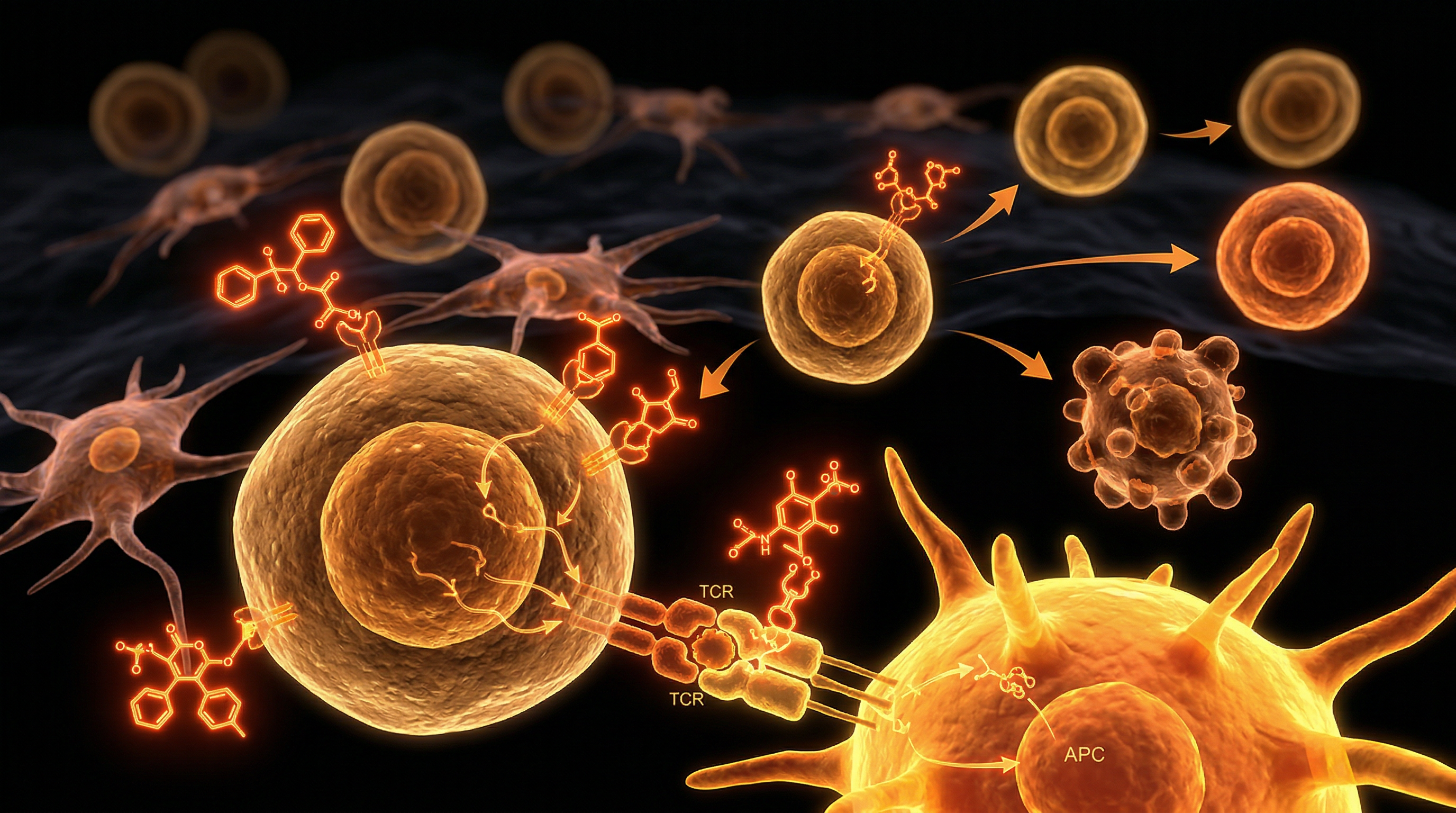
The human immune system is not merely a reactive force; it is a highly calibrated, developmental masterpiece. At the heart of this system lies the thymus gland, a specialised primary lymphoid organ that serves as the "school" for T-lymphocytes (T-cells). For decades, the biological community has accepted thymic involution—the gradual shrinking of the thymus—as an inevitable consequence of chronological ageing. However, emerging research from the vanguard of immunotoxicology suggests a more sinister reality. We are witnessing an unprecedented acceleration of immune senescence, driven not by time, but by an invisible deluge of Endocrine Disrupting Chemicals (EDCs).
Common household substances, ranging from Bisphenol A (BPA) in food linings to phthalates in personal care products, do more than just interfere with reproductive hormones. They mimic the very signals that tell the thymus to shut down. This chemical interference does not merely "age" the immune system; it fundamentally alters the maturation of T-cells, leading to a state of immunological feminisation and chronic vulnerability. As we explore the nexus of endocrinology and immunology, we uncover a disturbing truth: our modern chemical environment is systematically dismantling the foundation of our adaptive immunity, leaving the population susceptible to autoimmunity, chronic inflammation, and premature biological decay.
Fact: The thymus is most active during neonatal and pre-adolescent periods. By the age of 75, the functional thymic tissue is often less than 1/10th of its original mass, a process significantly accelerated by modern xenobiotic exposure.
The Biology — How It Works
To understand how chemicals disrupt T-cell maturation, one must first grasp the delicate architecture of the thymus and the hormonal signals that govern it. Located in the upper chest, the thymus is divided into the cortex (outer layer) and the medulla (inner layer).
The Life Cycle of a T-Cell
T-cells begin as haematopoietic stem cells in the bone marrow. They migrate to the thymus as progenitor cells, where they undergo a rigorous "education" process:
- Positive Selection: Occurring in the cortex, thymocytes are tested to see if they can recognise Major Histocompatibility Complex (MHC) molecules. Those that cannot are discarded.
- Negative Selection: Occurring in the medulla, thymocytes that react too strongly to "self-antigens" are eliminated to prevent autoimmunity.
The Hormonal Master Clock
The thymus is acutely sensitive to the body’s endocrine environment. It is part of the Hypothalamic-Pituitary-Immune (HPI) axis.
- Oestrogens and Androgens: High levels of sex hormones, particularly oestrogen, are known to promote thymic involution. This is why the thymus begins to shrink rapidly at puberty.
- Glucocorticoids: Stress hormones (cortisol) can induce mass apoptosis (programmed cell death) of immature thymocytes.
- Growth Hormone and IGF-1: These are the "rejuvenators" that maintain thymic volume and function.
When EDCs enter the body, they bypass these natural feedback loops. By mimicking oestrogen or blocking androgens, these chemicals send a "false puberty" signal to the thymus, triggering premature atrophy long before the natural developmental timeline dictates.
Mechanisms at the Cellular Level
The interference of EDCs is not a blunt trauma; it is a molecular hijacking. These chemicals operate through several high-precision pathways that disrupt the Thymic Microenvironment.
Oestrogen Receptor (ER) Binding
Most EDCs, particularly BPA and alkylphenols, have a high affinity for Oestrogen Receptor alpha (ERα) and Oestrogen Receptor beta (ERβ).
- The thymus expresses high levels of ERα in its epithelial cells.
- When an EDC binds to these receptors, it triggers the same genetic expression patterns as natural 17β-oestradiol.
- This results in the suppression of interleukin-7 (IL-7), a cytokine critical for T-cell survival and proliferation. Without IL-7, the "student" T-cells starve and die before they can mature.
The Aryl Hydrocarbon Receptor (AhR) Pathway
Many industrial chemicals, such as dioxins and certain polychlorinated biphenyls (PCBs), bind to the Aryl Hydrocarbon Receptor (AhR).
- AhR is a ligand-activated transcription factor found in abundance within thymocytes.
- Over-activation of AhR by synthetic chemicals disrupts the "Notch signalling pathway," which is the primary determinant of whether a stem cell becomes a T-cell or a B-cell.
- Research indicates that AhR hyper-activation leads to a profound decrease in CD4+/CD8+ double-positive thymocytes, essentially halting the production of the immune system’s "special forces."
Epigenetic Remodelling
Perhaps the most "suppressed" aspect of this science is epigenetic interference. EDCs can alter DNA methylation patterns within the thymus.
- Specifically, exposure to phthalates has been shown to hyper-methylate the promoter region of the AIRE (Autoimmune Regulator) gene.
- The AIRE gene is responsible for "teaching" T-cells what "self" looks like. If AIRE is silenced, the thymus fails to eliminate self-reactive T-cells, directly seeding the clouds for an explosion in autoimmune diseases later in life.
Key Statistic: Studies in murine models have shown that exposure to even "sub-toxic" levels of BPA during gestation can reduce thymic cellularity by up to 30%, a deficit that persists into adulthood.
Environmental Threats and Biological Disruptors
We are living in a "chemical soup." While the industry maintains that these substances are safe in isolation, the cumulative and synergistic effects on the thymus are devastating.
1. Bisphenol A (BPA) and its Analogues (BPS, BPF)
Used in the lining of tin cans, thermal paper receipts, and polycarbonate plastics, BPA is perhaps the most well-studied xenoestrogen.
- Mechanism: It competes with natural oestrogen for receptor sites but provides a much "louder" and distorted signal.
- Impact: Accelerates the conversion of functional thymic tissue into adipose (fat) tissue, a hallmark of immune ageing.
2. Phthalates (The "Feminising" Plasticisers)
Found in PVC flooring, medical tubing, and synthetic fragrances, phthalates are ubiquitous.
- Mechanism: They act as anti-androgens. In males, this disrupts the androgen-dependent maintenance of the immune system.
- Impact: Phthalate exposure is linked to a reduction in the anogenital distance (AGD) in infants, a marker of feminisation that correlates with altered T-cell ratios and increased asthma risk.
3. Per- and Polyfluoroalkyl Substances (PFAS)
The "Forever Chemicals" used in non-stick cookware and fire-fighting foams.
- Mechanism: PFAS interfere with PPAR (Peroxisome Proliferator-Activated Receptor) signalling in the thymus.
- Impact: PFAS are known to suppress the immune response to vaccinations. This is a direct result of impaired T-cell maturation; the "memory" cells cannot be formed correctly because the thymic foundation is compromised.
4. Parabens and Triclosan
Commonly used as preservatives in soaps and "anti-bacterial" products.
- Mechanism: These act as weak oestrogens but are absorbed directly through the skin, bypassing the liver’s initial detoxification phase.
- Impact: Chronic topical exposure leads to systemic levels high enough to alter the cytokine profile of the thymic cortex, shifting it toward a pro-inflammatory state.
The Cascade: From Exposure to Disease
The disruption of T-cell maturation is not an isolated biological event; it is the first domino in a cascade of systemic failure.
The Rise of Autoimmunity
When the thymus fails to perform "negative selection" due to EDC interference, self-reactive T-cells are released into the bloodstream.
- This explains the meteoric rise in conditions like Hashimoto’s thyroiditis, Type 1 Diabetes, and Multiple Sclerosis.
- The immune system is effectively "blinded," unable to distinguish between a viral invader and the body's own myelin or thyroid tissue.
Immunosenescence and Cancer
Immunosenescence is the exhaustion of the immune system. A "chemically aged" thymus cannot produce enough naïve T-cells.
- Naïve T-cells are essential for responding to new threats, such as mutated cancer cells or novel viruses.
- When the pool of naïve T-cells is depleted prematurely by EDCs, the body relies on "memory T-cells" that are increasingly senescent and dysfunctional. This creates a permissive environment for oncogenesis (the development of cancer).
The "Feminisation" of the Immune System
Statistically, women are more prone to autoimmune diseases, largely due to the role of oestrogen in the immune response. By flooding the male population with oestrogen-mimicking EDCs, we are seeing a shift in male immune profiles toward this "feminised" autoimmune-prone state, alongside a catastrophic decline in testosterone—the hormone that normally protects the thymus from over-involution.
Callout: Modern children are now born "pre-polluted," with an average of over 200 industrial chemicals detected in umbilical cord blood, many of which are known thymic disruptors.
What the Mainstream Narrative Omits
The dialogue surrounding EDCs is often stifled by industrial lobbying and outdated toxicological models. As researchers for INNERSTANDING, we must highlight the truths the mainstream avoids.
The Non-Monotonic Dose Response (NMDR)
Traditional toxicology is built on the mantra "the dose makes the poison." This assumes a linear relationship: more chemical equals more harm.
- The Truth: EDCs follow a non-monotonic curve. Extremely low doses—parts per trillion—can often cause more endocrine disruption than high doses. This is because the endocrine system is designed to respond to minute fluctuations in hormones.
- Regulatory bodies often ignore these low-dose effects, certifying chemicals as "safe" based on high-dose tests that are irrelevant to human endocrine reality.
The Cocktail Effect
Safety testing is almost always performed on single chemicals. In reality, humans are exposed to a "cocktail" of hundreds of EDCs simultaneously.
- Research shows that chemicals which have no effect individually can, when combined, create a potent "synergistic" suppression of thymic function.
- The regulatory framework for "Total Chemical Burden" is virtually non-existent.
Transgenerational Epigenetic Inheritance
The damage does not stop with the exposed individual.
- EDCs can alter the epigenetic tags on the germline (sperm and eggs).
- This means that a grandmother’s exposure to phthalates can result in a grandchild born with a compromised thymus and a predisposed risk for immune failure, even if the grandchild is never directly exposed. This is the "biological debt" of the industrial revolution.
The UK Context
In the United Kingdom, the situation is particularly acute due to our unique regulatory landscape and historical industrial density.
Post-Brexit Regulatory Divergence
Following the UK’s departure from the European Union, there has been significant concern regarding UK REACH (Registration, Evaluation, Authorisation and Restriction of Chemicals).
- There are fears that the UK may diverge from the more stringent EU "Precautionary Principle," leading to a "race to the bottom" where chemicals banned in Europe remain in British households.
- Current data suggests the UK is slower to restrict known endocrine disruptors like PFOS and PFOA compared to its European neighbours.
The "Great British Stink" and Water Quality
The UK’s water infrastructure is under immense scrutiny. Recent reports have highlighted the prevalence of "gender-bending" chemicals in British rivers, primarily from agricultural runoff and untreated sewage.
- Fish in British rivers are showing high rates of intersex characteristics due to oestrogen pollution.
- For the UK population, the consumption of water—even after standard treatment—may involve chronic, low-level exposure to these same thymic disruptors.
UK Health Trends
The UK has seen a sharp increase in atopic diseases (asthma, eczema) and autoimmune conditions over the last 30 years. British researchers have noted a correlation between the adoption of specific plastic-heavy lifestyle habits and the decline in "Thymic Output" measured in the general population.
Protective Measures and Recovery Protocols
While the environmental burden is significant, we are not helpless. Mitigating the impact of EDCs on T-cell maturation requires a dual approach: avoiding exposure and supporting the biological "clearance" of these compounds.
1. Radical Avoidance Strategies
- Ditch the "Fragrance": Most synthetic perfumes and air fresheners are delivery systems for phthalates. Use essential oils or, better yet, go fragrance-free.
- Thermal Receipt Awareness: Never handle thermal paper receipts (which are coated in pure BPA/BPS) after using hand sanitiser. Hand sanitiser acts as a skin penetrant, increasing the absorption of BPA by up to 100-fold.
- Plastics in the Kitchen: Never heat food in plastic containers. The heat causes monomer leaching, directly transferring EDCs into your lipids. Move to glass, stainless steel, or ceramic.
- Water Filtration: Utilise Reverse Osmosis (RO) or high-grade carbon block filters to remove PFAS and pharmaceutical oestrogens from drinking water.
2. Metabolic Support for Clearance
The liver must process these chemicals via Phase II Detoxification, specifically glucuronidation.
- Calcium D-Glucarate: This supplement helps prevent the "re-absorption" of EDCs in the gut, ensuring they are excreted.
- Sulforaphane: Found in broccoli sprouts, this compound activates the Nrf2 pathway, which enhances the body's ability to neutralise oxidative stress caused by EDCs in the thymus.
- DIM (Diindolylmethane): Derived from cruciferous vegetables, DIM helps the body metabolise oestrogens (and xenoestrogens) into safer metabolites, reducing the "false" signal sent to the thymus.
3. Thymic Rejuvenation Protocols
The thymus has a remarkable capacity for regeneration if the inhibitory signals are removed.
- Zinc Supplementation: Zinc is a critical co-factor for thymulin, a hormone produced by the thymus that governs T-cell differentiation.
- Vitamin D3/K2: T-cells have Vitamin D receptors. Optimal levels are required for the "Negative Selection" process to work correctly, preventing autoimmunity.
- Intermittent Fasting: Emerging studies suggest that prolonged fasting (48–72 hours) can trigger a "metabolic reset" that clears out senescent immune cells and stimulates the production of new T-cells from the bone marrow.
Summary: Key Takeaways
The threat posed by Endocrine Disruptors to our immune longevity is one of the most significant, yet overlooked, health crises of the 21st century.
- The Thymus is the Target: EDCs like BPA and phthalates are not just "hormone" problems; they are immune problems. They hijack the master clock of the immune system, causing premature thymic atrophy.
- The Mechanism is Precision Hijacking: Through ER binding and AhR activation, these chemicals stop the "education" of T-cells, leading to a shortage of naïve cells and an excess of self-reactive ones.
- Low Doses Matter: The "Non-Monotonic" nature of these chemicals means that modern safety standards are largely illusory. There is no "safe" level of exposure to a compound designed to mimic a hormone.
- Transgenerational Debt: We are currently passing the immunological damage of our plastic-centric world down to our children through epigenetic modifications.
- The UK is at a Crossroads: Post-Brexit regulatory shifts and aging infrastructure make British citizens particularly vulnerable to EDC-driven immune decay.
- Action is Possible: Through rigorous avoidance of plastics and fragrances, coupled with targeted nutritional support for the liver and thymus, we can begin to reclaim our immunological sovereignty.
The "Innerstanding" of this issue requires us to look beyond the surface of "germ theory" and recognise that our resilience is being eroded from within by the very materials we have used to build our modern world. The preservation of the thymus is the preservation of the self. Without a functional "school" for our T-cells, we are a nation without a defence, maturing into a future of avoidable infirmity. It is time to demand a chemical environment that respects the delicate, sacred architecture of the human immune system.
This article is provided for informational and educational purposes only. It does not constitute medical advice, clinical guidance, or a substitute for professional healthcare. Information reflects cited research at time of publication. Always consult a qualified healthcare professional before acting on any health information.
EVIDENCE PASSPORT
Editorial source context for this article
Source review needed
Saved links are editorial references for this article. They may support specific claims rather than every sentence. Open and assess each source in context. This passport does not independently verify them.
Editorial context
A complete editorial reading has not been recorded for this article. Source links remain available for you to open and assess directly.
Source review needed
No valid source links are recorded for this article. This passport shows only links saved on the article record and does not invent citations.
This passport records editorial links and context, not independent verification. Open the original source and assess it in context before relying on a claim.
Medical Disclaimer
The information in this article is for educational purposes only and does not constitute medical advice, diagnosis, or treatment. Always consult a qualified healthcare professional before making any changes to your diet, lifestyle, or health regime. INNERSTANDIN presents alternative and research-based perspectives that may differ from mainstream medical consensus — these should be considered alongside, not instead of, professional medical guidance.
Read Full DisclaimerContinue the thread
Keep this question moving.
Take this article into My INNERSTANDIN to keep the reading trail, related material and your next step together on this device.
Explore this in the Body Map
See where this hits your biology. Interactive anatomy, threats, and protective protocols.
Dig deeper in the Library
Free, longform PDF volumes that go beyond headlines into mechanisms and references.