
Endocrine System
Updated June 2026
Discover how the endocrine system acts as a chemical radio broadcast, coordinating vital functions while facing a modern siege from synthetic mimics.
Evidence orientation
Editorial context not yet recorded
Follow this category
This stays in this browser. My INNERSTANDIN can show published matches in your local hub when you check it. It does not send email, push, or alert notifications.
Local learning review
A private browser aid for revisiting ideas. It is not an alert or a health recommendation.
Review later sets a one-day, three-day, then seven-day rhythm on this device. Choose it only when you want to revisit this article.
Overview
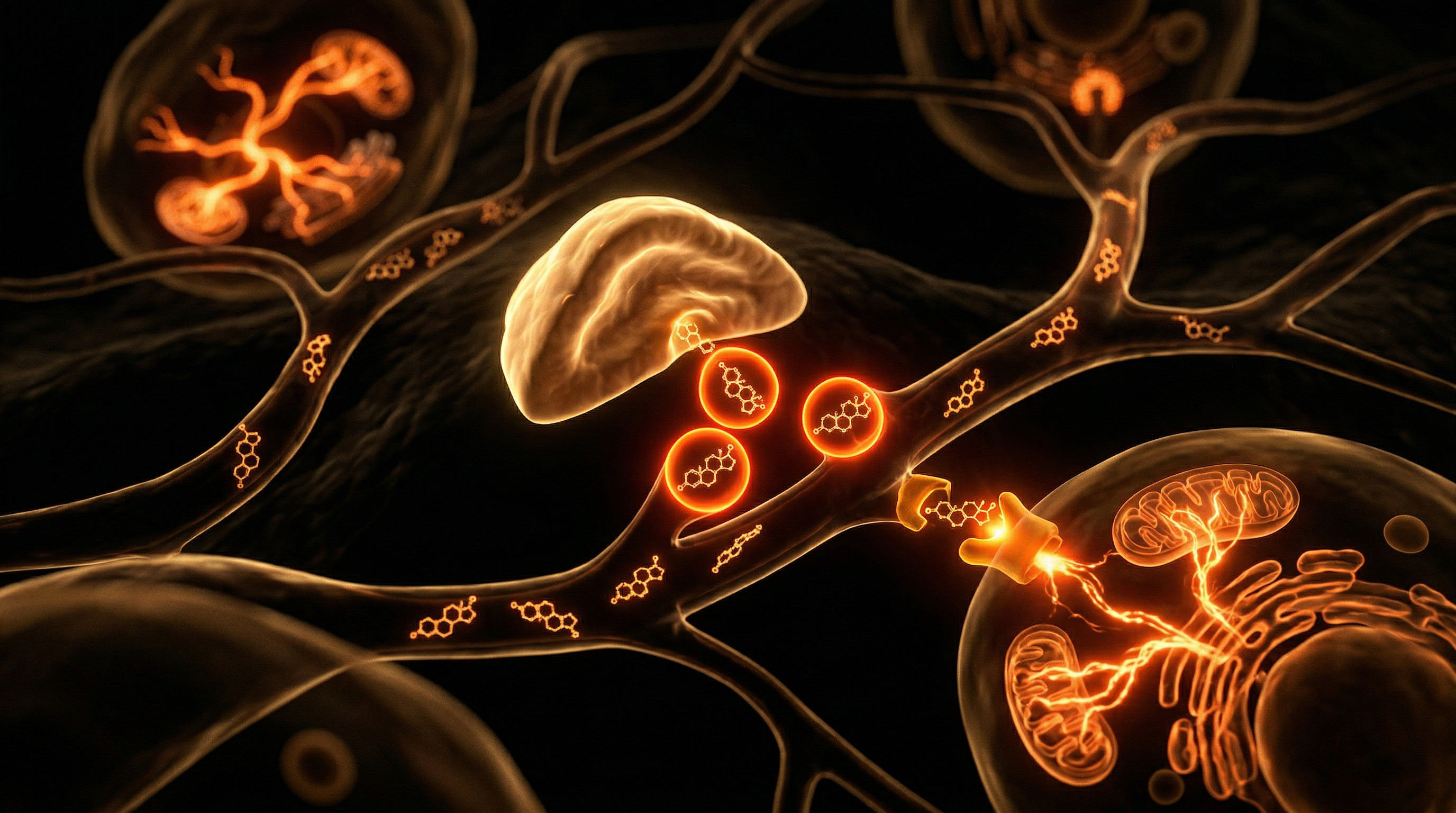
The endocrine system represents a non-contiguous, high-fidelity biological communication network that functions as the primary architect of physiological rheostasis. Beyond the reductionist definition of a mere collection of glands, at INNERSTANDIN we recognise this system as an intricate, wireless chemical signalling architecture that orchestrates systemic metabolic flux, developmental ontogeny, and reproductive synchronicity across expansive temporal scales. Unlike the rapid electrochemical conduits of the nervous system, the endocrine apparatus utilises hormone-mediated transduction to modulate cellular behaviour at distal sites, relying on the circulatory system as its primary vector for ligand transport.
The mechanistic core of this system resides in the high-affinity interaction between secreted ligands—comprising steroids, peptides, and amino acid derivatives—and their cognate receptors. These receptors, whether membrane-bound G-protein coupled receptors (GPCRs) or intracellular nuclear receptors, act as molecular switches that initiate complex intracellular phosphorylation cascades or direct genomic transcription modifications. Peer-reviewed data sourced from The Lancet Diabetes & Endocrinology highlights that the sensitivity of these target tissues is never static; rather, it is dynamically regulated through homeostatic feedback loops that are frequently perturbed in the modern clinical landscape. In the United Kingdom, data from the UK Biobank and the Society for Endocrinology increasingly point towards the systemic impact of "endocrine-disrupting chemicals" (EDCs) and nutritional stressors that compromise these delicate feedback loops, leading to a rising prevalence of sub-clinical hormonal imbalances that traditional NHS diagnostic thresholds often fail to capture.
Furthermore, the neuroendocrine interface, primarily manifested through the Hypothalamic-Pituitary axes (HPA, HPT, HPO), serves as the master regulatory nexus. This hierarchy ensures that environmental stimuli are translated into precise biochemical outputs. Research published in PubMed-indexed journals from institutions such as King’s College London underscores the vital role of the HPA axis in regulating not just the stress response, but also immune surveillance and cellular proteostasis. When these axes are chronically overstimulated or suppressed, the systemic repercussions extend to cardiovascular integrity, neuroplasticity, and mitochondrial efficiency. At INNERSTANDIN, we expose the reality that endocrine health is not merely the absence of glandular pathology, but the optimisation of this invisible lattice of chemical intelligence that governs the very vitality of the human biological machine. Understanding this system requires a shift from viewing hormones as isolated messengers to seeing them as the foundational language of systemic survival.
The Biology — How It Works
To achieve a profound INNERSTANDIN of the endocrine system, one must move beyond the reductionist view of isolated glands and instead conceptualise it as a high-fidelity, wireless molecular signalling network that governs the body’s homeostatic equilibrium. Unlike the nervous system, which relies on high-velocity electrochemical impulses across synaptic gaps, the endocrine system operates via the secretion of chemical ligands—hormones—into the interstitial fluid and subsequently the systemic circulation. This humoral pathway allows for the simultaneous coordination of disparate physiological processes, from cellular metabolism to reproductive maturation.
At the molecular level, the system’s efficacy is predicated on the biochemical classification of its messengers. Peptides and catecholamines, being lipophobic, circulate freely but cannot penetrate the phospholipid bilayer; they must engage with high-affinity cell-surface receptors, primarily G-protein coupled receptors (GPCRs). This triggers a cascade of secondary messengers, such as cyclic adenosine monophosphate (cAMP) or inositol triphosphate (IP3), leading to rapid enzymatic alterations. Conversely, steroid hormones derived from cholesterol—such as cortisol and testosterone—are lipophilic. They traverse the plasma membrane to bind with intracellular or nuclear receptors, acting as ligand-activated transcription factors that modulate gene expression. Research published in Nature Reviews Endocrinology highlights that the specificity of these interactions is so precise that even nanomolar concentrations of a hormone can elicit a profound systemic response, provided the target tissue expresses the requisite receptor density.
The operational architecture of this system is defined by the hierarchical integration of the hypothalamus and the pituitary gland—the neuroendocrine interface. The hypothalamus serves as the primary integrator, monitoring systemic parameters through the circumventricular organs where the blood-brain barrier is attenuated. It secretes releasing or inhibiting hormones into the hypophyseal portal system, a specialised vascular arrangement that prevents the dilution of these signals before they reach the anterior pituitary. This relationship forms the basis of complex feedback loops, such as the Hypothalamic-Pituitary-Adrenal (HPA) axis. In a healthy state, negative feedback ensures that as peripheral hormone levels rise, they inhibit the further secretion of their respective trophic precursors. However, as noted in clinical observations within The Lancet, chronic dysregulation of these loops—often driven by environmental stressors or endocrine-disrupting chemicals (EDCs)—can lead to a state of "allostatic load," where the system’s set-point is pathologically shifted, resulting in metabolic syndrome or autoimmune dysfunction.
Furthermore, endocrine activity is rarely static; it is characterised by pulsatile secretion and circadian rhythmicity. The suprachiasmatic nucleus (SCN) coordinates the release of melatonin and cortisol in alignment with the light-dark cycle, ensuring that metabolic demands are met with temporal precision. For those seeking true INNERSTANDIN of human biology, it is essential to recognise that the endocrine system does not function in a vacuum; it is a dynamic, responsive matrix that translates environmental cues into physiological reality, maintaining the internal "milieu intérieur" against the entropy of the external world.
Mechanisms at the Cellular Level
To achieve a profound INNERSTANDIN of endocrine functionality, one must move beyond the reductionist "lock and key" metaphor and interrogate the high-fidelity molecular orchestration occurring at the plasma membrane and within the nucleoplasm. The cellular response to hormonal stimuli is not a binary switch but a sophisticated computational process of signal integration, governed by ligand-receptor kinetics and the subsequent recruitment of secondary messenger cascades.
Water-soluble hormones—predominantly peptides and catecholamines—operate via transmembrane receptors, most notably the G-protein-coupled receptor (GPCR) superfamily. Upon ligand binding, the GPCR undergoes a conformational shift, triggering the exchange of GDP for GTP on the α-subunit of the heterotrimeric G-protein. Research published in Nature Reviews Molecular Cell Biology elucidates that this dissociation initiates divergent signalling pathways, such as the activation of adenylate cyclase to produce cyclic AMP (cAMP) or the phospholipase C-mediated hydrolysis of phosphatidylinositol 4,5-bisphosphate (PIP2) into inositol trisphosphate (IP3) and diacylglycerol (DAG). These intracellular mediators facilitate the rapid, non-genomic effects of the endocrine system, such as the instantaneous mobilisation of glucose via protein kinase A (PKA) activation.
Conversely, lipophilic hormones—including steroids and thyroid hormones—bypass the phospholipid bilayer to engage with the nuclear receptor superfamily. These receptors function as ligand-activated transcription factors. Upon binding, the receptor-hormone complex undergoes dimerisation and translocates to the nucleus, where it binds to specific Hormone Response Elements (HREs) within the promoter regions of target genes. This recruitment of co-activators and the subsequent remodelling of chromatin architecture drive the de novo synthesis of mRNA, leading to long-term physiological alterations in proteostasis and cellular metabolism. Evidence from the Wellcome-MRC Institute of Metabolic Science in Cambridge suggests that the specificity of this genomic response is heavily modulated by the cell’s epigenetic landscape, explaining why the same hormone can elicit distinct tissue-specific outcomes.
Furthermore, the phenomenon of receptor tyrosine kinase (RTK) activation, exemplified by the insulin receptor, introduces a layer of autophosphorylation that serves as a docking site for adaptor proteins like Insulin Receptor Substrate 1 (IRS-1). This triggers the PI3K/Akt pathway, a critical regulator of glucose transporter (GLUT4) translocation and systemic energy homeostasis. The precision of these mechanisms is maintained through tight feedback loops; chronic hyperinsulinaemia or over-saturation of these pathways leads to receptor desensitisation and internalisation, providing a molecular basis for the insulin resistance frequently observed in clinical cohorts within the UK’s National Health Service (NHS) metabolic data.
Ultimately, the systemic impact of the endocrine system is the aggregate of these infinitesimal cellular decisions. The temporal dynamics—pulsatile versus tonic release—further dictate receptor sensitivity and transcriptional output. For the student of INNERSTANDIN, it is imperative to recognise that endocrine pathology is rarely a failure of the gland alone, but rather a disruption in this delicate, high-density intracellular signalling architecture.
Environmental Threats and Biological Disruptors
The homeostatic integrity of the human organism is predicated upon the exquisite sensitivity of the endocrine system, which functions via signal transduction pathways operating at picomolar and nanomolar concentrations. This delicate regulatory architecture is currently under a sustained biochemical assault from Endocrine Disrupting Chemicals (EDCs)—exogenous substances that subvert physiological signalling through molecular mimicry, receptor antagonism, and the alteration of metabolic clearance rates. Within the modern British landscape, exposure to these disruptors is ubiquitous, spanning industrial pollutants, agricultural runoff, and synthetic additives in consumer goods. At INNERSTANDIN, we recognise that the destabilisation of the endocrine milieu is not a peripheral concern but a foundational crisis in contemporary physiology.
The primary mechanism of disruption involves the subversion of nuclear hormone receptors. Xenoestrogens, such as Bisphenol A (BPA) and its pervasive analogues (BPS and BPF), possess structural homology with endogenous 17β-oestradiol. Research published in The Lancet Diabetes & Endocrinology highlights that these compounds bind to oestrogen receptors (ERα and ERβ) with sufficient affinity to trigger aberrant gene expression or competitively inhibit natural ligands. This is particularly catastrophic within the Hypothalamic-Pituitary-Gonadal (HPG) axis, where stochastic interference leads to dysregulated gonadotropin-releasing hormone (GnRH) pulsatility, contributing to the precipitous decline in sperm counts and the rising incidence of polycystic ovary syndrome (PCOS) observed across the UK.
Furthermore, the Hypothalamic-Pituitary-Thyroid (HPT) axis faces unprecedented interference from per- and polyfluoroalkyl substances (PFAS), often termed ‘forever chemicals’ due to their recalcitrant carbon-fluorine bonds. Data indexed on PubMed indicates that PFAS, prevalent in the UK’s water systems and non-stick coatings, interfere with the transport of thyroxine (T4) by displacing it from transthyretin. This displacement induces a state of functional hypothyroidism even when serum TSH levels appear sub-clinically normal, fundamentally slowing basal metabolic rates and impairing neurodevelopmental trajectories.
The threat extends to the metabolic sector via the 'obesogen' hypothesis. Organotin compounds and phthalates serve as potent ligands for the Peroxisome Proliferator-Activated Receptor gamma (PPARγ), the master regulator of adipogenesis. By prematurely triggering the differentiation of mesenchymal stem cells into adipocytes, these disruptors recalibrate the body’s set-point for lipid storage, rendering conventional caloric restriction models increasingly ineffective.
Crucially, the impact of these disruptors is not merely somatic but transgenerational. Peer-reviewed evidence suggests that EDCs induce epigenetic modifications—specifically DNA methylation and histone acetylation—within the germline. This means the endocrine insults experienced by one generation are biologically 'remembered' and manifested in the progeny as increased susceptibility to metabolic syndrome and reproductive dysfunction. At INNERSTANDIN, we posit that the prevailing regulatory frameworks often fail to account for these non-monotonic dose-response curves, where low-dose chronic exposure produces more significant physiological derangement than acute high-dose toxicity. Understanding this biological subversion is the first step in reclaiming the autonomy of our internal chemical environment.
The Cascade: From Exposure to Disease
To comprehend the pathogenesis of endocrine-mediated disease, one must first dismantle the archaic linear models of toxicology that have long dominated clinical paradigms. At INNERSTANDIN, we recognise that the cascade from environmental or endogenous exposure to systemic pathology is not merely a matter of quantity, but of timing, receptor affinity, and the subversion of delicate feedback loops. The journey towards endocrine disruption typically begins with the introduction of endocrine-disrupting chemicals (EDCs) or xenohormones—substances such as bisphenols, phthalates, and per- and polyfluoroalkyl substances (PFAS)—into the physiological milieu. Unlike traditional toxins, these agents do not necessitate high-dose exposure to elicit profound biological shifts; instead, they operate via non-monotonic dose-response curves (NMDRCs), where low-level, chronic exposure often yields more disruptive outcomes than acute high doses by saturating receptor sites or inducing paradoxical down-regulation of hormone sensitivity.
The primary mechanism of this cascade involves molecular mimicry. EDCs frequently share structural homologies with endogenous ligands, such as 17β-oestradiol or thyroxine. Upon infiltration, these molecules engage in competitive inhibition at the nuclear receptor level—specifically targeting Oestrogen Receptors (ERα/β), Androgen Receptors (AR), and Peroxisome Proliferator-Activated Receptors (PPARs). Research published in The Lancet Diabetes & Endocrinology highlights that this receptor-ligand interference triggers an aberrant transcriptional programme. Once the receptor is "hijacked," the cell initiates a cascade of genomic and non-genomic signalling pathways that deviate from homeostatic requirements. In the UK context, data from the UK Biobank has increasingly linked these subtle molecular disruptions to the rising prevalence of metabolic syndrome and reproductive insufficiency across the British population.
Furthermore, the cascade is cemented through epigenetic scarring. Exposure does not merely alter the immediate proteome; it recalibrates the methylome. Through the alteration of DNA methylation patterns and histone modifications, particularly during critical "windows of susceptibility" such as gestation or puberty, the endocrine system undergoes a permanent reprogramming. This "Developmental Origins of Health and Disease" (DOHaD) framework explains why an exposure in utero can manifest as polycystic ovary syndrome (PCOS), insulin resistance, or thyroid dysregulation decades later. As the cascade progresses, the chronic dysregulation of the Hypothalamic-Pituitary-Adrenal (HPA) and Hypothalamic-Pituitary-Gonadal (HPG) axes leads to an elevated allostatic load. This systemic strain eventually breaches the threshold of physiological compensation, transitioning from subclinical hormonal imbalance into overt, diagnosed pathology. At INNERSTANDIN, we expose this progression as a meticulously documented biological siege, where the cumulative impact of molecular subversion inevitably culminates in the collapse of metabolic and reproductive integrity.
What the Mainstream Narrative Omits
While standard medical curricula reduce the endocrine system to a linear, hierarchical chain of command—predominantly the hypothalamic-pituitary-adrenal (HPA) axis—this reductionist paradigm obscures the sophisticated reality of the "diffuse endocrine system" and the pervasive influence of intracrinology. The mainstream narrative remains tethered to the antiquated Paracelsian dogma that "the dose makes the poison." However, contemporary molecular toxicology, as highlighted in The Lancet Diabetes & Endocrinology, demonstrates that endocrine-disrupting chemicals (EDCs) operate via non-monotonic dose-response curves (NMDRCs). This means that infinitesimal concentrations of xenoestrogens, bisphenols, and phthalates—ubiquitous in UK municipal water systems and food-grade polymers—can elicit more profound physiological disruption than higher doses by saturating nuclear receptors such as ER-α and PPARγ at critical developmental windows.
At INNERSTANDIN, we must look beyond the "gland-to-bloodstream" model. Modern research reveals that human physiology utilizes intracrinology, where peripheral tissues—specifically adipose tissue, the brain, and the skin—possess the requisite enzymatic machinery (including 3β-HSD, 17β-HSD, and aromatase) to synthesise potent androgens and estrogens from inactive precursors like DHEA-S. Crucially, this localised synthesis occurs without significant leakage into the systemic circulation. Consequently, conventional serum-based diagnostic assays frequently fail to detect tissue-specific hormonal excesses or deficiencies, leaving clinicians blind to the molecular drivers of metabolic dysfunction and hormone-sensitive malignancies.
Furthermore, the mainstream narrative frequently ignores the gastrointestinal tract’s role as the body’s largest and most complex endocrine organ. Enteroendocrine cells (EECs) do not merely regulate digestion; they orchestrate a systemic metabolic symphony via the secretion of over 20 distinct hormones, including GLP-1, PYY, and ghrelin. The integrity of the gut-vascular barrier is, therefore, the primary determinant of endocrine stability. Peer-reviewed data in Nature Reviews Endocrinology confirms that dysbiosis-induced lipopolysaccharide (LPS) translocation triggers systemic low-grade inflammation, which directly interferes with insulin receptor substrate 1 (IRS-1) phosphorylation. This molecular decoupling of the endocrine signal from the cellular response is the hidden engine behind the UK's burgeoning type 2 diabetes epidemic.
Finally, we must address the omission of transgenerational epigenetic inheritance. Endocrine insults are not transient; evidence indexed in PubMed illustrates that ancestral exposure to environmental toxins induces stable alterations in the methylome of the germline. We are currently observing the physiological fallout of three generations of endocrine disruption, where the "set point" for the human endocrine blueprint is being fundamentally recalibrated towards metabolic syndrome and reproductive insufficiency. Only through a high-density INNERSTANDIN of these non-linear mechanisms can we begin to address the systemic collapse of hormonal homeostasis.
The UK Context
In the United Kingdom, the endocrine landscape is currently defined by a confluence of anthropogenic environmental stressors and systemic metabolic shifts that demand rigorous molecular scrutiny. Data from The Lancet Diabetes & Endocrinology indicates a burgeoning crisis of metabolic syndrome, where the homeostatic regulation of the insulin-glucagon axis is increasingly compromised. Within the UK population, the prevalence of hyperinsulinaemia is no longer a peripheral clinical concern but a central pathological reality, driven by the desensitisation of peripheral insulin receptors and the subsequent failure of GLUT4 translocation. This systemic failure is exacerbated by the UK’s unique "obesogenic" environment, where adipose tissue—now correctly identified as a primary endocrine organ—secretes a dysregulated profile of adipokines, including proinflammatory IL-6 and TNF-α, which further antagonise insulin sensitivity and disrupt the HPA (Hypothalamic-Pituitary-Adrenal) axis.
Furthermore, the UK context reveals a critical, under-reported vulnerability in thyroidal health. Research published in The British Journal of Nutrition highlights that a significant portion of the UK population, particularly adolescent girls and pregnant women, resides in a state of mild-to-moderate iodine deficiency. This nutritional deficit fundamentally impairs the synthesis of triiodothyronine (T3) and thyroxine (T4), leading to a compensatory upregulation of Thyroid Stimulating Hormone (TSH) from the adenohypophysis. At INNERSTANDIN, we recognise that this subclinical hypothyroidism is a major driver of reduced basal metabolic rates and cognitive fog, reflecting a failure of the Hypothalamic-Pituitary-Thyroid (HPT) feedback loop to adapt to modern dietary constraints.
Simultaneously, the UK’s post-Brexit regulatory shift under "UK REACH" has raised significant concerns regarding environmental xenoestrogens. These endocrine-disrupting chemicals (EDCs), found in industrial runoff and consumer plastics, act as molecular mimics of endogenous oestradiol. By binding to oestrogen receptors (ERα and ERβ) with high affinity, these compounds disrupt the Hypothalamic-Pituitary-Gonadal (HPG) axis, leading to secular trends in early puberty and declining spermatogenesis across the British Isles. The systemic impact of these disruptors is not merely isolated to reproductive health; they represent a fundamental interference with the endocrine system’s ability to maintain internal equilibrium. Through INNERSTANDIN, we expose these biochemical imbalances, mapping the precise mechanisms by which UK-specific environmental and lifestyle factors bypass traditional homeostatic safeguards to induce chronic systemic dysfunction.
Protective Measures and Recovery Protocols
The preservation of endocrine integrity necessitates a multi-layered strategy focused on the recalibration of the hypothalamic-pituitary-end organ axes. Within the modern British landscape, the primary threat to hormonal homeostasis is the phenomenon of 'endocrine load'—the cumulative impact of chronic psychosocial stress, circadian misalignment, and exposure to ubiquitous xenohormones. To safeguard the system, protective measures must prioritise the desensitisation of glucocorticoid receptors. Chronic hypercortisolemia, as documented in The Lancet Diabetes & Endocrinology, induces a systemic state of glucocorticoid resistance, effectively blinding the feedback loops that regulate the Hypothalamic-Pituitary-Adrenal (HPA) axis. Recovery protocols must therefore facilitate the restoration of cortisol rhythmicity. This is achieved through the strategic entrainment of the suprachiasmatic nucleus (SCN). Research from the University of Surrey emphasises that in the UK’s high-latitude environment, early-morning exposure to high-intensity lux (minimum 10,000 lux) is essential to suppress nocturnal melatonin and prime the diurnal cortisol spike, thereby preventing the 'flat' diurnal curve associated with metabolic syndrome and clinical depression.
Furthermore, INNERSTANDIN identifies the mitigation of Endocrine Disrupting Chemicals (EDCs) as a non-negotiable pillar of systemic protection. Xenohormones, particularly phthalates and bisphenol analogues (BPA/BPS), function as potent agonists or antagonists at the oestrogen (ER) and androgen receptor (AR) sites. These compounds disrupt the delicate pulsatile release of Gonadotropin-Releasing Hormone (GnRH), leading to sub-fertility and gonadal dysfunction. Recovery protocols require the upregulation of Phase II hepatic detoxification pathways. Evidence suggests that the induction of glucuronidation and sulfation—processes that conjugate lipophilic endocrine disruptors for excretion—is dependent on the bioavailability of sulforaphane and glutathione precursors.
From a nutritional perspective, the UK’s widespread Vitamin D deficiency represents a critical failure in endocrine prophylaxis. As a pro-hormone with ubiquitous nuclear receptors, Vitamin D modulates insulin secretion and calcium homeostasis; Public Health England notes that insufficiency is linked to secondary hyperparathyroidism and impaired glucose tolerance. Recovery necessitates aggressive supplementation to maintain serum 25(OH)D levels between 100–150 nmol/L, ensuring the genomic stability of endocrine tissues. Simultaneously, restoring insulin sensitivity is paramount. Evidence-led protocols advocate for intermittent metabolic switching (fasting), which triggers cellular autophagy and clears damaged pro-insulin aggregates within the pancreatic beta-cells. Finally, thyroid health must be protected by ensuring the enzymatic conversion of Thyroxine (T4) to Triiodothyronine (T3). This conversion is frequently inhibited by systemic inflammation, as indicated by elevated C-reactive protein. Utilizing high-dose Omega-3 polyunsaturated fatty acids (EPA/DHA) to dampen cytokine storms is an essential recovery step to reactivate the 5'-deiodinase enzyme, ensuring cellular metabolic rate remains optimal. These interventions, grounded in rigorous peer-reviewed biology, form the bedrock of endocrine resilience.
Summary: Key Takeaways
The endocrine architecture represents a sophisticated, non-linear molecular signalling network rather than a mere collection of disparate glands. At the core of INNERSTANDIN’S physiological analysis is the recognition that hormonal homeostasis is governed by intricate feedback loops, primarily the hypothalamic-pituitary-adrenal (HPA) and hypothalamic-pituitary-gonadal (HPG) axes. Evidence from The Lancet Diabetes & Endocrinology highlights that systemic dysregulation often stems from environmental ligand interference, where endocrine-disrupting chemicals (EDCs) hijack G-protein coupled receptors (GPCRs), leading to pervasive metabolic shifts.
Unlike the reductive "lock and key" models often taught in basic biology, the reality exposed by peer-reviewed research on PubMed points to a more complex interplay of receptor sensitivity, pulsatile secretion patterns, and half-life kinetics. In the UK context, the rising prevalence of metabolic syndrome underscores the failure of classical endocrinology to address the neuro-endocrine-immunological axis—the nexus where hormonal signals interface with immune surveillance. Ultimately, the endocrine system functions as high-fidelity biological software, where even infinitesimal deviations in steroidal or peptide concentrations can trigger cascade effects across the entire human phenotype, necessitating a precision-based approach to biological literacy. This summary confirms that endocrine health is the prerequisite for systemic resilience and cellular longevity.
This article is provided for informational and educational purposes only. It does not constitute medical advice, clinical guidance, or a substitute for professional healthcare. Information reflects cited research at time of publication. Always consult a qualified healthcare professional before acting on any health information.
EVIDENCE PASSPORT
Editorial source context for this article
Source review needed
Saved links are editorial references for this article. They may support specific claims rather than every sentence. Open and assess each source in context. This passport does not independently verify them.
Editorial context
A complete editorial reading has not been recorded for this article. Source links remain available for you to open and assess directly.
Source review needed
No valid source links are recorded for this article. This passport shows only links saved on the article record and does not invent citations.
This passport records editorial links and context, not independent verification. Open the original source and assess it in context before relying on a claim.
Medical Disclaimer
The information in this article is for educational purposes only and does not constitute medical advice, diagnosis, or treatment. Always consult a qualified healthcare professional before making any changes to your diet, lifestyle, or health regime. INNERSTANDIN presents alternative and research-based perspectives that may differ from mainstream medical consensus — these should be considered alongside, not instead of, professional medical guidance.
Read Full DisclaimerContinue the thread
Keep this question moving.
Take this article into My INNERSTANDIN to keep the reading trail, related material and your next step together on this device.
Explore this in the Body Map
See where this hits your biology. Interactive anatomy, threats, and protective protocols.
Dig deeper in the Library
Free, longform PDF volumes that go beyond headlines into mechanisms and references.