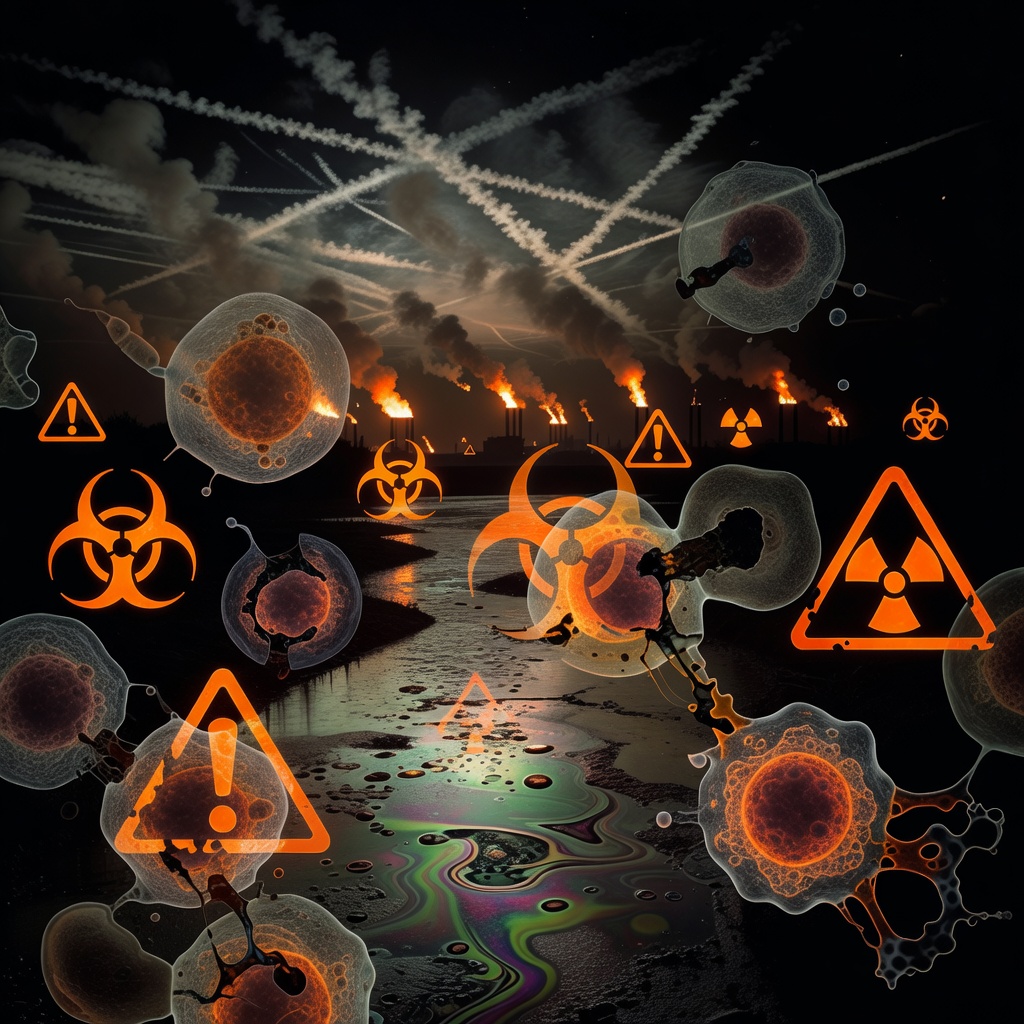
Environmental Toxicity: How Chronic Mycotoxin Exposure Compromises the UK Immune Response

# Environmental Toxicity: How Chronic Mycotoxin Exposure Compromises the UK Immune Response
In the modern landscape of chronic illness, there is a hidden driver often overlooked by conventional primary care: environmental toxicity. While the medical establishment frequently focuses on symptomatic relief for autoimmune conditions and chronic fatigue, a deeper truth remains obscured. We are living in an era where our internal biological terrain is under constant siege from external poisons.
Among the most insidious of these threats are mycotoxins—secondary metabolites produced by microfungi (moulds) that possess the capacity to dismantle the human immune system from the inside out. In the United Kingdom, where the climate and ageing infrastructure create a perfect storm for fungal proliferation, understanding the link between mycotoxin exposure and immune dysfunction is no longer optional; it is a clinical necessity for those seeking true health.
---
The Invisible Threat: Understanding Mycotoxins
To "innerstand" the impact of mycotoxins, we must first distinguish them from the mould spores themselves. While spores are the "seeds" of the fungus, mycotoxins are chemically stable, low-molecular-weight toxins released into the air and onto surfaces. They are invisible, odourless, and incredibly resilient to heat and chemical processing.
Common varieties such as Aflatoxins, Ochratoxin A, Gliotoxin, and Trichothecenes do not merely cause "allergies." They are potent bioweapons designed by fungi to eliminate biological competition. When these toxins enter the human body—via inhalation, ingestion, or skin contact—they bypass traditional detoxification pathways and embed themselves within fatty tissues and vital organs.
"Mycotoxins are not merely irritants; they are cytotoxic, neurotoxic, and profoundly immunosuppressive. Their ability to cross the blood-brain barrier and infiltrate the cellular mitochondria makes them one of the most significant environmental drivers of chronic disease in the 21st century."
---
Biological Mechanisms: How Mycotoxins Deconstruct the Immune System
The human immune system is a sophisticated hierarchy of defence. Mycotoxins are uniquely skilled at subverting this hierarchy through several distinct biological pathways.
1. Inhibition of Protein Synthesis
Many mycotoxins, particularly Trichothecenes (produced by *Stachybotrys chartarum*, or "Black Mould"), act as ribotoxins. They bind to the ribosomes within our cells—the machinery responsible for building proteins. Because the immune system relies on the rapid production of proteins (antibodies, cytokines, and enzymes) to respond to threats, this "ribosomal stress response" effectively paralyse the body’s ability to mount a defence.
2. Induction of Oxidative Stress and Mitochondrial Decay
Mycotoxins trigger the overproduction of Reactive Oxygen Species (ROS). This leads to lipid peroxidation, where the fatty membranes of our cells are literally "rusted" away. Most critically, they damage the mitochondria—the powerhouses of the cell. Since immune cells (like T-lymphocytes) require immense amounts of energy to hunt and destroy pathogens, mitochondrial failure leads to a state of immune exhaustion.
3. The Great "Th2 Shift"
A healthy immune system maintains a balance between Th1 (cellular defence against viruses and bacteria) and Th2 (humoral response involving allergies and parasites). Chronic mycotoxin exposure forces the body into a permanent Th2 dominance. This suppresses the Th1 "killer" cells, leaving the individual wide open to opportunistic infections, while simultaneously heightening allergic sensitivity and systemic inflammation.
---
The UK Context: A Breeding Ground for "Sick Building Syndrome"
The UK faces a unique crisis regarding environmental toxicity. Our geographical and architectural reality makes us particularly vulnerable to the "Mould-Immune" axis.
The British Climate
With high average humidity and frequent rainfall, the UK environment provides the ideal water activity (Aw) levels for moulds like *Aspergillus* and *Penicillium* to thrive indoors. Many UK homes suffer from "rising damp" and condensation issues that are often dismissed as aesthetic problems rather than toxicological emergencies.
Ageing Housing Stock and Modern "Airtight" Solutions
The UK has some of the oldest housing stock in Europe. Victorian and Edwardian terraces were designed to "breathe" through open fires and sash windows. When these buildings are modernised with double glazing and lack of adequate ventilation, moisture becomes trapped. Conversely, modern "eco-homes" are built so airtight that any internal leak or plumbing failure leads to rapid fungal colonisation behind plasterboard, where it remains hidden from view but remains chemically active.
Regulatory Failure
In the UK, the Landlord and Tenant Act and the Housing Health and Safety Rating System (HHSRS) have historically been slow to recognise the "stealth" nature of mycotoxins. Occupants are often told to "just open a window," ignoring the fact that once mycotoxins are embedded in porous materials (carpets, insulation, drywall), they continue to off-gas toxins regardless of airflow.
---
The Gateway to Stealth Pathogens: A Synergistic Nightmare
In the category of Chronic Infections & Stealth Pathogens, mycotoxins act as the ultimate "enabler." When the immune system is preoccupied and suppressed by toxic load, dormant infections find the opportunity to reactivate.
- —Lyme Disease & Co-infections: Patients with Borrelia or Bartonella often find their symptoms are manageable until they move into a water-damaged building. The mycotoxins disable the very T-cells required to keep these bacteria in check.
- —Viral Reactivation: We frequently see a correlation between high mycotoxin levels and the reactivation of Epstein-Barr Virus (EBV) or Cytomegalovirus (CMV).
- —Mast Cell Activation Syndrome (MCAS): Mycotoxins are potent mast cell triggers. This leads to a hyper-reactive state where the patient becomes "allergic to the world," reacting to foods, scents, and chemicals that were previously tolerated.
Key Fact: It is nearly impossible to successfully treat chronic Lyme disease or Mast Cell Activation Syndrome while the patient remains in a mycotoxin-rich environment. The toxic load must be addressed before the pathogen load can be diminished.
---
Environmental Factors and Bioaccumulation
Why do some people get sick while others in the same house seem fine? The answer lies in Bioaccumulation and Genetics.
- —The HLA-DR Gene: Approximately 25% of the population possesses the HLA-DR genetic quirk that prevents their immune system from "tagging" mycotoxins for excretion. For these individuals, toxins are recycled through the liver and bile (enterohepatic circulation) indefinitely, leading to a toxic "overflow."
- —Total Toxic Load: We are not just exposed to mould. We are exposed to microplastics, heavy metals in the UK water supply, and pesticides. Mycotoxins act synergistically with these other toxins to collapse the body’s homeostatic capacity.
---
Protective Strategies: Reclaiming Your Internal Terrain
If you suspect that chronic mycotoxin exposure is compromising your immune response, a systematic approach to "de-toxing" both your environment and your body is essential.
1. Environmental Assessment
Do not rely on cheap "petri dish" tests from hardware stores.
- —ERMI (Environmental Relative Mouldiness Index): A dust-sampling method that uses DNA analysis to identify specific toxic mould species.
- —Professional Inspection: Hire a surveyor who understands Building Biology and uses thermal imaging to find hidden leaks behind walls.
2. Biological Testing
Mainstream blood tests rarely look for toxins.
- —Urinary Mycotoxin Profile: This identifies the specific toxins your body is attempting to excrete.
- —Visual Contrast Sensitivity (VCS) Test: A simple neurological screen that measures how toxins affect the optic nerve and brain processing.
3. The "Bind and Flush" Protocol
To remove mycotoxins, you must interrupt their circulation.
- —Binders: Use substances like Activated Charcoal, Bentonite Clay, or Zeolite to "catch" toxins in the gut and prevent reabsorption.
- —Liposomal Glutathione: The body’s master antioxidant is rapidly depleted by mycotoxins. Supplementation is vital for liver support.
- —Sweat Equity: Infrared saunas are highly effective in the UK for mobilising toxins stored in adipose (fat) tissue.
---
Key Takeaways: The Path to Innerstanding
To overcome the hidden epidemic of environmental toxicity, we must shift our perspective from "killing germs" to "cleaning the terrain."
- —Mycotoxins are immunosuppressants: They don't just make you sneeze; they disable your primary defences against cancer, viruses, and bacteria.
- —The UK environment is high-risk: Our damp climate and housing crisis make mould exposure a primary driver of the "UK fatigue" epidemic.
- —Stealth Pathogens thrive in toxic bodies: You cannot heal from chronic infections while your "toxic bucket" is overflowing.
- —Detoxification is a lifestyle, not a kit: Recovery requires environmental remediation, genetic awareness, and consistent support of the body's drainage pathways (lymph, liver, kidneys, and colon).
The truth is that our health is a reflection of our environment. By acknowledging the invisible chemistry of our living spaces, we can begin the journey of restoring the British immune response and reclaiming a life of vitality, free from the shadow of stealth pathogens.
"Knowledge is the first step; action is the cure."
This article is provided for informational and educational purposes only. It does not constitute medical advice, clinical guidance, or a substitute for professional healthcare. Information reflects cited research at time of publication. Always consult a qualified healthcare professional before acting on any health information.
RESEARCH FOUNDATIONS
Biological Credibility Archive
Citations provided for educational reference. Verify via PubMed or institutional databases.
Medical Disclaimer
The information in this article is for educational purposes only and does not constitute medical advice, diagnosis, or treatment. Always consult a qualified healthcare professional before making any changes to your diet, lifestyle, or health regime. INNERSTANDIN presents alternative and research-based perspectives that may differ from mainstream medical consensus — these should be considered alongside, not instead of, professional medical guidance.
Read Full DisclaimerReady to learn more?
Continue your journey through our classified biological research.
RABBIT HOLE
Follow the biological thread deeper