
Epigenetic Erosion: How Modern Pollutants Silence Pluripotency
Updated May 2026
Modern environmental toxins induce chemical modifications that permanently alter stem cell gene expression. This article explores how UK urban pollutants suppress the regenerative potential of human tissues.
Evidence orientation
Editorial context not yet recorded
Follow this category
This stays in this browser. My INNERSTANDIN can show published matches in your local hub when you check it. It does not send email, push, or alert notifications.
Local learning review
A private browser aid for revisiting ideas. It is not an alert or a health recommendation.
Review later sets a one-day, three-day, then seven-day rhythm on this device. Choose it only when you want to revisit this article.
Overview
In the silent, microscopic theatre of the human cell, a quiet catastrophe is unfolding. For decades, the biological community viewed the genetic code—our DNA—as an immutable blueprint, a fixed script written at conception that dictated the trajectory of our health and longevity. However, the emerging field of Epigenetics has revealed a far more volatile reality. We are not merely the products of our genes, but of how those genes are expressed. This expression is governed by the Epigenome, a complex layer of chemical annotations that tell the cell which genes to "turn on" and which to "silence."
Today, we face a phenomenon I have termed Epigenetic Erosion. This is the progressive degradation of the epigenetic landscape, driven by an unrelenting onslaught of modern environmental toxins. This erosion does not merely cause "damage" in the traditional sense; it systematically silences Pluripotency—the innate ability of our stem cells to self-renew and differentiate into the myriad cell types required for tissue repair.
In the United Kingdom, particularly within our densely populated urban centres like London, Manchester, and Birmingham, the "biological fog" of the 21st century is rewriting the software of human life. We are witnessing a premature exhaustion of the body’s regenerative potential. As a senior researcher for INNERSTANDING, my objective is to expose the mechanisms by which urban pollutants—from nitrogen dioxide to microplastics—act as "epigenetic chisels," chipping away at the cellular plasticity that is the cornerstone of human health. This article serves as an urgent dossier on the chemical silencing of our regenerative future.
Key Fact: Recent longitudinal studies suggest that environmental factors contribute to over 70% of the variance in human chronic disease, yet the "epigenetic" component remains largely unmonitored by standard public health metrics.
The Biology — How It Works
To understand epigenetic erosion, one must first grasp the concept of the Epigenetic Landscape, famously visualised by Conrad Waddington. Imagine a marble (a stem cell) sitting at the top of a hill. The hill represents Pluripotency—the state of infinite possibility. As the marble rolls down, it enters various valleys (lineages), eventually becoming a specialised cell, such as a neuron or a muscle cell.
In a healthy system, this process is fluid and reversible under specific conditions. In a polluted environment, however, the "hill" itself is being levelled.
The Machinery of Gene Control
The epigenome operates through two primary mechanisms:
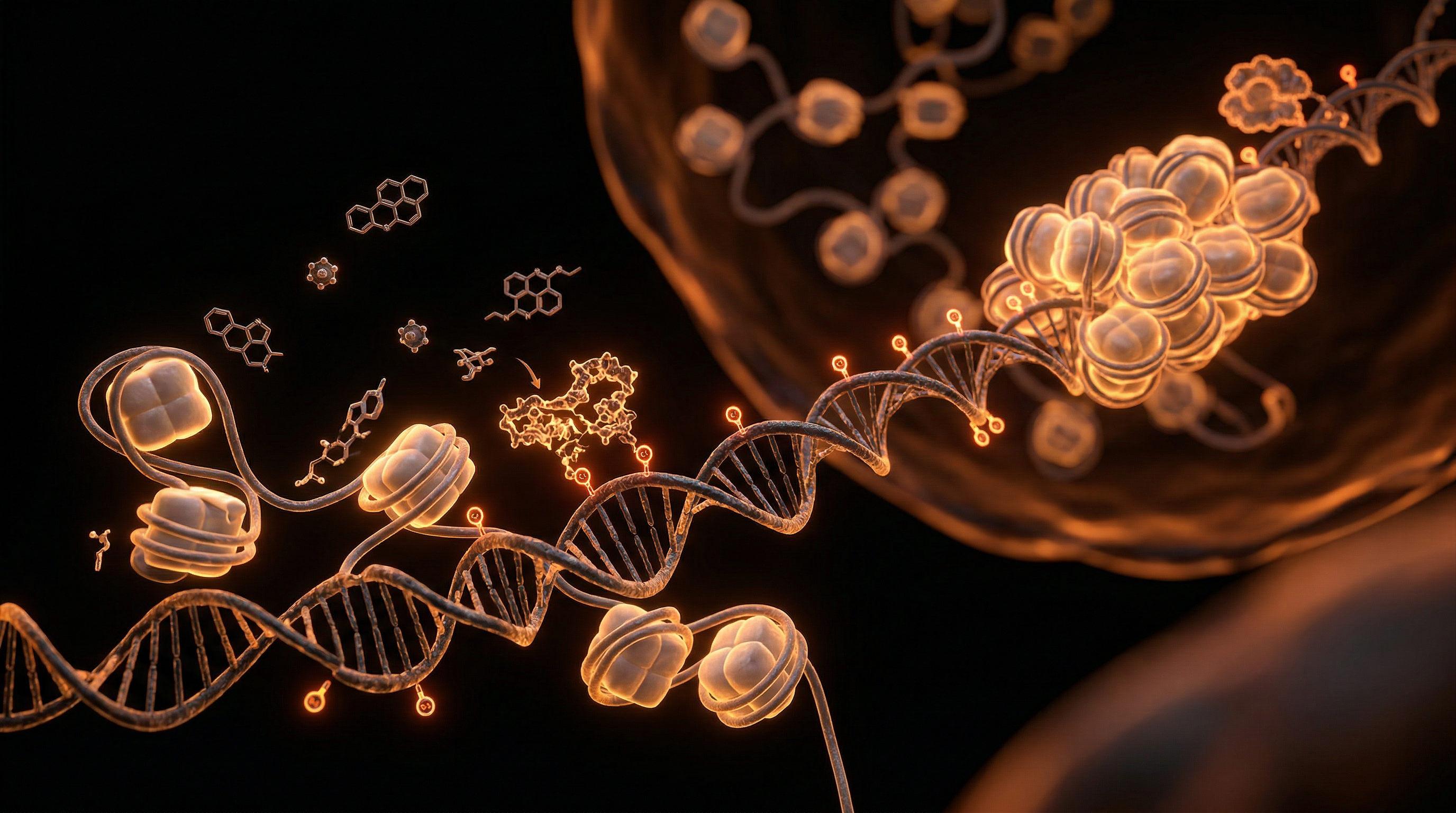
- DNA Methylation: The addition of a methyl group (CH3) to the DNA strand, typically at CpG sites. This acts like a "stop sign" for the cell's transcriptional machinery. When a promoter region of a gene is hyper-methylated, the gene is effectively silenced.
- Histone Modification: DNA is wrapped around proteins called histones. Chemicals can cause these histones to pack tightly (preventing gene access) or loosen (allowing gene access).
The Sanctity of Pluripotency
Pluripotency is governed by a core trio of transcription factors: OCT4, SOX2, and NANOG. These are the "Holy Trinity" of regenerative medicine. In embryonic stem cells and adult progenitor cells, these genes must remain active and accessible. They ensure that when a tissue is damaged—whether it be the lining of the lungs or the neurons in the brain—there is a reservoir of "undifferentiated" cells ready to step in and rebuild.
Epigenetic Erosion occurs when environmental pollutants induce "epimutations." These are not changes to the DNA sequence itself, but permanent "scars" on the epigenetic markers. When the promoters for OCT4 or NANOG become methylated due to toxic exposure, the cell loses its ability to regenerate. It becomes "fixed" or, worse, enters a state of Senescence (cellular old age), where it can no longer divide but continues to secrete inflammatory signals.
Mechanisms at the Cellular Level
How exactly do chemicals in our air and water translate into a silencing of the regenerative code? The process is a sophisticated biochemical assault that bypasses our primary cellular defences.
The Aryl Hydrocarbon Receptor (AhR) Pathway
Many urban pollutants, specifically Polycyclic Aromatic Hydrocarbons (PAHs) found in diesel exhaust, are lipophilic. They slip through the cell membrane and bind to the Aryl Hydrocarbon Receptor (AhR) in the cytoplasm. Once activated, the AhR moves into the nucleus and alters the expression of DNA Methyltransferases (DNMTs)—the enzymes responsible for placing methyl tags on DNA.
Under chronic pollutant exposure, the AhR remains hyper-activated. This leads to an "over-painting" of the genome with methyl groups. Crucially, studies have shown that this hyper-methylation specifically targets the promoter regions of genes associated with Somatic Cell Reprogramming. In simpler terms, the pollution is "locking" our cells in a degraded state, preventing the natural "reset" that occurs during tissue healing.
Oxidative Stress and the Methyl Donor Pool
The body requires a constant supply of methyl groups for various functions, a process known as One-Carbon Metabolism. Pollutants like heavy metals (Lead, Arsenic, Cadmium) and Nitrogen Dioxide induce massive amounts of Oxidative Stress.
To combat this stress, the cell diverts its resources—specifically S-adenosylmethionine (SAMe), the universal methyl donor—away from gene regulation and toward the production of antioxidants like Glutathione.
Callout: When the cell is forced to choose between immediate survival (fighting oxidative stress) and maintaining its long-term regenerative code (epigenetic maintenance), it chooses survival. The cost is the permanent silencing of pluripotency.
The Role of Non-Coding RNA (ncRNA)
We are now discovering that pollutants also disrupt MicroRNAs and Long Non-Coding RNAs. These are the "traffic controllers" of the cell. Modern toxins can cause an up-regulation of specific microRNAs that actively degrade the mRNA of NANOG before it can be translated into protein. This is a post-transcriptional "silencing" that is just as devastating as DNA methylation.
Environmental Threats and Biological Disruptors
The modern environment is no longer just a backdrop for human life; it is a complex chemical soup that interacts with our biology at every moment. In the UK context, several specific disruptors are leading the charge in epigenetic erosion.
Particulate Matter (PM2.5)
PM2.5 refers to fine particles less than 2.5 micrometres in diameter. These are small enough to pass from the lungs directly into the bloodstream and even cross the Blood-Brain Barrier.
- The Epigenetic Impact: PM2.5 acts as a Trojan horse. Its porous surface carries PAHs, heavy metals, and endotoxins into the deep tissues. Research indicates that exposure to high levels of PM2.5 is directly correlated with global DNA hypomethylation and site-specific hypermethylation of tumour suppressor genes and pluripotency factors.
Endocrine Disrupting Chemicals (EDCs)
Commonly found in plastics (Phthalates, Bisphenol A), pesticides, and tap water, EDCs mimic natural hormones.
- The Epigenetic Impact: EDCs interfere with the Epigenetic Programming that occurs during sensitive windows of development and adult tissue maintenance. They have been shown to alter the histone acetylation patterns in stem cell niches, essentially "exhausting" the stem cell pool before it is even needed.
Nitrogen Dioxide (NO2)
Primarily a byproduct of internal combustion engines, NO2 levels in UK cities frequently exceed WHO guidelines.
- The Epigenetic Impact: NO2 is a potent nitrating agent. It can cause DNA Damage that, when repaired, leads to "epigenetic scars." The repair process often results in the recruitment of DNMTs to the site of repair, leading to accidental silencing of nearby genes—often those essential for cellular identity.
Microplastics and Nanoplastics
The ubiquity of microplastics in the UK food chain is now undeniable. These particles have been found in human blood, placentas, and lung tissue.
- The Epigenetic Impact: Beyond their physical presence, microplastics leach "plasticisers" that induce chronic low-grade inflammation. This inflammatory environment triggers the NF-κB pathway, which has a direct antagonistic relationship with the Yamanaka Factors (the genes that maintain pluripotency).
The Cascade: From Exposure to Disease
The erosion of the epigenome is not an overnight event; it is a slow "weathering" of the biological architecture. This cascade explains why modern chronic diseases are manifesting earlier and with greater severity.
Phase 1: The Loss of Cellular Plasticity
In the initial stages of exposure, the progenitor cells—those responsible for maintaining the skin, the gut lining, and the blood—lose their "edge." They become slower to respond to injury. This is the first stage of Silencing Pluripotency.
Phase 2: The Niche Collapse
Stem cells do not exist in a vacuum; they live in a Niche. Pollution alters the epigenetic state of the surrounding "support" cells (fibroblasts, endothelial cells). When the niche becomes "epigenetically aged," it sends signals to the stem cells to remain dormant or to differentiate into dysfunctional cell types (such as scar tissue/fibrosis).
Phase 3: The Phenotypic Switch
As the Epigenetic Erosion reaches a critical threshold, the body can no longer compensate.
- In the Lungs: Pluripotent basal cells lose the ability to regenerate healthy epithelium, leading to COPD or Idiopathic Pulmonary Fibrosis.
- In the Brain: Neural stem cells lose their capacity for Neurogenesis, accelerating the onset of neurodegenerative diseases like Parkinson’s and Alzheimer’s.
- In the Heart: Cardiac progenitor cells are silenced, meaning the heart cannot repair minor ischaemic damage, eventually leading to heart failure.
Statistic: In the UK, it is estimated that nearly 30% of cases of chronic obstructive pulmonary disease (COPD) in non-smokers can be traced back to urban air pollution-induced epigenetic shifts.
What the Mainstream Narrative Omits
The current scientific and political discourse regarding pollution is dangerously reductive. It focuses almost exclusively on "acute toxicity" or "carcinogenesis" (cancer-causing potential). This leaves a massive void in our understanding of Sub-clinical Epigenetic Degradation.
The Myth of "Safe Levels"
Mainstream regulatory bodies like the UK’s Environment Agency or the WHO set "safe" exposure limits based on the LD50 (the dose that kills 50% of a population) or immediate inflammatory responses.
- The Suppressed Truth: There is no "safe level" for an epigenetic disruptor. Epigenetic changes can be triggered by infinitesimal concentrations of chemicals—parts per billion—if the exposure is chronic. These chemicals do not kill the cell; they reprogram it.
The Transgenerational Ghost
One of the most alarming aspects of epigenetic erosion is Transgenerational Epigenetic Inheritance. When a pregnant woman in a polluted UK city breathes in NO2 or ingests microplastics, she is not just affecting her health or her child's health. She is potentially altering the epigenetic markers in the developing germ cells (eggs or sperm) of the foetus.
- The Expose: This means that the pollution of 2024 is being "baked into" the DNA expression of the generation that will be born in 2050. The mainstream narrative ignores this "multi-generational debt."
The "Stem Cell Exhaustion" Crisis
We are told that the rise in chronic disease is due to an "ageing population." While this is partially true, INNERSTANDING's research suggests that we are witnessing an "accelerated biological age" that is decoupled from chronological age. We are seeing 40-year-olds with the Epigenetic Age and the depleted stem cell reservoirs of 70-year-olds. This is not natural ageing; it is environmental silencing.
The UK Context
The United Kingdom presents a unique and troubling case study for epigenetic erosion. Our industrial history, combined with dense urbanisation and specific geographical factors, has created a "perfect storm."
The Legacy of the Industrial North
In cities like Leeds, Sheffield, and Manchester, the soil and groundwater remain contaminated with Heavy Metals (Lead, Mercury, Cadmium) and PCBs from the 19th and 20th centuries. These persistent organic pollutants are "legacy epigenome-disruptors." As we redevelop these "brownfield" sites for housing, we are unearthing these toxins, leading to a resurgence of epigenetic damage in communities that believe they are living in a modern, "clean" environment.
The London "Canyon Effect"
London’s architecture, with its narrow streets and tall buildings, creates "urban canyons" that trap vehicle emissions. The concentration of PM2.5 and NO2 at street level—where children breathe—is often five to ten times higher than official monitoring stations (which are often placed in parks or high above the ground) suggest.
- The Biological Result: Londoners exhibit some of the highest rates of Epigenetic Age Acceleration in Europe. The "silencing" of pluripotency in the respiratory tract of London children is a silent public health emergency.
The Thames and the "Chemical Cocktail"
The UK's water systems are currently under scrutiny for sewage discharge, but the "invisible" threat is the cocktail of Pharmaceuticals and Personal Care Products (PPCPs). Antidepressants, hormonal contraceptives, and metformin are not fully removed by standard water treatment.
- The Epigenetic Impact: These compounds are potent epigenetic modifiers. We are essentially "micro-dosing" the entire population with endocrine-disrupting chemicals that systematically interfere with stem cell signalling pathways like Wnt and Notch, which are vital for tissue regeneration.
Protective Measures and Recovery Protocols
While the situation is dire, the "plasticity" of the epigenome is also our greatest hope. Unlike a genetic mutation, which is permanent, an epigenetic "mark" can potentially be removed or countered. To combat epigenetic erosion, we must move beyond basic "detoxes" and toward Epigenetic Resuscitation.
1. NRF2 Activation: The Master Regulator
The NRF2 pathway is the body's primary defence against oxidative stress and xenobiotics. Activating NRF2 can help clear the "metabolic sludge" that leads to DNA hyper-methylation.
- Protocol: High-dose Sulforaphane (found in broccoli sprouts) is the most potent natural inducer of NRF2. It has been shown to assist in the "de-methylation" of silenced tumour suppressor genes and promote the health of the stem cell niche.
2. Methylation Support and the "Goldilocks" Zone
To prevent the cell from "robbing" the methyl donor pool, we must provide adequate precursors. However, this must be balanced—over-methylation can be as damaging as under-methylation.
- Protocol: Targeted supplementation with Methylcobalamin (B12), Methylfolate (5-MTHF), and TMG (Trimethylglycine). This ensures the cell has the resources to maintain the "correct" epigenetic marks on pluripotency genes.
3. Hormetic Stressors: The "Reset" Button
The body’s regenerative systems respond to "hormesis"—brief, controlled doses of stress.
- Protocol: Intermittent Fasting and Heat/Cold Shock (Saunas and Cold Plunges). These stressors trigger Autophagy (cellular cleaning) and have been shown to "reset" certain histone acetylation patterns, effectively mimicking some of the effects of the Yamanaka Factors.
4. Environmental Remediation (The Micro-Level)
In the UK, individual action is required to bypass systemic failure.
- Air Filtration: Using HEPA and activated carbon filters (specifically those capable of capturing NO2 and VOCs) in the bedroom and workspace.
- Water Purification: Multi-stage Reverse Osmosis (RO) filtration to remove EDCs and pharmaceutical residues.
- The "Clean" Diet: Prioritising organic produce to avoid Glyphosate, a potent disruptor of the gut microbiome’s ability to produce essential epigenetic co-factors.
5. Pharmaceutical Intervention: The Future of HDAC Inhibitors
Emerging research is looking at HDAC Inhibitors—compounds that "loosen" the DNA around histones—to treat diseases of epigenetic erosion. While currently used in oncology, sub-therapeutic doses may one day be used to "re-awaken" the body’s innate regenerative potential.
Summary: Key Takeaways
The concept of Epigenetic Erosion represents a paradigm shift in how we understand the relationship between our environment and our health. The silencing of Pluripotency is the "hidden mechanism" behind the modern epidemic of chronic, degenerative disease.
- Epigenetics is the Software: Pollution doesn't just damage the "hardware" (DNA); it corrupts the "software" (the epigenome), leading to the permanent silencing of regenerative genes.
- Pluripotency is the Target: Pollutants like PM2.5 and EDCs specifically target the OCT4/SOX2/NANOG trio, exhausting our stem cell reservoirs.
- The "Safe Level" Fallacy: Current UK and international regulations fail to account for the sub-clinical, chronic epigenetic shifts that occur at extremely low concentrations.
- The UK's Unique Risk: Post-industrial legacy, urban "canyon" effects, and contaminated water systems make the UK a hotspot for accelerated epigenetic ageing.
- Resilience is Possible: Through NRF2 activation, precise methylation support, and hormetic lifestyle interventions, we can begin to "re-write" the epigenetic script and reclaim our biological potential.
We are at a crossroads. We can continue to allow our environmental landscape to erode our biological foundation, or we can take the necessary steps—both individually and as a society—to protect the sanctity of the human epigenome. The "innerstanding" of these processes is the first step toward a regenerative future.
The silence of our stem cells is not inevitable; it is a choice. It is time to turn the volume back up on our biology.
This article is provided for informational and educational purposes only. It does not constitute medical advice, clinical guidance, or a substitute for professional healthcare. Information reflects cited research at time of publication. Always consult a qualified healthcare professional before acting on any health information.
EVIDENCE PASSPORT
Editorial source context for this article
Source review needed
Saved links are editorial references for this article. They may support specific claims rather than every sentence. Open and assess each source in context. This passport does not independently verify them.
Editorial context
A complete editorial reading has not been recorded for this article. Source links remain available for you to open and assess directly.
Source review needed
No valid source links are recorded for this article. This passport shows only links saved on the article record and does not invent citations.
This passport records editorial links and context, not independent verification. Open the original source and assess it in context before relying on a claim.
Medical Disclaimer
The information in this article is for educational purposes only and does not constitute medical advice, diagnosis, or treatment. Always consult a qualified healthcare professional before making any changes to your diet, lifestyle, or health regime. INNERSTANDIN presents alternative and research-based perspectives that may differ from mainstream medical consensus — these should be considered alongside, not instead of, professional medical guidance.
Read Full DisclaimerContinue the thread
Keep this question moving.
Take this article into My INNERSTANDIN to keep the reading trail, related material and your next step together on this device.
Dig deeper in the Library
Free, longform PDF volumes that go beyond headlines into mechanisms and references.