
Epigenetic Erosion: The UK Chemical Burden
Updated May 2026
Modern industrial toxins are causing rapid alterations to the British epigenome, overriding millions of years of evolutionary stability. This article exposes how environmental pollutants bypass genetic barriers to cause transgenerational health decline.
Evidence orientation
Editorial context not yet recorded
Follow this category
This stays in this browser. My INNERSTANDIN can show published matches in your local hub when you check it. It does not send email, push, or alert notifications.
Local learning review
A private browser aid for revisiting ideas. It is not an alert or a health recommendation.
Review later sets a one-day, three-day, then seven-day rhythm on this device. Choose it only when you want to revisit this article.
Overview
For three billion years, the biological blueprint of life on Earth has been governed by the slow, majestic pace of Darwinian evolution. Genetic mutations—the hardware changes of life—occur over millennia, allowing species to adapt to gradual shifts in climate, diet, and predatory pressure. However, in the last seventy years, a blink of an eye in evolutionary terms, this stability has been shattered. We are currently witnessing a phenomenon I term Epigenetic Erosion: the systematic degradation of the chemical switches that regulate our genes, triggered by an unprecedented deluge of synthetic industrial toxins.
In the United Kingdom, a nation defined by its early adoption of the Industrial Revolution, the biological toll is particularly acute. While our genetic code (the DNA sequence) remains largely identical to that of our Neolithic ancestors, the epigenome—the complex layer of biochemical signals that determines which genes are turned "on" or "off"—is being rewritten. This is not evolution; it is a molecular hijacking.
The British population is currently serving as an involuntary cohort in a massive, uncontrolled toxicological experiment. From the "forever chemicals" (PFAS) contaminating our tap water to the organophosphate pesticides saturating our agricultural "Green Belt," the chemical burden is bypassing traditional genetic barriers. These pollutants do not necessarily mutate the DNA itself; instead, they "scar" the epigenome, creating heritable patterns of disease that are passed from parent to child without a single change to the underlying genetic code. This article serves as an expose of this silent crisis, detailing the mechanisms of our biological decline and the systemic failure to protect the British genomic heritage.
The Biology — How It Works
To understand epigenetic erosion, one must first distinguish between the Genome and the Epigenome. If the genome is the piano—a fixed set of 88 keys—the epigenome is the sheet music and the pianist. It dictates the melody, the tempo, and the volume.
The Epigenetic Layers
The epigenome operates through three primary mechanisms that work in concert to regulate gene expression:
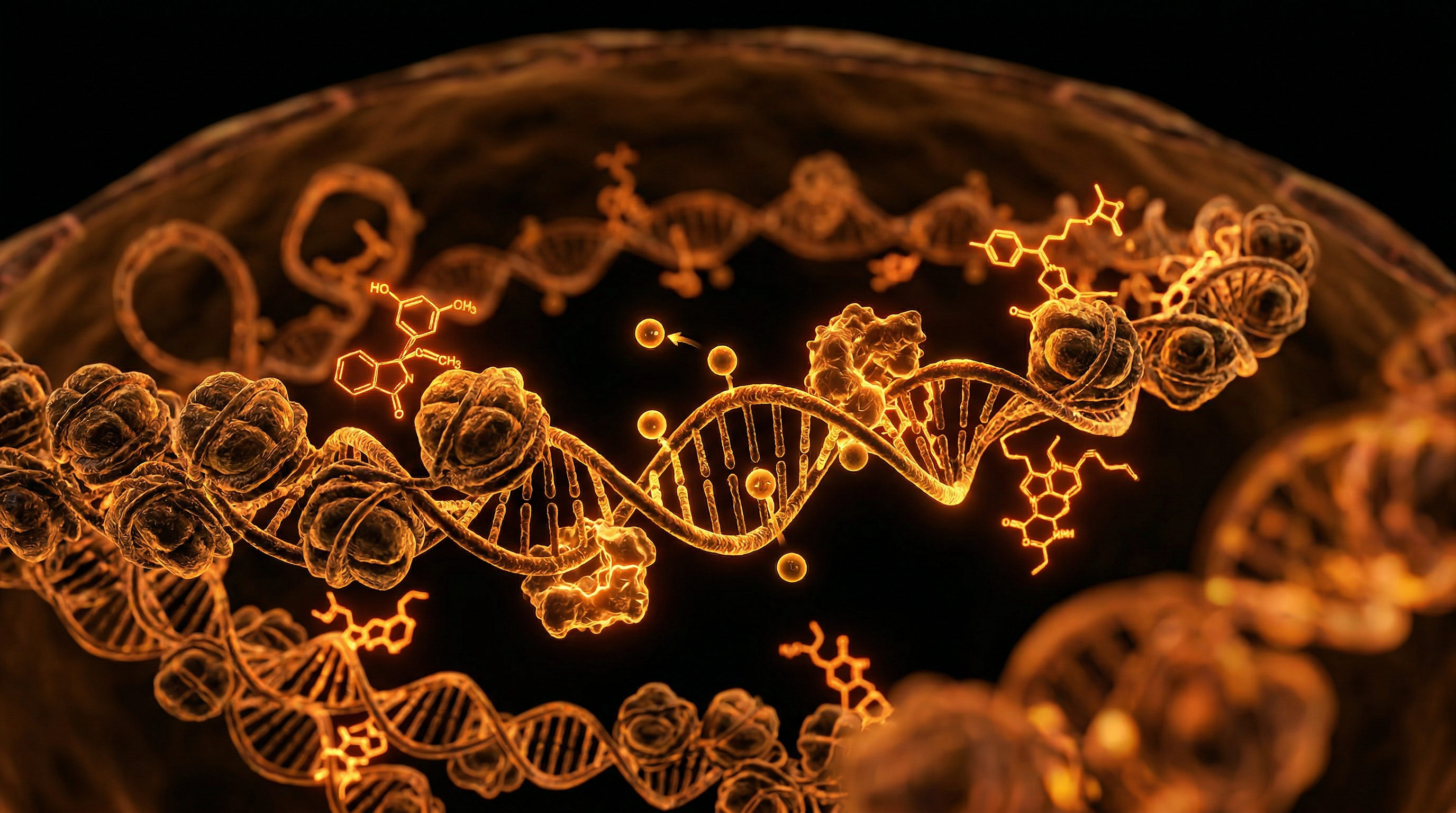
- DNA Methylation: This involves the attachment of a methyl group (a carbon atom bonded to three hydrogen atoms) to the DNA molecule, typically at "CpG sites." When a gene’s promoter region is heavily methylated, the gene is effectively silenced. It is the "off" switch.
- Histone Modification: DNA does not float freely in the nucleus; it is wrapped around proteins called histones. If the DNA is wrapped tightly (heterochromatin), the cellular machinery cannot read it. If it is wrapped loosely (euchromatin), the gene is active. Chemical "tags" (acetyl, methyl, or phosphate groups) tell the histones how tightly to pack the DNA.
- Non-coding RNA (ncRNA): Once thought to be "junk DNA," these molecules act as a sophisticated surveillance system, intercepting messenger RNA (mRNA) and preventing it from being translated into proteins.
Callout Fact: Unlike genetic mutations, which are permanent, epigenetic marks are theoretically reversible. However, they are also "transgenerational," meaning an exposure your grandmother faced in a Manchester textile mill in the 1950s could be influencing your current risk of metabolic syndrome.
The Evolutionary Mismatch
Evolutionary biology operates on the principle of canalisation—the ability of a population to produce the same phenotype regardless of environmental variation. Our bodies evolved to buffer against natural stressors like famine or cold. However, the human epigenome has no defensive precedent for Xenobiotics: synthetic substances (like plastics, flame retardants, and synthetic oestrogens) that did not exist before 1940. Because these chemicals mimic natural hormones or interfere with enzymatic pathways, they bypass the cell's traditional "security protocols," leading to rapid, maladaptive epigenetic shifts.
Mechanisms at the Cellular Level
At the microscopic level, epigenetic erosion is an assault on the Methylome. The primary engine of epigenetic regulation is the One-Carbon Cycle, a metabolic pathway dependent on B-vitamins (folate, B12) and minerals. Industrial toxins interfere with this cycle in several insidious ways.
Endocrine Disruption and Chromatin Remodelling
Many UK environmental pollutants, such as Bisphenol A (BPA) and Phthalates, are "endocrine-disrupting chemicals" (EDCs). They are molecular mimics. For example, BPA can bind to oestrogen receptors in the nucleus. Once bound, it recruits enzymes called Histone Acetyltransferases (HATs). These enzymes modify the histones surrounding genes involved in growth and reproduction, "unlocking" genes that should remain dormant or silencing those that should be active.
In the context of British health, this is increasingly linked to the "precocious puberty" seen in young girls and the precipitous drop in sperm counts among UK males, which have declined by over 50% since the 1970s.
Heavy Metal Interference
The UK’s industrial legacy has left a permanent footprint of heavy metals—Lead, Cadmium, and Arsenic—in urban soils and older water infrastructure. These metals are "epigenetic toxins" because they competitively inhibit the enzymes responsible for DNA methylation, known as DNA Methyltransferases (DNMTs).
- Cadmium, prevalent in cigarette smoke and industrial runoff, replaces Zinc in certain proteins, causing "hypomethylation" (under-methylation).
- Lead mimics Calcium, disrupting the epigenetic signalling required for neurodevelopment.
The Role of Oxidative Stress
Pollutants generate Reactive Oxygen Species (ROS). These unstable molecules damage the physical structure of the DNA, but more importantly, they oxidise the 5-methylcytosine (the "methyl tag") into 5-hydroxymethylcytosine. This confuses the cellular machinery, leading to "epigenetic drift"—the gradual loss of precise gene control that we typically associate with rapid ageing.
Environmental Threats and Biological Disruptors
The British Isles present a unique landscape of chemical exposure. From the high-density traffic of London to the pesticide-heavy arable lands of East Anglia, the UK "chemical body burden" is multifaceted.
1. PFAS: The "Forever Chemicals"
Per- and polyfluoroalkyl substances (PFAS) are perhaps the most concerning agents of epigenetic erosion. Used in non-stick cookware, waterproof clothing, and firefighting foams, they are now ubiquitous in UK water sources.
Statistic: A 2023 investigation found that "forever chemicals" exceeding international safety limits were present in roughly 1,700 sites across the UK.
PFAS are known to interfere with PPAR (Peroxisome Proliferator-Activated Receptors). These receptors are master regulators of lipid metabolism. By epigenetically altering PPAR expression, PFAS "programme" the body to store fat and resist insulin, contributing significantly to the UK's burgeoning obesity crisis, which cannot be explained by caloric intake alone.
2. Glyphosate and the Gut-Epigenome Axis
The UK remains a heavy user of glyphosate-based herbicides. While the mainstream narrative focuses on its potential as a carcinogen, its most profound impact is on the microbiome. The gut bacteria possess the Shikimate pathway, which glyphosate inhibits. Recent research suggests a "Gut-Brain Epigenetic Axis." When the microbiome is disrupted by glyphosate, it ceases to produce short-chain fatty acids (SCFAs) like butyrate. Butyrate is a potent Histone Deacetylase (HDAC) Inhibitor. Without it, the epigenetic silencing of inflammatory genes in the brain fails, potentially explaining the rise in neurodegenerative conditions across the British ageing population.
3. Air Pollution and the Urban Epigenome
Nitrogen dioxide (NO2) and Particulate Matter (PM2.5) from UK traffic are not just respiratory irritants; they are epigenetic modifiers. Studies of London residents have shown that high exposure to PM2.5 leads to significant demethylation of the IL-6 gene, a key driver of systemic inflammation. This creates a state of "inflammaging," where the body is stuck in a permanent, low-grade immune response.
The Cascade: From Exposure to Disease
How does a chemical exposure in the environment translate into a clinical diagnosis in a GP surgery? The process is a "cascade" where epigenetic changes trigger a domino effect of physiological failure.
Phase 1: The Priming Event
An individual is exposed to a cocktail of toxins (e.g., phthalates in food packaging and nitrates in processed meat). These substances cause subtle shifts in the methylation of genes regulating the Hypothalamic-Pituitary-Adrenal (HPA) axis.
Phase 2: Loss of Homeostasis
The HPA axis, now epigenetically "tuned" to a state of hyper-reactivity, produces excess cortisol. This leads to secondary epigenetic changes in the liver and adipose tissue. The body begins to prioritise energy storage over cellular repair.
Phase 3: The Phenotypic Break
The cumulative epigenetic erosion reaches a "tipping point." The body can no longer buffer the stress. This manifests as chronic disease:
- Metabolic Syndrome: Driven by the silencing of insulin receptor genes.
- Autoimmunity: Caused by the failure of T-cell epigenetic regulation, leading the immune system to attack "self."
- Cognitive Decline: Resulting from the hypermethylation of BDNF (Brain-Derived Neurotrophic Factor), the protein responsible for neuroplasticity.
The Transgenerational Ghost
The most terrifying aspect of this cascade is its persistence. In 2005, seminal research by Michael Skinner demonstrated that exposing a pregnant rat to a fungicide caused kidney and prostate disease not only in her offspring but in her great-grandchildren, despite the later generations never being exposed to the chemical. This is known as Transgenerational Epigenetic Inheritance. We are currently seeing the "ghosts" of the UK's mid-century industrial peak manifesting in the health of modern British children.
What the Mainstream Narrative Omits
The public health discourse in the United Kingdom is dominated by a "Lifestyle-Centric" model. We are told that our health is a result of our choices: what we eat, how much we exercise, and whether we smoke. While these factors are important, this narrative serves as a convenient smokescreen for corporate and regulatory negligence.
The Myth of "The Dose Makes the Poison"
Traditional toxicology relies on the Paracelsus principle: the idea that low doses of a toxin are harmless. However, Epigenetic Toxicology has proven this false. Many EDCs follow a "non-monotonic dose-response curve." This means they can be more disruptive at incredibly low concentrations (parts per billion) than at high doses, because they mimic the body's own low-level hormonal signals. UK regulatory bodies, such as the Health and Safety Executive (HSE), continue to set "safe" limits based on outdated models that ignore these low-dose epigenetic effects.
The Cocktail Effect
Regulatory assessments almost always test chemicals in isolation. In reality, the average UK citizen carries a "cocktail" of over 200 synthetic chemicals in their blood and adipose tissue. Research indicates that these chemicals act synergistically. A "safe" level of Arsenic combined with a "safe" level of Lead can have a devastating synergistic effect on the epigenome. The mainstream narrative entirely omits the reality of this chemical synergy.
The Post-Brexit Regulatory Void
Following the UK’s departure from the European Union, the country moved away from the REACH (Registration, Evaluation, Authorisation and Restriction of Chemicals) framework. The newly established UK REACH has been criticised by scientists for lacking the transparency and "precautionary principle" of its predecessor. Since Brexit, the UK has been slower to ban harmful substances—such as certain phthalates and neonicotinoids—that have already been restricted in the EU, effectively turning the UK into a "low-regulation" zone for chemical dumping.
The UK Context
The United Kingdom is not just any industrialised nation; it is a landscape with a specific chemical history that compounds the epigenetic threat.
The Victorian Legacy
The UK has some of the oldest housing stock in Europe. This means millions of British citizens are still exposed to residual lead from old piping and lead-based paint dust. While the water is treated, the "baseline" of heavy metal exposure in urban centres like Birmingham, Glasgow, and London creates a "primed" epigenome that is more susceptible to modern toxins.
The Sewage Crisis and Chemical Runoff
The recent and well-documented crisis of raw sewage discharge into British rivers is not just a bacterial concern. It is a chemical one. Human waste contains a concentrated mix of pharmaceuticals (antidepressants, birth control, antibiotics). Our wastewater treatment plants were not designed to filter these compounds.
Callout Fact: British freshwater fish are increasingly showing "intersex" characteristics—males developing eggs—due to the high concentration of synthetic oestrogens from the "pill" and industrial detergents in UK waterways. This is a primary indicator of the epigenetic "oestrogenisation" of the British environment.
Soil Depletion
British intensive farming has led to a catastrophic decline in soil mineral content. Soils in the UK are significantly depleted of Selenium, Magnesium, and Zinc. These minerals are essential co-factors for the enzymes that maintain the epigenome. We are in a "double bind": we are increasing our toxic load while simultaneously decreasing our intake of the very minerals required to repair the resulting epigenetic damage.
Protective Measures and Recovery Protocols
While the macro-problem requires systemic political change, there are biological interventions that can fortify the individual’s epigenome against erosion. As a senior researcher, I advocate for a protocol based on Epigenetic Resilience.
1. Optimising the Methylation Cycle
Since DNA methylation is the primary casualty of chemical exposure, supporting the methyl pool is critical.
- Methyl-Donors: Supplementing with bioactive forms of folate (Methylfolate), B12 (Methylcobalamin), and Trimethylglycine (TMG/Betaine).
- Choline: Found in pasture-raised eggs, choline is a vital precursor for methyl groups and is often deficient in the modern British diet.
2. Hormetic Stress and NRF2 Activation
The NRF2 pathway is the body's "master switch" for antioxidant defence and detoxification. Activating this pathway can help "flush" the epigenetic scars left by oxidative stress.
- Sulforaphane: Found in cruciferous vegetables (broccoli sprouts), this compound is one of the most potent NRF2 activators known to science.
- Thermal Stress: Regular use of saunas has been shown to increase the expression of "Heat Shock Proteins," which assist in the correct folding of proteins and the repair of chromatin structures.
3. Radical Avoidance and Filtration
The first rule of toxicology is to stop the exposure.
- Water: Given the PFAS and pharmaceutical burden in UK tap water, a standard jug filter is insufficient. High-grade Reverse Osmosis (RO) filtration is required to remove molecular-level contaminants.
- Air: High-efficiency particulate air (HEPA) filters in the home are essential for urban dwellers to reduce the PM2.5-driven epigenetic drift.
- Food: Transitioning to organic produce is not a luxury but a biological necessity to avoid glyphosate-driven microbiome disruption.
4. Sweating as Detoxification
The skin is a major organ of elimination for certain persistent organic pollutants (POPs) and heavy metals that the liver struggles to process. Vigorous exercise or infrared saunas that induce deep sweating can help reduce the "body burden" of lipophilic (fat-soluble) toxins like PFAS.
Summary: Key Takeaways
The erosion of the British epigenome is a silent emergency that threatens the long-term biological viability of the nation. To understand and combat this, we must recognise the following:
- Epigenetic Erosion is Rapid: While our genes take millions of years to change, our epigenome can be compromised in a single generation by synthetic chemicals.
- UK-Specific Risks: The combination of Victorian industrial legacy, modern pesticide use, and the post-Brexit regulatory shift makes the UK population particularly vulnerable.
- Beyond "Lifestyle": The mainstream focus on diet and exercise ignores the "chemical cocktail" that sabotages our metabolism at a molecular level.
- Transgenerational Impact: We are not just living for ourselves; our chemical exposures today are programming the health and fertility of our grandchildren.
- The Precautionary Protocol: Protecting the epigenome requires active intervention—optimising methylation, supporting NRF2 pathways, and employing advanced filtration to bypass a polluted environment.
We stand at a biological crossroads. If we continue to ignore the chemical burden, we face a future of "genomic instability"—a state where the human blueprint is so scarred by industrial toxins that chronic disease becomes the universal human condition. The time for "INNERSTANDING" our molecular reality is now. The restoration of our epigenetic heritage is the most important scientific and political challenge of the 21st century.
This article is provided for informational and educational purposes only. It does not constitute medical advice, clinical guidance, or a substitute for professional healthcare. Information reflects cited research at time of publication. Always consult a qualified healthcare professional before acting on any health information.
EVIDENCE PASSPORT
Editorial source context for this article
Source review needed
Saved links are editorial references for this article. They may support specific claims rather than every sentence. Open and assess each source in context. This passport does not independently verify them.
Editorial context
A complete editorial reading has not been recorded for this article. Source links remain available for you to open and assess directly.
Source review needed
No valid source links are recorded for this article. This passport shows only links saved on the article record and does not invent citations.
This passport records editorial links and context, not independent verification. Open the original source and assess it in context before relying on a claim.
Medical Disclaimer
The information in this article is for educational purposes only and does not constitute medical advice, diagnosis, or treatment. Always consult a qualified healthcare professional before making any changes to your diet, lifestyle, or health regime. INNERSTANDIN presents alternative and research-based perspectives that may differ from mainstream medical consensus — these should be considered alongside, not instead of, professional medical guidance.
Read Full DisclaimerContinue the thread
Keep this question moving.
Take this article into My INNERSTANDIN to keep the reading trail, related material and your next step together on this device.
Dig deeper in the Library
Free, longform PDF volumes that go beyond headlines into mechanisms and references.