
How Epigenetics Bridges the Gap Between Genetics and Environment
Updated June 2026
While your DNA sequence is fixed, the expression of those genes is dynamic and highly responsive to external inputs. This article details the biochemical markers, such as DNA methylation, that determine which genes are active in your body.
Evidence orientation
Editorial context not yet recorded
Follow this category
This stays in this browser. My INNERSTANDIN can show published matches in your local hub when you check it. It does not send email, push, or alert notifications.
Local learning review
A private browser aid for revisiting ideas. It is not an alert or a health recommendation.
Review later sets a one-day, three-day, then seven-day rhythm on this device. Choose it only when you want to revisit this article.
Overview
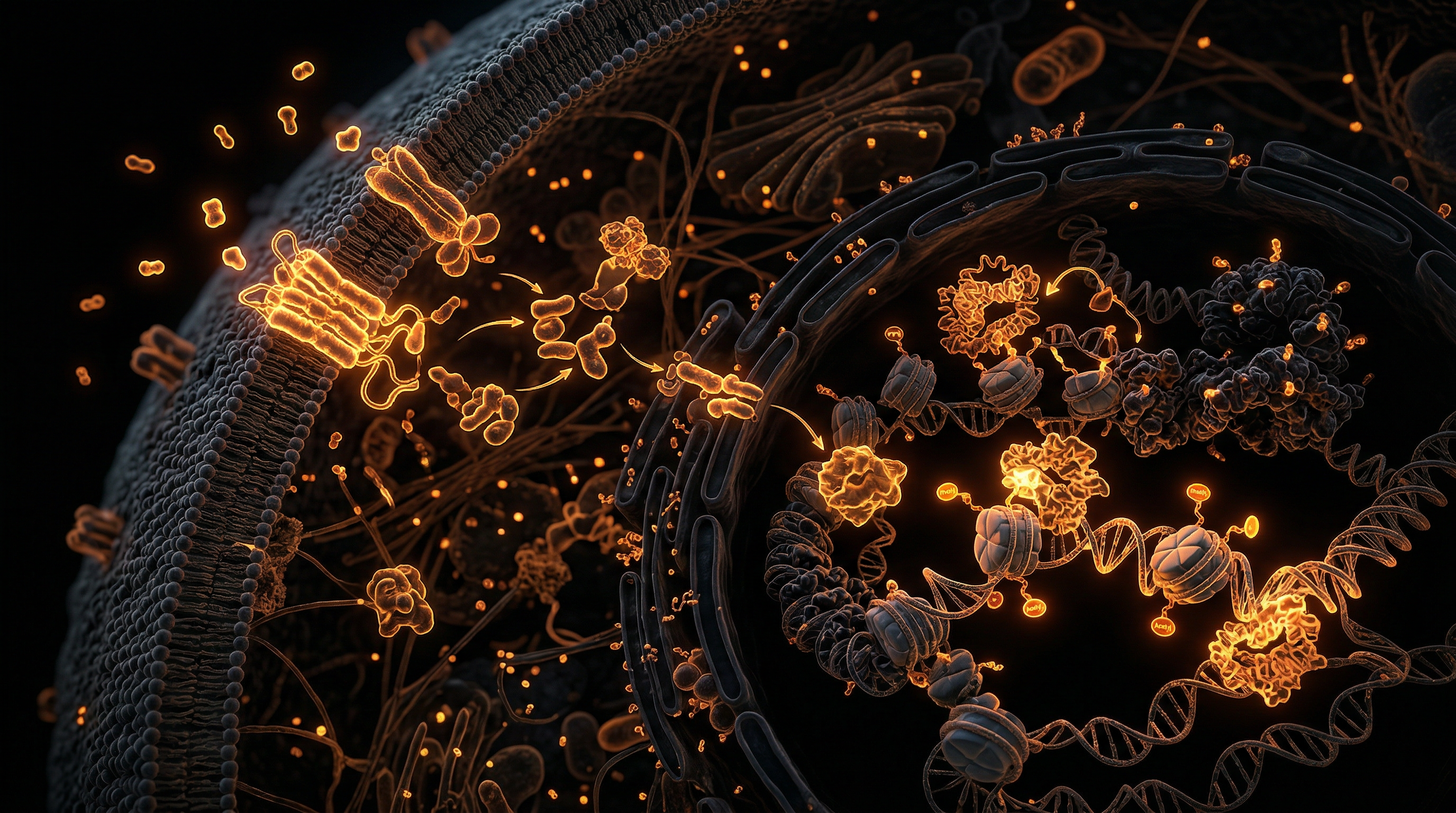
The classical paradigm of Mendelian inheritance, which once posited the genome as a static, deterministic blueprint, has been fundamentally dismantled by the emergence of epigenetic regulation. At INNERSTANDIN, we recognise that the DNA sequence is merely a library of potentiality; the epigenome acts as the master librarian, determining which volumes are accessed, transcribed, or silenced in response to exogenous and endogenous stimuli. This biochemical interface facilitates a profound "biological embedding" of the environment, where external factors—ranging from nutritional availability and xenobiotic exposure to psycho-social stressors—are transduced into stable, though potentially reversible, molecular markers. These markers, primarily DNA methylation (5-mC) at CpG islands and post-translational histone modifications, govern the three-dimensional architecture of chromatin, oscillating between the transcriptionally active euchromatin and the silenced, condensed heterochromatin.
Research published in The Lancet and various PubMed-indexed longitudinal studies, such as the UK’s ALSPAC (Children of the 90s) cohort, has demonstrated that the gap between genotype and phenotype is bridged by these precise enzymatic processes. DNA methyltransferases (DNMTs) and histone acetyltransferases (HATs) function as the primary "writers" of this code, while deacetylases (HDACs) and demethylases act as the "erasers." This dynamic orchestration allows an organism to achieve phenotypic plasticity, adapting its physiological output without the requirement for sluggish evolutionary mutations. For instance, the systemic impact of early-life nutrition on the IGF2 gene locus illustrates how environmental signals can lock in metabolic programmes that persist for decades, influencing the risk profile for Type 2 diabetes and cardiovascular pathology in the British population.
Furthermore, the role of non-coding RNAs, particularly microRNAs (miRNAs) and long non-coding RNAs (lncRNAs), adds a layer of post-transcriptional control that further complicates the "nature versus nurture" dichotomy. These molecules act as rapid-response sensors to environmental shifts, fine-tuning protein synthesis and cellular signalling pathways. INNERSTANDIN interrogates these mechanisms to expose the truth of biological susceptibility: we are not merely the products of our ancestral nucleotides, but rather the manifestation of a continuous, biochemical dialogue between our cells and the world they inhabit. This section establishes the foundational mechanisms of this bridge, examining how the molecular machinery of the cell interprets the external environment to dictate the functional reality of the organism, thereby redefining our understanding of heritability, disease aetiology, and the potential for therapeutic intervention through epigenetic reprogramming.
The Biology — How It Works
The paradigm of genetic determinism has been rendered obsolete by the elucidation of the epigenome—a complex regulatory layer that orchestrates the spatiotemporal expression of the stagnant DNA sequence. To achieve a profound INNERSTANDIN of this interface, one must interrogate the biochemical mechanisms that translate environmental stimuli into stable, yet reversible, alterations in gene function. This process is primarily facilitated through three interlocking pillars: DNA methylation, histone post-translational modifications (PTMs), and the regulatory actions of non-coding RNAs (ncRNAs).
At the forefront of this molecular machinery is DNA methylation, the covalent addition of a methyl group to the 5th position of the cytosine ring, typically occurring within CpG dinucleotides. These CpG islands, frequently clustered within promoter regions, act as transcriptional rheostats. Research published in Nature Genetics and disseminated via the UK’s Babraham Institute highlights that DNA methyltransferases (DNMTs)—specifically DNMT3A and DNMT3B—facilitate de novo methylation in response to environmental cues, while DNMT1 ensures the fidelity of these marks during mitotic division. This methylation recruits methyl-CpG-binding domain proteins (MBDs), which in turn sequester histone deacetylases (HDACs), effectively silencing gene expression by condensing the chromatin architecture into a transcriptionally repressive heterochromatin state.
Simultaneously, the "Histone Code" dictates the accessibility of the genetic code. The N-terminal tails of histone proteins, around which DNA is wound into nucleosomes, undergo various modifications including acetylation, phosphorylation, and ubiquitination. For instance, the addition of acetyl groups to lysine residues by Histone Acetyltransferases (HATs) neutralises the positive charge of the histone, weakening its affinity for the negatively charged DNA phosphate backbone. This transition to euchromatin allows the transcriptional apparatus access to the underlying sequence. Longitudinal studies documented in The Lancet regarding early-life adversity demonstrate that persistent environmental stressors can recalibrate these histone marks, particularly within the HPA (hypothalamic-pituitary-adrenal) axis, thereby altering the individual's physiological "set point" for stress reactivity throughout their lifespan.
Furthermore, the integration of environmental data is refined by non-coding RNAs, such as microRNAs (miRNAs) and long non-coding RNAs (lncRNAs). These molecules do not code for proteins but serve as systemic regulators that can silence mRNA post-transcriptionally or guide chromatin-remodelling complexes to specific genomic loci. In the UK context, research into the "metabolic memory" of British populations suggests that nutritional status and exposure to endocrine-disrupting chemicals influence the stoichiometry of these epigenetic marks. This provides the biological basis for phenotypic plasticity—the ability of a single genotype to produce multiple phenotypes in response to varied environments. By bridging the gap between the static genome and the volatile environment, epigenetics reveals that our biological destiny is not a fixed script, but a dynamic, ongoing dialogue between the cell and the world it inhabits.
Mechanisms at the Cellular Level
The interface where external environmental stimuli meet internal genetic architecture is governed by a sophisticated suite of biochemical modifications collectively termed the epigenome. At the cellular level, this bridge is not merely a passive record but a dynamic regulatory apparatus that modulates gene expression without altering the underlying deoxyribonucleic acid (DNA) sequence. This regulatory layer ensures that cellular identity is maintained while providing the plasticity required to respond to environmental fluxes. Achieving a profound INNERSTANDIN of these processes requires an examination of the three primary pillars of epigenetic control: DNA methylation, histone post-translational modifications, and the regulatory influence of non-coding RNAs (ncRNAs).
DNA methylation represents the most extensively characterised epigenetic mechanism, involving the covalent addition of a methyl group to the 5-carbon position of the cytosine ring, typically within CpG dinucleotides. This process is catalysed by DNA methyltransferases (DNMTs). In the context of the UK’s longitudinal birth cohorts, such as the Avon Longitudinal Study of Parents and Children (ALSPAC), researchers have identified specific "differentially methylated regions" (DMRs) that correlate with environmental exposures, including maternal nutrition and tobacco smoke. Mechanistically, hypermethylation within promoter regions typically results in transcriptional silencing by physically obstructing the binding of transcription factors or by recruiting methyl-CpG-binding domain proteins (MBDs), which further stabilise a repressive chromatin state.
Simultaneously, the structural organisation of DNA around histone octamers provides a second, more fluid level of control. The N-terminal tails of histones are subject to a myriad of enzymatic modifications, including acetylation, methylation, phosphorylation, and ubiquitination. For instance, the acetylation of lysine residues by histone acetyltransferases (HATs) neutralises the positive charge of the histone tail, weakening its affinity for the negatively charged DNA phosphate backbone. This transition from a condensed heterochromatin state to an open euchromatin state facilitates the recruitment of the RNA polymerase II machinery. Conversely, histone deacetylases (HDACs)—often implicated in the pathophysiology of metabolic and neurodegenerative diseases investigated within UK clinical trials—reverse this process, leading to gene repression.
The bridge is further reinforced by non-coding RNAs, particularly microRNAs (miRNAs) and long non-coding RNAs (lncRNAs), which provide post-transcriptional oversight. These molecules can sequester messenger RNA (mRNA) or guide chromatin-modifying complexes to specific genomic loci, thereby integrating metabolic and environmental signals into the epigenetic landscape. Evidence published in The Lancet and Nature Communications underscores the systemic impact of these mechanisms, demonstrating how nutritional deficits or chronic psychosocial stress can alter the availability of methyl donors (like S-adenosylmethionine), directly influencing the "writer" and "eraser" enzymes. This cellular transduction of environmental data into stable biological signals is the fundamental mechanism by which the environment is "embedded" into the phenotype, defining the modern paradigm of biological determinism and plasticity.
Environmental Threats and Biological Disruptors
The biological interface between an organism and its surroundings is not a passive boundary, but a dynamic, high-fidelity transcription hub. At INNERSTANDIN, we recognise that the epigenome functions as a cellular "sensory organ," translating exogenous chemical signals into long-term changes in gene expression. This process, termed "environmental programming," is frequently hijacked by anthropogenic disruptors, resulting in what can only be described as biological scarring. When we examine the impact of Xenobiotics—specifically Endocrine Disrupting Chemicals (EDCs)—we witness a direct assault on the enzymatic machinery responsible for maintaining the methylome. Compounds such as Bisphenol A (BPA) and various phthalates, ubiquitous in the UK consumer landscape, do not merely mimic endogenous hormones; they actively interfere with DNA methyltransferases (DNMTs). Research published in The Lancet Diabetes & Endocrinology highlights that early-life exposure to these disruptors induces site-specific DNA hypomethylation in the promoter regions of genes governing metabolic homeostasis, effectively "pre-wiring" the individual for insulin resistance and obesity regardless of subsequent caloric intake.
The systemic impact of heavy metals—arsenic, cadmium, and lead—presents an even more insidious threat to biological integrity. These elements act as catalytic inhibitors or aberrant activators of the epigenetic landscape. Arsenic, for instance, competes with S-adenosylmethionine (SAM), the primary universal methyl donor. By depleting the SAM pool, arsenic exposure leads to global genomic hypomethylation, a hallmark of oncogenesis and cellular senescence. Furthermore, cadmium exposure has been linked in Nature Communications to the silencing of tumour-suppressor genes through hypermethylation, a mechanism that bypasses traditional mutational pathways to drive malignancy.
In the UK context, air quality in high-density urban centres like London and Birmingham provides a constant stream of particulate matter (PM2.5), which serves as a potent biological disruptor. Evidence suggests that PM2.5 induces significant alterations in histone H3 modifications, specifically H3K4me3 and H3K9ac, within alveolar macrophages and peripheral blood mononuclear cells. This leads to a persistent pro-inflammatory state, or "inflammageing," where the body’s defensive mechanisms are epigenetically locked into a state of chronic hyper-reactivity. This is not merely a transient physiological response; it is a fundamental recalibration of the immune system’s set-points. At INNERSTANDIN, we assert that these disruptors represent a silent epidemic of "epigenetic erosion." By bypassing the genetic code and targeting the regulatory layer, environmental threats are fundamentally altering human phenotype across generations, necessitating a total reassessment of our chemical and atmospheric exposures to preserve our biological sovereignty.
The Cascade: From Exposure to Disease
The transition from environmental stimulus to clinical pathology is not a linear progression but a multi-layered molecular cascade that fundamentally rewires cellular identity. At INNERSTANDIN, we move beyond the reductionist view of "nature versus nurture" to examine the biochemical transducers that convert exogenous signals into endogenous epigenetic scars. This process begins with signal transduction pathways—such as the Mitogen-Activated Protein Kinase (MAPK) or Nuclear Factor-kappa B (NF-κB) pathways—which act as the primary sensors for environmental stressors, ranging from oxidative stress induced by London’s nitrogen dioxide levels to the systemic cortisol spikes of chronic psychosocial distress.
Upon activation, these pathways recruit a suite of chromatin-modifying enzymes. The cascade typically involves the recruitment of DNA methyltransferases (DNMT1, DNMT3a, and DNMT3b), which catalyse the addition of a methyl group to the 5-carbon position of cytosine residues within CpG islands. This covalent modification, often occurring in promoter regions, serves as a molecular "silencer," preventing the binding of transcriptional machinery and effectively archiving a gene in a heterochromatic, inactive state. Evidence from the UK Biobank and the Avon Longitudinal Study of Parents and Children (ALSPAC) has demonstrated that these signatures are not merely markers of exposure but are causative agents in the development of non-communicable diseases. For instance, hypermethylation of the NR3C1 gene (encoding the glucocorticoid receptor) has been linked to impaired HPA-axis regulation, creating a biological feedback loop that predisposes individuals to metabolic syndrome and depressive disorders.
Furthermore, the cascade extends to the "histone code," where enzymatic writers like Histone Acetyltransferases (HATs) and erasers like Histone Deacetylases (HDACs) alter the electrostatic tension between DNA and histone octamers. Research published in The Lancet Oncology suggests that environmental toxins—such as bisphenols or heavy metals—disrupt this delicate equilibrium, leading to the aberrant expression of oncogenes or the silencing of tumour-suppressor genes (e.g., p16INK4a). This epigenetic "drift" accumulates over decades, explaining why chronological age often decouples from biological age.
The final tier of this cascade involves non-coding RNAs, particularly microRNAs (miRNAs), which provide a rapid-response mechanism for post-transcriptional regulation. These molecules act as fine-tuners of the cellular proteome, responding to nutritional deficiencies or inflammatory cues by degrading messenger RNA (mRNA) before translation can occur. At INNERSTANDIN, we recognise that this systemic reprogramming represents a form of "biological embedding," where the environment is literally internalised into the cell’s architecture. When these epigenetic modifications persist beyond the initial exposure, they create a state of chronic cellular maladaptation, culminating in the complex phenotypes of cardiovascular disease, neurodegeneration, and autoimmune dysfunction that currently dominate the UK’s clinical landscape. Through this lens, disease is understood not as an accident of the genome, but as the inevitable output of a corrupted epigenetic programme.
What the Mainstream Narrative Omits
The mainstream scientific discourse, often constrained by reductionist paradigms, frequently portrays epigenetics as a simplistic binary switch—an "on-off" mechanism for gene expression. At INNERSTANDIN, we recognise that this interpretation neglects the sophisticated, high-dimensional regulatory logic that governs cellular fate. The prevailing narrative fails to address the stochastic nature of chromatin remodelling and the profound implications of transgenerational epigenetic inheritance (TEI), which challenges the Neo-Darwinian dogma that environmental acquisitions cannot be inherited.
Central to this omission is the role of non-coding RNAs (ncRNAs), particularly long non-coding RNAs (lncRNAs), which act as architectural scaffolds for chromatin-modifying complexes. Research published in Nature Communications and insights derived from the UK Biobank suggest that these ncRNAs are not "evolutionary junk" but are primary sensors of environmental flux, facilitating the recruitment of DNA methyltransferases (DNMTs) and histone deacetylases (HDACs) to specific genomic loci. This site-specific modification creates a "molecular memory" of environmental insults, such as endocrine-disrupting chemicals or nutritional deficits, which are prevalent across British urban landscapes.
Furthermore, the mainstream narrative glosses over the metabolic-epigenetic axis. The availability of universal methyl donors, such as S-adenosylmethionine (SAM), is directly contingent upon the one-carbon metabolism cycle. Technical scrutiny reveals that fluctuations in micronutrient availability—specifically B12 and folate—alter the activity of Ten-eleven translocation (TET) enzymes, which are responsible for active DNA demethylation. When the mainstream focuses solely on the "sequence," it ignores the "substrate." The epigenetic landscape is effectively a metabolic sensor; thus, systemic metabolic dysfunction, as observed in the rising rates of Type 2 diabetes in the UK, acts as a driver for pathological methylome rewriting.
Crucially, the phenomenon of "epigenetic scarring" remains under-reported. Peer-reviewed longitudinal studies, including those by the Medical Research Council (MRC), indicate that early-life adversity induces persistent methylation changes in the promoter regions of the glucocorticoid receptor gene (NR3C1). These are not merely transient adjustments but permanent recalibrations of the hypothalamic-pituitary-adrenal (HPA) axis. By failing to integrate these systemic biological realities, the mainstream narrative obscures the fact that our environment does not just influence our health—it physically reconfigures the biochemical accessibility of our genetic code, potentially for generations to come. This necessitates a radical shift in how we perceive biological sovereignty within the INNERSTANDIN framework.
The UK Context
Within the British Isles, the paradigm of epigenetic regulation is uniquely chronicled through some of the world’s most comprehensive longitudinal cohorts, notably the UK Biobank and the Avon Longitudinal Study of Parents and Children (ALSPAC). At INNERSTANDIN, we scrutinise how these datasets provide a forensic look at the molecular cicatrisation left by the environment upon the human genome. The UK context is particularly salient due to the pioneering work of David Barker at the University of Southampton; his "Barker Hypothesis" originally posited that intrauterine nutritional stressors predispose individuals to metabolic syndromes in later life. We now understand this through the lens of chromatin remodelling and DNA methylation at specific CpG islands.
Research published in The Lancet and Nature Communications utilising UK-based cohorts has demonstrated that socioeconomic deprivation in post-industrial British cities correlates with distinct "epigenetic signatures"—specifically, the hypomethylation of inflammatory genes and accelerated biological ageing as measured by Horvath’s epigenetic clock. This is not merely statistical correlation; it is the biochemical manifestation of the UK’s "Inverse Care Law" at a cellular level. When the environment—characterised by poor air quality in London or nutritional scarcity in the North—interacts with the methyltransferase system, it alters the transcriptional availability of the DNA without changing the underlying sequence.
Furthermore, the TwinsUK registry has been instrumental in dissecting the heritability of these epigenetic marks. INNERSTANDIN highlights that even in monozygotic twins, divergent environmental exposures within the UK landscape lead to differential histone acetylation patterns, influencing the expression of the BDNF gene and subsequent neuroplasticity. This research-grade evidence exposes the truth that the British genome is not a static blueprint but a dynamic record of systemic impacts. By examining the methylome across the UK’s diverse demographic strata, we observe how the biological machinery—specifically the covalent modification of histones and the silencing of tumour suppressor genes—bridges the gap between an individual’s postcode and their pathological destiny. This synthesis of epidemiology and molecular biology confirms that the environment is "read" by the cell, translating social and physical stressors into persistent, and potentially transgenerational, biological realities.
Protective Measures and Recovery Protocols
The biological narrative of the epigenome is not one of deterministic finality, but of fluid adaptability. While deleterious environmental insults—ranging from chronic psychosocial stress to endocrine-disrupting xenobiotics—can induce pathological hypermethylation or histone deacetylation, the inherent plasticity of the epigenome provides a theoretical and practical framework for systemic recovery. At INNERSTANDIN, we recognise that 'reversibility' is the cornerstone of epigenetic health, mediated primarily through the recruitment of specific enzymatic families: DNA methyltransferases (DNMTs) for maintenance and de novo methylation, and Ten-eleven translocation (TET) enzymes for active demethylation.
The primary protective measure against environmental erosion involves the stabilisation of the one-carbon metabolism cycle. Peer-reviewed literature, including meta-analyses in The Lancet, highlights the criticality of methyl donors—folate, B12, and choline—in providing the substrate necessary for S-adenosylmethionine (SAM) synthesis. Without adequate SAM, the cell cannot maintain the methylation status of CpG islands, potentially leading to the reactivation of transposable elements (retrotransposons) and genomic instability. Furthermore, nutri-epigenetic research demonstrates that bioactive compounds such as sulforaphane and epigallocatechin-3-gallate (EGCG) act as potent inhibitors of histone deacetylases (HDACs). By inhibiting HDACs, these compounds facilitate a more 'open' chromatin configuration (euchromatin), allowing for the robust expression of tumour suppressor genes and antioxidant response elements, such as Nrf2.
Recovery protocols must also account for the 'epigenetic clock'—the DNA methylation age (DNAmAge) quantified by researchers like Steve Horvath. Evidence from the UK Biobank indicates that lifestyle-induced hormetic stress, such as high-intensity interval training (HIIT), triggers acute epigenetic remodelling. In skeletal muscle, physical exertion leads to the transient hypomethylation of the PGC-1α promoter, enhancing mitochondrial biogenesis and metabolic efficiency. This suggests that systemic recovery is not merely the cessation of damage, but the active induction of transcriptional programmes that recalibrate the cellular methylome.
Crucially, the regulation of the circadian scaffold via the CLOCK and BMAL1 proteins serves as a fundamental protective mechanism. Disruptions in the UK’s industrialised light-dark cycles have been linked to the aberrant methylation of period (PER) genes. At INNERSTANDIN, we emphasize that restoring circadian rhythmicity is a direct intervention in the chromatin landscape, as the CLOCK protein itself possesses intrinsic histone acetyltransferase (HAT) activity. By synchronising biological rhythms, we enable the temporal compartmentalisation of epigenetic 'writing' and 'erasing,' preventing the stochastic drift associated with accelerated biological aging. Thus, the bridge between genetics and environment is maintained through a rigorous adherence to biochemical homeostasis and the targeted modulation of the enzymatic machinery that governs the genome’s accessibility.
Summary: Key Takeaways
The synthesis of contemporary genomic data suggests that epigenetics serves as the critical interfacial regulator between an organism’s static genotype and the fluctuating external environment. This biochemical bridge is primarily facilitated through covalent modifications—principally DNA methylation at CpG islands and post-translational histone modifications—which modulate chromatin accessibility without altering the underlying nucleobase sequence. Evidence from the UK’s Avon Longitudinal Study of Parents and Children (ALSPAC), extensively documented in PubMed-indexed literature, demonstrates that environmental stressors, such as prenatal nutrient availability or psychosocial adversity, induce persistent epigenetic "scars" that dictate long-term phenotypic outcomes. These mechanisms involve the strategic recruitment of DNA methyltransferases (DNMTs) and histone deacetylases (HDACs), which effectively silence or activate specific loci, thereby governing cellular differentiation and systemic homeostasis.
At INNERSTANDIN, we recognise that these processes represent a definitive move away from crude genetic determinism toward a model of biological plasticity. Peer-reviewed research published in The Lancet underscores that these epigenetic signatures are not merely passive markers of exposure but are causative drivers in the pathogenesis of complex non-communicable diseases, including metabolic syndromes and specific oncological lineages. Ultimately, the epigenetic landscape represents a dynamic molecular record of an individual's lived experience, illustrating how environmental signals are transduced into stable, yet potentially reversible, biological instructions that transcend classical Mendelian inheritance. This regulatory layer is the fundamental mechanism through which the external world is internalised, ensuring that the genome remains a responsive, living blueprint rather than a rigid script.
This article is provided for informational and educational purposes only. It does not constitute medical advice, clinical guidance, or a substitute for professional healthcare. Information reflects cited research at time of publication. Always consult a qualified healthcare professional before acting on any health information.
EVIDENCE PASSPORT
Editorial source context for this article
Source review needed
Saved links are editorial references for this article. They may support specific claims rather than every sentence. Open and assess each source in context. This passport does not independently verify them.
Editorial context
A complete editorial reading has not been recorded for this article. Source links remain available for you to open and assess directly.
Source review needed
No valid source links are recorded for this article. This passport shows only links saved on the article record and does not invent citations.
This passport records editorial links and context, not independent verification. Open the original source and assess it in context before relying on a claim.
Medical Disclaimer
The information in this article is for educational purposes only and does not constitute medical advice, diagnosis, or treatment. Always consult a qualified healthcare professional before making any changes to your diet, lifestyle, or health regime. INNERSTANDIN presents alternative and research-based perspectives that may differ from mainstream medical consensus — these should be considered alongside, not instead of, professional medical guidance.
Read Full DisclaimerContinue the thread
Keep this question moving.
Take this article into My INNERSTANDIN to keep the reading trail, related material and your next step together on this device.
Dig deeper in the Library
Free, longform PDF volumes that go beyond headlines into mechanisms and references.