
Epigenetics: How Your Environment Modifies Your Genetic Expression
Updated May 2026
Understand how the field of epigenetics proves that your genes are not your destiny. Explore how methylation and histone modification turn genes on and off based on your choices.
Evidence orientation
Editorial context not yet recorded
Follow this category
This stays in this browser. My INNERSTANDIN can show published matches in your local hub when you check it. It does not send email, push, or alert notifications.
Local learning review
A private browser aid for revisiting ideas. It is not an alert or a health recommendation.
Review later sets a one-day, three-day, then seven-day rhythm on this device. Choose it only when you want to revisit this article.
Overview
For decades, the mainstream scientific establishment has peddled a doctrine of biological fatalism. We were taught that our DNA is a rigid, unchangeable blueprint—a "book of life" written at conception that dictates our health, our temperament, and our ultimate demise. This narrative of genetic determinism has served a specific purpose: it renders the individual a passive observer of their own decay, waiting for the "inevitable" onset of hereditary disease, and reliant on pharmaceutical interventions to manage symptoms of a fate already sealed.
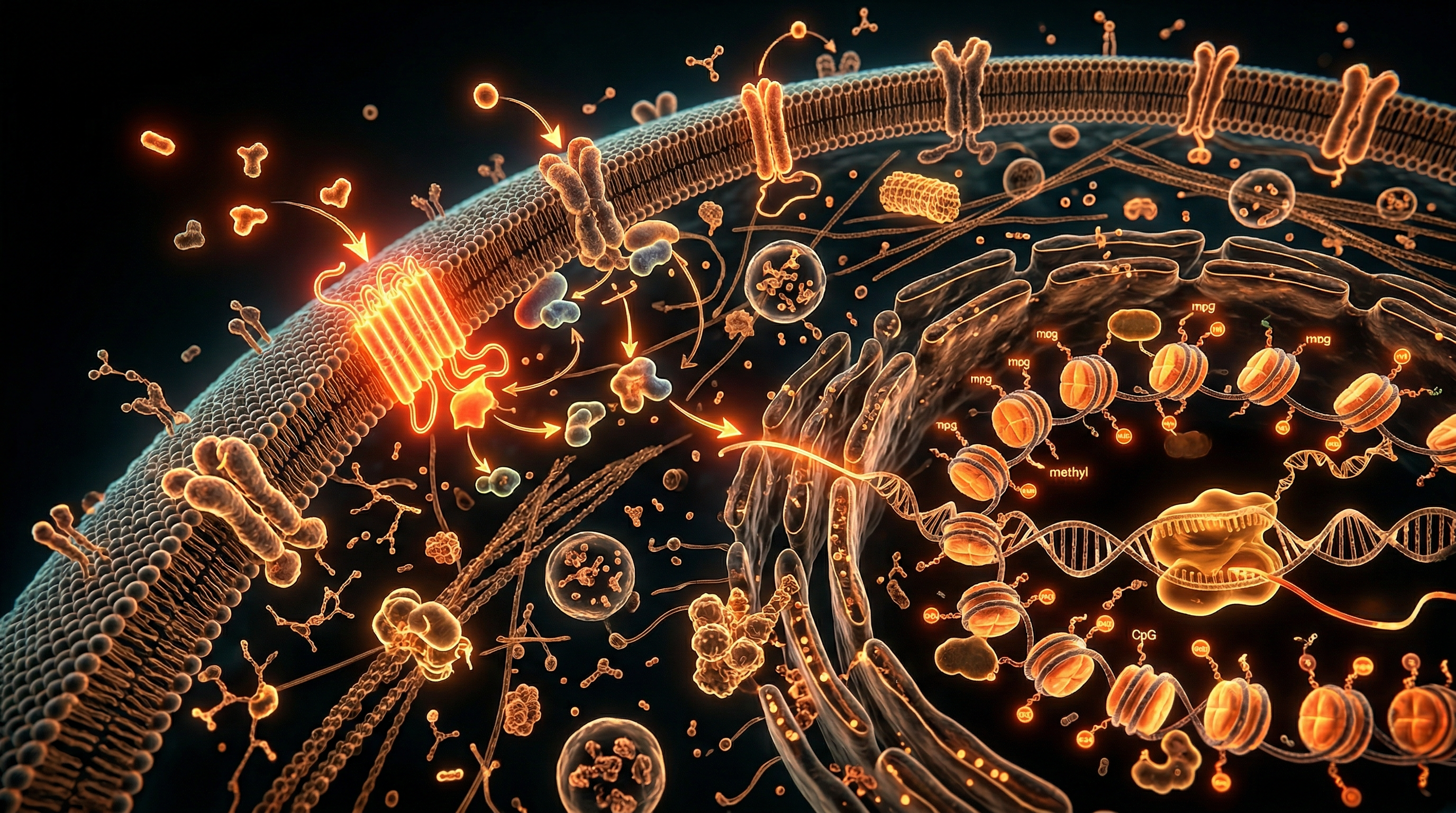
However, the field of epigenetics has utterly dismantled this paradigm. We now know that while your DNA sequence (the hardware) remains largely static, the expression of those genes (the software) is incredibly plastic. Epigenetics—literally meaning "above" or "on top of" genetics—is the study of biochemical "tags" that turn genes on or off, dial their activity up, or mute them entirely.
The profound truth that the establishment is slow to fully concede is this: your genes are not your destiny; they are a collection of possibilities. You are the architect of your biological expression. Every breath you take in a polluted city, every ultra-processed meal consumed, every hour of chronic stress, and every nutrient-dense whole food you eat sends a biochemical signal to your nucleus. These signals determine whether your body expresses the "health" programme or the "disease" programme.
Recent longitudinal studies suggest that as much as 70% to 90% of chronic disease is driven not by the DNA sequence itself, but by the exposome—the cumulative measure of environmental influences and associated biological responses throughout a lifetime.
This article serves as a deep dive into the molecular machinery of your cells. We will expose how the modern environment is systematically "hacking" your epigenome to drive chronic inflammation and premature ageing, and more importantly, how you can reclaim control over your biological narrative through targeted lifestyle interventions and environmental mastery.
##
The Biology — How It Works
To understand epigenetics, one must first understand the spatial constraints of the cell. If you were to stretch out the DNA from a single human cell, it would be approximately two metres long. Yet, this massive thread must fit into a nucleus only a few micrometres in diameter. To achieve this, the body employs an extraordinary packaging system.
The Chromatin Landscape
DNA does not float freely in the nucleus. It is wound around proteins called histones. This complex of DNA and protein is known as chromatin. Think of histones as spools and DNA as the thread. When the DNA is wound tightly (heterochromatin), the cellular machinery responsible for reading the genes—primarily RNA polymerase—cannot access the code. These genes are silenced. When the DNA is wound loosely (euchromatin), the genes are accessible and can be transcribed into messenger RNA (mRNA), which then directs the synthesis of proteins.
The "epigenome" consists of chemical compounds and proteins that can attach to DNA and direct such actions as turning genes on or off, controlling the production of proteins in particular cells. When epigenomic compounds attach to DNA and modify its function, they do not change the sequence of the DNA. Instead, they change the way cells read the DNA's instructions.
The Central Dogma Reimagined
The traditional "Central Dogma" of molecular biology—DNA makes RNA, and RNA makes protein—omitted a crucial step. Epigenetics sits at the apex of this hierarchy. It acts as the gatekeeper. You may possess the gene for a specific pro-inflammatory cytokine or a tumour-suppressor protein, but whether that gene is actually "read" is entirely dependent on the epigenetic state of your chromatin.
This explains why identical twins, who share 100% of their DNA sequence, can have vastly different health outcomes. One twin may develop an autoimmune condition or a specific cancer, while the other remains healthy. The difference lies not in their genes, but in their epigenetic expression, shaped by decades of differing environmental exposures, dietary choices, and stress levels.
##
Mechanisms at the Cellular Level
The "switching" of genes is not a metaphorical concept; it is a precise biochemical process involving specific enzymes and chemical groups. There are three primary pillars of epigenetic regulation: DNA Methylation, Histone Modification, and Non-coding RNA.
DNA Methylation: The Silence of the Genes
DNA methylation is perhaps the most well-studied epigenetic mechanism. It involves the addition of a methyl group (one carbon atom bonded to three hydrogen atoms, CH3) to the DNA molecule. In mammals, this typically occurs at the 5-position of the cytosine ring within "CpG islands"—regions of the genome where a cytosine nucleotide is followed by a guanine nucleotide.
The enzymes responsible for this are called DNA Methyltransferases (DNMTs).
- DNMT1 is the maintenance methyltransferase, ensuring that when a cell divides, the "tags" are passed on to the daughter cell.
- DNMT3a and DNMT3b are the de novo methyltransferases, which place new tags on the DNA in response to environmental stimuli.
High levels of DNA methylation in the promoter region of a gene typically act as a "stop sign," preventing the gene from being expressed. Conversely, hypomethylation (the loss of methyl groups) can lead to the dangerous activation of genes that should remain silent, such as oncogenes (cancer-promoting genes).
Histone Modification: The Structural Shift
While methylation affects the DNA directly, histone modification alters the "spools" the DNA is wrapped around. The tails of histone proteins are subject to various post-translational modifications, including acetylation, methylation, phosphorylation, and ubiquitination.
- Acetylation: This is generally an "on" switch. Enzymes called Histone Acetyltransferases (HATs) add acetyl groups to the amino acid lysine on the histone tails. This neutralises the positive charge of the histone, weakening its attraction to the negatively charged DNA. The "spool" loosens, and the gene becomes accessible.
- Deacetylation: The counter-process, managed by Histone Deacetylases (HDACs), removes acetyl groups, causing the DNA to wrap tightly again, effectively silencing the gene.
The balance between HATs and HDACs is a critical determinant of cellular health. Many modern toxins and pharmaceutical drugs inadvertently disrupt this balance, leading to the silencing of vital protective genes.
Non-coding RNA and MicroRNA (miRNA)
A significant portion of our genome—once dismissively called "junk DNA"—actually produces non-coding RNA molecules. MicroRNAs are short sequences of RNA that do not code for proteins but instead act as "silencers." They can bind to mRNA molecules in the cytoplasm, preventing them from being translated into proteins or triggering their destruction. This represents a post-transcriptional layer of epigenetic control, allowing the cell to rapidly fine-tune protein production in response to sudden environmental changes.
##
Environmental Threats and Biological Disruptors
The modern landscape is a minefield of epigenetic disruptors. We are currently participating in a massive, uncontrolled biological experiment where thousands of synthetic chemicals are interacting with our ancient genetic code.
Endocrine Disruptors and the "Plasticised" Epigenome
Compounds such as Bisphenol A (BPA), phthalates, and PFAS (polyfluoroalkyl substances, often called "forever chemicals") are pervasive in UK households. These chemicals are molecular mimics; they can dock into hormone receptors and trigger epigenetic changes that alter reproductive health, metabolic rate, and even neurological development.
Research has demonstrated that exposure to BPA during critical developmental windows can lead to the hypomethylation of the Agouti gene in mammals, leading to obesity and diabetes in offspring. This is clear evidence that environmental toxins "reprogramme" our metabolic settings.
The Impact of Ultra-Processed Foods (UPFs)
In the UK, over 50% of the average diet now consists of ultra-processed foods. These are not merely "empty calories"; they are epigenetic signals of scarcity and toxicity. High intakes of refined sugars and industrial seed oils (omega-6 rich) trigger chronic activation of the NF-κB pathway, a master regulator of inflammation. Chronic NF-κB activation leads to widespread histone modification changes that lock the body into a pro-inflammatory state, accelerating the ageing of every organ system.
Air Pollution and Particulate Matter
In cities like London, Manchester, and Birmingham, PM2.5 (fine particulate matter) is a major epigenetic threat. These particles can bypass the lung's defences, enter the bloodstream, and cause systemic oxidative stress. This stress depletes the cell's pool of S-adenosylmethionine (SAMe), the universal methyl donor. When SAMe is depleted by the need to neutralise toxins, the cell loses its ability to maintain proper DNA methylation patterns, leading to "epigenetic drift" and increased cancer risk.
Light Pollution and Circadian Rhythm Disruption
The human epigenome is synchronised to the 24-hour light/dark cycle through a series of "clock genes" (such as CLOCK and BMAL1). Modern exposure to artificial blue light at night suppresses melatonin and disrupts the epigenetic oscillation of these genes. This disruption is now linked to the silencing of tumour-suppressor genes, which is why the World Health Organization has classified night-shift work as a probable carcinogen.
##
The Cascade: From Exposure to Disease
The journey from an environmental "insult" to a clinical diagnosis is often a decades-long process of incremental epigenetic erosion. It is not a sudden "break" in the DNA, but a gradual silencing of the body's repair mechanisms.
The Cancer Pathway
Cancer is increasingly viewed not just as a genetic disease, but as an epigenetic catastrophe. In many tumours, the DNA sequence itself is remarkably intact, but the methylation landscape is ruined. Typically, we see:
- Global Hypomethylation: The genome becomes "unstable," allowing repetitive elements of DNA to jump around and cause mutations.
- Site-Specific Hypermethylation: The promoter regions of Tumour Suppressor Genes (like p53 or BRCA1) are heavily methylated (silenced), removing the cell's "brakes" on uncontrolled growth.
Neurodegeneration and Brain Health
In diseases like Alzheimer’s and Parkinson’s, epigenetic changes in the brain's microglial cells (the immune cells of the CNS) lead to a state of chronic "neuro-inflammation." Histone deacetylation (HDAC activity) increases in the hippocampus, the brain's memory centre, essentially "locking" the genes required for synaptic plasticity and memory formation.
Metabolic Syndrome and Transgenerational Inheritance
One of the most alarming "truths" exposed by epigenetics is that these marks can be heritable. If a parent is exposed to severe nutritional stress or endocrine disruptors, the "tags" on their sperm or eggs can be altered. This information is passed to the next generation—and potentially the generation after that.
The "Dutch Hunger Winter" study remains a cornerstone of this field. Individuals conceived during this period of famine had specific epigenetic marks on the IGF2 gene (linked to growth) that persisted for 60 years, predisposing them to higher rates of obesity and cardiovascular disease in adulthood.
##
What the Mainstream Narrative Omits
The reason the public is not adequately informed about epigenetic potential is largely economic. The pharmaceutical model relies on the concept of "one disease, one drug." If the public were to realise that the vast majority of their health outcomes are determined by their interaction with their environment—and that they can "reprogramme" their genes through lifestyle—the demand for lifelong chronic disease management would plummet.
The Myth of the "Bad Gene"
Medical professionals often tell patients they have a "genetic predisposition" for high blood pressure or type 2 diabetes. While certain gene variants (SNPs) can make you more sensitive to certain triggers, they are rarely the cause. The mainstream narrative focuses on the variant (which you cannot change) rather than the epigenetic environment (which you can). This creates a sense of helplessness that drives pharmaceutical dependency.
Corporate Accountability
If we acknowledge that air pollution, glyphosate in our wheat, and phthalates in our water are actively re-writing the DNA expression of the population, the burden of responsibility shifts from the "individual's choices" to corporate and regulatory failure. By keeping the conversation focused on "inherited genes," the industries responsible for environmental degradation evade the massive litigation that would follow if epigenetic damage were legally recognised as a primary driver of public health decline.
The Overlooked Role of Micronutrients
The mainstream medical system largely ignores the "Methylation Cycle"—a complex biochemical pathway that requires specific B-vitamins (B12, Folate, B6), Choline, and Betaine. Without these nutrients, your cells cannot produce methyl groups. This means you cannot silence the "bad" genes. A population deficient in these nutrients is a population with a compromised epigenetic "shield."
##
The UK Context
The United Kingdom presents a unique epigenetic landscape, shaped by its industrial heritage and current regulatory environment.
The Regulatory Gap: FSA and MHRA
While the UK has stricter regulations than some nations, the Food Standards Agency (FSA) and the MHRA have been criticised for being slow to act on "cocktail effects"—the synergistic toxicity of multiple low-level chemical exposures. Current safety limits for pesticides like Glyphosate are often based on acute toxicity, failing to account for the long-term, transgenerational epigenetic changes these chemicals can induce in the British population.
The "North-South" Health Divide
Epidemiological data in the UK shows a stark divide in life expectancy and chronic disease prevalence between the North and South. While socio-economic factors are usually cited, an epigenetic analysis reveals deeper layers. The industrial legacies of northern cities have left behind soil and water contaminated with heavy metals (lead, arsenic, cadmium). These metals are potent "epigenetic poisons" that inhibit DNMT enzymes, potentially explaining why certain regions suffer higher rates of chronic illness despite improvements in modern living standards.
The NHS and the "Sick Care" Model
The National Health Service (NHS) is currently structured as a "sick care" system. It is brilliantly equipped for acute trauma but poorly designed for epigenetic restoration. There is almost no focus on "Epigenetic Screening"—measuring biological age via DNA methylation clocks (like the Horvath Clock). By the time a patient presents with symptoms in the UK, the epigenetic "tipping point" has often been passed years prior.
##
Protective Measures and Recovery Protocols
Understanding that your genes are plastic is the ultimate form of empowerment. You can actively influence your epigenetic state by providing the body with the raw materials it needs for proper gene silencing and activation.
1. Support the Methylation Cycle
To maintain the "silence" of pro-inflammatory and oncogenic genes, you must ensure an adequate supply of methyl donors.
- Bioavailable Folate (Methylfolate): Found in dark leafy greens (spinach, kale). Avoid the synthetic version, "folic acid," which many Britons cannot metabolise efficiently due to the MTHFR gene variant.
- Vitamin B12 (Methylcobalamin): Critical for the conversion of homocysteine to methionine, the precursor to SAMe.
- Choline and Betaine: Found in organic eggs and beetroot. These provide alternative pathways for methylation, especially when the folate cycle is stressed.
2. Hormetic Stressors
Hormesis is the process where a brief, controlled stressor triggers a protective epigenetic response.
- Sulforaphane: Found in broccoli sprouts, this compound is a potent activator of the Nrf2 pathway. Nrf2 is an epigenetic master switch that turns on over 200 antioxidant and detoxification genes.
- Cold Exposure and Sauna: These practices trigger "heat shock proteins" and "cold shock proteins," which act as molecular chaperones, ensuring that proteins are folded correctly and that damaged epigenetic marks are repaired.
3. Eliminate Endocrine Disruptors
- Water Filtration: Use high-quality multi-stage filters (Reverse Osmosis or high-grade carbon) to remove fluoride, chlorine, and pharmaceutical residues from UK tap water.
- Plastic-Free Living: Transition to glass or stainless steel for food storage. Never heat plastic in the microwave, as heat accelerates the leaching of epigenetic-disrupting phthalates.
4. Circadian Hygiene
- Light Control: Utilise "red-light" mode on devices after sunset and ensure total darkness in the bedroom. This preserves the epigenetic rhythm of the "Clock" genes, which regulate cellular repair and autophagy (cellular cleaning).
- Time-Restricted Feeding: Consuming your food within a 10-12 hour window allows the body to shift its epigenetic focus from "growth/storage" (mediated by mTOR) to "repair/recycling" (mediated by AMPK).
5. Psychological Well-being and Cortisol
Chronic stress is a chemical signal. High levels of cortisol physically alter the epigenetic state of the glucocorticoid receptors in the brain.
- Mindfulness and Breathwork: These are not "fringe" practices; they are biological tools. Studies have shown that consistent meditation can reduce the expression of pro-inflammatory genes (like RIPK2 and COX2) in as little as eight hours of practice.
##
Summary: Key Takeaways
The science of epigenetics has provided the definitive proof that we are not the victims of our heredity. Our DNA is the keyboard, but our environment and choices are the pianist.
- Genetic Determinism is Dead: Your DNA sequence provides the potential, but your epigenome determines the reality.
- Methylation is the Key: DNA methylation is the primary "off switch" for disease. Supporting this process through nutrition (B-vitamins, choline) is non-negotiable for longevity.
- Histones are the Gatekeepers: The physical structure of your chromatin, controlled by acetylation and deacetylation, dictates which parts of your genetic library are accessible.
- Environment is Information: Every chemical, food, and thought is a signal that re-writes your biological software. The modern UK environment is rich in "noise" and "toxins" that disrupt these signals.
- Transgenerational Responsibility: The epigenetic marks you carry can be passed to your children. Your health choices today are an investment in the biological integrity of your future lineage.
By moving away from the "bad luck" narrative of mainstream medicine and embracing the "epigenetic responsibility" of INNERSTANDING, you reclaim the power to direct your own biological evolution. The tools for transformation are in your hands; it is time to use them.
This article is provided for informational and educational purposes only. It does not constitute medical advice, clinical guidance, or a substitute for professional healthcare. Information reflects cited research at time of publication. Always consult a qualified healthcare professional before acting on any health information.
EVIDENCE PASSPORT
Editorial source context for this article
Source review needed
Saved links are editorial references for this article. They may support specific claims rather than every sentence. Open and assess each source in context. This passport does not independently verify them.
Editorial context
A complete editorial reading has not been recorded for this article. Source links remain available for you to open and assess directly.
Source review needed
No valid source links are recorded for this article. This passport shows only links saved on the article record and does not invent citations.
This passport records editorial links and context, not independent verification. Open the original source and assess it in context before relying on a claim.
Medical Disclaimer
The information in this article is for educational purposes only and does not constitute medical advice, diagnosis, or treatment. Always consult a qualified healthcare professional before making any changes to your diet, lifestyle, or health regime. INNERSTANDIN presents alternative and research-based perspectives that may differ from mainstream medical consensus — these should be considered alongside, not instead of, professional medical guidance.
Read Full DisclaimerContinue the thread
Keep this question moving.
Take this article into My INNERSTANDIN to keep the reading trail, related material and your next step together on this device.
Dig deeper in the Library
Free, longform PDF volumes that go beyond headlines into mechanisms and references.