
Exercise as Medicine: Preserving the Thymus through Physicality
Updated May 2026
High-intensity exercise has been shown to slow the rate of thymic atrophy in older adults. We examine the biological pathways by which muscle activity signals for immune preservation.
Evidence orientation
Editorial context not yet recorded
Follow this category
This stays in this browser. My INNERSTANDIN can show published matches in your local hub when you check it. It does not send email, push, or alert notifications.
Local learning review
A private browser aid for revisiting ideas. It is not an alert or a health recommendation.
Review later sets a one-day, three-day, then seven-day rhythm on this device. Choose it only when you want to revisit this article.
Overview
For decades, the mainstream medical establishment has treated the steady decline of the human immune system as a biological inevitability—a slow, irreversible descent into "immunosenescence." At the heart of this decline lies the thymus, a small, pyramid-shaped lymphoid organ situated in the upper chest, directly behind the sternum and in front of the heart. Known to the ancients as the "seat of the soul" and to modern biology as the "Academy of the Immune System," the thymus is responsible for the maturation and "education" of T-lymphocytes (T-cells).
However, a chilling reality has emerged in the late 20th and early 21st centuries: the thymus begins to shrink, or "involute," almost immediately after puberty. By the age of 40, much of the functional thymic tissue has been replaced by non-functional adipose (fat) tissue. By 70, the production of "naïve" T-cells—those capable of identifying and attacking novel threats like new viral strains or emerging cancer cells—is virtually non-existent.
This process is not merely a byproduct of age; it is the primary driver of the diseases of ageing. Without a functional thymus, the body loses its ability to distinguish self from non-self, leading to the dual-edged sword of autoimmunity and increased susceptibility to infection.
Yet, emerging research from the vanguard of biological science suggests that this "biological destiny" is a fallacy. We are now discovering that the thymus is profoundly responsive to the mechanical and chemical signals generated by the musculoskeletal system. High-intensity physical activity acts as a potent biological signal that commands the thymus to remain functional. This article explores the revolutionary evidence that exercise is not just a lifestyle choice, but a primary pharmacological intervention for the preservation of human immunity. We will dissect the "Muscle-Thymus Axis" and expose why the preservation of this organ is the most suppressed secret in modern preventative medicine.
Key Fact: The rate of thymic involution is not fixed. Individuals who maintain high levels of physical activity into their 80s have been shown to possess thymic output comparable to that of young adults in their 20s.
The Biology — How It Works
To understand how physical movement preserves the thymus, one must first understand the organ’s internal machinery. The thymus acts as a rigorous training ground. Precursor cells migrate from the bone marrow to the thymus, where they undergo a brutal selection process. They must learn to identify pathogens while remaining "tolerant" of the body’s own tissues. Only about 2% of these cells graduate to become mature T-cells; the rest are destroyed through apoptosis (programmed cell death).
The Architecture of Immuno-Education
The thymus is divided into two main regions: the cortex (outer layer) and the medulla (inner core).
- Cortical Thymic Epithelial Cells (cTECs): These cells present antigens to developing T-cells to ensure they have functional receptors.
- Medullary Thymic Epithelial Cells (mTECs): These cells express the AIRE (Autoimmune Regulator) protein, which exposes T-cells to a "library" of the body's own proteins. If a T-cell reacts to these self-proteins, it is eliminated to prevent autoimmune disease.
As we age, the delicate scaffolding of these epithelial cells collapses. The space once occupied by active lymphoid tissue is invaded by adipocytes (fat cells). This "fatty infiltration" disrupts the chemical gradient required for T-cell maturation.
The Myokine Connection
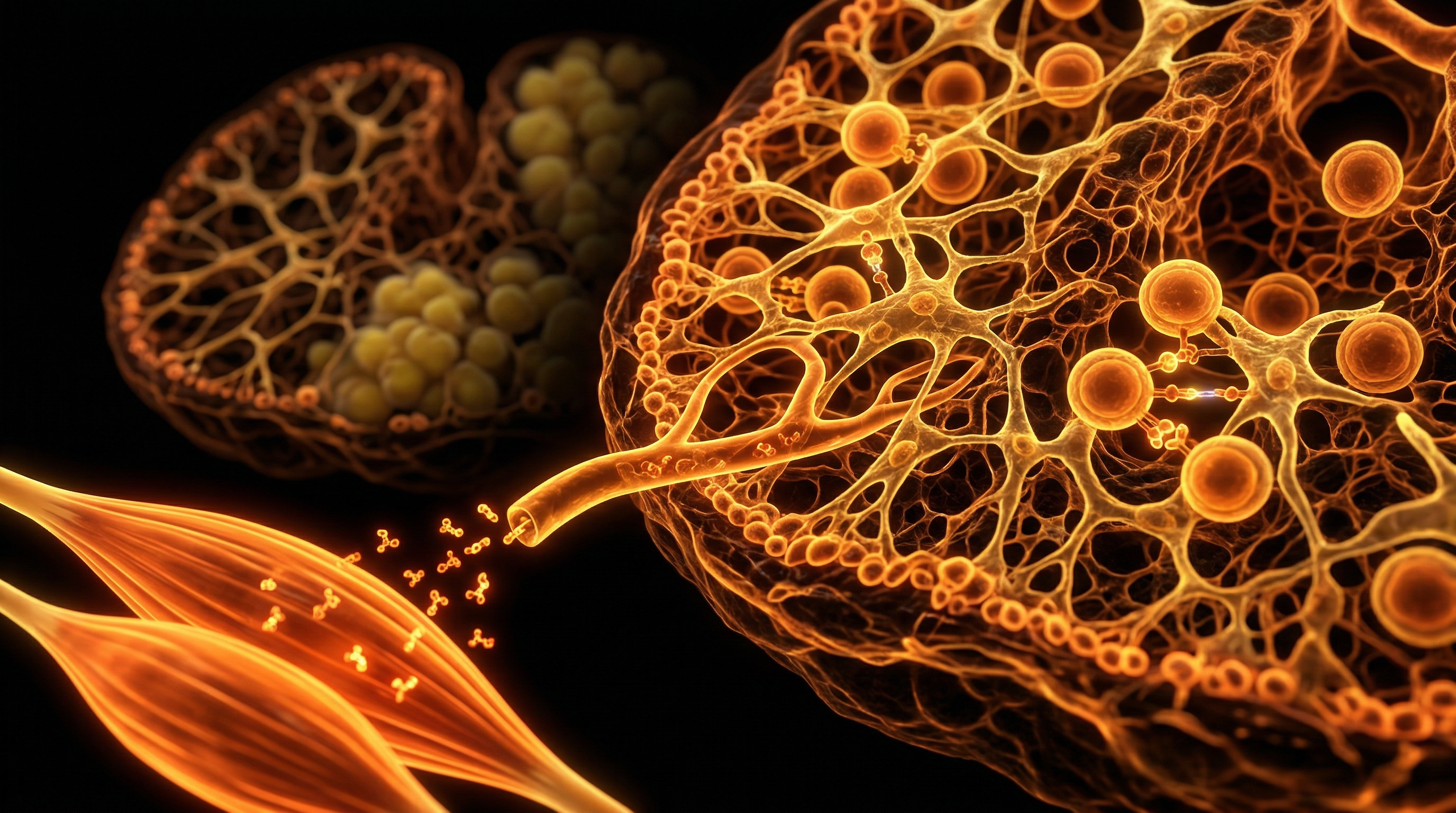
The breakthrough in our understanding of thymic preservation lies in the discovery of myokines—cell-signalling proteins (cytokines) produced and released by muscle fibres during contraction. Muscle is no longer viewed merely as a means of locomotion; it is the body’s largest endocrine organ.
When we engage in high-intensity exercise, our muscles secrete a cocktail of myokines, most notably Interleukin-7 (IL-7), Interleukin-15 (IL-15), and Irisin. These molecules travel through the bloodstream and bind to receptors on the thymic epithelial cells.
- IL-7 is particularly critical; it is the primary survival factor for developing T-cells.
- IL-15 enhances the metabolic efficiency of T-cells and protects them from premature senescence.
By maintaining high muscle mass and engaging in regular mechanical load, the body sends a continuous "survival signal" to the thymus, effectively overriding the genetic programme of involution.
Mechanisms at the Cellular Level
At the sub-cellular level, the preservation of the thymus through physicality involves complex epigenetic and metabolic shifts. It is not merely about "blood flow"; it is about the reprogramming of the cellular niche.
FOXN1: The Master Regulator
The transcription factor FOXN1 is the "master switch" for thymic development and maintenance. In sedentary individuals, FOXN1 expression drops precipitously after adolescence, leading to the degradation of the thymic microenvironment. Physical activity, particularly aerobic exercise coupled with resistance training, has been shown to upregulate FOXN1.
By maintaining FOXN1 levels, exercise ensures that the Thymic Epithelial Cells (TECs) maintain their structural integrity and their ability to secrete the hormones (like thymosin and thymopoietin) necessary for T-cell differentiation.
Mitochondria and Oxidative Stress
The thymus is highly sensitive to Reactive Oxygen Species (ROS). As we age, mitochondrial dysfunction in the thymus leads to a "leaky" energetic state, where oxidative stress damages the delicate DNA of developing T-cells. Exercise induces a process known as mitohormesis. The brief, controlled burst of oxidative stress during a workout triggers an adaptive response, strengthening the antioxidant defences within the thymic tissue. This makes the thymus more resilient to the chronic, low-level inflammation (often called "inflammageing") that typically characterizes the older body.
Adipose Tissue Antagonism
One of the most insidious aspects of thymic atrophy is the "fatty conversion" of the organ. There is a direct, antagonistic relationship between Intramuscular Adipose Tissue (IMAT) and the Thymic Microenvironment.
Callout Fact: Inactive muscles secrete pro-inflammatory cytokines (adipokines) that actively accelerate thymic shrinkage. In contrast, lean muscle mass acts as a "metabolic sink," pulling lipids away from the thymus and preventing its fatty infiltration.
Environmental Threats and Biological Disruptors
We do not live in a biological vacuum. The modern world is systematically designed—whether by accident or intent—to accelerate thymic involution. The preservation of the thymus through exercise is a defensive act against an environment that is increasingly hostile to human immune integrity.
The Cortisol Trap
Chronic psychological stress is a potent "thymic poison." Cortisol, the primary stress hormone, induces rapid apoptosis of immature T-cells within the thymus. In our modern, high-cortisol society, the thymus is under constant chemical assault. Exercise serves as a "metabolic flush," clearing systemic cortisol and replacing it with Endorphins and Brain-Derived Neurotrophic Factor (BDNF), which have a protective effect on lymphoid tissues.
Endocrine Disruptors and Chemical Assault
The modern environment is saturated with Xenoestrogens and Endocrine Disrupting Chemicals (EDCs) such as Bisphenol A (BPA) and phthalates. These chemicals mimic hormones and interfere with the delicate signalling required for T-cell education. Studies have indicated that EDCs can accelerate the replacement of thymic tissue with fat.
Electromagnetic Frequency (EMF) and Oxidative Burden
While often dismissed by mainstream public health bodies, emerging research suggests that constant exposure to high-intensity Non-Ionizing Radiation can exacerbate oxidative stress in the chest cavity. Because the thymus is located near the surface of the chest, it is particularly vulnerable to external environmental stressors that disrupt the electronic signalling within the mitochondrial membrane.
The Sedentary Paradigm as a Toxin
Sedentary behaviour is not just a lack of movement; it is a physiological state that signals to the body that the "warrior" phase of life is over. When the body is stationary, it enters a state of biological dereliction. The absence of mechanical load on the skeleton and muscles signals to the thymus that high-level immune surveillance is no longer a priority, triggering the programmed "shutdown" of T-cell production.
The Cascade: From Exposure to Disease
What happens when the thymus fails? The consequences are not localized to the chest; they ripple through every system in the human body, creating a cascade of physiological failure.
1. The Loss of the Naïve T-cell Pool
The primary function of the thymus is to produce "naïve" T-cells—cells that haven't encountered an enemy yet. As the thymus atrophies, the body must rely on "memory" T-cells—cells that have already fought a previous infection. This leads to T-cell Exhaustion. When a new threat appears (such as a mutated virus or a newly formed cancer cell), the body has no "fresh recruits" to identify the threat. This is why the elderly are disproportionately affected by seasonal respiratory illnesses.
2. The Rise of "Inflammageing"
As the thymus fills with fat, it begins to leak pro-inflammatory signals. This contributes to a state of chronic, systemic inflammation known as Inflammageing. This low-grade fire burns through the vascular system, the brain, and the joints, driving:
- Atherosclerosis (hardening of the arteries)
- Neurodegeneration (Alzheimer's and Parkinson's)
- Sarcopenia (muscle wasting)
3. Autoimmune Hyper-reactivity
Ironically, as the immune system becomes weaker at fighting external threats, it becomes more likely to attack the self. Without the mTECs and the AIRE protein to "delete" self-reactive cells, "rogue" T-cells escape the thymus and enter the general circulation. These rogue cells are responsible for the explosion of autoimmune conditions seen in the modern era, from rheumatoid arthritis to Hashimoto's thyroiditis.
4. Cancer Escape
The immune system's primary job is "surveillance"—finding and killing mutated cells before they become tumours. A robust thymus provides the "Special Forces" required for this task. When thymic output drops, "cancer escape" becomes exponentially more likely. The "biological clock" of cancer risk is, in many ways, the biological clock of the thymus.
What the Mainstream Narrative Omits
The medical-industrial complex has a vested interest in the "management" of chronic disease rather than the preservation of biological autonomy. The mainstream narrative regarding immune health almost entirely ignores the thymus for several calculated reasons.
The Pharmaceutical Hegemony
There is no "patentable" way to sell the myokine response generated by a heavy squat or a sprint. If the public understood that a specific protocol of high-intensity movement could maintain the immune profile of a 20-year-old well into their 70s, the market for "immune-boosting" drugs, synthetic boosters, and lifelong autoimmune medications would collapse.
The Misdiagnosis of "Ageing"
The mainstream narrative presents ageing as a series of disconnected symptoms: high blood pressure, low energy, and frequent illness. By failing to point to Thymic Involution as the "Master Driver," the medical establishment can treat each symptom individually with different pharmaceutical products, rather than addressing the root cause through physical intervention.
The Suppression of Hormetic Science
Hormesis—the concept that brief periods of stress (like exercise or cold exposure) strengthen an organism—is often downplayed. Instead, we are told to "take it easy" as we age. This "rest and recover" advice is perhaps the most damaging medical directive in history. It accelerates the very atrophy that leads to death. The "safety-first" culture of modern medicine is, in reality, a blueprint for immunological decay.
Key Observation: Notice that during recent global health crises, the focus was entirely on external interventions (masks, vaccines, lockdowns) and never on the endogenous resilience of the thymus or the role of metabolic health in T-cell maturation. The silence on thymic preservation was not an oversight; it was an omission.
The UK Context
In the United Kingdom, the state of thymic health is a national emergency hidden in plain sight. The British lifestyle, characterized by long hours of desk-bound work, a diet high in ultra-processed foods (UPFs), and a chronic lack of Vitamin D due to northern latitudes, is a "perfect storm" for thymic destruction.
The NHS Burden
The National Health Service (NHS) is currently buckling under the weight of an ageing population suffering from "multimorbidity." If we look closer, we see that a massive percentage of NHS spending is dedicated to diseases directly linked to thymic decline: chronic inflammation, respiratory vulnerability, and cancer.
The King’s College Study
In 2018, researchers at King’s College London conducted a landmark study on 125 "master" cyclists aged 55 to 79. These individuals had maintained high levels of activity throughout their lives. The results were staggering:
- Their immune systems had not aged.
- Their thymuses were producing as many T-cells as those of young adults.
- They had not lost muscle mass or strength, and their body fat levels had not increased.
This study proved, within a British cohort, that the "inevitable" decline of the immune system is a consequence of sedentary behaviour, not chronological time.
The Vitamin D Factor
The UK’s lack of sunlight is a critical factor. Vitamin D is not just a vitamin; it is a seco-steroid hormone that is essential for the function of the thymus. The British "indoor lifestyle" combined with a lack of vigorous outdoor activity has led to a population-wide deficiency, further accelerating thymic fatty infiltration.
Protective Measures and Recovery Protocols
Knowing the biology is one thing; applying it is another. To preserve the thymus—or even attempt a degree of "re-involution" or "thymic rejuvenation"—one must adopt a protocol that signals the evolutionary imperative of survival.
1. High-Intensity Interval Training (HIIT)
Steady-state cardio is beneficial for the heart, but HIIT is the key for the thymus. The brief, intense "fight or flight" signals generated by HIIT trigger the maximum release of IL-7 and IL-15.
- Protocol: 30 seconds of maximum effort (sprinting, cycling, or rowing) followed by 90 seconds of recovery. Repeat 8-10 times, twice a week.
2. Heavy Resistance Training
To prevent the "fatty invasion" of the thymus, you must prevent the fatty invasion of the muscles. Resistance training—specifically compound movements like squats, deadlifts, and presses—increases the expression of the FOXN1 gene.
- Protocol: Focus on 5-8 repetition ranges to maximize mechanical tension and myokine production.
3. Nutritional Fortification
- Zinc and Selenium: These trace minerals are the "building blocks" of thymic hormones. A deficiency in zinc is the fastest way to shrink the thymus.
- Vitamin A (Retinol): Essential for the integrity of the thymic epithelial cells. Obtain this from liver or high-quality grass-fed butter, not synthetic beta-carotene.
- Avoid Ultra-Processed Foods (UPFs): UPFs trigger systemic inflammation that "distracts" and exhausts the T-cell pool.
4. Hormetic Stress: Cold Thermogenesis
Exposure to cold (ice baths or cold showers) triggers the release of norepinephrine, which has been shown to modulate the immune environment and reduce the inflammatory load on the thymus. It also "browns" white fat, making the body more metabolically efficient and less likely to store fat in the thymic niche.
5. Stress Management and Vagal Tone
Engaging in "Deep Work" or meditation to lower chronic cortisol is essential. If you are constantly "stressed," the exercise will have a diminished effect because the cortisol will counteract the myokines.
The 3-Point Thymus Protection Plan:
1. Move with intensity (Signal survival).
2. Lift heavy (Signal structural integrity).
3. Eliminate toxins (Remove the "thymic poisons").
Summary: Key Takeaways
The thymus gland is the clock by which our biological life is measured. Its decay is the silent driver of the modern epidemic of chronic disease. However, the science of the Muscle-Thymus Axis provides a radical new path for human health.
- Atrophy is not Inevitable: The shrinking of the thymus is a reaction to a sedentary, toxic environment, not a fixed law of biology.
- Muscle is an Endocrine Shield: By training our muscles, we are actively "medicating" our thymus with myokines like IL-7, which keep the "Academy of the Immune System" open for business.
- Naïve T-cells are the Key: Preserving the thymus ensures a steady supply of fresh T-cells, providing the only real defence against novel viruses and cancer.
- The Narrative is Flawed: The focus on external pharmaceutical "cures" ignores the vastly more powerful endogenous systems we possess.
- Physicality is Mandatory: In an increasingly automated and stationary world, vigorous, high-intensity movement is the only way to signal to our DNA that we are still "in the game."
The preservation of the thymus through physicality is perhaps the ultimate act of biological rebellion. It is a refusal to accept the "slow fade" into immunosenescence. By engaging in high-intensity movement, we do more than just build muscle; we safeguard the very essence of our internal defence, ensuring that we remain immunologically "young" even as the years advance.
"The choice is simple: move with intensity, or allow the seat of your soul to turn to fat. The biology does not lie."
This article is provided for informational and educational purposes only. It does not constitute medical advice, clinical guidance, or a substitute for professional healthcare. Information reflects cited research at time of publication. Always consult a qualified healthcare professional before acting on any health information.
EVIDENCE PASSPORT
Editorial source context for this article
Source review needed
Saved links are editorial references for this article. They may support specific claims rather than every sentence. Open and assess each source in context. This passport does not independently verify them.
Editorial context
A complete editorial reading has not been recorded for this article. Source links remain available for you to open and assess directly.
Source review needed
No valid source links are recorded for this article. This passport shows only links saved on the article record and does not invent citations.
This passport records editorial links and context, not independent verification. Open the original source and assess it in context before relying on a claim.
Medical Disclaimer
The information in this article is for educational purposes only and does not constitute medical advice, diagnosis, or treatment. Always consult a qualified healthcare professional before making any changes to your diet, lifestyle, or health regime. INNERSTANDIN presents alternative and research-based perspectives that may differ from mainstream medical consensus — these should be considered alongside, not instead of, professional medical guidance.
Read Full DisclaimerContinue the thread
Keep this question moving.
Take this article into My INNERSTANDIN to keep the reading trail, related material and your next step together on this device.
Explore this in the Body Map
See where this hits your biology. Interactive anatomy, threats, and protective protocols.
Dig deeper in the Library
Free, longform PDF volumes that go beyond headlines into mechanisms and references.