
Exosomes as Bio-Indicators: Monitoring Environmental Impact on Cellular Health
Updated April 2026
Evidence orientation
Editorial context not yet recorded
Follow this category
This stays in this browser. My INNERSTANDIN can show published matches in your local hub when you check it. It does not send email, push, or alert notifications.
Local learning review
A private browser aid for revisiting ideas. It is not an alert or a health recommendation.
Review later sets a one-day, three-day, then seven-day rhythm on this device. Choose it only when you want to revisit this article.
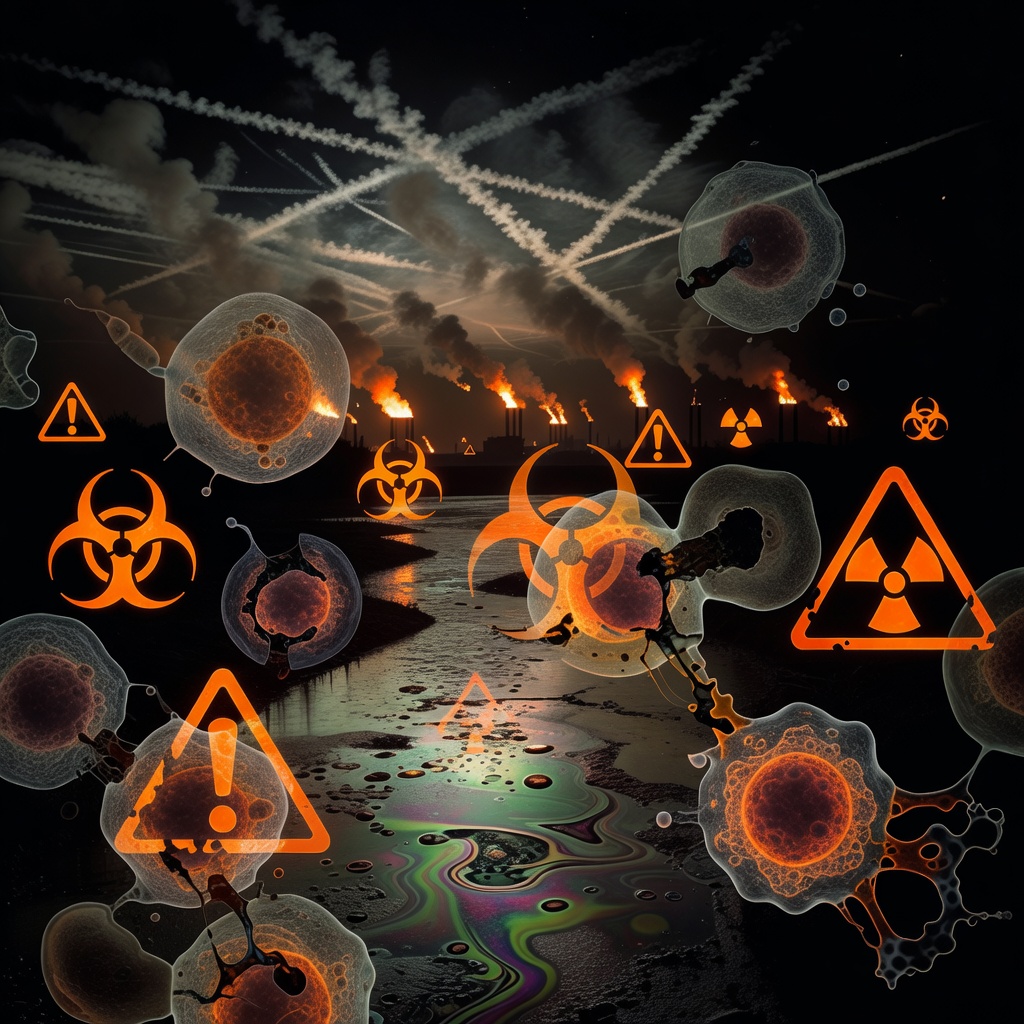
In the evolving landscape of regenerative medicine and molecular biology, a silent revolution is taking place—one that challenges the traditional "symptom-first" approach to healthcare. For decades, the medical establishment viewed the spaces between cells as mere structural scaffolding. However, we now know that this interstitial realm is teeming with sophisticated communication vesicles known as exosomes. These nano-sized messengers are more than just cellular couriers; they are the most precise bio-indicators of our age, serving as a biological "black box" that records every environmental assault, nutritional deficiency, and toxic exposure our bodies endure.
At INNERSTANDING, we believe that true health sovereignty begins with the recognition that our cells are in constant dialogue with their environment. Understanding the exosomal signal is the key to decoding how the modern world—from the air we breathe in London to the electromagnetic frequencies (EMFs) permeating our homes—is fundamentally altering our genetic expression.
The Exosomal Paradigm: Beyond Cellular Waste
For nearly half a century, exosomes were dismissed as "cellular dust" or waste-disposal bags. This reductionist view has been shattered. We now understand that exosomes are specialized extracellular vesicles (EVs), typically 30 to 150 nanometres in diameter, secreted by almost all cell types.
Their primary function is intercellular communication. They carry a concentrated "payload" of bioactive molecules, including microRNA (miRNA), messenger RNA (mRNA), proteins, lipids, and transcription factors. When a cell is under stress from environmental toxins, the composition of these exosomes changes instantaneously. They act as an early-warning system, alerting distant organs to the presence of systemic threats.
The Mechanism of Bio-Indication
When a cell encounters a stressor—be it a heavy metal, a synthetic chemical, or oxidative stress—it undergoes a process of "adaptive cargo loading." The cell selectively packages specific molecules into the exosome that reflect its current state of health.
"Exosomes do not merely reflect cellular health; they are the active narrators of the body’s internal landscape, capturing the physiological 'truth' long before clinical symptoms manifest."
By analysing the proteomic and transcriptomic profile of circulating exosomes, scientists can now identify specific "molecular fingerprints" associated with environmental damage. This is the frontier of personalised preventative medicine.
Environmental Factors: The "Silent Hacking" of Cellular Health
The modern environment is a cocktail of synthetic stressors that our biological systems were never designed to process. These factors don't just damage cells directly; they "reprogramme" the exosomal signals, leading to systemic inflammation and chronic disease.
1. Particulate Matter and Air Quality
In the urban centres of the United Kingdom, particularly London, Birmingham, and Manchester, Particulate Matter (PM2.5) is a significant concern. Research has shown that inhalation of fine particulates triggers the release of pro-inflammatory exosomes from lung epithelial cells. These vesicles enter the bloodstream and can cross the blood-brain barrier, potentially contributing to neurodegenerative conditions. The exosomes become "vectors of inflammation," carrying the environmental insult from the lungs to the brain.
2. Endocrine Disruptors and "Forever Chemicals"
Chemicals such as Bisphenol A (BPA), phthalates, and PFAS (per- and polyfluoroalkyl substances) are ubiquitous in our water and food supplies. These substances interfere with hormonal signalling. Crucially, they alter the lipid composition of exosomal membranes. When these "corrupted" exosomes reach target tissues, they deliver faulty instructions, leading to metabolic dysfunction and reproductive issues.
3. Electromagnetic Frequencies (EMFs)
Whilst the mainstream narrative often downplays the biological impact of non-ionising radiation, emerging studies suggest that high-level EMF exposure can trigger cellular stress responses. This stress is reflected in the increased secretion of Heat Shock Proteins (HSPs) within exosomes. This exosomal shift serves as a bio-indicator of "electrosmog" affecting the body’s bio-energetic field.
The UK Context: A Growing Crisis in Cellular Integrity
The United Kingdom faces a unique set of challenges regarding environmental impact on health. As an island nation with a dense industrial history, our soil and waterways often contain legacy pollutants that continue to impact cellular health.
The Water Quality Scandal
The recent public outcry over the state of British rivers and coastal waters highlights a deeper biological threat. The presence of untreated sewage, agricultural runoff (containing glyphosate), and pharmaceutical residues in the water cycle means that the British population is chronically exposed to low-dose chemical cocktails.
Exosomal monitoring in UK populations has shown an uptick in specific miRNA signatures associated with hepatic (liver) stress and detoxification pathways. This suggests that even if standard blood tests appear "normal," the exosomal data reveals a system that is struggling to maintain homeostasis.
The Shift in UK Healthcare
The National Health Service (NHS) is slowly beginning to recognise the importance of biomarkers, but the true innovation is happening in the private sector. British biotech firms are at the forefront of "Exosomal Diagnostics." By moving away from the "wait and see" model of the 20th century, we are entering an era where a simple blood or saliva test can reveal the environmental load on a person's cells, allowing for intervention decades before a disease like Parkinson's or Type 2 Diabetes takes hold.
Biological Mechanisms: How Exosomes Carry the Toxic Load
To understand exosomes as bio-indicators, one must understand their biogenesis. They are formed through the inward budding of multivesicular bodies (MVBs) within the cell.
- Selection: The cell identifies specific "damaged" or "signalling" proteins and RNA.
- Encapsulation: These molecules are wrapped in a lipid bilayer that protects them from degradation in the extracellular environment.
- Release: The MVB fuses with the cell membrane, releasing the exosomes into the interstitial fluid.
- Uptake: The exosome travels through the blood or lymph to a recipient cell, where it is internalised, and its "message" is read and acted upon.
Epigenetic Alterations: One of the most profound roles of exosomes is their ability to carry epigenetic information. Environmental toxins can cause "DNA methylation" patterns that are then shared via exosomes. This means that a toxic exposure in one part of the body can effectively "teach" other cells to behave as if they are also under attack, creating a cycle of chronic systemic stress.
Protective Strategies: Safeguarding Your Cellular Narrative
Knowing that our environment is constantly "writing" onto our exosomal record, how do we protect our cellular health? At INNERSTANDING, we advocate for a proactive approach to cellular hygiene.
1. Nutritional Fortification
- Sulforaphane: Found in cruciferous vegetables like broccoli, sulforaphane activates the Nrf2 pathway, which enhances the cell's ability to produce "clean" exosomes and detoxify environmental pollutants.
- Glutathione: As the body's master antioxidant, glutathione ensures that the cargo within exosomes is protected from oxidative damage, preventing the spread of "distress signals" through the body.
- Omega-3 Fatty Acids: High-quality EPA and DHA help maintain the fluidity and integrity of the exosomal lipid bilayer, ensuring that communication remains clear and uncorrupted.
2. Environmental Mitigation
- Water Filtration: Utilising high-grade reverse osmosis or charcoal filtration is essential in the UK to remove endocrine disruptors.
- Air Purification: In urban environments, HEPA and carbon filters can significantly reduce the intake of PM2.5, thereby reducing the "inflammatory load" on pulmonary exosomes.
- EMF Hygiene: Reducing exposure—particularly during sleep—allows the body to engage in cellular repair without the interference of external electromagnetic signals.
3. Hormetic Stress
Engaging in hormesis—such as cold water immersion or sauna therapy—encourages the production of "survivalist" exosomes. These vesicles carry protective proteins that help strengthen the resilience of recipient cells, effectively "training" the body to handle environmental challenges more efficiently.
Key Takeaways: The Truth of the Exosome
The shift toward viewing exosomes as bio-indicators is more than a scientific milestone; it is a fundamental shift in how we perceive our relationship with the world.
- Exosomes are the Body’s Ledger: They record and transmit the biological cost of our environment, providing a real-time map of cellular health.
- Early Detection is Molecular: Conventional medicine detects "fires" (organ failure); exosomal science detects "sparks" (cellular stress).
- Environmental Impact is Systemic: Toxins inhaled or ingested do not stay localised; they are "broadcast" throughout the body via exosomal pathways.
- Sovereignty through Knowledge: By understanding these mechanisms, we can move from being passive victims of environmental pollution to active architects of our cellular destiny.
"The ultimate truth of our health is not found in how we feel today, but in the silent messages our cells are sending to one another. To listen to the exosome is to listen to the very core of our existence."
As we continue to explore the depths of Exosome Science, it becomes clear that the boundary between "self" and "environment" is far more porous than we ever imagined. Our health is a reflection of our surroundings, filtered through the microscopic lens of the exosome. In the quest for INNERSTANDING, we must learn to read these signals and act with intention to preserve the sanctity of our biological blueprint.
This article is provided for informational and educational purposes only. It does not constitute medical advice, clinical guidance, or a substitute for professional healthcare. Information reflects cited research at time of publication. Always consult a qualified healthcare professional before acting on any health information.
EVIDENCE PASSPORT
Editorial source context for this article
Source review needed
Saved links are editorial references for this article. They may support specific claims rather than every sentence. Open and assess each source in context. This passport does not independently verify them.
Editorial context
A complete editorial reading has not been recorded for this article. Source links remain available for you to open and assess directly.
Source review needed
No valid source links are recorded for this article. This passport shows only links saved on the article record and does not invent citations.
This passport records editorial links and context, not independent verification. Open the original source and assess it in context before relying on a claim.
Medical Disclaimer
The information in this article is for educational purposes only and does not constitute medical advice, diagnosis, or treatment. Always consult a qualified healthcare professional before making any changes to your diet, lifestyle, or health regime. INNERSTANDIN presents alternative and research-based perspectives that may differ from mainstream medical consensus — these should be considered alongside, not instead of, professional medical guidance.
Read Full DisclaimerContinue the thread
Keep this question moving.
Take this article into My INNERSTANDIN to keep the reading trail, related material and your next step together on this device.