
Exosomes: Nature's Communication Not Pathogens
Updated May 2026
This piece redefines exosomes as cellular waste disposal or signaling units rather than external invaders. It challenges the conventional viral narrative using biological medicine principles.
Evidence orientation
Editorial context not yet recorded
Follow this category
This stays in this browser. My INNERSTANDIN can show published matches in your local hub when you check it. It does not send email, push, or alert notifications.
Local learning review
A private browser aid for revisiting ideas. It is not an alert or a health recommendation.
Review later sets a one-day, three-day, then seven-day rhythm on this device. Choose it only when you want to revisit this article.
Overview
For over a century, the medical establishment has operated under the shadow of a single, unyielding dogma: the Germ Theory of Disease. This paradigm posits that humanity is under constant siege by invisible, external invaders—viruses—that breach our biological defences to cause havoc. However, as we delve deeper into the microscopic realms of cellular biology, a more nuanced, sophisticated, and ultimately empowering truth is emerging. At the heart of this biological revolution lies the exosome.
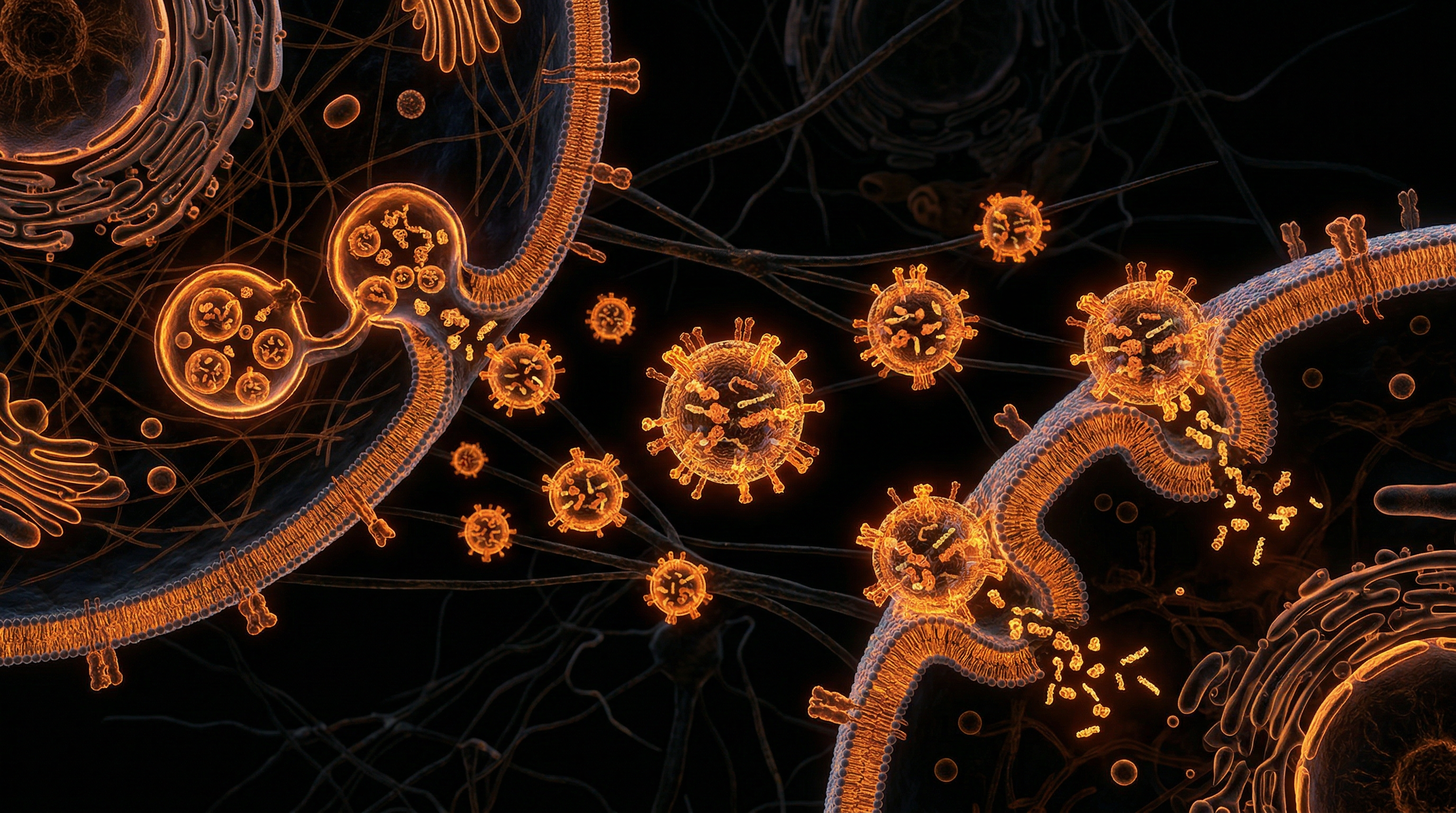
Exosomes are small, membrane-bound extracellular vesicles (EVs) ranging from 30 to 150 nanometres in diameter. In conventional virology, these particles are often ignored or, more insidiously, misidentified as pathogenic viruses. Yet, when viewed through the lens of Biological Medicine and Terrain Theory, exosomes reveal themselves not as enemies, but as the cellular equivalent of a sophisticated postal service or a rapid-response waste disposal unit.
The distinction is not merely semantic; it is foundational. If what we have been told are "viruses" are actually endogenous (internally produced) messages sent by our cells in response to stress, toxicity, or injury, then the entire structure of modern pharmacology—from antivirals to mandates—crumbles. This article serves as a comprehensive exploration into the true nature of exosomes, redefining them as vital components of our biological terrain and challenging the mainstream narrative that has conflated these essential messengers with microscopic "monsters."
To understand exosomes is to understand the language of life itself. We are not victims of a hostile environment; we are complex, self-regulating ecosystems that utilise these nanovesicles to maintain homeostasis amidst an increasingly toxic world.
The Biology — How It Works
To grasp the function of exosomes, one must first appreciate the staggering complexity of the cell. Far from being a simple bag of protoplasm, the cell is a high-tech manufacturing hub. Exosomes are a specific class of extracellular vesicle, produced within the endosomal compartment of most eukaryotic cells.
Biogenesis: The Birth of a Messenger
The creation of an exosome is a meticulous, multi-stage process:
- Endocytosis: The cell membrane invaginates (folds inward) to form an early endosome.
- Maturation: As the endosome matures, its own membrane buds inward to create even smaller vesicles within the larger structure. These internal vesicles are called Intraluminal Vesicles (ILVs).
- The Multivesicular Body (MVB): Once filled with these tiny ILVs, the endosome is redefined as a Multivesicular Body.
- The Decision Point: The cell then directs the MVB to one of two fates. It can either fuse with a lysosome (where the contents are degraded and recycled) or fuse with the cell's outer plasma membrane.
- Release: When fusion with the plasma membrane occurs, the internal vesicles are released into the extracellular space. At this precise moment, they are officially termed exosomes.
Composition and Cargo
Exosomes are not empty shells. They are densely packed with biological information, carefully curated by the parent cell. Their cargo typically includes:
- Proteins: Including receptors, transcription factors, and enzymes.
- Lipids: Cholesterol, sphingomyelin, and ceramide, which provide structural integrity and facilitate fusion with recipient cells.
- Nucleic Acids: Crucially, exosomes contain messenger RNA (mRNA), microRNA (miRNA), and sometimes fragments of DNA.
Callout Fact: The protein and RNA profile of an exosome serves as a "snapshot" of the physiological state of the cell that produced it. This is why exosomes are now being studied as "liquid biopsies" in mainstream oncology—they carry the exact signature of the tissue's health or distress.
Mechanisms at the Cellular Level
In the framework of Terrain Theory, the "terrain" is the internal environment of the body—the blood, the lymph, and the interstitial fluid. Exosomes are the primary tools the body uses to maintain the health of this terrain. Their mechanisms can be categorised into three primary functions: waste removal, cellular signalling, and immunological education.
1. The Waste Disposal Mechanism
When a cell is overwhelmed by toxins—whether heavy metals, metabolic by-products, or chemical pollutants—it must expel these materials to survive. Exosomes act as "rubbish bags," encapsulating degraded proteins and toxic elements and ejecting them from the cellular interior. This prevents the internal machinery of the cell (the mitochondria and the nucleus) from being permanently damaged.
2. Horizontal Gene Transfer and Signalling
Exosomes facilitate a form of "wireless" communication between cells. By carrying mRNA and miRNA, they can alter the genetic expression of recipient cells. This is not "infection" in the traditional sense, but rather a coordinated tissue response. For example, if a group of lung cells is damaged by smoke or pollutants, they release exosomes that signal neighbouring healthy cells to ramp up production of protective antioxidants or to prepare for repair.
3. The Pleomorphic Cycle
Biological Medicine acknowledges the work of Antoine Béchamp and Günther Enderlein, who observed that micro-organisms can change form (pleomorphism) based on the state of the terrain. Exosomes fit perfectly into this model. Under conditions of high toxicity, cells produce more exosomes to manage the load. Mainstream virology observes these particles, notes their genetic material, and erroneously labels them as "budding viruses." In reality, the "virus" is the result of the cellular distress, not the cause of it.
Exosomes vs. Viruses: The Identical Twins
One of the most suppressed facts in modern biology is that exosomes and "viruses" are virtually indistinguishable.
- They are the same size.
- They have the same shape (spherical vesicles).
- They both carry genetic material (RNA/DNA) wrapped in a lipid bilayer.
- They both interact with cell receptors to gain entry.
In 1987, a study published in the journal Journal of Cell Biology by Johnstone et al. first coined the term "exosome." Since then, researchers have struggled to find a definitive way to separate "viruses" from "exosomes" in laboratory samples. James Hildreth, a prominent researcher and president of Meharry Medical College, once famously stated, "The virus is fully an exosome in every sense of the word."
Environmental Threats and Biological Disruptors
If exosomes are produced in response to cellular stress, we must ask: what is causing this stress in the modern world? Our biological terrain is currently under assault from a cocktail of novel environmental disruptors that trigger mass exosomal release.
Electromagnetic Fields (EMF) and 5G
The rollout of high-frequency microwave radiation (including 5G) represents a significant biological stressor. Non-ionising radiation has been shown to affect Voltage-Gated Calcium Channels (VGCCs) in the cell membrane. When these channels are forced open by external electromagnetic fields, calcium floods the cell, leading to oxidative stress and mitochondrial dysfunction. The cell responds by producing exosomes to signal this damage to the rest of the body.
Chemical Toxicity and Glyphosate
The widespread use of glyphosate (Roundup) in British and global agriculture has decimated the human microbiome. Glyphosate acts as a chelator, stripping the body of essential minerals and disrupting the Shikimate pathway in our gut bacteria. This chemical insult leads to "leaky gut" and systemic inflammation, prompting a massive release of exosomes as the body attempts to detoxify and repair the intestinal barrier.
Heavy Metal Accumulation
Aluminium, mercury (from dental amalgams and certain medical interventions), and lead act as persistent "biological irritants." Cells sequester these metals and often attempt to export them via the vesicle pathway. The presence of these metals in the terrain alters the electrical conductivity of our fluids, leading to further cellular disharmony.
Psychological Stress
The "Biology of Belief," as explored by Dr. Bruce Lipton, demonstrates that our thoughts and emotions translate into chemical signals. Chronic fear and anxiety trigger the release of cortisol and adrenaline, which, in high doses, are toxic to cells. This "emotional toxicity" is a significant, yet often overlooked, driver of exosomal production.
The Cascade: From Exposure to Disease
What we commonly call "infectious disease" is, in most cases, a synchronized detoxification crisis. The process follows a predictable cascade:
- Accumulation: The body is exposed to environmental stressors (e.g., a cold snap, increased EMF exposure, or a period of poor diet and high stress).
- Saturation: The toxic load exceeds the capacity of the primary organs of elimination (liver, kidneys, colon).
- Cellular Response: Cells throughout the body begin to dump toxins and signal distress via exosomes.
- Inflammation: The immune system detects the high concentration of exosomes and debris in the blood and lymph. It initiates an inflammatory response—fever, mucus production, and coughing—to burn off and expel the waste.
- The "Outbreak" Illusion: Because members of a community are often exposed to the same environmental triggers (e.g., the same seasonal changes, the same contaminated water, or the same local 5G towers), they experience this detoxification process simultaneously. Mainstream medicine observes this clustering and assumes a "virus" is jumping from person to person.
Callout Fact: In the early 20th century, Milton Rosenau of the U.S. Navy conducted experiments during the Spanish Flu to prove contagion. Despite multiple attempts to infect healthy volunteers with the mucus and breath of the sick, not a single person fell ill. The "contagion" was an environmental synchronicity.
What the Mainstream Narrative Omits
The mainstream virological narrative relies on several logical fallacies and technical "sleights of hand" that obfuscate the exosomal truth.
The Failure of Isolation
In traditional science, to prove an entity exists and causes disease, you must isolate it. This means taking a sample from a sick person and separating the "virus" from all other material (cellular debris, extracellular vesicles, bacteria).
In modern virology, "isolation" does not mean this. Instead, scientists take a crude sample (like a nasal swab), mix it with a nutrient-poor medium, add foreign genetic material (Vero cells from monkey kidneys), and introduce toxic antibiotics. When the cells in the dish die, they claim the "virus" killed them. In reality, the cells died because they were starved and poisoned—and in their death throes, they produced billions of exosomes. These exosomes are then photographed with an electron microscope and labelled as the "isolated virus."
The PCR Deception
The Polymerase Chain Reaction (PCR) is a manufacturing technique, not a diagnostic tool. It amplifies small fragments of genetic material. The mainstream narrative omits the fact that the "viral" sequences PCR looks for are often identical to sequences found in our own endogenous exosomal RNA. When a test comes back "positive," it is often detecting the body's own repair signals (exosomes) produced in response to some other form of stress or illness.
Ignoring the Terrain
By focusing solely on the "seed" (the supposed virus), the mainstream narrative ignores the "soil" (the terrain). If you have a stagnant pond and mosquitoes appear, you don't blame the mosquitoes for the pond being stagnant. You clean the water. Modern medicine focuses on killing the "mosquitoes" (viruses/exosomes) with toxic drugs, while the "stagnant pond" (the toxic body) remains unaddressed.
The UK Context
In the United Kingdom, the push for a germ-centric view of health is deeply entrenched in the NHS and Public Health England (PHE). However, the UK also has a rich history of Sanitarianism and Terrain-based thinking.
The Legacy of Florence Nightingale
Florence Nightingale, the mother of modern nursing, was a staunch critic of early germ theory. She famously stated that there were no "specific" diseases, only "conditions" of filth and poor environment. She transformed British hospitals not by attacking "germs," but by bringing in fresh air, clean water, and proper nutrition. Her success rate remains a testament to Terrain Theory.
Modern British Disruptors
The UK faces unique challenges that trigger exosomal responses in the population:
- Water Fluoridation: Many parts of the UK, including the West Midlands and parts of the North East, have fluoride added to the water supply. Fluoride is a potent mitochondrial toxin that increases cellular stress.
- The "Smart" Grid: The UK has been aggressive in its rollout of smart meters and 5G infrastructure, particularly in high-density urban areas like London, Manchester, and Birmingham.
- Dietary Deficiencies: The British diet is often low in Vitamin D (due to lack of sunlight) and essential minerals, leaving cells more vulnerable to oxidative stress.
The Regulatory Capture
The UK's regulatory bodies, such as the MHRA, are heavily funded by the very pharmaceutical companies that profit from the "invader" narrative. This financial tie ensures that any research into the exosomal/terrain model is dismissed as "misinformation," despite its grounding in rigorous molecular biology.
Protective Measures and Recovery Protocols
If illness is a state of "unclean terrain" and exosomes are the messengers of that state, the solution is not to "fight" a virus, but to support the body’s innate ability to cleanse and repair.
1. Reducing the Toxic Load (The Cleanse)
To reduce the need for the body to produce stress-related exosomes, one must address the environmental triggers:
- Water Filtration: Use high-quality filters (like reverse osmosis) to remove fluoride, chlorine, and heavy metals from tap water.
- EMF Mitigation: Turn off Wi-Fi routers at night, use wired internet connections where possible, and avoid keeping mobile phones near the body.
- Organic Nutrition: Prioritise organic produce to avoid glyphosate and other pesticides that trigger gut-based exosomal signalling.
2. Biological Support (The Terrain)
Strengthening the internal terrain allows cells to function without entering a state of emergency:
- Liposomal Vitamin C: A potent antioxidant that helps neutralise the oxidative stress that leads to exosomal release.
- Zinc and Quercetin: Quercetin acts as an ionophore, helping zinc enter the cells where it can support proper enzymatic function and genetic integrity.
- Vitamin D3/K2: Essential for the British climate, supporting the immune system’s ability to "clean up" cellular debris efficiently.
- Magnesium: Required for over 300 biochemical reactions; magnesium deficiency is a primary driver of cellular "irritability" and stress.
3. Enhancing Elimination
Support the organs that process the "cargo" carried by exosomes:
- Infrared Saunas: Use heat to induce sweating, which is a primary pathway for excreting heavy metals and lipid-soluble toxins.
- Activated Charcoal and Zeolite: These binders can help "mop up" toxins in the gut, preventing them from recirculating and causing systemic stress.
- Hydration: Pure, structured water is essential for the lymphatic system to move exosomes and debris toward the elimination organs.
4. Psychological Harmony
Since the mind-body connection is a literal biochemical pathway:
- Vagus Nerve Support: Techniques such as deep breathing, cold water immersion, and gargling help shift the body from "sympathetic" (stress) to "parasympathetic" (healing) mode.
- Detoxifying the Information Field: Reducing exposure to fear-based media is as important as reducing exposure to physical toxins. Fear is a biological signal that triggers the "invader" response in our cells.
Summary: Key Takeaways
The transition from Germ Theory to Terrain Theory is the most significant paradigm shift in the history of medicine. By understanding exosomes as nature's communication units rather than pathogens, we reclaim our power from a system built on fear and dependency.
- Exosomes are Endogenous: They are made by our cells, for our cells, in response to the environment.
- The Identity Crisis: Modern virology cannot distinguish between a "virus" and an "exosome" because they are effectively the same thing—a cellular response to stress.
- Illness is Detoxification: What we call "viral infection" is usually a collective cellular "house-cleaning" triggered by environmental toxins, radiation, or nutritional lack.
- Terrain is Everything: You cannot make a healthy cell sick in a clean environment, nor can you make a sick cell healthy by simply "killing" the messengers.
- True Health is Stewardship: Our role as biological beings is to steward our internal terrain through clean water, ancestral nutrition, and a life free from excessive electromagnetic and psychological interference.
The exosome is not a harbinger of doom; it is a testament to the wisdom of the body. It is a sign that our cells are communicating, adapting, and striving for life even in the face of modern toxicity. It is time we stop fearing the messenger and start listening to the message.
This article is provided for informational and educational purposes only. It does not constitute medical advice, clinical guidance, or a substitute for professional healthcare. Information reflects cited research at time of publication. Always consult a qualified healthcare professional before acting on any health information.
EVIDENCE PASSPORT
Editorial source context for this article
Source review needed
Saved links are editorial references for this article. They may support specific claims rather than every sentence. Open and assess each source in context. This passport does not independently verify them.
Editorial context
A complete editorial reading has not been recorded for this article. Source links remain available for you to open and assess directly.
Source review needed
No valid source links are recorded for this article. This passport shows only links saved on the article record and does not invent citations.
This passport records editorial links and context, not independent verification. Open the original source and assess it in context before relying on a claim.
Medical Disclaimer
The information in this article is for educational purposes only and does not constitute medical advice, diagnosis, or treatment. Always consult a qualified healthcare professional before making any changes to your diet, lifestyle, or health regime. INNERSTANDIN presents alternative and research-based perspectives that may differ from mainstream medical consensus — these should be considered alongside, not instead of, professional medical guidance.
Read Full DisclaimerContinue the thread
Keep this question moving.
Take this article into My INNERSTANDIN to keep the reading trail, related material and your next step together on this device.
Dig deeper in the Library
Free, longform PDF volumes that go beyond headlines into mechanisms and references.