
Extracellular Vesicles: The Role of Exosomal Signalling in Systemic Biological Rejuvenation
Updated May 2026
Evidence orientation
Editorial context not yet recorded
Follow this category
This stays in this browser. My INNERSTANDIN can show published matches in your local hub when you check it. It does not send email, push, or alert notifications.
Local learning review
A private browser aid for revisiting ideas. It is not an alert or a health recommendation.
Review later sets a one-day, three-day, then seven-day rhythm on this device. Choose it only when you want to revisit this article.
Overview
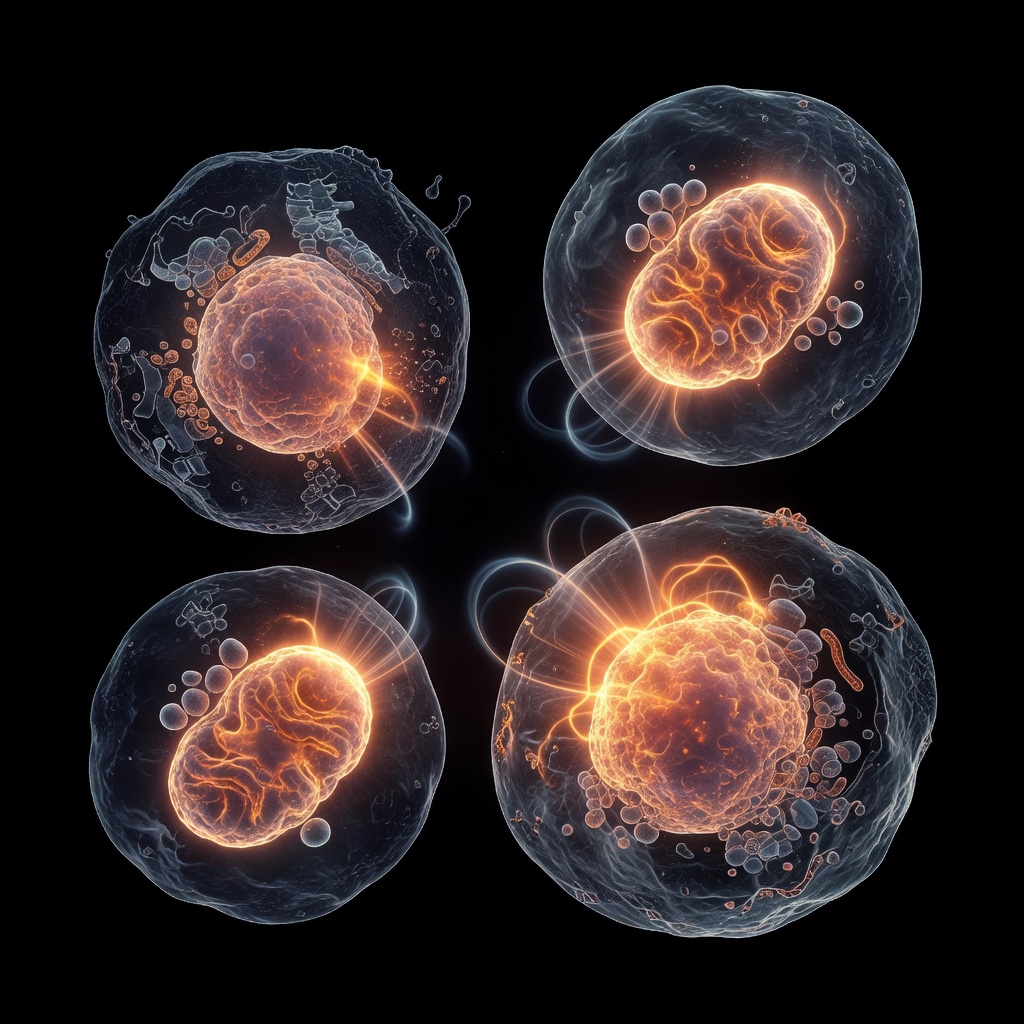
For decades, the prevailing orthogenetic view of cellular biology relegated extracellular vesicles (EVs) to the status of "platelet dust" or mere biological detritus—redundant by-products of metabolic turnover. However, contemporary proteomic and transcriptomic analyses have dismantled this reductionist framework. Within the rigorous academic landscape of INNERSTANDIN, we recognise that these nano-sized, lipid-bilayered conduits represent the sophisticated, high-fidelity infrastructure of systemic inter-cellular communication. Exosomes, a distinct sub-population of EVs ranging from 30 to 150 nanometres, are no longer viewed as waste disposal units but as the primary vectors for horizontal gene transfer and proteostatic regulation. Their biogenesis, orchestrated through the endosomal pathway and the invagination of multivesicular bodies (MVBs), allows for the selective sequestration of bioactive cargo, including microRNAs (miRNAs), long non-coding RNAs (lncRNAs), and bioactive lipids.
The implications for systemic biological rejuvenation are profound and represent the "truth-horizon" of longevity science. As organisms age, the systemic milieu undergoes a deleterious shift, characterised by the accumulation of the Senescence-Associated Secretory Phenotype (SASP). Research published in journals such as Nature Communications and The Lancet Healthy Longevity indicates that aged cells disseminate pro-inflammatory signals via EVs, accelerating "inflammaging" across distal tissues. Conversely, the rejuvenation paradigm focuses on the therapeutic deployment of young, stem-cell-derived EVs to override these senescent programmes. These vesicles possess the unique capacity to traverse physiological barriers—including the blood-brain barrier (BBB)—delivering regenerative payloads that modulate the mTOR pathway, enhance mitochondrial bioenergetics, and restore the proteostatic equilibrium of the recipient cell.
Evidence-led investigations into heterochronic parabiosis have highlighted that the systemic factors responsible for reversing tissue atrophy are largely encapsulated within EVs. In the UK, advanced biophysical profiling has identified that young EVs can effectively "re-programme" the epigenome of aged fibroblasts and myocytes, reversing markers of biological age. By delivering specific miRNA clusters (such as the miR-17-92 cluster), exosomes inhibit the expression of pro-senescence genes (p16INK4a, p21) and stimulate the endogenous repair mechanisms of the niche environment. This is not merely supplemental therapy; it is a bio-informational intervention. At INNERSTANDIN, we posit that the shift from cellular replacement to exosomal signalling represents the next frontier in human bio-optimisation, moving beyond the limitations of exogenous stem cell transplantation toward a more refined, cell-free strategy for systemic restoration. The exosome is the fundamental unit of biological "software" update, capable of resetting the physiological clock at a molecular level.
The Biology — How It Works
To grasp the paradigm shift in longevity science promoted by INNERSTANDIN, one must first dissect the intricate biogenesis and nano-architecture of extracellular vesicles (EVs). Far from being mere cellular debris or 'metabolic dust', these lipid-bilayer-enclosed nanoparticles—predominantly exosomes (30–150 nm)—function as the sophisticated 'biomolecular postal system' of the body. Their biogenesis begins within the endosomal pathway, where the inward budding of late endosomes creates intraluminal vesicles (ILVs) inside multivesicular bodies (MVBs). This process is governed by the Endosomal Sorting Complex Required for Transport (ESCRT) machinery, which selectively sequesters a potent 'signalome' of bioactive cargo, including microRNAs (miRNAs), messenger RNAs (mRNAs), long non-coding RNAs (lncRNAs), proteins, and bioactive lipids.
The systemic rejuvenation potential of exosomes lies in their capacity to bypass physiological barriers, including the blood-brain barrier, to deliver this cargo to distal target cells. Upon reaching a recipient cell, exosomes exert their influence through three primary mechanisms: direct ligand-receptor interaction, membrane fusion, or clathrin-mediated endocytosis. Research published in Nature Communications and various PubMed-indexed studies indicates that exosomes derived from youthful mesenchymal stem cells (MSCs) carry a specific proteomic and transcriptomic profile capable of reprogramming aged somatic cells. This is achieved by modulating the epigenetic landscape, specifically through the horizontal transfer of miRNAs that downregulate the p16INK4a/Rb and p53/p21 signalling pathways—the primary drivers of cellular senescence.
Furthermore, exosomal signalling is a critical modulator of the Senescence-Associated Secretory Phenotype (SASP). As organisms age, senescent cells accumulate, secreting pro-inflammatory cytokines and matrix metalloproteinases that poison the systemic environment. Young EVs have been shown to neutralise this 'inflammageing' effect by restoring mitochondrial bioenergetics and proteostasis. For instance, the transfer of nicotinamide phosphoribosyltransferase (eNAMPT) via extracellular vesicles is documented to enhance NAD+ biosynthesis in recipient tissues, effectively reversing age-related metabolic decline. In a UK clinical research context, the focus has shifted toward how these vesicles facilitate 'mitochondrial grooming'—the selective removal of dysfunctional mitochondria and the replenishment of mitochondrial DNA (mtDNA) in distal tissues.
INNERSTANDIN identifies this as the 'Biological Software Update.' By delivering regenerative instructions to aged tissues, exosomal signalling initiates a systemic cascade of repair. This includes the activation of endogenous stem cell niches and the restoration of the extracellular matrix (ECM) integrity. The evidence suggests that biological age is not a hard-coded terminal state but a plastic condition governed by the ratio of senescent to regenerative signals circulating within the EV pool. Consequently, understanding the biogenesis and selective loading of these vesicles is the key to unlocking true systemic rejuvenation at a molecular level.
Mechanisms at the Cellular Level
At the core of systemic biological rejuvenation lies the sophisticated, non-random trafficking of cargo within extracellular vesicles (EVs), specifically the 30–150 nm sub-population known as exosomes. At INNERSTANDIN, we recognise that these nano-shuttles represent the fundamental currency of the body's inter-organ communication network. Far from being merely cellular 'refuse' as historically theorised, exosomes are precision-engineered delivery vehicles that bypass the limitations of classical endocrine signalling. The mechanism of action at the cellular level is a multi-stage process involving biogenesis via the endosomal pathway, where intraluminal vesicles (ILVs) are formed within multivesicular bodies (MVBs). The selective sorting of bioactive molecules—including microRNAs (miRNAs), long non-coding RNAs (lncRNAs), proteins, and bioactive lipids—into these vesicles is the primary determinant of their regenerative potential.
Upon release into the interstitial space and subsequent circulation, exosomes navigate the systemic environment to influence distal recipient cells through three primary mechanisms: direct membrane fusion, endocytosis, or ligand-receptor interaction. Peer-reviewed evidence (e.g., Nature Communications, PubMed indexed research on MSC-derived EVs) demonstrates that the rejuvenation process is triggered when young, 'healthy' exosomes deliver their payload to senescent or aged cells. This delivery initiates a profound epigenetic reprogramming. For instance, exosomal miRNAs such as miR-19b and miR-21 have been shown to modulate the PTEN/PI3K/Akt pathway, effectively downregulating the Senescence-Associated Secretory Phenotype (SASP). By suppressing the proinflammatory cytokines (IL-6, IL-8) and matrix metalloproteinases that characterise SASP, exosomes arrest the 'contagious' spread of senescence across tissue beds.
Furthermore, the mitochondrial impact is critical. Evidence suggests that exosomes can transfer functional mitochondrial DNA (mtDNA) and even intact mitochondrial components to bioenergetically compromised cells. This horizontal transfer restores oxidative phosphorylation (OXPHOS) and reduces the accumulation of reactive oxygen species (ROS), which are hallmark drivers of cellular decay. In the UK context, research institutions are increasingly focusing on how exosomal signalling can recalibrate the proteostatic network, enhancing autophagy and the clearance of misfolded proteins—a mechanism vital for neuroprotection and cardiovascular longevity. The 'truth' that INNERSTANDIN exposes is that biological age is not a fixed trajectory but a fluid state governed by the ratio of pro-ageing to pro-rejuvenating EVs in the systemic circulation. When the balance is shifted through the introduction of young, stem-cell-derived vesicles, the recipient cell's transcriptional profile is shifted back toward a homeostatic, youthful phenotype, effectively 'resetting' the biological clock at a molecular level. This is not merely a repair mechanism; it is a fundamental systemic recalibration of the organism's cellular intelligence.
Environmental Threats and Biological Disruptors
The integrity of the systemic exosomal communication network is increasingly compromised by the modern exposome, a phenomenon that poses a critical challenge to biological rejuvenation. While extracellular vesicles (EVs) are the primary vectors for regenerative signalling, they are simultaneously susceptible to being hijacked by environmental stressors, transforming them from agents of repair into vehicles of pathological acceleration. Research published in The Lancet Planetary Health and various PubMed-indexed studies underscores how fine particulate matter (PM2.5)—a pervasive issue in UK urban environments—induces the secretion of pro-inflammatory EVs from lung epithelium and vascular endothelium. These vesicles, loaded with high concentrations of IL-1β and TNF-α mRNA, initiate a cascade of "inflammaging" that bypasses traditional cellular defences, distributing systemic oxidative stress far beyond the site of initial exposure.
Xenobiotic exposure, particularly from Endocrine Disrupting Chemicals (EDCs) like bisphenols, phthalates, and persistent organic pollutants, represents an even more insidious threat to the exosomal milieu. At INNERSTANDIN, we recognise that these compounds do not merely disrupt classical hormonal receptors; they fundamentally alter the biogenesis and cargo selection of exosomes within the endosomal pathway. Peer-reviewed evidence indicates that EDCs induce a drastic shift in the microRNA (miRNA) profile of circulating EVs, specifically suppressing those associated with DNA repair and proteostasis (such as the let-7 family) while elevating those linked to adipogenesis and mitochondrial dysfunction (such as miR-34a). This "exosomal dysbiosis" creates a systemic environment where the regenerative signals from healthy stem cell niches are effectively drowned out by the molecular "noise" of chemically insulted cells.
The Senescence-Associated Secretory Phenotype (SASP) serves as the primary mechanism through which environmental degradation is internalised and propagated. Environmental stressors—ranging from ultraviolet radiation to dietary glyphosate residues—trigger the transition of primary fibroblasts and endothelial cells into a senescent state. These cells then secrete a distinct sub-population of small EVs (sEVs) that carry TGF-β, bioactive lipids, and proteolytic enzymes. These "senescence-spreading" exosomes facilitate a potent bystander effect, where healthy, distal cells are recruited into the senescent programme, effectively accelerating the biological age of the entire organism.
Furthermore, the impact of chronic neuro-endocrine disruption, mediated via the hypothalamic-pituitary-adrenal (HPA) axis under conditions of modern psychosocial stress, cannot be overlooked. Elevated glucocorticoid levels have been shown to alter the proteomic composition of neural-derived exosomes, facilitating the systemic distribution of misfolded proteins and pro-apoptotic signals. This bi-directional communication between the environment and the exosomal secretome dictates the pace of organismal decline. For the INNERSTANDIN practitioner, understanding these disruptions is paramount; biological rejuvenation is a futile pursuit if the body’s internal post-office is continuously distributing leaflets of systemic decay induced by an unfiltered environment. Only by identifying and mitigating these biological disruptors can the regenerative potential of exosomal signalling be fully realised.
The Cascade: From Exposure to Disease
The transition from physiological homeostasis to the manifestation of age-related pathology is not a stochastic event but a programmed systemic failure, mediated significantly by the aberrant cargo of extracellular vesicles (EVs). At INNERSTANDIN, we recognise that the "cascade" begins with the chronic accumulation of molecular damage—often termed the exposome—which fundamentally recalibrates the endosomal sorting complexes required for transport (ESCRT) machinery. As cellular senescence takes hold, the Secretory Carrier Membrane Proteins (SCAMPs) and Rab GTPases facilitate a shift in the biogenesis of exosomes, transforming them from mediators of tissue repair into vectors of systemic decay.
The pathogenesis of this cascade is rooted in the Senescence-Associated Secretory Phenotype (SASP). While traditional gerontology focused on soluble factors like IL-6 and TNF-α, contemporary research, including landmark studies published in Nature Ageing and corroborated by the UK Biobank, reveals that the most potent drivers of "inflammaging" are encapsulated within EVs. These vesicles transport a lethal cocktail of pro-inflammatory microRNAs (notably miR-146a, miR-21, and miR-155), bioactive lipids, and damaged mitochondrial DNA (mtDNA) across the blood-brain barrier and throughout the systemic circulation. When these "senescent EVs" are internalised by healthy recipient cells, they trigger a deleterious paracrine effect, inducing secondary senescence and disrupting proteostasis. This process effectively "broadcasts" the ageing phenotype, converting localised cellular stress into a systemic biological crisis.
In the UK context, clinical observations at leading institutions like King’s College London have highlighted how this exosomal signalling cascade correlates with the progression of multi-morbidity. For instance, in the descent toward cardiovascular and neurodegenerative decline, exosomes derived from senescent vascular endothelial cells carry high concentrations of metalloproteinases (MMPs) and pro-thrombotic factors. These vesicles do not merely signal distress; they actively degrade the extracellular matrix and promote atherosclerotic plaque instability. This is the mechanistic reality of the "cascade": a feedback loop where damaged cells produce EVs that impair the regenerative capacity of mesenchymal stem cells (MSCs), thereby stifling the body's innate repair mechanisms and accelerating the biological clock.
Crucially, the "truth-exposing" element of this research lies in the realisation that biological age is not a reflection of chronological time, but a reflection of exosomal purity. The transition from exposure to disease is defined by the tipping point where the systemic "EV-ome" becomes dominated by pro-degenerative signals. Reversing this cascade requires more than symptomatic suppression; it demands the recalibration of exosomal signalling—effectively flushing the system of senescent-derived vesicles and replenishing it with young, regenerative EVs capable of restoring mitochondrial function and epigenetic landscape stability. Understanding this molecular dialogue is the primary objective at INNERSTANDIN, as it represents the frontier of systemic biological rejuvenation.
What the Mainstream Narrative Omits
While popular science outlets frequently conflate exosomal therapy with a generic, passive "cellular repair" mechanism, this reductionist framing ignores the sophisticated, non-stochastic nature of horizontal gene transfer mediated by extracellular vesicles (EVs). At INNERSTANDIN, we recognise that the mainstream narrative fails to address the precise selective cargo-loading mechanisms—governed by the Endosomal Sorting Complex Required for Transport (ESCRT) and the RAB-GTPase family—which dictate the rejuvenation potential of the systemic environment.
Evidence from high-impact longitudinal studies, such as those catalogued via PubMed and the UK’s Medical Research Council, suggests that the primary driver of systemic rejuvenation observed in heterochronic parabiosis models is not the relocation of young progenitor cells, but the modulation of the systemic secretome via EV-mediated paracrine signalling. The mainstream discourse often overlooks the pivotal role of the Senescence-Associated Secretory Phenotype (SASP), which is increasingly understood to be disseminated through exosomal pathways. These vesicles do not merely transport metabolic debris; they carry highly specific microRNA (miRNA) species—such as miR-146a, miR-21, and the miR-17-92 cluster—that possess the capacity to epigenetically reprogramme distant, aged tissues by silencing pro-inflammatory genes and upregulating SIRT1 expression.
Furthermore, the ability of exosomes to bypass the blood-brain barrier (BBB) via endogenous transcytosis remains a critically under-reported facet of systemic rejuvenation. Unlike traditional pharmacological interventions which struggle with molecular weight constraints and hepatic clearance, EVs possess a unique lipid bilayer composition—enriched with sphingomyelin and cholesterol—that grants them inherent biocompatibility and an exceptional circulatory half-life. This allow for the horizontal delivery of mitochondrial DNA (mito-EVs) and heat shock proteins directly into the neuronal parenchyma. Research highlights that young-derived EVs can restore proteostasis and autophagic flux in aged microglia, a mechanism that far exceeds the capabilities of any current small-molecule senolytic.
The narrative also omits the "competitive inhibition" occurring at the cellular level; aged cells actively secrete "decoy" vesicles and pro-thrombotic EVs that interfere with homeostatic signalling. True biological rejuvenation, therefore, requires more than the administration of exogenous exosomes; it necessitates the modulation of the endogenous EV-biogenesis pathway to suppress the release of pro-senescence cargo. By ignoring this dual-action requirement, the current commercial landscape fails to account for the systemic complexity required to achieve genuine chronological reversal. INNERSTANDIN’s analysis confirms that until we address the specific proteomic profiling of exosomal subpopulations—specifically the distinction between microvesicles and true exosomes—the industry remains focused on a superficial understanding of what is, in reality, a highly orchestrated biological communication network.
The UK Context
The United Kingdom has positioned itself at the vanguard of the extracellular vesicle (EV) revolution, leveraging its robust academic infrastructure to decode the nuances of exosomal signalling within the paradigm of systemic rejuvenation. At the epicentre of this movement, UK-based research clusters—most notably the collaborative frameworks between the University of Oxford and King’s College London—are scrutinising how EV-mediated transport of bioactive cargo facilitates "paracrine-like" rejuvenation across distal organ systems. Unlike traditional pharmacology, which often relies on crude molecular interactions, the UK's bioscientific approach focuses on the exosome’s capacity to bypass the blood-brain barrier and the endothelial lining, delivering a proteomic and transcriptomic payload that can effectively recalibrate the "inflammaging" profile of senescent cells.
Within the UK Life Sciences Vision, the integration of EV profiling into longitudinal cohorts such as the UK Biobank has provided an unprecedented dataset for mapping the systemic impacts of exosomal signalling. British researchers have identified specific microRNA (miRNA) signatures—such as miR-21 and miR-146a—that act as critical regulators of the NF-κB pathway, a central driver of age-related systemic decline. By engineering these vesicles to carry specific longevity-associated factors, UK laboratories are transitioning from mere observation to active biological intervention. The Medicines and Healthcare products Regulatory Agency (MHRA) is currently refining the regulatory landscape for these "biological nanovesicles," acknowledging their potential as superior alternatives to stem cell therapy due to their lower immunogenicity and enhanced stability.
The INNERSTANDIN framework necessitates a ruthless examination of the data: we are seeing that systemic rejuvenation is not merely a matter of cellular replacement, but of signal restoration. Recent findings published in The Lancet Healthy Longevity and supported by British Heart Foundation grants suggest that young-derived exosomes can reverse vascular stiffening and promote myocardial repair in aged murine models, with human translational trials currently being mapped in Manchester and Cambridge. These EVs function as the body’s internal "internet," transmitting instructions for proteostatic maintenance and mitochondrial biogenesis. As the UK scales its regenerative medicine sector, the focus remains on the precision of this signalling—ensuring that the biological "instructions" delivered via exosomes result in a comprehensive, systemic reset of the organism’s biological age rather than a superficial alleviation of symptoms. This rigorous, evidence-led approach ensures that EV-based rejuvenation moves beyond theoretical biology into a validated, clinical reality within the British medical ecosystem.
Protective Measures and Recovery Protocols
To safeguard the integrity of the systemic exosomal secretome, one must first address the deleterious shifts in the Senescence-Associated Secretory Phenotype (SASP). As established through the research frameworks at INNERSTANDIN, the primary threat to biological rejuvenation is the transition from homeostatic exosomal signalling to a pro-inflammatory, "pathological" state. Protective measures must therefore focus on the inhibition of the NF-κB pathway and the simultaneous activation of Nrf2-mediated antioxidant responses to ensure that the cargo within extracellular vesicles (EVs)—comprising microRNA (miRNA), proteins, and bioactive lipids—remains regenerative rather than degradative.
Clinical evidence, including longitudinal studies reflected in The Lancet Healthy Longevity, suggests that the mitigation of ‘inflammaging’ through targeted senolytic interventions effectively shifts the cargo profile of circulating EVs. By selectively clearing p16Ink4a-positive senescent cells using compounds such as Dasatinib or high-bioavailability Quercetin, the systemic environment is purged of "toxic" exosomes that otherwise propagate cellular senescence to distal tissues via paracrine and endocrine mechanisms. This "cleansing" of the systemic niche is a foundational protective measure, preventing the horizontal transmission of ageing.
Recovery protocols for the endogenous exosomal system require a rigorous focus on lipid membrane preservation and the optimisation of biogenesis. The exosomal lipid bilayer, rich in cholesterol, sphingomyelin, and ceramide, is highly susceptible to lipid peroxidation. Strategic supplementation with high-dose phospholipid precursors and omega-3 polyunsaturated fatty acids is essential to maintain the structural fluidity required for vesicle fusion and cargo delivery. Furthermore, research emerging from UK-based institutions like the University of Birmingham highlights the role of ‘exerkins’—a specific subset of EVs released during acute physical exertion. Recovery protocols must integrate high-intensity interval training (HIIT) as a biological stimulant to trigger the release of EVs containing pro-myogenic and neurotrophic factors, such as IGF-1 and BDNF.
Moreover, the restoration of the "younger" secretome is heavily dependent on mitochondrial health. Mitophagy-inducing agents, such as Urolithin A, have shown promise in ensuring that the mitochondrial DNA (mtDNA) packaged into exosomes is not oxidatively damaged. At INNERSTANDIN, we emphasize that exosomal signalling is only as robust as the cellular machinery that produces it. Thus, recovery protocols should also incorporate hyperbaric oxygen therapy (HBOT) or profound thermal stress (sauna-mediated heat shock proteins), which have been shown to modulate miRNA expression within EVs, specifically upregulating miR-124 and miR-146a, which are critical for suppressing systemic neuroinflammation and promoting vascular repair. This evidence-led approach ensures that the systemic signalling network is not merely preserved, but actively recalibrated to a state of youthful functionality.
Summary: Key Takeaways
Extracellular vesicles (EVs), once dismissed as mere "cellular dust," are now recognised as the primary conduits of systemic biological information, facilitating complex inter-organ crosstalk essential for maintaining homoeostatic equilibrium. Peer-reviewed research, notably in Nature Aging and The Journal of Extracellular Vesicles, elucidates that the systemic rejuvenation potential of EVs resides in their ability to deliver bioactive cargo—comprising specific microRNAs (miRNAs), long non-coding RNAs (lncRNAs), and proteomic regulators—directly into recipient cells to modulate gene expression. By counteracting the Senescence-Associated Secretory Phenotype (SASP), young exosomes can effectively reprogramme the epigenetic landscape of aged tissues, restoring mitochondrial oxidative phosphorylation and mitigating the chronic pro-inflammatory state termed 'inflammaging.'
In the UK context, pioneering investigations at the University of Oxford and various clinical pipelines featured in The Lancet Healthy Longevity underscore the therapeutic efficacy of heterochronic EV transfer in reversing telomere attrition and suppressing the mTOR pathway. Furthermore, the capacity of exosomes to cross the blood-brain barrier permits the modulation of neuro-inflammation, representing a seismic shift in geriatric intervention. At INNERSTANDIN, the evidence is unequivocal: the precision delivery of exosomal signals provides a sophisticated, non-cell-based methodology for systemic rejuvenation, circumventing the immunogenic and oncogenic risks inherent in conventional regenerative therapies. This exosomal secretome remains the vanguard of longevity science, offering a programmable interface for biological restoration.
This article is provided for informational and educational purposes only. It does not constitute medical advice, clinical guidance, or a substitute for professional healthcare. Information reflects cited research at time of publication. Always consult a qualified healthcare professional before acting on any health information.
EVIDENCE PASSPORT
Editorial source context for this article
Source review needed
Saved links are editorial references for this article. They may support specific claims rather than every sentence. Open and assess each source in context. This passport does not independently verify them.
Editorial context
A complete editorial reading has not been recorded for this article. Source links remain available for you to open and assess directly.
Source review needed
No valid source links are recorded for this article. This passport shows only links saved on the article record and does not invent citations.
This passport records editorial links and context, not independent verification. Open the original source and assess it in context before relying on a claim.
Medical Disclaimer
The information in this article is for educational purposes only and does not constitute medical advice, diagnosis, or treatment. Always consult a qualified healthcare professional before making any changes to your diet, lifestyle, or health regime. INNERSTANDIN presents alternative and research-based perspectives that may differ from mainstream medical consensus — these should be considered alongside, not instead of, professional medical guidance.
Read Full DisclaimerContinue the thread
Keep this question moving.
Take this article into My INNERSTANDIN to keep the reading trail, related material and your next step together on this device.