
Fascial Adhesions Decoded
Updated May 2026
Adhesions are the body's internal 'glue' gone wrong, sticking layers of tissue together and restricting blood flow. This article explains the biochemistry of adhesion formation and reversal.
Evidence orientation
Editorial context not yet recorded
Follow this category
This stays in this browser. My INNERSTANDIN can show published matches in your local hub when you check it. It does not send email, push, or alert notifications.
Local learning review
A private browser aid for revisiting ideas. It is not an alert or a health recommendation.
Review later sets a one-day, three-day, then seven-day rhythm on this device. Choose it only when you want to revisit this article.
Overview
For decades, the conventional medical establishment has viewed the human body through a reductionist lens, treating muscles, bones, and organs as discrete, isolated components. In this fragmented paradigm, the fascia—the pervasive, three-dimensional spider-web of connective tissue that envelopes every muscle fibre, nerve, and organ—was dismissed as mere "packaging material." This oversight represents one of the most significant blind spots in modern biology.
We now understand that the fascia is not just a passive wrapping; it is a sophisticated, fluid-filled, biotensegrity network and a sensory organ of the highest order. At the heart of most chronic pain, limited mobility, and systemic dysfunction lies a phenomenon known as fascial adhesions.
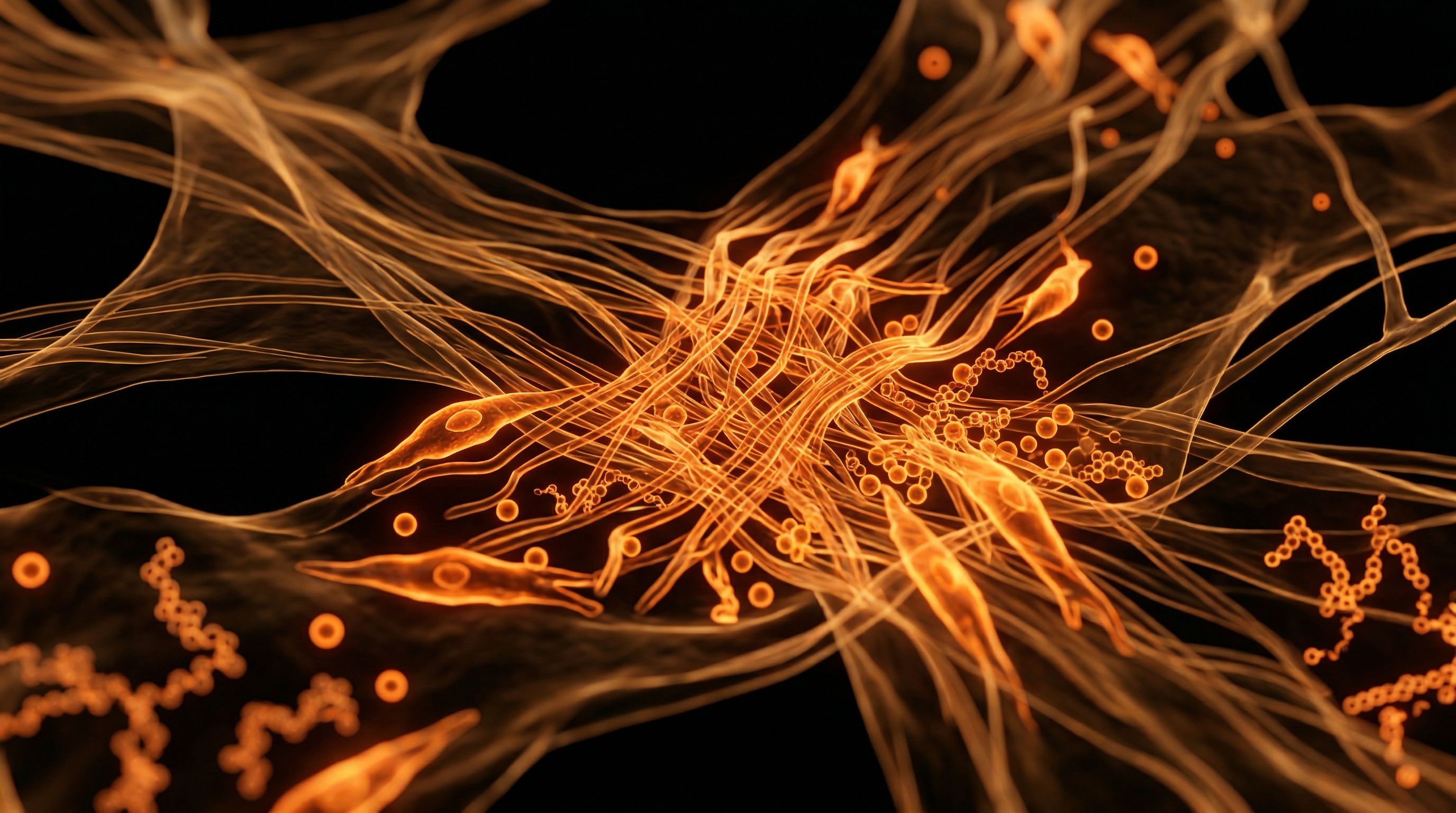
Adhesions are, quite literally, the body’s internal "glue" gone wrong. They are sites where layers of tissue that should glide effortlessly over one another become fused, bonded by dense, haphazardly arranged collagen fibres and dehydrated ground substance. This "stiction" creates a cascade of biological failure: it restricts blood flow, traps metabolic waste, compresses nerves, and creates a state of chronic ischaemia (oxygen deprivation).
This article aims to decode the biochemistry of these adhesions, exposing how modern environmental stressors and a lack of specific mechanical stimulus trigger a pathological hardening of our internal architecture. We will move beyond the superficial "stretching" advice to examine the molecular triggers of fibrosis and the revolutionary protocols required to restore the fascial glide.
The Biology — How It Works
To understand adhesions, one must first understand the healthy state of the Extracellular Matrix (ECM). In a healthy body, fascial layers are separated by a thin film of lubricant, primarily composed of hyaluronan (hyaluronic acid) and water. This allows for what is known as laminar glide—the ability of a muscle to contract without dragging the skin or the adjacent muscle with it.
The Ground Substance and Thixotropy
The space between our cells is filled with a gelatinous material called ground substance. This substance is rich in glycosaminoglycans (GAGs), which are highly polar and attract water. Fascia exhibits a property known as thixotropy: it becomes more fluid when moved (agitated) and more solid (gel-like) when sedentary.
When movement is restricted, or when the body is subjected to chronic inflammation, this ground substance thickens. The hyaluronan molecules, which usually act as a "super-lubricant," begin to polymerize and cross-link, turning from a slippery oil into a sticky resin.
The Architecture of the Glide
Healthy fascia is organised in a lattice-like structure that allows for multi-directional movement. However, when an adhesion forms, the body initiates a "micro-scarring" process.
- Type I Collagen: The primary structural protein, providing tensile strength.
- Type III Collagen: Often called "granulation tissue," this is the first responder in injury, but it is weaker and more chaotic than Type I.
- Elastin: Provides the "snap back" or elasticity.
In an adhesion, the ratio of Type III to Type I collagen shifts, and the fibres lose their parallel alignment. They become a "tangle" of protein strands that physically lock the layers together.
Key Fact: Recent research using high-resolution endoscopies in living subjects has shown that the fascia is a "continuum" of fluid-filled micro-vacuoles. Adhesions represent a "collapsing" of these vacuoles, leading to a total loss of internal hydraulic volume.
Mechanisms at the Cellular Level
The transition from fluid movement to "stuck" tissue is governed by a specific set of cellular actors, primarily the fibroblast.
The Fibroblast vs. The Myofibroblast
The fibroblast is the architect of the connective tissue, constantly secreting collagen and enzymes to maintain the ECM. However, under conditions of mechanical stress, trauma, or chemical inflammation, fibroblasts undergo a dramatic transformation into myofibroblasts.
Myofibroblasts contain alpha-smooth muscle actin (α-SMA), giving them the ability to contract like muscle cells. While essential for wound healing (to pull the edges of a cut together), when myofibroblasts become "persistently activated" in the fascia, they create a permanent state of tension. They literally "cinch" the fascial web, pulling it tight and creating the physical foundation of an adhesion.
The Role of TGF-Beta 1
The primary signaling molecule for this transformation is Transforming Growth Factor-beta 1 (TGF-β1). In a healthy recovery cycle, TGF-β1 levels spike and then recede. In the modern "pro-inflammatory" body, TGF-β1 remains elevated. This creates a feedback loop:
- Mechanical tension triggers the release of TGF-β1.
- TGF-β1 signals fibroblasts to become myofibroblasts.
- Myofibroblasts create more tension.
- The tension signals for more TGF-β1.
This is the biochemical "vortex" that leads to systemic fibrosis.
Mechanotransduction: Cells "Feeling" the Glue
Through a process called mechanotransduction, our cells "sense" the stiffness of their environment. When the fascia becomes adhered and stiff, the cells within that tissue receive a signal that they are under threat. This causes the cell nucleus to alter gene expression, favouring the production of more inflammatory cytokines and more "sticky" collagen, further entrenching the adhesion.
Environmental Threats and Biological Disruptors
Why are fascial adhesions reaching epidemic proportions in the 21st century? It is not merely a lack of exercise; it is a fundamental shift in our biological environment.
The Glycation Crisis
One of the most overlooked drivers of fascial adhesions is the consumption of refined sugars and the subsequent formation of Advanced Glycation End-products (AGEs). Through a non-enzymatic reaction, sugar molecules "caramelise" the collagen fibres in our fascia. This creates cross-links between protein strands that are incredibly difficult for the body to break down. This "biological rusting" makes the fascia brittle and prone to micro-tearing and subsequent adhesion.
Dehydration and the "Structure" of Water
It is a mistake to think that drinking more tap water solves fascial dehydration. The water within the fascia must be in a "structured" or Exclusion Zone (EZ) state—a fourth phase of water that is more viscous and carries a negative charge.
- EMF Exposure: High levels of non-ionising radiation from mobile devices and Wi-Fi have been shown to disrupt the structural integrity of water molecules within the interstitial fluid.
- Fluoridation: The presence of fluoride in UK water supplies can interfere with the mineralisation of the ECM, potentially leading to "calcified" adhesions.
Sedentary Ischaemia
The human body is designed for constant, varied movement. Modern life—specifically "The Chair"—creates prolonged ischaemic pressure on the fascia of the posterior chain (glutes, hamstrings, lower back). When blood flow is squeezed out of the fascia for hours at a time, the hyaluronan thickens, and the layers begin to "bond" through simple lack of shear force.
Callout: Research indicates that sitting for more than 6 hours a day increases the "viscosity" of the deep fascia by up to 20%, significantly increasing the risk of chronic "low back pain" that is actually fascial in origin.
The Cascade: From Exposure to Disease
An adhesion is rarely a localised problem; it is a systemic event. Because the fascia is a single, continuous web, a "tangle" in the fascia of the foot (plantar fasciitis) can pull on the fascia of the calf, which pulls on the hamstring, eventually manifesting as neck pain or even migraines. This is known as compensatory strain.
The Ischaemic Cycle
Once an adhesion forms, it compresses the vasa nervorum (the blood vessels that supply the nerves) and the capillary beds within the fascia. This leads to:
- Hypoxia: Lowered oxygen levels in the tissue.
- Acidosis: The buildup of lactic acid and metabolic waste (CO2) that cannot be drained by the lymphatic system.
- Pain Sensitization: The nerves trapped in the "glue" become hypersensitive, firing pain signals even in response to normal movement (allodynia).
The Lymphatic Blockage
The fascia and the lymphatic system are inextricably linked. The lymph vessels are literally "embedded" in the fascial layers. When adhesions lock these layers together, the "lymphatic pump" (which relies on muscle movement and fascial glide) fails. This leads to interstitial stagnation, where toxins are trapped in the tissue, further damaging the collagen and creating a toxic "sludge" that promotes more adhesions.
What the Mainstream Narrative Omits
The current medical model ignores fascial adhesions for a simple reason: they are invisible to standard imaging.
X-rays only show bone. Traditional MRIs are designed to look for "surgical" issues like disc herniations or ligament tears. Adhesions are often too thin to be seen on a standard scan, yet they are powerful enough to exert pressures of up to 2,000 pounds per square inch on internal structures.
The Surgery Paradox
When a patient presents with chronic pain, they are often funneled toward surgery. However, surgery is the ultimate "adhesion generator." Any surgical incision, no matter how "minimally invasive," cuts through the fascial layers. The body’s natural response to this trauma is to flood the area with "emergency glue" (fibrosis).
- Many "failed back surgeries" are not due to the disc, but due to the massive post-surgical adhesions that fuse the nerves to the surgical scar.
The "Nerve" Misconception
Patients are often told they have a "pinched nerve." In many cases, the nerve isn't being pinched by a bone or a disc; it is being strangled by adhered fascia. "Nerve flossing" or neural gliding exercises often fail because the "conduit" (the fascial sheath) through which the nerve should slide has become a solid block of glue.
The UK Context
In the United Kingdom, the approach to fascial health is particularly lagging. The NHS "Standard of Care" for musculoskeletal issues typically involves a "wait and see" approach, followed by NSAIDs (non-steroidal anti-inflammatory drugs) and, eventually, rudimentary physiotherapy.
The NHS Blind Spot
The UK’s medical training rarely includes the latest research on the interstitium (the fluid-filled space between tissues). Consequently, British patients are frequently diagnosed with "non-specific back pain" or "fibromyalgia"—labels that describe the symptoms without addressing the underlying fascial pathology.
Environmental Factors in Britain
- The "Grey Skies" Deficiency: Vitamin D3 is a potent modulator of the TGF-β1 pathway. The chronic Vitamin D deficiency in the UK population promotes a pro-fibrotic environment.
- Urban Toxicity: Exposure to air pollution in major UK cities like London and Manchester increases systemic oxidative stress, which accelerates the "cross-linking" of fascial proteins.
- The "Stiff Upper Lip" Posture: Cultural tendencies toward suppressed emotional expression often manifest as "holding patterns" in the diaphragm and pelvic floor fascia, leading to deep-seated core adhesions.
Statistic: It is estimated that 1 in 4 adults in the UK suffer from chronic pain. A significant percentage of these cases—perhaps as high as 60%—are primary fascial dysfunctions that are currently being mismanaged by the traditional medical system.
Protective Measures and Recovery Protocols
Reversing adhesions requires more than just "stretching." Since the tissue has become physically and chemically altered, a multi-pronged "biochemical and mechanical" approach is necessary.
1. Enzymatic Adhesiolysis
One of the most effective ways to break down internal "glue" is from the inside out using proteolytic enzymes.
- Serrapeptase and Nattokinase: These enzymes, taken on an empty stomach, enter the bloodstream and act as "biological scavengers," specifically targeting and dissolving non-living fibrin and scar tissue without harming healthy tissue.
2. Mechanical Shearing (Not Just Stretching)
Static stretching often only pulls on the "loose" parts of the fascia, bypassing the "stuck" adhesions. To break an adhesion, you need shear force.
- Myofascial Release (MFR): Using tools (foam rollers, lacross balls) or manual therapy to "pin" the tissue and then move the joint through its range of motion. This "sliding under pressure" is what physically breaks the cross-links.
- Structural Integration: Techniques like Rolfing or the Stecco Method focus specifically on the "glide planes" between muscles.
3. Restoring the Hyaluronan Glide
To "re-grease" the fascia, you must change the viscosity of the hyaluronan.
- Hydration + Electrolytes: Water alone is insufficient. You need magnesium, potassium, and sodium to allow the cells to actually "hold" the water within the ECM.
- Heat and Vibration: Whole-body vibration therapy and infrared saunas can help "melt" the thickened ground substance, moving it from a "gel" state back to a "sol" (fluid) state.
4. Anti-Glycation Nutrition
To prevent new adhesions from forming:
- Eliminate Seed Oils and Refined Sugars: These are the primary drivers of the "collagen caramelisation" mentioned earlier.
- Vitamin C and Lysine: These are the essential building blocks for healthy collagen synthesis.
- Glucosamine and Chondroitin: While often associated with joints, these are vital for maintaining the "slickness" of the fascial ground substance.
5. Movement Variability
The body builds adhesions in response to repetitive, predictable stress. To keep the fascia "alive" and responsive:
- Engage in multi-planar movement (e.g., Yoga, Tai Chi, Animal Flow). Moving in "spirals" rather than just linear planes (like a treadmill) forces the fascial web to stay adaptable and lubricated in all 360 degrees of motion.
Summary: Key Takeaways
The "hidden" world of fascial adhesions represents the next frontier in human performance and chronic disease reversal. By understanding that we are essentially a "fluid-filled crystalline matrix," we can stop treating our bodies like machines made of parts and start treating them like living ecosystems.
- Adhesions are the result of biochemical stagnation: Lack of movement and poor nutrition turn our internal lubricant into glue.
- The Myofibroblast is the key cellular driver: Chronic stress and inflammation keep these "contraction cells" turned on, leading to permanent stiffness.
- Standard imaging is inadequate: Do not assume your fascia is healthy just because an MRI "looks normal."
- Recovery requires a dual approach: You must mechanically "shear" the tissue while biochemically "dissolving" the fibrin with enzymes and proper hydration.
- Movement is Medicine: But only if that movement is varied, mindful, and designed to restore the fascial glide.
For the seeker of true health, the message is clear: the "glue" that binds us can be dissolved, but only if we address the biology of the fascia with the depth and respect it deserves. INNERSTANDING the web is the first step toward total physical liberation.
This article is provided for informational and educational purposes only. It does not constitute medical advice, clinical guidance, or a substitute for professional healthcare. Information reflects cited research at time of publication. Always consult a qualified healthcare professional before acting on any health information.
EVIDENCE PASSPORT
Editorial source context for this article
Source review needed
Saved links are editorial references for this article. They may support specific claims rather than every sentence. Open and assess each source in context. This passport does not independently verify them.
Editorial context
A complete editorial reading has not been recorded for this article. Source links remain available for you to open and assess directly.
Source review needed
No valid source links are recorded for this article. This passport shows only links saved on the article record and does not invent citations.
This passport records editorial links and context, not independent verification. Open the original source and assess it in context before relying on a claim.
Medical Disclaimer
The information in this article is for educational purposes only and does not constitute medical advice, diagnosis, or treatment. Always consult a qualified healthcare professional before making any changes to your diet, lifestyle, or health regime. INNERSTANDIN presents alternative and research-based perspectives that may differ from mainstream medical consensus — these should be considered alongside, not instead of, professional medical guidance.
Read Full DisclaimerContinue the thread
Keep this question moving.
Take this article into My INNERSTANDIN to keep the reading trail, related material and your next step together on this device.