
Fascial Rigidity and the UK Mental Crisis
Updated April 2026
Evidence suggests that the thickening of fascial tissue is a physical byproduct of the UK's burgeoning mental health crisis. We explore the feedback loop between psychological distress and the densification of connective tissue.
Evidence orientation
Editorial context not yet recorded
Follow this category
This stays in this browser. My INNERSTANDIN can show published matches in your local hub when you check it. It does not send email, push, or alert notifications.
Local learning review
A private browser aid for revisiting ideas. It is not an alert or a health recommendation.
Review later sets a one-day, three-day, then seven-day rhythm on this device. Choose it only when you want to revisit this article.
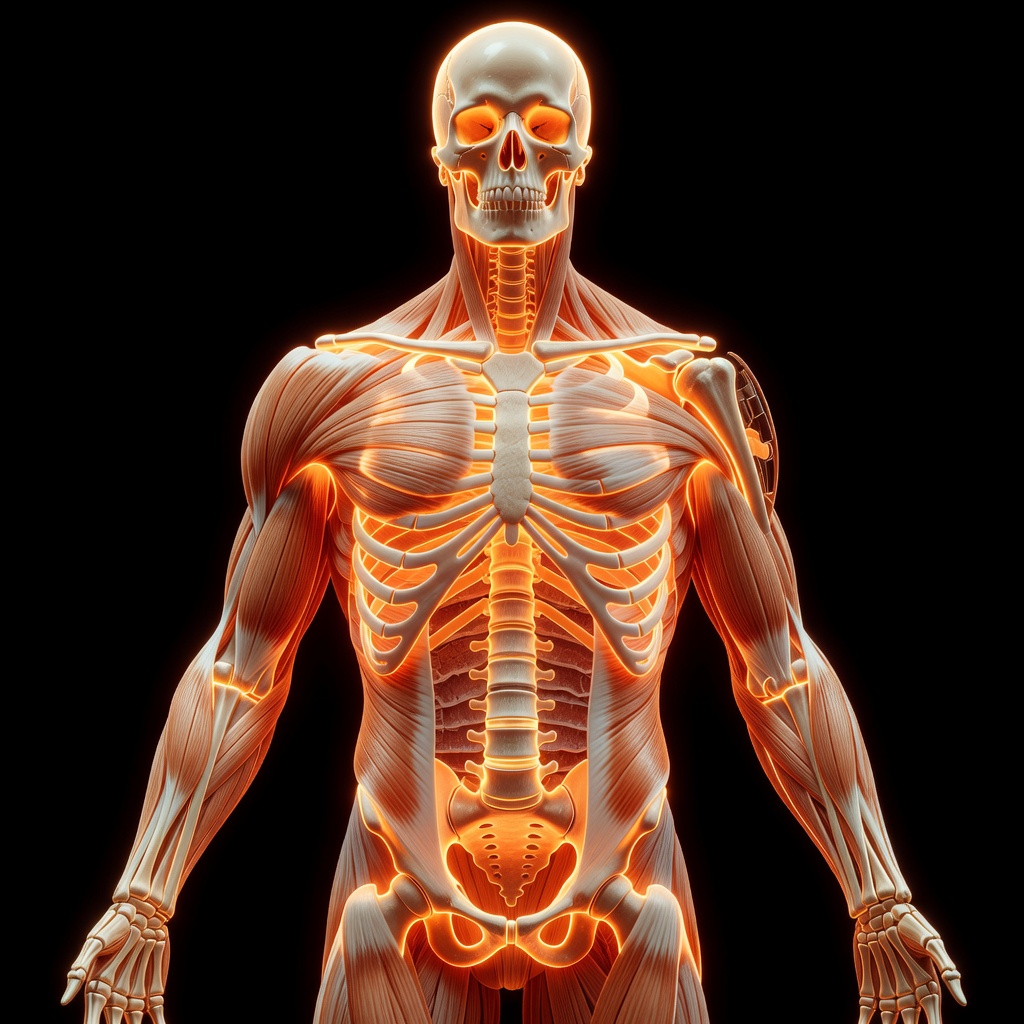
The United Kingdom is currently weathering a psychological storm of unprecedented proportions. While mainstream discourse remains hyper-focused on neurochemical imbalances and cognitive-behavioural interventions, a silent, structural epidemic is being overlooked. This crisis is not merely "in the head"—it is woven into the very fabric of the British physique. We are witnessing the manifestation of fascial rigidity, a state where the body’s connective tissue system becomes a calcified cage, trapping the nervous system in a perpetual loop of distress.
To understand the UK mental health crisis, we must move beyond the brain and into the extracellular matrix. We must acknowledge that the "Stiff Upper Lip" is not just a cultural metaphor; it is a physiological pathology.
Overview
Fascia is the body’s organ of form. It is a continuous, three-dimensional web of connective tissue that envelopes every muscle, bone, nerve, artery, and vein, as well as all of our internal organs. Traditionally dismissed by anatomists as "scrap tissue" to be discarded during dissection, modern biophysics reveals fascia to be a sophisticated, liquid-crystal communication network.
In a healthy state, fascia is fluid, elastic, and highly responsive. It allows for the effortless glide of tissues and the rapid transmission of mechanical and electrical signals. However, under the weight of chronic stress, environmental toxins, and unresolved trauma, this system undergoes a profound transformation. It hardens. It thickens. It loses its "thixotropic" quality (the ability to shift from a gel-like state to a fluid state).
The UK mental health crisis is, at its core, a crisis of biological architecture. When the fascia loses its elasticity, the human being loses their capacity for emotional regulation, cognitive flexibility, and physiological resilience.
This article exposes the biological mechanisms by which fascial rigidity drives the British mental health epidemic. We will explore how the "cellular memory" of trauma is stored not in neurons, but in the collagenous fibres of the body, and why traditional talk therapy often fails when the physical structure remains locked in a defensive posture.
The Biology
To grasp the magnitude of fascial influence, one must understand its composition. Fascia is composed of three primary elements: collagen fibres (providing strength), elastin fibres (providing elasticity), and the ground substance (a gel-like fluid that serves as a lubricant and transport medium).
The Living Matrix
Fascia functions as a Living Matrix. It is the environment in which our cells live. It is not merely a wrapping; it is a sensory organ with a nerve density that rivals the skin. Recent research suggests that the fascia contains up to six times more sensory neurons than muscle tissue, making it our primary organ of interoception—the ability to feel the internal state of the body.
Tensegrity: The Law of Structure
The human body operates on the principle of biotensegrity (biological tensional integrity). In a healthy body, tension is distributed evenly across the fascial web. When one area becomes rigid—due to a desk-bound lifestyle in London’s financial district or the repetitive strain of manual labour in the North—the entire system is pulled out of alignment. This structural "drag" creates a constant background noise of low-grade pain and "threat signals" sent to the brain.
The Piezoelectric Effect
Fascia is piezoelectric. When it is moved and stretched, it generates a small electrical charge. This charge is essential for cellular repair and the maintenance of the body's bio-electric field. When fascia becomes rigid, this electrical generation ceases. The body becomes "electrically dark," leading to a stagnation of energy that mirrors the lethargy and hopelessness found in clinical depression.
Mechanisms at the Cellular Level
The transition from a fluid, healthy fascial system to a rigid, "traumatised" one occurs through specific cellular pathways. This is the point where psychology becomes biology.
Myofibroblasts: The Contraction of Fear
Within the fascial layers reside specialised cells called myofibroblasts. Unlike regular fibroblasts, which simply produce collagen, myofibroblasts have the ability to contract—much like muscle cells. Crucially, these cells contract independently of the voluntary nervous system. They respond to inflammatory cytokines and chronic sympathetic nervous system arousal.
When a person experience prolonged stress (such as the current economic instability in Britain), their myofibroblasts contract. Over time, these cells "knit" the fascia into a shorter, thicker, and more restrictive shape. This is the physical embodiment of the "Fight or Flight" response. Even if the external stressor is removed, the myofibroblasts keep the tissue in a state of high tension. The body is literally "bracing for impact" decades after the impact has passed.
Mechanotransduction and Gene Expression
Mechanotransduction is the process by which cells convert mechanical stimulus into chemical activity. When the fascia is rigid, it exerts "mechanical stress" on the cells it surrounds. This pressure actually deforms the nucleus of the cell, triggering the expression of genes associated with inflammation and senescence (cellular ageing).
In this state, the body’s cells are physically squeezed into a "stress phenotype." This explains why fascial rigidity is so frequently comorbid with anxiety and depressive disorders; the cells are receiving a constant mechanical message that the environment is unsafe.
The Hyaluronan "Glues"
The ground substance of fascia is rich in hyaluronan (hyaluronic acid). In its healthy, hydrated state, hyaluronan acts as a lubricant, allowing fascial layers to slide over one another. However, in response to high acidity (caused by poor diet or shallow, upper-chest breathing), hyaluronan becomes sticky and viscous. It becomes a glue rather than a lubricant. This leads to "densifications" where tissues bond together, creating "knots" that no amount of psychological reframing can loosen.
Environmental Threats
The modern environment is a direct assault on fascial health. In the UK, several factors converge to accelerate the "ossification" of the British public.
The Sedentary Cage
The human fascial system is designed for varied, multi-planar movement. The average UK office worker spends 8–10 hours a day in a "C-shape" posture—slumped over a keyboard, neck flexed, hips closed. This lack of movement leads to fascial dehydration. Without the "pumping" action of movement, the ground substance stagnates, and the collagen fibres begin to cross-link, effectively "shrink-wrapping" the individual into a posture of defeat.
Advanced Glycation End-products (AGEs)
The British diet, increasingly dominated by ultra-processed foods, is a primary driver of fascial rigidity. High sugar intake leads to the formation of Advanced Glycation End-products (AGEs). These molecules "caramelise" the collagen fibres in the fascia, creating permanent cross-links that make the tissue brittle. A "brittle" body leads to a "brittle" mind—one that cannot adapt to the stresses of modern life without breaking.
Electromagnetic and Blue Light Interference
We are biological oscillators. Fascia, being a liquid crystal, is highly sensitive to electromagnetic frequencies. The saturation of high-frequency EMFs in urban centres like Birmingham, Manchester, and London interferes with the water-structuring within the fascia. Furthermore, the chronic exposure to blue light from screens suppresses melatonin and keeps the fascial system in a state of "high-noon" sympathetic dominance, preventing the deep tissue repair that should occur during sleep.
We are living in a "synthetic habitat" that is fundamentally incompatible with our biological requirement for fascial elasticity.
The UK Context
The UK mental health crisis is unique in its intersection of historical, cultural, and socioeconomic factors that manifest physically as fascial rigidity.
The "Stiff Upper Lip" as a Pathological State
The British cultural heritage of emotional suppression is a masterclass in fascial self-harm. To suppress an emotion—be it grief, anger, or fear—one must physically contract the musculature and fascia of the throat, chest, and diaphragm. When this is done across generations, it becomes a somatic lineage. Many Britons are born into a "pre-tensed" state, inheriting the fascial patterns of their ancestors who survived the industrial revolution and the World Wars.
The NHS Crisis and the Medical Model
The current UK medical model is woefully inadequate for addressing fascial health. The NHS is built on a "parts-based" approach, where the body is seen as a collection of isolated organs. If a patient presents with chronic anxiety and a tight chest, they are given a pill for the mind or a scan for the heart. Neither intervention addresses the fascial constriction of the mediastinum and pericardium that may be the physical root of their panic. This failure to treat the body as a unified whole leaves millions of Britons trapped in a cycle of "symptom management" rather than structural resolution.
The Damp Climate and Joint Stagnation
The British climate—characterised by high humidity and low temperatures for much of the year—contributes to fascial "stiffness." Damp-cold environments encourage the contraction of superficial fascia as a means of heat conservation. Without the countervailing force of heat or vigorous movement, this "winter posture" becomes a year-round reality for many, leading to a pervasive sense of heaviness and "stuckness" that mirrors the symptoms of seasonal affective disorder (SAD).
Economic Constriction
There is a direct correlation between economic stress and fascial tension. The "Cost of Living" crisis is not just a financial pressure; it is a mechanical pressure. The uncertainty of housing and heating in the UK causes a chronic elevation of cortisol, which directly stimulates myofibroblast activity. The British public is literally "tightening their belts," not just metaphorically, but through the chronic contraction of the abdominal fascia, which in turn inhibits the vagus nerve and shuts down the "rest and digest" system.
Protective Measures
Reversing fascial rigidity requires a radical departure from conventional mental health strategies. It requires a Somatic Revolution.
Somatic Uncoupling
The first step is "Somatic Uncoupling"—the process of releasing the physical tension that holds a traumatic memory in place. This cannot be done through talk. It requires techniques that engage the fascia directly:
- Myofascial Release (MFR): Using sustained pressure to allow the hyaluronan to transition from gel to liquid.
- Yin Yoga: Holding passive stretches for long durations (3–5 minutes) to bypass the muscle and affect the deeper fascial planes.
- TRE (Tension & Trauma Releasing Exercises): Inducing a natural neurogenic tremor that "shakes" the tension out of the fascial web.
Proprioceptive Enrichment
We must "re-wild" our movement. Instead of linear gym routines, the British public needs proprioceptive enrichment. This involves moving in unpredictable ways—crawling, climbing, and balancing. This "hydrates" the fascia by forcing it to adapt to new angles of load, breaking up the "adhesions of the mundane."
Biological Hydration
Drinking water is not enough. To hydrate fascia, water must be "structured" within the body. This is achieved through:
- Movement: Moving the tissue to allow water to penetrate the collagen matrix.
- Electrolytes: Specifically Magnesium and Potassium, which are chronically low in the UK diet.
- Silica and Vitamin C: Essential co-factors for collagen synthesis and repair.
Breath as a Fascial Tool
The diaphragm is the most important fascial structure in the body. Most Britons are "chest breathers," which keeps the lower lobes of the lungs stagnant and the abdominal fascia rigid. Diaphragmatic breathing acts as an internal massage, stretching the fascia from the inside out and stimulating the vagus nerve.
Key Takeaways
- Fascia is the Bridge: It is the interface between the mind and the body. Mental health is a reflection of fascial health.
- Rigidity is a Defensive State: Fascial hardening is the body’s way of "armouring" itself against a perceived hostile environment.
- Trauma is Structural: You cannot "think" your way out of a rigid body. The collagen fibres must be physically remodelled.
- The UK Crisis is Somatic: The combination of cultural suppression, sedentary lifestyle, and economic stress has created a "Fascial Lockdown" for the British people.
- Hydration and Movement are Medicine: To heal the mind, we must liquefy the body. We must move beyond the "Stiff Upper Lip" and embrace the fluidity of our biological design.
The path forward for the UK’s mental health lies not in more prescriptions, but in a profound return to the body. We must stop viewing ourselves as "brains on sticks" and start seeing ourselves as living, breathing tensegrity structures. Only by softening the cage can we truly free the mind. Fascial liberation is the "missing link" in our quest for a resilient, vibrant, and mentally healthy Britain.
This article is provided for informational and educational purposes only. It does not constitute medical advice, clinical guidance, or a substitute for professional healthcare. Information reflects cited research at time of publication. Always consult a qualified healthcare professional before acting on any health information.
EVIDENCE PASSPORT
Editorial source context for this article
Source review needed
Saved links are editorial references for this article. They may support specific claims rather than every sentence. Open and assess each source in context. This passport does not independently verify them.
Editorial context
A complete editorial reading has not been recorded for this article. Source links remain available for you to open and assess directly.
Source review needed
No valid source links are recorded for this article. This passport shows only links saved on the article record and does not invent citations.
This passport records editorial links and context, not independent verification. Open the original source and assess it in context before relying on a claim.
Medical Disclaimer
The information in this article is for educational purposes only and does not constitute medical advice, diagnosis, or treatment. Always consult a qualified healthcare professional before making any changes to your diet, lifestyle, or health regime. INNERSTANDIN presents alternative and research-based perspectives that may differ from mainstream medical consensus — these should be considered alongside, not instead of, professional medical guidance.
Read Full DisclaimerContinue the thread
Keep this question moving.
Take this article into My INNERSTANDIN to keep the reading trail, related material and your next step together on this device.
Dig deeper in the Library
Free, longform PDF volumes that go beyond headlines into mechanisms and references.