
Proprioception Beyond the Muscle: The Role of Fascia as a Sensory Organ
Updated May 2026
Explore why fascia is now considered our largest sensory organ, containing ten times more nerve endings than muscle. Learn how this 'sixth sense' governs your balance, posture, and even your emotional state.
Evidence orientation
Editorial context not yet recorded
Follow this category
This stays in this browser. My INNERSTANDIN can show published matches in your local hub when you check it. It does not send email, push, or alert notifications.
Local learning review
A private browser aid for revisiting ideas. It is not an alert or a health recommendation.
Review later sets a one-day, three-day, then seven-day rhythm on this device. Choose it only when you want to revisit this article.
Overview
For centuries, the medical establishment has viewed the human body through the lens of a mechanical assembly line. In this reductionist paradigm, muscles are the motors, bones are the levers, and the white, cobweb-like substance surrounding them—fascia—is merely "packing material." This gross oversight has led to a fundamental misunderstanding of human movement, chronic pain, and even emotional well-being. At INNERSTANDING, we are committed to dismantling these antiquated models. The truth is far more sophisticated: fascia is not passive wrapping; it is a dynamic, liquid-crystalline, biological fabric and, crucially, our largest and most sensitive sensory organ.
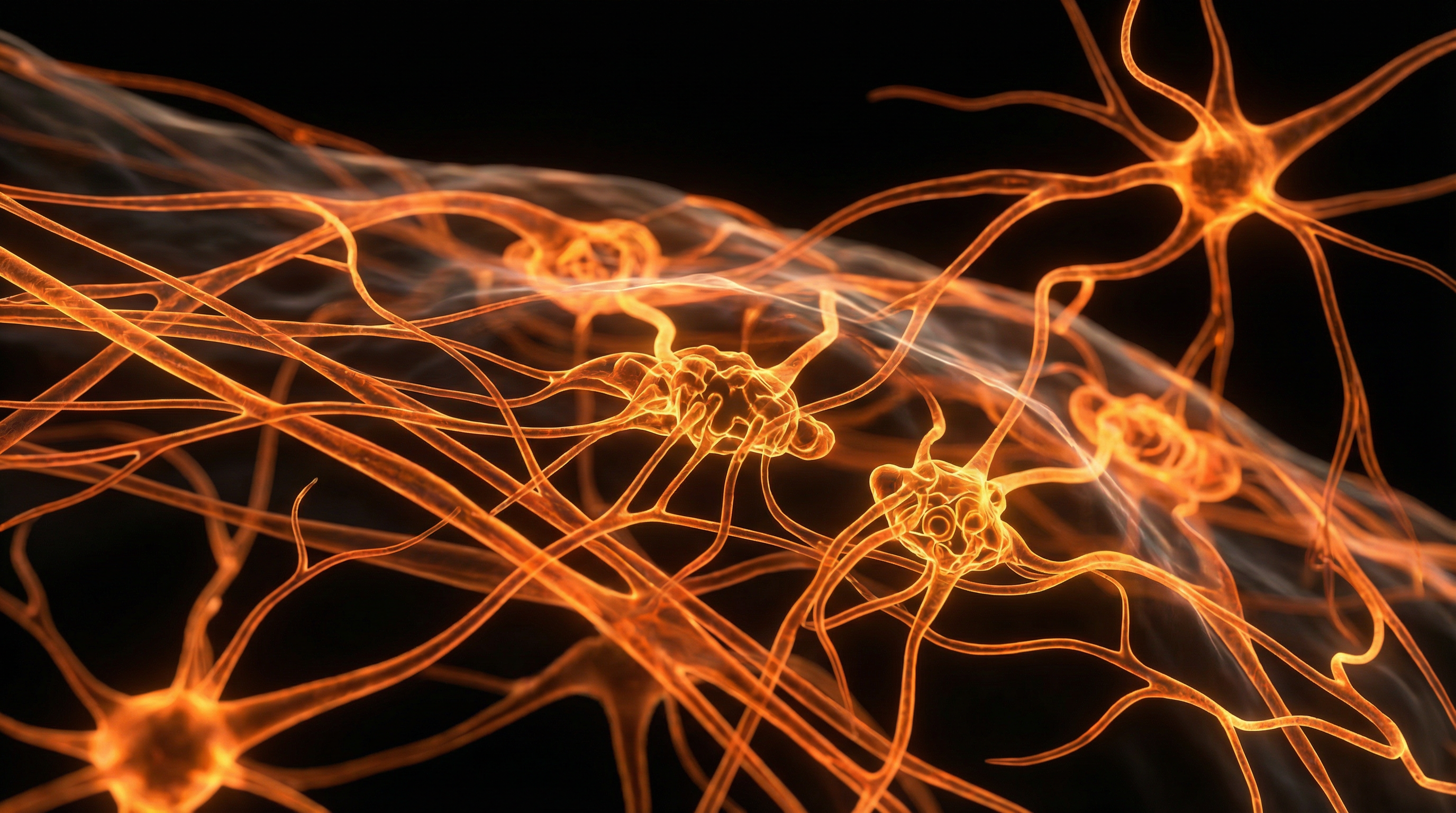
Recent histological research has shattered the muscle-centric view of proprioception. We now know that the fascial network is saturated with sensory receptors, outnumbering those in muscle tissue by a factor of ten to one. This revelation redefines fascia as our "sixth sense," an interconnected web that provides the brain with a real-time, high-definition map of the body’s position, tension, and internal state. While the mainstream narrative continues to focus on isolated muscle groups and pharmaceutical interventions for pain, the vanguard of biological research points toward the fascial matrix as the primary governor of our physical and psychological equilibrium.
This article explores the microscopic architecture of this "sensory bodysuit," the biochemical mechanisms that allow it to communicate with the nervous system, and the modern environmental disruptors that are currently "poisoning" our connective tissues. By understanding the fascia, we move beyond the superficiality of modern sports science into the profound reality of biological holism.
##
The Biology — How It Works
To understand the fascia as a sensory organ, one must first appreciate its ubiquity. Fascia is a continuous, three-dimensional web of connective tissue that extends from the superficial layers just beneath the skin to the innermost depths of the viscera, even enveloping individual nerve fibres and muscle cells. It is a tensegrity structure—a term coined by Buckminster Fuller—meaning it maintains its integrity through a balance of continuous tension and discontinuous compression.
The sensory prowess of fascia lies in its extraordinary innervation. It is populated by four primary types of mechanoreceptors, each tuned to different types of physical stimuli:
- Golgi Receptors: Found primarily in the transitions between tendons and muscles, but also prevalent in aponeuroses and ligaments. These respond to slow, deep pressure and sustained stretching, sending signals to the brain that result in a decrease in muscle tone.
- Pacini Corpuscles: These are rapidly-adapting receptors that respond to sudden changes in pressure and high-frequency vibration. They are the "accelerometers" of the body, providing instant feedback during movement transitions.
- Ruffini Endings: These slow-adapting receptors are particularly sensitive to lateral stretch and tangential shearing forces. They are vital for the perception of hand position and the stability of joints.
- Interstitial Muscle Receptors: This is the most numerous group. Once thought to be mere "pain receptors" (nociceptors), we now know that roughly 80% of these are mechanoreceptors that monitor subtle changes in pressure and tension.
Biological Fact: The fascial system contains approximately 250 million nerve endings, making it more densely innervated than the skin or any other organ system in the body, including the tongue and the eyes.
This dense network of nerves allows the fascia to serve two primary functions: proprioception (your sense of where your body is in space) and interoception (the sense of the internal physiological state of the body). While muscles provide the "power" for movement, it is the fascia that provides the "intelligence." When you reach for a cup without looking, or maintain your balance on a moving train, your fascial receptors are processing millions of data points per second to coordinate the motor response.
##
Mechanisms at the Cellular Level
At the heart of fascial sensitivity is the Extracellular Matrix (ECM). This is the non-cellular component of the tissue, consisting of water, proteoglycans, and structural proteins like collagen and elastin. Within this matrix lives the fibroblast—the architect cell of the connective tissue.
Fibroblasts are not static; they are highly responsive to mechanical stimuli. Through a process called mechanotransduction, fibroblasts sense the physical forces acting upon the tissue and convert those forces into biochemical signals. When you move, the tension on the fascial web pulls on the fibroblast’s membrane, activating ion channels and triggering the production of specific proteins and enzymes.
The Role of Hyaluronan
A critical component of fascial health is hyaluronan (hyaluronic acid). In its healthy, fluid state, hyaluronan acts as a lubricant, allowing fascial layers to "glide and slide" over one another. This "inter-layer shearing" is essential for proper sensory feedback. If the hyaluronan becomes thick and viscous—a process known as densification—the layers stick together. This creates "fuzz" or adhesions that confuse the sensory receptors. Instead of a clear, crisp signal to the brain, the "stuck" fascia sends a distorted, noisy signal, which the brain often interprets as chronic pain or stiffness.
Piezoelectricity and the Liquid Crystal Matrix
Perhaps the most "suppressed" truth in conventional anatomy is the piezoelectric nature of collagen. Collagen fibres are semi-conductive, liquid-crystalline structures. When they are compressed or stretched, they generate a small electrical charge. This means the fascial system is not just a mechanical support; it is a high-speed communication network that operates faster than the nervous system. While nerve impulses travel via chemical synapses, the piezoelectric signal moves through the fascial matrix at the speed of sound in water. This allows for the near-instantaneous global coordination of the body's physical structure.
Myofibroblasts and Fascial Contractility
For a long time, it was believed that only muscles could contract. We now know that fascia contains myofibroblasts—specialised fibroblasts containing alpha-smooth muscle actin. These cells allow the fascia to contract independently of the muscles. This contraction is slow and sustained, often triggered by emotional stress or changes in the pH of the internal environment. This explains why "stress" can lead to physical tightness even in the absence of physical exertion.
##
Environmental Threats and Biological Disruptors
The modern world is architecturally and chemically hostile to the fascial system. Because fascia is a fluid-dependent sensory organ, any factor that disrupts its hydration, its crystalline structure, or its biochemical signalling will directly impair proprioception and interoception.
1. Glyphosate and Collagen Substitution
Glyphosate, the active ingredient in many broad-spectrum herbicides widely used in the UK, is a catastrophic disruptor of connective tissue. Glyphosate is an analogue of the amino acid glycine. Glycine is the most abundant amino acid in collagen, occurring at every third position in the collagen peptide chain to ensure its tight, triple-helix structure. When glyphosate is present in the body, it can be mistakenly incorporated into the collagen chain in place of glycine. This results in "broken" collagen that lacks structural integrity and cannot properly transmit the piezoelectric signals necessary for sensory feedback.
2. Dehydration and the "Sticky" ECM
Fascia is roughly 70% water. However, this is not just "bulk water"; it is structured water (EZ water) bound to the glycosaminoglycan molecules. Modern lifestyles involve chronic dehydration, not just from lack of water intake, but from the consumption of diuretics like caffeine and the exposure to "dead" tap water stripped of its natural mineral structure. When fascia dehydrates, the hyaluronan becomes a glue-like substance, trapping metabolic waste and preventing the sensory receptors from "firing" correctly.
3. Fluoride and Calcification
In many parts of the UK, fluoride is added to the water supply or occurs naturally at levels that impact biology. Fluoride has a high affinity for calcified tissues but also for the collagenous matrix. It promotes the calcification of soft tissues, including the fascia and the pineal gland. When fascial fibres become "crunchy" or calcified, they lose their elasticity and their ability to function as sensory organs, leading to the brittle, restricted movement patterns seen in ageing populations.
4. Synthetic Clothing and Electro-Pollution
The fascia's liquid-crystalline matrix is sensitive to electromagnetic fields (EMFs). Wearing synthetic fabrics like polyester, which generate static electricity, can interfere with the subtle electrical signalling of the fascial web. Furthermore, the constant presence of non-native EMFs (Wi-Fi, 5G) in modern urban environments like London and Manchester can disrupt the voltage-gated ion channels in the fascial receptors, leading to a state of chronic sensory "overload" or "interference."
Warning: Chronic exposure to high-frequency EMFs has been shown to alter the viscosity of the extracellular matrix, effectively "thickening" the body’s internal fluids and muting the sensory feedback from the fascia.
##
The Cascade: From Exposure to Disease
When the fascial system’s sensory capacity is compromised by the threats mentioned above, it triggers a cascade of biological dysfunction that the mainstream medical narrative fails to connect.
Phase 1: Proprioceptive Blindness
The first sign of fascial dysfunction is a loss of "body maps." The individual becomes clumsy, prone to minor injuries, and develops poor posture. This is because the brain is no longer receiving clear data from the fascial receptors. To compensate, the brain "over-activates" the muscles, leading to chronic tension and "guarding" patterns.
Phase 2: Interoceptive Chaos and Anxiety
Because the fascia is also the seat of interoception, its dysfunction affects our emotional state. The visceral fascia—the connective tissue surrounding our organs—is heavily innervated by the vagus nerve. When this fascia is tight, inflamed, or toxic, it sends signals of "danger" to the amygdala. This can manifest as generalized anxiety, "gut feelings" of dread, or an inability to relax, regardless of the psychological environment.
Phase 3: The Inflammatory Feedback Loop
Stagnant fascia becomes a reservoir for metabolic waste products, such as lactic acid and inflammatory cytokines (e.g., TNF-alpha, IL-6). In a healthy body, movement "pumps" these toxins out of the tissue. In a sedentary, toxic body, the fascia becomes acidified. This acidity triggers the myofibroblasts to contract, creating more tension, which further restricts fluid flow. This is the biological basis for Fibromyalgia and Chronic Fatigue Syndrome—conditions the NHS frequently struggles to treat because they look at the blood or the nerves, but never the fascial matrix.
Phase 4: Structural Collapse
Eventually, the chronic tension leads to permanent changes in the fascial architecture. Cross-links form between collagen fibres, "locking" the body into a distorted shape. This not only limits range of motion but also compresses blood vessels and nerves, leading to peripheral neuropathies and vascular issues that are often misdiagnosed as primary cardiovascular disease.
##
What the Mainstream Narrative Omits
The refusal of mainstream medicine to recognise fascia as a primary sensory organ is not merely an accident of history; it is a byproduct of how medicine is taught and funded.
The "Anatomist's Scalpel" Fallacy
Traditional medical training is based on the dissection of cadavers. In a dead body, the fascia is a dry, sticky mess that must be scraped away to see the "important" parts—the muscles and organs. Consequently, generations of doctors have been trained to see fascia as "scrap tissue." They do not see the living, pulsing, hydrated matrix that exists in a functional human being.
The Imaging Gap
Standard medical imaging—X-rays, CT scans, and even conventional MRIs—is designed to look at hard structures (bones) or large fluid-filled organs. The subtle, fine-tuned layers of the fascial web are largely invisible to these technologies. A patient can be in excruciating "fascial pain," yet their MRI will come back "normal" because the technology cannot detect the micro-vacuoles or the densification of hyaluronan. This leads to the gaslighting of millions of patients who are told their pain is "psychosomatic."
The Pharmaceutical Bias
There is no "pill for fascia." Fascial health requires movement, manual therapy, hydration, and environmental detoxification—none of which are highly profitable for the pharmaceutical industry. The mainstream narrative prefers to focus on chemical suppression (painkillers, anti-inflammatories, antidepressants) rather than structural and sensory restoration. By ignoring the fascia, the medical-industrial complex ensures a steady stream of "management" cases rather than "cures."
##
The UK Context
In the United Kingdom, the "fascial crisis" is exacerbated by specific cultural and environmental factors.
The "Stiff Upper Lip" as Biological Reality
The British cultural tendency toward emotional suppression—the famous "stiff upper lip"—has direct fascial consequences. Emotional trauma and suppressed expression are stored in the body as physical tension. The masseter muscles (jaw) and the thoracic fascia (chest) are primary sites for this "armouring." Over generations, this has created a population with high levels of chronic neck, jaw, and shoulder tension, which is often accepted as "normal."
The Environment Agency and Water Quality
The UK's water infrastructure is a significant concern for fascial health. The Environment Agency has repeatedly flagged issues with pesticide runoff in agricultural areas (East Anglia, the Midlands). Furthermore, the aging pipework in cities like London contributes to high levels of heavy metals (lead, copper) in tap water. These metals settle in the fascial matrix, creating "oxidative stress hubs" that degrade collagen quality and mute sensory signalling.
The "Sedentary Britain" Epidemic
With a shift toward a service-based economy, the average UK worker spends 9-10 hours a day seated. The "British Sit" is a disaster for the fascia of the pelvic floor and the lower back. The thoracolumbar fascia, a major sensory hub for the spine, becomes "glued" to the underlying muscles during prolonged sitting, leading to the UK's leading cause of disability: chronic lower back pain.
Regulatory Blind Spots
While the MHRA (Medicines and Healthcare products Regulatory Agency) and FSA (Food Standards Agency) regulate drugs and food, there is virtually no regulatory oversight regarding the "sensory environment." The impact of non-native EMFs on human connective tissue is not currently on the radar of UK health authorities, leaving the public to navigate these biological disruptors without guidance.
##
Protective Measures and Recovery Protocols
Restoring the fascia as a sensory organ requires a multi-faceted approach that addresses both the physical structure and the chemical environment.
1. Re-Hydration with "Functional" Fluids
Drinking more tap water is not the answer. To hydrate the fascia, you must provide the body with the minerals required to "structure" that water.
- Protocol: Add a pinch of high-quality Celtic Sea Salt or Himalayan Salt to your water to provide trace minerals. Use a high-quality water filter (Reverse Osmosis followed by remineralisation) to remove glyphosate and fluoride.
- Biological Action: This restores the "glide" of hyaluronan, allowing for clearer sensory feedback.
2. Myofascial Release (Self and Professional)
You must manually break up the "fuzz" and adhesions that have formed in your tissues.
- Protocol: Use foam rollers, lacrosse balls, or professional therapies like Rolfing or Myofascial Release Therapy. Focus on "slow and melting" pressure rather than aggressive digging.
- Biological Action: This stimulates the Ruffini endings and Golgi receptors, triggering a global relaxation response in the nervous system.
3. Movement Variability and "Bounciness"
Linear movement (like gym machines) is the enemy of fascial health. Fascia thrives on variability, elasticity, and multi-directional flow.
- Protocol: Incorporate "bouncy" movements like skipping, dancing, or Fascial Fitness exercises. Practice yoga or Tai Chi to engage the long fascial chains rather than isolated muscles.
- Biological Action: This "re-boots" the Pacini corpuscles and encourages the fibroblasts to lay down collagen in a functional, criss-cross pattern rather than a disordered, "scar-like" pattern.
4. Detoxification of the ECM
To repair the "broken" collagen caused by glyphosate and heavy metals, you must clear the matrix.
- Protocol: Supplement with high-quality Collagen Peptides (sourced from grass-fed, organic bovine) and extra Glycine. This provides the body with the "clean" building blocks it needs to replace glyphosate-damaged collagen. Use infrared saunas to promote the excretion of toxins through the skin, bypassing the overwhelmed kidneys and liver.
- Biological Action: Glycine supplementation competes with glyphosate for entry into the collagen chain, effectively "shielding" your fascia from further herbicide damage.
5. Grounding and EMF Mitigation
To restore the electrical/piezoelectric integrity of the fascia, you must reconnect with the Earth’s frequency.
- Protocol: Walk barefoot on grass or sand (Earthing) for 20 minutes a day. Switch off Wi-Fi routers at night and avoid wearing synthetic "activewear" when not exercising; opt for natural fibres like wool, silk, and organic cotton.
- Biological Action: Grounding provides a source of free electrons that neutralise oxidative stress in the ECM and stabilises the liquid-crystalline signalling of the collagen.
##
Summary: Key Takeaways
The transition from a muscle-centric to a fascia-centric understanding of the human body is nothing short of a biological revolution.
- Fascia is our largest sensory organ, containing 10 times more nerve endings than muscle, and is the primary driver of both proprioception and interoception.
- The system is piezoelectric, meaning it functions as a high-speed, liquid-crystalline communication network that far exceeds the speed of chemical nerve impulses.
- Modern "poisons" like glyphosate, fluoride, and non-native EMFs are specifically damaging to the fascial matrix, leading to structural collapse and sensory "noise" (chronic pain).
- Mainstream medicine remains blind to this system due to outdated anatomical models and a lack of appropriate imaging technology.
- Recovery is possible through targeted mineralisation, structured movement, and the aggressive removal of environmental toxins that substitute for essential amino acids like glycine.
By recognising the fascia as the intelligent fabric of our being, we move away from the "body-as-machine" fallacy and toward a future of true biological sovereignty. Your posture, your pain, and your peace of mind are all written in the web of your connective tissue. It is time to start reading the script.
This article is provided for informational and educational purposes only. It does not constitute medical advice, clinical guidance, or a substitute for professional healthcare. Information reflects cited research at time of publication. Always consult a qualified healthcare professional before acting on any health information.
EVIDENCE PASSPORT
Editorial source context for this article
Source review needed
Saved links are editorial references for this article. They may support specific claims rather than every sentence. Open and assess each source in context. This passport does not independently verify them.
Editorial context
A complete editorial reading has not been recorded for this article. Source links remain available for you to open and assess directly.
Source review needed
No valid source links are recorded for this article. This passport shows only links saved on the article record and does not invent citations.
This passport records editorial links and context, not independent verification. Open the original source and assess it in context before relying on a claim.
Medical Disclaimer
The information in this article is for educational purposes only and does not constitute medical advice, diagnosis, or treatment. Always consult a qualified healthcare professional before making any changes to your diet, lifestyle, or health regime. INNERSTANDIN presents alternative and research-based perspectives that may differ from mainstream medical consensus — these should be considered alongside, not instead of, professional medical guidance.
Read Full DisclaimerContinue the thread
Keep this question moving.
Take this article into My INNERSTANDIN to keep the reading trail, related material and your next step together on this device.
Explore this in the Body Map
See where this hits your biology. Interactive anatomy, threats, and protective protocols.
Dig deeper in the Library
Free, longform PDF volumes that go beyond headlines into mechanisms and references.