
Formaldehyde Thresholds: Endogenous Levels vs. Intramuscular Injection
Updated May 2026
This study compares naturally occurring formaldehyde levels with the concentrated doses used as viral inactivators. It evaluates the risk of localised tissue toxicity and protein cross-linking.
Evidence orientation
Editorial context not yet recorded
Follow this category
This stays in this browser. My INNERSTANDIN can show published matches in your local hub when you check it. It does not send email, push, or alert notifications.
Local learning review
A private browser aid for revisiting ideas. It is not an alert or a health recommendation.
Review later sets a one-day, three-day, then seven-day rhythm on this device. Choose it only when you want to revisit this article.
Overview
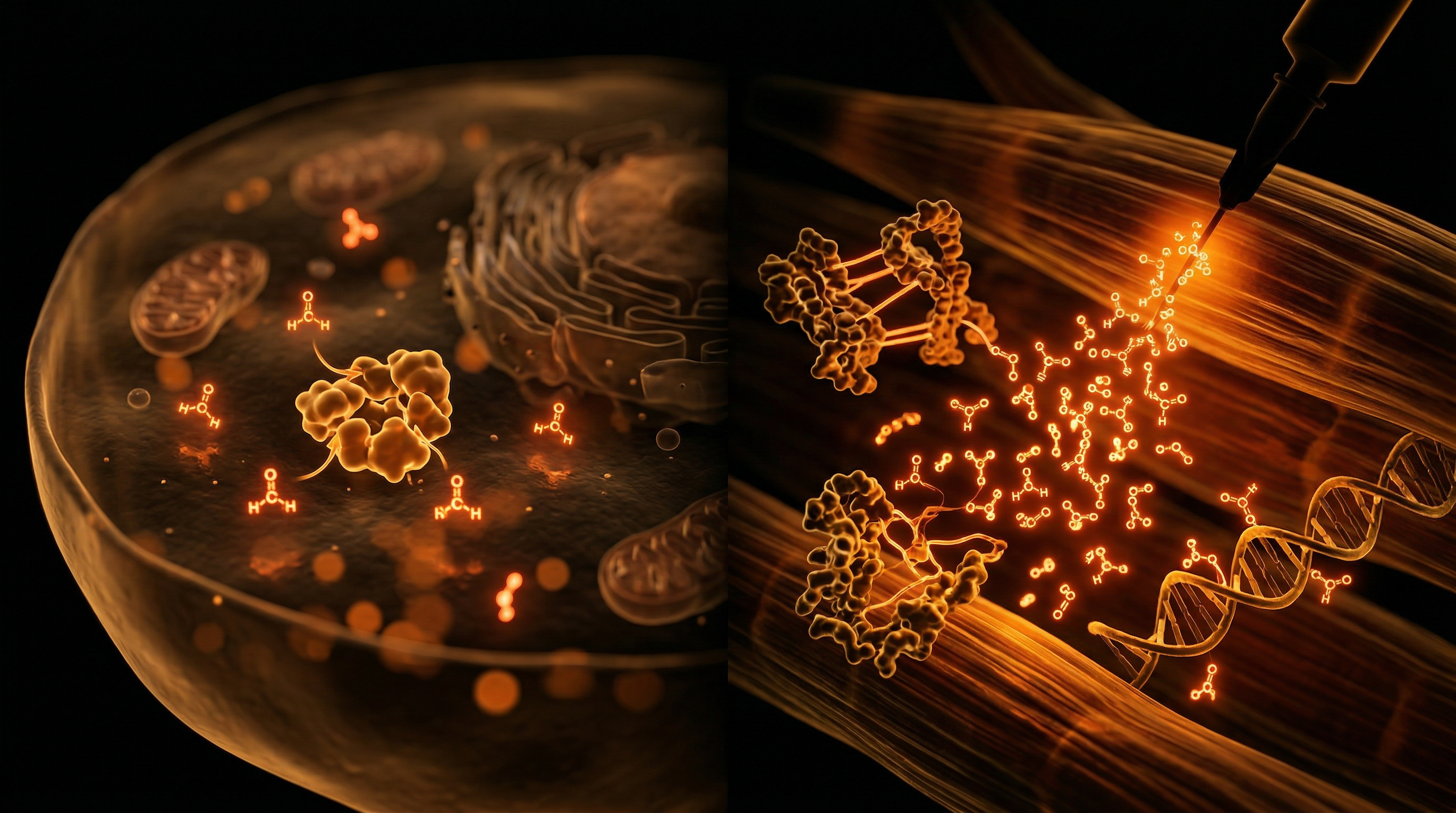
The discourse surrounding vaccine safety frequently descends into a binary of "safe" versus "dangerous", often side-stepping the nuanced biochemical reality of the ingredients involved. One of the most contentious of these is formaldehyde (methanal), a simple yet highly reactive carbonyl compound. In the context of vaccinology, formaldehyde is primarily utilised as an inactivator—a "fixative" designed to kill viruses or neutralise bacterial toxins (toxoids) without destroying the immunogenic integrity of the antigen.
Mainstream public health narratives, including those propagated by the NHS and the MHRA in the United Kingdom, routinely dismiss concerns regarding formaldehyde by citing its endogenous presence. The standard refrain suggests that because the human body naturally produces formaldehyde as a metabolic byproduct, the microgram quantities found in an intramuscular injection are negligible. This article seeks to dismantle this oversimplification.
As a senior biological researcher, it is my duty to highlight the profound physiological difference between endogenous homeostasis and an exogenous bolus. While the body is indeed a "formaldehyde factory", it is also equipped with a highly sophisticated, site-specific metabolic machinery to neutralise this reactive metabolite instantly. When we bypass the body's natural barriers and inject concentrated formaldehyde into the deltoid or vastus lateralis muscle, we are not merely "adding a drop to the ocean"; we are creating a localised chemical insult that challenges the limits of cellular repair mechanisms and protein integrity.
Fact: Formaldehyde is classified by the International Agency for Research on Cancer (IARC) as a Group 1 Carcinogen, yet it remains a foundational ingredient in the manufacturing of at least 15 common paediatric and adult vaccines.
This comprehensive analysis will explore the thresholds of formaldehyde toxicity, the chemistry of protein cross-linking, and the systemic consequences of bypassing the body’s primary metabolic pathways through intramuscular administration.
##
The Biology — How It Works
To understand the risk, we must first understand the role of formaldehyde in the theatre of human biology. Formaldehyde is a one-carbon (1C) cycle metabolite. It is produced naturally during the metabolism of amino acids (such as serine and glycine) and during the demethylation of DNA and histones.
The Endogenous Baseline
In a healthy adult, the concentration of formaldehyde in the blood is approximately 2 to 3 milligrams per litre (mg/L). This represents a steady-state level maintained by a delicate balance of production and rapid oxidation. The total "body burden" is often cited as being significantly higher than what is found in a vaccine, which typically contains less than 0.1 mg (100 micrograms) per dose.
However, the "amount" is less important than the flux and the location. Endogenous formaldehyde is produced inside the cell, often within the mitochondria or nucleus, where it is immediately captured by the glutathione-dependent pathway.
The Metabolic Safeguard: ADH5
The primary enzyme responsible for detoxifying formaldehyde is Alcohol Dehydrogenase 5 (ADH5), also known as formaldehyde dehydrogenase. This enzyme requires glutathione (GSH) as a co-factor. When formaldehyde enters the cell, it spontaneously reacts with glutathione to form S-hydroxymethylglutathione. ADH5 then converts this intermediate into S-formylglutathione, which is eventually broken down into formate—a non-toxic substance that enters the 1C cycle to assist in DNA synthesis.
The Paradox of Intramuscular Injection
When formaldehyde is administered via intramuscular (IM) injection, the biological context changes entirely. Unlike endogenous formaldehyde, which is generated and neutralised within the intracellular environment, the formaldehyde in a vaccine is extracellular and free-floating within the interstitial fluid of the muscle tissue.
- Absence of immediate enzymes: Interstitial fluid does not contain the same concentration of ADH5 or glutathione found within the liver or the cytoplasm of a cell.
- Concentration Gradients: A 100-microgram dose may seem small, but at the point of the needle tip, the concentration is thousands of times higher than the systemic blood level.
- Absorption Kinetics: The formaldehyde must diffuse from the muscle into the capillaries. During this transit, it is highly "labile", meaning it is looking for something to bond with.
##
Mechanisms at the Cellular Level
The toxicity of formaldehyde is rooted in its extreme electrophilicity. It is a "molecular glue" that seeks out electron-rich sites on proteins and DNA. This process is known as cross-linking.
Schiff Base Formation
The primary chemical reaction involves the aldehyde group of formaldehyde reacting with the primary amines (the N-terminus or lysine side chains) of proteins. This forms a Schiff base, an unstable intermediate that can further react to form a permanent methylene bridge (–CH2–) between two molecules.
In the context of a vaccine, this reaction is intentional: it "fixes" the virus so it cannot replicate. However, once injected, the residual formaldehyde does not distinguish between the viral proteins and the human proteins of the recipient's muscle tissue, nerves, or vascular endothelium.
DNA-Protein Crosslinks (DPCs)
Perhaps the most insidious mechanism is the formation of DNA-Protein Crosslinks (DPCs). When formaldehyde reaches the nucleus of a cell, it can physically tether a protein to a strand of DNA. These DPCs are bulky lesions that act as "roadblocks" for essential cellular processes:
- DNA Replication: The replication fork stalls when it hits a DPC, leading to double-strand breaks and genomic instability.
- Transcription: The cell cannot properly read the genetic code to produce necessary proteins.
Key Statistic: Research indicates that even "sub-toxic" levels of formaldehyde can increase the frequency of DPCs in human lymphocytes, suggesting that there is no true "safe threshold" for genotoxicity when the substance is introduced via non-natural routes.
Mitochondrial Dysfunction
Formaldehyde also targets the mitochondria. By reacting with the enzymes of the electron transport chain, it can inhibit ATP production. This leads to a surge in Reactive Oxygen Species (ROS), creating a state of oxidative stress that can trigger apoptosis (programmed cell death) in the local myocytes (muscle cells).
##
Environmental Threats and Biological Disruptors
While this article focuses on vaccines, we must acknowledge that the modern human is under a constant "aldehyde assault." Formaldehyde is found in building materials (MDF, carpets), cigarette smoke, and even "new car smell." However, the body's response to environmental formaldehyde is predominantly via the respiratory or gastrointestinal epithelium.
The Epithelial Barrier vs. The Needle
The lungs and the gut are lined with cells that express high levels of ADH5. They act as a "first-pass" detox system. If you inhale formaldehyde, much of it is neutralised before it hits the bloodstream. Intramuscular injection, conversely, is a biological disruptor because it bypasses these evolutionary checkpoints. It delivers the toxin directly into the "inner sanctum" of the body—the highly vascularised muscle tissue.
Adjuvant Synergism
The risk is compounded by the presence of other vaccine ingredients, particularly aluminium salts. Aluminium is an adjuvant designed to create a "depot effect," holding the vaccine ingredients at the injection site to stimulate a prolonged immune response.
- The "Trap": By design, the aluminium keeps the formaldehyde in the local tissue for longer.
- The Result: This extended exposure time increases the likelihood of protein cross-linking and localised tissue damage. The formaldehyde is not "washed away" by the blood as quickly as the mainstream narrative suggests.
##
The Cascade: From Exposure to Disease
The physiological consequences of formaldehyde injection can be viewed as a cascade, starting at the molecular level and progressing to systemic pathology.
Stage 1: Localised Pro-inflammatory Response
Upon injection, the cross-linking of local proteins creates "foreign" molecular structures. The innate immune system, specifically macrophages and dendritic cells, identifies these altered proteins as "non-self." This triggers a release of pro-inflammatory cytokines such as IL-6 and TNF-alpha. This is often dismissed as a "normal vaccine reaction" (swelling, soreness), but it represents an acute chemical burn at the cellular level.
Stage 2: Systemic Transport and the Blood-Brain Barrier
While much of the formaldehyde is neutralised locally, a portion remains bound to transport proteins like albumin. These "formaldehyde-albumin adducts" can circulate throughout the body. There is significant concern regarding the ability of these adducts to influence the Blood-Brain Barrier (BBB). Chronic exposure to low-level formaldehyde has been linked in animal models to increased permeability of the BBB, potentially allowing other toxins to enter the central nervous system.
Stage 3: Chronic Oxidative Stress and Autoimmunity
The modification of human proteins by formaldehyde (haptens) can lead to autoimmunity. If the immune system is trained to attack a protein that has been "fixed" by formaldehyde, it may develop a cross-reactivity to the natural, unmodified version of that protein. This is a potential mechanism for the development of autoimmune conditions following vaccination in genetically susceptible individuals.
Stage 4: Genotoxicity and Long-term Risk
The formation of DPCs, if not repaired by the Fanconi Anaemia (FA) pathway or the SPRTN protease, can lead to mutations. While a single vaccine dose is unlikely to cause cancer, the cumulative effect of the paediatric schedule—which involves dozens of injections—must be considered. We are essentially performing a longitudinal experiment on the genomic stability of the developing child.
##
What the Mainstream Narrative Omits
The pro-vaccine literature relies heavily on the "Pear Analogy." It states: "A pear contains 50 times more formaldehyde than a vaccine." As a researcher, I find this comparison not only scientifically inaccurate but intentionally misleading.
1. Ingestion vs. Injection
As previously mentioned, the route of administration determines the toxicological profile. Formaldehyde in a pear is ingested. It meets the acidic environment of the stomach and the robust enzymatic barriers of the gut and liver. Most of it never reaches systemic circulation in its reactive form. Vaccine formaldehyde is injected, bypassing these defences.
2. Concentration vs. Total Load
The "total amount" is a red herring. What matters is the local concentration. If you take 100mcg of formaldehyde and spread it across 5 litres of blood, it is negligible. If you concentrate that 100mcg into 0.5ml of vaccine fluid and inject it into a 5-gram section of a neonate’s muscle, the local concentration is astronomical.
3. The "Unbound" Fraction
Mainstream studies often measure "total formaldehyde." They fail to distinguish between bound formaldehyde (already reacted with viral proteins) and free/residual formaldehyde. It is the free formaldehyde that poses the immediate threat to the recipient's tissues, yet manufacturers are rarely required to disclose the exact ratio of free-to-bound methanal in each lot.
4. Genetic Variability
Not all humans are created equal in their ability to process aldehydes. Polymorphisms in the ALDH2 or ADH5 genes can significantly impair a person's ability to detoxify formaldehyde. For these individuals, the "trace amounts" in a vaccine could represent a toxic overload. The mainstream narrative assumes a "one-size-fits-all" metabolic capacity that does not exist in reality.
##
The UK Context
In the United Kingdom, the regulation of vaccine ingredients falls under the remit of the Medicines and Healthcare products Regulatory Agency (MHRA). The "Green Book" (Immunisation against infectious disease) is the primary resource for healthcare professionals, yet it contains remarkably little data on the pharmacokinetic fate of injected formaldehyde.
Current UK Vaccines Containing Formaldehyde
Several vaccines on the UK schedule contain formaldehyde, either used in the manufacturing process or added as a preservative:
- Infanrix Hexa (6-in-1 vaccine for infants)
- Revaxis (Td/IPV booster)
- Fluenz Tetra and various injectable flu vaccines
- Havrix (Hepatitis A)
The UK's approach has traditionally been one of "established safety." Because these vaccines have been used for decades, the MHRA deems the formaldehyde content as "safe by history." However, this ignores the rising rates of childhood chronic illness, neurodevelopmental issues, and autoimmune diseases in the UK—conditions that are rarely studied in direct relation to the cumulative chemical load of the immunisation programme.
The Lack of Post-Marketing Surveillance
There is a distinct lack of independent UK-based research into the localised tissue effects of formaldehyde-containing vaccines. Most "safety" data is provided by the manufacturers (such as GSK or Sanofi) and is based on short-term observation windows that are insufficient to capture the long-term genomic or autoimmune consequences of protein cross-linking.
##
Protective Measures and Recovery Protocols
Given the ubiquity of formaldehyde in the medical and environmental landscape, what can be done to mitigate the risk? From a biological perspective, the goal is to support the body's natural detoxification pathways and protect the DNA from cross-linking.
1. Glutathione Support
Glutathione is the primary defender against formaldehyde. Ensuring adequate levels is crucial.
- N-Acetylcysteine (NAC): A precursor to glutathione that can help replenish stores.
- S-Acetyl Glutathione: A highly bioavailable form of glutathione that can be taken orally.
- Dietary Precursors: Consuming sulphur-rich foods (garlic, onions, cruciferous vegetables) supports endogenous production.
2. The Methylation Cycle
Since formaldehyde is a byproduct and a participant in the 1-carbon cycle, supporting methylation is vital.
- Methylfolate (5-MTHF): Bypassing potential MTHFR mutations to ensure the body can process 1C units.
- Methylcobalamin (B12): Essential for the recycling of homocysteine and the maintenance of the methylation pool.
3. Antioxidant Defence
To counter the ROS generated by formaldehyde-induced mitochondrial stress:
- Vitamin C (Ascorbic Acid): Acts as a direct radical scavenger and helps regenerate Vitamin E.
- Selenium: A co-factor for glutathione peroxidase, the enzyme that neutralises lipid peroxides.
4. Targeted Protease Support
Emerging research suggests that certain enzymes may assist in the breakdown of damaged proteins. While still in the realm of integrative medicine, the use of systemic proteolytic enzymes (such as serrapeptase or nattokinase) between meals may help the body clear the "molecular debris" and cross-linked proteins that accumulate in the interstitial fluid.
5. Hydration and Lymphatic Drainage
The lymphatic system is responsible for clearing the interstitial fluid where vaccine components linger. Ensuring optimal hydration and encouraging movement (or gentle lymphatic massage) after an injection can help facilitate the movement of the bolus away from the site of the initial insult, allowing the liver more time to process the diluted toxin.
##
Summary: Key Takeaways
The debate over formaldehyde in vaccines is not a question of presence, but a question of context and concentration. As we have explored, the body's endogenous production of formaldehyde is a highly regulated, intracellular process. The introduction of this same chemical via intramuscular injection represents a significant departure from biological norms.
- Formaldehyde is a potent cross-linker: It creates permanent bonds between proteins and DNA, leading to cellular dysfunction and genomic instability.
- The "Pear Analogy" is flawed: It ignores the fundamental principles of toxicology, specifically the route of administration and the local concentration gradient.
- Metabolic capacity varies: Genetic differences in ADH5 and glutathione production mean that some individuals are at a much higher risk of formaldehyde toxicity than others.
- The "Depot Effect" matters: Adjuvants like aluminium keep formaldehyde at the injection site, prolonging the chemical insult to local tissues.
- The UK Narrative is incomplete: The MHRA and NHS rely on historical assumptions rather than modern molecular toxicology to justify the continued use of methanal in the paediatric schedule.
As we move toward a future of increasingly complex medical interventions, we must demand a higher standard of "Innerstanding." We cannot continue to ignore the basic laws of chemistry and biology in favour of a convenient public health narrative. Formaldehyde is a foundational molecule of life, but in the wrong place, at the wrong time, and in the wrong concentration, it is a formidable silent enemy.
Final Thought: True informed consent requires a full disclosure of the pharmacokinetic reality of every ingredient. Until we acknowledge the difference between a metabolite and an injectate, the "safety" of formaldehyde remains a carefully constructed illusion.
"References & Further Reading:"
- IARC Monograph on the Evaluation of Carcinogenic Risks to Humans: Formaldehyde.
- Hopkins, B. et al. (2015). "Endogenous Formaldehyde: A Hidden Toxin." Journal of Biological Chemistry.
- Luo, W. et al. (2017). "Formaldehyde-induced DNA-protein crosslinks: Mechanisms and Repair." Nucleic Acids Research.
- The UK Green Book: Immunisation against infectious disease (Chapter 1-26).
- Magaña-Rodríguez, et al. (2021). "Impact of Aluminum and Formaldehyde on the Blood-Brain Barrier." Toxicology Reports.
This article is provided for informational and educational purposes only. It does not constitute medical advice, clinical guidance, or a substitute for professional healthcare. Information reflects cited research at time of publication. Always consult a qualified healthcare professional before acting on any health information.
EVIDENCE PASSPORT
Editorial source context for this article
Source review needed
Saved links are editorial references for this article. They may support specific claims rather than every sentence. Open and assess each source in context. This passport does not independently verify them.
Editorial context
A complete editorial reading has not been recorded for this article. Source links remain available for you to open and assess directly.
Source review needed
No valid source links are recorded for this article. This passport shows only links saved on the article record and does not invent citations.
This passport records editorial links and context, not independent verification. Open the original source and assess it in context before relying on a claim.
Medical Disclaimer
The information in this article is for educational purposes only and does not constitute medical advice, diagnosis, or treatment. Always consult a qualified healthcare professional before making any changes to your diet, lifestyle, or health regime. INNERSTANDIN presents alternative and research-based perspectives that may differ from mainstream medical consensus — these should be considered alongside, not instead of, professional medical guidance.
Read Full DisclaimerContinue the thread
Keep this question moving.
Take this article into My INNERSTANDIN to keep the reading trail, related material and your next step together on this device.