
G-Protein Signaling: The Molecular Interference of Fluoride
Updated May 2026
Fluoride ions act as universal activators of G-proteins, causing chaotic cellular signaling. This molecular hijacking affects everything from neurotransmission to immune response in the human body.
Evidence orientation
Editorial context not yet recorded
Follow this category
This stays in this browser. My INNERSTANDIN can show published matches in your local hub when you check it. It does not send email, push, or alert notifications.
Local learning review
A private browser aid for revisiting ideas. It is not an alert or a health recommendation.
Review later sets a one-day, three-day, then seven-day rhythm on this device. Choose it only when you want to revisit this article.
Overview
In the sophisticated architecture of the human body, the transmission of information is as vital as the substance of the cells themselves. At the heart of this communication network lies a family of proteins known as G-proteins (guanine nucleotide-binding proteins). These molecular switches are the gatekeepers of cellular response, translating external signals—hormones, neurotransmitters, and environmental stimuli—into precise internal actions. However, a silent and ubiquitous interloper has been integrated into the modern biosphere: the fluoride ion ($F^-$).
For decades, fluoride has been promoted as a benign prophylactic for dental health. Yet, through the lens of advanced molecular biology, a far more ominous reality emerges. Fluoride is not merely a topical additive; it is a potent, inorganic biochemically active agent that acts as a universal activator of G-proteins. By bypassing the natural regulatory mechanisms of the cell membrane, fluoride effectively "hijacks" the cellular machinery, inducing a state of chronic, chaotic signalling.
This article explores the profound implications of fluoride-induced G-protein activation. We will dissect how the fluoroaluminate complex mimics the transition state of phosphate groups, locking G-proteins into a permanent "on" position. From the disruption of the endocrine system to the degradation of neurological integrity, the molecular interference of fluoride represents one of the most significant, yet overlooked, challenges to human biological sovereignty.
The Biology — How It Works
To understand the interference of fluoride, one must first appreciate the elegance of G-Protein Coupled Receptors (GPCRs). GPCRs are the largest family of membrane receptors, responsible for approximately 80% of all signal transduction across cell membranes. They are the targets of roughly half of all modern pharmaceutical drugs, illustrating their critical role in physiology.
The Heterotrimeric Structure
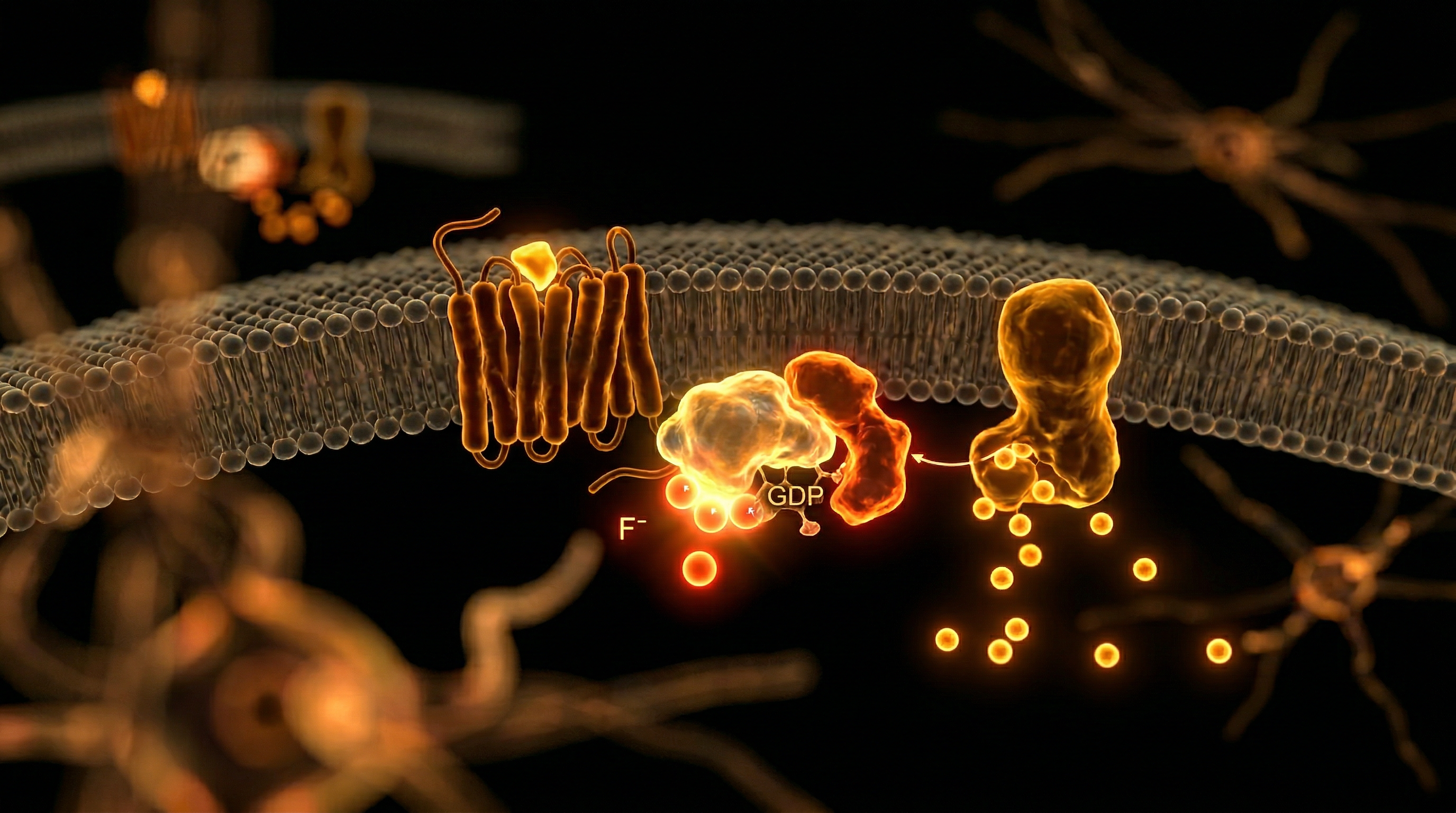
G-proteins consist of three subunits: alpha ($\alpha$), beta ($\beta$), and gamma ($\gamma$). In its inactive state, the $\alpha$-subunit is bound to GDP (guanosine diphosphate). When a ligand (such as adrenaline or dopamine) binds to the receptor on the outside of the cell, the G-protein undergoes a conformational change. The GDP is released and replaced by GTP (guanosine triphosphate).
Fact: There are over 800 different types of GPCRs in the human genome, regulating everything from vision and smell to heart rate and mood.
Once bound to GTP, the $\alpha$-subunit dissociates from the $\beta\gamma$ complex and moves along the inner surface of the cell membrane to activate "effector" proteins. These effectors, such as Adenylate Cyclase or Phospholipase C, then produce "second messengers" like cAMP (cyclic adenosine monophosphate) or IP3 (inositol trisphosphate). These second messengers carry the signal deep into the cell, eventually altering gene expression or metabolic activity.
The Internal Timer
Crucially, G-proteins have an inherent "off switch." The $\alpha$-subunit possesses an intrinsic enzymatic activity that hydrolyses GTP back into GDP. This cleaves a phosphate group, resetting the system. This timing is essential; if the signal remains "on" too long, the cell enters a state of exhaustion or pathological over-activity.
Fluoride disrupts this entire cycle. It does not wait for a ligand to bind to the receptor. It does not respect the internal timer. Instead, it enters the cell and provides a "false key" that locks the switch in the "on" position, bypassing the primary messenger entirely.
Mechanisms at the Cellular Level
The primary mechanism by which fluoride interferes with G-protein signalling is through the formation of metal-fluoride complexes, most notably fluoroaluminate ($AlF_4^-$).
The Fluoroaluminate Mimicry
The fluoride ion has a high affinity for aluminium, which is also ubiquitous in the modern environment. When $F^-$ and $Al^{3+}$ meet within the intracellular environment, they form the $AlF_4^-$ complex. This complex is a structural analogue of the gamma-phosphate group of GTP.
In the active site of the G-protein, where GDP is waiting to be phosphorylated or GTP is being processed, the $AlF_4^-$ complex slides into the position normally occupied by the terminal phosphate. Because the complex mimics the "transition state" of the hydrolysis reaction, the G-protein is fooled into a conformation that signifies the "active" state.
Key Term: Molecular Mimicry is the process by which a foreign molecule adopts a shape and charge distribution so similar to a native biological molecule that it can trick cellular receptors or enzymes.
Pseudo-Activation and Signal Noise
Unlike GTP, which is eventually broken down to turn the signal off, the $AlF_4^-$ complex is not metabolised. It stays lodged in the G-protein, creating a state of constitutive activation. The cell is now receiving a constant, high-intensity signal that has no external cause.
This results in "signal noise." In the brain, this might manifest as the constant firing of neurons. In the immune system, it could mean the chronic release of inflammatory cytokines. In the endocrine system, it might lead to the overproduction of hormones. The biological "signal-to-noise ratio" is decimated, leading to systemic dysregulation.
Interference with Second Messengers
The activation of G-proteins by fluoride directly impacts the production of cAMP. In many cell types, fluoride stimulates Adenylate Cyclase, leading to an abnormal surge in cAMP levels. cAMP is a powerful regulator of metabolism; its overproduction can lead to the depletion of cellular energy stores (ATP) and the activation of protein kinases that alter the cell’s entire proteomic profile.
In other pathways, fluoride activates Phospholipase C, which increases intracellular Calcium ($Ca^{2+}$) levels. Chronic elevation of intracellular calcium is a precursor to apoptosis (programmed cell death) and is a hallmark of neurodegenerative diseases.
Environmental Threats and Biological Disruptors
The molecular hijacking by fluoride does not occur in a vacuum. It is exacerbated by a cocktail of environmental factors that increase the bioavailability and toxicity of the ion.
The Aluminium Synergy
As established, the most potent activator of G-proteins is the $AlF_4^-$ complex. Therefore, the toxicity of fluoride is inextricably linked to the presence of aluminium. Our modern environment is saturated with aluminium—from cookware and food packaging to vaccines and geoengineering particulates. When an individual is exposed to both fluoride (via water) and aluminium (via various sources), the synergistic potential for G-protein disruption increases exponentially.
The Role of Beryllium and Magnesium
While aluminium is the most common partner, fluoride can also form complexes with beryllium ($BeF_3^-$) and interfere with magnesium ($Mg^{2+}$) centres. Magnesium is a necessary cofactor for the GTPase activity of G-proteins. Fluoride ions can displace magnesium or form complexes that inhibit these enzymes, further preventing the G-protein from ever returning to its inactive state.
Cumulative Exposure Pathways
Fluoride exposure is no longer limited to the "optimal" 0.7–1.0 ppm in drinking water. We must consider:
- Dental Products: Toothpastes containing 1,000–1,500 ppm of fluoride.
- Pesticides: Compounds like Cryolite and Sulfuryl fluoride used in commercial agriculture leave high residues on produce.
- Pharmaceuticals: Many modern drugs (e.g., Ciprofloxacin, Prozac) are fluorinated, potentially releasing fluoride ions during metabolism.
- Industrial Waste: Fluoride is a byproduct of aluminium smelting, phosphate fertiliser production, and glass manufacturing.
Statistic: Research indicates that total fluoride intake in fluoridated communities often exceeds the "safe" upper limits established by health authorities, particularly when accounting for "halo effects" from processed foods and beverages.
The Cascade: From Exposure to Disease
The disruption of G-protein signalling is not a localized event; it is a systemic catastrophe that cascades through every major organ system.
Neurotoxicity and Cognitive Decline
G-proteins are the bedrock of neurotransmission. They modulate the release of acetylcholine, serotonin, and glutamate. Fluoride’s interference with these pathways is a primary driver of its neurotoxic effects.
- IQ Reduction: Multiple meta-analyses have confirmed a correlation between high fluoride exposure and lower IQ in children. This is likely due to the over-activation of G-proteins during critical windows of brain development.
- Alzheimer’s Disease: By altering calcium signalling and promoting the accumulation of aluminium in the brain, fluoride-induced G-protein activation contributes to the formation of amyloid plaques and neurofibrillary tangles.
Endocrine Disruption: Thyroid and Pineal Gland
The thyroid gland is perhaps the most sensitive to fluoride. The Thyroid Stimulating Hormone (TSH) receptor is a GPCR. Fluoride mimics the action of TSH, leading to a "pseudo-hyperthyroid" signal that eventually exhausts the gland, resulting in hypothyroidism. This contributes to the global epidemic of fatigue, weight gain, and depression.
The pineal gland, responsible for melatonin production, is a major site of fluoride accumulation. Fluoride causes the calcification of the pineal gland, disrupting circadian rhythms and compromising the body’s antioxidant defences.
Skeletal and Connective Tissue Integrity
While fluoride is claimed to strengthen teeth, it actually causes dental fluorosis—a visible sign of disrupted G-protein signalling in the ameloblasts (tooth-forming cells). Similarly, in the bones, fluoride interferes with the G-proteins in osteoblasts and osteoclasts. This leads to skeletal fluorosis, where the bone becomes dense but brittle, significantly increasing the risk of fractures and bone cancer (osteosarcoma).
Fact: Osteosarcoma, a rare and deadly bone cancer, has been linked in several studies to fluoride exposure in young males during their peak growth spurts.
What the Mainstream Narrative Omits
The scientific literature on G-protein activation by fluoride is extensive and dates back to the 1980s. Yet, this mechanism is almost never discussed in public health discourse. Why?
The Dose-Response Fallacy
The mainstream narrative relies on the idea of a "threshold"—that fluoride is only toxic at high concentrations. However, G-protein activation by fluoroaluminates occurs at micromolar concentrations—levels that are frequently achieved in the blood and tissues of people living in fluoridated areas. There is no "safe" dose when the mechanism involves the hijacking of fundamental molecular switches.
The Omission of Synergistic Toxicity
Public health safety assessments rarely, if ever, account for the synergy between fluoride and aluminium. By testing these elements in isolation, regulatory bodies fail to capture the real-world toxicity of the $AlF_4^-$ complex.
Institutional Inertia and Conflict of Interest
Water fluoridation has been a cornerstone of public health policy for 70 years. To admit its fundamental biochemical flaws would be to invite a crisis of confidence in public institutions and face unprecedented legal liabilities. Consequently, research into the molecular mechanisms of fluoride toxicity is often underfunded or suppressed.
The UK Context
The United Kingdom occupies a unique position in the global fluoride debate. Unlike much of Western Europe—where 97% of the population drinks non-fluoridated water—the UK has seen a concerted push to expand water fluoridation.
Legislative Overreach
The Health and Care Act 2022 shifted the power to mandate water fluoridation from local authorities to the Secretary of State for Health and Social Care. This centralisation of power circumvents local democratic opposition and ignores the specific biological vulnerabilities of diverse populations.
The North-South Divide
Fluoridation in the UK is geographically inconsistent. Areas like the West Midlands and parts of the North East are heavily fluoridated, while London and the South East largely remain fluoride-free. This creates a "natural experiment" where health outcomes can be compared. Epidemiological data has consistently shown higher rates of hypothyroidism and hip fractures in fluoridated regions of the UK.
The "Levelling Up" Deception
The UK government often frames fluoridation as a "levelling up" measure to reduce dental health inequalities in deprived areas. However, this ignores the fact that those in lower socio-economic brackets are also more likely to have poor nutrition, making them more susceptible to the toxic effects of fluoride on G-protein signalling.
Protective Measures and Recovery Protocols
In a world where fluoride exposure is nearly unavoidable, proactive measures must be taken to protect the integrity of cellular signalling.
1. Water Filtration
Standard carbon filters are insufficient for fluoride removal. To protect G-protein integrity, one must use:
- Reverse Osmosis (RO): The most effective method for removing the fluoride ion.
- Activated Alumina: Specific filters designed to bind fluoride.
- Distillation: Highly effective but requires remineralisation of the water.
2. Nutritional Antagonists
Certain minerals and compounds can inhibit the formation of metal-fluoride complexes or compete for binding sites.
- Magnesium: Essential for maintaining the "off" state of G-proteins. Most people are deficient in magnesium, increasing their vulnerability to fluoride.
- Iodine: Fluoride competes with iodine in the thyroid. Supplementing with iodine (under supervision) can help displace fluoride from the gland.
- Selenium: A vital antioxidant that supports the enzymes responsible for converting thyroid hormones and protecting against oxidative stress.
- Boron: Clinical evidence suggests that boron can bind to fluoride and facilitate its excretion through the urine.
3. Neuroprotective Agents
- Curcumin: Studies have shown that curcumin can mitigate the neurotoxic effects of fluoride by reducing oxidative stress and protecting GPCR-mediated pathways in the hippocampus.
- Tamarind: In some traditional medical systems, tamarind paste is used to facilitate the mobilisation and excretion of fluoride from the bones.
4. Avoiding Aluminium
Since the $AlF_4^-$ complex is the primary driver of G-protein hijacking, reducing aluminium exposure is as important as reducing fluoride. This means switching to stainless steel or glass cookware, using aluminium-free deodorants, and avoiding processed foods wrapped in foil.
Summary: Key Takeaways
The molecular interference of fluoride is not a theoretical concern; it is a biochemical reality with profound consequences for human health.
- Fluoride is a universal activator of G-proteins, the molecular switches that control cellular signalling.
- The Fluoroaluminate complex ($AlF_4^-$) mimics the terminal phosphate of GTP, locking G-proteins in a constant "on" position.
- This results in constitutive signalling, leading to systemic "noise" that disrupts the brain, thyroid, and immune system.
- Environmental synergy with aluminium makes fluoride significantly more toxic than when it is viewed in isolation.
- Mainstream narratives ignore the biochemical mechanism of G-protein activation, focusing instead on outdated dental paradigms.
- In the UK, legislative changes are moving toward mandatory fluoridation, despite growing evidence of its systemic harm.
- Protective measures involve high-level water filtration and the strategic use of mineral antagonists like magnesium and boron.
Understanding the molecular interference of fluoride is the first step toward reclaiming biological autonomy. As we continue to uncover the intricate ways in which our environment shapes our internal signalling, the case against the mass addition of fluoride to the human water supply becomes not just a matter of health, but a matter of fundamental scientific integrity.
This article is provided for informational and educational purposes only. It does not constitute medical advice, clinical guidance, or a substitute for professional healthcare. Information reflects cited research at time of publication. Always consult a qualified healthcare professional before acting on any health information.
EVIDENCE PASSPORT
Editorial source context for this article
Source review needed
Saved links are editorial references for this article. They may support specific claims rather than every sentence. Open and assess each source in context. This passport does not independently verify them.
Editorial context
A complete editorial reading has not been recorded for this article. Source links remain available for you to open and assess directly.
Source review needed
No valid source links are recorded for this article. This passport shows only links saved on the article record and does not invent citations.
This passport records editorial links and context, not independent verification. Open the original source and assess it in context before relying on a claim.
Medical Disclaimer
The information in this article is for educational purposes only and does not constitute medical advice, diagnosis, or treatment. Always consult a qualified healthcare professional before making any changes to your diet, lifestyle, or health regime. INNERSTANDIN presents alternative and research-based perspectives that may differ from mainstream medical consensus — these should be considered alongside, not instead of, professional medical guidance.
Read Full DisclaimerContinue the thread
Keep this question moving.
Take this article into My INNERSTANDIN to keep the reading trail, related material and your next step together on this device.
Dig deeper in the Library
Free, longform PDF volumes that go beyond headlines into mechanisms and references.