
GHK-Cu: DNA Stability and Cellular Resurfacing
Updated May 2026
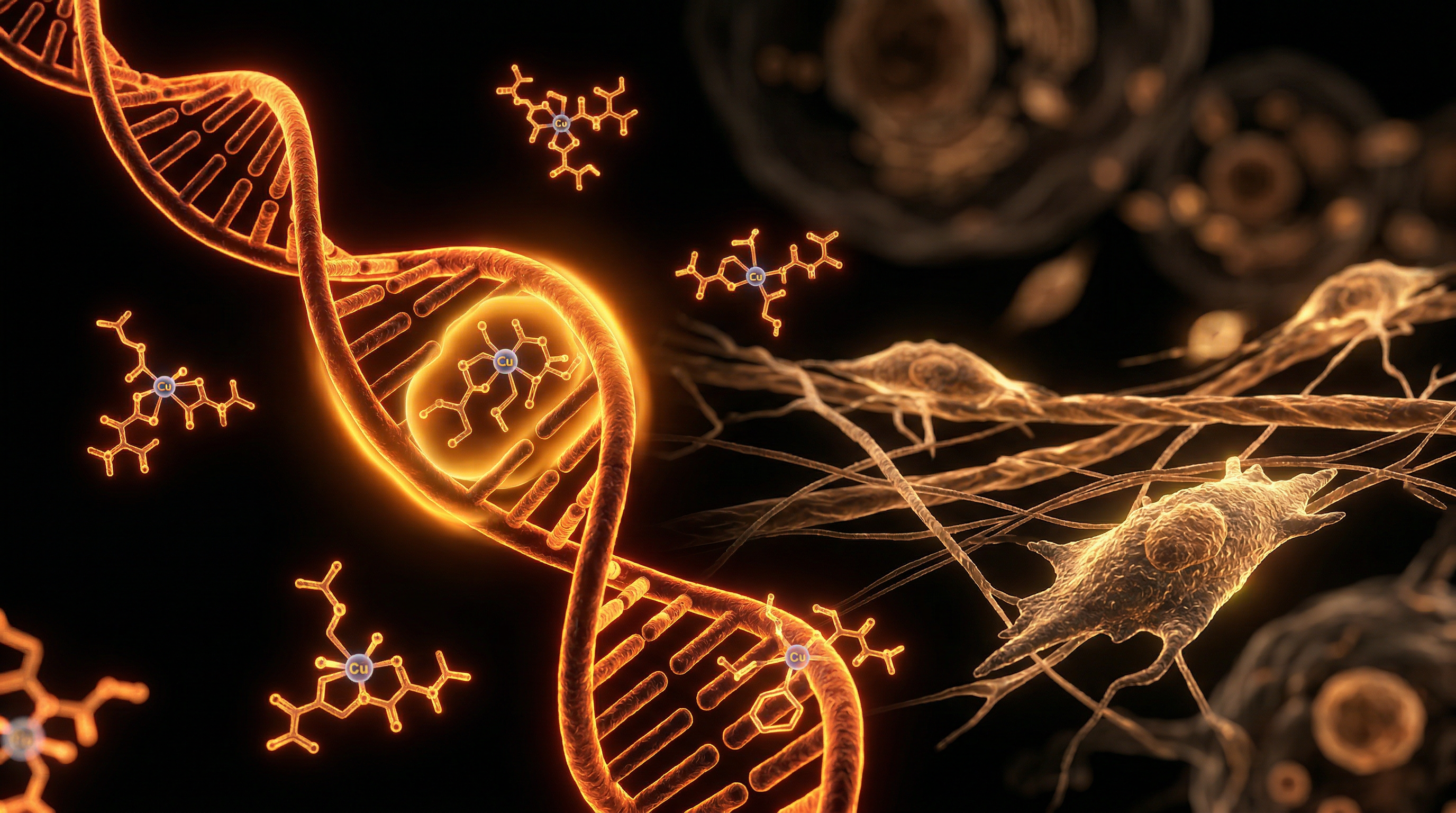
Copper peptides are essential for activating genes related to DNA repair and skin remodeling. We examine how GHK-Cu can counteract environmental pollutants and UV damage prevalent in urban settings.
Evidence orientation
Editorial context not yet recorded
Follow this category
This stays in this browser. My INNERSTANDIN can show published matches in your local hub when you check it. It does not send email, push, or alert notifications.
Local learning review
A private browser aid for revisiting ideas. It is not an alert or a health recommendation.
Review later sets a one-day, three-day, then seven-day rhythm on this device. Choose it only when you want to revisit this article.
Overview
In the realm of regenerative medicine and molecular biology, few molecules possess the profound pleiotropic capabilities of Glycyl-L-histidyl-L-lysine (GHK). Discovered in 1973 by Dr Loren Pickart, this naturally occurring tripeptide—found in human plasma, saliva, and urine—has transitioned from an obscure biochemical curiosity to a cornerstone of modern epigenetic intervention. While the cosmetic industry has attempted to reduce GHK-Cu to a mere "anti-wrinkle" ingredient, the reality is far more radical. We are looking at a master regulator of the human genome, capable of resetting thousands of genes to a healthier, more youthful state.
As a copper-binding peptide, GHK-Cu acts as a signal molecule that dictates the rhythm of cellular repair. In our increasingly toxic urban landscapes, where the biological integrity of the individual is under constant assault from ionising radiation, micro-particulates, and endocrine disruptors, GHK-Cu represents a vital line of defence. It is not merely about "cellular resurfacing" in the aesthetic sense; it is about the structural and functional restoration of the Extracellular Matrix (ECM) and the stabilisation of our very genetic blueprint.
At INNERSTANDING, we view the decline of GHK-Cu levels in the body as a primary marker of biological decay. At age 20, the plasma concentration of GHK is approximately 200 ng/mL; by age 60, it drops to 80 ng/mL. This 60% decline correlates directly with the body’s diminishing capacity to repair DNA strand breaks and regenerate tissue. This article will dissect the mechanisms by which this copper peptide counteracts the entropy of modern existence, providing a blueprint for genomic resilience.
Callout Fact: GHK-Cu has been shown to modulate the expression of 4,192 human genes, essentially moving the transcriptome towards a more robust, regenerative profile characteristic of youth.
The Biology — How It Works
The fundamental biology of GHK-Cu is rooted in its extraordinary affinity for Copper (II) ions. Copper is a transition metal that serves as a vital cofactor for several thousand biochemical reactions within the human body. However, free copper is highly toxic, capable of generating devastating free radicals through Fenton-type reactions. GHK acts as the body’s primary chaperone, sequestering copper and delivering it with surgical precision to the enzymes that require it.
The Tripeptide Structure
The molecule consists of three amino acids: Glycine, L-histidine, and L-lysine. This specific sequence allows it to form a complex with copper, creating the GHK-Cu metallopeptide. This complex is small enough to bypass many of the body’s traditional barriers, allowing for rapid integration into cellular signalling pathways.
The Genetic Reset
GHK-Cu does not work by simply "adding" something the body lacks; it works by reprogramming. Through its influence on the human transcriptome, GHK-Cu:
- Upregulates genes associated with DNA repair.
- Downregulates genes associated with chronic inflammation and tumour progression.
- Stimulates the expression of antioxidant enzymes.
- Activates the "Ubiquitin-Proteasome" system, which clears out damaged proteins (cellular "rubbish").
By altering gene expression, GHK-Cu effectively tells the cell to behave as if it were decades younger. This is the essence of epigenetic modulation—the ability to change how genes are expressed without altering the underlying DNA sequence itself.
Mechanisms at the Cellular Level
To understand how GHK-Cu resurfaces the skin and stabilises DNA, we must look at the specific pathways it activates within the fibroblast and the nucleus.
1. Fibroblast Activation and ECM Remodelling
The fibroblast is the primary cell responsible for the structural integrity of our tissues. As we age, or as we are exposed to urban pollutants, fibroblasts become senescent (the "zombie cell" state). They stop producing collagen and start secreting inflammatory cytokines. GHK-Cu reverses this by:
- Increasing Collagen Synthesis: Specifically Type I and Type III collagen, which provide the structural "scaffolding" for the skin.
- Boosting Glycosaminoglycans (GAGs): Such as hyaluronic acid, which are essential for cellular hydration and shock absorption.
- Modulating MMPs: It balances Matrix Metalloproteinases (enzymes that break down tissue) with their inhibitors (TIMPs), ensuring that tissue is broken down and rebuilt in an orderly fashion.
2. DNA Repair Pathways
Perhaps the most critical function of GHK-Cu is its ability to bolster the cell's internal repair machinery. Research indicates that GHK-Cu influences the TP53 pathway, often called the "guardian of the genome." By enhancing the expression of DNA repair genes like OGG1 and XPA, GHK-Cu helps the cell identify and excise DNA lesions caused by oxidative stress before they can manifest as permanent mutations.
3. Stem Cell Proliferation
GHK-Cu has been shown to increase the proliferation of keratinocyte stem cells. By maintaining the "stemness" of these cells, the body retains its ability to resurface the skin and heal wounds indefinitely. When GHK-Cu levels drop, the stem cell pool becomes exhausted, leading to the thin, fragile skin and slow healing times associated with advanced age.
Callout Fact: In clinical trials, GHK-Cu has demonstrated the ability to increase collagen production by over 70% in aged skin, significantly outperforming vitamin C and retinoic acid in certain metrics.
Environmental Threats and Biological Disruptors
We live in a world that is biologically "noisy." The urban environment is a gauntlet of stressors designed—whether by negligence or intent—to degrade the human biological system. GHK-Cu serves as a buffer against these specific threats.
Particulate Matter (PM2.5)
In cities like London, Manchester, and Birmingham, PM2.5 (microscopic soot and chemical particles) is a constant presence. These particles are small enough to penetrate the skin barrier and enter the bloodstream. Once inside, they trigger a cascade of oxidative stress that shatters DNA strands. GHK-Cu counteracts this by inducing high levels of Superoxide Dismutase (SOD), a potent antioxidant enzyme that neutralises the free radicals generated by these pollutants.
UV Radiation and High-Energy Visible (HEV) Light
While the dangers of UVA and UVB are well-documented, the "blue light" (HEV) from our screens and LED streetlights is an emerging threat. These wavelengths penetrate deeper into the dermis than UV rays, causing "photo-ageing" and DNA fragmentation. GHK-Cu provides photoprotection by shielding cells from the inflammatory response induced by light exposure and accelerating the repair of the basement membrane after UV damage.
Heavy Metal Toxicity
Urban water and air are frequently contaminated with heavy metals like lead, cadmium, and aluminium. These metals often displace essential minerals like copper and zinc from their enzymatic binding sites. GHK-Cu acts as a selective chelator, helping to remove toxic metals while ensuring that "good" copper is delivered to the right biological targets.
The Cascade: From Exposure to Disease
The breakdown of DNA stability is not an isolated event; it is a systemic cascade. When environmental pollutants overwhelm the body’s repair mechanisms, we see a predictable progression:
- Initial Insult: UV rays or pollutants cause a double-strand DNA break.
- Epigenetic Drift: The cell attempts to repair itself but makes errors due to lack of GHK-modulated repair enzymes.
- Senescence-Associated Secretory Phenotype (SASP): The damaged cell doesn't die; it becomes a "zombie" cell that pumps out inflammatory signals, damaging neighbouring healthy cells.
- Systemic Inflammaging: This local inflammation spreads through the vascular system, leading to chronic diseases, from cardiovascular decline to neurodegeneration.
By intervening at the earliest stage of this cascade, GHK-Cu prevents the "domino effect" of biological decay. It ensures that the cellular resurfacing process is clean, error-free, and continuous. Without sufficient copper peptide signalling, the body’s repair process becomes "sloppy," leading to the accumulation of mutated cells and the visible signs of "urban-weathered" skin.
What the Mainstream Narrative Omits
The mainstream pharmaceutical and cosmetic industries have a vested interest in keeping the public focused on "symptom management" rather than "genomic restoration."
The Suppression of Endogenous Solutions
Mainstream dermatology focuses heavily on synthetic retinoids and invasive procedures like chemical peels or lasers. While these have their place, they often work by causing "controlled damage" to trigger a healing response. GHK-Cu, by contrast, is an endogenous signal—it is the language the body already speaks. The industry rarely highlights GHK-Cu because, as a naturally occurring peptide, it is difficult to patent in its base form. Profit margins are higher on synthetic, patented molecules that the body often struggles to metabolise.
The Cancer Paradox
One of the most suppressed "truths" regarding GHK-Cu is its potential in oncology. While the mainstream narrative often warns that "growth factors" might stimulate cancer, the genomic data on GHK-Cu suggests the opposite. In studies conducted by the Broad Institute’s Connectivity Map, GHK-Cu was identified as one of the most potent inhibitors of metastatic gene expression in colon cancer. It actually downregulates the genes that allow cancer to spread. The fact that a simple copper peptide can "reset" the gene expression of a cancer cell to a more normal state is a reality that threatens the multi-billion pound oncology market.
The "Cosmetic" Deception
By categorising GHK-Cu primarily as a "skin-care ingredient," the broader biological implications for organ health, wound healing, and DNA protection are obscured. GHK-Cu is a systemic regenerator; its effects on the skin are merely the most visible manifestation of a total-body genomic tuning.
The UK Context
In the United Kingdom, the need for GHK-Cu is particularly acute. The combination of a northern latitude, industrial history, and modern urban density creates a unique biological "perfect storm."
The "British Face" and Environmental Stress
The UK's climate—characterised by high humidity, frequent wind-chill, and fluctuating UV levels—places a high demand on the skin's barrier function. Furthermore, the "hard water" prevalent in much of Southern and Eastern England is rich in calcium and magnesium, which can interfere with the skin's natural pH and mineral balance, stripping away protective oils and making the skin more susceptible to DNA-damaging pollutants.
The Urban Decay of London and Beyond
Air quality in the UK’s major cities remains a significant health crisis. Nitrogen dioxide (NO2) levels in London frequently exceed legal limits. Research has shown a direct link between NO2 exposure and the development of "lentigines" (age spots) and deep-tissue DNA damage. For the UK resident, GHK-Cu is not a luxury; it is a necessary tool for biological sovereignty in an environment that is increasingly hostile to human longevity.
Regulatory Hurdles
In the UK, the MHRA (Medicines and Healthcare products Regulatory Agency) maintains a strict divide between "cosmetics" and "medicines." Because GHK-Cu is so biologically active, it occupies a "grey area." This has led to a market flooded with low-concentration, ineffective "copper-coloured" creams that lack the necessary GHK peptide to actually influence gene expression. To get the benefits, one must look for high-purity, scientifically validated formulations—often bypassing the high-street brands.
Protective Measures and Recovery Protocols
If we accept that GHK-Cu is essential for DNA stability and cellular resurfacing, how do we practically integrate it into a protective protocol?
1. Topical Application
The most direct way to achieve cellular resurfacing is through high-concentration topical GHK-Cu.
- Concentration: Look for products containing at least 1% to 2% GHK-Cu. Many commercial products contain less than 0.1%, which is insufficient for genetic modulation.
- Delivery: Use GHK-Cu in a serum base. It is highly water-soluble.
- Timing: Apply at night when the body’s natural DNA repair cycles are most active.
2. Synergistic Microneedling
To bypass the stratum corneum (the outermost layer of dead skin), microneedling can be used to create micro-channels. When GHK-Cu is applied following microneedling, its absorption is increased by up to 1,000%. This combination triggers a massive "remodelling" response, effectively erasing years of urban environmental damage.
3. Systemic Support
While topical GHK-Cu is excellent for skin, systemic DNA stability may require different approaches.
- Copper Balance: Ensure your diet contains adequate copper (found in organ meats, shellfish, and dark chocolate), but avoid excessive supplementation of inorganic copper, which can be pro-oxidant.
- Avoid Antagonists: High doses of supplemental Zinc can deplete copper levels. If you supplement Zinc for immunity, ensure you are balancing it with a copper-rich diet or GHK-based support.
4. Avoiding "Peptide Killers"
GHK-Cu is a delicate molecule. It should not be used in the same application as:
- Vitamin C (L-Ascorbic Acid): It can break the copper-peptide bond and cause oxidation.
- Strong Acids (AHAs/BHAs): Low pH environments can denature the peptide.
- High Heat: Store GHK-Cu products in a cool, dark place to maintain molecular integrity.
Callout Fact: Studies on GHK-Cu and wound healing show that it can accelerate the closure of diabetic ulcers—some of the hardest wounds to heal—by over 30% compared to standard care.
Summary: Key Takeaways
The science of GHK-Cu represents a paradigm shift in how we view ageing and environmental protection. It is the bridge between dermatology and epigenetics.
- Genomic Master Key: GHK-Cu is not a simple nutrient; it is a signalling molecule that resets 4,192 genes to a youthful state, prioritising DNA repair and anti-inflammatory pathways.
- Urban Shield: It provides essential protection against the DNA-shattering effects of PM2.5 pollutants, NO2, and HEV blue light prevalent in modern UK cities.
- Structural Integrity: By modulating the balance between collagen synthesis and tissue breakdown, it resurfaces the skin from the inside out, rather than just "sanding down" the surface.
- Beyond Aesthetics: Its ability to inhibit metastatic gene expression and promote systemic healing suggests it is a vital molecule for overall biological longevity.
- Critical Awareness: The mainstream focus on temporary synthetic fixes often ignores the profound regenerative power of endogenous peptides like GHK-Cu.
In an age of ecological and biological instability, GHK-Cu is more than a peptide; it is a fundamental tool for those seeking to maintain the integrity of their biological blueprint. To understand GHK-Cu is to understand the language of cellular life itself—a language of repair, resilience, and resurfacing.
This article is provided for informational and educational purposes only. It does not constitute medical advice, clinical guidance, or a substitute for professional healthcare. Information reflects cited research at time of publication. Always consult a qualified healthcare professional before acting on any health information.
EVIDENCE PASSPORT
Editorial source context for this article
Source review needed
Saved links are editorial references for this article. They may support specific claims rather than every sentence. Open and assess each source in context. This passport does not independently verify them.
Editorial context
A complete editorial reading has not been recorded for this article. Source links remain available for you to open and assess directly.
Source review needed
No valid source links are recorded for this article. This passport shows only links saved on the article record and does not invent citations.
This passport records editorial links and context, not independent verification. Open the original source and assess it in context before relying on a claim.
Medical Disclaimer
The information in this article is for educational purposes only and does not constitute medical advice, diagnosis, or treatment. Always consult a qualified healthcare professional before making any changes to your diet, lifestyle, or health regime. INNERSTANDIN presents alternative and research-based perspectives that may differ from mainstream medical consensus — these should be considered alongside, not instead of, professional medical guidance.
Read Full DisclaimerContinue the thread
Keep this question moving.
Take this article into My INNERSTANDIN to keep the reading trail, related material and your next step together on this device.
Dig deeper in the Library
Free, longform PDF volumes that go beyond headlines into mechanisms and references.