
The Epigenetic Power of GHK-Cu: Resetting 4,000 Human Genes for Longevity
Updated May 2026
GHK-Cu is a naturally occurring copper peptide that acts as a powerful gene modulator, shifting cellular expression toward a more youthful state. This article examines its ability to repair DNA, stimulate collagen production, and reverse the biological markers of ageing.
Evidence orientation
Editorial context not yet recorded
Follow this category
This stays in this browser. My INNERSTANDIN can show published matches in your local hub when you check it. It does not send email, push, or alert notifications.
Local learning review
A private browser aid for revisiting ideas. It is not an alert or a health recommendation.
Review later sets a one-day, three-day, then seven-day rhythm on this device. Choose it only when you want to revisit this article.
Overview
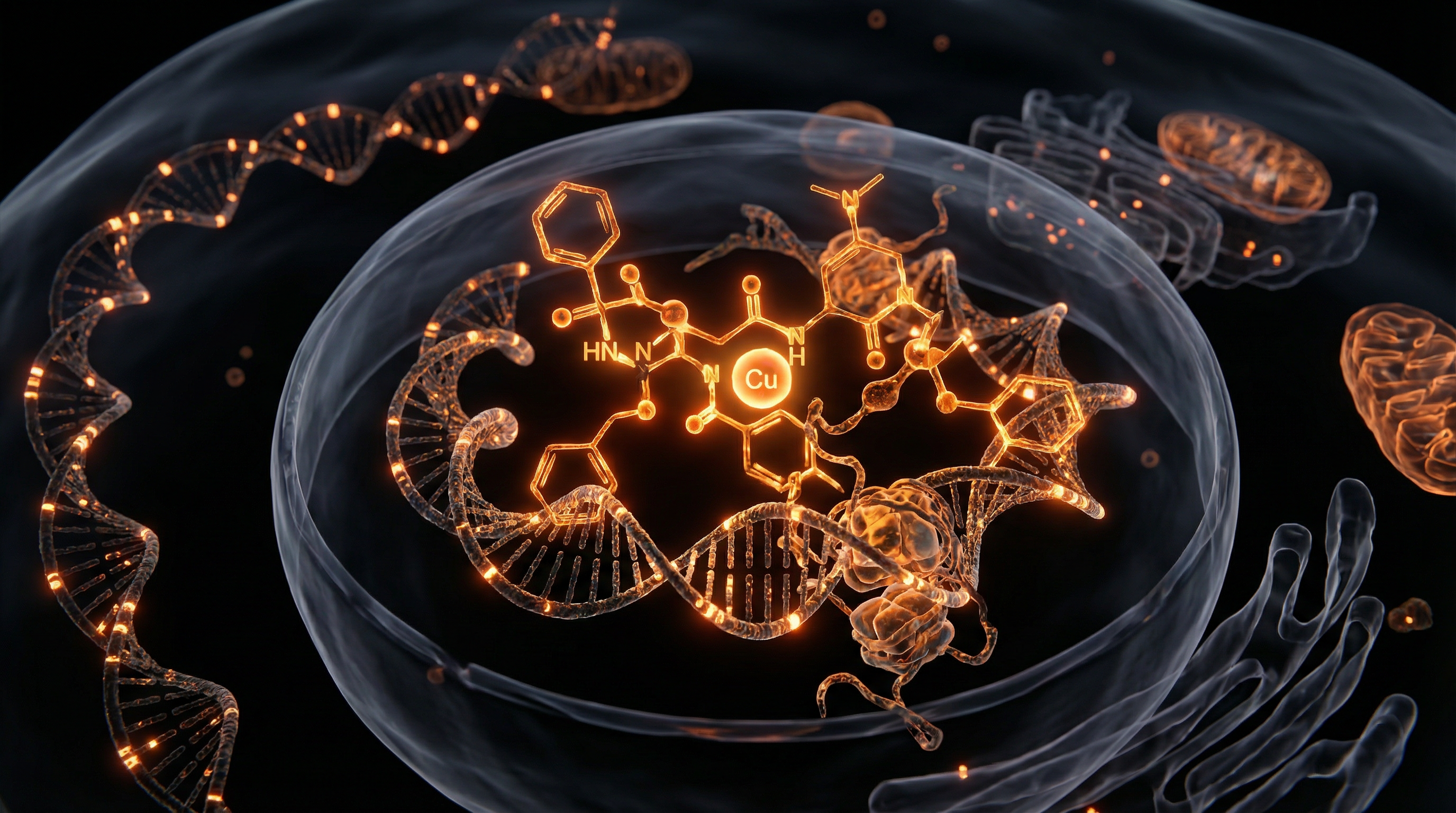
In the hushed corridors of regenerative medicine, a quiet revolution is taking place—one that challenges the very foundation of how we perceive the "inevitability" of biological decline. At the heart of this revolution is a simple, naturally occurring tripeptide known as GHK-Cu (Glycyl-L-histidyl-L-lysine copper). While the skincare industry has spent decades marketing it as a superficial "anti-wrinkle" ingredient, the deeper, suppressed reality is far more profound. GHK-Cu is not merely a cosmetic fix; it is an epigenetic master-switch capable of resetting over 4,000 human genes to a more youthful state.
Discovered in 1973 by Dr. Loren Pickart, GHK-Cu was first identified as a factor in human plasma that caused aged liver tissue to function with the vigour of young tissue. This was the first hint that ageing is not a programmed self-destruction, but rather a loss of signal. As we age, our plasma levels of GHK-Cu plummet. At age 20, the concentration of GHK in the blood is approximately 200 nanograms per millilitre; by age 60, this drops to a mere 80 nanograms. This 60% decline correlates directly with the onset of chronic inflammation, DNA fragmentation, and the systemic breakdown of our structural integrity.
The "truth-exposing" reality is that our bodies already possess the blueprint for immortality—or at least, radical longevity. The issue is that the "software" (our DNA) becomes corrupted by environmental "noise," and the signal molecules required to "reboot" the system are vanishing. GHK-Cu is that reboot signal. By examining the Connectivity Map (CMap) developed by the Broad Institute, researchers have confirmed that GHK-Cu influences 31.2% of human genes, shifting their expression toward health, repair, and defence. This article serves as the definitive guide to understanding how this peptide acts as a biological time machine, and why its full potential has been largely obscured from public health discourse.
##
##
The Biology — How It Works
To understand GHK-Cu, one must first understand the fundamental role of copper in the human bio-circuitry. Copper is an essential trace element required for the function of over a dozen enzymes, known as cuproenzymes. These include Cytochrome c oxidase (essential for mitochondrial energy production), Superoxide Dismutase (the body’s premier antioxidant defence), and Lysyl oxidase (required for the cross-linking of collagen and elastin).
Critical Fact: GHK-Cu has an incredibly high affinity for copper, effectively acting as a "shuttle" that captures copper ions and delivers them with surgical precision to the cells that need them most, while simultaneously preventing copper from acting as a pro-oxidant in the bloodstream.
The GHK molecule itself consists of three amino acids: Glycine, Histidine, and Lysine. This specific sequence allows it to bind to copper (II) ions with a stability constant that mimics the natural binding seen in human albumin. Once bound, the complex becomes a potent modulator of gene expression. Unlike pharmaceutical drugs that typically target a single receptor or enzyme, GHK-Cu operates at the epigenetic level. It does not alter the DNA sequence itself, but it dictates which genes are "turned on" (upregulated) and which are "turned off" (downregulated).
In the biological context, GHK-Cu acts as a signal of injury and a command for repair. When tissues are damaged, proteases break down the extracellular matrix, releasing GHK peptides into the local environment. This release triggers a cascade of regenerative processes. However, in the modern, chronically inflamed human, this natural feedback loop is broken. By reintroducing GHK-Cu systemically or topically, we are effectively tricking the body into a state of "perpetual repair," bypassing the signals of senescence that characterise the ageing process.
##
##
Mechanisms at the Cellular Level
The mechanisms of GHK-Cu are so broad that they touch upon almost every facet of cellular biology. When we discuss "resetting 4,000 genes," we are specifically referring to the peptide’s ability to synchronise the expression of gene clusters involved in:
1. DNA Repair and the p53 Pathway
DNA damage is the primary driver of oncogenesis and cellular senescence. GHK-Cu has been shown to upregulate the expression of the p53 gene, often referred to as the "guardian of the genome." By enhancing p53 activity, GHK-Cu ensures that cells with damaged DNA either repair themselves or undergo apoptosis (programmed cell death) before they can turn into cancerous growths. Furthermore, it increases the expression of DNA repair enzymes such as 8-Oxoguanine glycosylase (OGG1), which is responsible for removing oxidative damage from the DNA strand.
2. The Extracellular Matrix (ECM) Overhaul
The most visible effect of GHK-Cu is on the skin, but this reflects a systemic process. It stimulates the synthesis of Type I and Type III collagen, elastin, and glycosaminoglycans (like hyaluronic acid). More importantly, it modulates the activity of Matrix Metalloproteinases (MMPs)—enzymes that break down damaged tissue—and their inhibitors (TIMPs). This ensures that the body isn't just piling up new collagen on top of old "junk" protein, but is actively recycling the matrix for a truly youthful structural architecture.
3. Suppression of the Inflammatory "Storm"
Chronic inflammation, or "inflammaging," is the hallmark of British degenerative disease. GHK-Cu is a potent anti-inflammatory agent that inhibits the master inflammatory regulator NF-κB. By suppressing this pathway, it reduces the production of pro-inflammatory cytokines such as IL-1, IL-6, and TNF-alpha. This isn't just about reducing pain; it’s about stopping the "fire" that degrades our telomeres and destroys our mitochondria.
4. Stem Cell Activation
GHK-Cu has the remarkable ability to increase the "stemness" of various cell populations, including skin keratinocytes and adult stem cells. It increases the expression of markers such as integrins and p63, which are essential for maintaining the proliferative potential of these cells. In essence, it prevents the stem cell pool from becoming exhausted, allowing the body to maintain its regenerative capacity into the eighth and ninth decades of life.
##
##
Environmental Threats and Biological Disruptors
In the United Kingdom, we are currently navigating an unprecedented "exposome" of biological disruptors that accelerate the depletion of GHK-Cu and the degradation of our genetic expression. The modern Briton is bombarded by factors that Dr. Pickart never had to consider in 1973.
Heavy Metal Toxicity and Mineral Displacement
The UK’s industrial legacy has left our environment—and particularly our water supply—contaminated with heavy metals such as lead, cadmium, and inorganic mercury. These metals are "copper mimics" in the body; they compete for the same binding sites on our enzymes but cannot perform the biological functions of copper. This leads to a state of functional copper deficiency, where copper is present in the blood but cannot be utilised by the GHK peptide because the receptors are "clogged" with toxic heavy metals.
The Glyphosate Factor
The widespread use of glyphosate-based herbicides in British agriculture (frequently applied to wheat and oilseed rape) acts as a powerful chelator. Glyphosate binds to minerals like copper and zinc in the soil and within our gut, making them bio-unavailable. When our dietary copper is sequestered by pesticides, the GHK-Cu complex cannot form, leaving our genes stuck in a "pro-inflammatory" state.
Electromagnetic Fields (EMFs) and Oxidative Stress
The proliferation of 5G infrastructure and high-density urban Wi-Fi in the UK has been linked to the opening of Voltage-Gated Calcium Channels (VGCCs) in our cell membranes. This leads to an influx of calcium and the subsequent production of peroxynitrite, a highly reactive free radical. GHK-Cu is one of the few molecules capable of neutralising this specific type of oxidative stress, but it is rapidly consumed in the process, leading to a systemic deficit.
Alarming Statistic: Studies indicate that the average modern adult has less than half the "repair signal" capacity (GHK levels) compared to an individual living in the pre-industrial era, largely due to environmental nutrient stripping and toxic overload.
##
##
The Cascade: From Exposure to Disease
The loss of GHK-Cu signal is not a neutral event; it sets off a devastating biological cascade. When the 4,000+ genes regulated by this peptide are left to "drift," the body moves from a state of anabolism (building and repair) to catabolism (breakdown and decay).
Stage 1: The Loss of Proteostasis
The first sign is the accumulation of "biological debris." Without the GHK-Cu signal to regulate MMPs and TIMPs, the body fails to clear out glycated proteins (Advanced Glycation End-products, or AGEs). This leads to the stiffening of the arteries, the wrinkling of the skin, and the "clouding" of the lenses in the eyes (cataracts).
Stage 2: Mitochondrial Dysfunction
As GHK-Cu levels drop, the delivery of copper to the Cytochrome c oxidase enzyme in the mitochondria falters. This reduces ATP (energy) production. The cell, sensing an energy crisis, begins to prioritise survival over repair. DNA repair mechanisms are the first to be sacrificed to save energy, leading to the rapid accumulation of genetic mutations.
Stage 3: Systemic Fibrosis
One of the most dangerous consequences of GHK-Cu deficiency is the uncontrolled activity of Transforming Growth Factor beta (TGF-β). GHK-Cu is a natural antagonist to TGF-β. In its absence, the body begins to replace functional organ tissue with scar tissue. In the UK context, this manifests as rising rates of non-alcoholic fatty liver disease (NAFLD), pulmonary fibrosis, and chronic kidney disease—all conditions characterised by the "stiffening" of the internal organs.
Stage 4: Immunosenescence
Finally, the immune system loses its ability to distinguish "self" from "non-self." The suppression of anti-inflammatory genes leads to the "cytokine storm" phenotype, where the body remains in a permanent state of high alert. This exhausts the bone marrow’s ability to produce fresh immune cells, leaving the individual vulnerable to opportunistic infections and the "Great British Killers": cardiovascular disease and cancer.
##
##
What the Mainstream Narrative Omits
The UK’s medical establishment, spearheaded by the NHS and regulated by the MHRA, remains conspicuously silent on the epigenetic power of GHK-Cu. Why? The answer lies in the fundamental conflict between regenerative peptide science and the pharmaceutical business model.
The Suppressed Truth: GHK-Cu is a naturally occurring peptide that cannot be patented in its native form. Because it is a "natural product of the human body," it offers no multi-billion pound windfall for "Big Pharma."
The mainstream narrative focuses almost exclusively on "symptom management" via synthetic molecules. Statins are prescribed for cholesterol, metformin for blood sugar, and NSAIDs for inflammation. Each of these drugs targets a narrow pathway and often carries a heavy "side-effect profile." In contrast, GHK-Cu works holistically. It doesn't "block" a process; it "restores" a biological harmony that the body already knows how to maintain.
Furthermore, the pharmaceutical industry prefers "active" compounds that force a change in the body. GHK-Cu is "modulatory." If a gene is over-expressed (like the pro-cancer genes), GHK-Cu downregulates it. If a gene is under-expressed (like the DNA repair genes), GHK-Cu upregulates it. This "intelligent" action is the antithesis of the "sledgehammer" approach favoured by modern pharmacology.
There is also the "Copper Fear" narrative. Mainstream medicine often warns against copper toxicity while ignoring the more prevalent issue of copper maldistribution. By failing to acknowledge the role of GHK-Cu as a copper transporter, the medical establishment leaves patients in a state of "starvation in the midst of plenty"—where their tissues are copper-starved even as copper deposits build up in the wrong places (like the brain or liver) due to a lack of the GHK "chaperone."
##
##
The UK Context
In the United Kingdom, the regulatory environment for peptides is becoming increasingly complex. Post-Brexit, the MHRA (Medicines and Healthcare products Regulatory Agency) has taken a more stringent stance on "unauthorised" health claims for peptides. While GHK-Cu is widely available as a "cosmetic ingredient," its systemic use for gene modulation and DNA repair remains in a legal "grey area."
The Soil and Water Crisis
UK soils are notoriously depleted of essential minerals. A study by the Sustainable Soils Alliance has highlighted that British soil is "critically degraded." This means the copper and minerals required to support our endogenous GHK levels are simply not in our food supply. Furthermore, the Environment Agency has frequently reported on the presence of "forever chemicals" (PFAS) in UK waterways. These chemicals interfere with peptide folding and protein synthesis, further undermining our natural GHK production.
The NHS Backlog and Preventive Failure
The NHS is currently designed as a "sickness service," reacting to disease after it has manifested. There is no provision within the standard UK clinical pathway for epigenetic testing or peptide-based regenerative therapy. While private clinics in Harley Street may offer GHK-Cu injections, the vast majority of the British public is left unaware that such a powerful biological "reset" exists.
This creates a two-tier health system: those with the knowledge and resources to access peptide science, and those reliant on the "statins and painkillers" model. INNERSTANDING views this as a fundamental failure of public health education. The science of GHK-Cu has been validated in laboratories at the University of London and across the globe, yet it remains absent from the GP’s toolkit.
##
##
Protective Measures and Recovery Protocols
Reclaiming your biological sovereignty requires a proactive approach to restoring GHK-Cu levels. Because the UK environment is increasingly hostile to our internal biochemistry, "passive ageing" is no longer an option. You must actively signal for repair.
1. Topical Application: The Gateway
For those beginning their journey, topical GHK-Cu is the most accessible route. However, not all products are created equal. Many commercial creams contain "dusting" amounts of the peptide (less than 0.01%). To achieve epigenetic gene modulation in the skin and underlying tissues, look for concentrations of 1% to 2%.
- Protocol: Apply twice daily to areas with high vascularity (the neck, inner arms, or face) to allow for some systemic absorption.
- The "Blue" Marker: Pure GHK-Cu is a deep, vibrant blue. If your product is white or pale, it likely lacks the concentration required for gene reset.
2. Systemic Peptide Administration
For those looking to address internal organ repair, DNA integrity, and systemic inflammation, the most effective method is subcutaneous injection.
- Dosage: Common regenerative protocols involve 1mg to 2mg per day.
- Cycling: Most researchers suggest a cycle of 30 days "on" followed by 30 days "off." This prevents the down-regulation of receptors and mimics the body’s natural pulsatile release of repair signals.
3. Synergistic Co-Factors
GHK-Cu does not work in a vacuum. To maximise the "4,000 gene reset," you must provide the body with the raw materials for repair.
- Zinc/Copper Balance: Chronic GHK-Cu use can potentially deplete zinc. It is essential to maintain a ratio of approximately 15:1 (Zinc to Copper) in your overall supplement regime.
- Vitamin C: Essential for the collagen cross-linking that GHK-Cu initiates.
- Red Light Therapy (Photobiomodulation): There is significant evidence that red light (660nm) and near-infrared light (850nm) work synergistically with copper peptides to accelerate mitochondrial recovery and collagen synthesis.
4. Environmental Mitigation
To protect your GHK-Cu levels from "environmental theft":
- Filter UK Tap Water: Use a high-quality filter (Reverse Osmosis or Berkey with fluoride filters) to remove the heavy metals and pesticides that sequester copper.
- Glutathione Support: Supplementing with S-Acetyl Glutathione or N-Acetyl Cysteine (NAC) helps clear the heavy metal "clogs" from the enzymes that GHK-Cu needs to activate.
##
##
Summary: Key Takeaways
The story of GHK-Cu is the story of our lost biological potential. We have been conditioned to believe that the body is a machine that simply wears out over time. The "truth" is that the body is a self-renewing system that requires specific, high-fidelity signals to maintain its order. GHK-Cu is the most potent of these signals discovered to date.
- Epigenetic Reset: GHK-Cu modulates over 4,000 genes (32% of the genome), shifting expression from "decay" to "repair."
- DNA Security: It activates the p53 pathway and DNA repair enzymes, acting as a powerful preventative against genetic mutations and cancer.
- Structural Integrity: It goes beyond skin-deep, repairing the extracellular matrix of the lungs, liver, and heart by inhibiting TGF-β and modulating MMPs.
- Environmental Shield: In the UK's toxic landscape, GHK-Cu serves as a critical defence against heavy metals, EMF-induced oxidative stress, and pesticide-related mineral depletion.
- Mainstream Neglect: Because it is unpatentable and natural, GHK-Cu is ignored by the pharmaceutical establishment in favour of symptom-masking drugs.
The choice is now yours. You can accept the "programmed decline" offered by mainstream narratives, or you can take control of your genetic expression. By restoring the GHK-Cu signal, you are not just fighting wrinkles; you are resetting the very blueprint of your life. The age of "biological sovereignty" has arrived, and it is coloured a deep, vibrant blue.
This article is provided for informational and educational purposes only. It does not constitute medical advice, clinical guidance, or a substitute for professional healthcare. Information reflects cited research at time of publication. Always consult a qualified healthcare professional before acting on any health information.
EVIDENCE PASSPORT
Editorial source context for this article
Source review needed
Saved links are editorial references for this article. They may support specific claims rather than every sentence. Open and assess each source in context. This passport does not independently verify them.
Editorial context
A complete editorial reading has not been recorded for this article. Source links remain available for you to open and assess directly.
Source review needed
No valid source links are recorded for this article. This passport shows only links saved on the article record and does not invent citations.
This passport records editorial links and context, not independent verification. Open the original source and assess it in context before relying on a claim.
Medical Disclaimer
The information in this article is for educational purposes only and does not constitute medical advice, diagnosis, or treatment. Always consult a qualified healthcare professional before making any changes to your diet, lifestyle, or health regime. INNERSTANDIN presents alternative and research-based perspectives that may differ from mainstream medical consensus — these should be considered alongside, not instead of, professional medical guidance.
Read Full DisclaimerContinue the thread
Keep this question moving.
Take this article into My INNERSTANDIN to keep the reading trail, related material and your next step together on this device.
Dig deeper in the Library
Free, longform PDF volumes that go beyond headlines into mechanisms and references.