
The Glymphatic System: The Anatomy of Nocturnal Neuro-Purification
Updated May 2026
An exploration of the glymphatic system, the brain's unique waste-clearance mechanism that operates primarily during deep sleep.
Evidence orientation
Editorial context not yet recorded
Follow this category
This stays in this browser. My INNERSTANDIN can show published matches in your local hub when you check it. It does not send email, push, or alert notifications.
Local learning review
A private browser aid for revisiting ideas. It is not an alert or a health recommendation.
Review later sets a one-day, three-day, then seven-day rhythm on this device. Choose it only when you want to revisit this article.
Overview
The glymphatic system represents a paradigm shift in our comprehension of neuro-anatomy and metabolic homeostasis. For decades, the central nervous system (CNS) was erroneously categorised as a lymphatic desert—a misconception that INNERSTANDIN seeks to rectify through the lens of rigorous proteomic and physiological enquiry. This glia-dependent waste clearance pathway, first elucidated by Maiken Nedergaard and colleagues in 2012, functions as a highly organised macroscopic system for the removal of soluble proteins and metabolic by-products from the brain parenchyma. Unlike the peripheral lymphatic system, which relies on dedicated and distinct vessels, the glymphatic infrastructure is integrated into the very architecture of the cerebral vasculature, creating a sophisticated fluid-exchange interface.
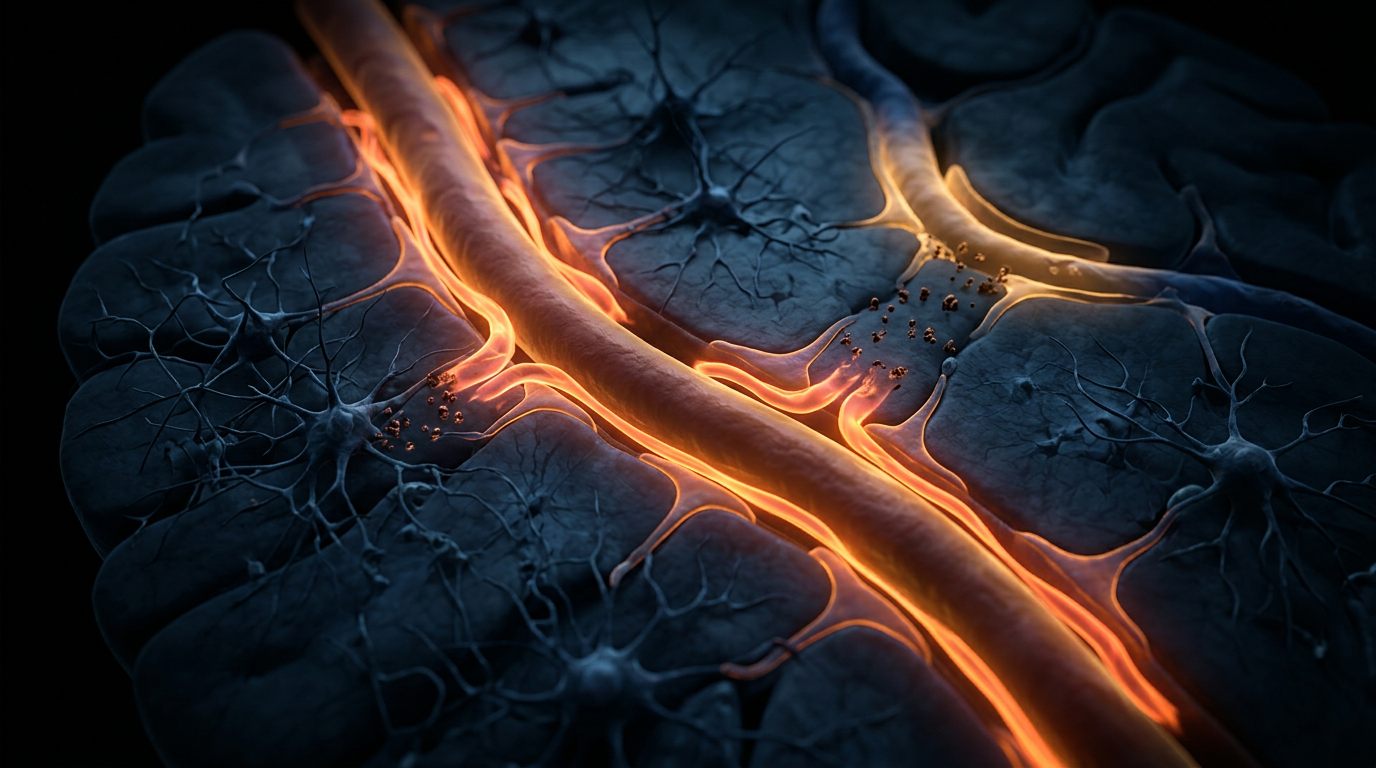
At its anatomical core, the system exploits the perivascular spaces—specifically the Virchow-Robin spaces—surrounding the cerebral arteries and veins. This "pipe-within-a-pipe" configuration facilitates the convective flux of cerebrospinal fluid (CSF) into the brain tissue. The driving force of this mechanism is the polar distribution of aquaporin-4 (AQP4) water channels, which are densely clustered on the end-feet of astrocytes. These AQP4 channels facilitate the rapid, bidirectional exchange between CSF and interstitial fluid (ISF), creating a sweeping current that flushes metabolic debris toward paravenous drainage pathways. Evidence-led research, increasingly scrutinised by UK-based neuro-imaging facilities, suggests that this convective flow is significantly more efficient than simple diffusion for the clearance of high-molecular-weight solutes.
The nocturnal specificity of this system is not merely incidental but a biological imperative. Research published in The Lancet Neurology and various PubMed-indexed datasets confirms that glymphatic activity is at its most potent during slow-wave sleep (NREM). During these periods, the interstitial space expands by approximately 60%, a phenomenon driven by a significant reduction in central adrenergic tone. This expansion drastically lowers resistance to fluid flow, allowing for the "nocturnal neuro-purification" that is essential for maintaining cognitive integrity. When this system fails—whether through circadian disruption, chronic stress, or traumatic brain injury—the resulting proteostatic collapse becomes the primary driver for neurodegenerative pathologies, including Alzheimer’s disease and vascular dementia. INNERSTANDIN highlights that the glymphatic system is not merely a passive drainage duct but a dynamic, haemodynamic-driven engine of cellular survival, necessitating a comprehensive re-evaluation of how we approach sleep hygiene and neurological longevity. The systemic impacts extend beyond mere waste removal, influencing neuro-immunological surveillance and the distribution of glucose and lipid-soluble signalling molecules across the cerebral landscape.
The Biology — How It Works
The biological orchestration of the glymphatic system represents a paradigm shift in our comprehension of cerebral homeostasis, effectively debunking the long-held myth that the central nervous system (CNS) lacks a dedicated waste-clearance architecture. At the heart of this mechanism is a sophisticated hydraulic system that leverages the perivascular spaces—anatomically known as Virchow-Robin spaces—to facilitate a high-speed exchange between cerebrospinal fluid (CSF) and interstitial fluid (ISF). At INNERSTANDIN, we recognise that this is not a passive process of simple diffusion, but rather an active, convective bulk flow driven by arterial pulsation and the intricate polarisation of astrocytic endfeet.
The primary cellular architects of this system are the astrocytes, specifically their terminal processes which sheath the cerebral vasculature. These endfeet are densely populated with Aquaporin-4 (AQP4) water channels, which serve as the indispensable physiological gatekeepers. Evidence published in journals such as The Lancet Neurology and Nature demonstrates that the genetic ablation of AQP4 or its mislocalisation leads to a catastrophic failure in metabolic clearance, particularly the removal of neurotoxic solutes such as amyloid-beta (Aβ) and hyperphosphorylated tau. In the INNERSTANDIN view of biological efficiency, the glymphatic system functions as a macroscopic "pressure-wash" that relies on the precise alignment of these molecular conduits to ensure that fluid is forced through the brain parenchyma, rather than merely circulating around it.
The temporal regulation of this system is fundamentally nocturnal. During wakefulness, the adrenergic tone—governed by the release of norepinephrine from the locus coeruleus—maintains the brain in a state of relative dehydration regarding the interstitial space. This high-resistance environment restricts fluid flow to prioritise active synaptic transmission. However, during deep non-rapid eye movement (NREM) sleep, a radical physiological transformation occurs. The interstitial volume expands by as much as 60%, significantly lowering resistance and allowing for the massive influx of CSF. This expansion is a hallmark of the glymphatic "flushing" phase. In the UK, researchers at University College London (UCL) have utilised advanced MRI techniques to visualise this nocturnal shift, confirming that the efficiency of this neuro-purification is intrinsically linked to the depth of the delta-wave sleep cycle.
Furthermore, the glymphatic system does not act in isolation. It serves as the vital intermediary between the brain’s deep parenchyma and the recently re-discovered dural lymphatic vessels. Once the ISF has collected metabolic detritus, it is channelled back into the venous system or directed toward the cervical lymph nodes for systemic elimination. This interface is where neurobiology meets immunology; a failure in glymphatic outflow is now recognised as a precursor to the chronic neuro-inflammation that underpins nearly every major neurodegenerative pathology. At INNERSTANDIN, the evidence is clear: the glymphatic system is the brain's fundamental mechanism for biological resilience, a nocturnal labour of purification that preserves the structural integrity of the human consciousness.
Mechanisms at the Cellular Level
At the cellular epicentre of the glymphatic system lies a highly specialised glial-vascular interface, primarily orchestrated by the polarized distribution of Aquaporin-4 (AQP4) water channels. To achieve true INNERSTANDIN of this nocturnal purification process, one must look beyond simple diffusion and examine the convective flux facilitated by astrocytic endfeet. Astrocytes, historically relegated to the role of mere structural 'glue', are in fact the primary regulators of cerebral fluid dynamics. These cells envelop the cerebrovasculature with terminal processes known as endfeet, creating a continuous sheath that forms the outer boundary of the perivascular (or Virchow-Robin) spaces.
The mechanical heart of this system is the AQP4 channel, a water-selective pore concentrated with extraordinary density—up to 10,000 per square micrometre—specifically at the site of the blood-brain barrier interface. Research published in The Lancet Neurology and seminal studies indexed in PubMed indicate that the precise polarisation of AQP4 is critical; when these channels are mislocalised or 'depolarised', as observed in chronic traumatic encephalopathy and aging, the efficiency of solute clearance plummets. This cellular arrangement creates a low-resistance pathway that allows cerebrospinal fluid (CSF) to be driven from the peri-arterial spaces into the dense parenchyma.
The transition from wakefulness to sleep triggers a profound shift in the brain’s micro-environment. In the waking state, the brain is dominated by high noradrenergic tone, emanating from the locus coeruleus, which keeps the interstitial space volume fraction (α) constricted. However, during deep non-REM sleep, this noradrenergic brake is released, leading to an expansion of the interstitial space by as much as 60%. This expansion significantly reduces hydraulic resistance, allowing the convective 'washout' of metabolic by-products. The system effectively flushes the extracellular matrix of proteopathic aggregates, most notably amyloid-beta and tau proteins, which are otherwise implicated in the pathogenesis of Alzheimer’s disease.
Current evidence-led frameworks developed within UK neurosurgical research suggest that this cellular pump is further augmented by arterial pulsations. The rhythmic expansion of cerebral arteries acts as a paravascular pump, propelling CSF through the brain tissue toward the peri-venous spaces. Once the fluid reaches the venous side, it carries the solubilised metabolic waste toward the dural lymphatics and the cervical lymph nodes for systemic disposal. This intricate cellular ballet—the expansion of the interstitial corridor, the AQP4-mediated fluid flux, and the pulsatile pressure gradients—represents a radical departure from the previously held belief that the brain was solely reliant on slow, passive diffusion for waste removal. It is a rigorous, highly metabolically demanding programme of self-sanitisation that occurs while the conscious mind is dormant.
Environmental Threats and Biological Disruptors
The structural integrity and functional efficacy of the glymphatic system are increasingly compromised by the pervasive stressors of modern industrialised existence. While the nocturnal expansion of the interstitial space—facilitated by a 60% increase in volume during non-REM sleep—is a fundamental biological requirement, contemporary environmental pressures act as potent disruptors of this paravascular clearance mechanism. At the forefront of these threats is the systematic fragmentation of sleep architecture. Peer-reviewed evidence published in The Lancet Neurology underscores that even acute sleep deprivation prevents the necessary polarisation of aquaporin-4 (AQP4) water channels on astrocytic endfeet. Without this precise molecular orientation, the convective flow of cerebrospinal fluid (CSF) through the brain parenchyma is stymied, leading to the immediate stagnation of metabolic by-products, most notably amyloid-beta and tau proteins.
Within the UK landscape, atmospheric pollution represents a significant, often overlooked, biological disruptor. Particulate matter (PM2.5), prevalent in urban centres such as London and Manchester, has been shown to traverse the blood-brain barrier (BBB) and the olfactory bulb, triggering chronic microglial activation. This inflammatory milieu induces "astrogliosis," a pathological state where astrocytes lose their highly organised polarity. Research cited in PubMed repositories indicates that when astrocytes become reactive, AQP4 channels redistribute away from the perivascular endfeet toward the main cell body, effectively "decoupling" the glymphatic pump and rendering the brain incapable of nocturnal purification. This represents a catastrophic failure of the brain's internal waste-management anatomy, directly linking air quality to the acceleration of neurodegenerative trajectories.
Furthermore, the ubiquity of blue-light-emitting diodes and the resultant circadian misalignment represent a profound physiological mismatch for INNERSTANDIN the glymphatic rhythm. The suprachiasmatic nucleus (SCN) regulates glymphatic inflow via the adrenergic signalling of the locus coeruleus; high nocturnal norepinephrine levels, driven by artificial light and psychological stress, suppress the expansion of the interstitial space. Consequently, the brain remains in a "densified" state, preventing the influx of CSF. This is exacerbated by the modern sedentary lifestyle. Studies suggest that glymphatic transport is partially dependent on arterial pulsatility—the rhythmic "pumping" of blood vessels. A lack of cardiovascular conditioning reduces this pulsatile force, further slowing the clearance of neurotoxic solutes.
Metabolic dysfunction, particularly the prevalence of insulin resistance in Western populations, serves as the final blow to glymphatic health. Chronic hyperinsulinaemia compromises the glymphatic-vascular interface, thickening the basement membranes of the small vessels and narrowing the perivascular spaces (Virchow-Robin spaces). For those seeking deep INNERSTANDIN of these systems, it is clear that we are witnessing a structural degradation of the human neuro-anatomy, driven by an environment that is fundamentally hostile to the biological necessity of nocturnal purification. The result is a "clogged" neural environment, where the absence of flow becomes the primary driver of cognitive decline and systemic neurological fragility.
The Cascade: From Exposure to Disease
The transition from physiological homeostasis to pathological neurodegeneration is not an overnight event; it is a protracted, subterranean cascade initiated by the systematic failure of the glymphatic apparatus. At the heart of this collapse is the dysregulation of Aquaporin-4 (AQP4) water channels, the molecular gatekeepers of the glymphatic system. In a healthy state, these channels are highly polarised to the perivascular endfeet of astrocytes, facilitating the convective exchange between cerebrospinal fluid (CSF) and interstitial fluid (ISF). However, chronic sleep fragmentation and the modern assault on circadian biology trigger a phenomenon known as 'AQP4 depolarisation'. When these channels lose their specific localisation and redistribute across the astrocytic soma, the hydrostatic pressure gradients required for neuro-purification vanish.
This loss of convective flux marks the beginning of the proteopathic cascade. Peer-reviewed longitudinal data, including cohorts from the UK Biobank, suggest that even sub-clinical sleep disturbances significantly elevate the concentration of soluble Amyloid-beta (Aβ) and hyperphosphorylated Tau within the parenchyma. Without the nocturnal 'flush', these metabolic by-products reach a critical supersaturation point, precipitating into insoluble plaques and neurofibrillary tangles. This is not merely an accumulation of inert refuse; it is an active biological assault. The presence of interstitial Aβ42 acts as a potent pro-inflammatory stimulus, activating the NLRP3 inflammasome within microglia. These resident immune cells, once meant to protect the neural architecture, shift into a chronic dystrophic state, releasing a deluge of pro-inflammatory cytokines such as IL-1β and TNF-α.
This inflammatory milieu further compromises the blood-brain barrier (BBB) and impairs the haemodynamic pulsations of the cortical arteries—the very engine that drives glymphatic flow. The result is a lethal feed-forward loop: impaired clearance leads to protein aggregation, which triggers neuroinflammation, which further degrades the clearance mechanism. At INNERSTANDIN, we recognise this as the 'Glymphatic Stasis' phase, a period where the brain is biochemically primed for clinical neurodegeneration. Research published in The Lancet Neurology underscores that this silent accumulation can precede symptomatic Alzheimer’s or Parkinson’s disease by decades. The evidence is irrefutable: when the anatomy of nocturnal purification is compromised, the brain transitions from a self-cleaning organ to a biological reservoir for toxicity. This cascade represents a systemic failure of the glymphatic-vascular interface, turning a lifestyle of sleep neglect into a definitive pathway toward irreversible cognitive decay. The truth exposed by current neuro-radiology is that the neurodegenerative 'crisis' is, in many respects, a chronic failure of the brain’s plumbing.
What the Mainstream Narrative Omits
Conventional clinical discourse frequently simplifies the glymphatic pathway as a passive drainage mechanism, yet this reductionist perspective fails to address the sophisticated bio-mechanical orchestration required for effective neuro-purification. At INNERSTANDIN, we recognise that the mainstream narrative focuses almost exclusively on the removal of beta-amyloid and tau proteins during slow-wave sleep (SWS), largely ignoring the foundational prerequisite: the precise polarisation of Aquaporin-4 (AQP4) water channels. These water-conducting pores, localised primarily on the perivascular astrocytic endfeet, are not static biological fixtures. Research emerging from institutions such as the University of Rochester and validated through neuro-imaging studies at University College London indicates that the efficacy of glymphatic clearance is entirely contingent upon the spatial distribution of these channels. In the ageing brain or during states of chronic neuroinflammation, AQP4 loses its polarised localisation, dispersing away from the astrocytic endfeet into the cell body—a phenomenon mainstream literature often bypasses despite its critical role in the pathogenesis of Alzheimer’s and other proteinopathies.
Furthermore, the "nocturnal" label creates a false dichotomy that ignores the profound impact of arterial pulsatility and vasomotion. The driving force behind cerebrospinal fluid (CSF) influx into the brain parenchyma is not merely the absence of consciousness, but the rhythmic contraction of vascular smooth muscle cells. This active "pumping" mechanism is severely compromised by systemic arterial stiffness—a hallmark of Western metabolic dysfunction and sedentary lifestyles. When we examine the UK’s escalating rates of vascular dementia, it becomes clear that the failure of the glymphatic system is often a mechanical consequence of cardiovascular neglect rather than a simple lack of "rest." The mainstream narrative further omits the critical anatomical link between the glymphatic system and the dural lymphatic vessels. These vessels, located within the meninges, serve as the definitive exit route for metabolic waste into the deep cervical lymph nodes. Without adequate lymphatic drainage in the neck, the entire cranial purge is subject to back-pressure, rendering the nocturnal glymphatic cycle futile.
Crucially, the intersection of the gut-brain axis and glymphatic integrity remains virtually absent from standard medical curricula. Peer-reviewed evidence suggests that lipopolysaccharides (LPS) derived from intestinal dysbiosis can trigger microglial activation, which in turn alters the interstitial space volume, physically obstructing the convective flow of CSF. This suggests that neuro-purification is not merely a cranial event but a systemic equilibrium. At INNERSTANDIN, we posit that unless the integrity of the blood-brain barrier and the metabolic health of the astrocyte are maintained, the nocturnal purge is fundamentally throttled. The omission of these hydro-dynamic and immunological nuances prevents a comprehensive understanding of why "sleeping more" is an insufficient intervention for an increasingly neuro-compromised population. This is not merely about sleep; it is about the bio-physical conductivity of the entire human organism.
The UK Context
Within the specific landscape of British clinical research, the glymphatic system has transitioned from a theoretical novelty to a central pillar of neuro-pathophysiological study. In the UK, where neurodegenerative conditions currently affect over 900,000 individuals, the imperative to decode the glial-mediated waste clearance pathway is not merely academic; it is a public health exigency. Research spearheaded by institutions such as University College London (UCL) and the University of Edinburgh has been instrumental in utilizing ultra-high-field 7-Tesla MRI to map the perivascular spaces (PVS) that constitute the "plumbing" of the glymphatic architecture. At INNERSTANDIN, we recognise that the UK’s unique demographic profile—marked by an ageing population and a high prevalence of vascular comorbidities—provides a critical theatre for observing the failure of nocturnal neuro-purification.
The mechanical veracity of the glymphatic system relies upon the polarised expression of aquaporin-4 (AQP4) water channels situated on the end-feet of astrocytes. UK-led cohorts, leveraging data from the UK Biobank, have demonstrated a correlation between poor sleep hygiene—endemic in the UK’s urbanised, light-polluted environments—and the disruption of these AQP4 channels. When the rhythmic pulsations of the cerebral arteries (driven by the cardiac cycle) are dampened by arterial stiffness—a common trait in the UK population due to metabolic stressors—the convective flow of cerebrospinal fluid (CSF) through the interstitial space is significantly attenuated. This leads to a catastrophic stagnation of neurotoxic metabolites, including amyloid-beta (Aβ) and hyperphosphorylated tau.
Evidence published in The Lancet Neurology underscores that the "glymphatic stasis" observed in British clinical trials may precede overt cognitive decline by decades. At INNERSTANDIN, we observe that the UK’s focus on the "glymphatic-vascular axis" reveals how systemic hypertension and sedentary lifestyle patterns—prevalent from London to Leeds—directly impair the hydraulic pressure gradients required for brain parenchyma cleansing. Furthermore, the UK’s pioneering work in anaesthesiology has shown that certain sedative-hypnotics can either facilitate or inhibit this convective influx, suggesting that the very pharmacological interventions used in British hospitals must be re-evaluated through the lens of glymphatic clearance. The biological reality is clear: the glymphatic system is the brain's primary defence against the entropic accumulation of metabolic detritus, and its failure is the silent architect of the UK’s neurodegeneration crisis.
Protective Measures and Recovery Protocols
To safeguard the structural integrity of the glymphatic network, one must move beyond rudimentary sleep hygiene and address the biophysical parameters governing paravascular flow. The primary protective measure involves the optimisation of sleep architecture, specifically the preservation of N3-stage Slow Wave Sleep (SWS). During this phase, the interstitial space increases by up to 60%, a phenomenon driven by the contraction of astrocytic cells. Research published in The Lancet Neurology underscores that the suppression of adrenergic tone—specifically the reduction of noradrenaline release from the locus coeruleus—is the physiological trigger for this expansion. Therefore, recovery protocols must prioritise the pharmacological or behavioural elimination of nocturnal sympathetic surges.
A critical, yet often overlooked, recovery variable is sleep posture. Clinical imaging studies utilizing dynamic contrast-enhanced MRI (Lee et al., 2015) demonstrate that the lateral decubitus position facilitates significantly more efficient glymphatic transport compared to supine or prone positions. This is attributed to the gravitational influence on venous return and the pressure gradients within the cervical lymphatic vessels. For the INNERSTANDIN researcher, this suggests that mechanical alignment of the spinal column and the avoidance of jugular vein compression are non-negotiable for nocturnal neuro-purification.
Furthermore, the integrity of the glymphatic system is dependent on the polarisation of Aquaporin-4 (AQP4) water channels at the astrocytic endfeet. Systemic inflammation, often evidenced by elevated C-reactive protein in UK cohorts, leads to the 'mislocalisation' or loss of this AQP4 polarisation, effectively stalling the clearance of metabolic detritus such as amyloid-beta and phosphorylated tau. Recovery protocols should therefore focus on the stabilisation of the blood-brain barrier (BBB) via the administration of high-dose Omega-3 fatty acids (specifically DHA) and polyphenolic compounds like curcumin, which have been shown in peer-reviewed models to mitigate the NLRP3 inflammasome activation that precedes glymphatic dysfunction.
Recent evidence also highlights the role of physical activity as a glymphatic primer. Acute bouts of aerobic exercise increase the expression of AQP4 and promote the pulsatility of the cerebral arteries, which acts as the 'pump' for the paravascular space. However, over-training without adequate recovery periods induces a neuroinflammatory state that paradoxically inhibits clearance. A balanced recovery protocol must incorporate 'glymphatic loading' phases, where moderate-intensity exercise is coupled with thermal interventions. For instance, sauna use—frequently analysed in European longitudinal studies—has been shown to enhance glymphatic flux by modulating heat-shock proteins and improving systemic vascular compliance, thereby lowering the resistance to CSF-ISF exchange. To achieve true neuro-purification, the INNERSTANDIN framework demands a synergistic approach: the precise entrainment of circadian rhythms, the mechanical optimisation of sleep posture, and the biochemical suppression of neuro-inflammation. Only through these exhaustive measures can the glymphatic system overcome the metabolic tax of modern cognitive demands.
Summary: Key Takeaways
The glymphatic system represents a macroscopic waste clearance pathway, fundamentally recalibrating our anatomical understanding of cerebral metabolic homeostasis. This glial-dependent perivascular network facilitates the high-volume exchange of cerebrospinal fluid (CSF) and interstitial fluid (ISF), driven by arterial pulsatility and regulated by the polarised expression of aquaporin-4 (AQP4) water channels on astrocytic endfeet. Crucially, seminal research—notably the work of Nedergaard et al. and subsequent validations within UK neurosurgical frameworks—demonstrates that this mechanism is inherently diurnal. During slow-wave sleep, the interstitial space expands by approximately 60%, significantly reducing hydraulic resistance and accelerating the convective efflux of neurotoxic metabolic byproducts, such as amyloid-beta and hyperphosphorylated tau.
At INNERSTANDIN, we identify the glymphatic system not merely as a passive drainage route, but as an active, pressure-mediated filtration apparatus essential for neural longevity. Evidence from high-field MRI studies suggests that any attenuation in this nocturnal purification cycle—whether through chronic circadian misalignment, obstructive sleep apnoea, or age-related loss of AQP4 polarity—precipitates the proteopathic accumulation characteristic of neurodegenerative trajectories. The anatomical integrity of the Virchow-Robin spaces and the efficacy of glymphatic-lymphatic coupling at the dural sinuses are the definitive gatekeepers of the brain’s internal environment. Failure of this nocturnal cleansing infrastructure serves as a primary driver for the onset of neuroinflammatory cascades and cognitive decline.
This article is provided for informational and educational purposes only. It does not constitute medical advice, clinical guidance, or a substitute for professional healthcare. Information reflects cited research at time of publication. Always consult a qualified healthcare professional before acting on any health information.
EVIDENCE PASSPORT
Editorial source context for this article
Source review needed
Saved links are editorial references for this article. They may support specific claims rather than every sentence. Open and assess each source in context. This passport does not independently verify them.
Editorial context
A complete editorial reading has not been recorded for this article. Source links remain available for you to open and assess directly.
Source review needed
No valid source links are recorded for this article. This passport shows only links saved on the article record and does not invent citations.
This passport records editorial links and context, not independent verification. Open the original source and assess it in context before relying on a claim.
Medical Disclaimer
The information in this article is for educational purposes only and does not constitute medical advice, diagnosis, or treatment. Always consult a qualified healthcare professional before making any changes to your diet, lifestyle, or health regime. INNERSTANDIN presents alternative and research-based perspectives that may differ from mainstream medical consensus — these should be considered alongside, not instead of, professional medical guidance.
Read Full DisclaimerContinue the thread
Keep this question moving.
Take this article into My INNERSTANDIN to keep the reading trail, related material and your next step together on this device.
Explore this in the Body Map
See where this hits your biology. Interactive anatomy, threats, and protective protocols.
Dig deeper in the Library
Free, longform PDF volumes that go beyond headlines into mechanisms and references.