
Graphene Oxide Toxicity in UK Aquatic Ecosystems
Updated May 2026
This article examines the cytotoxic effects of graphene derivatives on British freshwater species and food chains. It highlights the persistence of these nanomaterials in municipal water filtration systems.
Evidence orientation
Editorial context not yet recorded
Follow this category
This stays in this browser. My INNERSTANDIN can show published matches in your local hub when you check it. It does not send email, push, or alert notifications.
Local learning review
A private browser aid for revisiting ideas. It is not an alert or a health recommendation.
Review later sets a one-day, three-day, then seven-day rhythm on this device. Choose it only when you want to revisit this article.
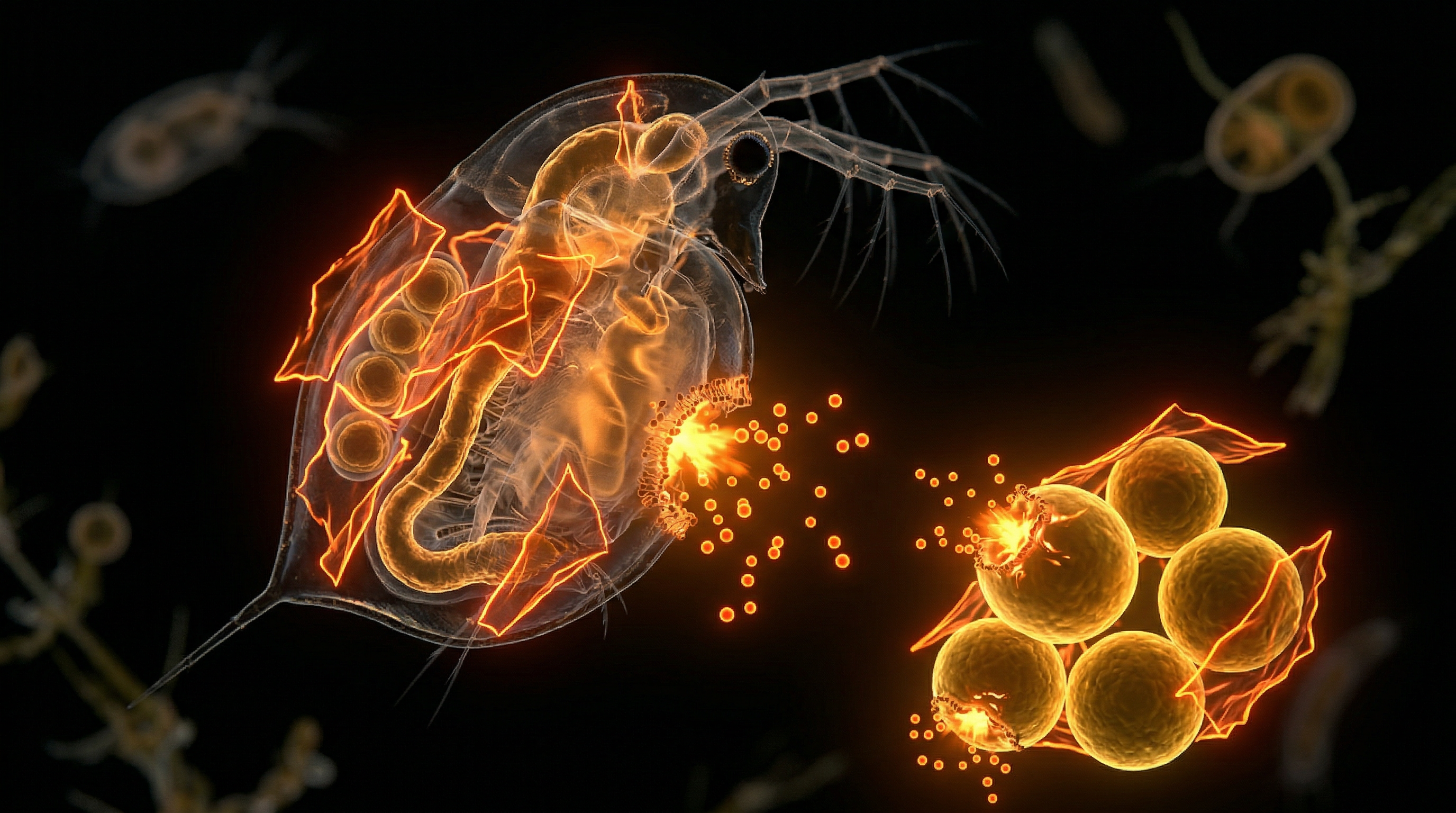
In the pursuit of the "Graphene Age," spearheaded by industrial hubs in the North of England and championed by globalist scientific institutions, a silent transition has occurred. Graphene Oxide (GO)—a two-dimensional, chemically modified derivative of graphite—has transitioned from a laboratory curiosity to a pervasive environmental contaminant. While mainstream scientific literature frequently celebrates its "miraculous" conductivity and mechanical strength, a darker reality is surfacing within the British Isles.
Our rivers, lakes, and coastal estuaries are becoming the unintended repositories for these nanomaterials. From the industrial discharge of the Manchester Ship Canal to the overburdened municipal water systems of London, Graphene Oxide is infiltrating the biological fabric of our aquatic ecosystems. This article serves as a comprehensive inquiry into the cytotoxic, genotoxic, and ecologically disruptive nature of GO, exposing the physiological mechanisms of harm that the regulatory bodies have largely ignored.
Overview
Graphene Oxide (GO) is the oxidised form of graphene, characterised by a hexagonal carbon lattice interspersed with oxygen-containing functional groups such as hydroxyl, epoxy, and carboxyl groups. These groups render GO highly hydrophilic, allowing it to remain suspended in water columns indefinitely, unlike its hydrophobic parent, graphene. This solubility is precisely what makes it an existential threat to aquatic life.
The UK is at the epicentre of this crisis. As the birthplace of graphene research, the British government has invested hundreds of millions of pounds into the National Graphene Institute and the Graphene Engineering Innovation Centre. However, the investment in safety protocols and environmental monitoring has not kept pace with the rate of commercialisation.
Critical Fact: Current UK wastewater treatment plants (WWTPs) are not designed to filter two-dimensional nanomaterials. Studies indicate that up to 70% of graphene-family nanomaterials (GFNs) bypass standard filtration, entering our river systems directly.
The persistence of GO in the environment is not merely a matter of physical presence; it is a matter of bio-accumulation and bio-magnification. Because GO nanosheets can easily cross biological membranes, they enter the lowest levels of the food chain—plankton and algae—and concentrate as they move toward apex predators and, ultimately, human consumers.
The Biology — How It Works
To understand the toxicity of Graphene Oxide, one must first grasp its unique physicochemical properties. GO is not a standard chemical pollutant; it is a mechanical-biological disruptor.
The Surface Area Paradox
GO possesses an extraordinarily high specific surface area. This allows it to act as a "nanoscaffold" or a carrier for other pollutants. In the murky waters of the River Thames or the Severn, GO does not exist in isolation. It adsorbs heavy metals (lead, mercury, cadmium) and organic pollutants (pesticides, pharmaceuticals), creating a highly concentrated toxic "cocktail" that is far more lethal than the individual components.
The Protein Corona Effect
Once GO enters a biological fluid—be it the mucus of a fish or the internal plasma of a crustacean—it immediately attracts a layer of proteins. This is known as the protein corona. This corona masks the nanomaterial, allowing it to "trick" the host's immune system. The organism no longer recognises the GO as a foreign invader, facilitating its transport into deep tissues and the central nervous system.
Functionalisation and Charge
The toxicity of GO is heavily dependent on its surface charge and the degree of functionalisation. Highly oxidised GO sheets carry a negative charge, which interacts aggressively with the positively charged lipids in cellular membranes. This interaction leads to physical rupturing of the cell, a process often described as "nano-slitting."
Statistical Insight: Research on Daphnia magna (the water flea), a keystone species in UK freshwater, shows that exposure to GO at concentrations as low as 250 µg/L results in a 40% reduction in reproductive success within 21 days.
Mechanisms at the Cellular Level
The primary driver of GO toxicity is the induction of oxidative stress. However, the pathways through which this occurs are multifaceted and devastating.
1. Reactive Oxygen Species (ROS) Generation
GO nanosheets act as catalysts for the production of Reactive Oxygen Species, such as superoxide radicals and hydroxyl radicals. Once inside the cell, GO interferes with the electron transport chain within the mitochondria. This "leakage" of electrons produces a cascade of oxidative damage that overwhelms the cell’s natural antioxidant defences (such as glutathione).
2. Physical Membrane Disruption
The sharp, "knife-like" edges of GO nanosheets can physically penetrate the lipid bilayer of cells. This is not merely a chemical reaction but a mechanical destruction of the cell's integrity. This leads to leakage of cytoplasmic contents and a loss of osmotic balance, resulting in necrotic cell death.
3. Mitochondrial Dysfunction
The mitochondria are the powerhouses of the cell, and they are particularly susceptible to GO. By localising within the mitochondrial membrane, GO disrupts the transmembrane potential. This leads to a cessation of ATP (energy) production, triggering apoptosis (programmed cell death).
4. Genotoxicity and DNA Damage
Perhaps most concerning is GO's ability to enter the nucleus. Because of its small size and planar structure, it can intercalate between DNA base pairs. This leads to:
- Chromosomal fragmentation
- Point mutations
- Inhibition of DNA repair enzymes
In British salmonid species, such as the Brown Trout (Salmo trutta), exposure to GO-contaminated sediment has been linked to significant DNA strand breaks in branchial (gill) cells.
Environmental Threats and Biological Disruptors
The introduction of GO into the aquatic environment disrupts the delicate balance of the benthic and pelagic zones.
Impact on Primary Producers
Algae (such as Chlorella vulgaris) are the foundation of the aquatic food web. GO affects algae in two ways:
- Shading effect: High concentrations of GO in the water column block sunlight, inhibiting photosynthesis.
- Physical Envelopment: GO nanosheets wrap around algal cells, preventing the intake of essential nutrients and minerals.
The Benthic Sink
GO has a high affinity for sediment. Over time, these nanosheets settle on the riverbeds of the UK. This creates a toxic environment for benthic organisms (molluscs, worms, and insect larvae). These organisms ingest the GO-laden sediment, leading to chronic inflammation and reduced growth rates.
Endocrine Disruption
Emerging evidence suggests that GO can act as a pseudo-endocrine disruptor. By interacting with hormone receptors, particularly oestrogen receptors in fish, GO can interfere with the reproductive cycles of species like the Roach (Rutilus rutilus), common in English canals. This leads to "feminisation" of male fish, a phenomenon already exacerbated by pharmaceutical runoff.
Warning: The synergistic effect of Graphene Oxide and microplastics in UK waters is creating a "new class" of environmental hazard, where GO acts as a carrier for plastic-derived toxins, delivering them directly into the bloodstream of aquatic biota.
The Cascade: From Exposure to Disease
The progression from initial exposure to systemic disease in aquatic wildlife follows a predictable, yet tragic, cascade.
Stage 1: Acute Respiratory Distress
In fish, the gills are the first point of contact. GO nanosheets adhere to the gill lamellae, stimulating excessive mucus production. This reduces gas exchange efficiency, leading to hypoxia. The fish must expend more energy simply to breathe, diverting resources away from growth and immune function.
Stage 2: Metabolic Exhaustion
As the organism attempts to detoxify the GO through the liver and kidneys, metabolic rates skyrocket. However, the energy production is hampered by mitochondrial damage. This creates a state of metabolic debt.
Stage 3: Immunosuppression
The chronic inflammatory response triggered by GO depletes the organism's white blood cell count. In the UK, this has been linked to an increased susceptibility to secondary infections, such as Saprolegnia (water mould) and viral haemorrhagic septicaemia.
Stage 4: Transgenerational Toxicity
The most insidious aspect of GO is its impact on the next generation. Studies have shown that GO can be deposited into the oocytes (eggs) of female fish. This leads to:
- Developmental deformities in fry (spinal curvature, cranial malformations).
- Reduced hatch rates.
- Neurological impairment, making young fish unable to escape predators.
What the Mainstream Narrative Omits
The corporate and governmental narrative surrounding graphene is one of "sustainability" and "green technology." However, this facade hides several uncomfortable truths.
The "Inert" Fallacy
Mainstream science often claims that carbon is naturally occurring and therefore graphene must be biocompatible. This is a deliberate obfuscation. While carbon is the basis of life, the nanostructural arrangement of carbon in GO is entirely alien to biological evolution. The body has no natural mechanism to break down the carbon-carbon bonds in a 2D lattice.
Regulatory Lag and "No-Data" Loopholes
In the UK, the regulation of chemicals falls under UK REACH. However, GO is often categorised under the same heading as bulk graphite. This is scientifically fraudulent. Graphite and Graphene Oxide have different toxicological profiles. By failing to create a specific "Nano-REACH" category with mandatory GO testing, the government is allowing tonnes of this material to enter the environment without oversight.
The Failure of Water Filtration
Standard municipal water treatment in the UK relies on sand filtration and chlorination. These methods are utterly ineffective against GO. In fact, chlorination can further oxidise graphene, potentially making it more toxic.
Exposing the Truth: There is currently no mandatory testing for Graphene Oxide levels in British drinking water, despite its increasing use in industrial lubricants, concrete additives, and even "smart" water-monitoring sensors.
The UK Context
The geography and infrastructure of the United Kingdom make it uniquely vulnerable to GO contamination.
The Industrial North and the Graphene Hub
Manchester is the global "Graphene City." The concentration of research facilities and pilot production plants along the Irwell and Mersey rivers means these waterways are the likely "ground zero" for GO environmental leakage.
Victorian Infrastructure
Much of the UK's sewage system dates back to the 19th century. During heavy rainfall, "Combined Sewer Overflows" (CSOs) discharge raw sewage directly into rivers. If GO is present in the domestic or industrial waste stream, it bypasses even the most basic treatment during these overflow events.
The Case of the River Wye
The River Wye is already suffering from massive ecological collapse due to agricultural runoff. The introduction of GO—which can bond with the phosphates and nitrates from chicken farms—accelerates the "death" of the river by creating a more toxic and persistent sediment layer.
Monitoring the "Ghost Pollutant"
Unlike microplastics, which can be seen under a standard microscope, GO requires Electron Microscopy (TEM/SEM) or Raman Spectroscopy for detection. Most UK environmental agencies lack the funding or the mandate to perform this level of monitoring on a routine basis.
Protective Measures and Recovery Protocols
While the situation is dire, there are scientific and regulatory pathways to mitigate the damage of Graphene Oxide.
Advanced Water Remediation
To remove GO from the water supply, the UK must transition to Advanced Oxidation Processes (AOPs) and Membrane Bioreactors.
- Adsorption using Biochar: Modified biochar has shown promise in "trapping" GO nanosheets before they leave treatment plants.
- Magnetic Separation: Using functionalised magnetic nanoparticles to bind to GO, allowing it to be "pulled" out of the water using industrial magnets.
Phytoremediation
Certain aquatic plants, such as the Common Reed (Phragmites australis), have the potential to sequester nanomaterials in their root systems. Implementing "constructed wetlands" around industrial discharge points could act as a biological buffer.
Regulatory Overhaul
The UK must immediately implement:
- Mandatory Nano-Labelling: Every product containing graphene derivatives must be registered and its disposal tracked.
- Specific Environmental Quality Standards (EQS): Legal limits for GO concentrations in freshwater ecosystems must be established.
- The Polluter Pays Principle: Companies like those in the "Graphene Frontier" must be held financially liable for the environmental monitoring of their products.
Biological Recovery for Ecosystems
For ecosystems already affected, the focus must be on antioxidant support. Reducing other stressors (such as nitrogen loading and heavy metal runoff) can give species the "metabolic breathing room" to cope with GO exposure.
Summary: Key Takeaways
The threat of Graphene Oxide in UK aquatic ecosystems is a multifaceted crisis that blends industrial ambition with environmental negligence.
- GO is a Mechanical Toxin: It kills through physical membrane disruption and the generation of uncontrollable oxidative stress (ROS).
- The "Trojan Horse" Effect: GO adsorbs other pollutants, making them more bioavailable and dangerous to British wildlife.
- Filtration Failure: Current UK water infrastructure is incapable of removing 2D nanomaterials, leading to persistent contamination of drinking water and river systems.
- Ecological Cascade: From the "shading" of algae to the "feminisation" of fish and the deformities in fry, GO threatens the very foundation of the British food chain.
- Regulatory Silence: The UK government's push to be a "Graphene Superpower" has resulted in a deliberate overlooking of the long-term ecotoxicological costs.
The "Graphene Age" must not be allowed to become the "Age of Biological Decay." As we continue to integrate these synthetic materials into the world around us, the price of our technological advancement must not be the permanent sterilization of our natural heritage. The evidence is clear; the time for "cautious observation" has passed. We require immediate, transparent, and rigorous intervention to protect the sanctity of the British aquatic environment.
This article is provided for informational and educational purposes only. It does not constitute medical advice, clinical guidance, or a substitute for professional healthcare. Information reflects cited research at time of publication. Always consult a qualified healthcare professional before acting on any health information.
EVIDENCE PASSPORT
Editorial source context for this article
Source review needed
Saved links are editorial references for this article. They may support specific claims rather than every sentence. Open and assess each source in context. This passport does not independently verify them.
Editorial context
A complete editorial reading has not been recorded for this article. Source links remain available for you to open and assess directly.
Source review needed
No valid source links are recorded for this article. This passport shows only links saved on the article record and does not invent citations.
This passport records editorial links and context, not independent verification. Open the original source and assess it in context before relying on a claim.
Medical Disclaimer
The information in this article is for educational purposes only and does not constitute medical advice, diagnosis, or treatment. Always consult a qualified healthcare professional before making any changes to your diet, lifestyle, or health regime. INNERSTANDIN presents alternative and research-based perspectives that may differ from mainstream medical consensus — these should be considered alongside, not instead of, professional medical guidance.
Read Full DisclaimerContinue the thread
Keep this question moving.
Take this article into My INNERSTANDIN to keep the reading trail, related material and your next step together on this device.