
Gut Dysbiosis: Herbicide Impact on the British Microbiome
Updated May 2026
Low-dose herbicide residues in the UK food supply can selectively inhibit beneficial gut bacteria. This dysbiosis is a foundational driver of contemporary autoimmune and digestive issues in the UK.
Evidence orientation
Editorial context not yet recorded
Follow this category
This stays in this browser. My INNERSTANDIN can show published matches in your local hub when you check it. It does not send email, push, or alert notifications.
Local learning review
A private browser aid for revisiting ideas. It is not an alert or a health recommendation.
Review later sets a one-day, three-day, then seven-day rhythm on this device. Choose it only when you want to revisit this article.
Overview
For decades, the United Kingdom’s agricultural landscape has undergone a silent chemical transformation. While the visual indicators of British farming—rolling green hills and golden wheat fields—suggest a pastoral idyll, the molecular reality is far more clinical and concerning. We are currently witnessing a profound biological crisis: the systematic degradation of the British gut microbiome through chronic, low-dose exposure to herbicide residues.
At INNERSTANDING, we view the human microbiome not merely as a collection of hitchhiking microbes, but as a sophisticated, auxiliary metabolic organ. This organ is responsible for everything from neurotransmitter synthesis to the calibration of the adaptive immune system. However, this delicate internal ecosystem is under siege. The primary antagonist in this narrative is the ubiquitous use of glyphosate-based herbicides (GBHs) and other synthetic phytotoxins, which are now inextricably woven into the UK food supply.
The mainstream narrative suggests that these chemicals are safe for human consumption because they target biological pathways absent in mammals. This article will expose that claim as a fundamental scientific oversight. By selectively inhibiting beneficial bacterial species while sparing pathogenic ones, these residues induce a state of chronic gut dysbiosis. This imbalance is not merely a digestive inconvenience; it is the foundational driver behind the UK’s skyrocketing rates of autoimmune diseases, inflammatory bowel conditions, and metabolic syndromes. We are, quite literally, spraying our internal pharmacy into extinction.
Fact: The UK uses approximately 5 million hectares of land for crops, with glyphosate being the most widely used herbicide, applied to over 2 million hectares annually—a surface area larger than Wales.
The Biology — How It Works
To understand why a plant-killer affects human health, we must look at the Shikimate pathway. The chemical industry’s primary defence for the safety of herbicides like glyphosate is that they inhibit the 5-enolpyruvylshikimate-3-phosphate (EPSPS) synthase enzyme. This enzyme is essential for the production of aromatic amino acids (phenylalanine, tyrosine, and tryptophan) in plants. Since humans do not possess the Shikimate pathway—we must obtain these amino acids from our diet—the logic follows that these chemicals are non-toxic to us.
The Microbial Loophole
This logic deliberately ignores the trillion-strong microbial community residing in the human colon. Over 90% of the bacterial species in the human gut do possess the Shikimate pathway. When we consume "allowable" levels of herbicide residues on our wheat, oats, and pulses, we are inadvertently introducing a potent antibiotic into our digestive tract.
Selective Inhibition
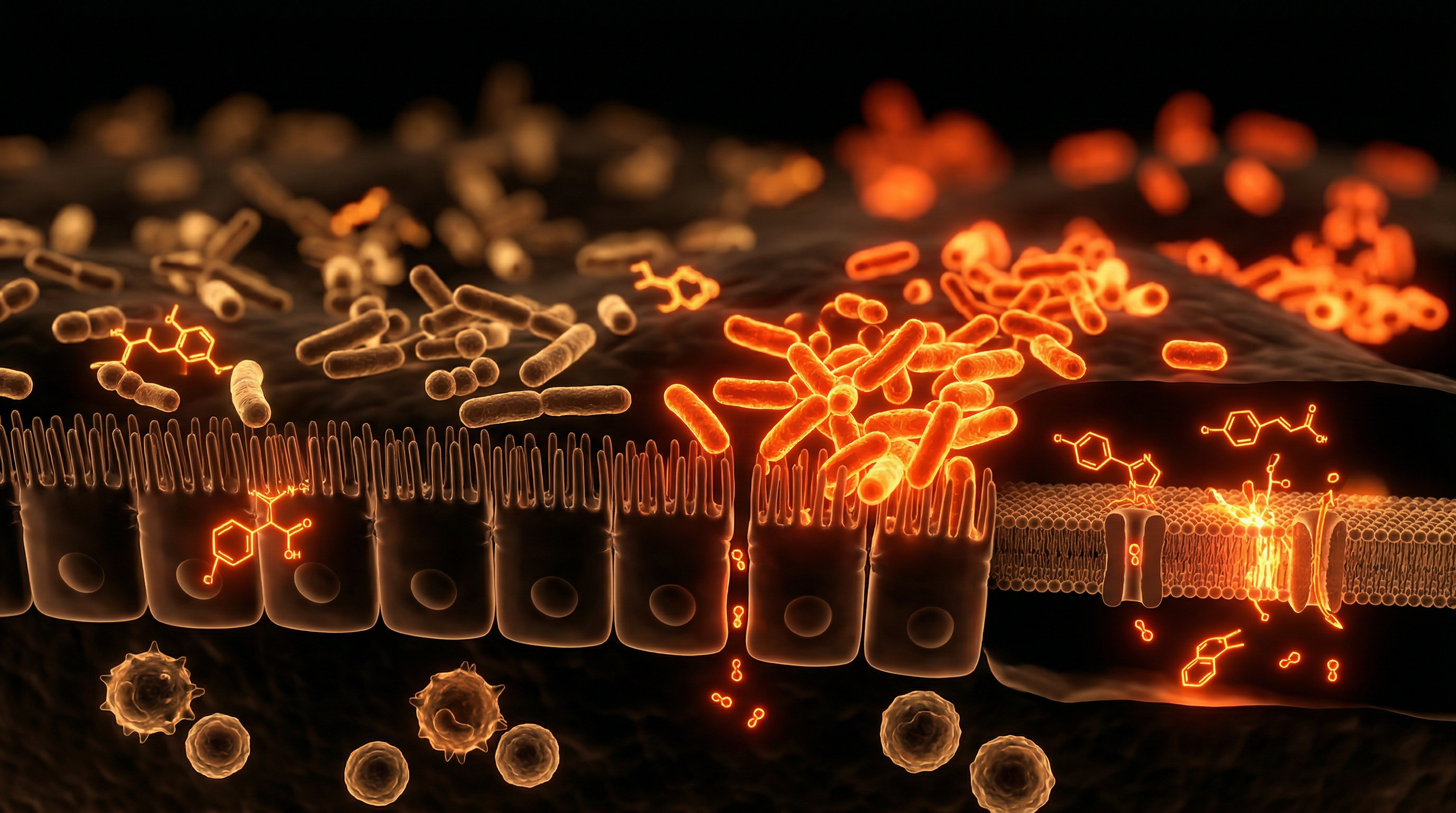
The toxicity of herbicides is not uniform across all bacterial species. This is the "hidden" mechanism of dysbiosis. Research indicates that beneficial, health-promoting bacteria, such as Bifidobacterium and Lactobacillus, are highly sensitive to herbicide exposure and are easily suppressed. Conversely, many highly pathogenic bacteria, including Salmonella typhimurium, Clostridium perfringens, and Escherichia coli, have evolved or possess innate resistance to these chemicals.
- Beneficial Bacteria Suppression: Leads to reduced production of Short-Chain Fatty Acids (SCFAs) like butyrate, which fuels the gut lining.
- Pathogenic Overgrowth: Creates a pro-inflammatory environment and produces toxic metabolites like p-cresol.
Mechanisms at the Cellular Level
The impact of herbicides extends beyond simple bacterial counts; it alters the very structural integrity of the human intestinal barrier and the metabolic capacity of our cells.
The Breakdown of Tight Junctions
The intestinal lining is a single layer of cells held together by "tight junctions." These act as the gatekeepers of the bloodstream. Exposure to glyphosate has been shown to trigger the release of zonulin, a protein that modulates the permeability of these junctions.
When zonulin levels rise, the tight junctions open, leading to Intestinal Permeability, colloquially known as "Leaky Gut." This allows undigested food particles, bacterial endotoxins (Lipopolysaccharides or LPS), and the herbicides themselves to enter systemic circulation, triggering a perpetual state of immune activation.
Chelation: The Mineral Thief
Glyphosate was originally patented as a powerful chelator—a chemical designed to strip minerals from pipes and boilers. In the human gut, it performs the same function. It binds to essential cations, including Manganese (Mn), Magnesium (Mg), Cobalt (Co), and Zinc (Zn).
- Manganese Depletion: Manganese is a crucial cofactor for the enzyme superoxide dismutase (SOD), which protects mitochondria from oxidative stress. By chelating manganese, herbicides induce cellular "rusting" and mitochondrial dysfunction.
- Cobalt Depletion: Cobalt is the central atom in Vitamin B12. Dysbiosis-induced B12 deficiency is a common, yet often misdiagnosed, consequence of herbicide exposure in the UK population.
Cytochrome P450 Inhibition
Herbicides interfere with the Cytochrome P450 (CYP) family of enzymes in the liver and gut. These enzymes are responsible for detoxifying xenobiotics (foreign chemicals) and metabolizing vitamin D. When CYP enzymes are inhibited by herbicide residues, the body’s ability to clear other environmental toxins—such as heavy metals and plasticizers—is severely compromised. This creates a "synergistic toxicity" where the herbicide makes every other toxin in the environment more damaging.
Important Statistic: Clinical studies have shown that glyphosate levels in the urine of the general public have increased by over 500% in the last two decades, correlating precisely with the rise in "Leaky Gut" diagnoses.
Environmental Threats and Biological Disruptors
The UK's specific agricultural practices make the British microbiome particularly vulnerable. Unlike many other nations, the UK relies heavily on Pre-Harvest Desiccation.
The Scandal of Pre-Harvest Desiccation
This is a technique where herbicides are sprayed directly onto crops (specifically wheat, oats, and barley) just days before harvest. The goal is to kill the plant quickly, drying it out uniformly to make harvesting easier. Because the chemical is applied so late in the growth cycle, it is not washed away or metabolised by the plant; it remains as a high-concentration residue on the grain itself.
The "Cocktail Effect"
While regulatory bodies test individual chemicals, they rarely account for the synergy between multiple residues. A typical British loaf of bread may contain residues of:
- Glyphosate (Herbicide)
- Chlormequat (Plant growth regulator)
- Diflufenican (Herbicide)
- Fungicides (To prevent mould in damp UK climates)
Research suggests that these chemicals together are exponentially more toxic to the gut flora than any single agent in isolation. The fungicides, in particular, decimate the "mycobiome"—the fungal component of our gut health—which works in tandem with bacteria to maintain homeostasis.
The Cascade: From Exposure to Disease
Once the gut microbiome is disrupted and the intestinal barrier is breached, a predictable cascade of physiological failure begins. This is the origin point of the modern UK health crisis.
1. Chronic Low-Grade Inflammation
When LPS (endotoxins) leak into the blood, the liver must work overtime to clear them. This results in the release of pro-inflammatory cytokines like TNF-alpha and IL-6. This systemic inflammation is the "silent killer" that precedes almost every chronic disease.
2. Molecular Mimicry and Autoimmunity
The immune system, now in a state of hyper-vigilance, begins to misidentify proteins. If a piece of undigested gluten or a bacterial fragment enters the blood, the immune system creates antibodies against it. Unfortunately, many of these foreign proteins look remarkably similar to human tissues.
- Thyroiditis (Hashimoto's): Antibodies attack the thyroid.
- Rheumatoid Arthritis: Antibodies attack joint tissue.
- Multiple Sclerosis: Antibodies attack the myelin sheath of nerves.
3. The Gut-Brain Axis and Mental Health
The gut produces over 90% of the body’s serotonin and 50% of its dopamine. This production is handled by specific bacterial strains like Lactobacillus brevis. When herbicides suppress these strains, neurotransmitter production craters. Furthermore, the vagus nerve acts as a highway, transporting inflammatory signals from a distressed gut directly to the brain, contributing to the UK's epidemic of anxiety, depression, and "brain fog."
Callout: There is a direct statistical correlation between the increased application of glyphosate in UK wheat production and the rise of Celiac disease and non-celiac gluten sensitivity. It is often not the gluten that is the primary agitator, but the herbicide residue riding upon it.
What the Mainstream Narrative Omits
The public is often told that the levels of herbicides found in food are "well below the Acceptable Daily Intake (ADI)." However, this narrative is built on several scientific fallacies that INNERSTANDING aims to dismantle.
The Fallacy of the Linear Dose-Response
Toxicology has historically operated on the principle that "the dose makes the poison." However, endocrine disruptors and microbiome-altering chemicals often exhibit non-linear dose-responses. This means that extremely low doses—parts per trillion—can sometimes be more disruptive than high doses because they mimic the body's own natural hormonal signaling.
Regulatory Capture
In the UK and the EU, the "safety" data used to approve these chemicals is largely provided by the manufacturers themselves. These "pivotal studies" are often kept behind a veil of "commercial confidentiality," preventing independent scientists from peer-reviewing the raw data. The Health and Safety Executive (HSE) in the UK frequently relies on outdated models that do not account for the microbiome's role in human health.
The Omission of Adjuvants
"Glyphosate" is the active ingredient, but it is never used alone. It is sold in formulations containing surfactants like POEA (polyethoxylated tallowamine). These surfactants are designed to break down the waxy surface of plant leaves so the poison can enter. In the human gut, these same surfactants act like detergents, dissolving the protective mucus layer that protects our intestinal cells from our own stomach acid and enzymes. Formulations can be up to 1,000 times more toxic than glyphosate alone, yet they are rarely tested for long-term gut toxicity.
The UK Context
Post-Brexit, the UK stands at a crossroads regarding food safety standards. There is significant pressure to "streamline" regulations, which often translates to adopting the more relaxed standards seen in the United States.
The "British Bread" Problem
In the UK, bread is a dietary staple. However, UK wheat is significantly more likely to be treated with pre-harvest glyphosate than wheat from other European nations. This means the "average" Briton is consuming a steady stream of herbicide-laden carbohydrates from childhood through to old age.
The Rise of IBD in the UK
The UK has some of the highest rates of Inflammatory Bowel Disease (IBD), including Crohn's and Ulcerative Colitis, in the world. While genetics play a role, the rapid increase in cases over the last 30 years cannot be explained by DNA alone. It is an environmental phenomenon. The herbicide-driven "microbial genocide" occurring in the British colon is the most plausible explanation for this surge.
The Soil-Human Connection
We must recognise that the health of the British soil and the health of the British citizen are the same thing. The depletion of soil microbes through industrial farming mirrors the depletion of gut microbes. We are eating "dead" food from "dead" soil, and our internal ecology is reflecting that vacancy.
Protective Measures and Recovery Protocols
While the situation is grave, it is not irreversible. As a senior researcher, I advocate for a two-pronged approach: avoidance of further exposure and the active restoration of the microbial terrain.
Primary Avoidance: The Organic Mandate
The most effective way to lower your herbicide burden is to switch to certified organic produce (look for the Soil Association logo in the UK). Organic standards strictly prohibit the use of synthetic herbicides like glyphosate.
- Priority Foods: Focus on organic wheat, oats, and soy, as these carry the highest residue loads in conventional farming.
- Water Filtration: Herbicides frequently leach into the UK water table. A high-quality reverse osmosis or multistage carbon filter is essential to remove these residues from drinking water.
Restorative Protocols
To heal the "leaky gut" and restore the microbiome, one must move beyond standard probiotics.
- Humic and Fulvic Acids: These natural soil-derived compounds act as "redox molecules." They help to tighten the junctions of the gut lining and can even help to neutralise the oxidative stress caused by glyphosate.
- Ancestral Fermentation: Incorporate traditional UK ferments like raw apple cider vinegar (with the mother), sauerkraut, and kefir. These provide a diverse array of bacteria that are hardier than lab-grown probiotic capsules.
- Glutamine and Collagen: To repair the physical structure of the intestinal wall, provide the body with the amino acids necessary for cellular regeneration. Bone broths (from organic, grass-fed British beef) are an ideal source.
- Spore-Based Probiotics: Strains like Bacillus coagulans are resistant to the harsh environment of the stomach and can help to suppress the pathogenic overgrowth stimulated by herbicides.
Strategic Chelation
Since herbicides strip the body of minerals, supplementation must be strategic.
- Manganese and Magnesium: Supplementing with highly bioavailable forms (like Magnesium Glycinate or Manganese Chelate) can help to "refill the tank" that herbicides have drained, restoring mitochondrial function.
Summary: Key Takeaways
The impact of herbicides on the British microbiome is perhaps the most significant overlooked health crisis of the 21st century. By understanding the mechanisms of action, we can move from victimhood to agency.
- The Shikimate Pathway Myth: The central tenet of herbicide safety is false; these chemicals do affect human health by decimating the gut microbiome.
- Dysbiosis is the Root: Selective inhibition of beneficial bacteria leads to pathogenic overgrowth, the precursor to most chronic British illnesses.
- Structural Damage: Herbicides directly cause "Leaky Gut" by triggering zonulin and dissolving the protective mucosal barrier.
- The UK Risk: Pre-harvest desiccation in UK wheat and oat production ensures that herbicide residues are a constant in the British diet.
- Regulatory Failure: Current safety standards do not account for the microbiome, the cocktail effect, or the non-linear toxicity of low doses.
- Empowered Recovery: Through organic consumption, strategic supplementation with fulvic acids, and traditional fermented foods, the microbiome can be restored.
We are at a tipping point. The continued use of these chemicals threatens not just our digestive health, but our neurological stability and the genetic integrity of future generations. It is time to demand a food system that respects the complex, invisible world within us. At INNERSTANDING, we believe that to heal the person, we must first heal the colony.
This article is provided for informational and educational purposes only. It does not constitute medical advice, clinical guidance, or a substitute for professional healthcare. Information reflects cited research at time of publication. Always consult a qualified healthcare professional before acting on any health information.
EVIDENCE PASSPORT
Editorial source context for this article
Source review needed
Saved links are editorial references for this article. They may support specific claims rather than every sentence. Open and assess each source in context. This passport does not independently verify them.
Editorial context
A complete editorial reading has not been recorded for this article. Source links remain available for you to open and assess directly.
Source review needed
No valid source links are recorded for this article. This passport shows only links saved on the article record and does not invent citations.
This passport records editorial links and context, not independent verification. Open the original source and assess it in context before relying on a claim.
Medical Disclaimer
The information in this article is for educational purposes only and does not constitute medical advice, diagnosis, or treatment. Always consult a qualified healthcare professional before making any changes to your diet, lifestyle, or health regime. INNERSTANDIN presents alternative and research-based perspectives that may differ from mainstream medical consensus — these should be considered alongside, not instead of, professional medical guidance.
Read Full DisclaimerContinue the thread
Keep this question moving.
Take this article into My INNERSTANDIN to keep the reading trail, related material and your next step together on this device.
Explore this in the Body Map
See where this hits your biology. Interactive anatomy, threats, and protective protocols.
Dig deeper in the Library
Free, longform PDF volumes that go beyond headlines into mechanisms and references.