
The Gut-Hair Axis: Why Digestive Health is the Secret to a Lush Mane
Intestinal permeability and systemic inflammation stemming from the gut can manifest as hair thinning. This exploration of the gut-hair axis reveals why probiotics and diet are essential for trichology.
# The Gut-Hair Axis: Why Digestive Health is the Secret to a Lush Mane
Overview
For decades, the field of trichology has been dominated by a singular, albeit reductive, focus: the scalp. We have been conditioned to view hair thinning, premature greying, and follicular atrophy as isolated events occurring at the surface of the cranium. The multi-billion pound hair care industry survives on this very premise—selling topical "solutions" that treat the symptom while ignore the systemic catalyst.
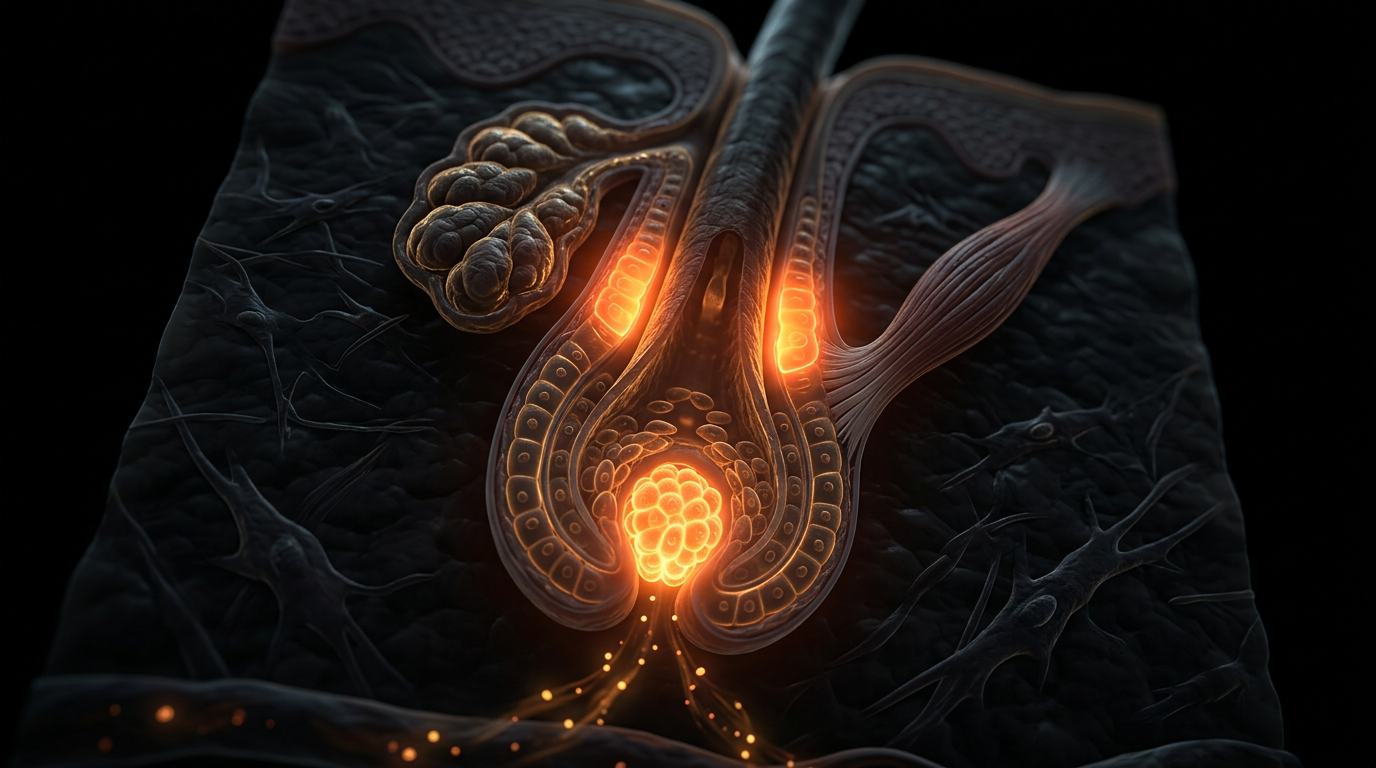
At INNERSTANDING, our research prioritises the biological truth over commercial convenience. The emerging science of the Gut-Hair Axis reveals a profound physiological reality: the hair follicle is not merely a cosmetic appendage, but a highly sensitive metabolic sensor. It is an outward manifestation of our internal milieu, particularly the state of our gastrointestinal tract.
The "Gut-Hair Axis" refers to the bidirectional communication network between the gut microbiome, the intestinal barrier, and the hair follicle’s regenerative cycle. When the gut is in a state of dysbiosis (imbalance) or the intestinal lining is compromised (intestinal permeability), the body enters a state of chronic, systemic inflammation. In the biological hierarchy of survival, the body prioritises vital organs—the heart, lungs, and brain—over non-essential tissues like hair.
This article serves as a comprehensive deconstruction of this axis. We will explore how your internal garden dictates the density of your mane, why "Leaky Gut" is the silent thief of follicular vitality, and why the future of hair restoration lies not in a bottle of shampoo, but in the complexity of your microbiome.
---
The Biology — How It Works
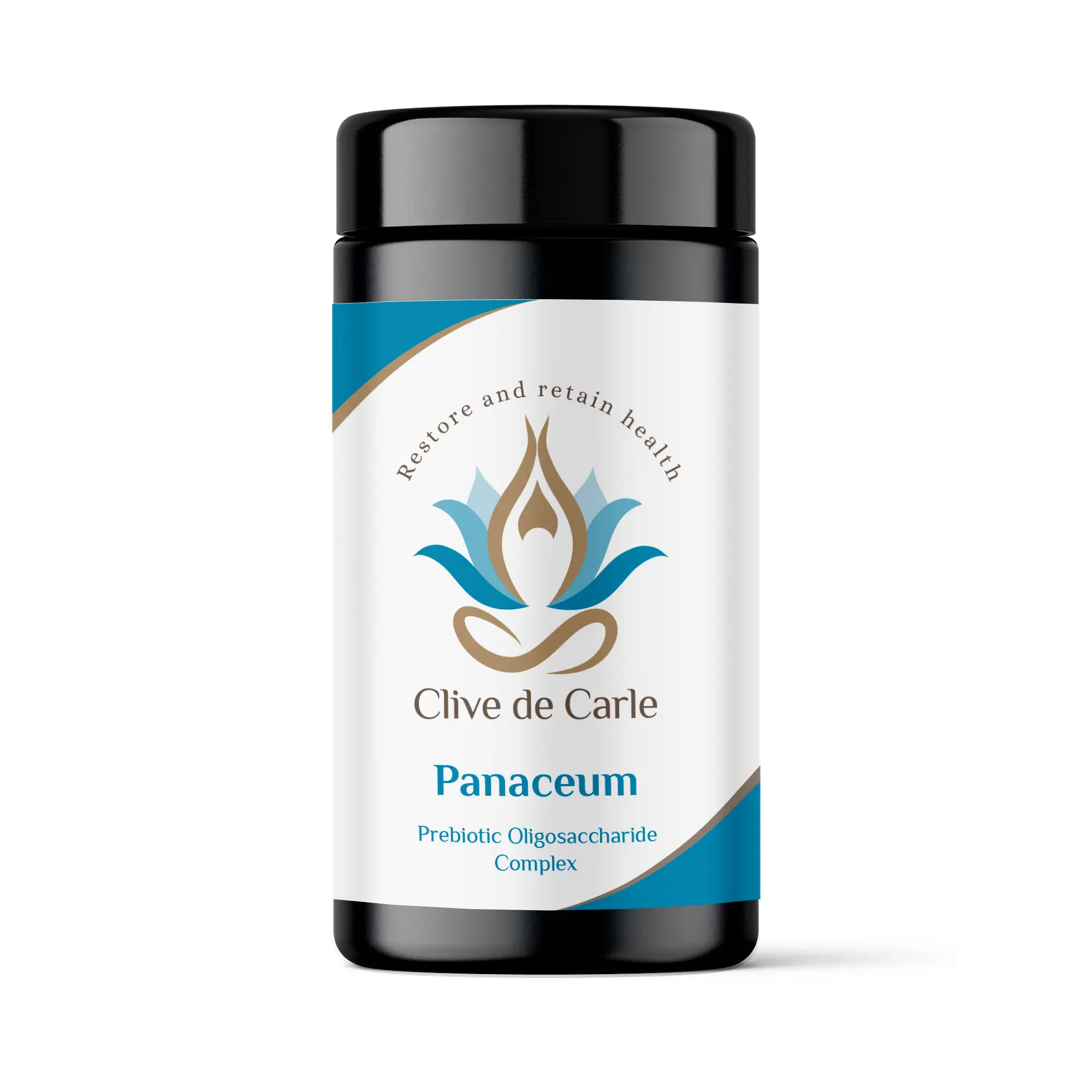
Panaceum – Prebiotic Oligosaccharide Complex
Panaceum is a specialist eight-oligosaccharide blend designed to restore the microbial diversity missing from the modern Western diet. By providing the complex fibres our ancestors once consumed, it feeds and sustains a resilient gut microbiome for long-term health.
Vetting Notes
Pending
To understand the Gut-Hair Axis, one must first appreciate that the hair follicle is one of the most metabolically active structures in the human body. To maintain the Anagen (growth) phase, the follicle requires a relentless supply of micronutrients, amino acids, and regulatory signals.
The Microbiome as a Chemical Factory
The human gut is home to trillions of microorganisms that do far more than digest fibre. They act as a sophisticated chemical factory, synthesising essential vitamins that are critical for hair health, such as Biotin (B7), Vitamin K2, and B12. Furthermore, a healthy microbiome facilitates the absorption of minerals like Zinc, Iron, and Selenium—the foundational building blocks of keratin.
The Intestinal Barrier: The Gatekeeper
The intestinal lining is a single layer of epithelial cells held together by "tight junctions." Its role is to allow nutrients to pass into the bloodstream while keeping pathogens, undigested food particles, and toxins out.
When this barrier is breached—a condition known as Intestinal Permeability or Leaky Gut—pro-inflammatory molecules such as Lipopolysaccharides (LPS) (endotoxins from bacterial cell walls) leak into the systemic circulation. This triggers an immune response that, as we will explore, has devastating consequences for the hair cycle.
UK FACT 1: According to the British Society of Gastroenterology, nearly 40% of people in the UK suffer from at least one digestive symptom at any given time, a statistic that correlates strongly with the rising rates of non-scarring alopecia across the British population.
The Nutrient Pipeline
The Gut-Hair Axis operates through three primary pathways:
- —Nutrient Synthesis and Absorption: The gut ensures the "raw materials" for hair reach the follicle.
- —Immune Modulation: 70-80% of the immune system resides in the gut. A healthy gut prevents the immune system from mistakenly attacking hair follicles (as seen in Alopecia Areata).
- —Hormonal Regulation: The gut microbiome influences the metabolism of hormones, including oestrogen and cortisol, both of which are central to hair density.
---
Mechanisms at the Cellular Level
The connection between the gut and the hair is not merely metaphorical; it is governed by complex molecular signalling. To truly understand why hair thins when the gut suffers, we must look at the cellular machinery.
Short-Chain Fatty Acids (SCFAs) and Follicular Induction
When beneficial gut bacteria ferment dietary fibre, they produce Short-Chain Fatty Acids (SCFAs), primarily Butyrate, Propionate, and Acetate. These SCFAs are not just energy sources for the colon; they are powerful epigenetic regulators.
Butyrate, in particular, has been shown to induce the expression of regulatory T-cells (Tregs). In the skin, these Tregs reside around the hair follicle. Recent studies have demonstrated that these Tregs are essential for "waking up" hair follicle stem cells. Without sufficient SCFA production in the gut, the immune signalling required to transition a hair from the Telogen (resting) phase back into the Anagen (growth) phase is significantly weakened.
The LPS-Induced Inflammatory Cascade
When LPS (endotoxins) enter the bloodstream due to a leaky gut, they bind to Toll-like Receptor 4 (TLR4) on various cells, including those in the scalp. This binding initiates a cascade that activates NF-κB, a primary "master switch" for inflammation.
This systemic inflammation leads to the production of pro-inflammatory cytokines such as TNF-alpha, IL-1 beta, and IL-6. These cytokines are known "Anagen inhibitors." They prematurely push the hair follicle into the Catagen (regression) phase. This is the biological mechanism behind Chronic Telogen Effluvium—the thinning of hair that seems to have no obvious external cause.
Mitochondrial Dysfunction
The hair follicle is a mitochondrial powerhouse. It requires immense ATP (energy) to produce the keratin shaft. Systemic inflammation stemming from the gut causes oxidative stress, which damages the mitochondria within the follicular cells. When the "batteries" of the hair follicle fail, the hair grows thinner, weaker, and loses its pigment prematurely.
UK FACT 2: Research suggests that over 6.5 million men in the UK experience male pattern baldness, yet less than 2% are ever screened for underlying metabolic or inflammatory markers associated with gut dysbiosis.
---
Environmental Threats and Biological Disruptors
The Gut-Hair Axis is under constant siege by the modern environment. In the UK, we are exposed to a unique set of biological disruptors that compromise both our microbiome and our hair.
The Scourge of Ultra-Processed Foods (UPFs)
The British diet is currently the most processed in Europe. UPFs contain emulsifiers (like polysorbate 80 and carboxymethylcellulose) which have been shown in laboratory settings to "detergent-wash" the protective mucus layer of the gut. This thinning of the mucus layer exposes the intestinal lining to damage, directly facilitating Leaky Gut and subsequent hair thinning.
Glyphosate and Agricultural Chemicals
The widespread use of glyphosate in UK agriculture acts as a "stealth antibiotic." While it is marketed as a weedkiller, its mechanism of action (the Shikimate pathway) is present in our beneficial gut bacteria. By consuming glyphosate residues in non-organic grains and pulses, we are inadvertently deculturating our internal microbiome, leading to a loss of the very bacteria that synthesise hair-essential B-vitamins.
The Antibiotic Over-Prescription Crisis
While lifesaving in acute scenarios, the historical over-prescription of broad-spectrum antibiotics in the UK has left many with a permanently altered microbial landscape. A single course of antibiotics can wipe out key species of *Lactobacillus* and *Bifidobacterium* that are involved in the anti-inflammatory pathways of the Gut-Hair Axis.
Water Fluoridation and Chlorination
In many parts of the UK, municipal water is treated with chlorine and fluoride. While intended for public health, these chemicals are antimicrobial by design. For a sensitive gut, the chronic consumption of chlorinated water can act as a minor but persistent irritant to the microbiome, contributing to the "slow drip" of systemic inflammation that eventually manifests as scalp issues.
---
The Cascade: From Exposure to Disease
How does a poor meal today become a handful of hair in the shower drain three months from now? The timeline of the Gut-Hair Axis is not immediate; it follows a predictable biological cascade.
Phase 1: The Microbial Shift (Dysbiosis)
It begins with an imbalance. Perhaps due to high stress or a course of medication, the "keystone" species of the gut decline. Opportunistic bacteria and yeast (like *Candida albicans*) begin to overgrow. These organisms produce metabolic by-products that irritate the intestinal wall.
Phase 2: Barrier Breakdown
The tight junctions of the gut begin to fail. This is often asymptomatic—you may not feel "bloated" or have "stomach pain." However, the gate is open. Micro-particles of food and bacterial endotoxins enter the portal vein and the general circulation.
Phase 3: Systemic Alarm (The Immune Response)
The liver and the immune system go on high alert. The body is now in a state of "metabolic endotoxemia." The immune system is busy fighting internal fires. In this state of emergency, the body halts all non-essential production.
Phase 4: Follicular Arrest
The hair follicles receive the signal that the environment is "unsafe" or "resource-scarce." The hair cycle is truncated. Hairs that should have stayed in the growth phase for three years are pushed into the shedding phase. Within 8-12 weeks of the initial gut insult, the individual notices increased shedding.
Phase 5: The Diagnostic Loop
The individual visits a GP or dermatologist. They are told it is "stress" or "genetics." They are prescribed a topical steroid or a vasodilator. Because the gut-based source of inflammation is never addressed, the hair continues to thin, or the results of the treatment are temporary and disappointing.
UK FACT 3: A 2022 study highlighted that the UK has the highest consumption of ultra-processed foods in Europe, accounting for 50.7% of the total energy intake, directly correlating with the rise in autoimmune-related hair loss conditions.
---
What the Mainstream Narrative Omits
The current medical and cosmetic narrative regarding hair loss is strategically incomplete. It focuses on the Androgen theory (DHT) or the Genetic theory, while ignoring the Environmental and Systemic reality.
The DHT Myth
While Dihydrotestosterone (DHT) is undoubtedly involved in androgenetic alopecia, it is not the sole actor. Inflammation *sensitises* the follicle to DHT. A gut in turmoil produces a high-inflammatory environment that makes the hair follicles on the scalp significantly more vulnerable to hormonal fluctuations. By only blocking DHT (with drugs like Finasteride) without fixing the gut, one is merely putting a finger in a leaking dam.
The Nutrition Gap
Standard medical training for GPs in the UK involves very little clinical nutrition. Consequently, the link between malabsorption and hair health is often overlooked unless a patient is severely anaemic. Sub-clinical deficiencies—where a patient is within the "normal" NHS range but not the "optimal" range for hair growth—are almost never addressed.
The "Topical-Only" Deception
Shampoos containing caffeine or ketoconazole have their place, but they cannot fix a "leaky" system. The skin is an excretory organ, but it is also a mirror. Applying expensive serums to the scalp while consuming a diet that destroys the gut is akin to painting a dying tree's leaves green rather than watering its roots.
The Pharmaceutical Cycle
There is no "Big Pharma" profit in suggesting fermented foods, bone broth, or the elimination of seed oils. The industry is built on the "Subscription Model" of hair care—products you must use forever to see marginal gains. True recovery of the Gut-Hair Axis offers something the industry fears: a permanent, self-sustaining solution.
---
The UK Context
The UK presents a specific set of challenges for those seeking to optimise their Gut-Hair Axis. Our geography, agricultural practices, and healthcare structure play a pivotal role.
Soil Depletion in the British Isles
Our soil is not what it used to be. Decades of intensive farming have depleted the British soil of essential minerals like magnesium and selenium. Even if a UK consumer eats "well," the nutrient density of a British apple or carrot today is significantly lower than it was in the 1950s. This makes the gut’s role in "maximising" nutrient extraction even more critical.
The Vitamin D Factor
In the UK, from October to April, the sun is not at the correct angle to facilitate Vitamin D synthesis. Vitamin D is a hormone that regulates both the gut barrier and the hair follicle's growth cycle. The "winter thinning" many Britons experience is often a combination of Vitamin D deficiency and the seasonal shift toward heavier, more processed "comfort foods" that disrupt the microbiome.
The Stress of the Modern Briton
Psychological stress is a potent disruptor of the gut-brain-hair axis. Stress triggers the release of Corticotropin-Releasing Hormone (CRH), which has been shown to increase intestinal permeability and directly inhibit hair growth. In the fast-paced, high-pressure environment of UK urban centres, this "stress-gut-hair" loop is a primary driver of premature thinning.
UK FACT 4: It is estimated that 1 in 10 people in the UK have some form of gluten sensitivity or Coeliac disease (many undiagnosed), a condition that directly causes villous atrophy in the gut, leading to the "leaky gut" hair loss cascade.
The NHS Burden
The NHS is currently under immense pressure, leading to longer waiting times for specialists. Patients with "cosmetic" concerns like hair loss are often deprioritised. This leaves the British public vulnerable to misinformation and expensive, ineffective treatments sold by high-street clinics that do not address the biological root causes.
---
Protective Measures and Recovery Protocols
If you are experiencing thinning, dullness, or a lack of hair growth, the recovery must start from the inside. At INNERSTANDING, we propose a protocol that prioritises the restoration of the intestinal environment.
1. Microbiome Re-inoculation
The goal is to shift the microbial balance back toward "growth-promoting" species.
- —Targeted Probiotics: Look for strains like *Lactobacillus reuteri*, which has been shown in animal studies to significantly increase hair thickness and lustre by increasing IL-10 (an anti-inflammatory cytokine). *Lactobacillus rhamnosus GG* is also vital for strengthening the gut barrier.
- —Fermented Foods: Incorporate traditional British ferments or high-quality options like Kefir, Sauerkraut, and Kimchi. These provide "transient" bacteria that help recalibrate the internal environment.
2. Sealing the Barrier
To stop the inflammatory leak, the "tight junctions" must be repaired.
- —Bone Broth / Collagen: Rich in glycine, proline, and glutamine—the amino acids specifically required to rebuild the gut lining and provide the structural proteins for hair.
- —Polyphenols: Consume dark berries, green tea, and dark chocolate (85%+). Polyphenols are "prebiotics" that specifically feed beneficial species like *Akkermansia muciniphila*, which thickens the protective mucus layer of the gut.
3. Eliminating the Disruptors
- —The "Clean 15" and "Dirty Dozen": Prioritise organic versions of foods most contaminated with pesticides. In the UK, this often includes oats, wheat, and certain fruits.
- —Seed Oil Elimination: Avoid highly processed vegetable oils (sunflower, rapeseed, corn) which are high in Omega-6 and contribute to systemic inflammation and "sludging" of the micro-capillaries that feed the hair follicle.
4. Nutrient Optimisation (The UK Focus)
- —Vitamin D3 + K2: Essential for the British climate. Aim for optimal levels (100-150 nmol/L) rather than just "avoiding deficiency."
- —Zinc and Copper Balance: These minerals work in tandem. Excess copper (often from old UK plumbing) can displace zinc, leading to hair shedding.
5. Managing the "Vagal Tone"
The vagus nerve connects the brain to the gut. High stress "shuts down" the gut's digestive capacity. Practices that stimulate the vagus nerve—cold exposure (as popularised by the "Wild Swimming" movement in the UK), deep diaphragmatic breathing, and gargling—can improve the "Rest and Digest" state necessary for hair growth.
UK FACT 5: A survey of UK pharmacists noted a 45% increase in enquiries for hair loss supplements since 2020, yet fewer than 5% of these supplements contain the prebiotic fibres or probiotic strains necessary to address the Gut-Hair Axis.
---
Summary: Key Takeaways
The secret to a lush, resilient mane is not found in the latest "miracle" shampoo, but in the intricate, three-pound universe of microbes residing in your digestive tract. The Gut-Hair Axis is the biological reality that the mainstream industry refuses to acknowledge because it shifts the power back to the individual.
To summarise the INNERSTANDING position:
- —Hair is a Bio-Indicator: Thinning hair is an early warning system from your body that your internal environment is inflamed and your gut barrier is compromised.
- —Leaky Gut = Leaky Follicles: Intestinal permeability allows endotoxins (LPS) to enter the blood, triggering a systemic "red alert" that shuts down the non-essential hair growth cycle.
- —The UK Diet is Hostile: The prevalence of ultra-processed foods and agricultural chemicals in the UK is a primary driver of the national hair-thinning epidemic.
- —True Restoration is Internal: By sealing the gut barrier, diversifying the microbiome with fermented foods and targeted probiotics, and managing environmental stressors, you can re-engage the hair’s natural growth potential.
The era of topical-only trichology is over. We must stop looking at the scalp and start looking at the gut. Your hair is an extension of your ecology. If you want the garden to bloom, you must first tend to the soil.
"References & Further Reading:"
- —*Microbiome and the Skin-Gut Axis (Journal of Clinical Medicine)*
- —*The role of the microbiome in alopecia areata (Current Opinion in Rheumatology)*
- —*UK National Diet and Nutrition Survey (NDNS) reports on UPF consumption*
- —*Innerstanding Biological Research Archives (GHA-2024)*
This article is provided for informational and educational purposes only. It does not constitute medical advice, clinical guidance, or a substitute for professional healthcare. Information reflects cited research at time of publication. Always consult a qualified healthcare professional before acting on any health information.
RESEARCH FOUNDATIONS
Biological Credibility Archive
Citations provided for educational reference. Verify via PubMed or institutional databases.
Medical Disclaimer
The information in this article is for educational purposes only and does not constitute medical advice, diagnosis, or treatment. Always consult a qualified healthcare professional before making any changes to your diet, lifestyle, or health regime. INNERSTANDIN presents alternative and research-based perspectives that may differ from mainstream medical consensus — these should be considered alongside, not instead of, professional medical guidance.
Read Full DisclaimerReady to learn more?
Continue your journey through our classified biological research.
DISCUSSION ROOM
Members of THE COLLECTIVE discussing "The Gut-Hair Axis: Why Digestive Health is the Secret to a Lush Mane"
SILENT CHANNEL
Be the first to discuss this article. Your insight could help others understand these biological concepts deeper.
THE ARSENAL
Based on Hair Health & Follicle Biology — products curated by our research team for educational relevance and biological support.
Panaceum – Prebiotic Oligosaccharide Complex
Magnesium Blend – The Most Important Mineral
Clean Slate – Detoxes thousands of chemicals,heavy metals, pesticides, allergens, mold spores and fungus
INNERSTANDING may earn a commission on purchases made through these links. All products are selected based on rigorous educational relevance to our biological research.