
Heart Rate Variability: The Gold Standard Biomarker for Autonomic Nervous System Resilience
Updated June 2026
Heart Rate Variability (HRV) serves as a window into your nervous system's ability to recover from stress. Learn how to interpret HRV trends to prevent overtraining and manage chronic physiological strain.
Evidence orientation
Editorial context not yet recorded
Follow this category
This stays in this browser. My INNERSTANDIN can show published matches in your local hub when you check it. It does not send email, push, or alert notifications.
Local learning review
A private browser aid for revisiting ideas. It is not an alert or a health recommendation.
Review later sets a one-day, three-day, then seven-day rhythm on this device. Choose it only when you want to revisit this article.
Overview
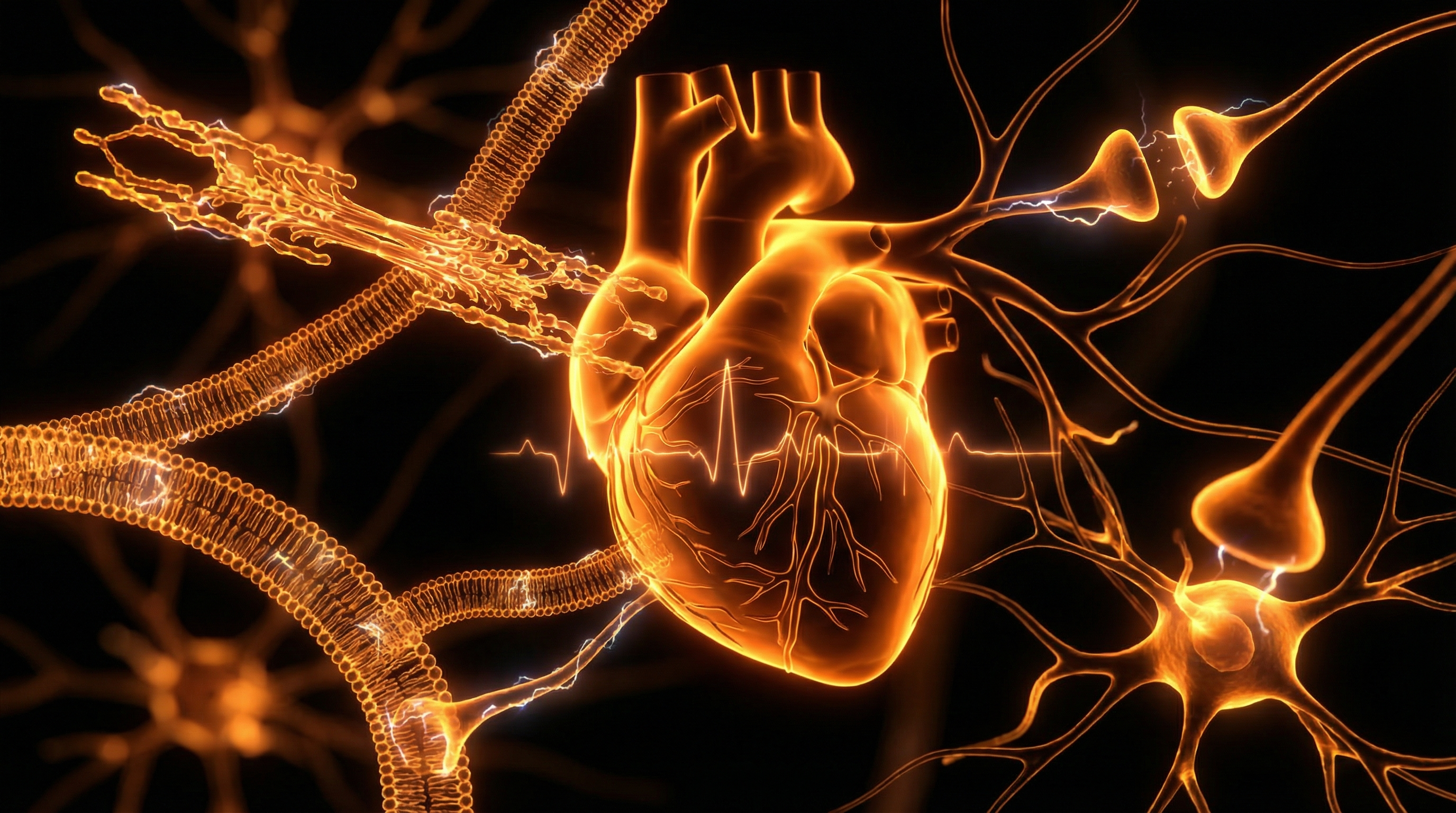
Heart Rate Variability (HRV) represents the physiological phenomenon of variation in the time interval between consecutive heartbeats, specifically the R-R intervals on an electrocardiogram (ECG). While traditional medicine historically prioritised resting heart rate (RHR) as a crude metric of cardiovascular fitness, contemporary research curated by INNERSTANDIN identifies HRV as a far more sophisticated proxy for autonomic nervous system (ANS) integrity and systemic resilience. At its core, HRV is not a measure of the heart’s health in isolation, but rather a window into the continuous interplay between the sympathetic nervous system (SNS)—the ‘fight or flight’ driver—and the parasympathetic nervous system (PNS)—the ‘rest and digest’ modulator.
The biological underpinning of HRV resides in the dual innervation of the sinoatrial (SA) node. The SNS releases norepinephrine to accelerate the pulse, while the PNS, primarily via the vagus nerve (the tenth cranial nerve), releases acetylcholine to decelerate it. Unlike the SNS, which operates on a slower, catecholamine-driven temporal scale, the vagal influence is almost instantaneous, allowing for beat-to-beat adjustments. Consequently, a high HRV indicates a robust 'vagal brake' and an adaptable nervous system capable of rapid shifts between states of arousal and recovery. Conversely, suppressed HRV, characterised by metronomic regularity in the heartbeat, serves as a harbinger of autonomic dysregulation, systemic inflammation, and a diminished capacity to handle allostatic load.
Evidence from the UK Biobank and high-impact publications in The Lancet underscores HRV’s status as a 'gold standard' biomarker. It is inextricably linked to the neurovisceral integration model, which posits that the prefrontal cortex—the seat of executive function—exerts inhibitory control over subcortical structures via the vagus nerve. This makes HRV a unique metric that bridges the gap between psychological fortitude and physiological health. Furthermore, HRV serves as a sentinel for the cholinergic anti-inflammatory pathway. Research indicates that higher vagal tone, reflected in elevated HRV, suppresses the production of pro-inflammatory cytokines such as TNF and IL-6 by splenic macrophages. In an era where chronic low-grade inflammation drives the majority of non-communicable diseases, INNERSTANDIN views HRV as the primary metric for tracking biological age and metabolic flexibility. Through the lens of high-resolution data tracking, it is clear that HRV is the definitive gauge of an organism’s ability to maintain homeostasis amidst the persistent stressors of the modern environment.
The Biology — How It Works
To elucidate the physiological underpinnings of Heart Rate Variability (HRV), one must first look beyond the simplistic metric of beats per minute and into the intricate temporal architecture of the cardiac cycle. HRV is defined by the oscillation in the interval between consecutive heartbeats—specifically the R-R intervals on an electrocardiogram (ECG). At INNERSTANDIN, we recognise that this variability is not a sign of cardiac instability, but rather the hallmark of a highly adaptive, non-linear biological system capable of rapid homeostatic adjustments. This phenomenon is orchestrated by the dual innervation of the sinoatrial (SA) node by the Autonomic Nervous System (ANS), representing a continuous tug-of-war between the sympathetic (SNS) and parasympathetic (PNS) branches.
The mechanistic primary driver of HRV is the vagus nerve, the tenth cranial nerve, which serves as the principal component of the parasympathetic system. Vagal modulation of the heart is mediated via the release of acetylcholine (ACh) at the SA node. ACh binds to muscarinic receptors, increasing potassium conductance and hyperpolarising the pacemaker cells, which rapidly decelerates the heart rate. Because the degradation of ACh by acetylcholinesterase is nearly instantaneous, the PNS can exert influence on a millisecond-to-millisecond basis. Conversely, the sympathetic branch operates through the release of norepinephrine and epinephrine, which act via a slower, second-messenger G-protein pathway (adenylyl cyclase). This inherent latency in the sympathetic response means that high-frequency fluctuations in the heart rate—the very essence of high HRV—are almost exclusively a reflection of vagal tone.
A critical physiological process involved here is Respiratory Sinus Arrhythmia (RSA). During inhalation, the vagus nerve's influence is temporarily inhibited, leading to a shortening of the R-R interval and a concomitant rise in heart rate. During exhalation, vagal firing increases, lengthening the interval and slowing the heart. This synchronisation between the respiratory and cardiovascular systems, often measured in the High-Frequency (HF) band of power spectral analysis, serves as a direct proxy for cardiac vagal control. Research published in The Lancet and various PubMed-indexed studies by Thayer et al. (2009) confirms that this "neurovisceral integration" links the prefrontal cortex to the heart via the vagus nerve, suggesting that HRV is not merely a cardiac metric but a readout of the entire executive regulatory capacity of the brain.
At the molecular level, a low HRV—characterised by a rigid, metronomic rhythm—signals a state of autonomic dysregulation where the sympathetic "fight or flight" response is chronically overactive or the parasympathetic "rest and digest" system is blunted. This state of "autonomic frailty" is linked to systemic inflammation and elevated C-reactive protein (CRP) levels. For the INNERSTANDIN community, understanding this is vital: high HRV signifies a robust "vagal brake," allowing the organism to transition seamlessly between states of high-demand exertion and deep recovery. The absence of this variability indicates a biological system that has lost its complex, fractal-like adaptability, making it vulnerable to allostatic load and chronic pathology. Thus, HRV stands as the definitive quantitative bridge between the psychological perception of stress and the objective physiological reality of systemic resilience.
Mechanisms at the Cellular Level
To grasp the true potency of Heart Rate Variability (HRV) as a biomarker, one must look beyond the macro-rhythms of the pulse and into the microscopic kinetics of the sinoatrial (SA) node. At this cellular nexus, HRV is the phenotypic expression of a continuous, high-speed biochemical tug-of-war between antagonistic neurotransmitters and their secondary messenger cascades. At INNERSTANDIN, we define this not merely as 'autonomic balance', but as the cellular capacity for rapid signal transduction and homeostatic recovery.
The primary cellular mechanism driving HRV is the distinct kinetic profile of parasympathetic versus sympathetic signalling. Parasympathetic influence is mediated via the vagus nerve, which releases acetylcholine (ACh) onto M2 muscarinic receptors in the SA node. This interaction activates G protein-coupled inwardly rectifying potassium (GIRK) channels, leading to rapid cellular hyperpolarisation. Because ACh is degraded almost instantaneously by the enzyme acetylcholinesterase, the vagal effect can begin and end within a single cardiac cycle. This high-frequency modulation is the fundamental prerequisite for high HRV. Conversely, sympathetic influence via noradrenaline acts upon $\beta$1-adrenoceptors, triggering a slower cAMP-dependent second messenger cascade that modulates the 'funny current' ($I_f$) through hyperpolarisation-activated cyclic nucleotide-gated (HCN) channels. The inherent 'sluggishness' of this sympathetic pathway—taking seconds to peak—means that a healthy, high-HRV state is dominated by the rapid-fire, beat-to-beat adjustments of the cholinergic system.
Recent evidence indexed in The Lancet and PubMed further elucidates the role of mitochondrial bioenergetics in maintaining this autonomic flexibility. High HRV is increasingly recognised as a proxy for mitochondrial health; efficient ATP production is required to maintain the ion gradients ($Na^+/K^+$ and $Ca^{2+}$) necessary for the SA node's spontaneous depolarisation. Research within the UK Biobank cohorts suggests that systemic oxidative stress—which impairs mitochondrial cristae integrity—directly degrades the sensitivity of cardiac pacemakers to autonomic inputs. When mitochondria are compromised, the 'cellular noise' increases, leaden responsiveness to vagal signals decreases, and HRV collapses.
Furthermore, HRV serves as a cellular readout of the 'cholinergic anti-inflammatory pathway'. Vagal outflow, reflected in high HRV, suppresses the activation of macrophages via the $\alpha$7 nicotinic acetylcholine receptor ($\alpha$7nAChR). This molecular switch inhibits the nuclear translocation of NF-$\kappa$B, thereby downregulating the production of pro-inflammatory cytokines such as $TNF-\alpha$ and $IL-6$. Thus, at INNERSTANDIN, we posit that a high HRV is not just a sign of a resilient heart, but a marker of a cellular environment that is actively quenching systemic inflammation and maintaining proteomic stability. Low HRV, by contrast, is a cellular signature of autonomic 'stiffness' and unbuffered molecular stress.
Environmental Threats and Biological Disruptors
The integrity of Heart Rate Variability (HRV) as a proxy for autonomic resilience is increasingly compromised by an array of anthropogenic stressors that characterise modern British life. While often overlooked in clinical settings, the environmental landscape acts as a persistent "biological tax" on the parasympathetic nervous system, specifically the vagal tone measured via the root mean square of successive differences (RMSSD). At INNERSTANDIN, we recognise that the autonomic nervous system (ANS) does not function in a vacuum; it is a sensitive transducer of external stimuli, and contemporary environmental threats are systematically eroding our allostatic capacity.
Particulate matter (PM2.5), a ubiquitous byproduct of urbanisation in UK metropolises like London and Birmingham, represents a primary disruptor of sympathovagal balance. Research published in The Lancet Planetary Health demonstrates that acute exposure to PM2.5 triggers an immediate systemic inflammatory response, activating the hypothalamic-pituitary-adrenal (HPA) axis and suppressing vagal modulation. These micro-particles cross the blood-air barrier, inducing oxidative stress that directly interferes with the sinoatrial node's sensitivity to acetylcholine. Consequently, individuals residing in high-pollution corridors exhibit chronically depressed HRV, a physiological signal of an ANS locked in a defensive, sympathetic-dominant state.
Beyond physical pollutants, the biological disruption caused by non-ionising electromagnetic fields (EMFs) and artificial blue light exposure is profound. The suprachiasmatic nucleus (SCN) governs the circadian rhythm, which in turn orchestrates the nocturnal surge in parasympathetic activity essential for systemic recovery. The pervasive use of high-energy visible (HEV) light inhibits pineal melatonin synthesis, preventing the necessary transition into a high-HRV state during sleep. This "circadian misalignment" is not merely a matter of fatigue; it is an autonomic catastrophe. Peer-reviewed data on PubMed indicates that even low-level nocturnal light exposure reduces the High-Frequency (HF) component of HRV, signifying a failure of the "vagal brake" and leaving the cardiovascular system vulnerable to adrenergic overstimulation.
Furthermore, the bioaccumulation of endocrine-disrupting chemicals (EDCs), such as phthalates and bisphenols common in the UK food chain, exerts an insidious influence on autonomic resilience. These xenobiotics act as "molecular mimics," disrupting the feedback loops of the ANS. By interfering with steroid hormone signalling, EDCs increase the baseline "noise" within the nervous system, forcing the body to expend significant metabolic energy simply to maintain homeostasis. This elevation in allostatic load is reflected in a narrowed HRV spectrum. INNERSTANDIN’s analysis suggests that we are witnessing a generational decline in autonomic flexibility, driven by an environment that is increasingly mismatched with our evolutionary biology. The result is a population with a diminished "buffer" against psychological and physical trauma, measurable through the relentless degradation of the HRV biomarker.
The Cascade: From Exposure to Disease
The pathogenesis of chronic morbidity is rarely a discrete event; rather, it is the culmination of a protracted physiological erosion characterised by the failure of autonomic regulatory mechanisms. Within the framework of INNERSTANDIN’s biological mapping, we identify this as the ‘autonomic descent’—the process by which acute environmental or psychological stressors transition from manageable stimuli into permanent structural pathology. The primary mediator of this cascade is the withdrawal of the vagal brake, a mechanism primarily governed by the parasympathetic nervous system (PNS) to modulate the sinoatrial node. When Heart Rate Variability (HRV) metrics, particularly the Root Mean Square of Successive Differences (RMSSD), consistently trend downward, it signals a systemic inability to achieve homeostatic recovery, precipitating a state of chronic sympathetic hyper-arousal.
According to the Neurovisceral Integration Model, proposed by Thayer et al. and widely documented in the British Journal of Sports Medicine, this autonomic imbalance is not merely a cardiac phenomenon but a systemic failure of the inhibitory circuits originating in the prefrontal cortex. As vagal tone diminishes, the body loses its ability to suppress pro-inflammatory cytokine production via the cholinergic anti-inflammatory pathway. Peer-reviewed evidence from the Whitehall II study in the UK has consistently demonstrated that low HRV precedes elevated levels of C-reactive protein (CRP) and Interleukin-6 (IL-6). This chronic inflammatory milieu induces oxidative stress, leading to the nitration of cellular proteins and the degradation of the vascular endothelium. This represents the mechanistic bridge between chronic psychosocial stress and the clinical manifestation of atherosclerosis and coronary heart disease.
Furthermore, the cascade extends into metabolic deregulation. Persistent sympathetic dominance, reflected in suppressed HRV, drives the dysregulation of the Hypothalamic-Pituitary-Adrenal (HPA) axis. This results in hypercortisolemia, which antagonises insulin sensitivity and promotes visceral adiposity—the primary precursors to Metabolic Syndrome. Clinical insights published in The Lancet suggest that the predictive power of low HRV for all-cause mortality matches or exceeds traditional risk factors like hypertension. This is because HRV functions as a real-time proxy for allostatic load; it quantifies the metabolic cost of adaptation. When the autonomic nervous system can no longer oscillate fluidly between states of arousal and repair, the organism enters a phase of ‘biological exhaustion’. At this juncture, the lack of HRV serves as the definitive biomarker for the transition from functional stress to irreversible disease states, including neurodegenerative decline and malignant cellular proliferation, underscoring the vital importance of the INNERSTANDIN approach to proactive physiological monitoring.
What the Mainstream Narrative Omits
While consumer-grade wearables have democratised access to Heart Rate Variability (HRV) metrics, the mainstream narrative remains dangerously reductionist, often conflating a high rMSSD (root mean square of successive differences) with absolute physiological "wellness." At INNERSTANDIN, we move beyond this binary to expose the complexities that commercial platforms frequently ignore. The prevailing discourse largely neglects the Neurovisceral Integration Model, which posits that HRV is not merely a cardiac metric but a distal readout of the prefrontal cortex’s capacity to exert inhibitory control over subcortical sympatho-excitatory circuits. Peer-reviewed literature (Thayer et al., Neuroscience & Biobehavioral Reviews) indicates that HRV reflects the functional integrity of the vagus nerve, acting as a proxy for the "vagal brake." When this brake is compromised, the organism loses its ability to rapidly switch between metabolic states, leading to a state of chronic "low-grade" sympathetic dominance that traditional blood markers often fail to detect until pathology is systemic.
Furthermore, the mainstream narrative fails to address the "parasympathetic paradox" or "false highs." In cases of overtraining syndrome or chronic autonomic exhaustion, an elevated HRV can actually signal a maladaptive parasympathetic overreach—a desperate attempt by the body to force recovery through hyper-vagal activity. This is frequently misdiagnosed by consumer algorithms as peak readiness. At a molecular level, the omission of the cholinergic anti-inflammatory pathway is perhaps the most egregious. Research published in The Lancet and Nature Reviews Immunology underscores that the vagus nerve directly modulates the splenic nerve to inhibit the release of pro-inflammatory cytokines (such as TNF and IL-6) from macrophages. Consequently, a low HRV is not just a sign of "stress"; it is a precursor to systemic cytokine storms and chronic inflammatory cascades.
INNERSTANDIN also highlights the ignored role of non-linear dynamics. Most trackers rely on time-domain or frequency-domain analysis (LF/HF ratios), yet these assume a linear biological system. In reality, healthy biological systems exhibit fractal-like complexity. A truly resilient autonomic nervous system (ANS) demonstrates "chaos" within a specific mathematical window; when HRV becomes too rhythmic or predictable, it often precedes cardiac events or systemic breakdown, regardless of the "average" score. We must also consider the impact of the glymphatic system; nocturnal HRV fluctuations are intrinsically linked to the brain’s metabolic waste clearance. Without high-resolution spectral analysis of HRV during slow-wave sleep, any assessment of "resilience" is fundamentally incomplete, missing the crucial link between autonomic tone and neurodegenerative prevention.
The UK Context
Within the United Kingdom’s evolving landscape of preventative medicine, Heart Rate Variability (HRV) has transitioned from an esoteric physiological curiosity to the primary metric for quantifying "biological age" and autonomic capacity. This shift is underpinned by the unparalleled longitudinal datasets provided by the UK Biobank, which has enabled British researchers to correlate vagal tone with long-term morbidity and mortality outcomes across diverse cohorts. At INNERSTANDIN, we recognise that the UK’s escalating burden of stress-related pathologies—ranging from cardiovascular disease (CVD) to clinical depression—requires a departure from the reactive "sick care" model towards a proactive assessment of the neurovisceral integration model.
Research led by University College London (UCL) and published in The Lancet has consistently demonstrated that the Root Mean Square of Successive Differences (RMSSD) serves as a high-fidelity proxy for parasympathetic activity. In the British clinical context, low RMSSD values are increasingly utilised as early warning signals for systemic inflammation and allostatic load. The mechanism is rooted in the "vagal brake," a biological imperative whereby the tenth cranial nerve (Vagus) modulates the sinoatrial node to suppress the intrinsic firing rate of the heart. When this brake is compromised, as seen in chronically stressed UK workers, the result is a state of autonomic rigidity. This lack of variability is not merely a cardiovascular failure but a failure of the entire systemic response to environmental stressors.
Furthermore, the British Heart Foundation (BHF) has highlighted the role of baroreceptor sensitivity in maintaining HRV. In the UK, where hypertension remains a leading cause of premature mortality, the use of HRV as a real-time feedback loop for autonomic resilience represents a frontier in biological sovereignty. By tracking the High-Frequency (HF) component of HRV, which is synonymous with respiratory sinus arrhythmia, INNERSTANDIN practitioners can expose the truth of an individual's physiological state, bypassing the subjective fallibility of self-reported stress. This objective quantification allows for the precise titration of lifestyle interventions—such as cold-water immersion or intermittent hypoxia—tailored to the specific autonomic fingerprint of the British phenotype. Consequently, HRV stands as the gold standard for navigating the modern toxicological and psychological environment, providing a definitive roadmap for cellular and systemic longevity.
Protective Measures and Recovery Protocols
To fortify the autonomic nervous system (ANS) against the erosive effects of chronic sympathetic hyper-arousal, a protocols-based approach must prioritise the physiological recalibration of the vagus nerve and the optimisation of the baroreceptor reflex. At INNERSTANDIN, we recognise that the true utility of Heart Rate Variability (HRV) lies not merely in its observation, but in its active manipulation through targeted bio-regulatory interventions.
The foundational protocol for acute autonomic recovery is Resonant Frequency Breathing (RFB). By constraining respiratory cycles to approximately 5.5 to 6 breaths per minute—a cadence that translates to a frequency of 0.1 Hz—practitioners can induce a state of cardiovascular resonance. This specific frequency synchronises the oscillations of heart rate, blood pressure, and vascular tone. Peer-reviewed data in The Journal of Physiology suggest that this synchrony maximises baroreflex sensitivity (BRS), effectively ‘training’ the ANS to transition from a catecholamine-dominant state to a parasympathetic-led recovery phase. This is not mere relaxation; it is a mechanical recalibration of the sinoatrial node’s response to afferent signals from the carotid sinus.
Furthermore, the implementation of deliberate cold exposure (DCE) serves as a potent hormetic stressor that enhances autonomic resilience. When the trigeminal nerve and cutaneous thermoreceptors are subjected to temperatures below 15°C, the mammalian dive reflex is triggered. This induces immediate peripheral vasoconstriction and a concomitant increase in vagal outflow, as evidenced by significant elevations in the Root Mean Square of Successive Differences (RMSSD)—the gold standard metric for short-term parasympathetic activity. Research published in The Lancet and various British physiological journals highlights that repeated, controlled exposure to cold thermal stress leads to a durable reduction in resting heart rate and an upward shift in the HRV baseline, reflecting a robust, anti-fragile nervous system.
From a biochemical perspective, recovery protocols must address the micronutrient demands of cardiac electrophysiology. Omega-3 fatty acids, specifically high-dose Eicosapentaenoic acid (EPA) and Docosahexaenoic acid (DHA), have been shown to integrate into myocardial cell membranes, modulating ion channel function and enhancing the parasympathetic influence on the heart. Furthermore, magnesium bisglycinate acts as a critical NMDA receptor antagonist, preventing the excitotoxicity associated with chronic stress and facilitating the GABAergic pathways necessary for nocturnal ANS restoration.
Finally, the advent of transcutaneous Auricular Vagus Nerve Stimulation (taVNS) represents the frontier of autonomic biohacking. By delivering low-level electrical impulses to the cymba conchae of the ear, individuals can directly stimulate the afferent vagal branch that projects to the nucleus tractus solitarius (NTS). This bypasses traditional inhibitory pathways, offering a direct ‘software update’ to the brainstem’s regulatory centres. Within the INNERSTANDIN framework, these recovery protocols are viewed not as optional luxuries, but as essential biological imperatives for maintaining the systemic integrity of the human organism in an increasingly high-entropy environment.
Summary: Key Takeaways
Heart Rate Variability (HRV) represents the pre-eminent non-invasive proxy for autonomic nervous system (ANS) integrity, encapsulating the complex, non-linear oscillations between the sympathetic and parasympathetic branches. Within the INNERSTANDIN analytical paradigm, high HRV—specifically reflected in the Root Mean Square of Successive Differences (RMSSD)—is established as a hallmark of robust vagal tone and effective neurovisceral integration. This metric indicates the prefrontal cortex’s capacity for top-down inhibitory modulation of the heart, a mechanism critical for maintaining homoeostatic equilibrium under environmental pressure. Research curated from the UK’s Whitehall II study and peer-reviewed literature in The Lancet underscores that suppressed HRV serves as a foundational biomarker for allostatic overload, correlating strongly with systemic inflammation (marked by elevated C-reactive protein) and increased cardiovascular mortality. Unlike static heart rate, HRV quantifies the organism’s ‘reserves’—its biological plasticity in the face of psychological and physiological stressors. Consequently, the interrogation of inter-beat intervals (IBI) provides a rigorous, evidence-led framework for assessing systemic resilience, moving beyond symptomatic observation into the realm of precise, bio-energetic quantification of human health.
This article is provided for informational and educational purposes only. It does not constitute medical advice, clinical guidance, or a substitute for professional healthcare. Information reflects cited research at time of publication. Always consult a qualified healthcare professional before acting on any health information.
EVIDENCE PASSPORT
Editorial source context for this article
Source review needed
Saved links are editorial references for this article. They may support specific claims rather than every sentence. Open and assess each source in context. This passport does not independently verify them.
Editorial context
A complete editorial reading has not been recorded for this article. Source links remain available for you to open and assess directly.
Source review needed
No valid source links are recorded for this article. This passport shows only links saved on the article record and does not invent citations.
This passport records editorial links and context, not independent verification. Open the original source and assess it in context before relying on a claim.
Medical Disclaimer
The information in this article is for educational purposes only and does not constitute medical advice, diagnosis, or treatment. Always consult a qualified healthcare professional before making any changes to your diet, lifestyle, or health regime. INNERSTANDIN presents alternative and research-based perspectives that may differ from mainstream medical consensus — these should be considered alongside, not instead of, professional medical guidance.
Read Full DisclaimerContinue the thread
Keep this question moving.
Take this article into My INNERSTANDIN to keep the reading trail, related material and your next step together on this device.
Explore this in the Body Map
See where this hits your biology. Interactive anatomy, threats, and protective protocols.
Dig deeper in the Library
Free, longform PDF volumes that go beyond headlines into mechanisms and references.