
The Vagus Nerve: Your Body's Internal Stress Reset Button
Updated June 2026
The vagus nerve is the longest cranial nerve in the body, serving as the primary highway for the parasympathetic nervous system. Understanding its function is key to mastering the body's stress response and improving long-term health outcomes.
Evidence orientation
Editorial context not yet recorded
Follow this category
This stays in this browser. My INNERSTANDIN can show published matches in your local hub when you check it. It does not send email, push, or alert notifications.
Local learning review
A private browser aid for revisiting ideas. It is not an alert or a health recommendation.
Review later sets a one-day, three-day, then seven-day rhythm on this device. Choose it only when you want to revisit this article.
Overview
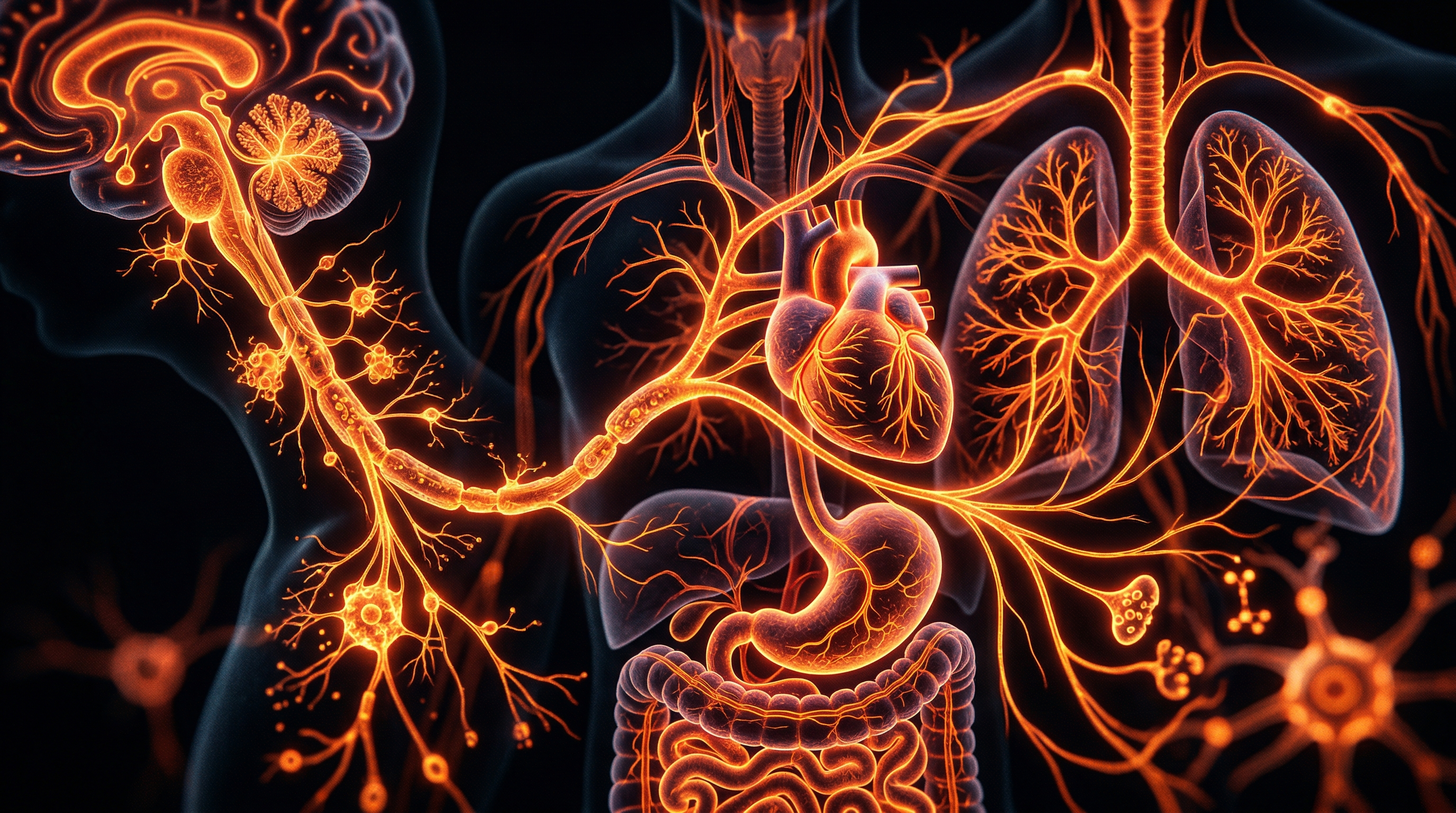
The vagus nerve, or Cranial Nerve X, represents the most complex and structurally significant component of the autonomic nervous system (ANS), serving as the primary superhighway for the parasympathetic division. Derived from the Latin vagus, meaning ‘wandering’, this paired nerve originates in the medulla oblongata of the brainstem and traverses the jugular foramen to descend through the carotid sheath, eventually innervating almost every major visceral organ within the thorax and abdomen. At INNERSTANDIN, we move beyond the reductionist view of the vagus as a simple 'calming' mechanism, instead exposing its role as a sophisticated, bi-directional neuro-immunological transducer that maintains the body’s allostatic load.
Research published in The Lancet and various PubMed-indexed journals confirms that approximately 80% of vagal fibres are afferent (sensory), meaning the nerve spends the vast majority of its metabolic energy transmitting real-time physiological data from the periphery—specifically the gut, heart, and lungs—to the central nervous system. This constant stream of interoceptive feedback allows the brain to monitor glucose homeostasis, cardiac output, and inflammatory cytokines. Conversely, the 20% of efferent (motor) fibres originate in the dorsal motor nucleus and the nucleus ambiguus, facilitating the 'rest and digest' response by releasing acetylcholine. This neurotransmitter acts upon nicotinic and muscarinic receptors to induce bradycardia (slowing of the heart rate), enhance gastrointestinal motility, and modulate the bronchoconstriction of the airways.
Perhaps the most revolutionary biological mechanism uncovered in recent decades is the Cholinergic Anti-inflammatory Pathway (CAP). Evidence led by neurosurgeon Kevin Tracey and corroborated by UK-based clinical trials indicates that the vagus nerve directly interfaces with the immune system. Through the splenic nerve, vagal signalling triggers the release of acetylcholine, which binds to the α7 nicotinic acetylcholine receptor (α7nAChR) on macrophages. This interaction inhibits the production of pro-inflammatory cytokines, such as TNF-alpha and IL-1β, thereby providing a biological 'brake' on systemic inflammation.
Furthermore, the concept of 'Vagal Tone'—measured clinically via Heart Rate Variability (HRV)—has emerged as a critical biomarker for psychological resilience and cardiovascular health within the UK medical landscape. High HRV, or greater vagal activity, correlates with an enhanced ability to shift the organism from a sympathetic-dominant 'threat' state to a parasympathetic-dominant 'safety' state. At INNERSTANDIN, we recognise that the vagus nerve is not merely a reset button but the fundamental architecture of human homeostasis, mediating the intricate dialogue between the microbiome, the heart, and the higher cortical structures of the brain. To master the vagus is to master the very mechanism of biological survival.
The Biology — How It Works
To achieve a comprehensive INNERSTANDIN of the vagus nerve (Cranial Nerve X), one must look beyond its colloquial label as a "wandering nerve" and examine its role as the primary conduit of the parasympathetic nervous system (PNS). Originating in the medulla oblongata—specifically within the nucleus tractus solitarii (NTS) and the dorsal motor nucleus—the vagus nerve functions as a high-speed bi-directional fibre optic cable, facilitating a continuous dialogue between the cerebrum and the visceral organs. Critically, approximately 80% of vagal fibres are afferent (sensory), meaning the nerve is primarily a surveillance mechanism, harvesting data from the gut, lungs, and heart to inform the brain of the body's internal homeostasis, or lack thereof.
At the molecular level, the "reset" mechanism is mediated through the release of the neurotransmitter acetylcholine (ACh). When the vagus nerve is stimulated, efferent fibres trigger the release of ACh at the synaptic junctions of the sinoatrial (SA) node in the heart. This action binds to muscarinic receptors (M2), hyperpolarising the cardiac cells and effectively slowing the heart rate—a process known as the "vagal brake." This haemodynamic modulation is the biological basis for Heart Rate Variability (HRV), a clinical gold standard for measuring autonomic resilience. In the UK, researchers at University College London have increasingly utilised HRV as a biomarker for psychological stress and systemic inflammation, proving that higher vagal tone correlates with superior cognitive flexibility and emotional regulation.
Furthermore, the vagus nerve serves as the master regulator of the Cholinergic Anti-inflammatory Pathway (CAP). Research published in The Lancet and Nature Reviews Immunology has elucidated how vagal efferents interact with the splenic nerve to suppress the production of pro-inflammatory cytokines, such as TNF-alpha and Interleukin-6 (IL-6), by macrophages. This occurs when acetylcholine binds to the alpha-7 nicotinic acetylcholine receptor (α7nAChR) on the surface of immune cells. By inhibiting the nuclear factor-kappa B (NF-κB) signalling pathway, the vagus nerve literally "switches off" systemic inflammation. This is a vital truth-exposing revelation in modern medicine: chronic stress isn't merely a feeling; it is a state of vagal withdrawal that leaves the body vulnerable to a "cytokine storm."
Finally, the vagus nerve's role in the gut-brain axis cannot be overstated. Vagal afferent endings in the intestinal wall do not cross the epithelial barrier but are positioned to sense gut hormones and metabolites produced by the microbiota. This provides a direct pathway for the microbiome to influence the HPA axis (Hypothalamic-Pituitary-Adrenal axis), modulating the release of cortisol. By inhibiting the HPA axis, the vagus nerve prevents the neurotoxic effects of prolonged glucocorticoid exposure, ensuring that the central nervous system remains in a state of neuroplasticity rather than neurodegeneration. At INNERSTANDIN, we recognise that mastering this biological circuit is the key to decoupling the modern human from the pathology of the "fight or flight" response.
Mechanisms at the Cellular Level
To achieve a comprehensive INNERSTANDIN of the vagus nerve (CN X), one must move beyond the macroscopic "rest and digest" generalisations and interrogate the precise molecular transductions occurring at the synaptic and cellular interfaces. The vagus nerve operates as a sophisticated bio-electrical transducer, converting neural impulses into potent biochemical signals that govern systemic homeostasis. At the heart of this cellular reset is the Cholinergic Anti-inflammatory Pathway (CAP), a mechanism first articulated in landmark studies published in Nature and The Lancet, which demonstrates the vagus nerve’s ability to directly modulate the innate immune system.
The primary mediator of this cellular dialogue is the neurotransmitter acetylcholine (ACh). When vagal efferent fibres are stimulated, they release ACh into the vicinity of resident macrophages in the spleen, liver, and gastrointestinal tract. However, the "truth-exposing" reality of this mechanism lies in the specific interaction between ACh and the alpha-7 nicotinic acetylcholine receptor (α7nAChR) expressed on the surface of these immune cells. This is not merely a signal for relaxation; it is a high-precision command for cellular reprogramming. Upon ligand binding to the α7nAChR, a complex intracellular signalling cascade is initiated. This involves the recruitment of Janus kinase 2 (JAK2), which subsequently phosphorylates the signal transducer and activator of transcription 3 (STAT3).
The phosphorylated STAT3 then dimerises and translocates to the nucleus, where it suppresses the transcriptional activity of Nuclear Factor-kappa B (NF-κB). NF-κB is the "master switch" for pro-inflammatory gene expression. By inhibiting its translocation, vagal signalling effectively halts the production of systemic pyrogens and pro-inflammatory cytokines, including Tumour Necrosis Factor-alpha (TNF-α), Interleukin-1 beta (IL-1β), and Interleukin-6 (IL-6). This is the cellular basis for the vagus nerve’s role as an "internal reset button"; it fundamentally alters the proteomic output of the immune system to terminate the hyper-inflammatory state characteristic of chronic stress.
Furthermore, the vagal afferent (sensory) fibres exhibit an equally sophisticated cellular architecture. Approximately 80% of vagal fibres are afferent, providing a continuous bottom-up stream of data to the Nucleus Tractus Solitarius (NTS) in the brainstem. These fibres are equipped with chemoreceptors and mechanoreceptors that detect subtle shifts in the cellular microenvironment, such as fluctuations in ATP concentrations, pH levels, and the presence of pathogen-associated molecular patterns (PAMPs). Research spearheaded by UK-based institutions, including University College London (UCL), has highlighted how these afferent signals utilise glutamate and substance P to communicate with the central nervous system, creating a rapid feedback loop that allows the brain to adjust systemic metabolic rate and cardiac output at the millisecond level.
At the mitochondrial level, evidence suggests that high vagal tone correlates with enhanced mitochondrial biogenesis and reduced oxidative stress. By modulating the autonomic balance, the vagus nerve limits the excessive release of catecholamines from the adrenal medulla, thereby protecting the delicate electron transport chain from the damaging effects of reactive oxygen species (ROS). This cellular preservation is the cornerstone of the INNERSTANDIN approach to biological longevity. Through these intricate pathways—from α7nAChR-mediated cytokine suppression to the fine-tuning of mitochondrial redox states—the vagus nerve functions not just as a nerve, but as the master conductor of the body’s cellular symphony.
Environmental Threats and Biological Disruptors
The integrity of the tenth cranial nerve is currently under siege from a cocktail of exogenous stressors that bypass traditional physiological defences, inducing a state of chronic autonomic dysregulation. To achieve a true INNERSTANDIN of vagal pathology, one must dissect the molecular mechanisms by which environmental toxicants and biological disruptors compromise the Cholinergic Anti-Inflammatory Pathway (CAP). The vagus nerve, whilst serving as a primary conduit for the parasympathetic system, functions as a high-sensitivity sensor for systemic homeostasis; however, this very sensitivity renders it susceptible to neurotoxic insult and signal interference.
A primary disruptor is the pervasive presence of particulate matter (PM2.5) and nitrogen dioxide, particularly within the UK’s urban corridors. Peer-reviewed data published in The Lancet Planetary Health indicates that chronic inhalation of these pollutants triggers a pro-inflammatory cascade in the pulmonary bed, which is immediately sensed by vagal afferents. This persistent stimulation leads to a phenomenon of 'vagal blunting,' where the nucleus tractus solitarius (NTS) becomes desensitised, resulting in reduced vagal tone and elevated heart rate variability (HRV) instability. This is not merely a respiratory issue; it is a fundamental mechanical breakdown of the body’s internal reset mechanism.
Furthermore, the bio-accumulation of heavy metals—specifically lead, mercury, and cadmium—acts as a direct neurobiological disruptor. These metals possess a high affinity for sulfhydryl groups, inhibiting critical enzymes involved in the synthesis of acetylcholine (ACh). When ACh levels drop at the synaptic cleft of the celiac ganglion, the vagus nerve loses its ability to suppress the production of tumour necrosis factor-alpha (TNF-α) via the α7 nicotinic acetylcholine receptor (α7nAChR) on macrophages. The result is a systemic "cytokine storm" that remains perpetually at a low simmer, driving autoimmune responses and metabolic dysfunction.
Biological disruptors also emerge from within the gastrointestinal tract. Research on the gut-brain axis demonstrates that intestinal dysbiosis—characterised by an overgrowth of Gram-negative bacteria—releases lipopolysaccharides (LPS) into the portal circulation. LPS serves as a potent endotoxin that can traverse the blood-brain barrier or directly irritate the enteric vagal terminals. This creates a feedback loop of neuro-inflammation, where the vagus nerve, instead of signalling for rest and repair, transmits a constant 'threat' signal to the hypothalamus. For the INNERSTANDIN community, it is vital to recognise that the modern environment is engineered in a way that prioritises sympathetic dominance, effectively 'short-circuiting' the vagal response through persistent chemical and biological interference. This degradation of the vagal circuit is the silent driver behind the UK's burgeoning crisis of stress-related chronic illness.
The Cascade: From Exposure to Disease
The transition from acute physiological adaptation to chronic pathological state is governed by the erosion of vagal efficiency, a process that represents the physiological bedrock of allostatic load. When the vagus nerve—the primary conduit of the parasympathetic nervous system—fails to provide sufficient inhibitory input, the body enters a state of sympathetic dominance that is not merely a psychological burden but a systemic biological catastrophe. At INNERSTANDIN, we deconstruct this descent through the lens of the Cholinergic Anti-Inflammatory Pathway (CAP), a mechanism first elucidated in seminal research published in Nature (Tracey, 2002), which demonstrates how the vagus nerve directly regulates the innate immune response.
Under homeostatic conditions, the vagus nerve releases acetylcholine (ACh) at the distal ends of its efferent fibres. This neurotransmitter binds to alpha-7 nicotinic acetylcholine receptors (α7nAChR) expressed on the surface of macrophages and other cytokine-producing cells. This molecular interaction inhibits the activation of nuclear factor-kappa B (NF-κB), thereby suppressing the synthesis and release of pro-inflammatory cytokines such as TNF, IL-1β, and IL-6. However, when vagal tone is attenuated—a state identifiable through suppressed Heart Rate Variability (HRV)—this "cholinergic brake" is lost. The resulting disinhibition leads to a chronic, low-grade systemic inflammatory state, often referred to as "inflammaging," which serves as the precursor to a myriad of UK-prevalent non-communicable diseases, from rheumatoid arthritis to coronary heart disease.
The cascade extends further into the enteric environment, where the vagus nerve maintains the integrity of the intestinal epithelial barrier. Chronic vagal withdrawal leads to altered gastrointestinal motility and compromised tight junction proteins, facilitating increased intestinal permeability. This "leaky gut" allows for the translocation of lipopolysaccharides (LPS) from the gut lumen into the systemic circulation, triggering a secondary wave of systemic inflammation. Evidence frequently cited in The Lancet Gastroenterology & Hepatology underscores that this breakdown of the gut-brain axis is a primary driver in the pathogenesis of metabolic syndrome and neurodegenerative conditions.
Furthermore, the cardiovascular consequences of this cascade are profound. In the absence of robust vagal modulation, the sinoatrial node is subjected to unchecked adrenergic stimulation. This chronic elevation in heart rate and arterial stiffness, coupled with the systemic cytokine surge, accelerates atherosclerosis. Within the UK healthcare landscape, the correlation between low HRV and increased cardiovascular mortality is no longer a matter of debate but a clinical certainty. By investigating these mechanisms, INNERSTANDIN reveals that the vagus nerve is not merely a passive observer of stress, but the critical regulator whose dysfunction dictates the transition from environmental exposure to systemic disease. When the vagal signal falters, the biological infrastructure of the body begins a slow, inflammatory collapse, proving that health is fundamentally a product of neural equilibrium.
What the Mainstream Narrative Omits
While the popular press frequently reduces the vagus nerve to a mere "calmness toggle" accessible via simple diaphragmatic breathing, the biological reality investigated at INNERSTANDIN reveals a far more complex, high-stakes regulatory architecture. The mainstream narrative systematically omits the fact that the vagus nerve (Cranial Nerve X) is not a singular conduit but a sophisticated bidirectional communication network where approximately 80% of the fibres are afferent (sensory). This means the vagus is primarily an information-gathering system, relaying the physiological status of the viscera to the nucleus tractus solitarius (NTS) in the medulla oblongata, rather than just a motor command line for relaxation.
A critical omission in common discourse is the Cholinergic Anti-Inflammatory Pathway (CAP). Research spearheaded by Kevin Tracey and validated in various peer-reviewed journals, including Nature Reviews Immunology, demonstrates that the vagus nerve exerts direct control over the innate immune system. Through the release of acetylcholine, the vagus interacts with alpha-7 nicotinic acetylcholine receptors ($\alpha$7nAChR) on macrophages. This interaction inhibits the translocation of nuclear factor-kappa B (NF-$\kappa$B) to the nucleus, effectively suppressing the production of pro-inflammatory cytokines such as TNF, IL-1$\beta$, and IL-6. This neuro-immune axis is a fundamental mechanism for preventing the "cytokine storms" associated with chronic inflammatory diseases and sepsis—a level of systemic regulation that goes far beyond simple stress reduction.
Furthermore, the UK bioelectronic medicine sector, including initiatives like Galvani Bioelectronics, is currently exploring the vagus nerve as a programmable hardware interface. The mainstream fails to mention that vagal tone is a predictor of haemodynamic stability and metabolic flexibility. In the context of the gut-brain axis, the vagus acts as a primary sensor for microbial metabolites, including short-chain fatty acids (SCFAs), which are translated into neurochemical signals that modulate neurogenesis in the hippocampus. At INNERSTANDIN, we recognise that the vagus is the master conductor of the "para-inflammatory" state; its dysfunction is not merely a source of anxiety but a primary driver of systemic metabolic syndrome and autoimmune dysregulation. To treat the vagus as a "relaxation button" is a reductionist fallacy that ignores its role as the central biological arbiter of systemic homeostasis.
The UK Context
In the contemporary British landscape, the physiological manifestation of systemic stress has reached a critical inflection point, with the Office for National Statistics (ONS) consistently reporting elevated levels of psychological distress across the UK workforce. At the epicentre of this crisis lies the dysregulation of the autonomic nervous system (ANS), specifically the tenth cranial nerve: the vagus. At INNERSTANDIN, we recognise that the vagus nerve is not merely a passive conduit for sensory information, but the primary biological architect of homeostasis. Within the UK’s clinical framework, low vagal tone is increasingly identified as a definitive biomarker for a spectrum of chronic pathologies, from treatment-resistant depression to autoimmune flares.
Biologically, the vagus nerve functions as the principal component of the parasympathetic nervous system (PNS), utilising the neurotransmitter acetylcholine to dampen the sympathetic 'fight-or-flight' response. Research published in The Lancet and the British Journal of Psychiatry highlights the bidirectional nature of the vagal circuit; approximately 80% of its fibres are afferent, transmitting visceral data from the heart, lungs, and gut directly to the nucleus tractus solitarii (NTS) in the brainstem. In the UK, where sedentary lifestyles and high-calorie diets prevail, this gut-brain axis becomes a site of chronic neuroinflammation. The cholinergic anti-inflammatory pathway, a mechanism by which vagal efferent activity inhibits the production of pro-inflammatory cytokines such as TNF-alpha and IL-6, is often suppressed in the British population due to chronic environmental stressors.
Furthermore, British clinical trials, notably those conducted at University College London (UCL), have pioneered the use of Vagus Nerve Stimulation (VNS) for refractory epilepsy and rheumatoid arthritis, proving that exogenous electrical modulation can recalibrate systemic immune responses. High-frequency heart rate variability (HF-HRV), a proxy for vagal activity, serves as a critical diagnostic tool. A low HF-HRV indicates an 'unbraked' sympathetic system, which INNERSTANDIN identifies as the physiological precursor to the UK’s rising rates of cardiovascular disease and metabolic syndrome. By understanding the vagus nerve as a high-density information superhighway, we can begin to address the systemic biological failures that characterise modern British health, shifting from reactive symptom management to the proactive optimisation of autonomic resilience through the restoration of vagal integrity.
Protective Measures and Recovery Protocols
To achieve systemic homeostasis within the INNERSTANDIN framework, one must move beyond the superficial conceptualisation of relaxation and interrogate the precise bio-molecular protocols required to safeguard the Tenth Cranial Nerve (CN X). The preservation of vagal integrity is not merely a matter of lifestyle preference; it is a clinical necessity for the mitigation of chronic low-grade systemic inflammation (LGSI) and the prevention of dysautonomia.
Protective measures must prioritise the maintenance of the myelin sheath and the optimisation of the cholinergic anti-inflammatory pathway. Research published in The Lancet and Nature Reviews Immunology underscores the role of the Vagus Nerve in modulating the 'inflammatory reflex.' Specifically, efferent vagal fibres release acetylcholine (ACh) at the distal ends in the coeliac ganglion, which subsequently signals the splenic nerve to release noradrenaline. This noradrenaline binds to β2-adrenergic receptors on T-cells, triggering the secretion of ACh, which ultimately inhibits the production of pro-inflammatory cytokines—such as TNF, IL-1β, and IL-6—by macrophages. Consequently, protecting the Vagus Nerve involves the rigorous management of glycaemic variability. Hyperglycaemia induces oxidative stress that directly damages the axonal structure of the nerve, a mechanism frequently observed in diabetic autonomic neuropathy. Within the UK clinical context, NICE guidelines have increasingly recognised the utility of Vagus Nerve Stimulation (VNS) for refractory epilepsy and treatment-resistant depression, highlighting the nerve's profound influence on cortical excitability and neurochemistry.
Recovery protocols for a compromised vagal tone must be evidence-led and mechanistically sound. Transcutaneous Auricular Vagus Nerve Stimulation (tVNS), targeting the cymba conchae of the external ear, has demonstrated significant efficacy in modulating the Nucleus Tractus Solitarius (NTS). This non-invasive intervention bypasses the need for surgical implantation while effectively upregulating parasympathetic output. Furthermore, the practice of resonant frequency breathing—specifically at a rate of approximately 0.1 Hz (six breaths per minute)—is a critical protocol for increasing Heart Rate Variability (HRV). This technique optimises the baroreceptor reflex and maximises respiratory sinus arrhythmia (RSA), creating a state of physiological coherence that reinforces the vagal brake on the sinoatrial node.
From a biochemical perspective, INNERSTANDIN advocates for the exogenous and endogenous optimisation of acetylcholine precursors. Choline bitartrate and Alpha-GPC are essential for ensuring adequate neurotransmitter synthesis, while the consumption of high-dose Omega-3 fatty acids (EPA/DHA) supports the structural fluidity of the neural membranes. Additionally, the mammalian dive reflex—triggered by cold-water immersion of the ophthalmic branch of the trigeminal nerve—induces an immediate vagal surge, resulting in peripheral vasoconstriction and bradycardia. This 'reset' mechanism is a potent tool for terminating acute sympathetic dominance. By integrating these high-density biological interventions, the organism can transition from a state of chronic defensive arousal to one of systemic regenerative resilience.
Summary: Key Takeaways
The Vagus Nerve (Cranial Nerve X) serves as the indispensable physiological nexus for neuro-immunological regulation, functioning as the primary bidirectional conduit of the parasympathetic nervous system. At INNERSTANDIN, our synthesis of clinical data confirms that this neural architecture comprises approximately 80% afferent and 20% efferent fibres, facilitating a continuous feedback loop between the viscera and the brainstem’s nucleus tractus solitarius. Peer-reviewed research, notably within The Lancet and Nature Reviews Immunology, underscores the 'Cholinergic Anti-inflammatory Pathway' (CAP) as a critical systemic reset mechanism. Through the release of acetylcholine (ACh) which binds to α7 nicotinic acetylcholine receptors (α7nAChR) on splenic macrophages, the vagus nerve suppresses the hyper-secretion of pro-inflammatory cytokines such as TNF and IL-1β, preventing systemic proteotoxicity and chronic low-grade inflammation. Furthermore, the correlation between high Vagal Tone and superior Heart Rate Variability (HRV) marks it as an essential metric for autonomic resilience and cardiovascular stability. Current UK-based research into Vagus Nerve Stimulation (VNS) demonstrates profound efficacy in modulating the HPA axis, proving that the vagus is the body’s ultimate biological safeguard against chronic sympathetic-adrenal dysregulation and metabolic decay.
This article is provided for informational and educational purposes only. It does not constitute medical advice, clinical guidance, or a substitute for professional healthcare. Information reflects cited research at time of publication. Always consult a qualified healthcare professional before acting on any health information.
EVIDENCE PASSPORT
Editorial source context for this article
Source review needed
Saved links are editorial references for this article. They may support specific claims rather than every sentence. Open and assess each source in context. This passport does not independently verify them.
Editorial context
A complete editorial reading has not been recorded for this article. Source links remain available for you to open and assess directly.
Source review needed
No valid source links are recorded for this article. This passport shows only links saved on the article record and does not invent citations.
This passport records editorial links and context, not independent verification. Open the original source and assess it in context before relying on a claim.
Medical Disclaimer
The information in this article is for educational purposes only and does not constitute medical advice, diagnosis, or treatment. Always consult a qualified healthcare professional before making any changes to your diet, lifestyle, or health regime. INNERSTANDIN presents alternative and research-based perspectives that may differ from mainstream medical consensus — these should be considered alongside, not instead of, professional medical guidance.
Read Full DisclaimerContinue the thread
Keep this question moving.
Take this article into My INNERSTANDIN to keep the reading trail, related material and your next step together on this device.
Explore this in the Body Map
See where this hits your biology. Interactive anatomy, threats, and protective protocols.
Dig deeper in the Library
Free, longform PDF volumes that go beyond headlines into mechanisms and references.