All INNERSTANDIN content is for educational purposes only — not medical advice, diagnosis or treatment. Full Disclaimer →

    BACK TO DATABASE
    TAGGED RESEARCH

    #Parasympathetic

    7TRANSMISSIONS FOUND
    V
    Scientific illustration for Vagus Nerve: The Master Regulator of Healing
    Nervous System
    15 MIN READ

    Vagus Nerve: The Master Regulator of Healing

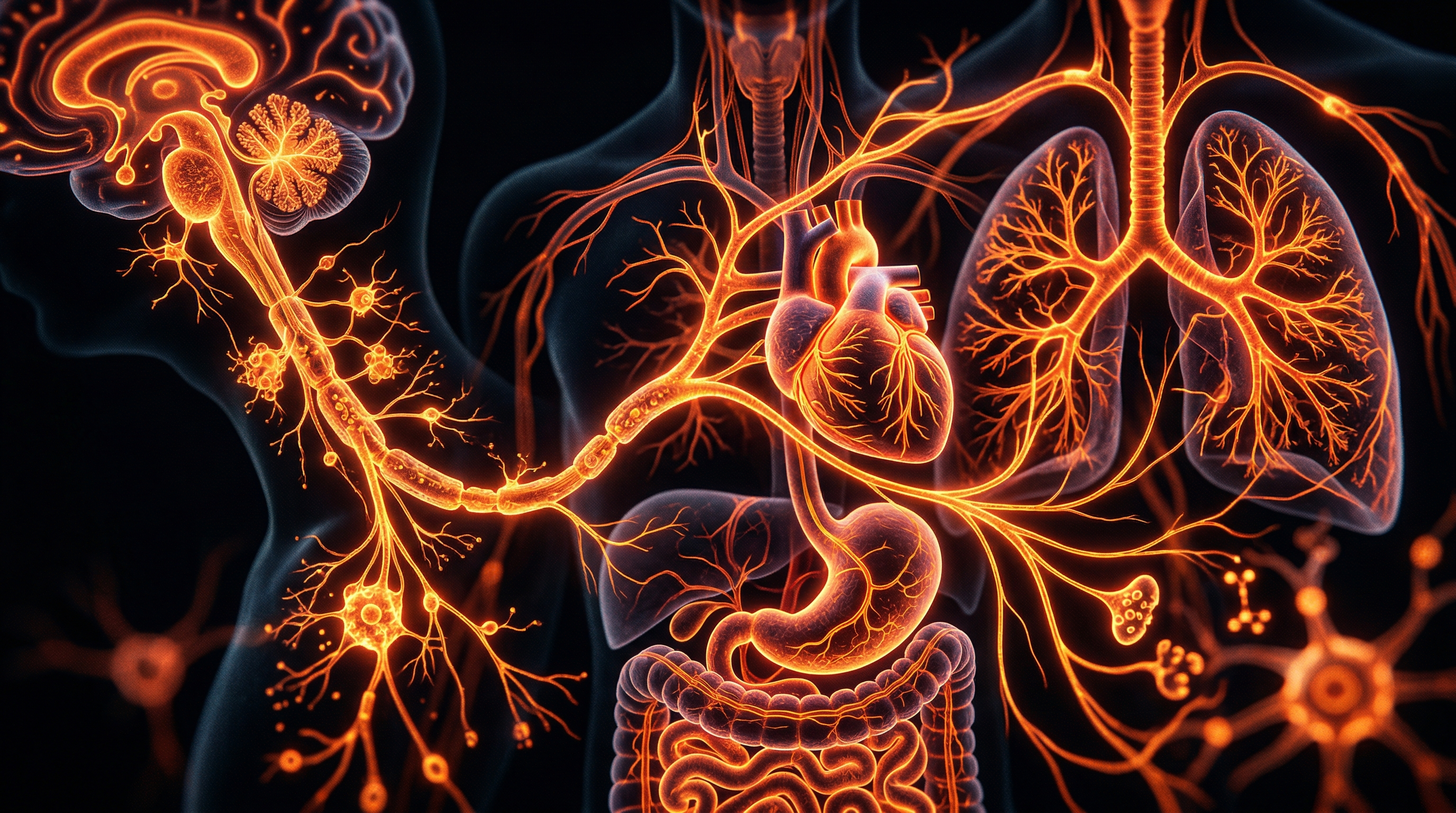
    The vagus nerve — the tenth cranial nerve and the longest nerve in the autonomic nervous system — extends from the brainstem through the neck, chest, and abdomen, innervating the heart, lungs, oesophagus, stomach, liver, gallbladder, spleen, pancreas, and the entire length of the intestines, carrying both efferent signals from the brain to peripheral organs and, critically, 80% afferent signals from the organs back to the brain. As the primary conduit of the parasympathetic nervous system, vagal tone — the level of ongoing vagal activity measurable through heart rate variability (HRV) — determines the body's capacity to maintain anti-inflammatory homeostasis via the 'inflammatory reflex', regulate intestinal motility and gut microbiome composition, manage the stress response through HPA axis modulation, and facilitate the restorative 'rest and digest' physiology that enables tissue repair. Chronic vagal dysfunction — driven by psychological trauma, chronic inflammation, gut dysbiosis, toxic exposure, and sedentary behaviour — is now identified as a common denominator across conditions including autoimmune disease, inflammatory bowel disease, treatment-resistant depression, PTSD, and ME/CFS, making vagal rehabilitation through evidence-based practices a critical and underutilised therapeutic frontier.

    #vagus nerve#parasympathetic
    V
    Scientific illustration for The Vagus Nerve: The Superhighway Between Body and Brain
    Nervous System
    16 MIN READ

    The Vagus Nerve: The Superhighway Between Body and Brain

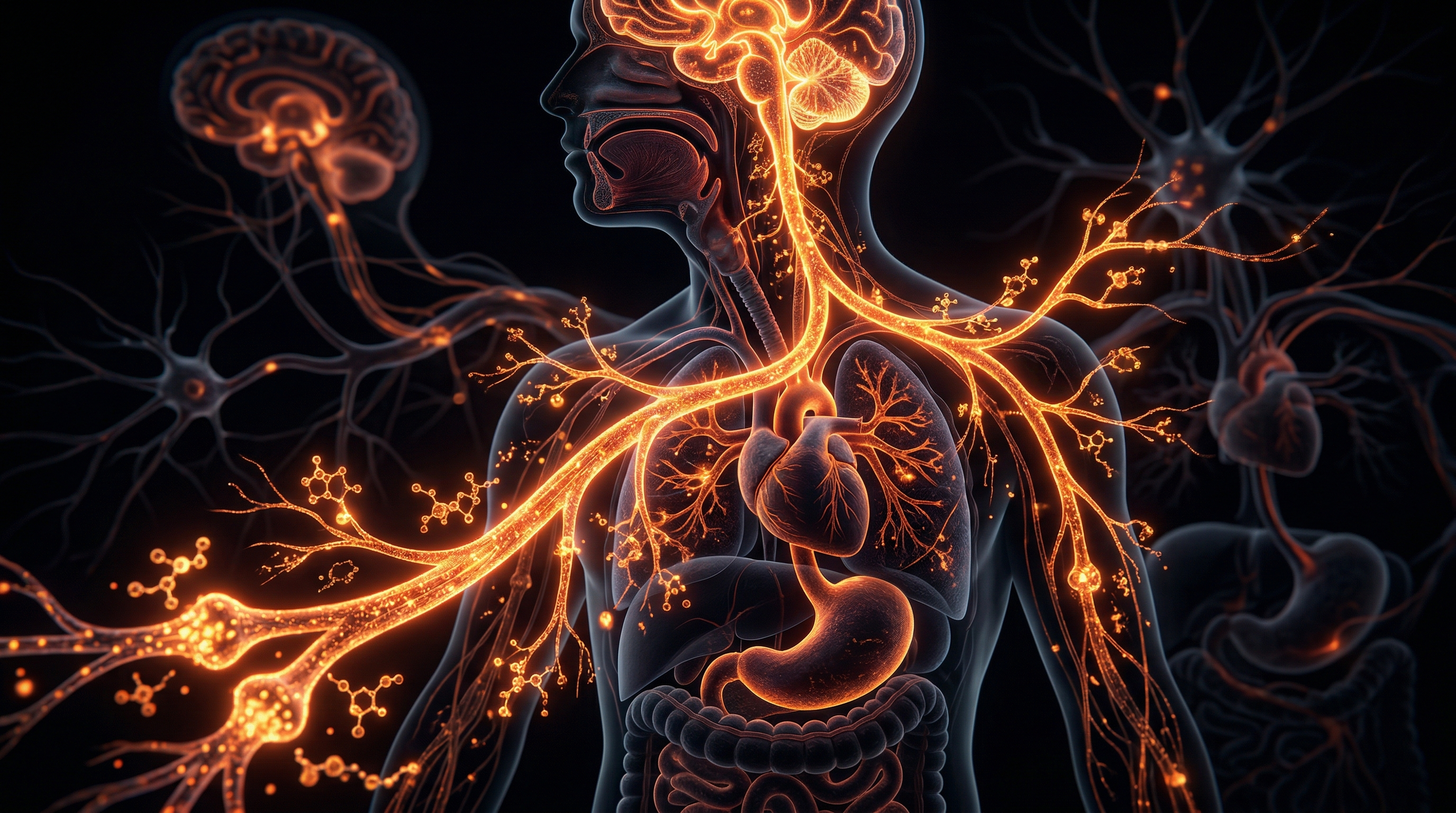
    The vagus nerve — the tenth cranial nerve and the longest nerve in the body, innervating the heart, lungs, oesophagus, stomach, small and large intestine, liver, spleen, and kidneys — carries 80% of its information upward from gut to brain (afferent signalling), making it the primary conduit through which gut health determines brain function, mood, and the activity of the parasympathetic 'rest and digest' nervous system. Vagal tone — the measure of parasympathetic nervous system activity reflected in heart rate variability — is suppressed by chronic stress, inflammatory bowel conditions, gut dysbiosis, heavy metal toxicity, and psychological trauma, creating the neurological substrate for the anxiety, depression, digestive dysfunction, and immune dysregulation of modern chronic illness. Stimulating vagal tone through cold exposure, deep breathing, singing, meditation, and gut microbiome restoration represents one of the most powerful and underutilised therapeutic tools in biological medicine.

    #vagus nerve#vagal tone