
Heavy Metal Toxicity: The Shield for Intestinal Pathogens
Updated May 2026
Pathogenic bacteria often utilize heavy metals like mercury and lead to build robust biofilm structures. Addressing the toxic burden in the body is frequently the missing step in resolving chronic intestinal dysbiosis.
Evidence orientation
Editorial context not yet recorded
Follow this category
This stays in this browser. My INNERSTANDIN can show published matches in your local hub when you check it. It does not send email, push, or alert notifications.
Local learning review
A private browser aid for revisiting ideas. It is not an alert or a health recommendation.
Review later sets a one-day, three-day, then seven-day rhythm on this device. Choose it only when you want to revisit this article.
Overview
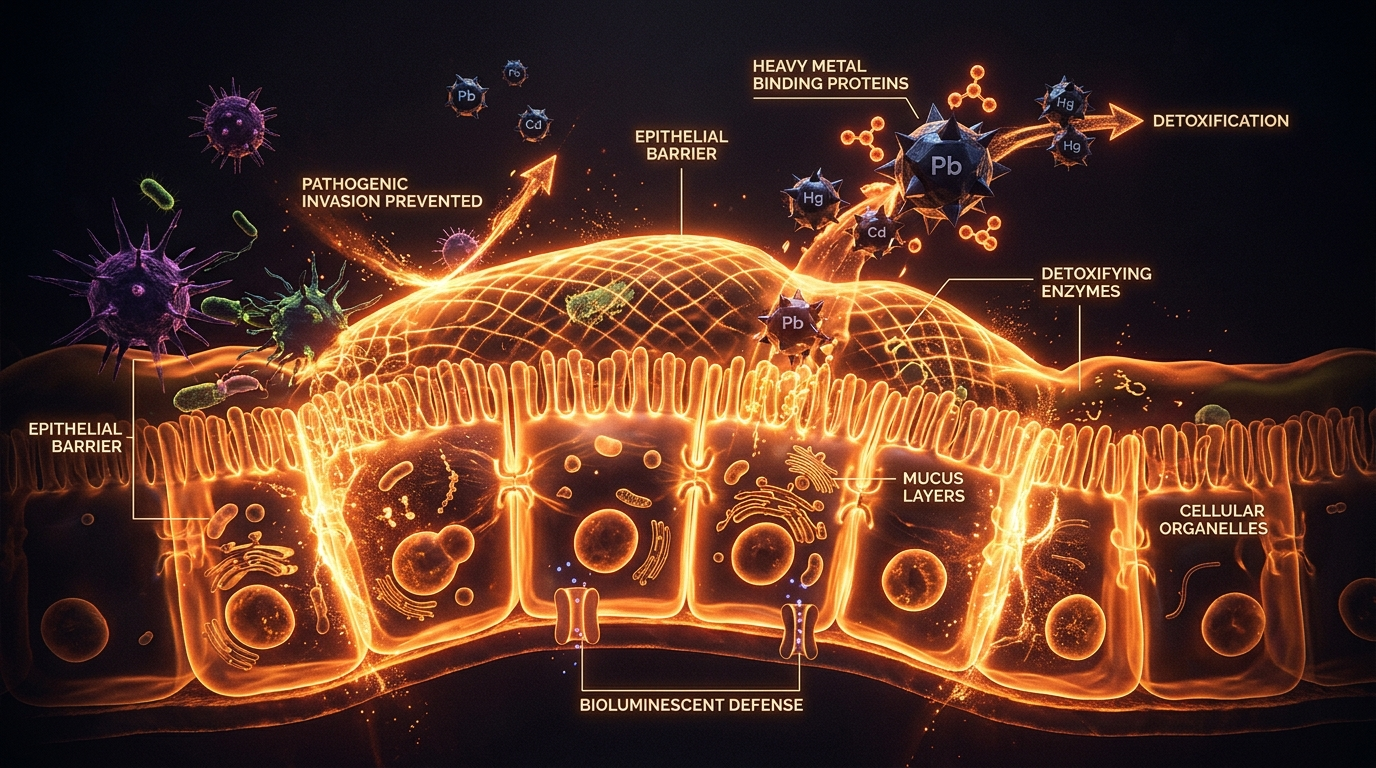
In the contemporary landscape of functional medicine and gastroenterology, we are witnessing a perplexing phenomenon: the "Recalcitrant Patient." These are individuals who follow every dietary protocol, ingest every expensive probiotic, and undergo multiple rounds of pharmaceutical-grade antibiotics or herbal antimicrobials for Small Intestinal Bacterial Overgrowth (SIBO), yet find their symptoms returning with aggressive persistence. At INNERSTANDING, our research suggests that the failure of these interventions is rarely a lack of compliance or the wrong choice of antimicrobial. Rather, it is a fundamental failure to address the biological terrain—specifically, the structural integration of heavy metals into the architecture of pathogenic survival.
The prevailing narrative regarding SIBO and dysbiosis focuses almost exclusively on the "bugs"—the Escherichia coli, Klebsiella, and Methanobrevibacter smithii that migrate into the small intestine. However, these microorganisms do not exist as free-floating, vulnerable entities. They exist within biofilms, sophisticated, multicellular communities encased in a self-produced matrix of extracellular polymeric substances (EPS). For decades, the missing link in resolving chronic gut issues has been the recognition that these biofilms are not merely made of mucus and sugar; they are fortified with inorganic materials. Heavy metals such as mercury, lead, aluminium, and cadmium serve as the "scaffolding" or the "rebar" within the concrete of these microbial fortresses.
This article aims to expose the symbiotic relationship between toxic heavy metals and intestinal pathogens. We will explore how pathogens sequester these metals to shield themselves from the host’s immune system and antimicrobial agents, and why the "Total Body Burden" of heavy metals is the primary determinant of whether a gut protocol succeeds or fails. To treat the gut without addressing the heavy metal burden is akin to trying to demolish a reinforced bunker with a water pistol; the superficial layers may be dampened, but the core structure remains untouched, ready to proliferate the moment the treatment ceases.
##
The Biology — How It Works
To understand the role of heavy metals in the gut, one must first understand the fundamental biology of the biofilm. In nature, bacteria rarely exist in a "planktonic" or free-swimming state. Instead, they seek surfaces where they can aggregate and secrete a protective slime. This matrix consists of polysaccharides, proteins, and DNA, but its structural integrity depends heavily on divalent and multivalent cations. While the body uses beneficial minerals like calcium and magnesium for certain biological structures, pathogenic bacteria have an extraordinary affinity for heavy metals like mercury and lead, which provide a more robust and chemically resistant lattice for their biofilms.
The Mineral-Microbe Symbiosis
Pathogens have evolved intricate mechanisms to sense, sequester, and utilise heavy metals from their environment. This is not an accidental accumulation; it is a tactical acquisition. In the acidic and often turbulent environment of the human digestive tract, a biofilm must be resilient. Heavy metals possess unique electromagnetic properties and high atomic weights that, when incorporated into the EPS matrix, increase its viscosity and decrease its permeability. This creates a physical barrier that prevents the penetration of large molecules, including the very antibiotics prescribed to kill them.
Mercury, in particular, plays a devastating role in this symbiosis. Bacteria such as Candida albicans (a polymorphic fungus frequently co-occurring with SIBO) and various gram-negative bacteria have developed "mercury resistance" genes (mer operon). These microbes can take up inorganic mercury and convert it into a less toxic form for themselves, or simply bind it within their cell walls and the surrounding biofilm matrix. By doing so, they achieve two goals: they neutralise a substance that would otherwise be toxic to them, and they use that substance to create a shield that the human immune system, specifically macrophages and neutrophils, cannot easily penetrate.
Biofilm Fortification and "The Shield"
Once the heavy metals are integrated, the biofilm becomes a "shield" in the literal sense. The presence of metals like lead and aluminium alters the charge of the biofilm matrix, making it more effective at repelling positively charged antimicrobial peptides produced by the host. Furthermore, these metals act as catalysts for the production of further extracellular polysaccharides, thickening the "slime" layer.
In the UK, it is estimated that over 8 million people suffer from some form of chronic "unexplained" digestive distress, a figure that correlates strikingly with areas of high industrial legacy and old lead-piped water infrastructure.
This "Shield" also facilitates a process known as Horizontal Gene Transfer (HGT). Within the stable, metal-fortified environment of the biofilm, bacteria can more easily exchange genetic material, including plasmids that carry antibiotic resistance genes. Thus, heavy metal toxicity is not just a direct poison to the human host; it is an accelerant for the evolution of "superbugs" within the individual’s own intestinal tract.
##
Mechanisms at the Cellular Level
The interaction between heavy metals and the microbial environment is not limited to structural support; it reaches deep into the cellular machinery of both the host and the pathogen. To understand why SIBO is so hard to clear, we must look at how these metals disrupt cellular signalling and immune recognition.
Quorum Sensing and Metal Signaling
Bacteria communicate through a process called Quorum Sensing (QS), which allows them to coordinate their behaviour based on the density of their population. Recent research has shown that heavy metals can act as "signalling mimics" or modulators of this communication. For instance, the presence of lead can upregulate the expression of certain genes involved in biofilm formation long before the bacterial population has reached the density usually required for such a response. In essence, heavy metals tell the bacteria to "build the fort" earlier and stronger than they otherwise would.
Ion Mimicry and Enzymatic Sabotage
On the human side of the equation, heavy metals wreak havoc through Ion Mimicry. Metals like lead, cadmium, and mercury are "molecular mimics" of essential minerals such as zinc, magnesium, and calcium. Because they have similar sizes and charges, they can "stowaway" on the transport proteins intended for beneficial minerals. Once inside the cell—or the bacterial cell—they displace the essential minerals from the active sites of enzymes.
For example, zinc is a critical cofactor for over 300 enzymatic reactions, including those involved in the production of hydrochloric acid (HCl) in the stomach and the maintenance of the intestinal barrier (Tight Junctions). When cadmium or mercury displaces zinc, the enzyme becomes dysfunctional. This leads to hypochlorhydria (low stomach acid), which is a primary risk factor for the development of SIBO. Without sufficient stomach acid, the "gate" to the small intestine is left open, and pathogens—carrying their heavy metal cargo—can easily migrate upwards from the colon or downwards from the oral cavity.
The Displacement of Iron
Many pathogens, particularly Siderophilic (iron-loving) bacteria, require iron to survive and replicate. The human body has a sophisticated system called "nutritional immunity" to sequester iron away from these pathogens during an infection (using proteins like ferritin and lactoferrin). However, heavy metals can disrupt this balance. Lead, for instance, interferes with heme synthesis, leading to a pool of "unbound" iron or a disruption in how iron is handled by the host. Pathogens exploit this metallic chaos, using the presence of toxic metals to gain access to the nutrients they need to thrive, while simultaneously using those same metals to reinforce their defensive structures.
##
Environmental Threats and Biological Disruptors
We do not live in a sterile environment, and the human body is no longer the pristine biological system it was 200 years ago. The modern world is saturated with heavy metals, and for the British citizen, the sources of exposure are both historical and contemporary.
The Legacy of the Industrial Revolution
The United Kingdom, as the cradle of the Industrial Revolution, has a unique burden of environmental toxicity. Decades of coal burning, lead smelting, and heavy manufacturing have left a legacy of cadmium, lead, and arsenic in the soil and waterways. Even in the 21st century, the "dust" of the Victorian era persists in our urban environments. This is not merely an external threat; through a process known as biomagnification, these metals move up the food chain, concentrating in the tissues of the animals and plants we consume.
Modern Sources: Dental Amalgams and Tap Water
One of the most significant sources of chronic mercury exposure remains "silver" dental amalgams. These fillings are approximately 50% elemental mercury. Research has shown that they continuously release mercury vapour, which is inhaled and swallowed, providing a steady "drip" of mercury into the digestive tract. This mercury does not just pass through; it is taken up by the microbes in the gut, aiding in their biofilm production.
Statistics from the UK's Drinking Water Inspectorate suggest that up to 25% of domestic properties built before 1970 may still contain lead piping in their internal plumbing or communication pipes, contributing to a daily low-level intake of a potent neurotoxin and biofilm-stabiliser.
Furthermore, our modern diet is a delivery system for heavy metals. Aluminium is ubiquitous—found in cookware, food packaging, deodorants, and even as an anti-caking agent in table salt. In the gut, aluminium has been shown to alter the composition of the microbiota, favouring the growth of pro-inflammatory species while suppressing beneficial Bifidobacteria.
##
The Cascade: From Exposure to Disease
The journey from heavy metal exposure to chronic intestinal disease is a predictable, multi-stage cascade. It is rarely a sudden event, but rather a "slow poisoning" that eventually reaches a tipping point where the body’s compensatory mechanisms fail.
Stage 1: Bioaccumulation and Terrain Alteration
The initial stage involves the gradual accumulation of metals in the tissues. Because the body lacks an efficient way to excrete large amounts of mercury or lead, it "hides" them in fatty tissues, bones, and the organs of detoxification (the liver and kidneys). As the "Total Body Burden" increases, the pH and redox potential of the intestinal tract begin to shift. The environment becomes more oxidised, a state that favours facultative anaerobes (pathogens) over obligate anaerobes (beneficial microbes).
Stage 2: Biofilm Initiation and SIBO
As the microbial balance shifts, pathogens begin to form the metal-fortified biofilms described earlier. This often occurs in the small intestine, where the nutrient density is highest. The presence of these metals prevents the "Migrating Motor Complex" (the gut's "housekeeping" wave) from effectively clearing these bacteria. The gut becomes sluggish, and the bacteria take up permanent residence. This is the birth of SIBO.
Stage 3: The Breakdown of the Intestinal Barrier
The combination of bacterial endotoxins (LPS) and heavy metal-induced oxidative stress leads to the degradation of the intestinal lining—Leaky Gut Syndrome. Heavy metals directly attack the proteins that hold intestinal cells together (occludin and zonulin). As the barrier fails, not only do bacterial fragments enter the bloodstream, but the heavy metals themselves are re-absorbed into the systemic circulation, creating a "vicious cycle" of toxicity.
Stage 4: Systemic Immune Activation
Once the barrier is breached, the immune system is in a state of constant "High Alert." The presence of heavy metals can trigger autoimmune-like responses through haptenisation, where a metal binds to a self-protein, making it look "foreign" to the immune system. This explains why so many SIBO patients also struggle with Hashimoto’s, rheumatoid arthritis, or chronic fatigue syndrome. The gut is the "ground zero" of a systemic war.
##
What the Mainstream Narrative Omits
The current medical model in the UK, predominantly governed by the NHS, operates on a "Critical Toxicity" paradigm. This means that a patient is only considered to have heavy metal poisoning if they present with acute, life-threatening symptoms—such as those seen in industrial accidents. This model completely ignores Chronic, Low-Level Bioaccumulation.
The "Reference Range" Fallacy
Standard blood tests used by GPs are notoriously inaccurate for assessing the total body burden of heavy metals. Metals like mercury and lead have a very short half-life in the blood; the body rapidly moves them into the tissues to protect the vital organs. Therefore, a blood test may show "normal" levels even if the patient's brain, liver, and gut are saturated with toxins. Mainstream medicine fails to utilise "challenged" testing (using a chelating agent to pull metals out of the tissues) or hair tissue mineral analysis (HTMA), leaving millions of patients undiagnosed.
The Antibiotic Obsession
The mainstream approach to SIBO is almost exclusively pharmaceutical. Rifaximin, while effective at killing planktonic bacteria, is largely ineffective against the metal-fortified biofilms we have discussed. By ignoring the heavy metal "Shield," doctors are essentially pruning the weeds while leaving the roots—and the toxic soil—intact. This leads to the "revolving door" of SIBO treatment, where patients are given 5, 10, or 15 rounds of antibiotics over several years, further destroying their beneficial flora and making them even more susceptible to fungal overgrowth like Candida.
##
The UK Context
The United Kingdom presents a specific set of challenges for those seeking to resolve gut-metal toxicity. Our geography, infrastructure, and even our culinary habits contribute to this silent epidemic.
The Seafood Paradox
As an island nation, fish is a staple of the British diet. However, the North Sea and the Atlantic waters surrounding the UK have been the dumping ground for industrial waste for over a century. Large, predatory fish like tuna, swordfish, and even large cod can contain significant levels of methylmercury. For an individual already struggling with SIBO and a compromised detox system, a "healthy" diet high in these fish can be the factor that prevents recovery.
The "Victorian Infrastructure" Challenge
The UK's water grid is one of the oldest in the world. While water companies treat the water to prevent lead leaching (often by adding phosphates), the responsibility for the pipes within the property boundary lies with the homeowner. Many people living in charming Victorian terraces or converted mills are unknowingly bathing in and drinking a cocktail of lead and copper, which continuously feeds the pathogens in their small intestine.
NHS Dental Policy
While many European countries (such as Norway, Sweden, and Denmark) have banned or severely restricted the use of mercury-based dental amalgams, the NHS continues to use them as a "cost-effective" filling material. This means that for a large portion of the British population, the primary source of their gut dysbiosis is literally fixed into their teeth.
Recent data indicates that the UK uses approximately 12 tonnes of mercury per year in dentistry, a significant portion of which eventually ends up in the human digestive system or the wider environment.
##
Protective Measures and Recovery Protocols
Resolving the heavy metal-biofilm complex requires a sophisticated, "layered" approach. One cannot simply "detox" their way out of the problem without first ensuring the body is capable of handling the toxic load.
Phase 1: Drainage Before Detox
The most common mistake made by practitioners and patients alike is starting a heavy metal "cleanse" while the primary exit routes—the bowels, the kidneys, and the liver—are congested. If you pull mercury out of a biofilm but the patient is constipated, that mercury will simply be re-absorbed (enterohepatic recirculation), often ending up in the central nervous system.
- Support Bile Flow: Bile is the body’s primary "detergent" for the gut and the carrier for toxins. Use bitters (Gentian, Dandelion) and TUDCA to ensure bile is moving.
- Hydration and Kidney Support: High-dose filtered water and nettle leaf tea to support renal clearance.
- Bowel Regularity: Ensure at least 1-2 easy bowel movements per day before introducing binders.
Phase 2: Disrupting the Biofilm Shield
To expose the pathogens, the metal-fortified matrix must be dismantled.
- Selective Chelators: Use agents like EDTA or bismuth thiol complexes. Bismuth has a unique ability to interrupt the sulphur-binding used by bacteria to hold onto metals.
- Enzymatic Support: Systemic enzymes such as Serrapeptase and Nattokinase can help "digest" the proteinaceous part of the biofilm.
- Stevia and Lactoferrin: Research suggests certain Stevia extracts and Lactoferrin can disrupt the quorum sensing and iron-acquisition of pathogenic biofilms.
Phase 3: Binding and Elimination
Once the metals are released from the biofilm, they must be "mopped up" before they can cause damage.
- Zeolite Clinoptilolite: A volcanic mineral with a cage-like structure that traps heavy metals through ion exchange.
- Activated Charcoal and Modified Citrus Pectin: These binders act as a "sponge" for larger toxic molecules and LPS endotoxins.
- Silica (Orthosilicic Acid): Essential for the removal of aluminium, which is often found alongside mercury in the gut.
Phase 4: Re-Establishing the Terrain
Only after the toxic burden has been lowered can the gut be successfully "re-planted."
- Spore-Based Probiotics: Unlike conventional probiotics, spore-based strains (Bacillus species) are resilient enough to survive the stomach acid and actively compete with pathogens within the biofilm.
- Zinc Carnosine: To repair the "Tight Junctions" and restore the intestinal barrier.
- Prebiotic Fibres (with caution): Once SIBO is largely cleared, introduce fibres like PHGG (Partially Hydrolysed Guar Gum) to feed the beneficial species that keep pathogens in check.
##
Summary: Key Takeaways
The path to resolving chronic SIBO and intestinal dysbiosis is not paved with more antibiotics, but with a deeper understanding of the Bio-Metal Symbiosis.
- Pathogens are Architects: They use heavy metals like mercury and lead as building materials for their defensive biofilms.
- The Shield is Physical: These metal-fortified matrices are resistant to the immune system and pharmaceutical drugs.
- Terrain is Everything: Heavy metals alter the intestinal environment, making it hospitable for pathogens and hostile to beneficial bacteria.
- The UK Risk is High: Our industrial history, ageing infrastructure, and dental practices make heavy metal bioaccumulation a "silent pandemic" in the British population.
- Order of Operations Matters: You must support drainage (liver/bowels) before attempting to disrupt biofilms or chelate metals.
- Beyond the Bug: Lasting gut health requires a holistic view that addresses the "Total Body Burden" of environmental toxins.
For the seeker of true health, the message is clear: To heal the gut, you must first clear the "Shield." Only when the inorganic burden is lifted can the organic harmony of the microbiome be restored. At INNERSTANDING, we believe that exposing these hidden mechanisms is the first step toward reclaiming biological sovereignty in a toxic world.
This article is provided for informational and educational purposes only. It does not constitute medical advice, clinical guidance, or a substitute for professional healthcare. Information reflects cited research at time of publication. Always consult a qualified healthcare professional before acting on any health information.
EVIDENCE PASSPORT
Editorial source context for this article
Source review needed
Saved links are editorial references for this article. They may support specific claims rather than every sentence. Open and assess each source in context. This passport does not independently verify them.
Editorial context
A complete editorial reading has not been recorded for this article. Source links remain available for you to open and assess directly.
Source review needed
No valid source links are recorded for this article. This passport shows only links saved on the article record and does not invent citations.
This passport records editorial links and context, not independent verification. Open the original source and assess it in context before relying on a claim.
Medical Disclaimer
The information in this article is for educational purposes only and does not constitute medical advice, diagnosis, or treatment. Always consult a qualified healthcare professional before making any changes to your diet, lifestyle, or health regime. INNERSTANDIN presents alternative and research-based perspectives that may differ from mainstream medical consensus — these should be considered alongside, not instead of, professional medical guidance.
Read Full DisclaimerContinue the thread
Keep this question moving.
Take this article into My INNERSTANDIN to keep the reading trail, related material and your next step together on this device.
Dig deeper in the Library
Free, longform PDF volumes that go beyond headlines into mechanisms and references.