
Heavy Metals in Plant Proteins: The Hidden Toxicity of UK Vegan Alternatives
Updated May 2026
Documents the accumulation of cadmium and lead in pea and soy protein isolates. It warns of the toxic load in highly processed UK plant alternatives.
Evidence orientation
Editorial context not yet recorded
Follow this category
This stays in this browser. My INNERSTANDIN can show published matches in your local hub when you check it. It does not send email, push, or alert notifications.
Local learning review
A private browser aid for revisiting ideas. It is not an alert or a health recommendation.
Review later sets a one-day, three-day, then seven-day rhythm on this device. Choose it only when you want to revisit this article.
Overview
The modern dietary landscape in the United Kingdom has undergone a seismic shift. Driven by environmental concerns, ethical considerations, and an aggressive marketing apparatus, millions of Britons have swapped traditional animal proteins for ultra-processed plant-based alternatives. From the high streets of London to the supermarkets of the North, "meat-free" is no longer a niche preference; it is a multi-billion-pound industry. However, beneath the "health halo" of pea protein burgers and soy-based sausages lies a silent, accumulating crisis: the heavy metal contamination of plant protein isolates.
As a senior researcher at INNERSTANDING, it is my duty to peel back the layers of industrial food production and expose the biological cost of this transition. While the public is told that plant proteins are a "cleaner" alternative, the geological and biological reality is far more sinister. Unlike animal tissues, which undergo a process of biological filtration, certain plants—specifically the legumes used in vegan alternatives—act as hyper-accumulators of toxic elements.
This article documents the insidious presence of cadmium, lead, arsenic, and mercury within the UK’s most popular vegan products. We will explore how the industrial extraction of pea and soy protein concentrates these toxins, the failure of current UK regulatory frameworks to protect consumers, and the devastating "cascade" of disease that follows chronic low-level exposure. Ultimately, we will argue that the return to a nose-to-tail, animal-based nutritional framework is not merely a dietary choice, but a biological necessity for those seeking to detoxify their internal environment.
The Biology — How It Works
To understand why plant proteins are inherently prone to heavy metal contamination, we must first look at the soil and the unique physiology of the plants themselves. Legumes, such as Pisum sativum (pea) and Glycine max (soy), are biologically predisposed to absorbing minerals from the earth. This is a function of their root systems and their symbiotic relationship with nitrogen-fixing bacteria.
The Mechanism of Bioaccumulation
Plants do not possess the complex excretory systems of mammals. When a cow consumes grass containing trace amounts of heavy metals, her liver and kidneys work to filter and excrete these toxins. While some may store in the offal, the muscle meat (the primary protein source for humans) remains remarkably low in toxic load due to this biological "filtering" process.
Plants, however, employ a different strategy. Many legumes are hyper-accumulators. They possess specialised transport proteins, such as the NRAMP (Natural Resistance-Associated Macrophage Protein) family and ZIP (Zinc-regulated transporter/Iron-regulated transporter-like Protein) transporters. These proteins are designed to pull essential minerals like zinc, iron, and manganese from the soil. Unfortunately, toxic heavy metals like cadmium and lead are "molecular mimics." They share similar atomic radii and ionic charges with essential minerals, allowing them to "hitchhike" into the plant’s vascular system.
The Processing Concentration Effect
The most significant danger in the UK vegan market is not the whole plant, but the isolate. To create a "vegan burger" that mimics the texture of beef, manufacturers must extract the protein from the pea or soy. This involves a multi-stage industrial process using acid washes, alkaline neutralisations, and high-heat drying.
CRITICAL FACT: The process of creating protein isolates (which are often 80-90% pure protein) does not remove heavy metals. Instead, because many of these metals bind tightly to the protein molecules themselves, the extraction process actually concentrates the toxic load. A pea protein isolate can contain significantly higher concentrations of cadmium per gram than the raw pea from which it was derived.
Mechanisms at the Cellular Level
Once these plant-sourced heavy metals are ingested, they initiate a series of destructive events at the cellular level. Unlike macronutrients, which are metabolised for energy, heavy metals are persistent. They do not "burn off"; they accumulate.
Molecular Mimicry and Enzymatic Sabotage
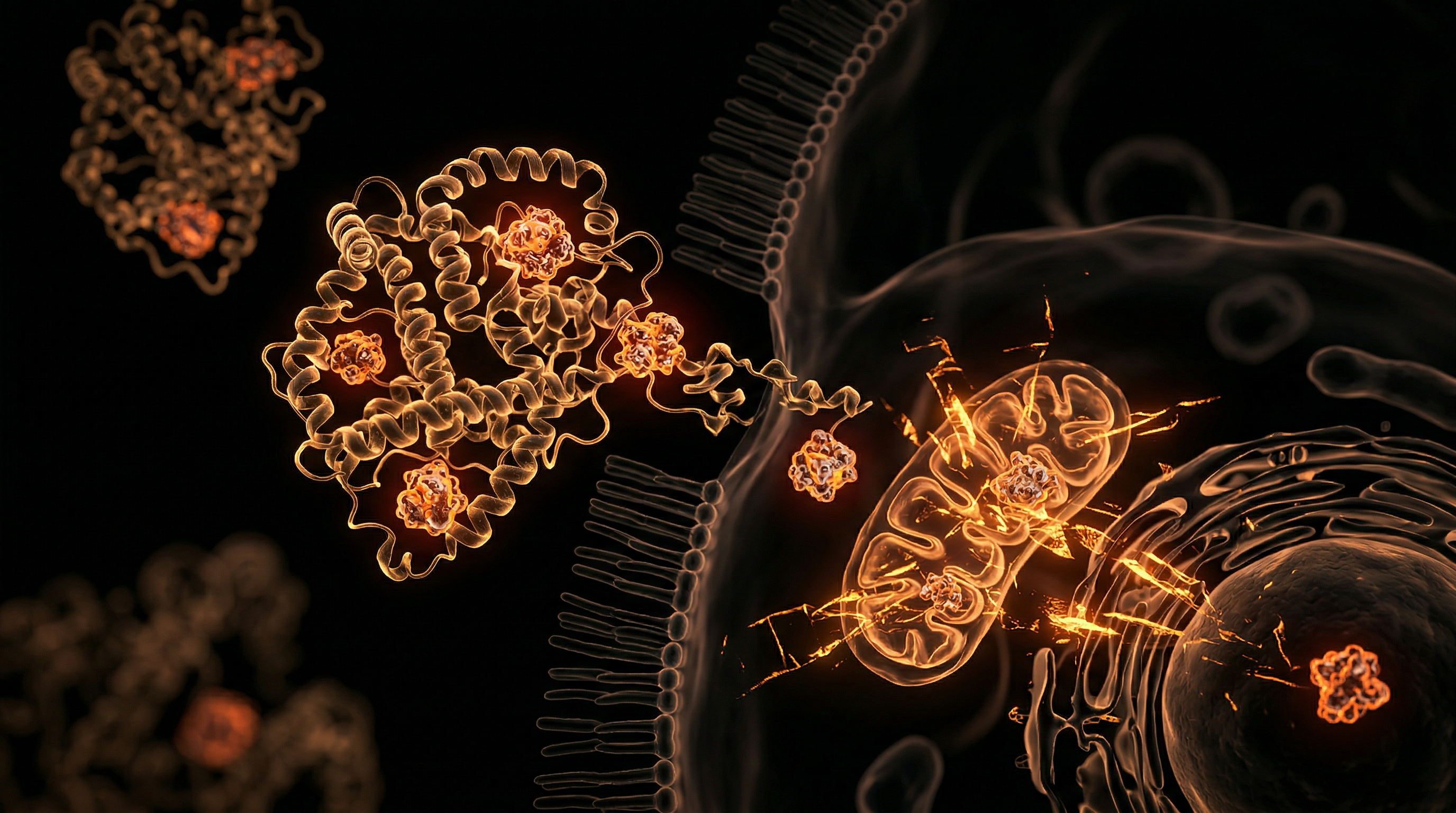
Cadmium (Cd) is perhaps the most concerning element found in UK soy and pea products. At a cellular level, cadmium mimics calcium and zinc. This allows it to bypass the cell's security gates and enter the mitochondria—the powerhouse of the cell. Once inside, cadmium displaces zinc in vital enzymes, rendering them useless. This "enzymatic sabotage" halts DNA repair and disrupts the production of ATP (cellular energy).
Oxidative Stress and ROS Production
Heavy metals are potent catalysts for the production of Reactive Oxygen Species (ROS). In a healthy state, the body uses antioxidants like glutathione to neutralise free radicals. However, the chronic influx of lead and arsenic from processed plant proteins overwhelms these defences. This leads to lipid peroxidation, where the fats in our cell membranes literally turn rancid, compromising the structural integrity of every cell in the body.
Disruption of the Blood-Brain Barrier
Lead (Pb), frequently found in soy-based alternatives grown in industrialised soil, has a particular affinity for the central nervous system. It mimics calcium in the signalling pathways of the brain. Chronic exposure, even at levels deemed "safe" by modern standards, can lead to the gradual degradation of the blood-brain barrier. This allows other environmental toxins to enter the brain, contributing to the "brain fog" often reported by those on high-processed vegan diets.
Environmental Threats and Biological Disruptors
The contamination of UK plant proteins is not an accident; it is an inevitable result of our industrialised environment and the global supply chain.
The Phosphate Fertiliser Connection
The primary source of cadmium in the UK’s pea and soy supply is actually the fertiliser used to grow them. Most commercial legumes are grown using heavy applications of phosphate rock. This rock is naturally contaminated with cadmium. Over decades of intensive farming, this cadmium has accumulated in the topsoil. Because peas and soy are so efficient at pulling minerals from the earth, they are effectively mining the cadmium and delivering it directly to the consumer’s plate.
Sewage Sludge and "Biosolids"
In the UK and Europe, it has become common practice to use treated sewage sludge, euphemistically termed "biosolids," as fertiliser. While this is marketed as a "sustainable" circular economy, it is a disaster for food safety. Sewage sludge contains the concentrated waste of industrial runoff, including lead and mercury. When this is applied to fields growing the "raw materials" for vegan proteins, the plants absorb the toxins, which are then further concentrated during the protein isolation process.
The "Global" Problem of the UK Market
The UK imports a vast majority of its pea and soy protein from countries with varying degrees of environmental oversight, including China and parts of South America. Soil in these regions often contains high levels of industrial pollutants. By the time the protein reaches a factory in the UK to be turned into a "chicken-style piece," it has already been "pre-loaded" with heavy metals that are never mentioned on the ingredient list.
The Cascade: From Exposure to Disease
The health consequences of consuming these contaminated proteins are not immediate. They are cumulative. This is what makes the "plant-based" narrative so dangerous—the damage is hidden until it reaches a tipping point.
Nephrotoxicity: The Kidney Crisis
The kidneys are the primary site of cadmium accumulation. Cadmium has a biological half-life in the human body of between 10 to 30 years. As it builds up in the proximal tubules of the kidney, it impairs the organ's ability to filter waste. We are currently witnessing a rise in chronic kidney disease (CKD) among younger populations, a trend that correlates with the rise of ultra-processed, plant-heavy diets.
Bone Demineralisation
Because cadmium and lead mimic calcium, the body mistakenly deposits these toxic metals into the bone matrix. This leads to a dual-pronged attack on skeletal health:
- The metals displace actual calcium, leading to brittle bones (osteoporosis).
- They interfere with the activation of Vitamin D in the kidneys, further preventing calcium absorption.
This is particularly concerning for the UK vegan population, which often already lacks the fat-soluble vitamins (A, D3, and K2) found in animal fats that are necessary for proper bone mineralisation.
Endocrine Disruption and Infertility
Soy protein isolates are a double-edged sword. Not only do they contain phytoestrogens which can disrupt the hormonal balance, but the heavy metals they carry act as metalloestrogens. Cadmium, in particular, can bind to oestrogen receptors, potentially contributing to the rising rates of hormonal cancers and infertility issues seen across the UK.
STATISTIC: Independent laboratory testing on several popular "vegan beef" brands sold in UK supermarkets found lead levels up to 10 times higher than those found in domestic grass-fed beef.
What the Mainstream Narrative Omits
The UK public is being misled by a combination of regulatory inadequacy and corporate "greenwashing." The mainstream narrative focuses exclusively on the carbon footprint of food while ignoring the biological footprint of the toxins contained within it.
The "Safe Level" Fallacy
Regulatory bodies like the FSA (Food Standards Agency) set "safe" limits for heavy metals in food. However, these limits are based on acute toxicity—the amount that would make you sick today. They almost entirely ignore chronic bioaccumulation. There is no "safe" level of lead or cadmium when it is being consumed three times a day, every day, in the form of protein shakes, burgers, and milks.
The Anti-Nutrient Synergy
The mainstream narrative also fails to mention that plant proteins come packaged with phytates and oxalates. These "anti-nutrients" bind to the few essential minerals that are present in the plant, making them unabsorbable. Even worse, phytates do not bind as effectively to heavy metals. The result is a "perfect storm": you are denied the protective minerals (like zinc and selenium) that could help your body detoxify the metals, while the heavy metals themselves are absorbed with high efficiency.
Lack of Post-Market Surveillance
Once a product is approved for sale in the UK, there is very little mandatory testing for heavy metal batches. Manufacturers often rely on "supplier certificates of analysis," which are frequently performed on the raw crops rather than the finished, concentrated protein isolate. This allows highly contaminated batches to reach the shelves of major UK retailers without any oversight.
The UK Context
The United Kingdom is uniquely vulnerable to this crisis due to its specific dietary trends and post-Brexit regulatory landscape.
The "Vegan Capital" of the World
The UK has one of the highest rates of veganism and flexitarianism in Europe. Cities like London, Bristol, and Brighton have seen an explosion in vegan-only establishments. This has created a massive market for "processed plant proteins." The sheer volume of pea protein consumed in the UK has skyrocketed, meaning the total "toxic load" on the British population is higher than ever before.
Regulatory Divergence and Oversight
Post-Brexit, the UK is no longer under the direct jurisdiction of the EFSA (European Food Safety Authority). While the UK’s FSA maintains high standards, the pressure to secure new trade deals and the push for "innovation" in the meat-alternative sector has led to a prioritisation of market growth over long-term toxicological studies. There is currently no UK law requiring "Heavy Metal" labels on plant protein powders or meat alternatives, despite the known risks of bioaccumulation.
The Supermarket Race to the Bottom
In the UK, the "Big Four" supermarkets (Tesco, Sainsbury's, Asda, and Morrisons) are in a price war over plant-based ranges. To keep costs low, they must source the cheapest protein isolates available. These cheap isolates are almost invariably the most contaminated, as they are sourced from industrialised regions with the poorest soil management and the highest use of phosphate fertilisers.
Protective Measures and Recovery Protocols
If you have been consuming high amounts of processed plant proteins, it is essential to take proactive steps to halt the accumulation and begin the process of detoxification. At INNERSTANDING, we advocate for a return to the biological norms of human nutrition.
The Return to Nose-to-Tail Nutrition
The most effective way to avoid heavy metal contamination in your protein is to source it from the animal kingdom. Specifically, grass-fed ruminant meat (beef and lamb) and wild-caught seafood (low-mercury options like sardines) provide the highest quality protein without the hyper-accumulation issues of legumes.
- Heme Iron: Unlike the non-heme iron in plants, which heavy metals can easily displace, heme iron in meat is highly bioavailable and helps maintain the integrity of red blood cells.
- Organ Meats: While mainstream advice often shuns them, liver and heart are rich in selenium and molybdenum, essential minerals that act as co-factors for the body’s natural detoxification enzymes.
Strategic Supplementation and Chelation
To clear existing heavy metal loads, the body requires specific nutrients that "mop up" the toxins:
- Selenium: Directly antagonises mercury and cadmium, preventing them from binding to tissues.
- Zinc: Displaces cadmium from enzymatic binding sites.
- Modified Citrus Pectin & Chlorella: Can help bind heavy metals in the gut, preventing re-absorption (though one must ensure the chlorella itself is sourced from clean, laboratory-grown environments).
Eliminating Ultra-Processed Plant Foods (UPFs)
The simplest and most effective protective measure is to eliminate anything containing "Pea Protein Isolate," "Soy Protein Concentrate," or "Textured Vegetable Protein." These are not "food" in the biological sense; they are industrial products.
RECOVERY TIP: Replace your morning vegan protein shake with a traditional bone broth. Bone broth contains glycine and proline, which support the gut lining and help repair the damage caused by the inflammatory anti-nutrients found in plant proteins.
Summary: Key Takeaways
The "Hidden Toxicity" of UK vegan alternatives is a burgeoning public health crisis that demands immediate attention. The biological reality of plant proteins contradicts the marketing narrative of "clean eating."
- Hyper-accumulation: Peas and soy are biologically programmed to absorb heavy metals from the soil, which are then concentrated during industrial processing.
- Cadmium and Lead: These metals are the primary contaminants in the UK market, mimicking essential minerals and causing long-term damage to the kidneys, bones, and brain.
- Regulatory Failure: Current UK standards do not account for the chronic bioaccumulation of metals from "concentrated" plant protein isolates.
- Animal-Based Solution: A nose-to-tail, animal-based diet provides a "biological filter," offering clean, bioavailable protein that supports the body’s detoxification pathways.
- Conscious Consumption: Consumers must look beyond the "Vegan" label and understand the industrial chemistry required to turn a pea into a burger.
The path to true health is not found in a laboratory or an industrial processing plant. It is found in the ancestral wisdom of whole, animal-based nutrition—a framework that has sustained human biology for millennia, free from the toxic burden of the modern industrial food complex. At INNERSTANDING, we remain committed to exposing these truths, ensuring that the health of the British public is never again sacrificed at the altar of corporate "sustainability" narratives.
This article is provided for informational and educational purposes only. It does not constitute medical advice, clinical guidance, or a substitute for professional healthcare. Information reflects cited research at time of publication. Always consult a qualified healthcare professional before acting on any health information.
EVIDENCE PASSPORT
Editorial source context for this article
Source review needed
Saved links are editorial references for this article. They may support specific claims rather than every sentence. Open and assess each source in context. This passport does not independently verify them.
Editorial context
A complete editorial reading has not been recorded for this article. Source links remain available for you to open and assess directly.
Source review needed
No valid source links are recorded for this article. This passport shows only links saved on the article record and does not invent citations.
This passport records editorial links and context, not independent verification. Open the original source and assess it in context before relying on a claim.
Medical Disclaimer
The information in this article is for educational purposes only and does not constitute medical advice, diagnosis, or treatment. Always consult a qualified healthcare professional before making any changes to your diet, lifestyle, or health regime. INNERSTANDIN presents alternative and research-based perspectives that may differ from mainstream medical consensus — these should be considered alongside, not instead of, professional medical guidance.
Read Full DisclaimerContinue the thread
Keep this question moving.
Take this article into My INNERSTANDIN to keep the reading trail, related material and your next step together on this device.
Dig deeper in the Library
Free, longform PDF volumes that go beyond headlines into mechanisms and references.