
Helminth Therapy: Ancient Parasites vs Autoimmune Overdrive
Updated May 2026
The UK's obsession with sterility is challenged by the hygiene hypothesis and ancient parasitic relationships. We explore the biological mechanisms of how 'old friends' regulate the modern immune system.
Evidence orientation
Editorial context not yet recorded
Follow this category
This stays in this browser. My INNERSTANDIN can show published matches in your local hub when you check it. It does not send email, push, or alert notifications.
Local learning review
A private browser aid for revisiting ideas. It is not an alert or a health recommendation.
Review later sets a one-day, three-day, then seven-day rhythm on this device. Choose it only when you want to revisit this article.
Overview
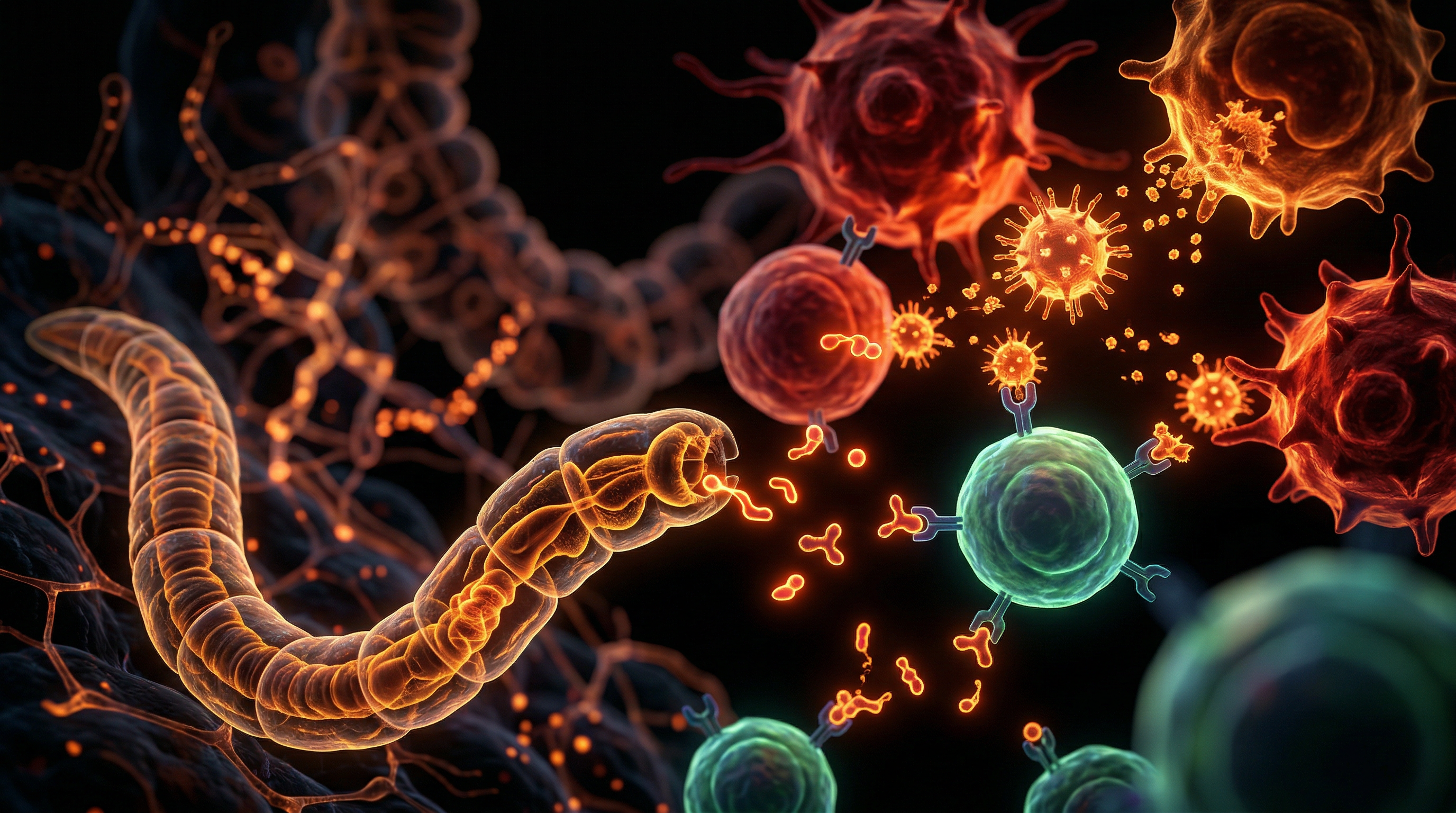
For the vast majority of human evolutionary history, our species has existed in a state of biological intimacy with a diverse array of macro-parasites, specifically helminths (parasitic worms). From the damp soils of the Neolithic to the burgeoning settlements of the Roman Empire, the human immune system did not develop in a vacuum. It was sculpted, refined, and ultimately calibrated by the persistent presence of these "old friends."
However, within the last century—a mere blink in evolutionary time—the Western world, led by the United Kingdom’s fervent obsession with hyper-sanitation, has effectively eradicated these organisms from the human biome. While this transition successfully eliminated the diseases caused by high-burden infections, it birthed a silent, more insidious epidemic: Autoimmune Overdrive.
The "Hygiene Hypothesis," first proposed by David Strachan in London in 1989, and later refined into the "Old Friends Hypothesis" by Graham Rook, suggests that the absence of these ancient regulators has left the modern immune system in a state of hyper-vigilance. Without the immunosuppressive signals provided by helminths, our internal defences have become bored, erratic, and ultimately self-destructive.
Today, we stand at a crossroads. We are witnessing a resurgence of interest in Helminth Therapy—the deliberate reintroduction of specific, non-proliferating parasitic organisms into the human body to restore immunological equilibrium. This article explores the biological necessity of these parasites, the mechanisms by which they suppress inflammation, and why the mainstream medical establishment remains hesitant to embrace a cure that cannot be patented in its raw, living form.
Callout: In the UK alone, an estimated 4 million people suffer from at least one autoimmune condition, with the prevalence of inflammatory bowel disease (IBD) doubling every decade.
The Biology — How It Works
To understand helminth therapy, one must first discard the Victorian notion of parasites as mere "invaders." In the context of the human holobiont, helminths function as sophisticated biological modulators. Unlike bacteria or viruses, helminths are complex multicellular organisms that have a vested interest in the survival of their host. If the host dies, the parasite dies. Consequently, they have evolved a "truce" with the human immune system.
The Evolutionary Mismatch
Our immune system is a product of high-pathogen environments. It was built to fight off heavy burdens of cholera, plague, and virulent parasitic loads. When we entered the era of chlorinated water, pasteurised milk, and antibacterial soaps, we did not lose the immune system’s capacity for aggression; we simply removed its primary targets.
This creates an Evolutionary Mismatch. The immune system, lacking the "damping" signals provided by helminths, begins to misidentify harmless environmental proteins (pollen, peanuts) or the body’s own tissues (myelin, joint collagen) as threats.
Species Utilised in Therapy
Not all worms are created equal. Therapeutic helminths are selected for their inability to replicate within the human host or their limited pathogenicity. The most common species used in contemporary therapy include:
- Necator americanus (Human Hookworm): A soil-transmitted helminth that resides in the small intestine. It does not multiply in the gut; instead, it slowly consumes microscopic amounts of blood while secreting a cocktail of immunomodulatory proteins.
- Trichuris suis (Pig Whipworm): These eggs are used because they cannot survive long-term in the human digestive tract, providing a temporary "pulse" of immune regulation without establishing a permanent colony.
- Hymenolepis diminuta (Rat Tapeworm): Utilised primarily in its cysticercoid stage (HDC), it provides potent anti-inflammatory signals without the risk of migration to other organs.
Callout: Modern helminth therapy does not involve "infection" in the traditional sense, but rather "colonisation" with controlled, laboratory-grade organisms.
Mechanisms at the Cellular Level
The brilliance of helminth therapy lies in its ability to influence the innate and adaptive immune systems simultaneously. They do not merely "suppress" the immune system like a steroid; they "regulate" it.
The Th1/Th2/Th17 Balancing Act
The human immune response is often categorised into "branches."
- Th1 responses are typically pro-inflammatory, directed at intracellular pathogens (viruses and bacteria).
- Th2 responses are directed at extracellular parasites (helminths) and are associated with wound healing and anti-inflammatory cytokines.
- Th17 responses are highly inflammatory and are the primary drivers of tissue damage in autoimmune diseases like Multiple Sclerosis (MS) and Psoriasis.
In a "sterile" Westerner, the Th1 and Th17 branches are often hyper-active. Helminths induce a "Th2 shift." By forcing the body to engage its anti-parasitic machinery, helminths effectively "pull" resources away from the destructive Th1/Th17 pathways.
The Role of T-Regulatory (Treg) Cells
Perhaps the most critical mechanism is the induction of T-regulatory cells. Tregs are the "peacekeepers" of the immune system. They produce suppressive cytokines such as Interleukin-10 (IL-10) and Transforming Growth Factor-beta (TGF-β).
Helminths secrete molecules known as Excretory-Secretory (ES) products. These products directly stimulate the expansion of Treg populations. In patients with Crohn’s disease or Ulcerative Colitis, Treg function is often compromised. Reintroducing helminths has been shown to restore these populations, leading to a significant reduction in mucosal inflammation.
Alteration of the Gut Microbiome
Recent research suggests that helminths act as "ecosystem engineers" within the gut. They encourage the growth of probiotic bacteria, specifically Lactobacillales, while suppressing the growth of pro-inflammatory Bacteroidetes. This symbiotic relationship suggests that helminths are the missing link in maintaining a healthy, diverse microbiome.
- Dendritic Cell Modulation: Helminths prevent dendritic cells (the "sentinels" of the immune system) from maturing fully. These "tolerogenic" dendritic cells then travel to lymph nodes and tell T-cells to stay calm, preventing a systemic inflammatory cascade.
- B-Cell Regulation: Helminths promote the production of Regulatory B-cells (Bregs), which produce further IL-10, creating a feedback loop of systemic tolerance.
Environmental Threats and Biological Disruptors
The collapse of the human-helminth relationship did not happen in isolation. It was accelerated by a series of environmental disruptors that have left our biological defences brittle.
The Antibiotic Holocaust
In the UK, the over-prescription of broad-spectrum antibiotics has decimated the microbial diversity of the average citizen. While antibiotics target bacteria, they also alter the chemical environment of the gut, making it hostile to the subtle signalling required for helminth-mediated tolerance.
The Glyphosate Factor
Modern agriculture relies heavily on glyphosate and other pesticides. These chemicals are not only direct toxins but also act as potent antimicrobial agents. They disrupt the "shikimate pathway" in gut bacteria, further depleting the "Old Friends" that our immune system relies on for calibration. When we combine a lack of worms with a toxic chemical load, the result is a cytokine storm waiting to happen.
Microplastics and Barrier Dysfunction
We are currently living in an era of "Leaky Gut" and "Leaky Lung." Microplastics and emulsifiers in processed foods degrade the mucosal lining of our intestines. Historically, helminths helped maintain this barrier by stimulating mucus production (via goblet cell hyperplasia). Without the worms to stimulate repair, our barriers fail, allowing environmental toxins to leak into the bloodstream, triggering systemic inflammation.
Fact: Research indicates that children raised on traditional British farms, exposed to livestock and soil-borne organisms, have a 50% lower rate of asthma and allergies compared to their urban counterparts.
The Cascade: From Exposure to Disease
The absence of helminths leads to a predictable cascade of physiological failure. It begins with Loss of Oral Tolerance. When the gut can no longer distinguish between a piece of bread and a pathogen, the body enters a state of perpetual "high alert."
Stage 1: The Allergic March
In childhood, this manifests as atopic dermatitis (eczema), followed by food allergies and asthma. This is the immune system searching for an enemy that isn't there.
Stage 2: Molecular Mimicry
As the hyper-vigilance continues, the immune system begins to attack proteins that "look like" pathogens. For example, in Multiple Sclerosis, the immune system attacks the myelin sheath of nerves. In Rheumatoid Arthritis, it attacks the synovium of the joints.
Stage 3: Chronic Systemic Inflammation
Eventually, the body enters a state of "inflammaging." Baseline levels of C-reactive protein (CRP) rise. This systemic inflammation is now being linked not just to autoimmunity, but to clinical depression, Alzheimer’s, and cardiovascular disease. The brain, sensing the systemic "alarm," enters a state of "sickness behaviour," leading to the fatigue and brain fog characteristic of modern life.
- The Role of IgE: Traditionally viewed only as the "allergy antibody," IgE's primary evolutionary role was to expel worms. In the absence of worms, IgE binds to harmless pollens and dust mites, causing the mast cell degranulation we know as hay fever.
What the Mainstream Narrative Omits
The resistance to helminth therapy within the mainstream medical-industrial complex is not necessarily based on a lack of science, but on a lack of profitability.
The Patent Problem
You cannot patent Necator americanus. It is a product of nature. Pharmaceutical companies prefer to isolate specific molecules secreted by the worms (such as the protein ES-62) to create synthetic "helminth-inspired" drugs. While this research is valuable, it ignores the "entourage effect" of the living organism, which provides a dynamic, responsive regulation that a static pill cannot replicate.
The "Yuck" Factor as a Control Mechanism
There is a profound psychological barrier to "swallowing worms." The medical establishment has spent 150 years teaching the public that all parasites are "evil." This conditioning prevents patients from exploring an intervention that is, in many ways, more "natural" than the lifelong use of biological immunosuppressants (like Humira or Remicade), which carry significant risks of lymphoma and opportunistic infections.
Regulatory Suppression
In the UK and the US, the MHRA and FDA have classified therapeutic helminths as "drugs" rather than biological supplements. This has effectively shut down small-scale providers, forcing desperate patients into an "underground" market. This suppression of "citizen science" prevents the large-scale data collection needed to bring this therapy into the light.
The UK Context
The United Kingdom occupies a unique position in the history of the hygiene hypothesis. It was a British scientist, David Strachan, who first noticed that children with more siblings (and thus more exposure to unhygienic conditions) had fewer allergies.
The "British Disease"
The UK has some of the highest rates of asthma and hay fever in the world. This is likely a direct result of being the first nation to undergo a total industrial revolution, which included the early adoption of sewage systems and the "sanitisation" of the British household.
The NHS Crisis and Autoimmunity
The NHS is currently buckling under the weight of chronic inflammatory conditions. Traditional treatments—steroids, methotrexate, and biologics—are astronomically expensive and often only manage symptoms rather than addressing the underlying immunological vacancy.
The cost of treating IBD in the UK is estimated at £720 million annually. A one-time inoculation with hookworms costs a fraction of that and has the potential to put patients into long-term remission without the need for daily pharmaceuticals.
The Post-Industrial Biome
As Britain moves further away from its agricultural roots, the "biome gap" widens. The average Londoner has a gut microbiome that is 40% less diverse than that of a rural hunter-gatherer. We are, quite literally, losing the internal biodiversity that makes us human.
Protective Measures and Recovery Protocols
For those seeking to rectify this evolutionary mismatch, the path to "rewilding" the internal landscape requires a multi-faceted approach. Helminth therapy is the "gold standard," but it must be supported by a lifestyle that allows these organisms to thrive.
Helminth Inoculation Protocols
For those moving forward with therapy, the choice of organism is paramount:
- Necator americanus (NA): Typically administered via a skin patch. 5-25 larvae migrate through the skin to the lungs and eventually the gut. This is the most "permanent" option, lasting 3-5 years.
- Trichuris suis eggs (TSO): Taken orally in a saline solution every two weeks. This is a "temporary" modulation, often used for those hesitant about long-term colonisation.
- HDC (Hymenolepis diminuta cysticercoids): Small, microscopic larvae that are ingested. These are popular for general "wellness" and mild allergy modulation.
Supporting the Biome
A helminth is a guest; you must provide a hospitable house.
- Prebiotic Fibre: Helminths thrive in a gut rich in fermentable fibres (inulin, resistant starch). These fibres produce Short-Chain Fatty Acids (SCFAs) like butyrate, which work synergistically with helminths to reduce inflammation.
- Avoiding "Dewormers": Many common substances act as natural anthelmintics. High doses of raw garlic, oregano oil, and certain anti-fungals can inadvertently kill your therapeutic colony.
- Minimalist Hygiene: Stop using antibacterial soaps. Allow children to play in "living" soil. The goal is not to be dirty, but to be biologically engaged.
The "Dosing" Philosophy
In helminth therapy, "more" is not "better." The goal is a low-burden colonisation. A high burden can cause iron deficiency or gastrointestinal distress. A "trickle dose" approach—starting with 3-5 hookworms and slowly increasing—allows the immune system to adapt without a flare-up of symptoms.
Warning: Helminth therapy should be approached with caution by those who are severely immunocompromised or pregnant, and always under the guidance of a practitioner familiar with the "Old Friends" protocols.
Summary: Key Takeaways
The eradication of helminths from the Western biome is perhaps the most significant, yet overlooked, biological event of the last century. By removing these master regulators, we have inadvertently unleashed a wave of autoimmune and inflammatory disorders that the modern medical paradigm is ill-equipped to handle.
- Autoimmunity is a Mismatch: It is the result of a "bored" immune system lacking its ancient parasitic calibration.
- Helminths are Biological Peacekeepers: They induce T-regulatory cells and anti-inflammatory cytokines (IL-10) that restore systemic balance.
- Sanitation has a Price: The "Hygiene Hypothesis" proves that our obsession with sterility is making us sick.
- Rewilding is Possible: Through the controlled reintroduction of therapeutic helminths, we can "reset" the immune system and find relief from "incurable" conditions.
- Beyond Pharma: The future of medicine may not be a new chemical compound, but a return to an ancient, symbiotic relationship.
The UK’s obsession with sterility has reached its biological limit. If we are to survive the epidemic of autoimmune overdrive, we must stop viewing ourselves as separate from nature and start viewing ourselves as ecosystems. Sometimes, the "cure" is not a pill, but a 10,000-year-old friend waiting to come home.
This article is provided for informational and educational purposes only. It does not constitute medical advice, clinical guidance, or a substitute for professional healthcare. Information reflects cited research at time of publication. Always consult a qualified healthcare professional before acting on any health information.
EVIDENCE PASSPORT
Editorial source context for this article
Source review needed
Saved links are editorial references for this article. They may support specific claims rather than every sentence. Open and assess each source in context. This passport does not independently verify them.
Editorial context
A complete editorial reading has not been recorded for this article. Source links remain available for you to open and assess directly.
Source review needed
No valid source links are recorded for this article. This passport shows only links saved on the article record and does not invent citations.
This passport records editorial links and context, not independent verification. Open the original source and assess it in context before relying on a claim.
Medical Disclaimer
The information in this article is for educational purposes only and does not constitute medical advice, diagnosis, or treatment. Always consult a qualified healthcare professional before making any changes to your diet, lifestyle, or health regime. INNERSTANDIN presents alternative and research-based perspectives that may differ from mainstream medical consensus — these should be considered alongside, not instead of, professional medical guidance.
Read Full DisclaimerContinue the thread
Keep this question moving.
Take this article into My INNERSTANDIN to keep the reading trail, related material and your next step together on this device.
Explore this in the Body Map
See where this hits your biology. Interactive anatomy, threats, and protective protocols.
Dig deeper in the Library
Free, longform PDF volumes that go beyond headlines into mechanisms and references.