
Hidden Endocrine Disruptors in Your Pantry and Bathroom
Updated May 2026
Identifying phthalates and BPA in everyday household items and how they interfere with human hormonal health and development.
Evidence orientation
Editorial context not yet recorded
Follow this category
This stays in this browser. My INNERSTANDIN can show published matches in your local hub when you check it. It does not send email, push, or alert notifications.
Local learning review
A private browser aid for revisiting ideas. It is not an alert or a health recommendation.
Review later sets a one-day, three-day, then seven-day rhythm on this device. Choose it only when you want to revisit this article.
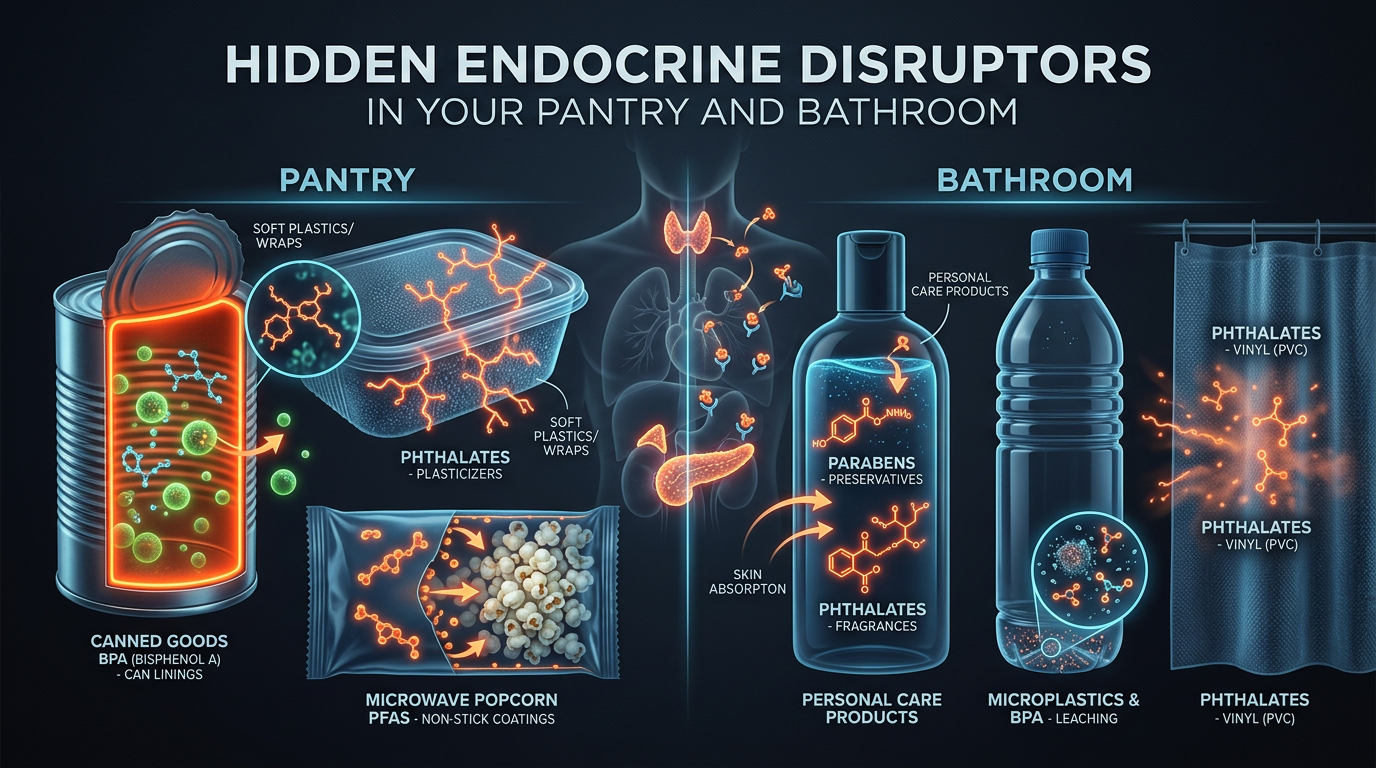
The human endocrine system is an exquisite masterpiece of biological engineering. Operating through a complex network of glands and signalling molecules, it governs everything from metabolic rate and circadian rhythms to reproductive viability and cognitive function. However, in the modern British household, this delicate chemical equilibrium is under a sustained, silent assault.
We are currently living through an unprecedented biological experiment. For the first time in evolutionary history, our internal physiological processes are being modulated by synthetic exogenous compounds—Endocrine Disrupting Chemicals (EDCs). These substances do not merely exist alongside us; they infiltrate our cellular structures, hijack our hormonal receptors, and perturb the very blueprints of our health.
The Biological Mechanisms of Hormonal Sabotage
To understand the gravity of EDC exposure, one must first grasp the precision of hormonal signalling. Hormones operate at infinitesimal concentrations—parts per trillion. At this level of sensitivity, even minute quantities of a foreign chemical can precipitate systemic physiological shifts.
EDCs disrupt the endocrine system via several primary pathways:
- Molecular Mimicry: Many EDCs, particularly xenoestrogens, possess a molecular structure that mirrors natural oestradiol. They bind to oestrogen receptors, triggering biological responses at inappropriate times or with excessive intensity.
- Receptor Antagonism: Conversely, some chemicals block natural hormones from binding to their designated receptors, effectively "muting" the body’s internal communication.
- Epigenetic Alteration: Perhaps most concerning is the ability of EDCs to alter gene expression. By modifying how DNA is read, these toxins can induce "heritable" health issues that persist across generations without changing the genetic sequence itself.
- The Non-Monotonic Paradox: Traditional toxicology suggests that "the dose makes the poison." However, EDCs often follow a non-monotonic dose-response curve, meaning they can be more disruptive at extremely low doses than at high doses, as they mimic the body's own low-level hormonal signals.
The Pantry: A Reservoir of Synthetic Oestrogens
The modern kitchen, intended to be a place of nourishment, is frequently the primary source of EDC bioaccumulation. From the containers we use to the coatings on our food, chemical leaching is a constant reality.
Bisphenols and the Myth of "BPA-Free"
Bisphenol A (BPA) is perhaps the most notorious EDC, used primarily in the production of polycarbonate plastics and the epoxy resins that line tinned foods. Whilst public pressure has led to a surge in "BPA-Free" labelling, the scientific reality is sobering. Manufacturers have largely replaced BPA with Bisphenol S (BPS) or Bisphenol F (BPF), compounds which research suggests are equally, if not more, endocrine-disruptive.
According to data from the UK’s Food Standards Agency (FSA) and various biomonitoring studies, over 90% of the UK population has detectable levels of bisphenols in their urine, indicating a state of chronic, low-level exposure.
Phthalates: The Plasticizers
Phthalates are added to plastics to increase flexibility. They are not chemically bound to the substrate, meaning they easily migrate into fatty foods like cheese, meats, and oils. Phthalates are potent anti-androgens, meaning they interfere with male sex hormones, contributing to the "shanna swan" effect—a documented decline in reproductive health and sperm quality across Western populations.
Pesticide Residues and Glyphosate
The UK’s agricultural reliance on organophosphates and glyphosate introduces another layer of endocrine interference. Glyphosate, the active ingredient in common herbicides, has been shown to disrupt the gut microbiome—our "second brain"—which plays a pivotal role in metabolising hormones like oestrogen.
- Atrazine: Though restricted in some contexts, residues of this herbicide are known to induce "chemical castration" in amphibians by converting testosterone into oestrogen.
- Organochlorines: Persistent organic pollutants that bioaccumulate in animal fats and remain in the body for decades.
The Bathroom: The Dermal Entry Point
The skin is the body’s largest organ, and it is highly permeable. Unlike the digestive tract, which has the advantage of first-pass metabolism by the liver, chemicals absorbed through the skin enter the bloodstream directly.
The "Parfum" Black Box
On any personal care product—shampoo, deodorant, or moisturiser—the term "fragrance" or "parfum" represents a legal loophole. Under trade secret laws, companies are not required to disclose the constituents of their scents. This "black box" often contains hundreds of undisclosed phthalates and synthetic musks.
Parabens: The Preservative Burden
Parabens (Methyl-, Ethyl-, Propyl-, Butyl-) are used to prevent microbial growth in cosmetics. They are easily absorbed and have been identified in human breast tumour tissue. Whilst a direct causal link to carcinogenesis remains a subject of intense debate, their oestrogen-mimicking properties are undisputed.
Triclosan and Thyroid Interference
Found in "antibacterial" soaps and some toothpaste brands, Triclosan is a potent thyroid disruptor. The thyroid gland controls the body's basal metabolic rate; when it is hindered by halogenated compounds like Triclosan, individuals may experience unexplained weight gain, lethargy, and cognitive fog.
A study by the University of Exeter found that high levels of certain endocrine disruptors in the blood were significantly correlated with thyroid disease in women, highlighting the vulnerability of the UK female population to these bathroom toxins.
PFAS: The "Forever Chemicals"
Per- and polyfluoroalkyl substances (PFAS) are used in "long-wear" or "waterproof" cosmetics and dental floss. These chemicals do not break down in the environment or the human body. They are linked to suppressed immune function and interference with the PPAR receptors which regulate glucose and lipid metabolism.
Environmental Context: The UK Landscape
The United Kingdom faces a unique challenge following its exit from the European Union. While the EU’s REACH (Registration, Evaluation, Authorisation and Restriction of Chemicals) remains one of the world's most stringent frameworks, the UK is now navigating its own regulatory path (UK REACH). There is an ongoing concern among the scientific community that UK standards may diverge or lag behind, leaving citizens exposed to substances that are being phased out on the continent.
The Environment Agency’s monitoring of English rivers has consistently found "cocktails" of EDCs, including ethinylestradiol (from the contraceptive pill) and industrial surfactants, which are not only feminising fish populations but entering the human water cycle through extraction processes.
The Sovereign Recovery Protocol: Reclaiming Your Biology
While the presence of EDCs is ubiquitous, we are not powerless. Recovery involves a dual strategy of Interruption (stopping the influx) and Clearance (optimising the body's detoxification pathways).
1. The Pantry Overhaul
- Transition to Glass and Stainless Steel: Replace all plastic food storage containers and water bottles. Never heat food in plastic, as thermal energy accelerates the leaching of phthalates and bisphenols.
- Ditch the Non-Stick: PTFE-coated pans (Teflon) release toxic fumes and leach PFAS when scratched. Switch to cast iron, carbon steel, or high-quality ceramic.
- Filter Your Water: Standard Brita filters are insufficient for EDCs. Utilise a reverse osmosis system or a high-grade gravity filter (e.g., Berkey) to remove fluoride, pesticide residues, and pharmaceutical metabolites.
- Prioritise Organic for the "Dirty Dozen": Focus your budget on organic versions of produce with the highest pesticide loads (strawberries, spinach, kale).
2. The Bathroom Purge
- Fragrance-Free Living: Select products that use essential oils for scent or are explicitly labelled as "phthalate-free" and "fragrance-free."
- Clean Hygiene: Replace conventional deodorants containing aluminium and parabens with magnesium-based alternatives. Use fluoride-free toothpaste to reduce thyroid suppression.
- Check the Label: Avoid any ingredient ending in "-paraben" or "-siloxane."
3. Biological Clearance and Detoxification
To clear the existing "body burden" of EDCs, one must support the liver and the emunctories (organs of elimination).
- Support Phase II Glucuronidation: This specific liver pathway is responsible for clearing excess oestrogens and xenoestrogens. Consuming cruciferous vegetables (broccoli, cauliflower, Brussels sprouts) provides Indole-3-Carbinol and Sulforaphane, which upregulate this process.
- Calcium D-Glucarate: This supplement prevents "deconjugation" in the gut, ensuring that toxins bound by the liver are actually excreted rather than reabsorbed into the bloodstream.
- Sweat Therapy: Many EDCs, particularly phthalates and heavy metals, are excreted through sweat. Regular use of a sauna (specifically Infrared) is one of the most effective ways to reduce the systemic burden of forever chemicals.
- Optimise Fibre Intake: EDCs are often excreted via bile into the intestines. Without adequate soluble fibre to bind this bile, the toxins are recycled through enterohepatic circulation.
The Truth Exposed: A Call to Consciousness
The prevalence of endocrine disruptors is not merely a failure of chemistry, but a failure of precaution. The regulatory frameworks currently in place rely on an "innocent until proven guilty" approach to industrial chemicals. However, the rising rates of metabolic syndrome, infertility, and hormone-sensitive cancers in the UK suggest that the evidence of "guilt" is already manifest in our biology.
True health sovereignty requires us to look beyond the marketing veneer of household brands. It demands an understanding that our homes have become the front lines of a chemical silent war. By purging these hidden disruptors and implementing rigorous recovery protocols, we do more than just avoid illness; we restore the integrity of our internal signalling system.
We must remember that our hormones are the chemical messengers of our will. When they are clear and uncorrupted, our vitality, clarity, and purpose remain intact. To remove EDCs from your life is to reclaim the sovereignty of your own physical temple.
The path to innerstanding begins with the awareness of what we allow across our thresholds. Inspect your labels, question the "safety" of the status quo, and choose the path of biological purity. Your endocrine system, the master orchestrator of your life, deserves nothing less.
This article is provided for informational and educational purposes only. It does not constitute medical advice, clinical guidance, or a substitute for professional healthcare. Information reflects cited research at time of publication. Always consult a qualified healthcare professional before acting on any health information.
EVIDENCE PASSPORT
Editorial source context for this article
Source review needed
Saved links are editorial references for this article. They may support specific claims rather than every sentence. Open and assess each source in context. This passport does not independently verify them.
Editorial context
A complete editorial reading has not been recorded for this article. Source links remain available for you to open and assess directly.
Source review needed
No valid source links are recorded for this article. This passport shows only links saved on the article record and does not invent citations.
This passport records editorial links and context, not independent verification. Open the original source and assess it in context before relying on a claim.
Medical Disclaimer
The information in this article is for educational purposes only and does not constitute medical advice, diagnosis, or treatment. Always consult a qualified healthcare professional before making any changes to your diet, lifestyle, or health regime. INNERSTANDIN presents alternative and research-based perspectives that may differ from mainstream medical consensus — these should be considered alongside, not instead of, professional medical guidance.
Read Full DisclaimerContinue the thread
Keep this question moving.
Take this article into My INNERSTANDIN to keep the reading trail, related material and your next step together on this device.
Explore this in the Body Map
See where this hits your biology. Interactive anatomy, threats, and protective protocols.
Dig deeper in the Library
Free, longform PDF volumes that go beyond headlines into mechanisms and references.