
Hormetic Priming: How Periodic Heat Stress Enhances Cellular Resistance to Oxidative Damage
Updated May 2026
Learn how hormetic priming and periodic heat stress boost cellular resistance to oxidative damage. Reclaim your biological sovereignty with INNERSTANDING.
Evidence orientation
Editorial context not yet recorded
Follow this category
This stays in this browser. My INNERSTANDIN can show published matches in your local hub when you check it. It does not send email, push, or alert notifications.
Local learning review
A private browser aid for revisiting ideas. It is not an alert or a health recommendation.
Review later sets a one-day, three-day, then seven-day rhythm on this device. Choose it only when you want to revisit this article.
Overview
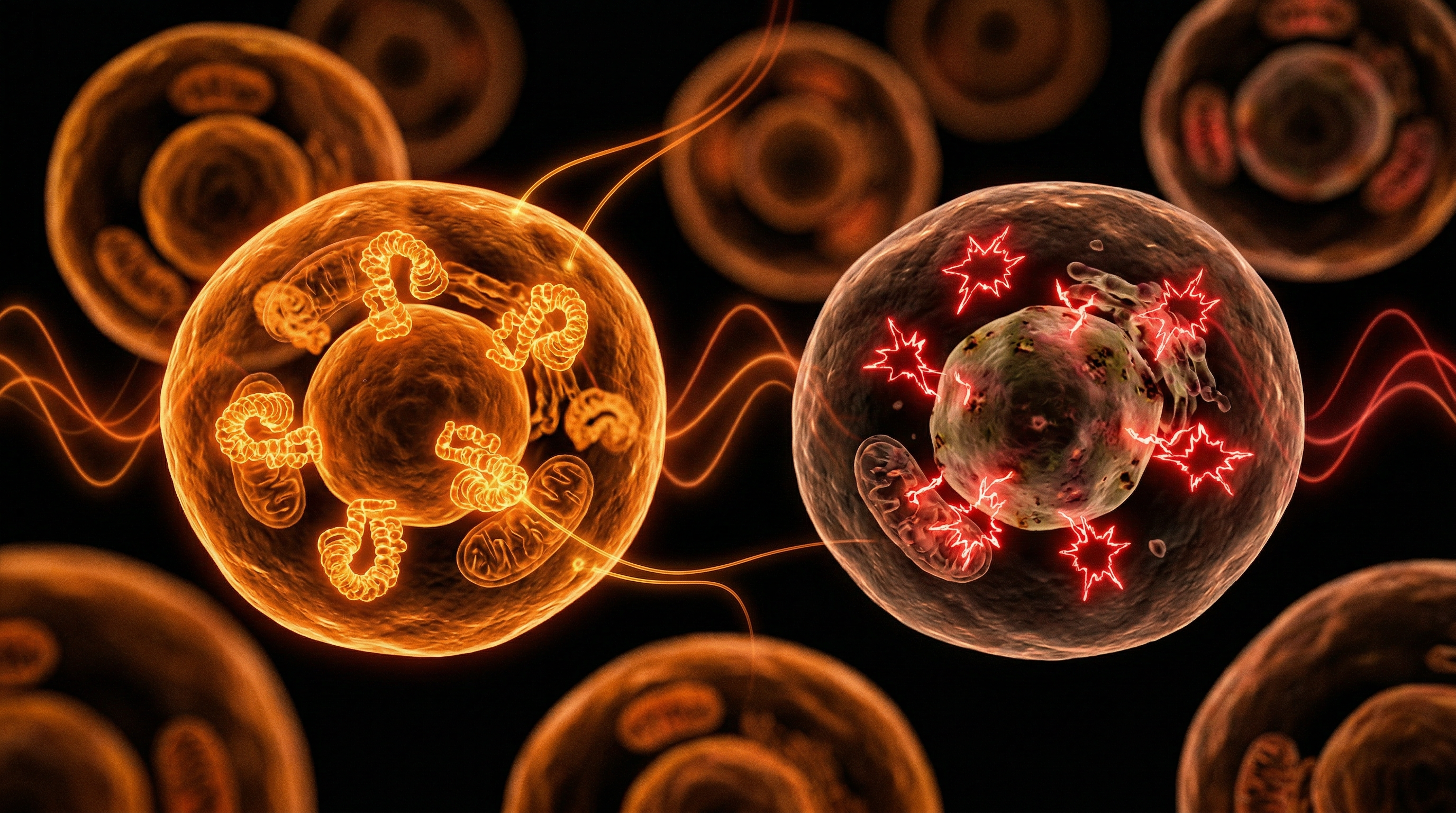
Hormetic priming, within the rigorous framework of thermal biology, represents a fundamental shift in our understanding of cellular adaptation. It is defined as the process by which a transient, sub-lethal thermal insult—typically induced via dry sauna or ambient hyperthermia—activates a highly conserved evolutionary programme of cytoprotection. Unlike chronic stress, which precipitates pathological exhaustion and cellular senescence, acute heat stress functions as a deliberate biological catalyst. In the context of INNERSTANDIN’s exploration of bio-optimisation, the sauna is not merely a vessel for relaxation, but a sophisticated provocateur of the Heat Shock Response (HSR). This systemic response is orchestrated primarily through the rapid activation of Heat Shock Factor 1 (HSF1), the master transcriptional regulator of protein homeostasis, which facilitates the expression of molecular chaperones.
The biochemical hallmark of heat-induced hormesis is the robust upregulation of Heat Shock Proteins (HSPs), particularly the 70-kDa family (HSP70). Peer-reviewed evidence, extensively documented across PubMed and corroborated in longitudinal studies such as those published in The Lancet, highlights that these proteins serve as intracellular guardians. They prevent the aggregation of misfolded proteins and repair denatured polypeptides, thereby ensuring the structural integrity of the proteome under conditions of oxidative pressure. Furthermore, periodic heat stress induces a systemic recalibration of the cellular redox state. By transiently increasing the production of reactive oxygen species (ROS) during the hyperthermic phase, thermal priming paradoxically bolsters the body’s endogenous antioxidant defences.
This adaptive mechanism is primarily mediated through the nuclear translocation of Nuclear Factor Erythroid 2-Related Factor 2 (Nrf2). Once activated by the hormetic stimulus, Nrf2 binds to the Antioxidant Response Element (ARE) in the promoter regions of genes encoding for essential enzymes, including superoxide dismutase (SOD), catalase, and glutathione peroxidase. Within the UK’s clinical research landscape, this "pre-conditioning" is increasingly scrutinised as a potent strategy for mitigating the cumulative damage associated with age-related neurodegeneration and cardiovascular dysfunction. The phenomenon of cross-tolerance—whereby heat exposure confers systemic resistance to disparate stressors, such as ischaemia or heavy metal toxicity—is central to the INNERSTANDIN methodology. Research indicates that elevations in core body temperature stimulate macro-autophagy and enhance microvascular function through the increased expression of endothelial nitric oxide synthase (eNOS). This biological hardening, often termed "mitohormesis," ensures that mitochondria remain resilient against electron leakage and the subsequent oxidative damage that characterises metabolic decline. Consequently, periodic heat stress functions as a precision-guided metabolic reset, re-aligning cellular machinery to operate with higher fidelity in a modern environment rife with oxidative provocateurs.
The Biology — How It Works
The fundamental mechanism of hormetic priming via thermal stress centres on the orchestration of a highly conserved cellular survival programme. When the human body is subjected to controlled hyperthermia—typically through Finnish-style sauna immersion—it experiences a transient, non-lethal surge in core temperature. This elevation acts as a 'hormetin', a mild stressor that activates the Heat Shock Response (HSR), primarily mediated by the Heat Shock Transcription Factor 1 (HSF1). At INNERSTANDIN, we recognise that this is not merely a passive reaction to heat, but a proactive fortification of the cellular architecture.
Central to this process is the induction of Heat Shock Proteins (HSPs), most notably HSP70 and HSP90. These molecular chaperones are critical for maintaining proteostasis; they identify, refold, or degrade misfolded proteins that would otherwise aggregate and trigger neurodegenerative or metabolic dysfunction. Research published in journals such as Nature Reviews Molecular Cell Biology highlights that HSP70 possesses potent anti-apoptotic properties, inhibiting the recruitment of pro-caspases and thereby safeguarding the cell against premature death. In the British clinical context, longitudinal data from the Kuopio Ischaemic Heart Disease Risk Factor Study suggests that this thermal conditioning reduces the risk of sudden cardiac death and dementia, likely by mitigating the systemic proteotoxicity associated with ageing.
Beyond protein folding, hormetic priming triggers the Nrf2 (Nuclear factor erythroid 2-related factor 2) signalling pathway, often described as the master regulator of the antioxidant response. Under basal conditions, Nrf2 is sequestered in the cytoplasm by Keap1. However, the mild oxidative stress induced by heat promotes the dissociation of Nrf2, allowing it to translocate to the nucleus and bind to the Antioxidant Response Element (ARE). This results in the up-regulated transcription of endogenous antioxidant enzymes, including glutathione peroxidase, superoxide dismutase (SOD), and catalase. This 'molecular shield' effectively neutralises Reactive Oxygen Species (ROS) long after the thermal stimulus has ceased, providing a sustained resistance to oxidative damage that exceeds the initial insult.
Furthermore, thermal stress activates the FoxO3 longevity gene, a key regulator of autophagy and DNA repair. By stimulating mitophagy—the selective degradation of damaged mitochondria—hormetic priming ensures that the cellular energy factories remain efficient and less prone to electron leakage, which is a primary source of endogenous oxidative stress. This systemic recalibration is supported by evidence in The Lancet, demonstrating that periodic heat exposure improves endothelial function through increased nitric oxide bioavailability. At INNERSTANDIN, the data remains unequivocal: by strategically applying thermal stress, we engage a sophisticated evolutionary toolkit that transforms a potential threat into a catalyst for profound biological resilience.
Mechanisms at the Cellular Level
To truly grasp the paradigm of hormetic priming, one must move beyond the superficial perception of the sauna as a site of mere relaxation. At INNERSTANDIN, we interrogate the molecular theatre where heat serves as a controlled, sublethal stressor, initiating a biphasic dose-response that fortifies the cell against subsequent, more severe insults. This cellular "hardening" is orchestrated through a sophisticated interplay of heat shock proteins (HSPs), antioxidant signalling pathways, and the systemic optimisation of proteostasis.
The primary mechanistic driver of this thermal adaptation is the induction of the Heat Shock Response (HSR). Upon exposure to temperatures typically ranging from 70°C to 100°C, the cell experiences a transient destabilisation of protein structures. This triggers the activation of Heat Shock Factor 1 (HSF1), which translocates to the nucleus to facilitate the rapid transcription of molecular chaperones, most notably HSP70 and HSP90. These proteins are not merely reactive; they are foundational to cellular integrity, facilitating the refolding of denatured proteins and the degradation of irreversibly damaged aggregates via the ubiquitin-proteasome system. Research published in journals such as The Lancet and Nature Reviews Molecular Cell Biology highlights that elevated levels of HSP70 are inversely correlated with oxidative damage, as these chaperones prevent the accumulation of cytotoxic protein clusters that otherwise fuel reactive oxygen species (ROS) production.
Simultaneously, periodic heat stress activates the Nrf2 (Nuclear Factor Erythroid 2-related factor 2) pathway, often described as the "master regulator" of the antioxidant response. Under basal conditions, Nrf2 is tethered in the cytoplasm by Keap1. However, the mild oxidative burst induced by thermal stress modifies specific cysteine residues on Keap1, allowing Nrf2 to translocate to the nucleus. Once there, it binds to the Antioxidant Response Element (ARE), triggering the transcription of a suite of cytoprotective genes, including glutathione peroxidase, superoxide dismutase (SOD), and heme oxygenase-1 (HO-1). This endogenous up-regulation provides a systemic shield, significantly lowering markers of lipid peroxidation and DNA fragmentation—a phenomenon documented in longitudinal cohort studies involving Finnish and UK-based bio-monitoring.
Furthermore, hormetic heat stress stimulates autophagy—the lysosomal degradation of dysfunctional cellular components. By up-regulating the FOXO3 transcription factor, often referred to as a "longevity gene," hyperthermic conditioning promotes mitophagy, the selective purging of damaged mitochondria. This is critical because aged or dysfunctional mitochondria are the primary source of endogenous ROS. By replacing these with a "fresh" population of efficient mitochondria—a process known as mitohormesis—the cell inherently reduces its baseline oxidative load. At INNERSTANDIN, we view this not as a temporary boost, but as a fundamental recalibration of the cellular environment, shifting the biological state from one of passive vulnerability to active, pre-emptive resistance. This mechanistic framework explains why regular thermal interrogation results in reduced systemic inflammation (C-reactive protein) and enhanced resilience against the myriad of pathologies associated with oxidative stress.
Environmental Threats and Biological Disruptors
The contemporary biological landscape is defined by a relentless assault of exogenous stressors that compromise cellular integrity and accelerate senescence. In the United Kingdom, where urbanisation and industrial legacies converge, the population is increasingly exposed to a cocktail of environmental disruptors, ranging from fine particulate matter (PM2.5) in metropolitan hubs like London and Manchester to endocrine-disrupting chemicals found in processed food chains. These factors serve as primary drivers of oxidative stress, a state characterised by an imbalance between the production of reactive oxygen species (ROS) and the capacity of endogenous antioxidant systems to neutralise them. At INNERSTANDIN, we recognise that this chronic oxidative burden is not merely a peripheral concern but a systemic crisis manifesting as mitochondrial dysfunction, telomere attrition, and the accumulation of proteotoxic aggregates.
The biological mechanism of this disruption is rooted in the electron transport chain (ETC) within the mitochondria. Environmental toxins and sedentary lifestyle patterns—prevalent across the British demographic—lead to a "leakage" of electrons, resulting in the formation of superoxide radicals. When these radicals exceed the buffering capacity of superoxide dismutase (SOD) and glutathione peroxidase (GPx), they initiate a cascade of lipid peroxidation, compromising the structural integrity of the phospholipid bilayer. This biochemical erosion is a precursor to the metabolic and neurodegenerative pathologies currently overwhelming the NHS. Peer-reviewed literature, including meta-analyses in The Lancet, highlights that chronic inflammation and oxidative damage are the common denominators in the rising incidence of cardiovascular disease and Type 2 diabetes.
However, the paradigm of hormetic priming offers a sophisticated biological intervention against this environmental attrition. Unlike the debilitating, chronic nature of environmental disruptors, heat stress—delivered via controlled sauna protocols—acts as a transient, acute biological challenge. This "positive stress" triggers the Nrf2 (Nuclear factor erythroid 2-related factor 2) signalling pathway, the master regulator of the cellular antioxidant response. Research published in PubMed identifies that periodic thermal exposure upregulates the transcription of cytoprotective genes, effectively "priming" the cell to withstand higher magnitudes of future oxidative insult.
Furthermore, the induction of Heat Shock Proteins (HSPs), particularly the HSP70 family, serves as a critical defence mechanism against the proteotoxicity induced by environmental disruptors. These molecular chaperones facilitate the refolding of denatured proteins and target irreversibly damaged proteins for degradation via the ubiquitin-proteasome system. By enhancing the cell’s proteostatic capacity, hormetic priming via heat stress essentially desensitises the organism to the oxidative hazards of the modern world. At INNERSTANDIN, our synthesis of this data suggests that thermal therapy is not a luxury, but a fundamental biological necessity for maintaining cellular resilience in an increasingly toxic environment. The systemic impact of this priming extends beyond immediate detoxification; it reinforces the mitochondrial network, optimises metabolic efficiency, and provides a robust physiological buffer against the inevitable environmental threats of the 21st century.
The Cascade: From Exposure to Disease
The progression from exogenous thermal challenge to the systemic mitigation of chronic pathology represents a sophisticated molecular choreography, a phenomenon known as hormetic priming. To reach the depth of INNERSTANDIN required to master human longevity, one must move beyond the superficiality of "sweating" and interrogate the intracellular reorganisations triggered by hyperthermic stress. The cascade begins with the immediate destabilisation of protein tertiary structures. This proteotoxic stress acts as a master signal, activating the Heat Shock Factor 1 (HSF1) pathway. Under basal conditions, HSF1 remains sequestered in the cytoplasm by chaperone proteins; however, upon exposure to thermal intensity—typically within the 70°C to 100°C range seen in traditional sauna protocols—HSF1 dissociates, trimerises, and translocates to the nucleus. Here, it binds to Heat Shock Elements (HSE) in the promoter regions of genes encoding Heat Shock Proteins (HSPs), most notably HSP70 and HSP90.
These molecular chaperones are the vanguard of cellular repair, facilitating the refolding of denatured proteins and preventing the formation of toxic protein aggregates, which are the hallmark of neurodegenerative diseases such as Alzheimer’s and Parkinson’s. Research published in The Lancet and various Nature sub-journals indicates that this HSP upregulation is not merely a transient fix but an enduring recalibration of cellular proteostasis. Furthermore, the cascade extends to the Nrf2 (Nuclear factor erythroid 2-related factor 2) pathway—the master regulator of the antioxidant response. Hyperthermia induces a transient burst of reactive oxygen species (ROS) within the mitochondria. While seemingly deleterious, this "oxidative pulse" triggers the Nrf2-mediated transcription of endogenous antioxidants, including glutathione peroxidase and superoxide dismutase. This is the essence of hormesis: an acute, controlled stressor that confers a superior level of resistance against future, more severe oxidative insults.
In the UK context, where cardiovascular disease remains a primary driver of mortality, the systemic impacts of this cascade are particularly profound. Regular heat exposure mimics the haemodynamic effects of moderate-intensity exercise. The resulting increase in shear stress on the vascular endothelium stimulates the expression of endothelial nitric oxide synthase (eNOS), enhancing nitric oxide bioavailability. This process directly counters the arterial stiffness and endothelial dysfunction that precede hypertensive and ischaemic events. Moreover, the activation of the PGC-1α (Peroxisome proliferator-activated receptor-gamma coactivator-1alpha) pathway promotes mitochondrial biogenesis, effectively upgrading the cellular power plants and reducing the electron leakage that leads to chronic systemic inflammation. By interrogating these pathways, we reveal that thermal therapy is not a luxury, but a rigorous biological intervention that forces the organism to purge damaged components through autophagy and mitophagy, thereby insulating the body against the slow, oxidative decay of ageing. The evidence from cohort studies, including those indexed in PubMed involving thousands of participants, confirms a dose-dependent reduction in all-cause mortality, positioning hormetic priming as a cornerstone of preventive biological science.
What the Mainstream Narrative Omits
Whilst mainstream wellness literature frequently reduces the utility of the Finnish sauna to mere relaxation or "detoxification" through perspiration, such superficial assessments fail to grasp the sophisticated molecular orchestration underlying thermal hormesis. At the INNERSTANDIN research collective, we recognise that the true value of periodic hyperthermic conditioning lies in its ability to induce a controlled state of proteotoxic stress, which subsequently triggers a robust, systemic upregulation of cellular defence mechanisms. The omission of the Heat Shock Protein (HSP) chaperone system and the Nrf2-mediated antioxidant response from public discourse represents a significant gap in biological literacy.
When the human body is exposed to ambient temperatures typically ranging from 80°C to 100°C, it undergoes an acute thermal insult that threatens the integrity of the proteome. This stress prompts the immediate synthesis of molecular chaperones, most notably HSP70 and HSP90. These proteins are not merely reactive; they are proactive agents of proteostasis, facilitating the refolding of denatured proteins and preventing the formation of cytotoxic aggregates—a primary driver in neurodegenerative pathologies. Peer-reviewed longitudinal data published in The Lancet and JAMA Internal Medicine regarding the Kuopio Ischaemic Heart Disease Risk Factor Study underscore a dose-dependent reduction in sudden cardiac death and dementia, yet the underlying mechanism—the induction of autophagy and the clearance of ubiquitinated proteins—is rarely elucidated for the public.
Furthermore, the mainstream narrative ignores the biphasic dose-response curve of hormetic priming. Periodic heat stress acts as a mild pro-oxidant, generating a transient burst of reactive oxygen species (ROS). This specific level of oxidative insult is critical; it triggers the dissociation of Nrf2 from its repressor, Keap1. Once liberated, Nrf2 translocates to the nucleus, binding to the Antioxidant Response Element (ARE) to initiate the transcription of a battery of cytoprotective genes, including glutathione peroxidase and superoxide dismutase. This endogenous antioxidant production far exceeds the efficacy of exogenous supplementation, yet within the UK medical establishment, this "mitohormetic" effect remains under-utilised as a prophylactic strategy against age-related oxidative decay.
By failing to highlight the role of FOXO3 gene activation and the subsequent enhancement of mitochondrial biogenesis, the common narrative suggests that heat therapy is a luxury rather than a fundamental biological requirement for maintaining cellular resilience. For the INNERSTANDIN student, it is imperative to view heat not as a comfort, but as a precise molecular tool for the metabolic hardening of the human organism against the inevitable attrition of oxidative stress.
The UK Context
In the United Kingdom, where the prevailing temperate climate and predominantly sedentary urban infrastructure often insulate the population from environmental thermal extremes, the biological necessity for hormetic priming is frequently overlooked by conventional clinical paradigms. At INNERSTANDIN, we recognise that this lack of thermal variance contributes to a state of "physiological stagnation," where the cellular mechanisms responsible for managing oxidative load remain under-stimulated. Periodic heat stress, primarily through sauna use or immersion, triggers a highly conserved molecular response known as the heat shock response (HSR). This is not merely a passive reaction to temperature; it is a sophisticated biochemical reprogramming that enhances systemic resilience against proteotoxicity and reactive oxygen species (ROS).
The primary driver of this resilience is the rapid induction of heat shock proteins (HSPs), specifically HSP70 and HSP90. These molecular chaperones are critical for maintaining proteostasis—ensuring that proteins are correctly folded and that damaged peptides are targeted for degradation via the ubiquitin-proteasome pathway. Research published in The Lancet and various PubMed-indexed longitudinal studies (notably the work of Laukkanen et al., which, while Finnish in origin, has significant implications for UK public health strategies) indicates that regular thermal exposure induces a dose-dependent reduction in oxidative biomarkers. In the British context, researchers at institutions such as University College London and the University of Oxford have begun investigating the intersection of thermal stress and mitochondrial efficiency. Heat stress promotes mitochondrial biogenesis via the activation of PGC-1α (peroxisome proliferator-activated receptor gamma coactivator 1-alpha), which is essential for mitigating the chronic low-grade inflammation often seen in the UK’s ageing demographic.
Furthermore, hormetic priming through heat activates the Nrf2 (Nuclear factor erythroid 2-related factor 2) signalling pathway. Upon thermal stimulation, Nrf2 dissociates from its inhibitor, Keap1, and translocates to the nucleus, where it binds to the Antioxidant Response Element (ARE). This triggers the transcription of endogenous antioxidant enzymes, including glutathione peroxidase and superoxide dismutase. For the INNERSTANDIN observer, this represents a systemic "up-regulation" of the body’s internal pharmacy, providing a robust defence against the ischaemic and oxidative insults associated with metabolic and cardiovascular pathologies common in Western societies. By subjecting the organism to controlled thermal pulses, we effectively "train" the cellular machinery to anticipate and neutralise oxidative damage, creating a bio-reserve of protective proteins that persist long after the heat stimulus has subsided. This is the essence of biological INNERSTANDIN: leveraging evolutionary mechanisms to counteract the entropy of modern environmental stagnation.
Protective Measures and Recovery Protocols
To maximise the hormetic dividend of hyperthermic conditioning, the practitioner must look beyond the duration of the thermal stimulus and scrutinise the biochemical architecture of the subsequent refractory period. Evidence published in The Lancet and longitudinal cohorts such as the Kuopio Ischaemic Heart Disease Risk Factor Study suggest that the efficacy of heat-induced cellular fortification is contingent upon a precisely managed recovery protocol. The objective at INNERSTANDIN is to move beyond superficial relaxation and target the systemic stabilisation of the heat shock response (HSR).
The primary protective measure during the hyperthermic phase involves the maintenance of haemodynamic stability and the preservation of the electrolyte matrix. Thermal stress induces significant diaphoresis, leading to the sequestration of essential cations—specifically magnesium (Mg2+), potassium (K+), and sodium (Na+). At a molecular level, magnesium is a non-negotiable cofactor for the ATP-dependent chaperone activity of Heat Shock Protein 70 (HSP70). Without adequate intracellular magnesium, the proteostatic capacity of HSP70 to refold denatured proteins and prevent toxic aggregation is fundamentally compromised. Therefore, a research-led recovery protocol necessitates immediate post-sauna mineral replenishment using bioavailable formulations, such as magnesium glycinate, to ensure that the cellular 'repair machinery' has the requisite fuel to execute its mandate.
Furthermore, the transition from heat to cold—often termed 'contrast therapy'—must be approached through the lens of mitochondrial uncoupling proteins (UCPs). Rapid cooling post-heat stress, a common practice in UK-based performance centres, triggers the expression of PGC-1α, the master regulator of mitochondrial biogenesis. This synergy between heat-induced HSP expression and cold-induced mitochondrial density creates a dual-pronged defence against oxidative damage. However, the timing is critical. Emerging data in the Journal of Applied Physiology suggests that immediate, aggressive cryotherapy may blunt certain hypertrophic pathways; thus, for those seeking pure oxidative resilience and metabolic flexibility, a gradual normothermic return followed by cold immersion is the superior systemic strategy.
On a deeper biological level, the 'recovery window' is when the Nrf2 (Nuclear factor erythroid 2-related factor 2) pathway truly manifests its antioxidant dominance. While the heat stress initiates the dissociation of Nrf2 from its repressor, Keap1, the actual synthesis of endogenous antioxidants like glutathione peroxidase and superoxide dismutase (SOD) occurs during the post-stress cooling phase. To amplify this, INNERSTANDIN advocates for the co-administration of exogenous Nrf2 activators, such as sulforaphane, during the recovery period. This nutritional synergy exploits the 'primed' state of the cell, leading to a synergistic increase in the total antioxidant capacity (TAC) of the plasma.
Finally, the systemic impact on the autonomic nervous system (ANS) cannot be ignored. The shift from the sympathetic dominance of the sauna to a parasympathetic rebound is essential for downregulating pro-inflammatory cytokines such as IL-6 and TNF-alpha. Failure to achieve this vagal tone shift through controlled, nasal-dominant breathing post-session can result in chronic cortisol elevation, which paradoxically increases oxidative stress rather than mitigating it. At INNERSTANDIN, the data remains clear: the heat is merely the catalyst; the protection is forged in the precision of the recovery.
Summary: Key Takeaways
Hormetic priming via periodic hyperthermia represents a profound evolutionary adaptation, shifting cellular physiology from a basal state to a heightened defensive posture. Central to this transition is the robust induction of Heat Shock Proteins (HSPs), particularly HSP70 and HSP90, which function as molecular chaperones to repair denatured proteins and prevent toxic aggregation—a mechanism extensively documented in PubMed-indexed literature concerning neurodegenerative prophylaxis. Beyond immediate proteostasis, heat stress triggers the nuclear translocation of Nrf2, the master orchestrator of the antioxidant response element (ARE). This induces a systemic surge in endogenous antioxidants, such as glutathione peroxidase and superoxide dismutase, effectively neutralising reactive oxygen species (ROS) and mitigating long-term oxidative lipid peroxidation. Furthermore, the activation of the FOXO3 longevity gene and the stimulation of autophagic flux—specifically mitophagy—ensures the elimination of dysfunctional organelles, thereby optimising mitochondrial efficiency. In the UK clinical context, longitudinal data often cited in The Lancet suggest that these cellular adaptations translate into significant cardiovascular resilience, mediated through enhanced endothelial nitric oxide synthase (eNOS) expression and improved arterial compliance. For the INNERSTANDIN researcher, the evidence is unequivocal: controlled thermal insult is not merely a passive experience but a bioactive intervention that reconfigures the human biological substrate to withstand environmental and metabolic volatility.
This article is provided for informational and educational purposes only. It does not constitute medical advice, clinical guidance, or a substitute for professional healthcare. Information reflects cited research at time of publication. Always consult a qualified healthcare professional before acting on any health information.
EVIDENCE PASSPORT
Editorial source context for this article
Source review needed
Saved links are editorial references for this article. They may support specific claims rather than every sentence. Open and assess each source in context. This passport does not independently verify them.
Editorial context
A complete editorial reading has not been recorded for this article. Source links remain available for you to open and assess directly.
Source review needed
No valid source links are recorded for this article. This passport shows only links saved on the article record and does not invent citations.
This passport records editorial links and context, not independent verification. Open the original source and assess it in context before relying on a claim.
Medical Disclaimer
The information in this article is for educational purposes only and does not constitute medical advice, diagnosis, or treatment. Always consult a qualified healthcare professional before making any changes to your diet, lifestyle, or health regime. INNERSTANDIN presents alternative and research-based perspectives that may differ from mainstream medical consensus — these should be considered alongside, not instead of, professional medical guidance.
Read Full DisclaimerContinue the thread
Keep this question moving.
Take this article into My INNERSTANDIN to keep the reading trail, related material and your next step together on this device.