
Hormonal Disruption: Industrial Fats and Endocrine Signalling
Updated May 2026
Processed vegetable oils can interfere with hormone receptor sensitivity and steroidogenesis. This article explains the link between seed oil consumption and increasing rates of hormonal imbalances in the UK.
Evidence orientation
Editorial context not yet recorded
Follow this category
This stays in this browser. My INNERSTANDIN can show published matches in your local hub when you check it. It does not send email, push, or alert notifications.
Local learning review
A private browser aid for revisiting ideas. It is not an alert or a health recommendation.
Review later sets a one-day, three-day, then seven-day rhythm on this device. Choose it only when you want to revisit this article.
Overview
For the better part of seven decades, the British public has been the subject of a massive, uncontrolled nutritional experiment. This experiment involves the systematic replacement of stable, evolutionarily consistent animal fats with industrialised, chemically processed seed oils—often euphemistically termed "vegetable oils." While mainstream nutritional discourse has focused almost exclusively on cardiovascular health and caloric density, a far more insidious crisis has been unfolding beneath the surface: the total systemic disruption of the human endocrine system.
As a senior biological researcher at INNERSTANDING, I have observed a disturbing correlation between the exponential rise in industrial fat consumption and the precipitous decline in metabolic and hormonal health across the United Kingdom. We are witnessing an era defined by record-breaking rates of Polycystic Ovary Syndrome (PCOS), declining sperm counts, thyroid dysfunction, and oestrogen dominance. This is not merely a consequence of "lifestyle factors" or "sedentary behaviour." It is a fundamental biochemical failure triggered by the integration of unstable, pro-oxidative fatty acids into our very cellular architecture.
The endocrine system is a delicate web of chemical messengers. For these messengers to function, they require stable receptors and a predictable internal environment. Industrial fats—specifically high-linoleic acid seed oils like soybean, sunflower, rapeseed (canola), and corn oil—introduce a level of molecular volatility that our biology is simply not equipped to handle. These oils act as "endocrine disruptors" not just through chemical contamination, but through their fundamental structural properties and the toxic breakdown products they generate within the body.
Fact: Since the 1970s, the consumption of linoleic acid in the British diet has increased by more than 250%, mirroring an almost identical rise in endocrine-related metabolic disorders.
The Biology — How It Works
To understand why industrial fats are so destructive, we must first understand the role of lipids in the endocrine system. Hormones are not produced in a vacuum; they are synthesised from precursors, transported through the bloodstream, and must eventually dock with receptors located on cell membranes.
The Cholesterol Precursor
Most steroid hormones—including testosterone, oestrogen, progesterone, and cortisol—are derived from cholesterol. For millions of years, human biology evolved to utilise saturated and monounsaturated fats to support this synthesis. Saturated fats provide the structural integrity required for the endocrine glands to function.
When we replace these stable fats with polyunsaturated fatty acids (PUFAs), we alter the raw material available for steroidogenesis. Industrial fats are chemically "unstable" because they possess multiple double bonds in their carbon chains. These double bonds are highly susceptible to oxidation when exposed to heat, light, or oxygen.
The Membrane Problem
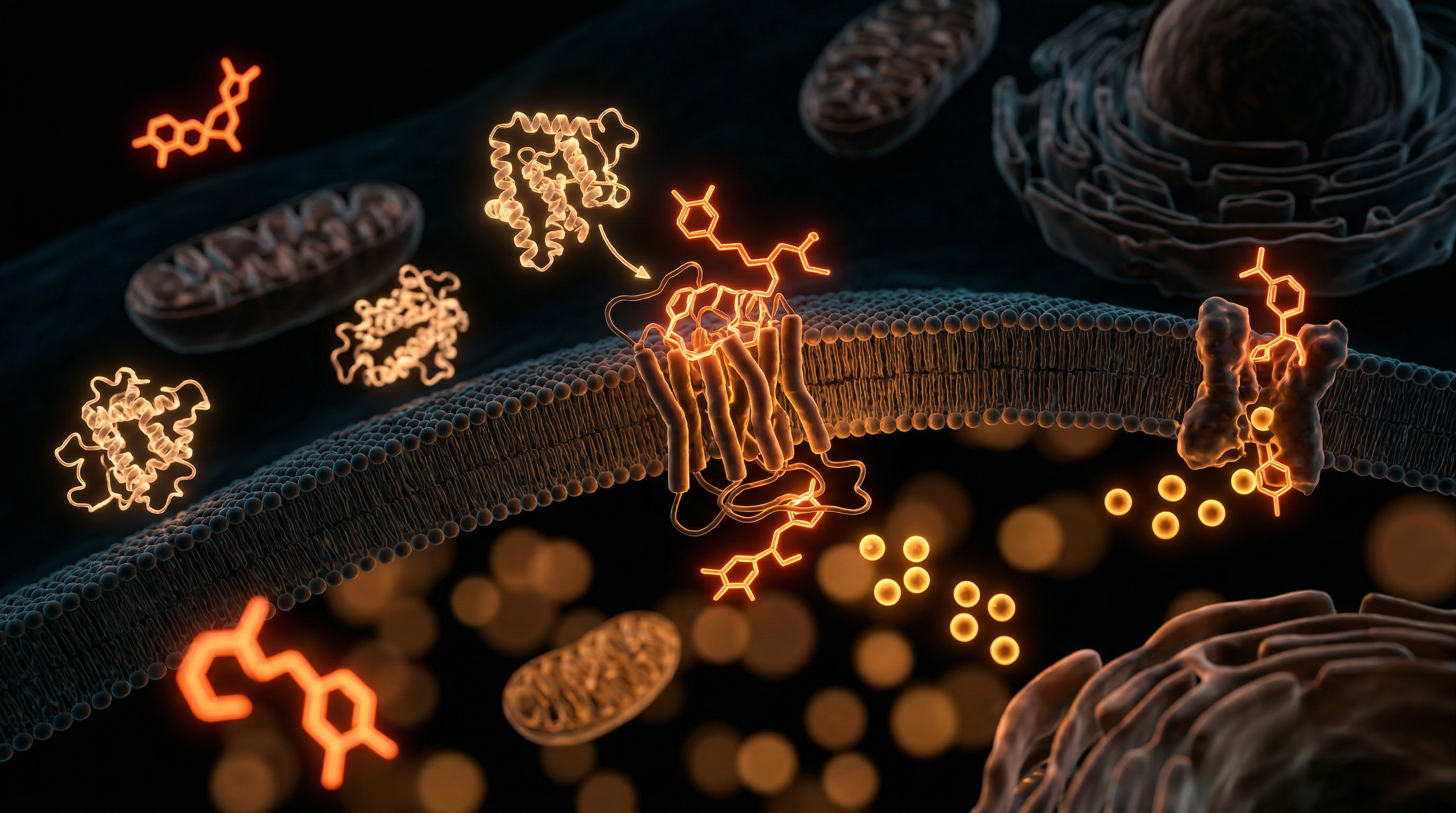
Every cell in the human body is encased in a lipid bilayer—a membrane composed of fats. This membrane is not just a "skin"; it is the interface for all hormonal signalling. For a hormone like insulin or thyroid hormone (T3) to work, it must bind to a receptor embedded in this membrane.
- Saturated Fats: Create a firm, stable membrane structure.
- Polyunsaturated Fats (PUFAs): Create a fluid, highly reactive, and fragile membrane.
When our membranes become overly concentrated with industrial PUFAs, they become prone to lipid peroxidation. This creates a "leaky" or dysfunctional membrane where hormone receptors become deformed or unresponsive. This is the primary driver of hormone resistance—a state where the body produces the hormone, but the cells cannot "hear" the signal.
Mechanisms at the Cellular Level
The disruption caused by industrial fats is most visible at the microscopic level, particularly within the mitochondria and the endoplasmic reticulum.
Lipid Peroxidation and 4-HNE
When linoleic acid (the primary omega-6 fatty acid in seed oils) breaks down in the body, it produces highly toxic by-products known as Aldehydes. The most notorious of these is 4-hydroxynonenal (4-HNE).
Scientific Fact: 4-HNE is a potent "genotoxic" and "cytotoxic" molecule that can directly damage DNA and bind to proteins, effectively "gumming up" cellular machinery.
In the context of the endocrine system, 4-HNE is devastating. It has been shown to:
- Inhibit Protein Synthesis: Interfering with the production of hormone transport proteins.
- Damage Leydig Cells: In men, 4-HNE directly attacks the cells in the testes responsible for producing testosterone.
- Trigger Endoplasmic Reticulum (ER) Stress: This leads to the misfolding of proteins, including hormone receptors, rendering them useless.
Mitochondrial Dysfunction
The mitochondria are the powerhouses of the cell, but they are also the site where the first step of steroid hormone production occurs (the conversion of cholesterol to pregnenolone). Industrial fats are uniquely toxic to the mitochondrial membrane.
The mitochondrial membrane contains a specific phospholipid called cardiolipin. For cardiolipin to function correctly, it should ideally be composed of saturated or monounsaturated fats. When linoleic acid replaces these fats in cardiolipin, the molecule becomes "peroxidisable." This leads to a "short-circuiting" of the mitochondria, resulting in a massive increase in Reactive Oxygen Species (ROS) and a collapse in the energy required to drive hormonal cascades.
The Aromatase Upregulation
Industrial fats promote systemic inflammation through the production of pro-inflammatory eicosanoids (like Prostaglandin E2). Chronic inflammation upregulates an enzyme called aromatase. This enzyme is responsible for converting testosterone into oestrogen. This is a primary mechanism behind the "feminisation" of the male profile and the "oestrogen dominance" seen in females consuming high-PUFA diets.
Environmental Threats and Biological Disruptors
Industrial seed oils are not "natural" products. Unlike olive oil or butter, which can be extracted through simple mechanical pressing, seed oils require an intensive, multi-stage industrial process that introduces further endocrine-disrupting elements.
The Hexane Extraction
Most industrial oils (soybean, rapeseed, corn) are extracted using a petroleum-derived solvent called hexane. While manufacturers claim that hexane is removed during processing, trace amounts often remain. Hexane is a known neurotoxin and has been linked in animal studies to reproductive toxicity.
Deodorisation and Trans Fats
Because seed oils are inherently unstable, the extraction process leaves them smelling rancid and appearing cloudy. To make them "shelf-stable" and palatable, they undergo high-heat deodorisation. This process can reach temperatures of over 200°C, which inadvertently creates "hidden" trans fats and cyclic fatty acids.
- Trans Fats: These are well-documented endocrine disruptors that interfere with the body's ability to use essential fatty acids and correlate strongly with insulin resistance.
- Oxidised Sterols: The high heat also oxidises the plant sterols in the oils, forming "oxy-sterols," which can mimic or block natural hormone signals at the receptor level.
Glyphosate and Pesticide Accumulation
In the UK and globally, industrial oilseeds are often "Roundup Ready" or heavily treated with glyphosate. Because many pesticides are lipophilic (fat-soluble), they concentrate in the oil fraction of the seed. When we consume these oils, we are also consuming a concentrated dose of endocrine-disrupting pesticides that further interfere with the thyroid and reproductive axes.
The Cascade: From Exposure to Disease
The disruption of endocrine signalling by industrial fats is not an isolated event; it is a falling row of dominoes that leads to multi-systemic disease.
The Thyroid Blockade
One of the most immediate victims of industrial fat consumption is the thyroid gland. Thyroid hormones (T4 and T3) regulate metabolism, body temperature, and cellular repair. PUFAs interfere with the thyroid in three distinct ways:
- Inhibiting Secretion: They block the proteolytic enzymes required to release T4 from the thyroid gland.
- Transport Interference: They interfere with the binding of thyroid hormones to transport proteins in the blood.
- Receptor Blunting: They make the cells less sensitive to the active T3 hormone.
The result is "Type 2 Hypothyroidism"—where blood tests might appear "normal," but the patient suffers from all the symptoms of low thyroid (cold hands, hair loss, fatigue, weight gain) because the hormone cannot work at the cellular level.
Insulin Resistance and Metabolic Syndrome
The "fluidity" induced by industrial fats in the cell membrane eventually leads to a breakdown in insulin signalling. When the insulin receptor is surrounded by peroxidised lipids, its ability to dock with insulin is compromised. This forces the pancreas to produce more insulin, leading to hyperinsulinemia.
In the UK, this is the root cause of the epidemic of Type 2 Diabetes. High insulin levels also signal the ovaries to produce more androgens, directly contributing to the rise of PCOS in British women.
The Reproductive Crisis
In men, the oxidative stress caused by the breakdown of linoleic acid in the testes is a major factor in the 50% decline in sperm quality observed over the last four decades. Sperm membranes are incredibly high in fatty acids; when those fats are oxidised PUFAs rather than stable fats, the sperm lose motility and structural integrity.
Warning: Chronic consumption of industrial seed oils is functionally equivalent to a low-level, internal chemical "burn" that specifically targets the reproductive organs.
What the Mainstream Narrative Omits
If the science is so clear, why are we still told that "vegetable oils" are heart-healthy? The answer lies in a combination of historical inertia, corporate funding, and "The Great Fat Fallacy."
The Selective Science of the 20th Century
The demonisation of saturated fat began with Ancel Keys and the "Saturated Fat-Heart Disease" hypothesis. To support this narrative, several massive studies were conducted, such as the Minnesota Coronary Experiment and the Sydney Diet Heart Study.
For decades, the full results of these studies were suppressed. When the raw data was finally re-analysed in 2013 and 2016, the findings were shocking:
- Replacing saturated fat with seed oils did lower cholesterol.
- However, the groups eating the seed oils had a higher risk of death and heart disease.
The mainstream narrative omits the fact that "lower cholesterol" does not automatically mean "better health"—especially when that lower cholesterol is achieved by flooding the body with oxidisable, endocrine-disrupting industrial fats.
The Conflict of Interest
The food industry is built upon the use of seed oils. They are incredibly cheap, they have a long shelf life (due to chemical preservatives like BHA and BHT), and they are subsidised by governments. Academic institutions and dietary advisory boards in the UK often receive significant funding from the very corporations that profit from the sale of processed "low-fat" spreads and ultra-processed foods.
The truth is suppressed because the alternative—returning to animal fats—would dismantle the current profit models of global food conglomerates and the pharmaceutical companies that treat the resulting metabolic diseases.
The UK Context
The United Kingdom presents a unique and troubling case study in hormonal disruption. Despite being a nation with a rich history of dairy and animal husbandry, the UK has one of the highest rates of ultra-processed food consumption in Europe.
The "Eatwell Guide" Failure
The Public Health England "Eatwell Guide" continues to recommend "lower fat spreads" and "unsaturated oils" over butter or tallow. This guidance has coincided with:
- A Fertility Crisis: One in seven UK couples now struggles with infertility.
- PCOS Epidemic: It is estimated that up to 20% of British women of reproductive age now suffer from PCOS.
- Hypogonadism: A sharp rise in "Low T" among British men in their 20s and 30s.
The British Diet and the "Fry-Up" Evolution
The traditional British "Fry-Up" was historically cooked in beef dripping or lard—stable fats that did not oxidise at high temperatures. In the 1980s, under pressure from health "experts," pubs and households across the UK switched to sunflower or rapeseed oil. This changed the nutritional profile of a national staple from a source of stable energy into a concentrated dose of lipid peroxides.
The UK's reliance on "ready meals" is also a major factor. Over 50% of the British diet is now "ultra-processed," and almost every single one of these products uses rapeseed or sunflower oil as a primary ingredient.
Statistic: The average UK citizen now carries a "body burden" of linoleic acid in their adipose tissue that is three times higher than it was in 1960.
Protective Measures and Recovery Protocols
The damage caused by decades of industrial fat consumption is significant, but the body possesses a remarkable capacity for regeneration—provided the "insult" is removed and the correct building blocks are supplied.
1. The Total Elimination of Seed Oils
The most critical step is the immediate and total removal of the "Hateful Eight" oils from the diet:
- Soybean oil
- Corn oil
- Rapeseed (Canola) oil
- Sunflower oil
- Safflower oil
- Cottonseed oil
- Grapeseed oil
- Rice bran oil
This includes checking labels for "vegetable oil" or "vegetable fat." In the UK, this means being particularly wary of margarines, vegan "butters," and almost all store-bought biscuits and cakes.
2. Prioritising Stable "Sacred" Fats
To rebuild hormone membranes and support steroidogenesis, you must return to the fats our ancestors utilised:
- Tallow and Suet: Excellent for high-heat cooking.
- Butter and Ghee: Rich in fat-soluble vitamins (A, D, K2) essential for hormone signalling.
- Coconut Oil: Provides medium-chain triglycerides that support mitochondrial health.
- Extra Virgin Olive Oil: High in monounsaturated fats (use cold only).
3. Nutritional Antidotes to Lipid Peroxidation
Because PUFAs can stay in your fat cells for years (they have a half-life of roughly 600 days), you must protect your tissues from ongoing oxidation during the "depletion phase":
- Vitamin E (Mixed Tocopherols): The primary fat-soluble antioxidant that stops the chain reaction of lipid peroxidation.
- Selenium: Essential for the production of glutathione peroxidase, which detoxifies 4-HNE.
- Iodine: Crucial for protecting the thyroid from the inhibitory effects of seed oils.
4. Metabolic Re-priming
To fix the "broken" hormonal signals, one must focus on restoring insulin sensitivity. This involves:
- Reducing Refined Carbohydrates: Which, when combined with seed oils, create the "Proline-Rich" proteins that drive inflammation.
- Supporting the Liver: The liver is responsible for detoxifying the by-products of seed oil metabolism. Bitters, milk thistle, and choline-rich egg yolks are vital.
Summary: Key Takeaways
The link between industrial fats and hormonal disruption is no longer a fringe theory; it is a biochemical reality that explains much of the modern health crisis. By understanding the mechanisms—from lipid peroxidation to mitochondrial "short-circuiting"—we can begin to take control of our biological destiny.
- Industrial seed oils are structurally unstable and break down into toxic aldehydes like 4-HNE.
- These oils embed themselves in cell membranes, blunting the receptors for insulin, thyroid, and sex hormones.
- Mainstream dietary advice in the UK has prioritised corporate interests over biological reality, leading to an epidemic of "Type 2" hormonal resistance.
- Recovery is possible but requires the strict elimination of seed oils and a return to stable, animal-based saturated fats.
The path to INNERSTANDING begins with the realisation that our modern food environment is chemically hostile to our endocrine systems. To reclaim our health, we must reject the industrialised "vegetable oil" experiment and return to the ancestral fats that fueled human evolution.
This article is provided for informational and educational purposes only. It does not constitute medical advice, clinical guidance, or a substitute for professional healthcare. Information reflects cited research at time of publication. Always consult a qualified healthcare professional before acting on any health information.
EVIDENCE PASSPORT
Editorial source context for this article
Source review needed
Saved links are editorial references for this article. They may support specific claims rather than every sentence. Open and assess each source in context. This passport does not independently verify them.
Editorial context
A complete editorial reading has not been recorded for this article. Source links remain available for you to open and assess directly.
Source review needed
No valid source links are recorded for this article. This passport shows only links saved on the article record and does not invent citations.
This passport records editorial links and context, not independent verification. Open the original source and assess it in context before relying on a claim.
Medical Disclaimer
The information in this article is for educational purposes only and does not constitute medical advice, diagnosis, or treatment. Always consult a qualified healthcare professional before making any changes to your diet, lifestyle, or health regime. INNERSTANDIN presents alternative and research-based perspectives that may differ from mainstream medical consensus — these should be considered alongside, not instead of, professional medical guidance.
Read Full DisclaimerContinue the thread
Keep this question moving.
Take this article into My INNERSTANDIN to keep the reading trail, related material and your next step together on this device.
Explore this in the Body Map
See where this hits your biology. Interactive anatomy, threats, and protective protocols.
Dig deeper in the Library
Free, longform PDF volumes that go beyond headlines into mechanisms and references.