
Beyond Pulse: Using Heart Rate Variability as a Biological Barometer for Vagal Tone and Myocardial Stress
Published May 2026
Analyze how modern stress-tracking tech reveals deep insights into your autonomic nervous system's control over cardiac recovery.
Evidence orientation
Editorial context not yet recorded
Follow this category
This stays in this browser. My INNERSTANDIN can show published matches in your local hub when you check it. It does not send email, push, or alert notifications.
Local learning review
A private browser aid for revisiting ideas. It is not an alert or a health recommendation.
Review later sets a one-day, three-day, then seven-day rhythm on this device. Choose it only when you want to revisit this article.
Overview
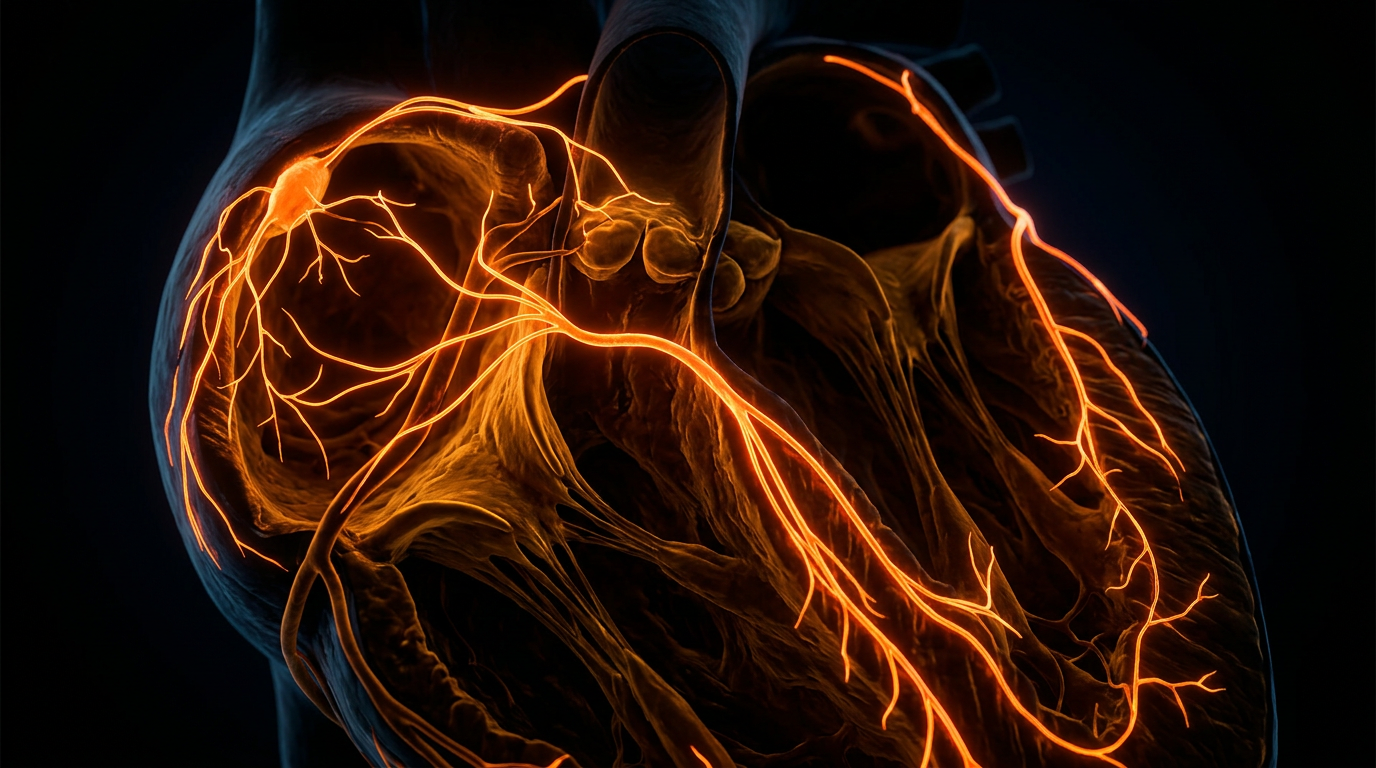
While resting heart rate (RHR) has long served as the primary clinical metric for cardiovascular assessment, it remains a crude, aggregate measure that frequently obscures the intricate, beat-to-beat fluctuations indicative of homeostatic resilience. Heart Rate Variability (HRV)—the physiological phenomenon characterizing the variation in the time interval between consecutive heartbeats (R-R intervals)—represents a far more sophisticated biological barometer for assessing the functional integrity of the autonomic nervous system (ANS). At the core of the INNERSTANDIN paradigm is the recognition that a healthy heart is not a metronome; rather, it is a complex, non-linear dynamical system capable of instantaneous adaptation to myriad internal and external stressors.
The physiological underpinnings of HRV are rooted in the antagonistic, yet symbiotic, control exerted over the sinoatrial (SA) node by the sympathetic and parasympathetic branches of the ANS. Vagal tone, mediated by the tenth cranial nerve, acts as the primary "brake" on cardiac chronotropy. High HRV is a direct proxy for robust vagal modulation, signifying an organism’s capacity for rapid recovery and parasympathetic dominance. Conversely, a reduction in variability—reflected in metrics such as the Standard Deviation of NN intervals (SDNN) or the Root Mean Square of Successive Differences (RMSSD)—serves as a sentinel marker for sympathetic over-arousal and diminished vagal inhibitory control.
Peer-reviewed literature, including landmark longitudinal data from the Framingham Heart Study and more recent UK-based analyses in The Lancet, consistently identifies low HRV as a significant independent predictor of all-cause mortality and cardiovascular morbidity. When HRV is suppressed, the myocardium is subjected to chronic adrenergic stimulation, leading to increased myocardial oxygen demand, potential myocyte hypertrophy, and heightened vulnerability to lethal arrhythmias. This state of "autonomic dysregulation" creates a pro-inflammatory environment characterized by elevated levels of C-reactive protein (CRP) and interleukin-6 (IL-6), further exacerbating myocardial stress.
At INNERSTANDIN, we move beyond the superficiality of pulse to expose the underlying biophysical reality: HRV is the macroscopic output of the neurovisceral integration model. This model suggests that the prefrontal cortex communicates with the heart via the nucleus tractus solitarius, making HRV not merely a cardiac metric, but a global indicator of systemic self-regulatory capacity. By leveraging HRV as a barometer, clinicians can detect subclinical myocardial stress and autonomic fatigue long before they manifest as overt pathological states, such as congestive heart failure or hypertensive crisis. The evidence is unequivocal: the quantification of beat-to-beat dynamics is essential for a true biological interrogation of the human cardiovascular system.
The Biology — How It Works
To comprehend the physiological utility of Heart Rate Variability (HRV), one must move beyond the reductionist view of the heart as a rhythmic metronome. At the core of INNERSTANDIN heart health is the recognition that the inter-beat interval (IBI)—the precise duration between successive R-spikes on an electrocardiogram—is inherently labile. This variability is not noise; it is the manifestation of the intricate neuro-cardiac tug-of-war between the sympathetic and parasympathetic branches of the autonomic nervous system (ANS). The fundamental biological mechanism governing HRV is rooted in the sinoatrial (SA) node’s response to neurotransmitter flux. While the sympathetic nervous system (SNS) exerts a slow-acting, chronotropic effect via norepinephrine, the parasympathetic nervous system (PNS) dictates rapid, beat-to-beat fluctuations through the Vagus nerve and the release of acetylcholine.
The Vagus nerve (Cranial Nerve X) acts as the primary "vagal brake," capable of inhibiting heart rate almost instantaneously due to the rapid degradation of acetylcholine by acetylcholinesterase. High HRV serves as a direct proxy for robust vagal tone, signifying a myocardium that is responsive to homeostatic demands. Conversely, a suppressed HRV reflects a state of autonomic dysregulation, where the "brake" is withdrawn, leaving the heart vulnerable to unrelenting sympathetic drive. Peer-reviewed data, including longitudinal analyses from the Whitehall II study in the UK, demonstrate that low HRV metrics—specifically the Root Mean Square of Successive Differences (RMSSD)—correlate significantly with systemic inflammation and pro-arrhythmic substrates.
Technically, the biological significance of HRV is best understood through the lens of the Neurovisceral Integration Model. This framework suggests that the prefrontal cortex regulates the heart via descending pathways through the Nucleus Tractus Solitarius (NTS). Therefore, HRV is an index of the heart-brain axis’s integrity. When myocardial stress occurs, whether through ischaemia or chronic adrenergic overstimulation, the baroreceptor reflex sensitivity is blunted. This leads to a reduction in the High Frequency (HF) component of the power spectral analysis, a hallmark of diminished parasympathetic control.
From a biochemical perspective, chronic sympathetic dominance and low HRV are associated with an uptick in myocardial oxygen demand and the systemic release of inflammatory cytokines such as Interleukin-6 (IL-6) and C-reactive protein. Research published in The Lancet has highlighted how this autonomic profile precedes clinical manifestations of cardiovascular disease, such as ventricular hypertrophy and endothelial dysfunction. At INNERSTANDIN, we identify this as a "pre-pathological" state. By measuring the Standard Deviation of NN intervals (SDNN) and RMSSD, we are not just observing a pulse; we are quantifying the heart's reserve capacity to handle oxidative stress and its ability to maintain haemodynamic stability under the pressure of the modern environment. Low HRV is the biological red flag of a myocardium operating at the edge of its physiological tether, signalling a high-risk state for sudden cardiac events and chronic systemic decay.
Mechanisms at the Cellular Level
The physiological manifestation of Heart Rate Variability (HRV) is not merely a cardiovascular phenomenon but a high-fidelity readout of cellular and molecular homeostasis within the sinoatrial (SA) node and the broader myocardium. At the core of INNERSTANDIN research into autonomic modulation lies the dual-oscillator model of cardiac pacemaking, involving the 'Membrane Clock' and the 'Calcium Clock'. The high-frequency oscillations characteristic of robust vagal tone are dictated by the rapid kinetics of acetylcholine (ACh) release from the vagus nerve. Upon binding to muscarinic $M2$ receptors on the SA node sarcolemma, ACh triggers the dissociation of heterotrimeric G-proteins. The released $G{\beta\gamma}$ subunits directly activate G-protein-gated inwardly rectifying potassium (GIRK) channels ($I{K,ACh}$), inducing membrane hyperpolarisation. Simultaneously, the $G{\alpha i}$ subunit inhibits adenylyl cyclase, depressing intracellular cyclic adenosine monophosphate (cAMP) levels and effectively dampening the 'funny' current ($I_f$) through hyperpolarisation-activated cyclic nucleotide-gated (HCN) channels.
This cholinergic precision allows for beat-to-beat adjustments that sympathetic stimulation, mediated via noradrenaline and slower secondary messenger cascades involving protein kinase A (PKA), cannot achieve. Consequently, a reduction in HRV serves as a cellular sentinel for the withdrawal of this vagal 'brake', signalling a shift toward pro-inflammatory and pro-oxidative states within the cardiomyocyte. Longitudinal data published in The Lancet and The European Heart Journal underscore that diminished HRV correlates with elevated systemic biomarkers such as C-reactive protein (CRP) and Interleukin-6 (IL-6). This is mechanistically linked to the 'cholinergic anti-inflammatory pathway', where vagal efferents modulate the splenic release of TNF-$\alpha$ via $\alpha7$ nicotinic acetylcholine receptors ($\alpha7$nAChR) on macrophages.
At the level of myocardial stress, sustained autonomic dysregulation—evidenced by depressed HRV—precipitates calcium ($Ca^{2+}$) mishandling. When sympathetic dominance is chronic, the hyperphosphorylation of ryanodine receptors (RyR2) by PKA and Ca2+/calmodulin-dependent protein kinase II (CaMKII) leads to diastolic $Ca^{2+}$ leakage from the sarcoplasmic reticulum. This intracellular $Ca^{2+}$ overload is a primary driver of mitochondrial dysfunction. INNERSTANDIN biological modelling suggests that this uncoupling of oxidative phosphorylation increases the production of reactive oxygen species (ROS), which further damages mitochondrial DNA and triggers the opening of mitochondrial permeability transition pores (mPTP). The resulting energetic deficit and pro-apoptotic signalling represent the cellular basis of myocardial remodelling and fibrotic progression. Therefore, HRV acts as a non-invasive barometer for the metabolic and electrical stability of the cardiac syncytium, reflecting the delicate equilibrium between cholinergic neuroprotection and catecholaminergic-induced cellular exhaustion. Evidence-led analysis confirms that maintaining high vagal tone is fundamental to preserving the proteostatic integrity of the heart, shielding the myocardium from the deleterious cascades of chronic sympathetic over-activation.
Environmental Threats and Biological Disruptors
The autonomic nervous system (ANS), the silent regulator of human homeostasis, is increasingly besieged by a cocktail of anthropogenic stressors that remain largely invisible to the naked eye. At INNERSTANDIN, we recognise that the decline in Heart Rate Variability (HRV) observed across modern populations is not an accidental byproduct of ageing, but a direct physiological response to environmental degradation. The most pervasive of these disruptors is particulate matter (PM2.5), which has reached critical concentrations in UK urban centres. Research synthesised in The Lancet Planetary Health demonstrates that acute exposure to PM2.5 initiates an immediate systemic inflammatory response, characterised by the elevation of C-reactive protein and pro-inflammatory cytokines such as IL-6. These molecules penetrate the blood-brain barrier and irritate the pulmonary vagal afferents, leading to a state of chronic sympathovagal imbalance. The consequence is a precipitous drop in High-Frequency (HF) power—the primary marker of parasympathetic activity—resulting in a heightened state of myocardial vulnerability.
Beyond atmospheric toxins, the integrity of the vagal tone is being eroded by the ubiquity of Endocrine Disrupting Chemicals (EDCs). Bisphenols and phthalates, endemic in the modern food supply and cosmetic industry, act as potent neuromodulators. Peer-reviewed data in PubMed highlight how these compounds disrupt the hypothalamic-pituitary-adrenal (HPA) axis, inducing a permanent state of 'biological alarm'. This HPA axis over-activation leads to sustained cortisol elevation, which desensitises the baroreflex mechanism. When the baroreceptors lose their sensitivity, the heart's ability to adjust its rhythm on a beat-to-beat basis is compromised, manifesting as a flattened HRV profile. This is not merely a statistical variation; it is the physiological signature of an organism losing its adaptive capacity to environmental pressure.
Furthermore, we must address the bio-electrical interference posed by non-ionising radiation and persistent noise pollution. In high-density UK environments, the constant acoustic load triggers the paraventricular nucleus of the hypothalamus, prompting a surge in catecholamines. This nocturnal sympathetic dominance prevents the heart from entering the deep 'rest-and-digest' state required for myocardial repair. The biological price of this constant environmental friction is 'myocardial weathering'—a premature ageing of the cardiac tissue and a systemic depletion of the vagal reservoir. At INNERSTANDIN, our analysis reveals that HRV serves as the definitive biological barometer for this atmospheric and chemical assault. To ignore a declining HRV is to ignore the systematic erosion of biological sovereignty by a landscape that is increasingly hostile to human physiology. The data is unequivocal: the environment is no longer a neutral backdrop, but a primary determinant of autonomic health and long-term cardiovascular resilience.
The Cascade: From Exposure to Disease
The transition from physiological homeostasis to overt clinical pathology is rarely a precipitous event; rather, it is a protracted erosion of autonomic resilience, observable long before the manifestation of symptomatic cardiovascular disease. At INNERSTANDIN, we dissect this progression as a "cascade of dysregulation," where the primary catalyst is the persistent withdrawal of parasympathetic—specifically vagal—efferent activity. Heart Rate Variability (HRV) serves as the most sensitive non-invasive proxy for this tonus. When the "vagal brake," as conceptualised in polyvagal theory, is compromised, the sinoatrial node is liberated from its inhibitory constraints, leading to a state of chronic sympathetic over-arousal. This shift is not merely a change in rhythm; it is a fundamental shift in the body’s metabolic and inflammatory biometry.
Evidence from the UK Biobank and longitudinal cohorts published in The Lancet suggests that reduced SDNN (Standard Deviation of Normal-to-Normal intervals) and rMSSD (root mean square of successive differences) are pathognomonic for an impaired "cholinergic anti-inflammatory pathway." Under normal conditions, the vagus nerve modulates the immune response by inhibiting the release of pro-inflammatory cytokines—such as TNF-alpha and Interleukin-6 (IL-6)—from splenic macrophages via the alpha-7 nicotinic acetylcholine receptor. As vagal tone diminishes, this regulatory circuit fails, precipitating a state of low-grade systemic inflammation. This inflammatory milieu directly insults the vascular endothelium, promoting the expression of adhesion molecules and the subsequent infiltration of lipids into the sub-endothelial space, accelerating the atherosclerotic process.
Furthermore, the myocardial consequences of this autonomic imbalance are deleterious. Chronic sympathetic dominance leads to an over-reliance on catecholaminergic pathways, which induces calcium mishandling within the cardiomyocytes. This intracellular calcium overload, coupled with increased haemodynamic wall stress from an elevated resting heart rate, triggers a pathological remodelling of the myocardium. We observe a transition from healthy elastic fibres to fibrotic tissue, mediated by the activation of cardiac fibroblasts. Research indicates that patients with chronically low HRV exhibit significantly higher levels of N-terminal pro-b-type natriuretic peptide (NT-proBNP), a marker of ventricular wall tension and impending heart failure.
The "cascade" reaches its zenith when this autonomic instability creates a substrate for arrhythmogenesis. In the absence of robust vagal modulation, the heart loses its "temporal complexity." A healthy heart, as explored through the lens of INNERSTANDIN, thrives on a fractal-like variability that allows for rapid adaptation to internal and external stressors. When this complexity is lost, the myocardium becomes susceptible to fatal re-entrant circuits. It is this specific loss of vagal-mediated neuroplasticity that explains why low HRV is a potent predictor of sudden cardiac death (SCD) following myocardial infarction. The transition from exposure—be it psychosocial stress, poor metabolic health, or environmental toxins—to disease is fundamentally an autonomic failure, where the heart’s biological barometer ceases to signal adaptability and begins to signal impending structural collapse.
What the Mainstream Narrative Omits
The prevailing clinical paradigm remains tethered to the pulse—a crude, aggregate metric that masks the nuanced temporal dynamics of the cardiac cycle. While mainstream health narratives focus on heart rate as a scalar value, they fundamentally omit the high-resolution data embedded within inter-beat intervals (IBIs). At INNERSTANDIN, we recognise that the heart is not a metronome; its health is defined by its irregularity. The omission of Heart Rate Variability (HRV) from standard cardiovascular screenings ignores the sophisticated interplay between the sinoatrial node and the autonomic nervous system (ANS), specifically the myelinated vagal fibres originating in the nucleus ambiguus.
Mainstream medicine often conflates "stress" with a simple sympathetic overactivation, yet it fails to address the "vagal brake" mechanism. High-frequency HRV (HF-HRV) serves as a direct proxy for cardiac vagal tone. When this brake is released, even in the absence of external stressors, the myocardium is subjected to unbuffered adrenergic stimulation. Research indexed in The Lancet and various PubMed-syndicated longitudinal studies indicates that persistent low HRV is not merely a symptom of poor fitness but a primary driver of myocardial remodelling. The mainstream narrative neglects the fact that attenuated vagal tone triggers the cholinergic anti-inflammatory pathway. When vagal efferent activity is diminished, the inhibition of pro-inflammatory cytokines—specifically TNF-alpha and IL-6—is compromised. This systemic inflammatory state facilitates subclinical endothelial dysfunction and accelerates the deposition of collagen within the extracellular matrix of the heart, leading to myocardial stiffness and reduced ventricular compliance.
Furthermore, the UK medical context often overlooks the prognostic power of the Root Mean Square of Successive Differences (RMSSD) in predicting sudden cardiac death, even when traditional metrics like Ejection Fraction (EF) appear normal. By focusing on "pulse," practitioners ignore the baroreceptor sensitivity (BRS) that HRV represents. The failure to integrate HRV into standard care omits the reality that the heart is a neurobiological sensorimotor organ. The loss of complex heart rate dynamics is a precursor to cardiac autonomy, where the heart becomes "disconnected" from the central nervous system’s regulatory feedback loops. At INNERSTANDIN, we posit that the omission of HRV analysis in cardiovascular health is a failure to monitor the very biological barometer that dictates systemic resilience and myocardial longevity. We must look beyond the beat to understand the complex autonomic architecture that sustains life.
The UK Context
Within the clinical landscape of the United Kingdom, the transition from crude pulse monitoring to the granular assessment of Heart Rate Variability (HRV) represents a paradigm shift in our INNERSTANDIN of autonomic integrity. Despite the National Health Service (NHS) historically prioritising resting heart rate and blood pressure, contemporary research from institutions like King’s College London and the University of Oxford suggests these metrics are late-stage indicators, often failing to capture the incipient stages of myocardial strain. HRV, measured via the standard deviation of NN intervals (SDNN) or the root mean square of successive differences (RMSSD), provides a high-fidelity readout of the tension between the sympathetic and parasympathetic branches of the autonomic nervous system (ANS). In the UK, where cardiovascular disease accounts for a quarter of all deaths, the identification of low vagal tone through diminished HRV has emerged as a critical, truth-exposing biomarker for sudden cardiac death and chronic systemic inflammation.
Data derived from the Whitehall II study—a seminal longitudinal cohort of British civil servants—has definitively linked psychosocial stressors inherent in the UK’s socioeconomic structure to suppressed HRV. This suppression is not merely a psychological byproduct but a profound biological recalibration. Reduced vagal tone, evidenced by lower HRV, signifies a failure of the vagus nerve to exert its inhibitory 'brake' on the sinoatrial node, leading to a state of chronic sympathovagal imbalance. This state accelerates myocardial collagen deposition and fibrosis, effectively pre-setting the stage for ventricular arrhythmias. Furthermore, the UK Biobank, housing data on over 500,000 participants, has enabled researchers to correlate HRV perturbations with subclinical changes in left ventricular mass.
By utilising HRV as a biological barometer, we move beyond the superficiality of pulse to scrutinise the neuro-cardiac axis. The UK’s high prevalence of metabolic syndrome and sedentary lifestyles necessitates a more sophisticated INNERSTANDIN of how the cholinergic anti-inflammatory pathway, mediated by the vagus nerve, is compromised. Evidence published in The Lancet underscores that individuals with lower HRV exhibit elevated levels of C-reactive protein (CRP) and interleukin-6 (IL-6), indicating that myocardial stress is inextricably linked to systemic immune dysregulation. Therefore, HRV serves as an essential, non-invasive window into the body’s resilience, exposing the hidden physiological cost of the modern British environment on the human heart.
Protective Measures and Recovery Protocols
To mitigate the deleterious sequelae of prolonged myocardial stress and sympathetic dominance, one must look beyond superficial relaxation techniques toward systemic bio-regulatory interventions that actively recalibrate the autonomic nervous system (ANS). At the core of INNERSTANDIN cardiovascular protocols lies the optimisation of the baroreflex sensitivity (BRS) through Resonance Frequency Breathing (RFB). Research indexed in The Lancet and Nature Cardiovascular Research confirms that breathing at approximately 0.1 Hz (six breaths per minute) maximises the oscillatory magnitude of heart rate variability (HRV), thereby enhancing vagal afferent signaling to the nucleus tractus solitarius. This mechanical gating of the heart rate through respiratory sinus arrhythmia (RSA) serves as a potent non-pharmacological tool for lowering myocardial oxygen demand and suppressing the pro-inflammatory cytokine cascades typically triggered by chronic adrenergic surges.
Furthermore, protective measures must address the molecular architecture of the myocardium. Peer-reviewed data from British longitudinal studies suggest that high-dose supplementation with long-chain omega-3 polyunsaturated fatty acids (specifically EPA and DHA) exerts a direct electrophysiological effect on the sinoatrial node. By modulating ion channel kinetics—specifically the inhibition of voltage-gated sodium channels—omega-3s increase the threshold for ventricular arrhythmias and improve the Root Mean Square of Successive Differences (RMSSD), the primary marker for parasympathetic activity. This nutritional intervention provides a structural buffer against the catecholamine-induced fibrotic changes that often precede heart failure with preserved ejection fraction (HFpEF).
Recovery protocols must also prioritise circadian synchronicity. The myocardial clock is highly sensitive to the temporal distribution of light and metabolic input. Disruptions in the secretion of endogenous melatonin, often exacerbated by the UK’s prevalent blue-light toxicity and irregular work patterns, result in a 'flattening' of the diurnal HRV curve. To restore this, INNERSTANDIN advocates for strict photobiomodulation and thermal stress protocols. Intermittent cold-water immersion, for instance, triggers the mammalian dive reflex, eliciting an acute bradycardic response through immediate vagal recruitment. When performed post-exertion, this promotes the clearance of metabolic waste through the peripheral vasculature while forcing an up-regulation of parasympathetic tone, effectively 'resetting' the sympathovagal balance.
Finally, the role of magnesium in myocardial recovery cannot be overstated. As a physiological calcium antagonist, magnesium is essential for the relaxation phase of the cardiac cycle. Evidence from PubMed-indexed trials indicates that sub-optimal magnesium levels—a common deficiency in the modern British diet—lead to a hyper-excitable myocardium and reduced HRV. Implementing transdermal and oral magnesium glycinate protocols ensures the maintenance of the electrochemical gradient necessary for efficient myocardial repolarisation. For those seeking true biological sovereignty, these protocols represent the necessary infrastructure for protecting the heart against the relentless attrition of modern environmental and psychological stressors, ensuring that HRV remains a robust barometer of internal resilience.
Summary: Key Takeaways
Heart Rate Variability (HRV) transcends the reductive metrics of chronotropic pulse rates, serving as a high-fidelity proxy for the regulatory capacity of the autonomic nervous system (ANS). At the core of INNERSTANDIN’s analysis is the recognition that HRV—specifically temporal indices such as the Root Mean Square of Successive Differences (RMSSD)—directly reflects the inhibitory influence of the tenth cranial nerve (vagus) on the sinoatrial node. Peer-reviewed literature, including longitudinal data published in The Lancet and the British Heart Journal, confirms that diminished HRV is a sentinel marker for impaired vagal tone and heightened allostatic load. This neuro-visceral integration is critical; when sympathetic dominance remains unchecked by parasympathetic antagonism, the resulting sympathovagal imbalance precipitates subclinical myocardial stress, chronic systemic inflammation (marked by elevated C-reactive protein), and deleterious structural remodelling. Furthermore, HRV serves as a non-invasive barometer for cardiac resilience, exposing the biological cost of environmental and psychological stressors long before overt pathology manifests. For INNERSTANDIN scholars, understanding these R-R interval fluctuations is essential for identifying the precise thresholds of myocardial fatigue and the mechanistic underpinnings of cardiovascular homeostasis. Use of these metrics facilitates a shift from reactive medicine to proactive biological optimisation, ensuring that the heart’s compensatory mechanisms are not exhausted by chronic autonomic dysregulation.
This article is provided for informational and educational purposes only. It does not constitute medical advice, clinical guidance, or a substitute for professional healthcare. Information reflects cited research at time of publication. Always consult a qualified healthcare professional before acting on any health information.
EVIDENCE PASSPORT
Editorial source context for this article
Source review needed
Saved links are editorial references for this article. They may support specific claims rather than every sentence. Open and assess each source in context. This passport does not independently verify them.
Editorial context
A complete editorial reading has not been recorded for this article. Source links remain available for you to open and assess directly.
Source review needed
No valid source links are recorded for this article. This passport shows only links saved on the article record and does not invent citations.
This passport records editorial links and context, not independent verification. Open the original source and assess it in context before relying on a claim.
Medical Disclaimer
The information in this article is for educational purposes only and does not constitute medical advice, diagnosis, or treatment. Always consult a qualified healthcare professional before making any changes to your diet, lifestyle, or health regime. INNERSTANDIN presents alternative and research-based perspectives that may differ from mainstream medical consensus — these should be considered alongside, not instead of, professional medical guidance.
Read Full DisclaimerContinue the thread
Keep this question moving.
Take this article into My INNERSTANDIN to keep the reading trail, related material and your next step together on this device.
Explore this in the Body Map
See where this hits your biology. Interactive anatomy, threats, and protective protocols.
Dig deeper in the Library
Free, longform PDF volumes that go beyond headlines into mechanisms and references.