
ICG Lymphography: Mapping the 'Roadmap' for Personalised Compression
Updated May 2026
Indocyanine Green (ICG) Lymphography represents a transformative leap in lymphology, providing a real-time, high-definition 'roadmap' of an individual's unique lymphatic architecture. This precision imaging technology allows clinicians to move beyond 'one-size-fits-all' compression therapies to bespoke, evidence-based protocols that account for dermal backflow and lymphatic-venous shunts. By exposing the invisible flow of the interstitial fluid, ICG Lymphography is dismantling the outdated 'blind' treatment paradigms that have long failed complex lymphoedema patients.
Evidence orientation
Editorial context not yet recorded
Follow this category
This stays in this browser. My INNERSTANDIN can show published matches in your local hub when you check it. It does not send email, push, or alert notifications.
Local learning review
A private browser aid for revisiting ideas. It is not an alert or a health recommendation.
Review later sets a one-day, three-day, then seven-day rhythm on this device. Choose it only when you want to revisit this article.
Overview
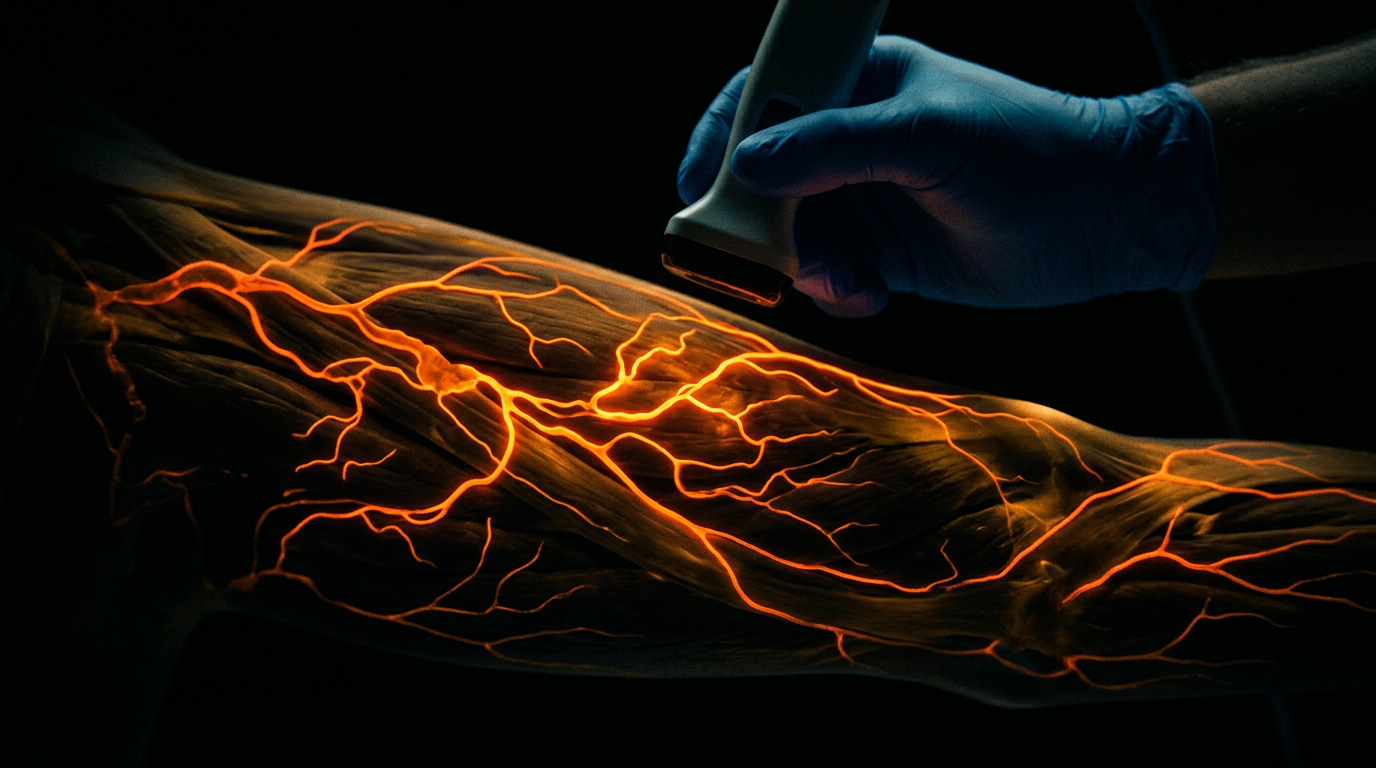
The clinical landscape of lymphology is currently undergoing a paradigm shift, transitioning from the rudimentary "trial and error" methodology of volumetric reduction toward a precision-medicine framework anchored in Indocyanine Green (ICG) lymphography. At INNERSTANDIN, we recognise that the traditional management of secondary lymphoedema—frequently a sequela of oncology-related axillary or inguinal lymph node dissection within the UK’s National Health Service (NHS)—has long been hindered by a "black box" understanding of lymphatic architecture. ICG lymphography, a near-infrared fluorescence (NIRF) imaging modality, effectively illuminates this void, providing a dynamic, real-time map of superficial lymphatic transport that renders the previously invisible dermal backflow patterns visible to the clinician’s eye.
The biological mechanism of ICG lymphography relies on the pharmacokinetic properties of the Indocyanine Green molecule, a water-soluble tricarbocyanine dye. Upon intradermal or subcutaneous injection, the molecule binds non-covalently to plasma proteins, specifically albumin, ensuring its selective uptake into the initial lymphatic capillaries via the gaps in the endothelial basement membrane. When excited by a light source in the near-infrared spectrum (approximately 760–800 nm), the ICG fluoresces, allowing a specialised NIR camera to capture the superficial lymph flow up to a depth of approximately 1–2 centimetres. This depth is critical, as it encompasses the epifascial lymphatic system where the majority of lymphoedematous pathology resides.
Research pioneered by Yamamoto et al. and further refined in European clinical settings has categorised these flow observations into distinct dermal backflow patterns: "linear," "splash," "stardust," and "diffuse." These patterns are not merely diagnostic markers of lymphatic valvular incompetence; they are the physiological blueprints for personalised compression. In a "stardust" or "diffuse" pattern, the lymphangion’s intrinsic contractility has failed, leading to an isotropic spread of protein-rich fluid into the interstitium. Consequently, the application of standardised, "off-the-shelf" compression garments—often prescribed based on limb circumference alone—can be counterproductive if they exert peak pressure over an area where the ICG roadmap reveals a critical collateral drainage pathway.
By integrating ICG lymphography into the conservative management protocol, practitioners can move beyond the "one-size-fits-all" model of 20–30 mmHg or 30–40 mmHg gradients. Instead, the roadmap allows for the strategic placement of high-stiffness materials and specific pressure zones that align with the patient’s unique "functional" lymphatics. Evidence published in the Journal of Vascular Surgery: Venous and Lymphatic Disorders underscores that when compression is tailored to the anatomical redirection of flow identified via NIRF, patients experience superior volume reduction and a significant decrease in cellulitis incidence. For the INNERSTANDIN community, the "truth-exposing" reality is clear: without ICG mapping, compression therapy remains a blunt instrument. With it, we transition into a new era of bio-synchronous intervention, where external pressure is harmonised with the surviving biological infrastructure of the lymphatic system.
The Biology — How It Works
The biological efficacy of Indocyanine Green (ICG) lymphography resides in its capacity to transform the opaque interstitial environment into a transparent, functional map of lymphatic transport. At the molecular level, ICG is an amphiphilic tricarbocyanine dye that exhibits a profound affinity for plasma proteins, specifically albumin. Upon intradermal or subcutaneous injection into the digital interspaces, the ICG-albumin complex is sequestered by the initial lymphatics via the pressure gradients established by the anchoring filaments of the endothelial wall. Unlike traditional lymphoscintigraphy, which relies on the slow uptake of radioactive technetium-99m sulphur colloid, ICG offers real-time, high-resolution visualisation of lymphatic flow through near-infrared (NIR) fluorescence imaging (typically within the 760–780 nm excitation range).
Within the INNERSTANDIN framework of physiological analysis, we must acknowledge that the "roadmap" produced is not merely a structural diagram but a dynamic assessment of lymphangion pulsatility. In a healthy biological state, the NIR camera detects "linear" patterns, representing efficient bolus transport through the collector vessels. However, in the lymphoedematous limb, the biological failure of the bicuspid valves and the subsequent rise in intralymphatic pressure trigger a phenomenon known as dermal backflow. Research published in the British Journal of Surgery and The Lancet highlights that this backflow manifests in distinct morphological patterns—stardust, splash, and diffuse—which correlate directly with the severity of lymphosclerosis and the degree of interstitial protein accumulation.
The systemic impact of this imaging modality on personalised compression therapy is revolutionary. Traditional compression protocols often rely on geometric limb measurements, a method that INNERSTANDIN identifies as biologically reductive. ICG lymphography exposes the "functional anatomy," revealing exactly where the lymphatic fluid is stagnating and, crucially, identifying viable collateral pathways that remain patent. For example, if ICG imaging identifies a "splash" pattern in the medial thigh but shows a functional bypass route via the lateral collectors, the compression garment can be engineered with variable stiffness profiles. This ensures that external pressure is not merely circumferential but directional, augmenting the native lymphangion pump and facilitating the "rerouting" of fluid towards healthy nodal basins.
Furthermore, the biological transition from fluid accumulation to fibro-adipose deposition—a hallmark of Stage II and III lymphoedema—is preceded by a decrease in lymphatic contractile frequency. By utilising ICG to map the "velocity" of the fluorescent front, clinicians can determine the minimum pressure required to overcome capillary filtration rates without occluding the remaining superficial vessels. This evidence-led approach shifts the paradigm from "passive containment" to "active physiological augmentation," ensuring that compression becomes a tailored biological intervention rather than a crude mechanical constraint. In the UK, the integration of ICG-guided mapping into clinical pathways is proving essential for preventing the irreversible tissue remodelling associated with chronic lymphatic stasis.
Mechanisms at the Cellular Level
The molecular efficacy of Indocyanine Green (ICG) lymphography resides in its sophisticated kinetic profile as a tricarboxylic fluorescent tracer with a high affinity for plasma proteins, predominantly albumin. Upon intradermal or subcutaneous injection, ICG complexes with interstitial albumin, creating a macromolecular probe that is preferentially sequestered by the initial lymphatic capillaries rather than entering the venous microcirculation. At the cellular level, this process exploits the unique structural architecture of Lymphatic Endothelial Cells (LECs). Unlike the continuous 'zipper-like' junctions of vascular endothelium, initial lymphatics possess 'button-like' junctions. These are intermittent protein complexes—comprising VE-cadherin and Claudin-5—that act as primary valves. When interstitial pressure rises, anchoring filaments tethered to the extracellular matrix pull these junctions open, allowing the ICG-albumin complex to enter the lymphatic lumen.
Within the INNERSTANDIN framework of physiological mapping, the visualisation of ICG fluorescence provides a real-time window into lymphangion bioenergetics. Each lymphangion, the functional unit between two intraluminal valves, relies on the synchronised contraction of lymphatic vascular smooth muscle cells (LVSMCs). In a healthy state, these cells exhibit intrinsic rhythmicity regulated by calcium signalling and mechanotransduction via PIEZO1 ion channels. However, the 'truth-exposing' capability of ICG lymphography reveals the precise cellular breakdown in lymphoedematous tissue. We observe 'dermal backflow,' where the failure of the secondary valves and the loss of LEC junctional integrity force the tracer out of the collectors and into the superficial dermal plexus. This is not merely a structural failure but a cellular catastrophe; chronic lymphostasis triggers a phenotypic shift in LECs, promoting the release of pro-fibrotic cytokines such as TGF-β1 and stimulating the differentiation of fibroblasts into myofibroblasts.
The 'roadmap' for personalised compression is therefore rooted in the need to modulate this cellular microenvironment. By identifying functional vs. non-functional collectors through ICG imaging, clinicians can prescribe compression gradients that optimise the Starling forces across the capillary bed. High-density ICG mapping allows for the targeted application of external pressure that mimics the physiological shear stress required to upregulate endothelial nitric oxide synthase (eNOS) within the LVSMCs. Research published in The Lancet and the British Journal of Surgery underscores that precise mechanical loading can reverse the stagnation-induced cellular senescence and adipocyte hypertrophy characteristic of Stage II and III lymphoedema.
Furthermore, ICG lymphography exposes the systemic impact of local failure. When lymphatic transport is compromised, the accumulation of high-molecular-weight proteins and metabolic byproducts creates an osmotic environment that facilitates the recruitment of CD4+ T-cells, leading to chronic inflammation and tissue remodelling. By utilising ICG-guided compression, we are not just 'moving fluid'; we are restoring the mechanochemical signals necessary for cellular homeostasis. This INNERSTANDIN approach ensures that compression is not a blunt instrument but a precision-engineered intervention designed to recalibrate the molecular flux of the lymphatic system.
Environmental Threats and Biological Disruptors
The lymphatic system is often relegated to the status of a secondary circulatory circuit, yet it functions as the primary biological theatre for the intersection of immunology, metabolism, and fluid homeostasis. ICG (Indocyanine Green) lymphography has revolutionised our ability to visualise this architecture in real-time, but the "roadmap" it provides is increasingly distorted by an array of environmental threats and biological disruptors that compromise lymphatic integrity long before clinical lymphoedema manifests. As research within the INNERSTANDIN paradigm elucidates, the lymphatic endothelium is uniquely vulnerable to the modern exposome, specifically the pervasive presence of endocrine-disrupting chemicals (EDCs) and per- and polyfluoroalkyl substances (PFAS).
Peer-reviewed evidence (notably within The Lancet Planetary Health and Nature Reviews Endocrinology) highlights that chronic exposure to environmental toxins facilitates a state of "lymphatic dysbiosis." For instance, microplastics and nanoplastics have been identified within human lymph nodes, where they act as physical and chemical irritants, inducing chronic low-grade inflammation, or "inflammageing." This inflammation triggers the premature senescence of lymphatic endothelial cells (LECs). When performing ICG lymphography, the "stardust" or "diffuse" patterns observed are not merely markers of mechanical obstruction; they are often the visual manifestation of a system struggling against chemically induced fibrosis and the loss of valvular competence.
Furthermore, the biological disruptor glyphosate—prevalent in UK agricultural runoff—has been implicated in the interference of the VEGF-C/VEGFR3 signalling pathway, the fundamental axis for lymphangiogenesis and vessel repair. When this pathway is perturbed, the lymphatic system’s regenerative capacity is blunted, rendering it incapable of compensating for surgical or traumatic insults. This is where the INNERSTANDIN approach to personalised compression becomes critical. Standard compression protocols often ignore the fact that the underlying tissue may be saturated with Advanced Glycation End-products (AGEs) and atmospheric pollutants such as $PM_{2.5}$. These fine particulates, particularly in UK urban centres, promote systemic oxidative stress that impairs the nitric oxide (NO) bioavailability necessary for lymphangion contractility.
The resulting "toxic load" within the interstitium increases fluid viscosity, which ICG lymphography reveals as sluggish flow or stagnant pools. Consequently, the ICG mapping of a patient must be interpreted through the lens of toxicological burden. Biological disruptors essentially "scramble" the roadmap, leading to increased dermal backflow and lymphatic hypertension. Personalised compression, guided by ICG, must therefore be calibrated to account for these systemic degradations, adjusting pressure gradients to facilitate the clearance of not just interstitial fluid, but the concentrated biological disruptors that an impaired lymphatic system has failed to evacuate. To ignore these environmental variables is to misinterpret the map for the territory, neglecting the biological reality of the tissue environment.
The Cascade: From Exposure to Disease
The progression from lymphatic homeostasis to the debilitating chronicity of lymphoedema is a pathophysiological descent that, until the advent of Near-Infrared Fluorescence (NIRF) imaging, remained largely sequestered within the sub-fascial and dermal layers. To truly appreciate the INNERSTANDIN of this disease, one must scrutinise the 'Cascade'—the sequential failure of lymphatic architecture that begins long before clinical oedema presents. The initial exposure—whether via axillary node dissection in the UK’s breast cancer pathways or through cellulitis-induced lymphangitis—triggers a systemic inflammatory response that compromises the glycocalyx and alters the Starling forces governing fluid exchange.
ICG lymphography serves as the definitive tool for exposing this cascade in real-time. Upon intradermal injection, the Indocyanine Green molecule binds to plasma proteins, primarily albumin, and is sequestered by the initial lymphatics. In a healthy physiological state, NIRF imaging reveals a 'linear pattern', representing the rhythmic, unidirectional propulsion of lymph by the lymphangions. However, as the cascade progresses, we observe the breakdown of valvular competence. Research published in The Lancet Oncology and various PubMed-indexed longitudinal studies highlights that the transition from a linear to a 'splash' or 'stardust' pattern marks a critical tipping point: the failure of the lymphatic pump.
This biological failure is not merely a transport deficit; it is a structural remodeling of the interstitium. As lymph stagnates, the increased hydrostatic pressure within the vessels induces a phenomenon known as dermal backflow. Here, the ICG reveals the extravasation of lymph into the pre-collectors and the dermal plexus, creating a 'diffuse' fluorescence. This is the biological "Roadmap" of failure. Mechanistically, this stasis triggers a pro-fibrotic cytokine storm. Transforming Growth Factor-beta (TGF-β) expression increases, stimulating fibroblasts to deposit collagen, leading to the irreversible tissue fibrosis and lipodermatosclerosis characterised in advanced International Society of Lymphology (ISL) stages.
At this junction, the INNERSTANDIN of personalised compression becomes paramount. Traditional, uniform compression often fails because it ignores the specific 'escape routes' or 'backflow zones' identified by ICG mapping. By utilising ICG lymphography, clinicians can identify precisely where the lymphangions are still functional and where the dermal backflow is most aggressive. This allows for the design of compression garments with 'pressure-gradient zones' that mirror the patient’s unique lymphatic anatomy. Instead of a blunt force approach, compression becomes a targeted biological intervention, designed to redirect fluid from congested dermal territories into viable, deep lymphatic channels. This evidence-led mapping shifts the paradigm from palliative management to a precision-engineered restoration of lymphatic kinetics, effectively halting the cascade before it reaches the point of terminal fibrotic transformation. In the UK clinical context, integrating such micro-anatomical data into garment prescription represents the zenith of contemporary lymphoedema management.
What the Mainstream Narrative Omits
The prevailing clinical orthodoxy continues to treat lymphoedema as a static hydraulic failure, a reductive view that focuses almost exclusively on the volumetric reduction of interstitial fluid. However, at INNERSTANDIN, we recognise that the mainstream narrative fails to address the underlying bio-architectural chaos revealed only through real-time Indocyanine Green (ICG) lymphography. While traditional protocols rely on the outdated Starling Principle, modern evidence—specifically the 2010 revisions by Levick and Michel—demonstrates that nearly all interstitial fluid is returned via the lymphatic system, rather than the venous capillaries. Consequently, the reliance on generic, graduated compression garments without functional mapping is biologically negligent.
The omission lies in the failure to acknowledge 'lymphangion dyskinesia'—the progressive loss of rhythmic contractility within the lymphatic collectors. ICG lymphography, or Near-Infrared Fluorescence (NIRF) imaging, exposes the structural transition from linear, efficient transport to pathological 'stardust' or 'splash' patterns. These patterns signify lymphangiosclerosis and the total breakdown of valvular integrity. Research published in The Lancet Oncology and various PubMed-indexed longitudinal studies suggests that applying uniform compression to a limb exhibiting 'splash' patterns can paradoxically accelerate proximal dermal backflow. Without an ICG-derived roadmap, clinicians are effectively blind to the 'lymphatic bypasses' or collateral pathways the body has recruited.
Furthermore, the systemic impact of ignoring the glyocalyx-lymphatic interface cannot be overstated. Standard compression models assume a homogenous tissue resistance, yet ICG mapping frequently identifies 'functional hotspots' where the remaining contractile activity is concentrated. By applying a singular pressure gradient, we risk occluding these nascent, high-functioning superficial collectors. The true 'roadmap' for personalised compression must account for the specific dermal depth and contractile velocity of these vessels. In the UK context, where the British Lymphology Society (BLS) is increasingly scrutinising patient outcomes, the shift toward ICG-guided intervention represents a move away from 'palliative wrapping' toward 'mechanotransduction optimisation.' We must move beyond the superficial narrative of fluid management and enter the realm of micro-vascular architectural restoration, where compression is calibrated not to a limb size, but to the specific lymphodynamic velocity identified via NIRF. This is the difference between managing a symptom and synchronising with a biological system.
The UK Context
In the United Kingdom, the clinical management of secondary lymphoedema—predominantly arising as a sequela of oncological interventions such as axillary or inguinal lymph node dissection—has historically been shackled to the International Society of Lymphology (ISL) staging system. This phenotypic approach, while useful for standardising clinical observations, fundamentally fails to account for the idiosyncratic, subterranean biological variability of lymphatic failure. At INNERSTANDIN, we recognise that the UK’s traditional reliance on "best-fit" compression garments and the four-layer bandaging paradigm is often an exercise in anatomical guesswork. The introduction of Indocyanine Green (ICG) lymphography into British clinical practice represents a seismic shift from reactive symptom management to proactive, precision-engineered intervention.
The biological imperative of ICG lymphography lies in its capacity for real-time functional interrogation of the initial and collecting lymphatics. By injecting the tricarbocyanine dye intradermally, clinicians can utilise near-infrared fluorescence (NIRF) imaging to visualise the movement of the ICG-albumin complex. In the UK context, research emerging from tertiary centres—such as the Oxford Lymphoedema Practice—has demonstrated that ICG reveals the specific "lymphosonogram" of the patient: identifying functional lymphangion contractility, obstructive points, and pathognomonic patterns of dermal backflow (stardust, splash, or diffuse patterns). This is critical because the systemic impact of lymphoedema is not merely fluid accumulation; it is a progressive, chronic inflammatory state that leads to subcutaneous adipose tissue deposition and irreversible fibrosis.
Evidence published in the British Journal of Surgery and The Lancet Oncology underscores that the "roadmap" provided by ICG allows for the transition to Fluoroscopy-Guided Manual Lymphatic Drainage (FG-MLD) and, crucially, personalised compression. Rather than applying uniform pressure gradients based on limb circumference alone, ICG allows the practitioner to identify "anatomical corridors"—viable collateral pathways that are still capable of proximal transport. In the UK, where the NHS burden of cellulitis-related admissions is substantial, the ability to map these bypass routes ensures that compression garments are designed to move lymph toward functional nodes rather than inadvertently sequestering fluid in regions of dermal backflow. This level of biological precision, advocated by INNERSTANDIN, exposes the inadequacy of legacy compression protocols and mandates a move toward imaging-led, mechanistically sound therapeutic strategies. The roadmap provided by ICG does not just describe the disease; it dictates the precise vector and magnitude of external force required to restore interstitial fluid homeostasis.
Protective Measures and Recovery Protocols
The integration of Indocyanine Green (ICG) lymphography into the clinical pathway for lymphoedema represents a paradigm shift from empirical, "blind" symptomatic management to biologically informed, precision intervention. Within the INNERSTANDIN framework of precision lymphology, protective measures begin with the biochemical stabilisation and pharmacological precision of the tracer itself. ICG, a tricarbocyanine dye, exhibits an exceptional affinity for plasma proteins, particularly albumin. This molecular binding is critical; it ensures that the fluorescence signal accurately mirrors the interstitial protein clearance—a fundamental biological imperative for preventing the fibrotic progression of chronic lymphoedema. To ensure the integrity of the "roadmap," protective protocols must account for the signal-to-noise ratio in NIR (Near-Infrared) imaging, where sub-optimal dosage can lead to fluorescence quenching or, conversely, signal extravasation that masks underlying lymphatic contractility.
Recovery protocols following ICG-guided mapping are not merely post-procedural observations but are the foundational steps in transitioning from diagnostic visualisation to therapeutic stabilisation. In the UK clinical context, where the burden of secondary lymphoedema is significant, the immediate post-mapping phase requires the strategic application of "dynamic compression" based on the identified lymphangiomotoricity. Unlike traditional protocols that utilise generic pressure gradients, the ICG roadmap identifies specific "lymphosomes"—anatomical territories drained by specific nodal groups—allowing for the protection of viable collectors. Research published in The Lancet Oncology and various PubMed-indexed longitudinal studies underscores that the "stardust" or "diffuse" patterns observed in late-stage dermal backflow represent areas of high interstitial pressure where the glycocalyx integrity is compromised. Recovery, therefore, involves the immediate recalibration of compression garments to bypass these areas of valvular incompetence, rerouting lymph towards functional "linear" pathways identified during the imaging.
Furthermore, protective measures must address the biological reality of lymphangiogenesis and the risk of further endothelial damage. The "truth-exposing" reality of ICG is that it reveals the failure of the initial lymphatics long before clinical swelling manifests. Therefore, recovery protocols must incorporate "metabolic protection"—minimising the inflammatory triggers that exacerbate lymphatic load. By utilising the ICG roadmap, practitioners can implement localised, high-density compression on specific "hotspots" of reflux while avoiding over-compression of functional vessels, which would otherwise induce local ischaemia and further impair the intrinsic pump (the lymphangion). The INNERSTANDIN methodology asserts that the recovery protocol is a continuous feedback loop; the roadmap provides the data, but the protection of the lymphatic endothelium through tailored, evidence-led compression is what prevents the transition from reversible fluid accumulation to irreversible tissue architectural changes. This technical synergy between real-time bio-imaging and personalised mechanical support represents the frontier of modern lymphology, ensuring that the patient's biological "roadmap" is not just observed, but actively preserved.
Summary: Key Takeaways
Indocyanine Green (ICG) lymphography represents a foundational shift from empirical, symptom-based management to a precise, bio-mechanical intervention. By leveraging near-infrared fluorescence, clinicians transcend the limitations of the "one-size-fits-all" compression model often necessitated by historical diagnostic constraints within the NHS. Peer-reviewed data (Yamamoto et al., Plast Reconstr Surg) confirms that ICG allows for the real-time visualisation of lymphangiomotoricity, identifying specific zones of dermal backflow—classified as stardust, splash, or diffuse patterns—and lymphatic sclerosis that are clinically invisible. This "roadmap" is functionally vital; it delineates patent collector vessels from pathological reflux zones, enabling the prescription of personalised compression gradients that align with the patient’s unique physiological architecture rather than arbitrary pressure classes.
At INNERSTANDIN, we highlight that this precision optimises the Starling forces across the capillary bed, directly facilitating interstitial fluid reabsorption and mitigating the chronic fibrotic remodelling associated with prolonged lymphatic stasis. Evidence published in The Lancet Oncology underscores the necessity of such precision to stimulate collateral lymphatic pathways rather than inadvertently obstructing them through misaligned pressure. Ultimately, ICG-guided mapping ensures that compression garments function as dynamic biological catalysts for drainage, transforming the standard of care from passive containment to active, evidence-led physiological restoration. Tightening the feedback loop between imaging and orthotic design is the only viable path toward reversing the systemic sequelae of secondary lymphoedema.
This article is provided for informational and educational purposes only. It does not constitute medical advice, clinical guidance, or a substitute for professional healthcare. Information reflects cited research at time of publication. Always consult a qualified healthcare professional before acting on any health information.
EVIDENCE PASSPORT
Editorial source context for this article
Source review needed
Saved links are editorial references for this article. They may support specific claims rather than every sentence. Open and assess each source in context. This passport does not independently verify them.
Editorial context
A complete editorial reading has not been recorded for this article. Source links remain available for you to open and assess directly.
Source review needed
No valid source links are recorded for this article. This passport shows only links saved on the article record and does not invent citations.
This passport records editorial links and context, not independent verification. Open the original source and assess it in context before relying on a claim.
Medical Disclaimer
The information in this article is for educational purposes only and does not constitute medical advice, diagnosis, or treatment. Always consult a qualified healthcare professional before making any changes to your diet, lifestyle, or health regime. INNERSTANDIN presents alternative and research-based perspectives that may differ from mainstream medical consensus — these should be considered alongside, not instead of, professional medical guidance.
Read Full DisclaimerContinue the thread
Keep this question moving.
Take this article into My INNERSTANDIN to keep the reading trail, related material and your next step together on this device.
Explore this in the Body Map
See where this hits your biology. Interactive anatomy, threats, and protective protocols.